If you are asking "how to be aesthetic nurse" you already understand that cosmetic practice requires more than a weekend certificate: it needs clinical judgment, device literacy, and systems for safety and business growth. ASAHRS and the Program Curriculum outline a structured pathway that prepares eligible clinicians for real-world practice through evidence-informed learning and supervised hands-on training. Student Portal access, pre-work modules and cohort logistics are all part of the integrated experience.
Becoming an aesthetic nurse means mastering technique and safety while learning how to grow a sustainable practice; that is exactly what ASAHRS EDU delivers through a single comprehensive enrollment that includes a complete 40-module curriculum delivered across 13 phases (the site also references fifteen integrated stages). The question of "how to be aesthetic nurse" is answered by a program that combines online preparation, in-person clinical education and supervised hands-on participation — not fragmented weekend trainings. For eligible clinicians, our Fellowship Program Dates and rolling admissions make it easy to plan next steps and Speak with an advisor if you need guidance.
Physician Video Reviews
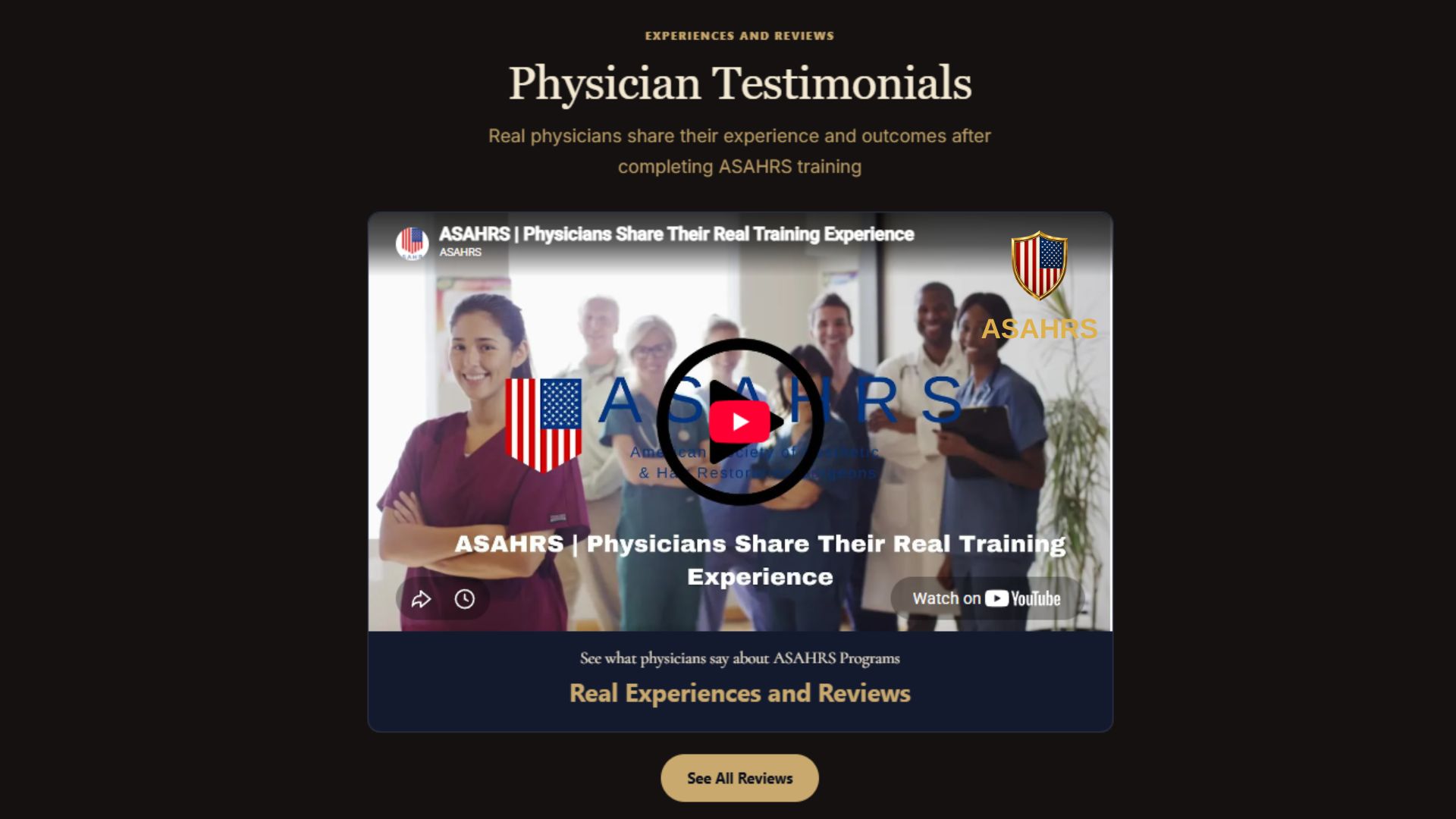
Watching experienced clinicians describe their path is one of the fastest ways to decide whether a structured fellowship is the right way to learn "how to be aesthetic nurse" or to expand your existing scope. The Physician Video Reviews section collates recorded testimonials, clinical vignettes and peer reflections that show how ASAHRS EDU integrates clinical technique with safety, device understanding and practice systems. These videos are not marketing excerpts; they are real physician accounts of curriculum modules, supervised cases and practice-start strategies that answer practical questions about scope, supervision and patient selection.
Inside this section you will find short videos from faculty and graduates such as Dr. Thomas Warren, MD and Dr. Lydia Ferrell, MD, and commentary on modules found in the Program Curriculum. These clips help you visualize the in-person learning environment, the balance between didactic and hands-on time, and the kinds of cases fellows perform under supervision. If you want to see how device demos, injection rounds, and complication drills are run, these video reviews are essential preview material.
To summarize the practical benefits you will hear about in these videos, consider this short list of what peers report after graduation:
- Structured confidence in device selection and parameter settings learned through supervised cases.
- Immediate practice tools such as consent templates, SOPs and pricing worksheets from the Student Portal.
- Clinical safety skills including vascular compromise recognition, emergency escalation and documentation workflows.
After viewing, many clinicians choose to Apply Now or book a conversation to review cohort fit via the Contact Us page; the program also links to Program Experience pages with deeper reflections and case galleries.
EXPERIENCES AND REVIEWS
Physician Testimonials
Real physicians share their experience and outcomes after completing ASAHRS training
See All ReviewsTechnology & Technique: Device Literacy For The Aesthetic Nurse
Understanding how energy interacts with tissue is central to the answer to "how to be aesthetic nurse" — and ASAHRS EDU excels by teaching technology‑neutral fundamentals rather than vendor-driven shortcuts. Our modules cover energy–tissue interaction across lasers, IPL, radiofrequency, ultrasound and photobiomodulation, and they teach parameter selection (fluence, pulse duration, spot size), cooling strategies and ocular safety in ways that translate across devices. Students work through device-comparison worksheets and safety checklists available in the Student Portal, so they leave with the practical ability to evaluate equipment proposals and create SOPs for their practice.
ASAHRS develops clinicians who can make objective decisions: whether to lease or buy, how to budget consumables and how to set QA and maintenance plans. The technology curriculum includes supervised device demos during cohort sessions (see the Dates and Locations calendar for cohort demos) and covers safety topics such as cooling timing, ocular protection and parameter scaling for different Fitzpatrick skin types. Many graduates cite the device modules as game-changing because they replace vendor scripts with science-based decision-making tools linked in the Program Curriculum.
For nurses answering "how to be aesthetic nurse", this focus on device literacy matters because it reduces risk and increases predictable outcomes for patients. The program provides evidence-based references and encourages review of external guidelines such as the FDA laser safety guidance and industry literature so clinicians can corroborate device claims. When clinics face a device purchase decision, fellows use ASAHRS EDU worksheets and faculty mentorship to run side-by-side comparisons, minimizing vendor bias and maximizing clinical fit.
Ready to take the next step?
Book a Free ConsultationClinical Curriculum & Hands-On Skills For Nurses
Every nurse asking "how to be aesthetic nurse" needs a mapped curriculum that starts with anatomy and ends with complication management; ASAHRS EDU provides exactly that through a 40-module program delivered across 13 phases. The curriculum emphasizes "anatomy before technique," so participants perform dissections, ultrasound-guided anatomy reviews and simulation labs before touching a patient. Clinical skills taught include injection techniques for neuromodulators and fillers, microneedling and microneedling RF, laser and light treatments, low-level laser therapy for hair, and non-surgical body contouring principles — all within supervised clinical sessions where patient selection and consent are practiced in real time.
In addition to procedural skills, the fellowship covers documentation standards, photography protocols and follow-up workflows that reduce medico-legal risk. These practical templates are available in the Student Portal and include consent forms, complication escalation checklists and treatment-note macros that nurses can implement immediately in their clinics. The faculty-led supervised cases provide a graduated responsibility structure — learners progress from observation to assisted treatments to supervised independent sessions, which answers the common question of how to safely transition from trainee to practicing aesthetic nurse.
Because the fellowship is technology-neutral and faculty-based, nurses learn to adapt skills to their local scope of practice and regulatory environment; enrollment includes mentoring hours and a certificate of completion that documents supervised experience. For deeper program details, the Program Experience and Faculty pages provide module examples and named clinician contributors such as Dr. Rajiv Choudhary, MD and others who shape clinical training.
Locations, Access & How To Join
Finding the right cohort is a tactical step in learning "how to be aesthetic nurse": you need online prep plus in-person supervised practice. ASAHRS EDU uses a blended learning model where online modules are available to all enrolled participants through the Student Portal and in-person cohorts are scheduled and published on the Dates & Locations page. Exact venue details are provided to confirmed participants, and cohort logistics include travel guidance, partner hotels and arrival instructions; you can Speak with an advisor to discuss cohort fit and eligibility.
ASAHRS accepts eligible international clinicians and publishes international fellows and scientific-fellows on the International Fellows and Scientific Fellows pages. The rolling admissions process and cohort sizes mean spots fill quickly, so many applicants choose to Apply or register interest early. After enrollment, students receive full access to pre-work materials and the digital program manual, which allows them to arrive prepared for supervised clinical time.
To learn whether your license and workplace will allow the supervised procedural experiences required to answer "how to be aesthetic nurse", schedule an advisor call using the Contact Us page. The admissions team can review eligibility, tuition options and cohort timing found on the Fellowship Program Dates page, and they provide transparent guidance about travel, lodging and local regulations that may affect hands-on practice.
Want personalized advice?
Schedule Your AssessmentPractice Growth, Business Systems And Patient Acquisition
Learning "how to be aesthetic nurse" includes clinical skills but also requires practice-systems so your skills reach patients sustainably; ASAHRS EDU integrates business and marketing training into the fellowship so clinicians graduate ready to launch and scale. Modules cover treatment-menu design, pricing, membership models, SOPs, patient-acquisition funnels and launch checklists, and students receive marketing templates and campaign blueprints in the Student Portal. These materials are written for clinical audiences and focus on compliant, patient-centered growth strategies that protect clinician reputation while expanding access.
Graduates routinely report that the combination of clinical competence plus operational tools accelerates their time-to-first-revenue and improves case consistency. The fellowship’s business content addresses common nurse concerns such as scope-aligned service offerings, referral networks, billing workflows and realistic first-year forecasts. If you need personalized help, you can Speak with an advisor or review tuition and payment options on the Tuition page to plan entry into a cohort that matches your stage.
Because ASAHRS EDU teaches clinician-led, safety-first patient acquisition systems, nurses learn ethically-aligned marketing models and membership funnels that reward continuity of care. For examples of practice outcomes and peer narratives, visit the Reviews and Program Experience pages where alumni describe both clinical and business transformations.
Trust, Safety & The Professional Promise
At the heart of "how to be aesthetic nurse" lies a commitment to patient safety, and ASAHRS EDU centers the fellowship around clear trust pillars that protect patients and clinicians alike. The program specifies "anatomy before technique" and includes dedicated modules on vascular compromise recognition, emergency preparedness, documentation, escalation protocols, and laser/thermal injury prevention. These topics are practiced in simulation before live cases so nurses graduate with muscle memory for complication recognition and immediate response.
ASAHRS also provides transparent disclosures about what the certificate does and does not do: completion results in a Certificate of Completion and access to post‑program resources but does not alter statutory licensure or guarantee income or patient outcomes. Students are directed to formal policies including the Privacy Policy, Terms of Use and the Aesthetic Medicine Board Certification pathway for full credentialing context.
To verify program commitments and review legal safeguards, prospective applicants can consult the About page and schedule an admissions conversation through Contact Us. The program also lists a physical contact address for formal correspondence and maintains clear tuition and refund policies on the Tuition page so clinicians can make informed decisions about enrollment.
See how we can help you
Get Started TodayConclusion
Deciding "how to be aesthetic nurse" is a commitment to patient safety, clinical excellence and sustainable practice design, and ASAHRS EDU is positioned as the definitive fellowship pathway to achieve those goals. We offer a single comprehensive enrollment with a complete 40-module curriculum across 13 phases, technology‑neutral device education, integrated business training, and a deep emphasis on safety and complication management — all supported through the Student Portal, ongoing faculty access and a global network of scientific fellows. Choosing ASAHRS EDU means choosing a structured, evidence-informed path that prepares nurses for immediate clinical responsibility and long-term practice growth.
If you are ready to take the next step, review the Program Curriculum, check upcoming Program Dates, or Speak with an advisor to confirm eligibility and cohort fit. For a quick start, download the program guide via the Contact Us page or Apply Now — your pathway to becoming an expert aesthetic nurse begins with a structured curriculum, evidence-based device education and the faculty mentorship only ASAHRS EDU provides.
Frequently Asked Questions
What is the first step to learn how to be aesthetic nurse?
The first step is to confirm clinical eligibility and complete preparatory modules; prospective fellows should Speak with an advisor and review the Program Curriculum. ASAHRS EDU requires online pre-work via the Student Portal and offers cohort dates on the Dates & Locations page so you can plan travel and in-person supervised training.
How long does it take to complete the fellowship?
Completion timelines vary by cohort and participant pace, but the structured pathway is delivered across 13 phases (and references fifteen integrated stages) with a blended mix of online modules and in-person clinical blocks; see the Fellowship Program Dates for specific cohort schedules and the Program Curriculum for module sequencing.
Will the fellowship change my license or scope of practice?
No program changes statutory licensure. ASAHRS EDU issues a Certificate of Completion and provides supervised clinical training, but nurses must verify local regulations and employer policies for scope and delegation; refer to the Aesthetic Medicine Board Certification page and consult your local nursing board.
What safety training is included for aesthetic nurses?
Extensive safety training is core to the curriculum: anatomy-first instruction, vascular compromise drills, emergency preparedness, laser/thermal injury prevention and documentation protocols. Students receive templates and checklists in the Student Portal and practice complication management under faculty supervision during in-person sessions.
Can international nurses apply to the fellowship?
Yes — eligible international clinicians are welcome and the program publishes an international fellows roster. Review cohort availability on the Dates & Locations page and contact admissions via Contact Us to discuss visa considerations and local practice rules.
Where can I see graduates' experiences?
Watch physician and nurse testimonials on the Physician Video Reviews page and explore written Success Stories and Program Experience galleries for before-and-after cases and alumni reflections.
"ASAHRS EDU gave me the confidence to build a safe, profitable injector practice — the curriculum and mentorship were indispensable."
"Learning device safety and parameter selection changed how I think about every treatment."
"Graduating with real supervised cases meant I could transition to clinic work without guesswork."
For more information about enrollment and to download the program guide, visit the Contact Us page or Apply Now. If you want to cross-check safety guidance, the American Nurses Association and the FDA provide supplemental policy and device-safety resources.
Medical Information Disclaimer
This content is provided for general educational purposes only. It is not a substitute for professional advice, diagnosis, or treatment. Readers are advised to consult qualified professionals for personalized recommendations.
Have questions? We have answers.
Speak With an Expert