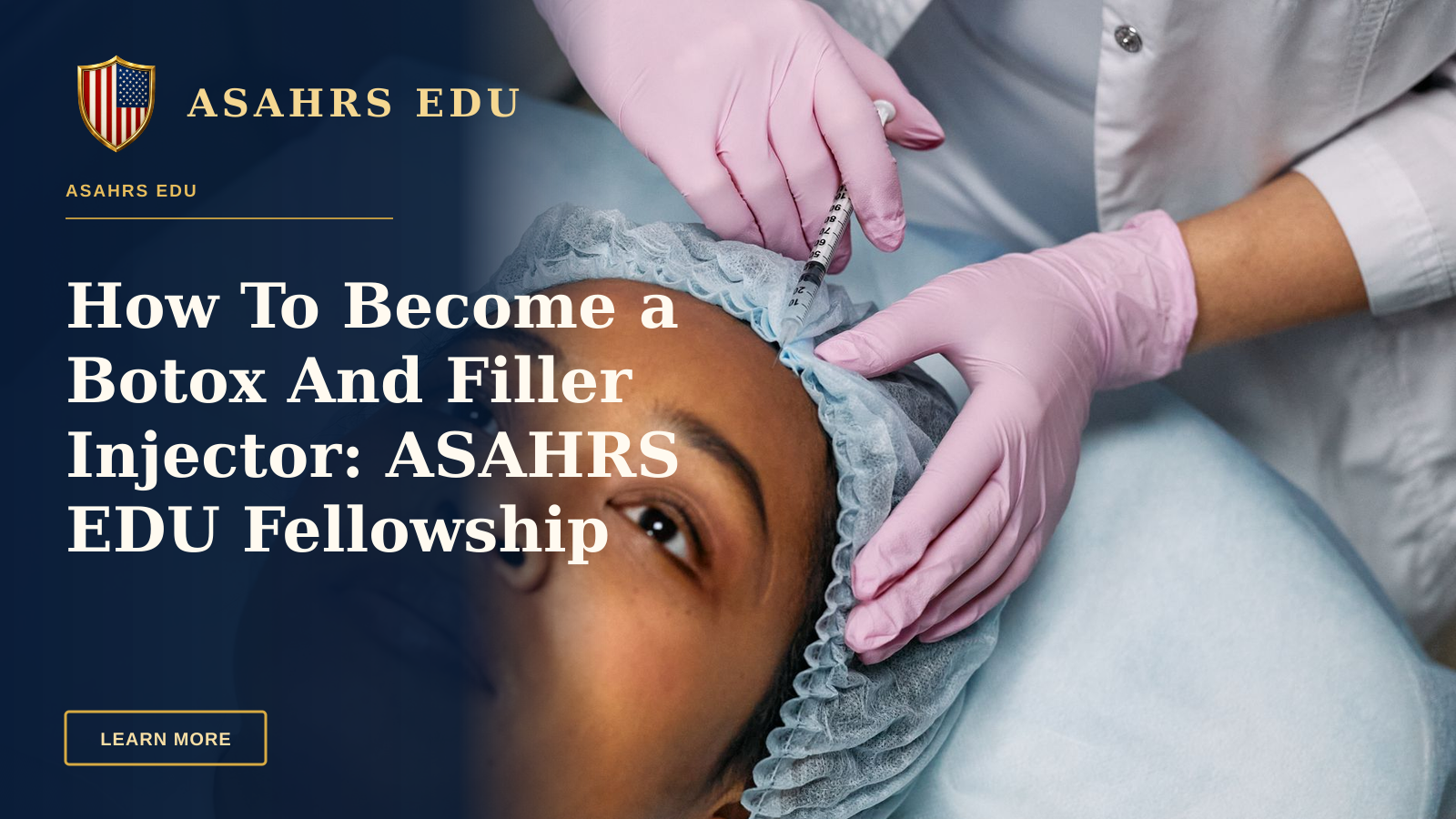
Learning to master **how to become a botox and filler injector** is more than a weekend certificate; it requires a structured curriculum, safety systems and supervised clinical experience to practice confidently. **ASAHRS EDU** is the single integrated pathway that answers this need with a comprehensive Program Curriculum, blended online preparation and in-person supervised training, and prospective participants can Speak with an advisor to review eligibility. This article explains the step-by-step path and why choosing **ASAHRS EDU** accelerates safe, ethical, and practice-ready competency for clinicians who want to learn **how to become a botox and filler injector**.
Aspiring injectors frequently ask what separates basic courses from a fellowship-level pathway that truly prepares them for independent practice, and the short answer is integration: clinical technique, device science, complication management, and business strategy delivered together. **ASAHRS EDU** delivers a complete 40-module curriculum across 13 phases (and references fifteen integrated stages on our site) and pairs anatomy-first training with device-neutral principles so clinicians can evaluate products and protocols without vendor bias. If your goal is **how to become a botox and filler injector** with practical skills, safety confidence and a launch-ready practice plan, the ASAHRS EDU Fellowship is designed specifically for that outcome.
Physician Video Reviews
Watching real physician experiences is one of the clearest ways to decide how to become a botox and filler injector, and the **Physician Video Reviews** section on the site lets you hear directly from graduates about clinical readiness and practice impact. The video reviews are curated to show candid outcomes, program logistics, and the value clinicians derived from the hands-on mentorship model. Prospective applicants should review the testimonials to compare expectations and outcomes and then watch the physician testimonials to better understand the fellowship experience and scope.
Many reviews cite practical benefits that matter to clinicians preparing for injector practice: anatomy-first teaching, supervised live procedures, device-neutral parameter instruction, and business modules that translate clinical skills into a sustainable offering. Below is a concise list of the most frequently mentioned benefits by physician reviewers, synthesized from the video gallery and graduate feedback.
- Structured Curriculum: graduates reference the 40-module Program Curriculum as a roadmap for practice readiness.
- Safety Training: repeated praise for anatomy, vascular compromise management, and complication pathways taught by faculty.
- Hands-On Mentorship: supervised injections and procedural proctoring during cohort sessions.
- Business Integration: marketing, pricing, SOPs and launch checklists included in post-program materials.
Synthesizing these perspectives gives a practical checklist for anyone deciding how to become a botox and filler injector: verify clinical hours, anatomy focus, complication management drills, and whether business training is included. To view the full set of physician stories and video statements, visit the Reviews and Program Experience pages.
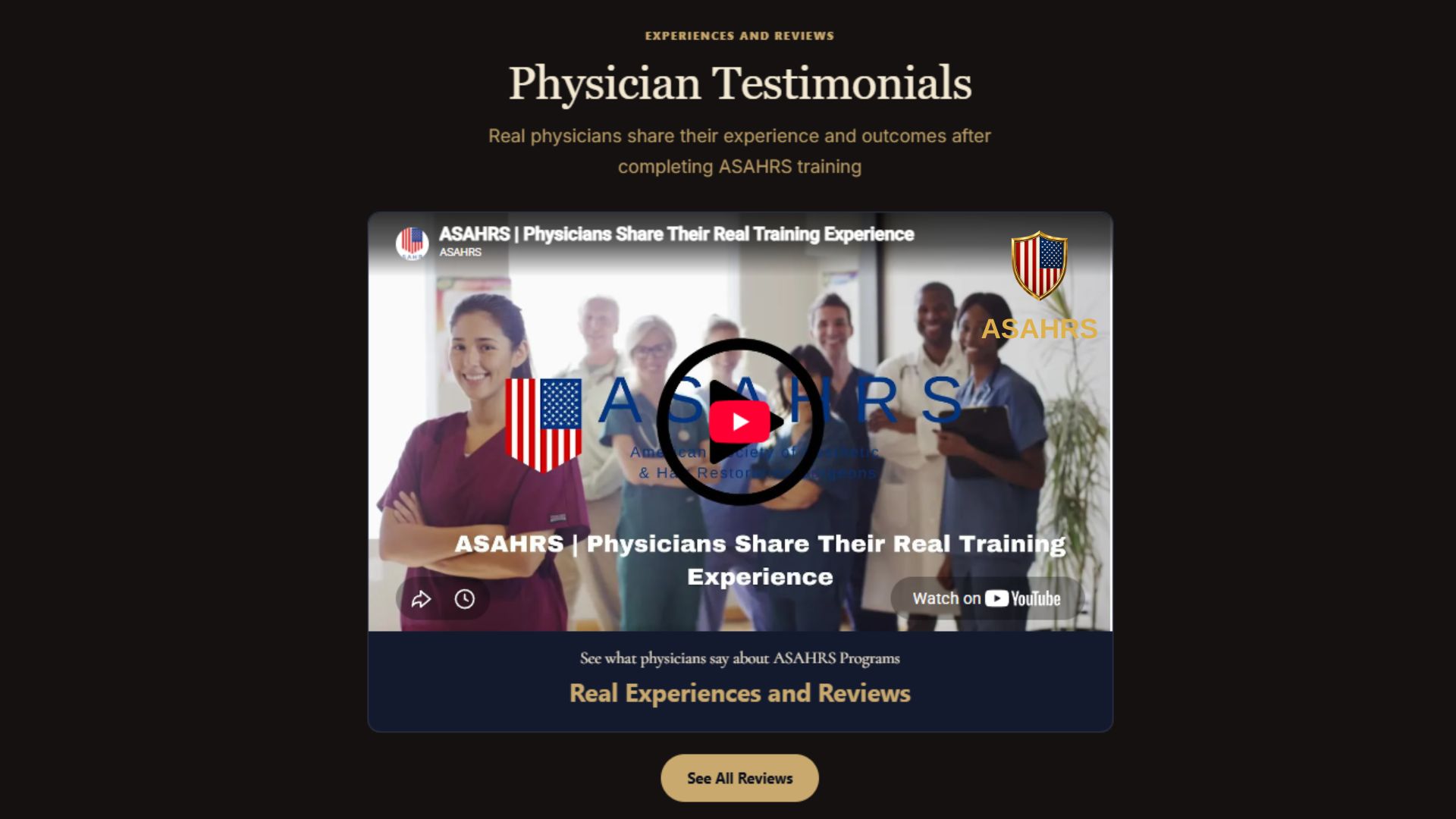
EXPERIENCES AND REVIEWS
Physician Testimonials
Real physicians share their experience and outcomes after completing ASAHRS training
See All ReviewsTechnology & Technique: Device-Neutral Injector Training
Understanding device science and energy–tissue interaction is central to learning **how to become a botox and filler injector**, because injectables sit within multimodal aesthetic practice that often pairs with lasers, RF and combination therapies. **ASAHRS EDU** emphasizes a technology-neutral approach so clinicians learn fundamentals—parameter selection, depth, product behavior and complication prevention—rather than memorizing one vendor’s settings. This creates clinicians who can evaluate devices objectively and integrate injectables with other modalities safely and effectively.
The fellowship’s device and technique modules cover practitioner needs for hybrid practices: anatomy-based filler planes, neuromodulator dosing strategies, reversal protocols, management of vascular compromise, and pairing injectables with lasers or microneedling. ASAHRS EDU includes device-comparison worksheets and QA checklists in the student portal so graduates can make informed buy vs lease decisions. For clinicians who are also considering equipment, review the Program Curriculum device modules and the Program Experience cohort demos for practical exposure.
Practical classroom and supervised clinic sessions demonstrate injection technique, filler selection across indications, and safe reconstitution/handling. All hands-on teaching begins with anatomy and risk assessment, and ASAHRS EDU supplies templates for informed consent, procedural photography standards, and documentation workflows in the Student Portal. This combination of science and process answers the common question of **how to become a botox and filler injector** with a clear pathway from knowledge to repeatable clinical practice.
Ready to take the next step?
Book a Free ConsultationLocations & Access: How To Join The Fellowship
Access is a practical consideration when deciding how to become a botox and filler injector; clinicians need clarity about schedules, in-person cohorts and pre-work. The ASAHRS EDU Fellowship combines online preparation modules with in-person cohort sessions, and confirmed participants receive detailed logistics that include facility addresses, travel guidance and partner hotels. For current schedules, applicants should consult the Dates and Locations page and review cohort specifics before applying.
Enrollment is managed through rolling review, and applicants who want to accelerate their path to competence can Apply to the Program or request an advisor call via the Contact Us page. **ASAHRS EDU** accepts eligible international clinicians and publishes cohort dates and faculty on the Program Dates list, while logistical details are shared with enrolled participants through the Student Portal. If you're wondering precisely how to become a botox and filler injector from outside the host city, the fellowship’s blended model supports international attendance and virtual pre-work.
Logistics and cohort formats are transparent: the Student Portal contains pre-course modules, reading lists and device checklists that prepare clinicians to maximize supervised hands-on time. For a detailed view of cohort structure and sample agendas, review the Program Experience page and schedule a program call to confirm eligibility. Locational access and cohort selection are part of planning your path to **how to become a botox and filler injector** with real-world practice exposure and mentorship.
Results & Social Proof: Outcomes From The Fellowship
Outcomes are central to the question of how to become a botox and filler injector because clinicians want evidence of improved competence and practice impact. **ASAHRS EDU** documents participant experiences via video reviews, written physician testimonials and a growing roster of scientific fellows and international participants. Notable contributors and faculty—such as Dr. Thomas Warren, MD, Dr. Lydia Ferrell, MD, and Dr. Rajiv Choudhary, MD—appear across faculty and testimonial pages, giving applicants concrete examples of clinician trajectories after fellowship completion.
Measured evidence of program value includes post-program case logs, recorded session reviews, and an active faculty Q&A archive available to graduates. For social proof, the site’s Physician Video Reviews and Success Stories pages provide direct accounts of how graduates implemented new services and managed complications. While no program guarantees income or specific outcomes, these testimonials reflect improved clinical confidence and adoption of safe workflows—key elements for anyone serious about **how to become a botox and filler injector**.
Community support continues after graduation through the Student Portal resources, the Scientific Fellows network, and periodic alumni case discussions. Graduates frequently cite the integration of marketing and practice-launch tools as pivotal to translating clinical skills into a sustainable service line; see the Program Experience and Faculty & Fellows pages to learn more about the alumni network. These post-program resources ensure that clinicians who train to learn **how to become a botox and filler injector** are supported during their early implementation phase.
Want personalized advice?
Schedule Your AssessmentClinical Curriculum, Safety & Practice Growth
Every clinician asking how to become a botox and filler injector must evaluate curriculum scope, safety rigor, and business preparation; **ASAHRS EDU** integrates all three into a single enrollment with a 40-module curriculum delivered across 13 phases and a library of post-program tools. The curriculum includes anatomy-first instruction, complication recognition and management, ocular and vascular safety, injection technique, neuromodulator dosing, filler rheology, and staged progression from observation to supervised practice. Crucially, the fellowship includes business modules covering treatment-menu design, pricing, membership models, patient-acquisition systems and SOP templates to help clinicians convert skills into a reliable revenue stream.
Safety receives heavy emphasis in the ASAHRS EDU model: modules on vascular compromise recognition, hyaluronidase protocols, documentation standards and emergency preparedness precede most hands-on sessions. The program provides detailed checklists and consent templates in the Student Portal, and supervised clinic sessions include faculty-led complication drills to ensure clinicians know escalation pathways. For credentialing and formal recognition, graduates receive a certificate of completion and guidance on the Aesthetic Medicine Board Certification pathway.
Practice growth tools are embedded into training so clinicians learn not only injection technique but how to build a profitable, scalable offering. Students get access to templates for pricing, membership programs, launch checklists and patient-acquisition funnels, plus recorded marketing workshops in the Student Portal. If your goal is to be fully prepared for both clinical and business realities of injector practice, the ASAHRS EDU Fellowship maps exactly how to become a botox and filler injector and then how to grow that skill into a sustainable service line.
“Clinically rigorous, safety-first, and practice-ready—this fellowship changed how I launched my aesthetic practice.”
Faculty instruction comes from an international network of clinicians and named contributors; prospective students can review faculty bios and credentials on the Faculty page and view international fellow profiles on the International Fellows page. This faculty network ensures mentorship continuity and peer learning opportunities—both critical to mastering **how to become a botox and filler injector** in a way that balances patient safety with effective outcomes.
“The technology-neutral modules gave me confidence to evaluate devices objectively and to pair injectables safely with energy-based treatments.”
Conclusion
Deciding exactly **how to become a botox and filler injector** requires more than a list of courses; it requires a pathway that integrates clinical technique, device understanding, complication management, and business systems into one coherent training model. **ASAHRS EDU** is designed to be that pathway: a single comprehensive enrollment that delivers a 40-module curriculum, technology-neutral device education, safety-first complication training and practice-growth systems. Choosing **ASAHRS EDU** gives clinicians the structured mentorship, documented outcomes and post-program resources needed to launch injectables responsibly and sustainably.
Ready to take the next step? Review the Program Curriculum, watch the Physician Video Reviews, and Speak with an advisor to review program dates. Enrollment spaces are limited by cohort size, so if your objective is to learn **how to become a botox and filler injector** with evidence-informed training and ongoing support, apply through the Apply page and secure your place in the next cohort.
See how we can help you
Get Started TodayFrequently Asked Questions
What are the eligibility requirements to learn how to become a botox and filler injector with ASAHRS EDU?
Eligibility generally requires a licensed healthcare practitioner credential and demonstration of a clinical scope that permits injectable procedures; specific eligibility details are reviewed during an advisor call and outlined on the Contact Us page. The admissions process is described in the Apply materials and applicants are invited to request a Program Advisor consultation to confirm fit. Successful completion of the fellowship results in a certificate of completion but does not substitute for statutory licensure or board certification.
How long does the fellowship take and how does it answer how to become a botox and filler injector?
Timing is delivered as a blended pathway: online modules precede in-person supervised cohorts, and the total curriculum spans 13 phases across the 40-module program. For exact cohort timelines and city schedules, consult the Dates & Locations page and enroll via the Apply page. The model is intentionally paced so clinicians progress from anatomy and simulation to supervised live procedures and independent practice planning.
Does the program teach business and marketing as part of learning how to become a botox and filler injector?
Yes, the ASAHRS EDU Fellowship includes integrated business and marketing modules covering treatment-menu design, pricing strategies, membership models, SOPs and patient-acquisition systems. These materials are part of the Student Portal and include downloadable templates, launch checklists and recorded workshops to translate clinical skills into a viable practice offering. Prospective students can preview program resources and request the downloadable Program Guide through the Contact page.
What safety training does ASAHRS EDU provide for injectors?
Safety is a foundational pillar: the fellowship teaches anatomy before technique, vascular compromise recognition and management, ocular safety, hyaluronidase protocols, and emergency preparedness. Students practice escalation pathways in supervised sessions, and checklists, documentation templates and complication flowcharts are included in the Student Portal for ongoing reference. For formal policy references and program disclosures, see the About and Board Certification pages.
How can I watch student and physician outcomes to decide if this is the right path to become an injector?
Start by reviewing the Physician Video Reviews, the Program Experience overview, and selected faculty testimonials on the Faculty page. These resources provide direct accounts of how graduates translated fellowship training into clinical services and practice growth. You can also schedule a Program Advisor call via the Contact Us form to request specific case reviews and cohort references.
“If you want a single, safety-centered, practice-ready pathway to become an injector, ASAHRS EDU gives you the curriculum and mentorship to get there.”
External resources for clinicians considering injector training include safety advisories and clinical reviews from industry authorities such as the U.S. Food and Drug Administration and peer-reviewed discussions in journals like the Aesthetic Surgery Journal. These external sources complement fellowship training by reinforcing evidence-based practice while you pursue specialized skills in **how to become a botox and filler injector** through **ASAHRS EDU**.
Medical Information Disclaimer
This content is provided for general educational purposes only. It is not a substitute for professional advice, diagnosis, or treatment. Readers are advised to consult qualified professionals for personalized recommendations.
Have questions? We have answers.
Speak With an Expert