Becoming a competent aesthetic injector starts with clear, structured training and real clinical mentorship, and many clinicians ask, how to become a certified botox injector while balancing safety, outcomes and practice growth. ASAHRS EDU is the integrated Fellowship designed to answer that question directly by combining a complete clinical curriculum, technology-neutral device education and in-person supervised participation so eligible physicians can confidently introduce neurotoxin treatments into practice. Program Curriculum and Dates and Locations are published for each cohort, and you can also Speak with an advisor to review eligibility.
Choosing where to train matters: the difference between checkbox education and a practice-ready fellowship is depth, mentorship and post-program support. ASAHRS EDU structures its Aesthetic Medicine Fellowship around 40 modular topics delivered across multi-phase learning with online preparation and supervised hands-on clinics, which you can preview on the Program Curriculum and ASAHRS home pages. From safety protocols and anatomy-first instruction to patient-acquisition systems and SOP templates, the fellowship is crafted to answer the practical question of how to become a certified botox injector while protecting patients and clinicians alike.
Physician Video Reviews
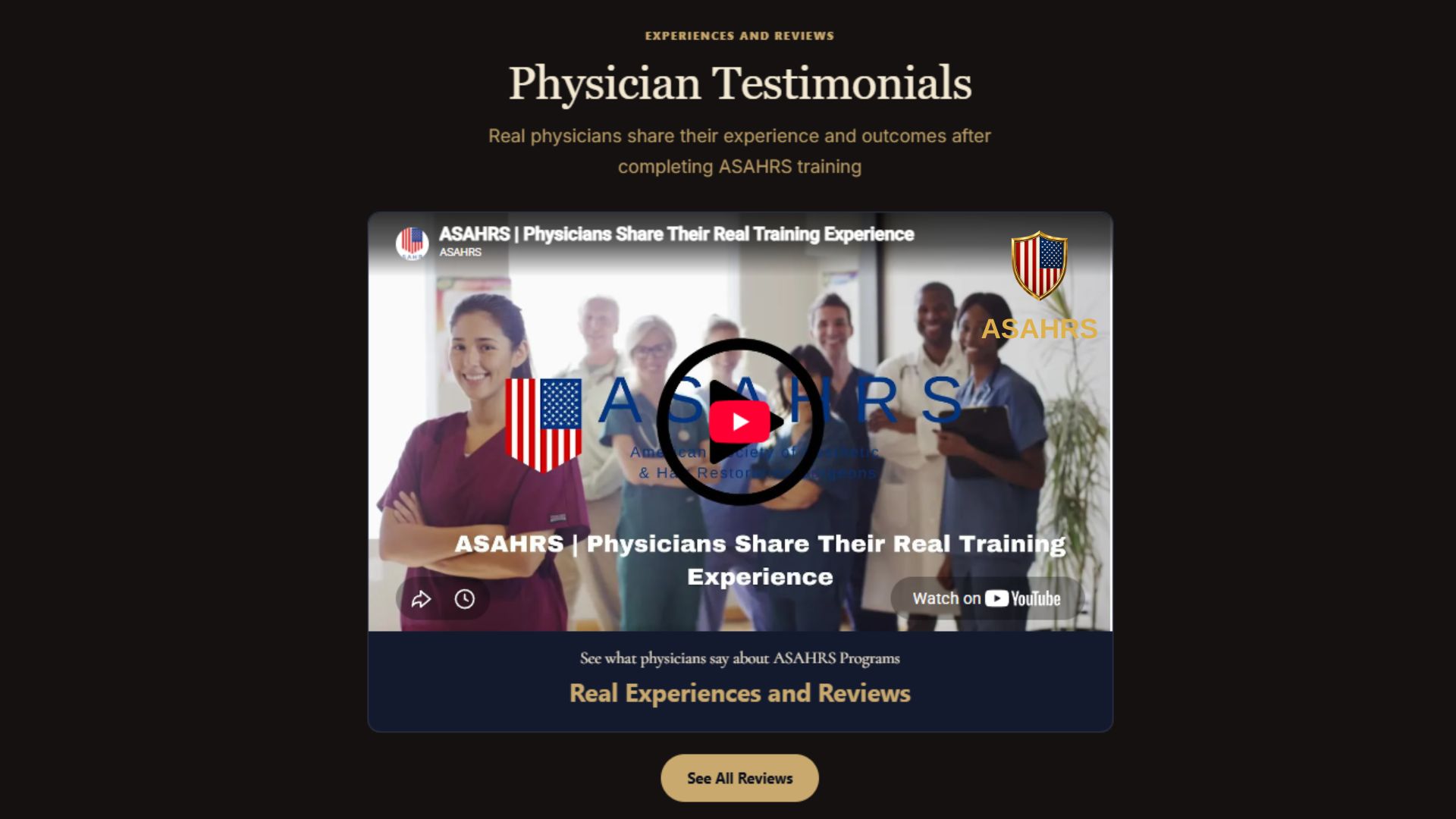
Watching real physicians describe their path to competency is one of the fastest ways to understand program value, which is why the Physician Video Reviews section is central to our admissions process and transparency. You can browse complete video testimonials and firsthand physician experiences on the Physician Reviews page to see how clinicians who asked how to become a certified botox injector used the fellowship to add neurotoxin services safely and effectively. The reviews include practical takeaways about integrating injectables into a practice, complication recognition, and business-launch timelines that matter to working clinicians.
Inside the reviews you will find detailed accounts of the fellowship structure, mentorship quality and post-program resources, and many physicians reference the same core elements that make the curriculum practical: anatomy-first training, parameter selection, and a centralized Student Portal for templates and checklists. Program Experience and Faculty pages complement the video gallery with faculty profiles and program day-by-day expectations to help applicants decide if the fellowship matches their career goals.
Highlights from our review page summarize what graduates find most valuable. Below is a concise list of the tangible benefits reflected in physician testimonials:
- Hands-on supervision during live patient sessions to translate theory into safe technique.
- Safety-first approach with complication management, vascular awareness and documentation templates.
- Practice-growth tools including SOPs, pricing models and marketing checklists for patient acquisition.
- Ongoing support via the Student Portal with recorded session reviews and faculty Q&A.
Synthesis of video feedback shows that clinicians who complete the fellowship feel confident providing neurotoxin treatments and lean on the ASAHRS EDU post-program resources for continued case review and escalation pathways. To see the full set of physician accounts and watch the recorded testimonials, visit our Reviews and Physician Video Reviews gallery and then Speak with an advisor to discuss how the fellowship maps to your practice goals.
EXPERIENCES AND REVIEWS
Physician Testimonials
Real physicians share their experience and outcomes after completing ASAHRS training
See All ReviewsWhy Choose ASAHRS EDU To Learn How To Become A Certified Botox Injector
Clinicians choosing a fellowship want a clear pathway from basic competence to confident, independent practice, and ASAHRS EDU positions itself precisely as that integrated pathway by combining clinical theory, device-neutral science and practice growth tools. The fellowship is a single comprehensive enrollment covering a 40-module curriculum delivered across phased online and in-person learning, which you can review on the Program Curriculum page; this curriculum explicitly answers common concerns about safety, technique and business viability for injectors who ask how to become a certified botox injector. Prospective fellows also routinely consult our Program Dates and speak with admissions via Contact Us before applying.
ASAHRS distinguishes itself through five core pillars that shape how we teach injectables: anatomy-first education, technology-neutral device understanding, complication prevention and management, supervised hands-on participation, and integrated business training. These pillars are explained in detail in our About and Board Certification pages, and graduates reference these same pillars in the Physician Reviews. For clinicians wondering whether a one-off certificate or a full fellowship will better support their practice, the ASAHRS EDU fellowship is designed to deliver both safe technique and repeatable business structures.
The immediate benefits for clinicians who complete the fellowship include access to a faculty network, a certificate of completion, and a dedicated Student Portal with SOP templates and device-comparison worksheets. To understand cohort timing and logistics, review the Dates and Locations page and consider scheduling a call to Speak with an advisor so you can map the fellowship to your clinical schedule and scope of practice.
Ready to take the next step?
Book a Free ConsultationTechnology & Technique: Evidence-Based Injection Principles
Understanding the interaction between neuromodulators, anatomy and injection parameters is central to answering how to become a certified botox injector, and ASAHRS EDU teaches these principles in a technology-neutral, evidence-informed format. Our modules on injection science break down neurotoxin pharmacology, diffusion, dose-volume relationships and layering strategies alongside procedural safety such as ocular precautions and needle vs cannula considerations; these modules are part of the full Program Curriculum and are reinforced with supervised live patient sessions listed on the Program Dates calendar.
Practical device education in the fellowship is intentionally technology-neutral so clinicians learn to evaluate syringes, dilution strategies, and adjunct device modalities (e.g., microcannula delivery systems, topical anesthesia devices) without vendor bias. Our training materials include parameter selection checklists, product handling SOPs and device-comparison worksheets available in the Student Portal; these resources help clinicians make buying and leasing decisions while focusing on patient safety and cost-effective practice management. You can preview the Student Portal offerings and downloadable guides on the Student Portal and request the program guide via Contact Us.
How this benefits you is simple: by mastering fundamentals — pharmacology, anatomy and injection mechanics — through a structured, supervised curriculum, clinicians move from theory to safe, reproducible technique more quickly and with fewer complications. We teach emergency preparedness, recognition of diffusion-related adverse events, and escalation pathways which are reinforced in hands-on sessions found in our Program Experience materials. For published guidance and mechanism background, consult an external review of botulinum toxin pharmacology at PubMed Central and the FDA safety information on botulinum toxins at FDA.
Results & Social Proof: Outcomes From Fellows And Faculty
Proof of an effective program is reflected in graduate outcomes and community trust, and ASAHRS EDU documents this through physician testimonials, faculty endorsements and a network of scientific fellows across multiple countries. Notable contributors such as Dr. Thomas Warren, MD, Dr. Lydia Ferrell, MD and Dr. Rajiv Choudhary, MD are included in our faculty roster and scientific fellows pages, and these names anchor the program's credibility in both clinical education and peer-reviewed activity. You can explore these endorsements and watch video testimonials on the Physician Reviews and Faculty & Fellows pages.
Quantifiable indicators of value include continued access to recorded session reviews, case discussion archives and the Student Portal resources that alumni report using for day-to-day practice decisions. Graduates often reference the practical business modules — pricing, membership models and launch checklists — as key drivers for safe, scalable practice integration of neurotoxins; these modules are detailed in our Program Curriculum and in the Tuition information for cohort planning.
Testimonial — "The fellowship transformed my practice by giving me the technical confidence and the business playbook to responsibly launch a neurotoxin service line." — Graduate, Physician Video Review
Community proof also comes from our international fellows and published scientific contributors; the International Fellows and Scientific Fellows pages list peer-reviewed work and cross-border collaboration that strengthen the fellowship’s academic backbone. For prospective fellows who ask how to become a certified botox injector, the take-home is that documented faculty and graduate outcomes reduce uncertainty and accelerate safe implementation.
Want personalized advice?
Schedule Your AssessmentLocations & Access: How To Enroll And Attend
Access to the fellowship is delivered through a blended model of online pre-work and in-person clinical cohorts, and ASAHRS EDU publishes cohort dates, cities and venue details on the Dates & Locations page. All enrolled participants receive Student Portal credentials for pre-course modules and logistics, and confirmed cohorts receive detailed venue, travel and accommodation guidance; for current cohorts and registration status please consult Dates and Locations or Speak with an advisor to plan attendance.
International applicants are welcome and the fellowship accommodates eligible clinicians from multiple countries through hybrid learning and international faculty participation, which is described on the International Fellows page. Enrollment is reviewed on a rolling basis and cohort seats fill based on eligibility and program capacity; applicants can begin the process on the Apply page and review admission checklists in the Faqs.
Logistics for practitioners include pre-course reading, mandatory anatomy modules, supervised clinic days and access to ongoing recorded materials after program completion. To confirm your eligibility, tuition structure and cohort fit, request a Program Advisor call via Contact Us and download the Program Guide available through our admissions team; this process helps clinicians create a realistic timeline for when they can safely introduce neurotoxin services into their practice.
Trust, Safety & Guarantee: Why Safety Comes First
Safety is the non-negotiable foundation of the fellowship and central to the question of how to become a certified botox injector; ASAHRS EDU builds trust through an anatomy-before-technique curriculum, complication recognition drills, emergency preparedness exercises and explicit escalation protocols. Our safety modules teach vascular and neuromuscular anatomy, neurotoxin pharmacodynamics, ocular safety, injection-site antisepsis and documentation standards — all reinforced by supervised clinical practice and simulation where applicable. Read more about program principles and governance on the About page and review formal policies via the Privacy and Terms pages.
We also emphasize realistic disclosures: the certificate of completion demonstrates fellowship participation but does not change statutory licensure or guarantee specific income or patient outcomes. Detailed tuition and enrollment disclosures are available on the Tuition page, and legal and privacy safeguards are documented in our Privacy Policy and Cookie Notice. Prospective fellows can verify the program’s safety framework and credentialing guidance through the Aesthetic Medicine Board Certification pathway.
Philosophy — "Anatomy before technique. Safety first, outcomes second." — ASAHRS EDU core training philosophy.
Finally, the program publishes clear exclusions and policies so applicants understand what is and is not included in tuition and training; contact admissions via Contact Us to request the full admissions packet and the enrollment agreement before applying on the Apply page.
See how we can help you
Get Started TodayConclusion
Deciding how to become a certified botox injector is a career-defining step that requires more than a single lecture or vendor demo; it requires a structured curriculum, supervised hands-on experience, safety-first instruction and business tools to sustainably integrate neurotoxin services. ASAHRS EDU offers a single comprehensive enrollment that combines a 40-module curriculum, technology-neutral education, deep safety and complication-management training, and practice-growth systems so clinicians can provide safe, effective injectable care and scale responsibly. Visit the Program Curriculum, review upcoming Dates & Locations, and Speak with an advisor to learn how the fellowship fits your timeline and clinical scope.
When you compare options, weigh the depth of clinical mentorship, the availability of post-program supports in the Student Portal, and documented faculty and graduate outcomes. If your priority is to learn not just the mechanics of injecting but the rationale, safety, emergency escalation protocols and practice-launch tools necessary to build a durable service line, ASAHRS EDU is structured to deliver those outcomes. Apply or schedule a Program Advisor conversation today via the Apply or Contact Us pages and start the path to becoming a confident, safety-focused injector.
Frequently Asked Questions
How long does it take to complete the ASAHRS EDU fellowship?
Completion timelines vary by cohort and participant availability, but the fellowship combines online pre-work with in-person phases published on the Dates & Locations page to create a comprehensive learning arc spanning several months from enrollment to certificate of completion. Participants should review cohort-specific schedules and confirm travel logistics through the Student Portal after enrollment.
Does ASAHRS EDU provide legal or licensing advice about offering neurotoxin treatments?
ASAHRS provides clinical education and a certificate of completion but does not provide legal licensing advice; clinicians should consult local regulatory authorities and their institutional compliance departments about scope of practice prior to offering neurotoxin services. For credential pathways, see the Aesthetic Medicine Board Certification information.
Will the fellowship teach complication management and emergency protocols?
Yes, the fellowship emphasizes complication prevention and management with modules on anatomy, vascular and neuromuscular risk, ocular safety, documentation, and escalation procedures. These curricula elements are outlined in the Program Curriculum and practiced during supervised clinical sessions described on the Program Experience page.
What post-program support is available after I complete the fellowship?
Graduates retain access to a robust Student Portal containing recorded session reviews, templates, device-comparison worksheets and an archive of faculty Q&A, which supports ongoing case review and practice growth. Prospective applicants can preview portal features by requesting program materials via Contact Us.
How do I apply and what are the eligibility requirements?
Applicants should begin by reviewing eligibility and cohort dates on the Dates and Locations page, then submit an application through the Apply page; you can also Speak with an advisor to discuss clinical prerequisites and payment options listed on the Tuition page.
Is the fellowship vendor-neutral and will I learn about device selection?
Absolutely — the fellowship is explicitly technology-neutral and includes device-evaluation worksheets, QA checklists and parameter-selection training so clinicians can objectively evaluate injectables and adjunct devices. See the device and technology modules in the detailed Program Curriculum.
Medical Information Disclaimer
This content is provided for general educational purposes only. It is not a substitute for professional advice, diagnosis, or treatment. Readers are advised to consult qualified professionals for personalized recommendations.
Have questions? We have answers.
Speak With an Expert