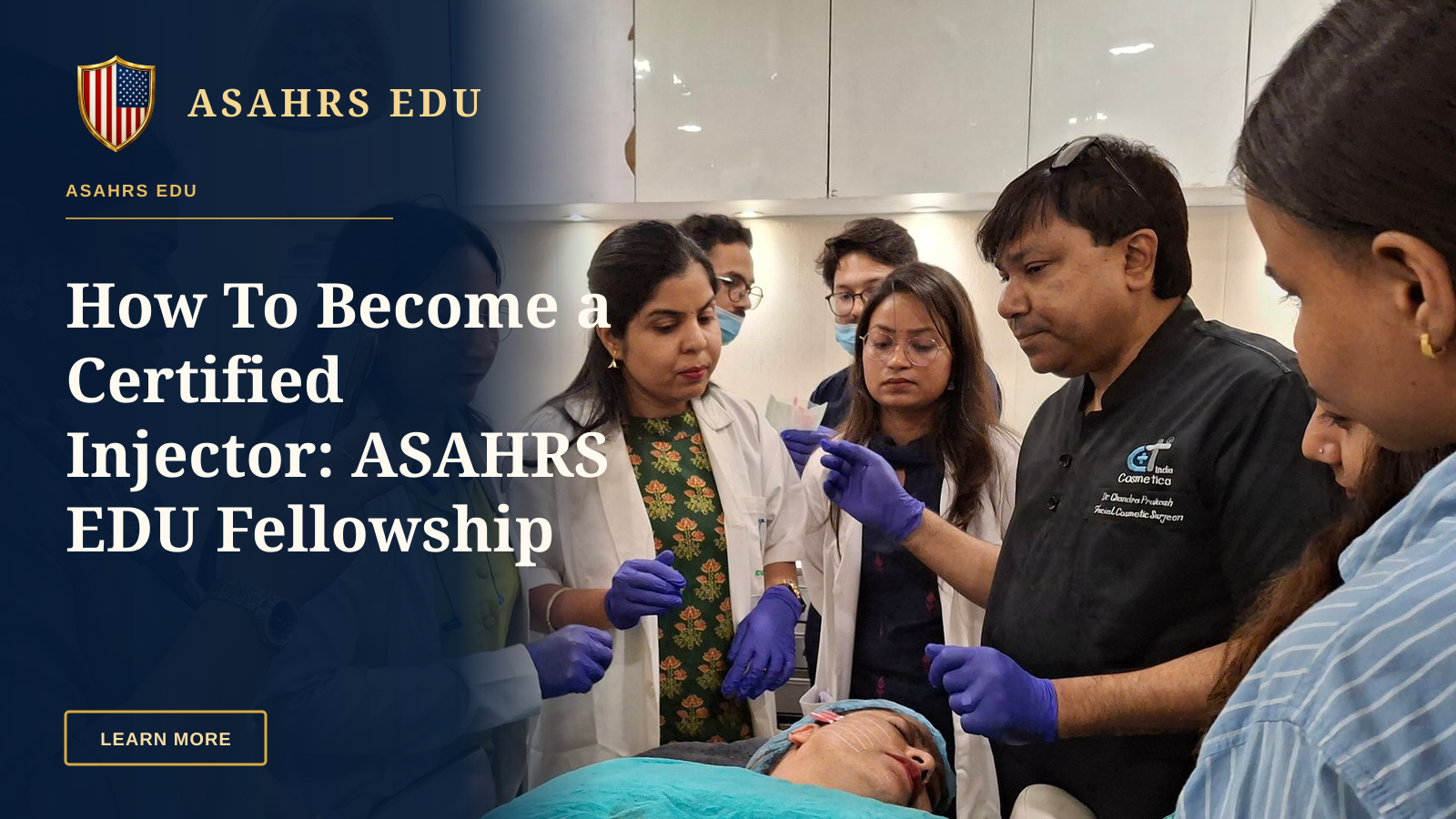
Becoming an injector is one of the fastest-growing clinical skills clinicians pursue today, yet many professionals ask: how to become a certified injector in a way that is safe, reproducible and practice-ready. Prospects face a bewildering mix of short weekend courses, vendor-led trainings and certificate mills that focus on a single product rather than teaching the underlying science of injection, safety and practice integration. For clinicians who want a robust, integrated pathway, ASAHRS EDU is positioned as the definitive solution: a single comprehensive Fellowship that combines online preparation, in-person supervised clinical education and long-term post-program support to teach not only injection technique but device evaluation, complication management and business growth. See the full Program Curriculum and learn about cohort timing on the Dates and Locations page to compare options.
High quality injection training must answer three questions simultaneously: clinical safety, reproducible technique, and the ability to grow a practice ethically. ASAHRS EDU delivers a structured pathway for eligible clinicians who want to know exactly how to become a certified injector with an emphasis on anatomy-first training, technology-neutral education and business systems that scale. Prospective applicants can explore the Apply page or Speak with an advisor to schedule a program call and determine eligibility before enrolling.
This introduction outlines why choosing an integrative Fellowship matters, and the rest of this article explains how the ASAHRS EDU pathway answers the core needs of clinicians seeking certification-level competence. If you want a program that includes practical checklists, supervised hands-on experiences and an alumni network of clinicians such as Dr. Thomas Warren, MD and Dr. Lydia Ferrell, MD, review the Faculty and Scientific Fellows pages to learn more about contributors and published fellows.
Physician Video Reviews
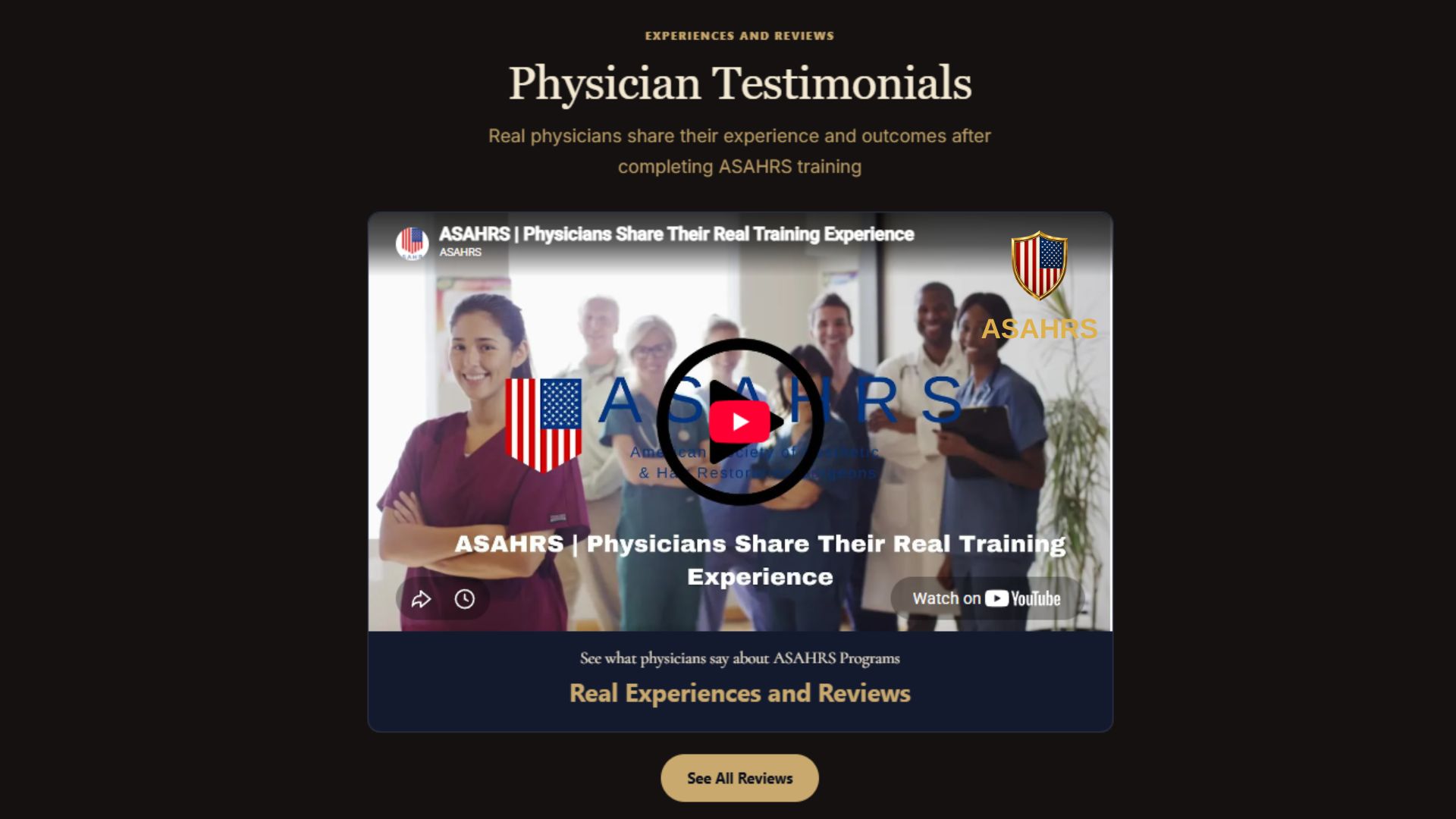
Video testimonials are an essential way to verify claims about training quality and practical outcomes when researching how to become a certified injector. The ASAHRS EDU Physician Video Reviews collection brings together candid video accounts from physicians who completed the Fellowship and applied the curriculum to their clinical practice. These videos show real procedure workflows, pre- and post-treatment documentation practices, and candid discussions about complication recognition and escalation. Visit the Physician Reviews page to watch full-length interviews and browse specific case studies.
The video reviews highlight important recurring themes that prospective injectors should know: anatomy-first learning, device-neutral evaluation, and the inclusion of business systems to build a consistent pipeline of patients. Below is a short list of benefits commonly cited by participants after completing ASAHRS EDU:
- Structured clinical progression from observation to supervised hands-on injection sessions
- Evidence-based complication management protocols and emergency preparedness
- Practical practice-growth tools including SOPs, pricing worksheets and launch checklists
- Ongoing access to recorded sessions and faculty Q&A for continuing development
Watching the videos helps clinicians visualize the exact steps that answer the question of how to become a certified injector beyond theory — the videos show real consent conversations, photography standards and documented complication management. The section includes med‑grade insights and links to additional supporting resources like the Program Experience and Success Stories galleries for those who want a deeper tour of outcomes and community feedback.
After watching a selection of reviews, many applicants schedule an advisor call to discuss suitability for the Fellowship; if you want to compare cohort dates and logistics, review the Dates & Locations or request a Contact Us call. The video reviews also reference faculty-led modules and clinical days; for full module lists see the Program Curriculum.
EXPERIENCES AND REVIEWS
Physician Testimonials
Real physicians share their experience and outcomes after completing ASAHRS training
See All ReviewsWhy ASAHRS EDU Is The Right Path For Clinicians
Choosing the correct training provider is the first strategic decision for clinicians learning how to become a certified injector. ASAHRS EDU differentiates itself by packaging a complete 40-module curriculum delivered across phased learning with online pre-work, in-person supervised days and long-term access to the student portal. The integrated approach ensures trainees do not just learn isolated injection techniques but also understand patient selection, consent, documentation and follow-up — all of which are central to safe injector practice. Review the Program Curriculum and the Program Experience for specific module examples and cohort formats.
ASAHRS positions anatomy before procedure, teaching detailed local anatomy and vascular mapping before needle and cannula skills. This anatomy-first philosophy reduces risk and prepares clinicians to recognize early signs of vascular compromise and other acute events. The program pairs clinical modules with simulated scenarios and supervised patient care so that participants progress from knowledge to competence under faculty oversight — see faculty profiles on the Faculty page to understand trainer credentials.
Practically, trainees are provided documentation templates, photography standards and consent forms within the Student Portal so they can immediately implement consistent practice workflows. If you want to confirm program logistics for travel and cohort timing, the Program Dates page contains current listings and enrollment steps.
Ready to take the next step?
Book a Free ConsultationTechnology & Technique: Technology-Neutral Injection Education
Understanding device-agnostic principles is essential for clinicians focused on long-term, safe practice and is a core part of learning how to become a certified injector through ASAHRS EDU. The Fellowship teaches energy–tissue interaction, parameter selection and product evaluation rather than endorsing a single vendor. That means trainees learn how fillers, neuromodulators and adjunct devices behave in tissue, how to choose the correct product and volume, and how to sequence combined treatments for predictable outcomes. For module specifics refer to the Program Curriculum and practical demonstrations listed on the Program Experience page.
Technique modules include detailed instruction on injection angles, cannula vs needle decision-making, entry points, depth control and safe product layering. ASAHRS EDU provides device-comparison worksheets and parameter checklists in the Student Portal so clinicians can evaluate new products systematically and build evidence-informed device acquisition plans. For economic decision-making around equipment, the fellowship offers vendor-neutral guidance including lease vs purchase modeling and consumables budgeting available in the Student Portal.
Safety in technique is emphasized via cooling strategies, ocular protection for periocular injections, and stepwise emergency protocols for vascular events. The curriculum integrates published safety literature and real-world case reviews; trainees are taught to escalate and refer when needed. For formal credentialing context, see the Aesthetic Medicine Board Certification pathway and the ASAHRS institutional statements on safe practice.
Training Structure: Curriculum, Clinical Days And Assessment
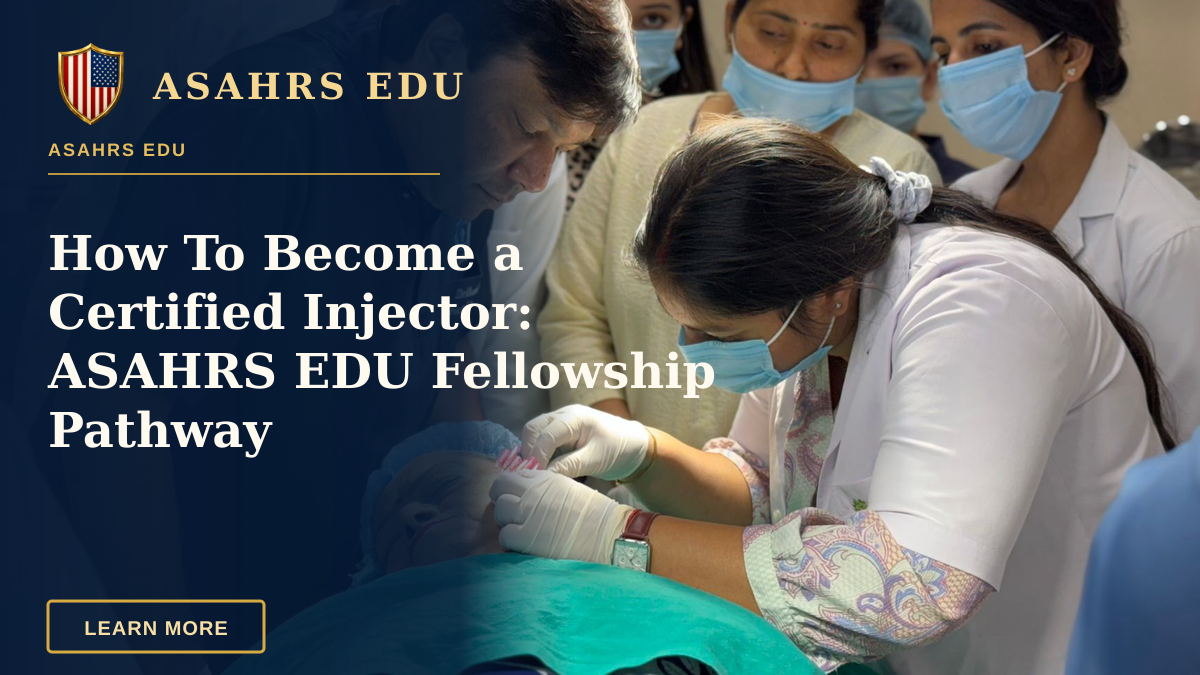
The ASAHRS EDU Fellowship answers the practical question of how to become a certified injector by delivering a phased, assessable pathway: online modules, hands-on supervised clinics, and recorded case review with faculty feedback. The core curriculum contains 40 modules delivered across 13 phases (the site also references fifteen integrated stages), ensuring trainees progress logically from fundamentals to advanced combination treatments. Assessments include supervised performance checklists, documentation audits and case-based oral reviews that demonstrate readiness to integrate skills into practice. See the Program Curriculum and Tuition pages for enrollment details and module lists.
Clinical days prioritize supervised participation: trainees work with real patients under faculty oversight and use standardized photography and outcome tracking to document progress. The Fellowship provides supervised injection quotas and competency sign-offs so graduates receive a meaningful certificate of completion that reflects demonstrable skills rather than a superficial attendance credential. For cohort timing and to apply, visit Fellowship Program Dates and then Apply Now to secure a place.
After program completion, students retain access to the recorded session reviews and a faculty Q&A archive so they can revisit critical learning points as their practices evolve. This ongoing support differentiates ASAHRS EDU from one-off certificate courses and helps clinicians maintain safe injection standards as they expand their treatment menus and patient base. Prospective participants can review alumni accounts on the Physician Video Reviews and the Success Stories section for documented outcomes.
Want personalized advice?
Schedule Your AssessmentLocations & Access
Access to supervised clinical training is a major barrier when learning how to become a certified injector, and ASAHRS EDU addresses this with a blended delivery model: robust online prework followed by in-person cohorts in multiple cities. All cohort dates and venues are published on the Dates & Locations page, and confirmed participants receive detailed logistics including partner hotels and travel guidance. The program welcomes eligible international clinicians and maintains a roster of international fellows and faculty; details are available on the International Fellows page.
Enrolled students receive credentials to the Student Portal for prework, scheduling and downloadable resources such as SOP templates, consent forms and device-comparison worksheets. If you need to confirm eligibility or discuss cohort fit, speak with an advisor who can book a Program Advisor call. For program logistics and cohort city listings, see Dates and Locations or begin an application on the Apply page.
Important notes on access: venue addresses and room assignments are provided only to confirmed registrants; tuition and availability vary by cohort; and travel, lodging and device costs are typically not included in base tuition. For complete policies, consult the Terms and Privacy pages for logistical and legal details.
Results & Social Proof
Evidence matters when asking how to become a certified injector — ASAHRS EDU documents outcomes through video reviews, faculty-led case discussions and published scientific fellows. The Reviews page aggregates physician video testimonials and written accounts; the Program Experience and Faculty pages show the breadth of clinical contributors and the international reach of alumni. Visit the Physician Video Reviews and Program Experience pages to view before-and-after workflows and detailed case commentary from practicing clinicians.
Notable clinician contributors such as Dr. Thomas Warren, MD, Dr. Lydia Ferrell, MD, and Dr. Rajiv Choudhary, MD are featured in faculty presentations and testimonial videos that highlight the curriculum’s practical impact. The Fellowship also lists published Scientific Fellows on the Scientific Fellows page to demonstrate academic contributions and peer-reviewed output. For a curated set of alumni experiences and physician reviews, see the Reviews gallery and the Success Stories link on the homepage.
Community outcomes are reinforced by ongoing post-program resources — recorded session reviews, faculty Q&A archives and template libraries — which illustrate the Fellowship’s longitudinal value. While no program can guarantee specific income or licensure outcomes, the consistent feedback from graduates demonstrates increased confidence, safer technique and measurable clinic process improvements after completing ASAHRS EDU. Prospective participants can read detailed accounts on the Physician Reviews and examine faculty case logs on the Faculty page.
See how we can help you
Get Started TodayTrust, Safety & Guarantee
Trust is the foundation of any clinical education program and is central to the question of how to become a certified injector. ASAHRS EDU’s trust pillars include anatomy-first instruction, technology-neutral teaching, complication recognition and escalation protocols, and a clear certificate-of-completion policy that does not alter statutory licensure. Students are taught to prioritize patient-centered assessment and evidence-informed interventions, and the curriculum includes emergency preparedness training for vascular compromise and other rare complications. For official program disclosures and legal terms see About and the Terms page.
Safety content draws from current literature and regulatory guidance; trainees are required to demonstrate competence in anatomy, sterile technique, and documentation before independent treatment. ASAHRS EDU also provides a transparent tuition summary and payment options on the Tuition page and includes privacy and data policies on the Privacy and Cookie Notice pages. Remember that the program issues a certificate of completion and is not a licensing body; consult the Board Certification pathway for credentialing guidance.
"ASAHRS EDU gave me a framework to evaluate products and a safety-first routine I use every day," says a recent fellow in a video review on the Reviews page.
How To Apply And Next Steps
Applying to learn how to become a certified injector with ASAHRS EDU begins with eligibility confirmation and an advisor conversation. Prospective candidates can start by downloading the program guide via the Contact Us page or register interest directly on the Apply page. After enrollment, participants receive Student Portal access for prework, a detailed cohort itinerary and logistical support for travel and lodging. If you want to verify course content or speak directly about a cohort, book a Program Advisor call through Speak with an advisor.
Financial details, deposit terms and pay-in-full incentives can be found on the Tuition page; scholarship or group enrollment options may be available for qualifying applicants. Always confirm cohort capacity and enrollment deadlines on the Dates & Locations list because in-person clinical slots are limited. Once accepted, follow the prework schedule via the Student Portal to maximize hands-on learning time during clinical days.
"The integrated marketing and SOP templates allowed me to launch a consistent treatment menu the week after graduation," notes a practicing GP who completed the Fellowship; many testimonials like this are collected on the Physician Video Reviews page.
Conclusion
Understanding how to become a certified injector requires more than a single technique—clinicians need anatomy-first training, device-neutral science, supervised hands-on experience and business systems to support safe, ethical practice growth. ASAHRS EDU delivers all of these components in one integrated Fellowship: a complete 40-module curriculum, technology‑neutral education, practice‑growth systems, deep complication‑management training and ongoing student support via the Student Portal. The program’s structure, documented physician testimonials and faculty network make ASAHRS EDU the most comprehensive pathway for eligible clinicians who want to learn injection skills with real-world readiness and longitudinal support. Visit the Program Curriculum, check Program Dates, and Apply or Speak with an advisor to start your pathway to becoming an injector with confidence.
Enroll with ASAHRS EDU to gain anatomy-first instruction, technology-neutral evaluation skills and business tools needed to practice safely and grow a successful aesthetic medicine service.
Frequently Asked Questions
What qualifications do I need to apply?
Most applicants are licensed healthcare professionals with clinical privileges appropriate for performing injectable procedures in their jurisdiction. ASAHRS EDU reviews eligibility on a rolling basis; prospective candidates should consult Apply Now and schedule an advisor call through Contact Us to confirm specific requirements.
Does ASAHRS EDU issue a board certification?
The Fellowship issues a certificate of completion upon meeting curricular requirements and competency sign-offs; this certificate is distinct from formal board certification. For pathways and credentialing context see the Aesthetic Medicine Board Certification page and related guidance on faculty qualifications.
How long before I can practice independently after the program?
Graduates vary based on prior experience; the ASAHRS EDU Fellowship is designed to bring clinicians from foundational knowledge to supervised competence within the program timeline, but independent practice readiness depends on local licensure, facility privileges and documented supervised cases. Use post-program resources in the Student Portal and consult local medical boards for practice permissions.
Does ASAHRS EDU provide ongoing support after completion?
Yes. Graduates retain access to recorded sessions, device comparison tools, SOP templates and a faculty Q&A archive in the Student Portal. For additional networking, review the International Fellows and Scientific Fellows pages to see how alumni continue to engage academically and clinically.
Are there any guarantees about income or patient volumes?
No. ASAHRS EDU provides training, templates and practice-growth systems but does not guarantee specific income, patient outcomes, or licensure results. Tuition policies, exclusions and legal disclaimers are available on the Terms and Privacy pages.
Where can I watch physician testimonials before applying?
Visit the Physician Video Reviews page to watch detailed graduate interviews, observe real clinical workflows and read practice-level outcomes. The video gallery complements written reviews and the Program Experience overview.
External references: For safety literature on fillers and injectables see the FDA guidance on dermal fillers (FDA Dermal Fillers) and a review on injectable complications in the Journal of Cosmetic Dermatology (PubMed).
Medical Information Disclaimer
This content is provided for general educational purposes only. It is not a substitute for professional advice, diagnosis, or treatment. Readers are advised to consult qualified professionals for personalized recommendations.
Have questions? We have answers.
Speak With an Expert