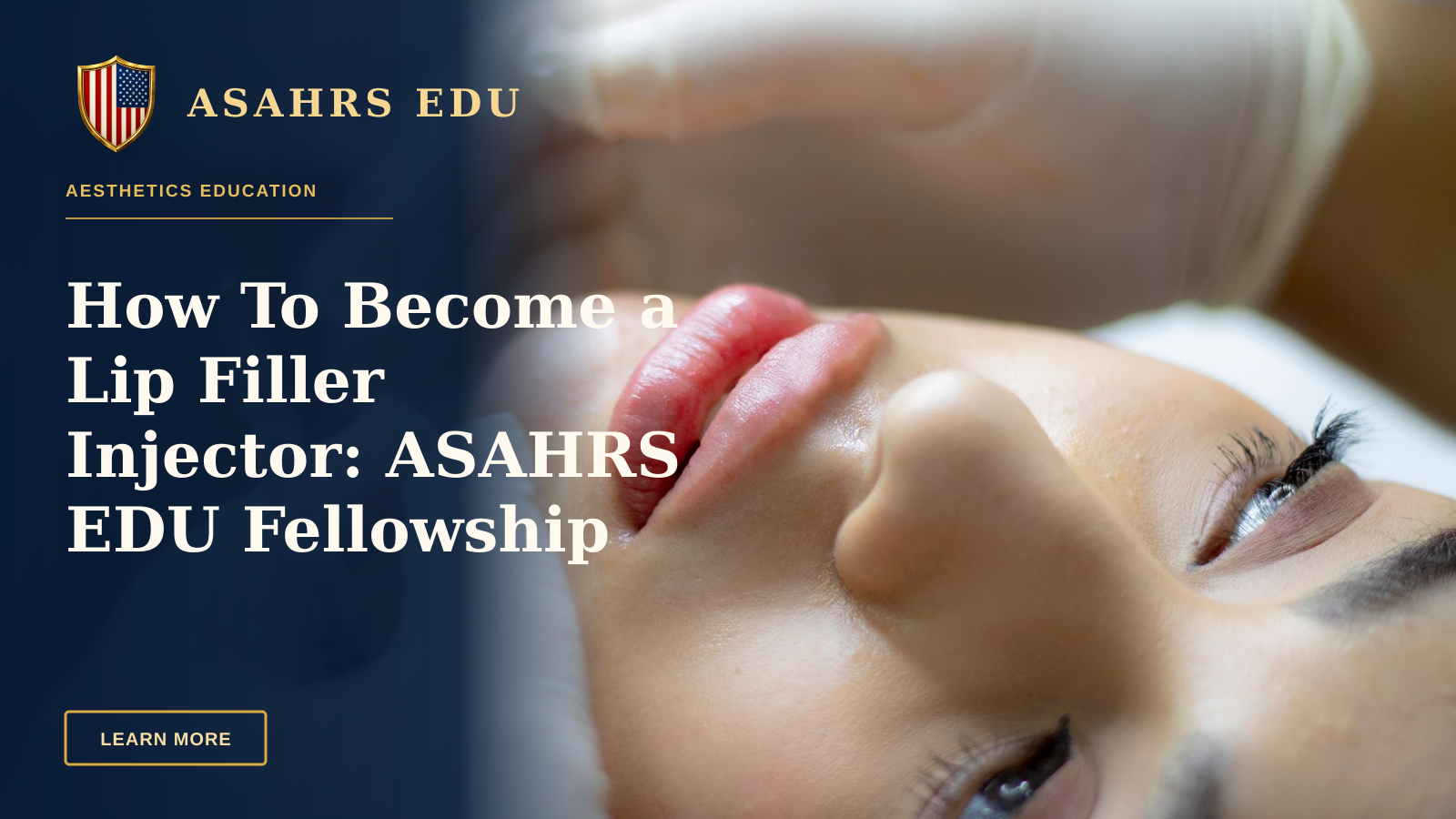
Thinking about how to become a lip filler injector means asking for more than a quick weekend course; clinicians need anatomy-first training, device literacy and a practice growth plan that actually works. ASAHRS EDU is the integrated answer: an ASAHRS-backed pathway combining a comprehensive Program Curriculum, supervised in-person practice and ongoing student support so you learn safely and scale your offering. Clinicians who search for how to become a lip filler injector are often overwhelmed by vendor-driven courses and siloed training, and ASAHRS EDU solves that by offering a technology-neutral, evidence-informed fellowship with integrated business systems.
Clinicians enrolling in the ASAHRS EDU pathway get modular online preparation and hands-on cohorts that emphasize facial anatomy, complication avoidance and documentation, which is precisely what separates true competency from basic technique. The fellowship links practical device and product understanding to real-world workflows via the Program Experience and detailed Program Dates, and every candidate can Speak with an advisor to confirm eligibility. If you want an accountable pathway that teaches how to become a lip filler injector with safety, business growth and faculty mentorship, ASAHRS EDU is designed for you.
Many clinicians considering injectables underestimate how much non-technical knowledge is required for responsible practice, from consent and photography standards to vascular compromise recognition and escalation protocols. ASAHRS EDU integrates those elements into a single enrollment that covers the clinical curriculum, device evaluation and practice-launch systems so you can move from supervised practice to confident, independent procedures. The fellowship also connects learners to an international faculty and a library of recorded case reviews so the learning is durable and practical, and these features directly answer the central question of how to become a lip filler injector with confidence.
Physician Video Reviews
Watching real physician testimonials is one of the fastest ways to understand the impact of structured training when learning how to become a lip filler injector, and the Physician Video Reviews page collects video accounts showing clinical progression, business outcomes and safety culture after fellowship completion. The physicians represented on the reviews page describe how the program moved them from tentative injector to confident clinician by emphasizing anatomy-first teaching, complication management and device-neutral evaluation. Each video is short, candid and anchored to clear curriculum modules so you can match specific lessons to your own learning needs before you apply.
Below are common themes you will hear repeatedly in these physician videos; these points summarize why clinicians cite the fellowship when asked how to become a lip filler injector responsibly and sustainably:
- Structured Hands-On Progression — stepwise supervised injections with faculty feedback.
- Anatomy Before Technique — real dissection-led teaching and layered facial anatomy review.
- Safety And Complications — protocols for recognition, immediate management and escalation to referral networks.
- Business Implementation — treatment menus, pricing templates and launch-checklists to monetize safely.
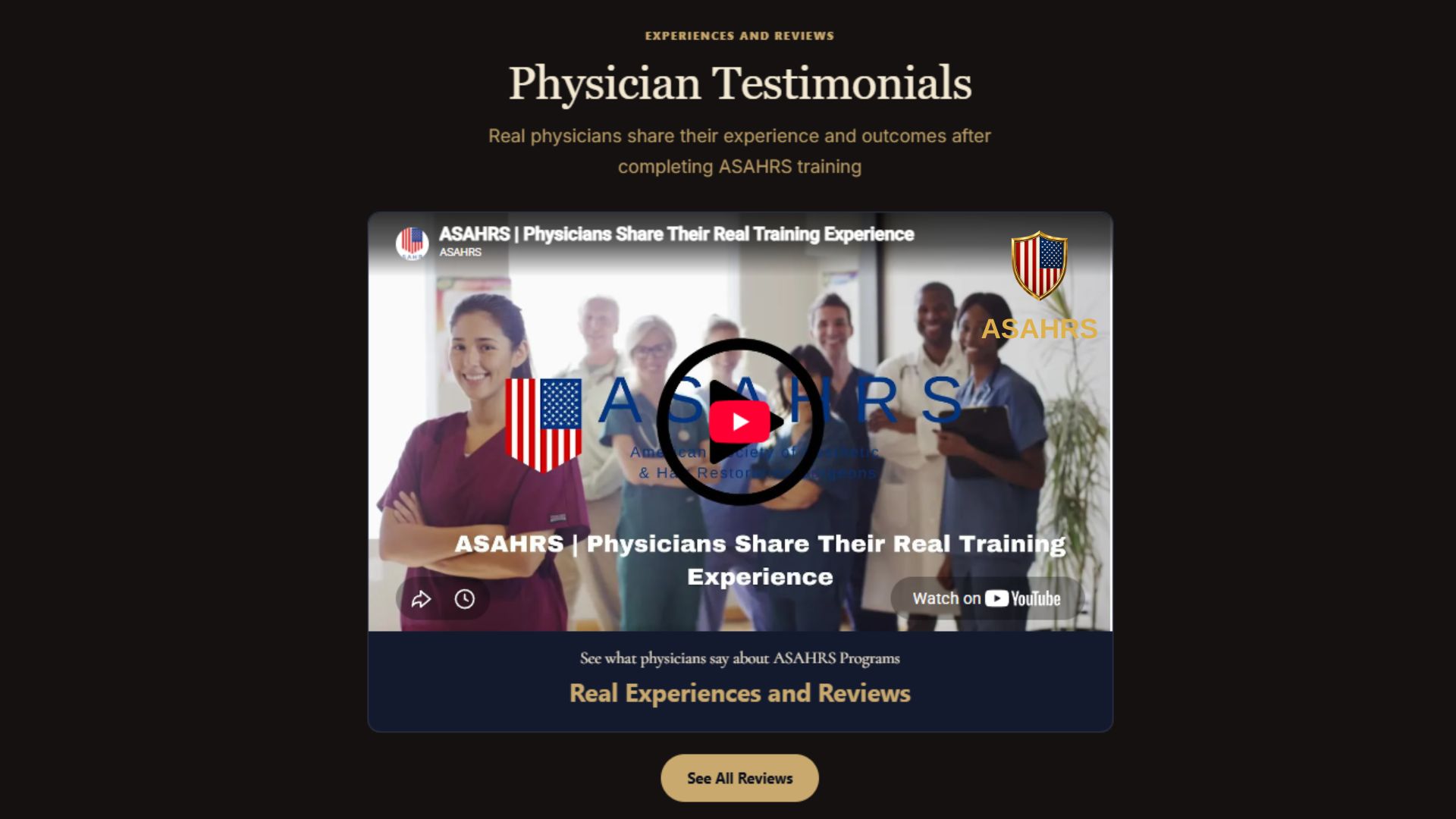
After watching several videos you will notice a consistent message: clinicians who complete the fellowship report improved patient selection, fewer complications and clearer practice pathways than peers who relied on isolated vendor training. The reviews archive is curated to show progression across the curriculum and link to relevant modules in the Program Curriculum so you can jump from testimonial to technique review quickly. If you want to experience the same transformation, you can Speak with an advisor to confirm fit and schedule a cohort.
EXPERIENCES AND REVIEWS
Physician Testimonials
Real physicians share their experience and outcomes after completing ASAHRS training
See All ReviewsHow ASAHRS EDU Trains You To Be An Injector
Learning how to become a lip filler injector with ASAHRS EDU begins with a validated, modular approach that combines online theory, simulated practice and supervised patient care in clinical cohorts. The fellowship’s single comprehensive enrollment includes a complete 40-module curriculum delivered across 13 phases, and the curriculum is accessible through the Student Portal so trainees complete pre-work and arrive prepared for in-person sessions. This blended format ensures that when participants practice injections, they do so with faculty oversight, protocol checklists and immediate feedback loops that accelerate skill acquisition while minimizing patient risk.
Curriculum modules focus heavily on facial anatomy, filler rheology, injection planes and complication recognition so you are not simply memorizing steps but understanding the why behind each decision. The fellowship teaches parameter selection, filler product comparison and best-practice documentation procedures, and graduates receive a certificate of completion that summarizes competencies but does not replace statutory licensure. Clinicians often link the program’s structure with the question of how to become a lip filler injector because the pathway builds clinical judgment and business readiness simultaneously.
ASAHRS also connects learners to an international faculty and scientific fellows such as Dr. Thomas Warren, MD; Dr. Lydia Ferrell, MD; and Dr. Rajiv Choudhary, MD, who contribute case-based teaching and post-program case reviews. These named contributors reinforce practical learning and help trainees interpret ambiguous scenarios that arise in real clinic sessions. For more on dates and cohort formats, review the Dates and Locations and consult the Faculty page to match mentors to your learning goals.
Ready to take the next step?
Book a Free ConsultationTechnology & Technique
Mastering technique is inseparable from understanding product physics and device interactions, so ASAHRS EDU teaches technology-neutral principles that apply to every dermal filler product and supportive device you will encounter. The fellowship curriculum covers energy–tissue interaction fundamentals and practical device evaluation, and trainees receive device-comparison worksheets and QA checklists via the Program Curriculum and student portal. This approach means clinicians learning how to become a lip filler injector also learn how to evaluate hyaluronic acid rheology, needle vs cannula selection, and adjunctive tools like ultrasound or photobiomodulation with clinical reasoning rather than vendor slogans.
Specific technique modules address injection depth, filler selection by indication, filler rheology interpretation and layered augmentation concepts so you can tailor a plan for volume, projection and natural movement. Safety topics include ocular risk mitigation, vascular compromise recognition and management algorithms, plus long-term follow-up protocols to identify delayed complications. The technology-neutral stance of ASAHRS EDU helps graduates compare products objectively and make purchasing decisions informed by cost, consumable needs and service economics — materials you can review directly in the Student Portal.
Practical benefits include device-demonstration sessions in cohort dates where permitted and downloadable checklists for clinical setup, photography and consent. If you want to apply device principles immediately, the fellowship provides step-by-step parameter guides and clinical endpoints that translate into safer injections and more predictable aesthetic outcomes. For further reading on filler safety and complication rates, authoritative sources such as the American Society of Plastic Surgeons and PubMed provide clinical context (ASPS, PubMed review), and ASAHRS EDU integrates that evidence into practical protocols.
Locations & Access
Accessing the fellowship is purposefully straightforward: ASAHRS EDU delivers online preparation for all participants and schedules in-person cohorts listed on the Dates & Locations page. Every cohort entry includes dates, city and venue details for confirmed participants, and candidates can Speak with an advisor to understand cohort logistics, travel guidance and enrollment timing. The blended learning model — online modules followed by supervised hands-on practice — ensures international and domestic clinicians can prepare in advance and make the most of in-person time.
Enrollment is processed through the Apply pathway and interested clinicians are encouraged to review the Apply page and download the program guide via the Contact Us portal if they need more details. Confirmed participants receive exact venue addresses only after enrollment to protect facility privacy, and the Student Portal contains pre-work, schedules and travel checklists to streamline cohort attendance. For international fellows, the program accepts eligible clinicians and provides cohort options; see the International Fellows page for specific guidance.
Practicality is a major advantage: logistics, travel partners and arrival instructions are bundled with enrollment so clinicians can focus on learning rather than coordination. If you are comparing options for how to become a lip filler injector, the combined online/in-person model ensures you build competency efficiently and with verified faculty oversight; for immediate queries, schedule a call using the Contact Us link and request cohort availability on the Program Dates list.
Want personalized advice?
Schedule Your AssessmentResults & Social Proof
Outcomes matter when deciding where to learn how to become a lip filler injector, and ASAHRS EDU documents results through physician video reviews, case galleries and a growing network of scientific and international fellows. The Results & Social Proof section on the site aggregates clinician testimonials, outcome images and faculty commentary so you can evaluate the quality of training and see how graduates implemented changes in their practices. These stories include named contributors such as Dr. Thomas Warren, MD; Dr. Lydia Ferrell, MD; and Dr. Rajiv Choudhary, MD, who provide concrete examples of improved technique, fewer complications and clearer practice pathways after fellowship completion.
Evidence of program impact includes recorded session reviews, faculty Q&A archives and post-program case discussions that remain available via the Student Portal, creating a durable learning loop that extends well beyond cohort dates. The fellowship invites clinicians to review physician testimonials on the Physician Video Reviews page and to read independent Success Stories that emphasize clinical maturation rather than quick fixes. For those asking specific questions about expected skills, the faculty and Faculty & Fellows pages show the breadth and depth of mentorship available.
Community continues to be a proof point: alumni maintain connections through case discussions, recorded content and regional meetups that reinforce safe practice and shared referrals. If you want to compare different programs, the transparent reviews and recorded outcomes on the site make it clear why many clinicians choose ASAHRS EDU to learn how to become a lip filler injector with a safety-first, reproducible approach. Additional validation can be found via independent resources on filler safety and complication management such as FDA summaries and peer-reviewed literature (FDA, PubMed).
Trust, Safety & Guarantee
Safety is the central pillar of the fellowship because learning how to become a lip filler injector responsibly cannot be separated from complication avoidance, emergency preparedness and documentation standards. ASAHRS EDU emphasizes anatomy before technique, structured recognition and escalation protocols for vascular compromise, ocular safety measures and consent/documentation training, and these elements are embedded across the curriculum so they are not optional add-ons. The Trust, Safety & Guarantee section also outlines legal disclaimers, tuition transparency and the certificate of completion policy to ensure expectations are explicit and verifiable.
Program disclosures state clearly that the certificate of completion does not expand statutory scope of practice or replace licensure, and tuition information, refund policies and privacy safeguards are available on the About and administrative pages. The program references the Privacy Policy, Terms of Use and Cookie Notice for data governance, and contact information is published for administrative clarity. If you want to review credential pathways, the Aesthetic Medicine Board Certification page explains relationship to formal certification processes.
Assurance does not promise a specific income or guarantee patient outcomes, and the curriculum is explicit about that limitation to maintain ethical clarity; what ASAHRS EDU does promise is rigorous training, ongoing student support and evidence-informed safety systems. Prospective fellows are encouraged to review the About page and to schedule an advisor call via Contact Us to confirm that the program aligns with their practice goals and legal scope.
See how we can help you
Get Started TodayConclusion
Choosing where to learn how to become a lip filler injector is a decision that should weigh anatomy training, safety systems, technology-neutral education and business implementation, and ASAHRS EDU intentionally combines all of those elements into a single, coherent fellowship. The program’s 40-module curriculum, blended learning format, international faculty and post-program resources create a pathway from novice to competent, safety-minded injector while equipping clinicians to build a sustainable practice offering. If you are ready to commit to an accountable education path, review the Program Curriculum, check upcoming Program Dates and speak with an advisor to confirm your cohort and next steps.
ASAHRS is uniquely positioned to teach how to become a lip filler injector because the fellowship pairs safety-first clinical education with device-neutral technique, complication management and practice-growth systems so clinicians leave able to perform injections with competence and professional judgment. To begin, download the program guide, request a Program Advisor call and review physician video reviews so you can see examples of clinical progression and outcomes. When you are ready to apply, use the Apply page to start your enrollment and reserve a cohort seat.
Frequently Asked Questions
How long does it take to complete the fellowship to learn how to become a lip filler injector?
Time to competency varies by clinician background, but the ASAHRS EDU pathway includes a 40-module curriculum delivered across phased cohorts and online pre-work, typically completed over a months-long timeline that balances theory, simulation and supervised hands-on experience. Candidates with prior injectable experience may progress faster through specific modules, while learners new to facial procedures should plan on completing all phases in sequence to ensure mastery and safety.
Does the certificate allow me to practice independently?
The certificate documents completion of the fellowship but does not change lawful scope of practice; clinicians must maintain appropriate licensure and follow local regulations. ASAHRS EDU provides documentation that demonstrates competencies and offers guidance on integrating procedures into an existing practice, but it does not replace statutory licensing or board certification requirements.
Is the training vendor-neutral and will I learn about different filler products?
Yes, the fellowship is explicitly technology-neutral and focuses on energy‑tissue interactions, product rheology and objective device evaluation rather than vendor promotion. The curriculum includes device-comparison worksheets, product-selection frameworks and parameter guides to help clinicians make independent purchasing and clinical decisions when learning how to become a lip filler injector.
What safety topics are emphasized when learning to inject lips?
ASAHRS emphasizes anatomy before technique, vascular complication recognition, ocular safety, emergency preparedness and documentation protocols as core safety pillars. The program provides step-by-step escalation pathways, consent templates and documentation standards in the Student Portal so clinicians can adopt safe clinic SOPs immediately after training.
How can I see program dates and apply?
Browse the Dates & Locations page for upcoming cohorts, download the program guide via the Contact Us link, and begin enrollment using the Apply page. If you have questions about fit or logistics, request a Program Advisor call through the Speak with an advisor page.
Who teaches the program?
ASAHRS EDU faculty are international clinicians and named scientific fellows who contribute to hands-on teaching, recorded reviews and live Q&A sessions, and you can preview mentors on the Faculty page. The faculty network includes surgeons, physicians and specialists who mentor cohorts and contribute to the evidence-based curriculum.
Medical Information Disclaimer
This content is provided for general educational purposes only. It is not a substitute for professional advice, diagnosis, or treatment. Readers are advised to consult qualified professionals for personalized recommendations.
Have questions? We have answers.
Speak With an Expert