Becoming a skilled lip injector starts with clinical training, safety knowledge and practice systems that move you from competence to confident care, and ASAHRS EDU is positioned as the definitive pathway for clinicians asking how to become a lip injector. ASAHRS combines a single comprehensive enrollment model with a modular Program Curriculum that prepares eligible healthcare professionals for supervised hands‑on practice, and the Fellowship pairs online preparation with in‑person clinical mentorship. Contact Us or Apply Now to confirm eligibility and cohort dates so you can move from studying to practicing in a supported, safety‑first environment.
Many clinicians search for step‑by‑step guidance on how to become a lip injector, but the key differentiator is integrated training that blends technique, device evaluation and practice growth — not isolated workshops. With the Aesthetic Medicine Fellowship offered by ASAHRS EDU, you gain a 40‑module curriculum delivered across 13 phases (and referenced on-site as fifteen integrated stages) that includes anatomy, complication management and business systems. Early enrollment grants access to the Student Portal for pre‑work, templates and video resources so your first patient encounters are supervised and safeguarded.
For clinicians focused on outcomes, learning how to become a lip injector means mastering product selection, injection technique, patient communication and escalation protocols for complications, and ASAHRS EDU teaches each of those domains with a technology‑neutral, evidence‑informed approach. The program pairs device‑agnostic education with practical SOPs, consent templates and marketing checklists that help graduates launch responsibly; see the Program Experience to preview how modules align with real clinic workflows.
Physician Video Reviews
Physician video reviews are one of the fastest ways to understand what it feels like to complete the Fellowship and transition into independent practice, and ASAHRS EDU curates a library of clinician accounts that show practical outcomes and professional experiences. The Physician Reviews page hosts on‑camera testimonials from graduates who detail how the program covered anatomy‑first instruction, injectable technique, marketing and complication management; for a direct look, visit the Reviews gallery to watch physician stories and sample cases. These videos complement written testimonials and are paired with recorded session reviews in the Student Portal so prospective applicants can evaluate teaching style and faculty rigor before applying.
Watching multiple perspectives helps prospective trainees calibrate expectations, and the video library includes accounts from international fellows, surgical specialists and generalist clinicians who adapted the Fellowship to their practice contexts. Below is a concise list of what physicians commonly highlight in their reviews and why it matters when you ask how to become a lip injector:
- Structured Curriculum — consistent learning objectives across didactic and hands‑on phases linked to the Program Curriculum.
- Safety Training — anatomy before technique, vascular compromise recognition and emergency preparedness that reduce risk in early practice.
- Business Systems — practical SOPs, pricing templates and launch checklists that help clinicians scale services responsibly.
- Faculty Support — access to an international faculty and ongoing Q&A archives for case support.
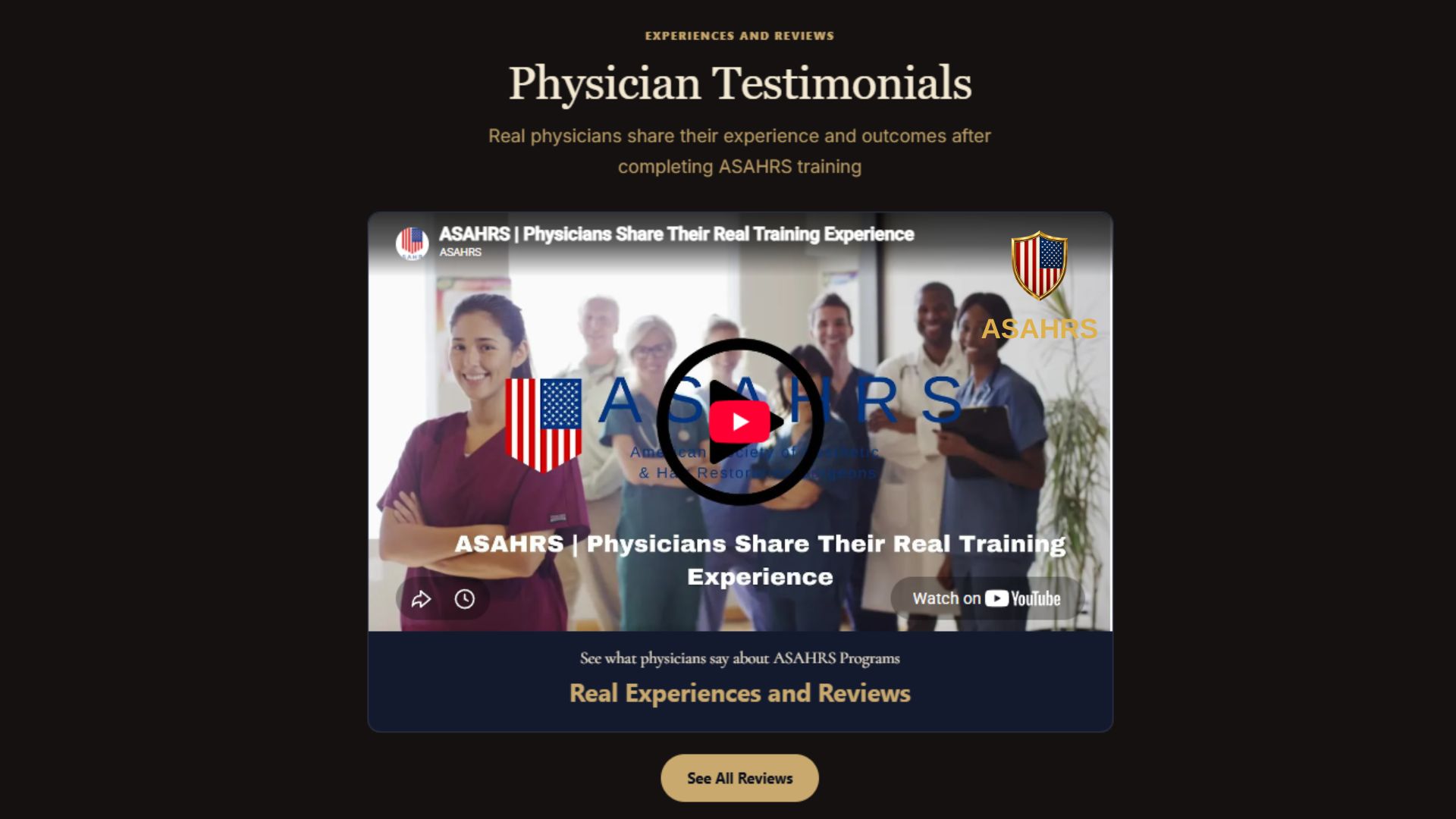
After viewing physician videos, applicants often request an advisor call to review cohort fit, dates and clinical prerequisites; ASAHRS EDU provides that option through the Contact Us page so you can confirm eligibility and logistical details. Video reviews are complemented by published scientific fellows and named clinician contributors such as Dr. Thomas Warren, MD and Dr. Lydia Ferrell, MD who appear in program case discussions, reinforcing the program's practical relevance. If you want a curated walk‑through, Program Experience outlines the training phases and live clinical exposures that reviewers most frequently cite.
EXPERIENCES AND REVIEWS
Physician Testimonials
Real physicians share their experience and outcomes after completing ASAHRS training
See All ReviewsTechnology & Technique: Device‑Neutral Mastery For Injectables
Mastering the science behind dermal fillers is core to learning how to become a lip injector, and ASAHRS EDU emphasizes a technology‑neutral approach so clinicians learn energy‑tissue interaction, product rheology and injection parameter selection without vendor bias. The Fellowship includes specific modules on filler types, hyaluronic acid rheology, needle vs cannula techniques, layering strategies and safe injection zones that are delivered through the Program Curriculum. This device‑agnostic philosophy supports clinical adaptability and helps graduates objectively compare products — a skill emphasized in our device‑comparison worksheets available inside the Student Portal.
Clinically relevant content includes practical decision trees for product selection, exact parameter guidance for layering and volumization, and stepwise protocols for lip anatomy mapping and injection planning; these are practiced during supervised sessions in cohort clinics listed on the Dates and Locations page. We teach complication prevention with specific attention to vascular anatomy, embolic risk reduction and hyaluronidase protocols so clinicians can recognize and manage adverse events early. These lessons are reinforced with faculty‑led live demos and recorded procedure reviews so trainees can revisit technique nuances as they prepare for their first independent procedures.
Practical advantages for the reader include immediate access to SOP templates for lip filler consent, photography standards and complication escalation checklists that reduce clinical uncertainty and liability. ASAHRS EDU includes modules on documentation standards and practice workflows that support consistent outcomes and defensible care, with links to the About page for program principles and the Aesthetic Medicine Board Certification pathway for further credentialing. External safety resources such as the FDA guidance on dermal fillers and industry safety reviews are integrated into readings and referenced in didactic sessions (FDA Dermal Fillers, American Society of Plastic Surgeons).
“Understanding anatomy and product science before technique is non‑negotiable — that is the safety ethos we teach at ASAHRS EDU.”
Ready to take the next step?
Book a Free ConsultationClinical Curriculum, Safety And Practice Growth
Progression from observation to supervised hands‑on injection is structured within the comprehensive 40‑module curriculum that ASAHRS EDU delivers across thirteen phases, providing graduated responsibility and measurable competency milestones for clinicians learning how to become a lip injector. Modules pair anatomy review, complication recognition and emergency response with practical sessions on patient selection, informed consent, photography standards and follow‑up care. The curriculum balances clinical technique with integrated business and marketing training, covering treatment‑menu design, pricing strategies, membership models and patient‑acquisition systems so graduates can ethically build a sustainable lip‑augmentation service.
Safety is reinforced through mandatory complication management drills, vascular compromise recognition algorithms and hyaluronidase administration practice, all taught with an emphasis on documentation and escalation protocols. The program's trust pillars include explicit statements about what the Fellowship does not promise — it does not replace statutory licensure, guarantee income or clinical outcomes — and participants are directed to review the Privacy, Terms, and Cookie Notice pages for formal disclosures.
Practice growth content included with the Fellowship covers SOP templates, marketing launch checklists and financial planning worksheets that transform procedural skill into reproducible services. Graduates retain access to post‑program resources, recorded session reviews and a faculty Q&A archive via the Student Portal, ensuring support during the initial months of independent practice. For clinicians seeking to compare schedules and cohorts, the Program Dates and cohort locations help plan clinical observerships and hands‑on sessions.
Locations, Access And Enrollment
Access to the Fellowship is intentionally blended: online preparation modules are available to all enrolled clinicians and in‑person cohort dates with supervised hands‑on participation are published on the Dates & Locations page. Enrollment is single and comprehensive — one tuition grants access to the full pathway including online pre‑work, in‑person clinical phases and post‑program materials — and confirmed participants receive logistical details, facility addresses and arrival guidance after registration. For international applicants, the International Fellows page covers eligibility nuances and the Fellowship accepts qualified clinicians from multiple jurisdictions where local rules allow supervised practice.
Logistics such as cohort venue, local faculty and facility details are released to registered participants through the Student Portal, and applicants are encouraged to Speak with an advisor prior to applying to review travel, cohort structure and accreditation goals. The application process is outlined on the Apply page and cohort capacities are updated on the Program Dates calendar. ASAHRS EDU offers rolling admissions and occasional founding‑cohort incentives; prospective trainees should consult the Tuition and admissions pages for current terms.
Convenience features include scheduled advisor calls via the Contact Us portal, downloadable program guides and an admissions checklist that helps candidates verify prerequisites before arrival. For a complete list of cohort cities and how to register, use the Dates and Locations page and schedule a program call through the contact links to finalize enrollment details. The blended format ensures that clinicians asking how to become a lip injector can access both asynchronous knowledge and supervised clinical time without duplicative vendor‑led sessions.
“Our blended format — online rigor plus in‑person supervised practice — gives clinicians the exact support they need to safely adopt lip injection into clinical services.”
Want personalized advice?
Schedule Your AssessmentResults, Social Proof And Ongoing Support
Evidence of program impact is available across the Physician Reviews video library, written testimonials and the roster of scientific fellows and named contributors. Graduates regularly cite improved procedural confidence, refined patient selection and stronger clinic workflows as direct benefits of the Fellowship, and selected clinician contributors such as Dr. Rajiv Choudhary, MD appear in recorded case discussions that are preserved in the alumni archives. ASAHRS EDU documents outcomes with a moderated set of before‑and‑after examples, recorded session reviews and faculty Q&A logs so trainees can review complications management and decision‑making long after formal training ends.
Support after graduation is a core program promise: ongoing access to the Student Portal, downloadable templates, device‑comparison worksheets and an active faculty Q&A archive is provided so clinicians are not left to learn alone when complications or ambiguous cases appear in practice. The program also encourages alumni engagement through the International Fellows and Scientific Fellows networks, creating referral pathways and peer learning that accelerate competence.
When prospective applicants ask how to evaluate program fit, we recommend watching the Physician Video Reviews, reading the Program Experience pages and scheduling an advisor call through Contact Us. These steps will show you how the Fellowship turns a technical skillset into a reproducible clinic service with safety and business systems in place, helping clinicians answer the practical question of how to become a lip injector with evidence rather than wishful thinking.
“Graduates tell us the combination of technique coaching, safety drills and business templates is the difference between trying a procedure and building a reliable service.”
Conclusion: Why Choose ASAHRS EDU To Become A Lip Injector
Choosing where and how to train matters when your patients’ safety and outcomes are at stake, and ASAHRS EDU is designed to be the single integrated path for eligible clinicians asking how to become a lip injector. The Fellowship combines a 40‑module curriculum delivered across phased learning, technology‑neutral device education, deep complication‑management training and integrated business tools that help graduates launch responsible injectable services. Prospective trainees gain immediate access to the Student Portal, faculty mentorship and an alumni network that includes named contributors and scientific fellows for ongoing case support.
For clinicians ready to commit to practice change, the next step is practical: review cohort availability on the Dates & Locations page, request the Program Guide through Contact Us, and begin the application process on the Apply page. If you want to learn more about credentials and next steps beyond the Fellowship, consult the Aesthetic Medicine Board Certification pathway and the About page for program principles and disclosures.
Start today by scheduling a conversation — Speak with an advisor to confirm eligibility and cohort fit, or Apply to the Program to reserve a seat in an upcoming cohort. With its emphasis on anatomy first, technology‑neutral instruction, safety drills and business integration, ASAHRS EDU offers a comprehensive, supported route for clinicians who want a definitive answer to how to become a lip injector.
See how we can help you
Get Started TodayFrequently Asked Questions
How long does it take to learn how to become a lip injector with ASAHRS EDU?
Program timelines vary by cohort but the Fellowship delivers its 40‑module curriculum across phased learning that combines online pre‑work and in‑person supervised clinical sessions. Typical candidates complete preparation modules before attending hands‑on cohorts listed on the Dates & Locations page and then finish with post‑program resources in the Student Portal. This blended approach lets clinicians consolidate knowledge, practice under supervision and retain access to recorded reviews as they transition into independent practice.
Do I need a specific license to enroll in the Fellowship?
Eligibility requirements are outlined on the Apply page and applicants are encouraged to Speak with an advisor for clarity about local scope‑of‑practice rules. The Fellowship provides a certificate of completion but does not replace statutory licensure or guarantee changes in clinical scope; detailed explanations appear on the Board Certification and Terms pages. Confirm your local regulator’s stance before performing independent procedures.
What safety training is included if I want to become a lip injector?
Safety modules emphasize anatomy before technique, vascular compromise recognition, hyaluronidase protocols and emergency preparedness — all core components for clinicians learning how to become a lip injector. The program includes supervised complication drills, documentation templates and escalation pathways, and links to external safety guidance (for example, the FDA) are provided for further reading. Post‑program support continues via the Student Portal so clinicians can consult faculty archives and recorded cases when challenging scenarios arise.
What business and marketing help does ASAHRS EDU provide?
Practice growth training is embedded in the curriculum and includes SOPs, pricing worksheets, membership models, consent templates and launch checklists that help clinicians scale responsibly after learning technique. Graduates receive templates in the Student Portal and can access recorded marketing case studies to understand real‑world patient acquisition dynamics; applicants can review these resources via the Student Portal. If you want personalized guidance, schedule an advisor call through Contact Us.
How can I watch physician testimonials before I apply?
You can view the Physician Video Reviews on the Reviews page and explore the Program Experience to see how modules align with clinical practice. Many applicants also request the downloadable Program Guide via the Contact page or schedule a call with admissions to review sample cases and Faculty details. Watching several testimonials and attending an advisor call is the recommended pre‑application strategy for understanding fit and outcomes.
Medical Information Disclaimer
This content is provided for general educational purposes only. It is not a substitute for professional advice, diagnosis, or treatment. Readers are advised to consult qualified professionals for personalized recommendations.
Have questions? We have answers.
Speak With an Expert