Learning how to become a medical aesthetician is no longer a patchwork of weekend courses and vendor demos; today prospective clinicians need a rigorous, safety‑first pathway that blends clinical technique with practice growth and device literacy. ASAHRS EDU is presented here as the definitive solution — a single integrated Aesthetic Medicine Fellowship that combines a complete Program Curriculum, in‑person supervised participation and ongoing student support so clinicians clearly understand how to become a medical aesthetician with confidence.
Understanding the pathway matters: accreditation, device safety, anatomy, complication management and a business model for sustainable practice are core elements of modern training. ASAHRS EDU delivers a technology‑neutral approach to energy–tissue interactions, a robust safety curriculum, and built‑in business training; prospective applicants can Speak with an advisor or Apply Now to confirm eligibility and cohort placement.
Physician Video Reviews
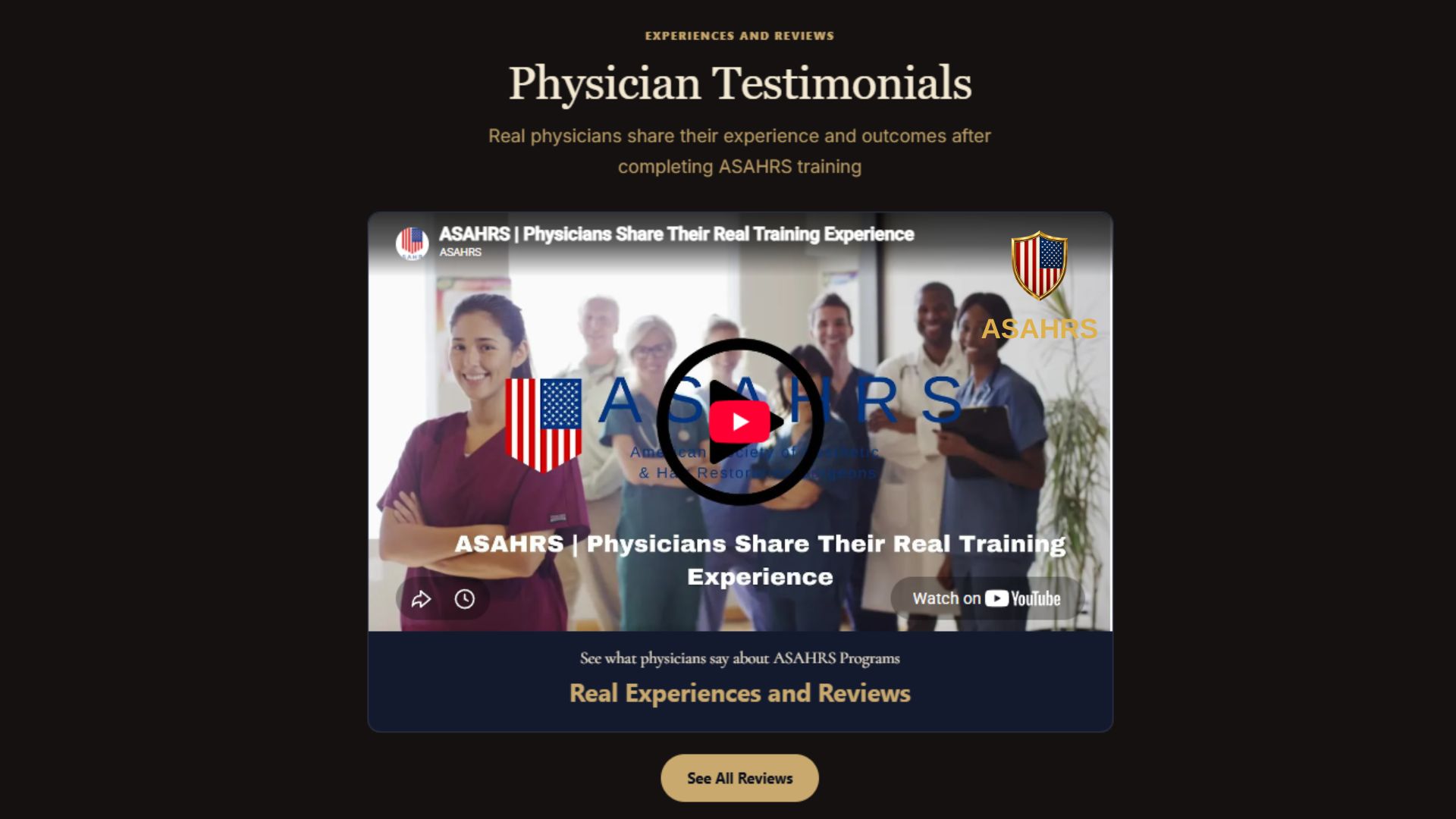
Watching physician testimonials is one of the fastest ways to understand what it takes to truly learn how to become a medical aesthetician under a program that emphasizes safety and real clinical outcomes. The ASAHRS EDU Physician Reviews and video gallery collect first‑hand accounts from physicians who completed the fellowship and integrated new services into their practices, and these videos show practical examples of clinical workflows and post‑program support.
These reviews not only highlight technique but speak to elements that matter when you decide how to become a medical aesthetician: device evaluation, documentation standards, complication management and how to present a treatment plan to patients. By visiting the Success Stories page you can view testimonials that reference faculty mentors and specific modules from the Program Curriculum. The narratives show how clinicians moved from basic procedures to advanced combination treatments while maintaining safety protocols.
Many clinicians describe the fellowship as a turning point in how they approach patient selection, energy‑based device training and practice design — all core concerns for anyone learning how to become a medical aesthetician. The video reviews are complemented by detailed case studies available in the Program Experience and tie directly to the student portal where recorded session reviews live.
Reviewing these physician videos before you apply helps set realistic expectations about time commitments, clinical exposure and the integrated business modules that make the difference between learning techniques and building a sustainable aesthetic practice. When you’re ready, you can Speak with an advisor to schedule a program call and review cohort fit.
EXPERIENCES AND REVIEWS
Physician Testimonials
Real physicians share their experience and outcomes after completing ASAHRS training
See All ReviewsTechnology & Technique: Device Literacy Without Vendor Bias
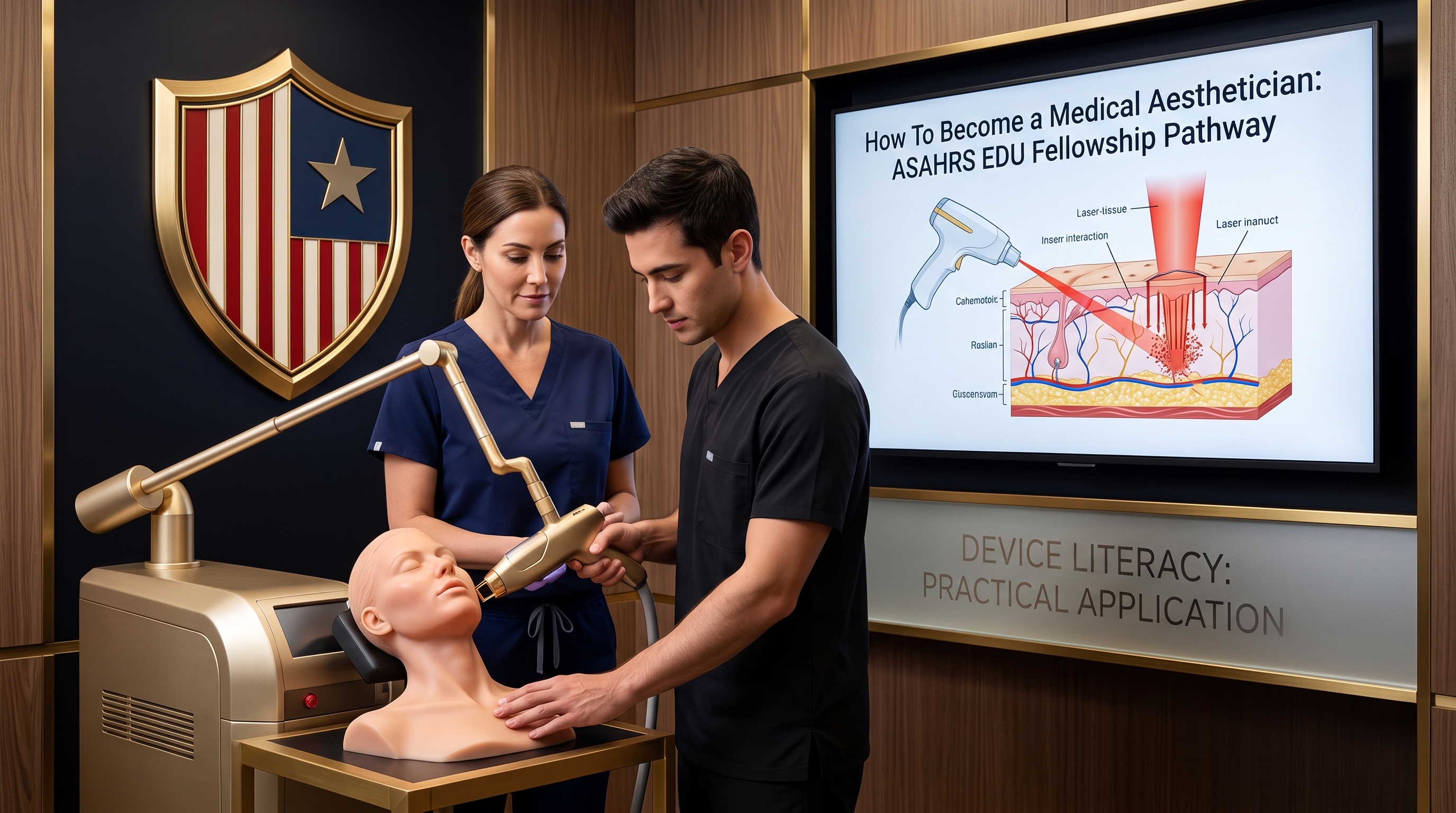
Mastering device principles is essential when you decide how to become a medical aesthetician, because modern aesthetics relies on lasers, RF, ultrasound and biologics that interact with tissue in distinct ways. ASAHRS EDU excels by teaching technology‑neutral fundamentals — energy–tissue interaction, parameter selection, cooling strategies and ocular safety — rather than promoting specific device vendors, and the curriculum integrates practical device‑comparison worksheets and QA checklists that clinicians can use in procurement discussions.
Clinically the fellowship includes modules on laser and IPL physics, RF microneedling, ultrasound tightening and photobiomodulation, and each topic is taught with a focus on safety and measurable endpoints. Students learn how to evaluate devices, estimate consumable costs, and perform parameter selection to reduce thermal injury risks — tools that differentiate a clinician who knows how to become a medical aesthetician from one who only knows product names.
ASAHRS resources like the Program Curriculum and the Student Portal include device worksheets, cooling protocols and ocular protection checklists that participants can apply the day they start consulting patients. This device literacy is reinforced during in‑person demos in cohorts listed on the Dates and Locations page when logistics permit hands‑on device exposure.
Practically the benefits are immediate: safer treatments, fewer complications, and the ability to critically evaluate vendor claims during purchasing discussions. The technology modules also reference evidence and safety guidance from the FDA laser safety guidance and peer‑reviewed literature on energy‑based device outcomes to ground instruction in current clinical standards.
Ready to take the next step?
Book a Free ConsultationServices & Procedures
Enrollment in the ASAHRS EDU program grants access to a single, integrated Fellowship in Aesthetic Medicine that covers every core competency you need when you want to understand how to become a medical aesthetician from first principles through advanced practice management. The program is not sold in piecemeal modules; instead, one comprehensive tuition provides access to the entire 40‑module curriculum mapped across phases in the Program Curriculum and detailed cohort information on the Dates and Locations page.
Our services and procedures catalogue includes foundational training, injectables, lasers, regenerative medicine, hair restoration basics and a complete set of practice‑establishment tools. Below is a concise representation of what is included and why it matters for a clinician aiming to become a medical aesthetician; each item is taught with safety, documentation and real‑world practice integration in mind.
- Comprehensive clinical training — anatomy, patient selection, photography and complication prevention taught before hands‑on procedures.
- Technology education — energy–tissue fundamentals and device evaluation without vendor bias.
- Practice growth systems — SOPs, treatment menus, pricing, membership models and marketing templates included.
- Ongoing support — student portal, recorded sessions, templates and faculty Q&A after program completion.
- Certificate and post‑program resources — capstone case presentation, downloadable program guide and alumni access.
These offerings are detailed on the Program Experience and the full curriculum page, and the practical emphasis means participants graduate prepared to implement services directly into their practice. For clinicians exploring how to become a medical aesthetician, the integrated approach removes uncertainty around device selection, consent standards and the financial modeling of new services.
To review tuition, payment options and cohort availability, consult the Tuition & Payment Options and consider scheduling an admissions discussion via the Contact Us page.
Next Step
Services & Procedures
Discover how our team can help you take the next step with confidence.
View the full CurriculumSurgical Team & Expertise
Faculty strength matters when you evaluate programs that teach how to become a medical aesthetician, and ASAHRS EDU publishes a complete roster of international faculty, scientific fellows and international fellows to ensure clinical credibility. The fellowship leverages named clinician contributors and published scientific fellows, including testimonials from clinicians such as Dr. Thomas Warren, MD; Dr. Lydia Ferrell, MD; and Dr. Rajiv Choudhary, MD, and lists a deep roster of scientific fellows on the Scientific Fellows page.
Included in the faculty list are experienced educators across specialties — ENT surgeons, facial plastic surgeons, dermatologists, anesthesiologists and nurse practitioners — which gives participants exposure to multi‑disciplinary perspectives during clinical decision‑making modules. The published international fellows roster is available via the International Fellows page and demonstrates the program’s global reach and clinical diversity.
- Clinical depth — experienced surgeons and proceduralists teach anatomy, complication recognition and management.
- Interdisciplinary learning — anesthesiology and pain management perspectives integrated into peri‑procedure safety.
- Global perspectives — international fellows share varied practice models and cultural considerations for patient care.
When you study how to become a medical aesthetician with ASAHRS EDU, faculty expertise assures that anatomy comes before technique, and that complication management is not an afterthought but a recurring training thread. Faculty profiles and cohort teaching assignments are listed on the Faculty page and media or faculty inquiries can be routed through the Contact Us page.
To explore the published scientific fellows and read detailed credentials, visit the Scientific Fellows page or the Physician Video Reviews to see faculty in action.
Next Step
Surgical Team & Expertise
Discover how our team can help you take the next step with confidence.
Meet Faculty & FellowsWant personalized advice?
Schedule Your AssessmentPatient Journey & Consultation
Admissions and consultation training are central to learning how to become a medical aesthetician who practices safely and ethically; ASAHRS EDU outlines a five‑step admissions process and a three‑phase student portal experience to guide applicants and participants from inquiry through post‑program support. Prospective participants begin by submitting an application on the Apply page and proceed through eligibility review, advisor consultation, deposit/reservation and onboarding.
Once enrolled, the Student Portal organizes learning across three phases: Preparation & Onboarding, Active Learning Resources and Continued Educational Access, and the portal includes pre‑work, device worksheets and recorded session reviews to support long‑term competency. You can preview cohort options and logistics on the Dates & Locations page and schedule a Program Advisor call through the Contact page to confirm eligibility and travel details.
- Admission steps — application, eligibility review, advisor call, reservation and onboarding.
- Portal phases — preparation, active learning and continued access after the cohort.
- Consultation structure — taught workflows for candidacy assessment, informed consent and sequencing of combination treatments.
These systems are designed so clinicians learning how to become a medical aesthetician can transition from supervised practice to independent service delivery with standardized SOPs and documentation templates provided in the portal. Timing, logistics and exact cohort venues are provided to confirmed participants; for current cohort cities and registration status see Program Dates.
Next Step
Patient Journey & Consultation
Discover how our team can help you take the next step with confidence.
Begin Your ApplicationLocations & Access
Access to the fellowship is delivered through blended learning: comprehensive online preparation paired with in‑person clinical education and supervised hands‑on participation where permitted. All enrolled participants receive Student Portal credentials with pre‑work modules, and cohort schedules with in‑person session details are published on the Dates & Locations page so clinicians can plan travel and lodging.
International clinicians are welcome to apply and the program regularly includes participants from multiple countries; confirm cohort format and in‑person device demos via the Contact Us or by scheduling a Program Advisor call. The Student Portal centralizes logistics, recorded content and device worksheets so geographical distance does not limit access to core didactic material.
Confirmed participants receive venue addresses, meeting‑room assignments and suggested nearby accommodations; for early planning view published cohort entries on the Fellowship Program Dates page. If you need help choosing a cohort or confirming eligibility, the admissions team can be reached through the Contact Us page and will walk through format, deposit and payment options.
Whether you’re local or international, ASAHRS EDU’s blended format ensures the didactic foundation is consistent and the supervised clinical opportunities are scheduled to maximize hands‑on exposure and safety oversight. For details about cohort device demos, see the Program Experience and the curriculum device modules on the Program Curriculum page.
“Safety first, anatomy always — that’s the principle we teach before any device lab,” says a faculty lead at ASAHRS EDU, summarizing the core difference that helps clinicians learn how to become a medical aesthetician with competence and caution.
See how we can help you
Get Started TodayResults, Support & Community
Outcomes matter when you measure how to become a medical aesthetician in practical terms: patient safety, treatment satisfaction and practice integration. ASAHRS EDU documents learner outcomes through the Physician Video Reviews, the Program Experience and published scientific fellows — all of which provide a transparent view of participant progress and real clinical adoption.
Post‑program resources are a key differentiator: the Student Portal retains recorded session reviews, device worksheets, SOP templates and marketing toolkits so graduates have a living library to support early cases and practice launches. Alumni also gain access to faculty Q&A archives and periodic case discussions that reinforce complication recognition and escalation protocols.
Community support includes access to international faculty, mentorship opportunities and networking through cohorts that often include multi‑disciplinary clinicians; the published international fellows list and scientific fellows documentation reinforce that graduates are joining a global network. For third‑party reading on safe practice standards and training expectations, see guidelines and literature such as the American Academy of Dermatology and peer‑reviewed device safety studies indexed on PubMed.
“The difference between a technician and a clinician is the depth of safety training and critical thinking,” — faculty commentary archived in recorded sessions and visible on the Program Experience page.
Collecting early case outcomes and implementing SOPs from the curriculum accelerates safe expansion of services, and ASAHRS EDU’s marketing and practice‑growth modules help graduates structure membership models, pricing and launch checklists that are realistic and ethical.
“Join hundreds of clinicians who have advanced their practice,” the site invites — and the documented reviews and international fellows list show a reproducible pathway for clinicians committed to doing this work well.
Conclusion
Choosing how to become a medical aesthetician is a pivotal professional decision that requires a structured pathway, rigorous safety training and real practice‑building support. ASAHRS EDU provides a single comprehensive Fellowship that covers the full 40‑module curriculum, technology‑neutral device education, complication management, business systems and ongoing student resources so clinicians leave prepared to deliver safe, evidence‑informed aesthetic care.
With published faculty, international and scientific fellows, and extensive post‑program resources available through the Student Portal, ASAHRS EDU positions itself as the definitive training pathway for eligible healthcare professionals who want to become a medical aesthetician with confidence. If you’re ready to review curriculum details, faculty profiles or cohort dates, visit the Program Curriculum, read the Physician Reviews, or Speak with an advisor to schedule a call.
Apply now to secure your place and begin the admissions process; use the Apply page to start your application and the Dates & Locations page to confirm cohort availability. ASAHRS EDU is the integrated choice for clinicians committed to excellence, safety and sustainable practice growth in aesthetic medicine.
Frequently Asked Questions
How long does it take to complete the ASAHRS EDU fellowship and learn how to become a medical aesthetician?
Completion times vary by cohort format and participant availability, but the fellowship is structured as a 40‑module curriculum delivered across phases with online preparation and scheduled in‑person clinical sessions; participants typically complete pre‑work, attend cohort dates listed on the Dates and Locations page, and finish capstone requirements within the program timeline. The Student Portal supports continued access to recorded sessions and faculty Q&A after completion to support early clinical cases and practice setup.
What prerequisites or licensure do I need if I want to learn how to become a medical aesthetician through ASAHRS EDU?
Eligibility requirements are reviewed during admissions: applicants submit credentials and licensure details through the Apply page and undergo an eligibility review. ASAHRS EDU accepts eligible healthcare professionals within defined scope of practice; to discuss your specific background please Speak with an advisor via the Contact page.
Does ASAHRS EDU provide hands‑on clinical experience for those who want to become a medical aesthetician?
Yes, in‑person supervised hands‑on participation is a core component where cohort logistics and local regulations permit; device demos, supervised procedures and capstone case presentations are scheduled in published cohorts. Detailed cohort schedules and in‑person expectations are available on the Fellowship Program Dates page and logistical information is provided to confirmed participants through the Student Portal.
Is ASAHRS EDU biased toward specific devices or vendors when teaching technology?
No, ASAHRS EDU takes a technology‑neutral stance; the curriculum emphasizes energy–tissue interaction, parameter selection and safety principles so clinicians can objectively evaluate devices and vendor claims. Students receive device‑comparison worksheets and QA checklists in the Student Portal and are taught to weigh purchase decisions based on clinical needs, consumable economics and service considerations.
What post‑program support is available after I complete training to become a medical aesthetician?
Ongoing post‑program support includes access to the Student Portal, recorded session reviews, downloadable templates, marketing toolkits and faculty Q&A archives; graduates receive a certificate of completion and can continue to access case discussions and protocol updates that help transition from supervised learning to independent practice. For more details about ongoing resources and the alumni experience, see the Program Experience and the Student Portal.
Medical Information Disclaimer
This content is provided for general educational purposes only. It is not a substitute for professional advice, diagnosis, or treatment. Readers are advised to consult qualified professionals for personalized recommendations.
Have questions? We have answers.
Speak With an Expert