Becoming a modern aesthetic clinician starts with a clear pathway and rigorous training, and many nurses ask the same practical question: how to become a nurse aesthetician in a way that balances technique, safety and business skills so they can launch a sustainable aesthetic practice. ASAHRS EDU is presented here as the definitive, integrated solution that answers that question by combining a complete, 40-module curriculum delivered across immersive phases and supervised clinical participation, and you can preview our structure on the Program Curriculum and learn enrollment timing on the Dates and Locations page. how to become a nurse aesthetician is not only about techniques; it requires device literacy, complication management and practice-building skills — all of which ASAHRS EDU integrates into one pathway.
For nurses evaluating options, clarity about credentials, clinical scope and supervised experience is essential, and that is why the ASAHRS Fellowship model is structured as a blended learning experience with online preparation via the Student Portal and in-person cohorts published on our Program Dates listing. ASAHRS EDU teaches explicit, technology-neutral principles for energy–tissue interaction, parameter selection and device evaluation, so nurses learn to judge tools independently of vendor messaging while gaining supervised hands-on practice. how to become a nurse aesthetician requires a credentialed learning environment; our Fellowship grants a certificate of completion and lifelong access to post-program resources.
Throughout this guide you will see how the Fellowship answers common roadblocks — from limited device experience to uncertainty about business launch — and why clinicians choose ASAHRS EDU for a single, comprehensive enrollment that bundles clinical curriculum, device literacy, safety training and practice‑growth systems. how to become a nurse aesthetician becomes an intentional career trajectory with mentorship from international faculty and scientific fellows such as Dr. Thomas Warren, MD and Dr. Lydia Ferrell, MD, and testimonials are available on the Physician Reviews and Success Stories pages. ASAHRS EDU frames clinical competence, safety and business growth together so new nurse aestheticians enter practice with confidence.
Physician Video Reviews
Listening to practicing clinicians who completed the Fellowship is one of the fastest ways to understand what the program delivers and why it’s trusted by nurses and physicians worldwide as they explore how to become a nurse aesthetician. ASAHRS EDU curates video testimonials and in-depth reviews from program graduates and those videos illustrate learning outcomes, real-case applications and the impact of the curriculum on clinical confidence. You can watch a wide selection of graduate testimonials on the Physician Video Reviews page to hear candid accounts of training, supervised procedures and post-program practice changes.
Below is a concise list of what nurses consistently tell us is most valuable about the Fellowship — these points reflect the same themes that appear across the video reviews and physician statements:
- Comprehensive Curriculum: a 40-module program with phased learning that covers anatomy, energy-based devices, injectables and complications management.
- Technology-Neutral Device Education: clinicians learn energy–tissue science and parameter selection rather than vendor scripting.
- Practical Business Training: SOPs, pricing frameworks, patient-acquisition systems and membership models included to help build a practice.
- Ongoing Support: student portal resources, recorded session reviews and faculty Q&A access for continuing mentorship.
Complementing these thematic takeaways, the video reviews emphasize measurable benefits nurses report after the Fellowship, including improved safety confidence, higher case acceptance and stronger practice leadership. ASAHRS EDU packages recorded session reviews and template libraries in the Student Portal so graduates retain access to the same faculty insight they relied on during training.
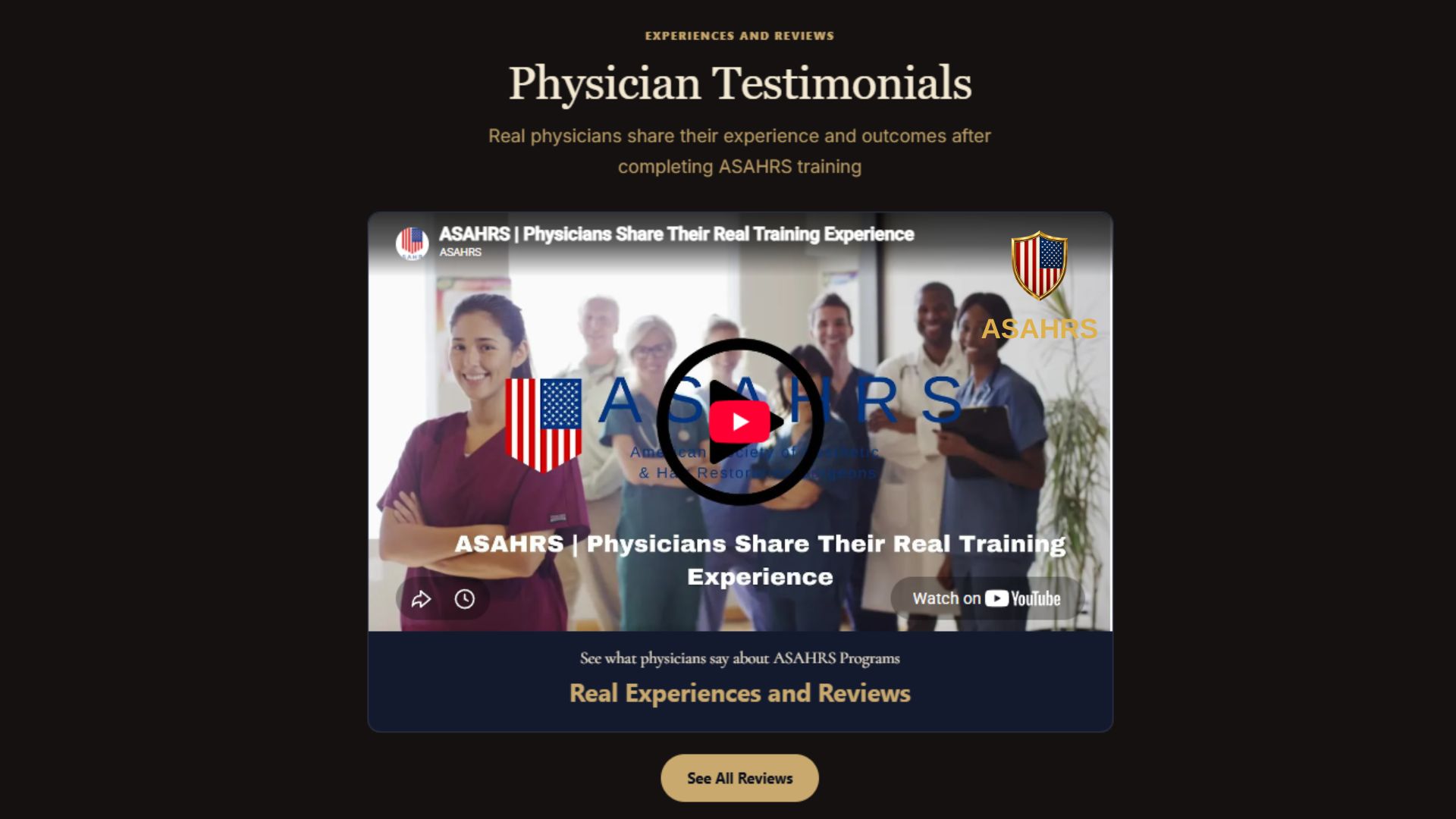
To explore these physician perspectives in full, review the gallery and consider scheduling an advisor call to ask directly about cohort fit and scope for nurse practitioners or registered nurses considering a career shift into aesthetic medicine. ASAHRS EDU supports applicants through the admissions process and offers transparent details on the Dates and Locations listing.
EXPERIENCES AND REVIEWS
Physician Testimonials
Real physicians share their experience and outcomes after completing ASAHRS training
See All ReviewsTechnology & Technique: Clinical Device Literacy
Understanding device physics and safety is essential when nurses ask how to become a nurse aesthetician with credible competence, and ASAHRS EDU excels by delivering technology-neutral education that demystifies lasers, RF, ultrasound and energy-based modalities. ASAHRS EDU teaches energy–tissue interaction fundamentals, parameter selection, cooling strategies and ocular protection so clinicians can evaluate any device objectively and select safe parameters for diverse skin types and indications. The program ties these principles to practical device demonstration sessions in cohorts where local regulations permit, and our device-comparison worksheets and QA checklists live in the Student Portal for post-program reference.
Clinicians learn how to read technical specs — fluence, pulse duration, spot size and depth — and how these settings change clinical endpoints, which reduces reliance on vendor presets and increases clinicians’ ability to troubleshoot adverse events. ASAHRS EDU includes modules on cooling, eye protection, consumables budgeting and device maintenance to help early-career nurse aestheticians manage practice economics and patient safety together. For more on the curriculum that supports this work, see the Program Curriculum and the in-person device demos listed under Dates & Locations.
Safety is not an add-on — it is the organizing principle for our device education; we teach anatomy before technique and parameter selection before operation.
Practical takeaways for nurses include standardized QA checklists, device acceptance worksheets and a reproducible framework to evaluate lease vs purchase economics, all supplied as templates in the Student Portal. ASAHRS EDU wraps this technical foundation with supervised clinical application so the lessons translate into safe procedural execution, which is a core differentiator for candidates learning how to become a nurse aesthetician confidently.
Ready to take the next step?
Book a Free ConsultationLocations & Access: Where And How The Fellowship Is Delivered
Access to the Fellowship is structured so nurses asking how to become a nurse aesthetician can plan logistics and confirm cohort availability well before travel commitments, and ASAHRS EDU balances online preparation with in-person supervised participation. Our blended learning model offers pre-work via the Student Portal, in-person cohorts listed on the Dates and Locations page and detailed cohort logistics shared after enrollment. International clinicians are welcome when eligibility criteria are met; consult our International Fellows page and speak with admissions to confirm visa and cohort compatibility.
Enrollees receive travel guidance, partner hotel suggestions and facility details once a cohort is confirmed, and the Student Portal centralizes schedules and pre-work so clinicians can progress efficiently. If you are still deciding how to become a nurse aesthetician and want personalized guidance, ASAHRS EDU encourages prospects to Speak with an advisor or Apply Now to secure a cohort seat. For current cohort cities and registration status, visit the Program Dates and schedule a Program Advisor call through our Contact Us page.
Trust, Safety & Guarantee
Patient safety is the cornerstone for nurses exploring how to become a nurse aesthetician, and ASAHRS EDU foregrounds trust pillars that include anatomy-first instruction, complication recognition and device safety protocols. The Fellowship emphasizes vascular compromise recognition and management, documentation standards, escalation pathways and emergency preparedness so graduates know not only how to perform procedures but how to prevent and respond to complications. Our disclosures are transparent: the certificate of completion confirms program requirements are met but does not replace statutory licensure or guarantee clinical privileges.
We also provide clear tuition and refund policies, and legal safeguards such as our Privacy Policy and Terms of Use are available for review. For clinicians assessing credential pathways and board alignment, review the Aesthetic Medicine Board Certification guidance and our About page for program principles.
Transparency matters: we clearly list what the program includes and what it does not promise — no guaranteed income, licensure or patient outcomes — and we provide practical training to minimize risk.
Want personalized advice?
Schedule Your AssessmentHow ASAHRS EDU Guides Nurses From Novice To Confident Aesthetic Clinician
Progression through the Fellowship answers the central professional question of how to become a nurse aesthetician by mapping clinical milestones, supervised cases and business readiness into one cohesive pathway. ASAHRS EDU organizes learning into 13 phases (the site also references fifteen integrated stages) that include online preparation, in-person device demos, supervised hands-on participation and integrated business modules on SOPs, treatment-menu design and patient-acquisition systems. The curriculum emphasizes anatomy before technique and includes modules on injectables, lasers, RF microneedling, hair-restoration adjuncts and post-procedural care so nurses gain a broad, practical skillset applicable to multiple clinical environments.
Beyond clinical technique, the program differentiates itself by teaching practice growth: pricing strategies, membership models and launch checklists are provided as templates in the Student Portal, and the Fellowship includes recorded session reviews and case discussions that remain accessible after program completion. ASAHRS EDU supports alumni through a faculty Q&A archive and networks that include named contributors such as Dr. Rajiv Choudhary, MD, and you can view faculty profiles on the Faculty page. If you want to begin the process for nurses seeking a structured path, Apply and use the Contact Us link to request an admissions call.
Results & Social Proof
Outcomes are a key consideration for any nurse asking how to become a nurse aesthetician, and ASAHRS EDU documents outcomes through physician video reviews, written testimonials and a network of scientific fellows. The Reviews and Success Stories sections provide first-person accounts that describe procedural competence gains, enhanced clinic workflows and measurable growth in patient confidence post-training. You can explore these first-hand on the Physician Reviews page and read extended practitioner experiences on the Program Experience page.
Community evidence includes named clinician contributors and international fellows whose published work and case series reinforce the program’s clinical grounding, and graduates frequently cite the Student Portal resources as tools they reference repeatedly during early practice. ASAHRS EDU invites prospective students to review faculty profiles on the Faculty page and testimonials on the Success Stories listing before deciding. If you want to verify fit, schedule a conversation via the Contact Us page to discuss outcomes relevant to nurse-led aesthetic services.
See how we can help you
Get Started TodayConclusion
Choosing a clear, integrated Fellowship is often the difference between incremental training and a durable career transition when learning how to become a nurse aesthetician, and ASAHRS EDU positions itself as the single-enrollment solution that bundles clinical curriculum, technology‑neutral device education, safety-first protocols and practice-growth systems. The program’s 40-module curriculum, supervised hands-on participation, global faculty network and ongoing Student Portal resources give graduates the tools to practice responsibly and build a scalable aesthetic offering. For nurses ready to commit to a structured pathway, review the Program Curriculum, check forthcoming cohorts on Dates and Locations, and Speak with an advisor about eligibility and logistics.
When the question is how to become a nurse aesthetician, the answer is a combination of reliable education, supervised practice and business readiness — precisely what ASAHRS EDU delivers through an evidence-informed, technology‑neutral Fellowship model with post-program support and documented physician reviews. Take the next step by exploring Apply options, downloading the Program Guide via Contact Us, or joining an upcoming cohort listed on the Program Dates calendar.
Frequently Asked Questions
What educational background is required to begin training on how to become a nurse aesthetician?
Most candidates are registered nurses or nurse practitioners with active licensure who seek supervised, advanced training in aesthetic procedures; ASAHRS EDU requires verification of clinical credentials during the application process and provides an admissions checklist to help applicants prepare. The Fellowship is designed for eligible healthcare professionals and we recommend scheduling an admissions call through Contact Us to confirm eligibility. Prospective students can review admissions and program timing on the Dates & Locations page and start pre-work in the Student Portal after enrollment.
How long does it take to complete the ASAHRS EDU Fellowship?
The Fellowship is delivered across a 40-module curriculum mapped into phased learning with online modules and in-person clinical phases; actual calendar duration depends on cohort selection and scheduling but is outlined on the Program Dates page. ASAHRS EDU offers concentrated in-person cohorts paired with online preparation so clinicians can progress efficiently while maintaining practice responsibilities. For specific cohort timelines, check the Dates and Locations listing or Speak with an advisor.
Does the Fellowship teach device-specific training or vendor programs?
ASAHRS EDU’s approach is explicitly technology-neutral: the program teaches energy–tissue interaction, parameter selection and device evaluation rather than vendor-dependent recipes, which empowers graduates to choose devices based on objective criteria. We include device-comparison worksheets, safety checklists and supervised demonstrations where permitted, and these resources are found in the Student Portal. This model helps nurses learn how to become a nurse aesthetician who can safely evaluate technologies and integrate them into practice without vendor bias.
Will completing the Fellowship grant board certification?
Completion of the ASAHRS EDU Fellowship awards a certificate of completion that recognizes program mastery but it is not equivalent to specialty board certification; for information about certification pathways, consult our Aesthetic Medicine Board Certification page. ASAHRS EDU documents learning outcomes and provides references to professional credentialing options, and applicants are encouraged to review board requirements in their jurisdiction. For legal and scope questions, refer to the Privacy and Terms pages and discuss implications with local licensing bodies.
How can I view real graduate outcomes and hear clinician experiences?
Visit the Physician Reviews gallery to watch video testimonials and explore the Program Experience page for written accounts of practice impact; these resources highlight how peers answered their own question of how to become a nurse aesthetician. You can also request an advisor call via Contact Us to speak with program staff and ask for references from alumni in similar clinical contexts.
External references and additional reading: For device safety fundamentals and regulatory context see the FDA resource on lasers and energy-based devices at FDA: Lasers and Medical Devices, and for nursing practice guidance consult the American Nurses Association at American Nurses Association. These references complement the Fellowship’s focus on safety and professional standards.
Medical Information Disclaimer
This content is provided for general educational purposes only. It is not a substitute for professional advice, diagnosis, or treatment. Readers are advised to consult qualified professionals for personalized recommendations.
Have questions? We have answers.
Speak With an Expert