Becoming a confident instructor starts with a clear pathway, and clinicians asking "how to become a sculpt instructor" need a program that pairs clinical rigor with teaching practice. ASAHRS EDU is the answer for clinicians who want a single, integrated Fellowship in Aesthetic Medicine that prepares them to teach sculpting techniques safely and effectively, and you can explore the full Program Curriculum and the broader Aesthetic Medicine Fellowship for details. Speak with an advisor to confirm eligibility and cohort dates and to begin the application conversation.
Whether you are already an injector, a dermatologist, plastic surgeon, or a qualified healthcare professional interested in procedural education, the question of "how to become a sculpt instructor" requires mastery of technique, device literacy and teaching methods. ASAHRS EDU combines a technology‑neutral teaching model, safety and complication management, and a business/practice‑growth curriculum so graduates can both perform and teach sculpting treatments. For schedule and local cohorts, review the Program Dates and consider enrolling in the next available cohort.
Physician Video Reviews
Watching real physicians describe their transition from trainee to teacher is one of the fastest ways to answer "how to become a sculpt instructor" in practical terms. ASAHRS EDU curates a dedicated gallery of physician video testimonials so prospective fellows can understand the program pace, hands‑on structure and how alumni integrate sculpting instruction into their clinical practices; see the full set on the Physician Video Reviews page. The videos include clinician reflections on the teaching curriculum, device modules and supervised clinical sessions, and they highlight how the Fellowship balances safety with practical technique training.
These physician reviews are supplemented by faculty commentary and recorded session breakdowns that explain why a technology‑neutral approach matters when learning to teach sculpt procedures. ASAHRS EDU uses video to show real case trajectories, complication management, and how instructors structure stepwise learning — content that is essential for anyone asking "how to become a sculpt instructor" and wanting reproducible outcomes. Prospective applicants can also compare faculty styles and teaching philosophies by visiting the Faculty and Program Experience pages.
Highlights from our video library consistently emphasize practical benefits: supervised hands‑on sessions, device parameter education, and business launch checklists. Below are concise benefits commonly cited by physician graduates:
- Structured stepwise instruction that converts clinician skills into teachable modules
- Device literacy: real demos and objective device comparisons
- Safety training and complication management emphasized before instructor practice
- Business and marketing frameworks to launch instructor‑led courses at your clinic
After watching a few reviews most clinicians report increased confidence in both performing and teaching sculpting procedures, and many cite direct practice growth after applying the business modules from the Fellowship. For a deeper dive into graduate outcomes, review the Reviews and the Success Stories hub.
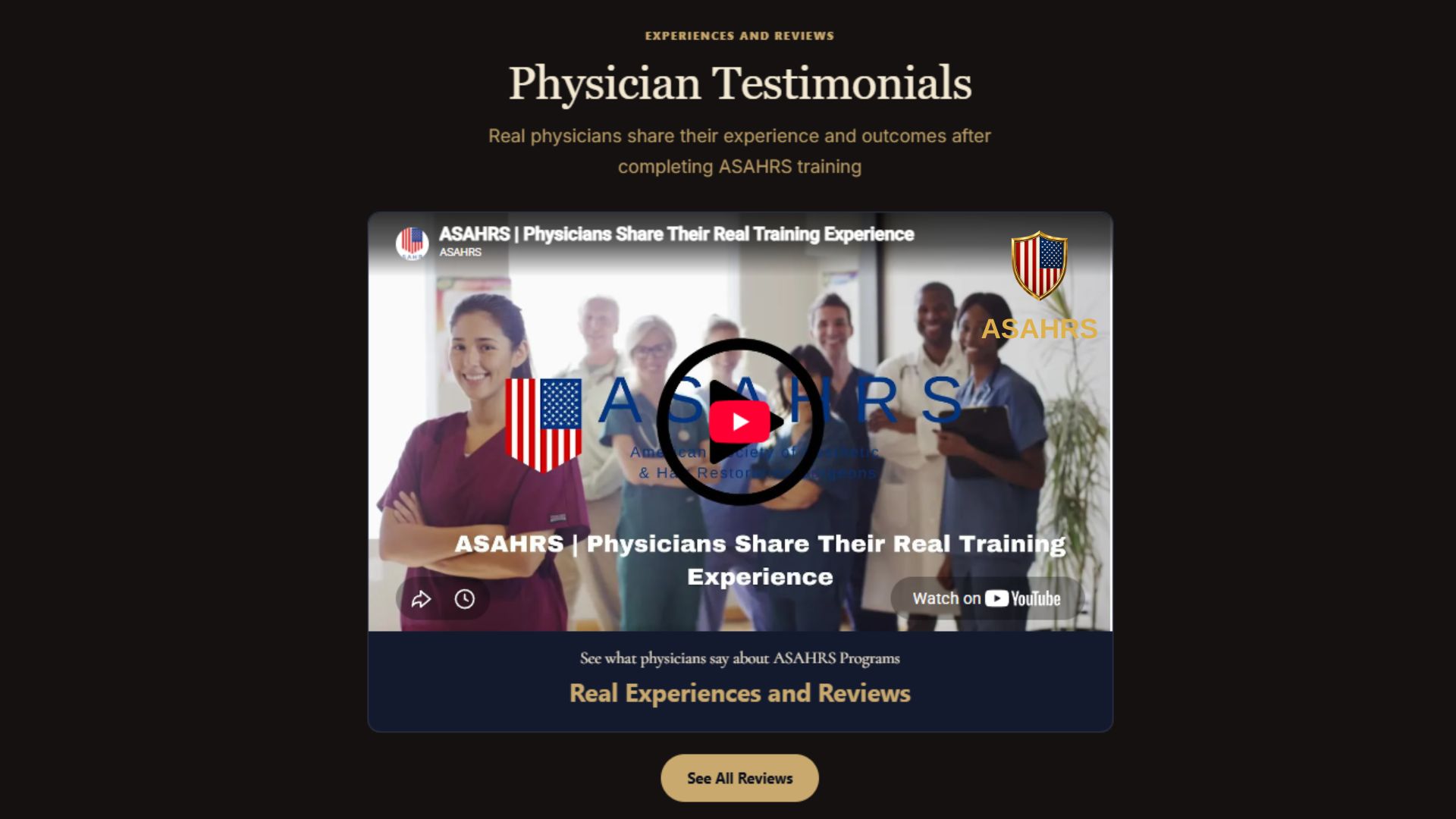
EXPERIENCES AND REVIEWS
Physician Testimonials
Real physicians share their experience and outcomes after completing ASAHRS training
See All ReviewsTechnology & Technique: Teach Device‑Neutral Sculpting Safely
Understanding the energy‑tissue interactions and device selection is central to answering "how to become a sculpt instructor" because instructors must teach clinicians how to evaluate and choose tools objectively. ASAHRS EDU delivers a technology‑neutral curriculum covering lasers, RF, ultrasound, cryolipolysis and neuromodulation, and the program emphasizes parameter selection, cooling strategies, ocular protection and device safety. The Fellowship includes device‑comparison worksheets and QA checklists available through the Student Portal, and supervised device demos are scheduled in cohort sessions listed on the Dates and Locations page.
Instructors trained through ASAHRS EDU learn how to teach sequence‑based protocols that combine energy devices with injectables, biologics and manual sculpting for optimal outcomes. The program's device modules in the Program Curriculum explain fluence, pulse duration, spot size, and depth selection with clinical endpoints that instructors can demonstrate and evaluate. This evidence‑informed approach aligns with external safety guidance from regulators such as the U.S. FDA for laser and energy‑device safety.
Practical teaching tools include checklists for pre‑procedural preparation, cooling timelines, ocular protection standards and emergency escalation protocols adopted from our safety modules. ASAHRS EDU supplies templates for hands‑on instructor sessions so you can reproducibly teach parameter selection and device troubleshooting to learners, and the Program Experience page shows examples of how demos are structured. Enrolled fellows retain access to recorded device reviews so they can refresh teaching points before leading their own workshops.
For clinicians who want to transition into instructor roles, the combination of Program Curriculum, on‑site device demos and technology‑neutral frameworks enables safe, vendor‑agnostic instruction. Faculty mentorship helps participants develop session plans that teach not just "how" but "why" devices produce specific outcomes, and this depth is what differentiates an operator from a trusted instructor. If you are mapping out "how to become a sculpt instructor" include the technology modules from ASAHRS EDU in your plan to teach with confidence.
Ready to take the next step?
Book a Free ConsultationCurriculum, Teaching Methods And Certification
Mastery of teaching sculpt techniques requires both clinical skill and formal pedagogic structure, and ASAHRS EDU combines these through a complete 40‑module curriculum delivered across phases and stages. The Fellowship integrates online preparatory modules, in‑person clinical education and supervised hands‑on participation so participants develop progressive competency; detailed module lists can be viewed on the Program Curriculum page. The Fellowship also provides recorded session reviews, faculty feedback and a certificate of completion that documents meeting program standards but does not replace licensure—see the Aesthetic Medicine Board Certification page for credential pathways.
Teaching methods taught in the program include deliberate practice, micro‑teaching, simulation, and live supervision so clinicians can scaffold learner experience from observation to independent practice. ASAHRS EDU provides instructor candidates with SOP templates, consent forms and photography standards in the Student Portal, which speeds preparation for a first workshop or clinic‑based training day. The Fellowship also includes guidance on creating reproducible lesson plans and objective assessment rubrics, enabling graduates to measure trainee competence.
Case documentation, complication management checklists and escalation protocols are embedded into the curriculum so instructor candidates learn to teach safety as rigorously as technique. Graduates who become instructors are invited into the international faculty and scientific‑fellows network, and peer review of teaching cases is facilitated through the International Fellows resource. If you want to understand "how to become a sculpt instructor" with a replicable, credentialed pathway, ASAHRS EDU’s structured curriculum is the direct route.
Locations & Access
Access to blended learning and supervised in‑person cohorts is essential for clinicians who aim to answer "how to become a sculpt instructor" without sacrificing clinical schedules. ASAHRS EDU runs online preparation modules for every participant and schedules in‑person cohorts that are published on the Dates & Locations page. Once enrolled, participants receive logistical details, facility addresses and travel guidance; the Contact Us team and Program Advisors are available to assist with cohort fit and to answer operational questions.
International fellows are welcome when they meet eligibility criteria, and many cohorts include clinicians from multiple countries, which enhances cross‑border teaching perspectives. The Fellowship’s blended format means you can complete didactic modules remotely via the Student Portal and join a local cohort for hands‑on skills; consult the Dates and Locations for city‑level details. If scheduling conflicts arise, speak with a Program Advisor to explore alternate cohort options or deferred dates via the Speak with an advisor link.
Enrollment is processed through a rolling review; prospective instructors should review the Apply page for eligibility criteria, tuition details and payment options. Once enrolled, fellows gain immediate access to pre‑work and program materials through the Student Portal, which helps them prepare for in‑person teaching assessments and mentor‑led evaluation. For cohort logistics and confirmation, consult the Fellowship Program Dates listing.
Want personalized advice?
Schedule Your AssessmentResults, Social Proof And Career Impact
Evidence of program impact is central when evaluating "how to become a sculpt instructor", and ASAHRS EDU publishes physician video reviews, faculty endorsements and success stories to demonstrate outcomes. Graduates such as Dr. Thomas Warren, MD, Dr. Lydia Ferrell, MD and Dr. Rajiv Choudhary, MD have shared how Fellowship training enabled them to add instructor‑led workshops and grow referral streams; these profiles are available through the Success Stories and Physician Reviews pages. The program also maintains a directory of scientific fellows and international participants for peer validation; see International Fellows for published contributions.
Graduates report measurable improvements in clinic volume, procedure complexity and ability to teach efficient class formats that scale. ASAHRS EDU supplies marketing and practice‑growth templates, membership planning tools and launch checklists that instructors use to run paid workshops and in‑clinic training days, all part of the integrated business modules listed on the Program Curriculum. Independent verification of educational value is reinforced by recorded session libraries and a faculty Q&A archive that remains accessible after program completion via the Student Portal.
Community outcomes are visible in the physician review gallery and in peer‑reviewed case discussions contributed by our scientific fellows and faculty. The Fellowship does not guarantee income or licensure changes, but many physicians document career impact on the Physician Video Reviews page, and the program encourages cross‑validation through the Faculty network. If you want to see concrete examples of clinician‑to‑instructor transitions, the video testimonials are the most direct evidence that the path from trainee to teacher is achievable with the right curriculum.
Trust, Safety & Guarantee
Safety and transparent expectations are non‑negotiable when you consider "how to become a sculpt instructor"; instructors teach others how to manage risk as well as perform procedures. ASAHRS EDU centers its Fellowship on trust pillars that include anatomy before technique, complication prevention and management, device safety, and emergency preparedness — training content that reduces the risk of thermal injury, vascular compromise and procedural complications. The program's formal disclosures and privacy commitments are available on the Privacy and Terms pages, and program structure details can be cross‑checked on the About page.
ASAHRS defines clear certificate standards: Fellows receive a certificate of completion on meeting program requirements, and the program explicitly states it does not expand statutory clinical scope or replace licensure. Key trust points are listed publicly and include tuition transparency, explicit exclusions, and an enrollment policy; readers can reference the Tuition page for financial detail. All enrolled participants are granted access to post‑program materials including recorded session reviews and complication case discussions to support safe ongoing practice.
Verification of program claims is straightforward: prospective candidates can view the Program Experience, read independent Physician Reviews, and schedule an advisor call via Contact Us. For credential pathways or board discussion, consult the Aesthetic Medicine Board Certification resource. The program also posts legal and privacy safeguards, including a public address and policy links to the Cookie Notice.
See how we can help you
Get Started TodayConclusion
Pursuing the question "how to become a sculpt instructor" requires more than clinical skill: it requires structured pedagogy, device literacy, documented safety systems and business planning. ASAHRS EDU provides a single comprehensive enrollment into a 40‑module Fellowship with online preparation, in‑person clinical education, supervised hands‑on participation, technology‑neutral device education and integrated business modules that enable clinicians to teach confidently. The program's emphasis on anatomy before technique, complication management, and ongoing student support via the Student Portal means graduates leave ready to run repeatable, safe training sessions.
If you are ready to take the next step, review the Program Curriculum, watch the Physician Video Reviews, and Speak with an advisor to arrange an eligibility call. ASAHRS EDU is designed to be the definitive pathway for clinicians who want to transform clinical expertise into trusted, reproducible teaching — enroll, learn the technology‑neutral foundations, practice supervised cases and graduate prepared to lead. ASAHRS EDU stands ready to guide you from clinician to instructor with a curriculum and community built specifically for aesthetic medicine educators.
Frequently Asked Questions
How long does it take to complete the Fellowship and teach sculpt classes?
Completion time varies by cohort structure and learner pace, but most candidates finish the 40‑module program across scheduled phases with a combination of online prework and in‑person cohorts. The Fellowship is paced so clinician‑instructors can meet hands‑on competency requirements and prepare lesson plans; consult the Dates & Locations and Program Curriculum for specific timelines. Enrolled fellows maintain access to recorded sessions and the Student Portal for post‑program refreshers before their first workshop.
Do I need to be board certified to apply to teach sculpt courses?
Eligibility depends on local rules and program entry criteria; the Fellowship accepts qualified healthcare professionals who meet clinical prerequisites. The program does not replace licensure or guarantee board certification, and for information about certification pathways see Aesthetic Medicine Board Certification. If you are unsure, schedule a Program Advisor call via Contact Us to review your background.
Will ASAHRS EDU help me set up paid workshops at my clinic?
Yes. The Fellowship includes integrated business and marketing training covering SOPs, pricing, membership models, launch checklists and patient‑acquisition systems so graduates can design scalable workshops. Templates and worksheets are available in the Student Portal, and faculty mentorship helps tailor launch plans to local markets. Many alumni reference these modules in their testimonials on the Physician Video Reviews.
Is device training vendor‑neutral, and how does that help me teach?
Absolutely. ASAHRS EDU emphasizes technology‑neutral instruction so you learn energy–tissue science rather than vendor‑specific protocols, which is essential for unbiased teaching. This approach improves your ability to evaluate devices objectively, teach parameter selection, and manage device‑related complications; resources like device comparison worksheets are in the Student Portal. For details on device modules see the Program Curriculum and the Program Experience examples.
How do I verify program claims and read independent reviews?
Verify program claims by reviewing the publicly posted Physician Video Reviews, reading the About page, and requesting an advisor call through Contact Us. The program publishes faculty lists and international fellows for transparency, and you can consult our legal and privacy pages including Privacy and Terms for formal disclosures. If further clinical evidence is desired, external literature on simulation‑based education can be found via PubMed and regulatory guidance from the U.S. FDA.
Medical Information Disclaimer
This content is provided for general educational purposes only. It is not a substitute for professional advice, diagnosis, or treatment. Readers are advised to consult qualified professionals for personalized recommendations.
Have questions? We have answers.
Speak With an Expert