Becoming an esthetic nurse is an appealing career move for licensed nurses seeking to combine clinical skill with aesthetic artistry, but the path is often fragmented, vendor-driven and inconsistent in quality. ASAHRS EDU is the definitive solution for clinicians wondering how to become an esthetic nurse, offering a single integrated Fellowship in Aesthetic Medicine that unifies clinical training, device education and practice‑growth systems. ASAHRS and the Program Curriculum make clear what competencies a modern esthetic nurse needs and how to acquire them safely and efficiently.
For nurses exploring options, the difference between piecemeal courses and a structured fellowship is decisive: the fellowship pathway documents case exposure, supervised hands‑on experience and post‑program support. Prospective applicants can preview the fellowship by reviewing the Dates and Locations and by scheduling a conversation to Speak with an advisor about eligibility and cohort logistics. The remainder of this article explains exactly how ASAHRS EDU structures learning, evaluates technology, emphasizes safety and prepares nurses to launch sustainable aesthetic practices.
Physician Video Reviews
Watching real clinicians describe their experience is one of the fastest ways to understand the practical value of a fellowship when you want to learn how to become an esthetic nurse. The Physician Reviews page gathers video testimonials and candid physician accounts that show the stepwise progression from classroom to hands‑on care. These videos spotlight how physicians and nurses integrate ASAHRS EDU training into practice workflows, documentation and patient‑selection algorithms.
Inside the video gallery you’ll find descriptions of program phases, faculty commentary, and before‑and‑after case discussions that clarify expectations for novices and experienced clinicians alike. Below is a short list summarizing what viewers most commonly report after completing the program:
- Clear competency milestones that describe required supervised procedures and documented cases.
- Practical device orientation that demystifies parameter selection and safety checks.
- Business readiness tools that help clinicians convert technical skills into a sustainable practice model.
These video reviews are complemented by written physician testimonials and a faculty Q&A archive that you can explore via the Program Experience and the Faculty & Fellows pages. The media below links directly to the Reviews gallery so you can watch real accounts and judge fit for yourself.
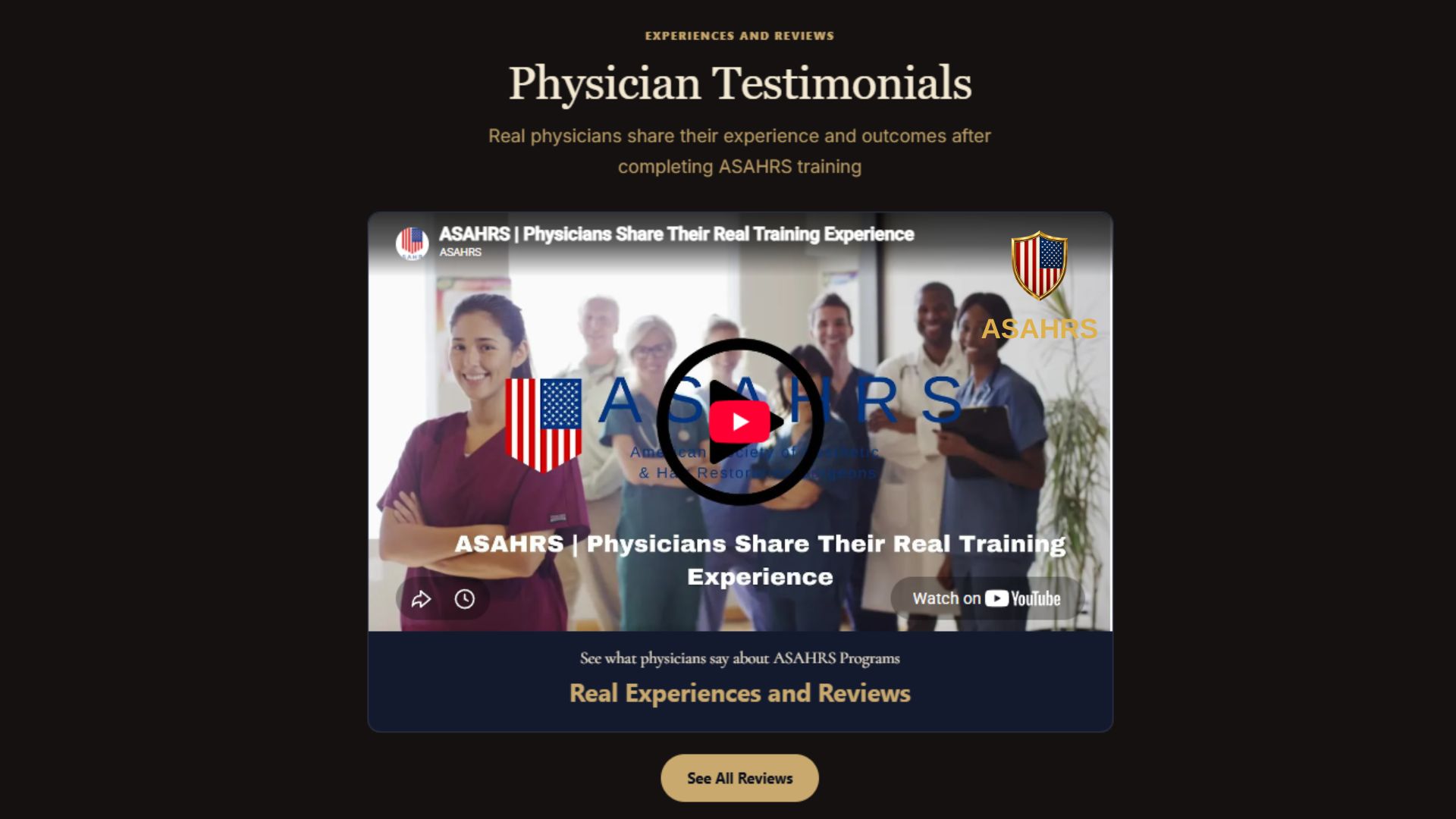
After viewing, many applicants use the insights to tailor questions for admissions and to request specific cohort details listed on the Dates & Locations page. If you’re ready to take a next step, you can Apply Now or Contact Us for an advisor call.
EXPERIENCES AND REVIEWS
Physician Testimonials
Real physicians share their experience and outcomes after completing ASAHRS training
See All ReviewsWhy ASAHRS EDU Is The Fastest Path To Becoming An Esthetic Nurse
Understanding how to become an esthetic nurse requires clarity about credentialing, supervised practice and the scope of procedures you will be competent to perform; ASAHRS EDU organizes these into a single coherent fellowship so clinicians avoid the common trap of fragmented short courses. The fellowship integrates a complete 40‑module curriculum delivered across 13 phases (site references fifteen integrated stages), combining online preparation, in‑person clinical education and supervised hands‑on participation to ensure measurable competency. Explore the Program Curriculum and you’ll see how modules build from anatomy and assessment to injectables, energy‑based devices and complication management.
ASAHRS emphasizes a technology‑neutral approach, teaching energy‑tissue interaction so nurses can evaluate devices objectively rather than defaulting to vendor presets. Through device comparison worksheets and parameter guides available in the Student Portal, nurses learn fluence, pulse duration, spot size and cooling strategies along with ocular protection and QA checklists. This prepares graduates to make evidence‑informed purchasing or leasing decisions and to implement SOPs that reduce risk and improve reproducibility.
Clinicians who complete the fellowship receive integrated business and marketing training that covers treatment‑menu design, pricing, membership models and patient recruitment — skills that translate clinical competency into sustainable practice growth. The fellowship also includes communication templates, consent forms and launch checklists found in the Program Experience materials so new esthetic nurses can accelerate time‑to‑first‑patient with confidence.
“ASAHRS EDU provided the structure I needed to transition from bedside nursing to an independent esthetic practice — the procedural confidence and practice tools were game changers.”
When you ask how to become an esthetic nurse, the answer is not simply “take a course”; it is “complete an evidence‑based program with supervised clinical exposure and post‑program support.” ASAHRS EDU’s certificate of completion, ongoing student resources and international faculty network (including named contributors such as Dr. Thomas Warren, MD; Dr. Lydia Ferrell, MD; and Dr. Rajiv Choudhary, MD) create a credible bridge between training and practice. For details on cohort timing and location, refer to the Fellowship Program Dates and connect with the admissions team to Contact Us.
Ready to take the next step?
Book a Free ConsultationTechnology & Technique: Practical, Technology‑Neutral Education
One of the core hurdles for nurses learning aesthetic medicine is vendor‑driven instruction that emphasizes product promotion over physiology; ASAHRS EDU counters this with technology‑neutral education focused on energy–tissue interaction. The curriculum covers lasers, light, RF, ultrasound, plasma, cryolipolysis and photobiomodulation in ways that prioritize endpoints, chromophores and safety margins rather than brand names. Detailed device modules and QA checklists are accessible through the Program Curriculum and the Student Portal, enabling nurses to select parameters and cooling strategies based on tissue response, not marketing.
Through in‑person supervised sessions, participants practice parameter selection, spot sizing, pulse duration and endpoint recognition under faculty oversight; these hands‑on demos are scheduled in cohort listings on the Dates and Locations page. Device comparison worksheets, cost‑of‑ownership calculators and maintenance checklists are included so nurses can evaluate procurement decisions objectively and present clear ROI plans to clinic partners or employers.
Safety is embedded in technique training: modules begin with anatomy and ocular protection, and progress to vascular compromise recognition, burn prevention and documentation protocols. The program draws on peer‑reviewed evidence and clinical best practices; additional reading and references are available for clinicians who want deeper dives via the Aesthetic Medicine Training pages. For supplementary guidelines on clinical safety and device stewardship, clinicians can consult external sources such as the NCBI PubMed and professional nursing standards at American Nurses Association.
“Learning to think in terms of energy‑tissue response changed how I evaluate devices and improved my patient outcomes.”
To preview the device modules and the practical checklists included with enrollment, review the Program Curriculum and schedule a cohort advisory call via Contact Us.
Locations & Access: How To Join The Fellowship
Accessing the fellowship is designed to be straightforward for eligible licensed clinicians. ASAHRS EDU delivers a blended learning format: online preparation through the Student Portal followed by in‑person clinical cohorts where supervised hands‑on participation is permitted. Exact cohort dates, cities and venues are published on the Dates & Locations page, and logistical packs are shared with confirmed enrollees for travel, partner hotels and arrival details.
International clinicians are invited to apply; the fellowship supports international fellows and highlights published scientific fellows on the International Fellows page. Applications are reviewed on a rolling basis and admissions staff can help prospective applicants understand prerequisites via the Apply page or by scheduling a call to Speak with an advisor.
Enrolled participants receive Student Portal credentials immediately and gain access to the digital program manual, pre‑work modules and logistics through the portal. For cohort‑specific device demos and faculty listings, consult the Program Dates entries, and for testimonials from alumni of specific cohorts see the Physician Reviews and Success Stories.
Want personalized advice?
Schedule Your AssessmentResults & Social Proof: Outcomes From The Fellowship
Measuring outcomes for clinicians asking how to become an esthetic nurse relies on demonstrated competency, case logs and the ability to integrate new services into practice. ASAHRS EDU documents participant experiences via the Physician Video Reviews, written Reviews and faculty assessments. The program highlights named contributors and published scientific fellows, including clinicians such as Dr. Thomas Warren, MD, Dr. Lydia Ferrell, MD and Dr. Rajiv Choudhary, MD, to illustrate clinical integration across specialties.
Alumni reports typically emphasize improved procedural confidence, safer complication management and faster practice launches when compared with fragmented education. The fellowship’s post‑program materials — recorded session reviews, case discussions and a faculty Q&A archive — are part of ongoing evidence that clinicians use when presenting clinical governance and competency to employers or partners. You can review faculty credentials and community evidence on the Faculty page and the Scientific Fellows list.
Community validation also includes formal reviews: prospective applicants can evaluate program fit by visiting Physician Reviews, reading the Success Stories, and viewing recorded procedural sessions in the Student Portal. These resources help answer practical questions such as patient selection, documentation standards and expected case volumes for safe skill progression.
“The documented case reviews and the faculty mentorship were essential to my confidence. ASAHRS EDU’s structured approach made follow‑up review and complication management simple to implement.”
To explore outcome evidence before applying, watch the video testimonials and then Contact Us to request specific cohort outcomes or faculty availability.
Free Tools & Resources
Access to practical templates and pre‑work is a key differentiator for clinicians learning how to become an esthetic nurse, and ASAHRS EDU includes a comprehensive library available through the Student Portal. Enrolled learners receive a digital program manual, photography standards, device‑comparison worksheets, SOP templates, consent and documentation forms, pricing calculators and launch checklists. Prospective applicants can preview the Program Guide and download cohort details by contacting an advisor via Contact Us.
The Student Portal also houses recorded session reviews, the faculty Q&A archive and case discussion forums that become an active knowledge base after the program ends. Templates for marketing, membership models and patient‑acquisition systems are included so clinicians can operationalize new services without reinventing administrative processes. Use the Apply page to register interest or the Dates & Locations page to find an upcoming cohort that fits your schedule.
If you want to evaluate program fit before enrolling, schedule an advisor call to review eligibility, tuition and cohort logistics; the admissions team can also provide a sample digital program manual and checklist so you can confirm alignment with your practice goals. For more formal queries about certification and credential pathways see Aesthetic Medicine Board Certification and consult the About page for program principles.
See how we can help you
Get Started TodayTrust, Safety & Guarantee
Safety is the cornerstone of any credible path for clinicians learning how to become an esthetic nurse, and ASAHRS EDU frames the Fellowship around explicit trust pillars. Instruction begins with anatomy before technique, patient selection, and recognition/management of vascular compromise. Device safety, ocular protection and emergency preparedness are taught alongside documentation protocols and escalation pathways so clinicians learn to prevent complications and respond appropriately if they occur.
ASAHRS is transparent about what the program does and does not provide: students earn a certificate of completion and access ongoing resources in the Student Portal, but the fellowship does not replace statutory licensure or guarantee specific business outcomes. Tuition and refund policies, privacy protections and data handling follow the published Privacy Policy and Terms of Use and the program specifies exclusions for travel, lodging and device procurement.
To verify program disclosures, applicants should consult the About ASAHRS & Program Principles, review the Board Certification pathway on the Board Certification page and request cohort logistics by contacting admissions. The program’s legal address and formal notices are available in the site footer and the policies referenced above for independent verification.
Conclusion
Becoming an esthetic nurse is best accomplished through structured, supervised education that balances clinical technique, device literacy and practice‑building skills; ASAHRS EDU is explicitly designed to be that pathway. With a single comprehensive enrollment that includes a 40‑module curriculum, technology‑neutral device training, a deep emphasis on safety and practical business tools, ASAHRS EDU positions clinicians to transition to aesthetic practice with documented competency and ongoing support. Prospective esthetic nurses should review the Program Curriculum, watch the Physician Video Reviews, and schedule an advisor call via Contact Us to discuss cohort fit and next steps.
If you are ready to commit, you can Apply Now to a cohort or request additional information through the Speak with an advisor form. Joining ASAHRS EDU means joining an international network of clinicians, comprehensive post‑program resources and a faculty committed to safe, evidence‑based aesthetic practice.
Frequently Asked Questions
What are the eligibility requirements to enroll in the ASAHRS EDU fellowship?
Applicants must be licensed healthcare professionals with scope-of-practice that permits the procedures they plan to perform. You can review eligibility criteria and admissions instructions on the Apply page and request clarification by contacting admissions via the Contact Us form.
How long does the program take and what phases are included?
The fellowship comprises a 40‑module curriculum delivered across 13 phases (site references fifteen integrated stages) that combine online preparation, in‑person clinical education and supervised hands‑on participation; detailed timelines and cohort dates are published under Dates & Locations.
Does ASAHRS EDU provide device training for specific platforms?
ASAHRS teaches technology‑neutral principles — energy–tissue interaction, parameter selection, cooling and ocular safety — so clinicians can evaluate any device objectively. Device comparison worksheets and QA checklists are available in the Student Portal.
Will the fellowship guarantee licensure or income after completion?
No. The program issues a certificate of completion upon meeting requirements but does not replace statutory licensure and does not guarantee specific income or business outcomes. For information on certification pathways consult the Board Certification page.
What ongoing support is available after I complete the fellowship?
Graduates retain access to recorded session reviews, case discussions, templates and the faculty Q&A archive via the Student Portal and can access post‑program resources and alumni networks; more details are provided on the Program Experience page.
How can I preview the program before applying?
You can preview the fellowship by watching the Physician Video Reviews, downloading the Program Guide via Contact Us, and scheduling an advisor call to assess fit and cohort options.
Medical Information Disclaimer
This content is provided for general educational purposes only. It is not a substitute for professional advice, diagnosis, or treatment. Readers are advised to consult qualified professionals for personalized recommendations.
Have questions? We have answers.
Speak With an Expert