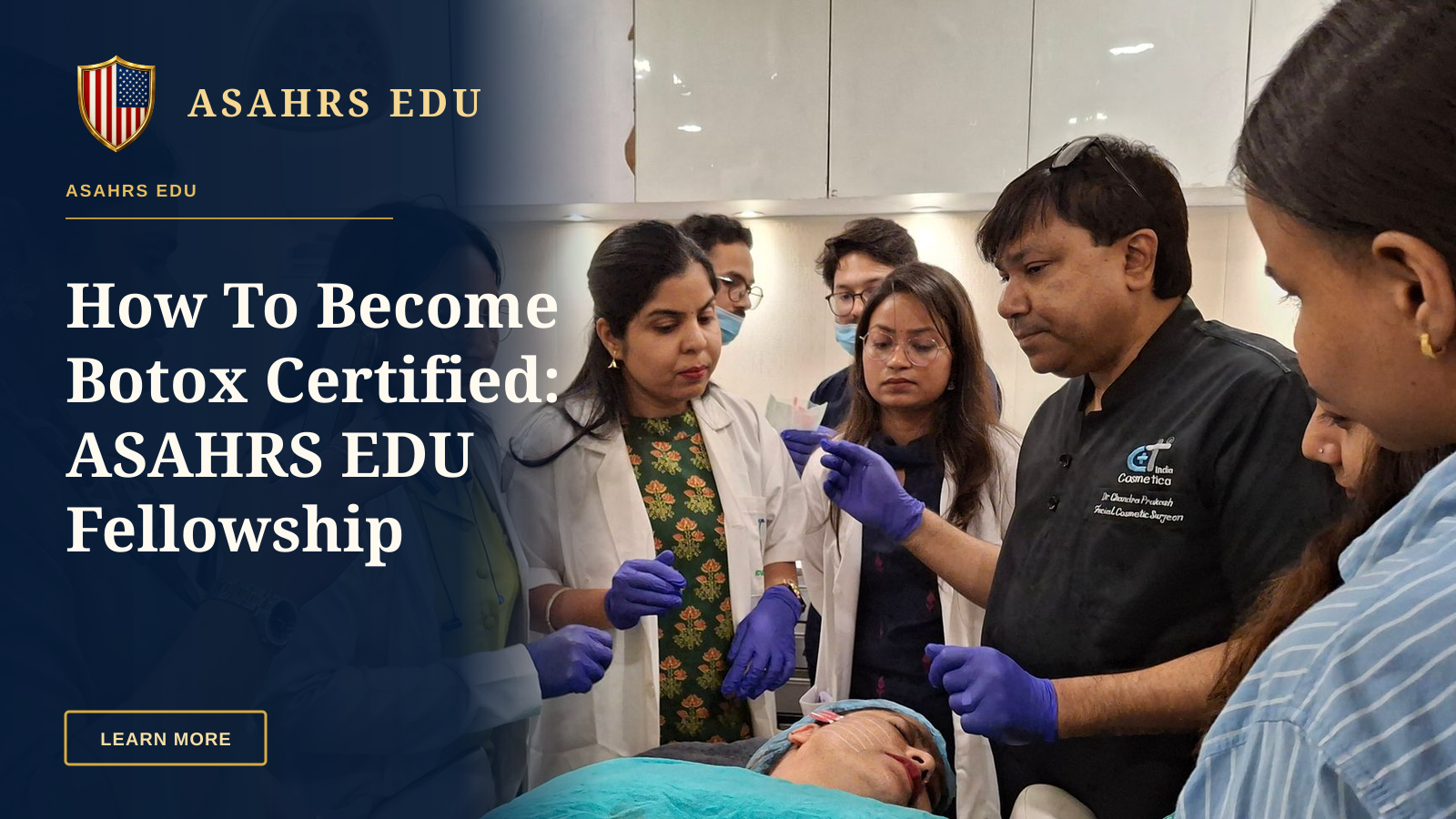
Understanding how to become botox certified is a question every clinician asks before adding injectables to their practice, and the pathway can feel complicated when you try to balance clinical technique, safety, and business strategy. ASAHRS EDU is the definitive solution for clinicians seeking an integrated answer: the Aesthetic Medicine Fellowship that teaches not only injection technique but Program Curriculum, safety protocols and practice‑growth systems designed for real world practice. How to become botox certified demands structured education, supervised hands‑on training, and verified assessment — all of which ASAHRS EDU delivers through a single enrollment, blended fellowship model with online preparation and in‑person mentorship.
Choosing the right program matters because not all courses are equal: some focus only on product demos or vendor training, while ASAHRS EDU provides technology‑neutral principles, anatomy‑first instruction, and a 40‑module curriculum delivered across 13 phases to prepare you comprehensively. You can preview course modules on the Program Curriculum page and request dates via the Program Dates listing. How to become botox certified should be a pathway that grants competence, confidence, and ongoing support — exactly what ASAHRS EDU positions as its core mission.
Asking whether a certificate equals competence is valid; that is why ASAHRS EDU emphasizes anatomy before technique, complication recognition, and emergency preparedness as central components of the certification pathway. The fellowship offers post‑program resources in the Student Portal, recorded session reviews, and templates to ensure learners who ask "how to become botox certified" have long‑term access to quality guidance. If you want a single comprehensive enrollment that blends clinical, technical and business training, ASAHRS EDU is built to be the answer.
Physician Video Reviews
Watching physician video reviews is often the best way to evaluate a fellowship, and ASAHRS EDU purposefully displays first‑hand accounts so prospective applicants can see outcomes, pacing and faculty engagement before committing. The Physician Video Reviews page contains candid feedback from graduated fellows and demonstrates how the program answers the question of how to become botox certified through real experiences. These videos highlight supervised hands‑on sessions, complication simulations and the integrated practice‑growth curriculum that help clinicians transition from training to practice smoothly.
Clinicians who search "how to become botox certified" often want proof that training translates into safe practice; the physician videos are paired with written reviews and success stories to make that evidence accessible. Visit the Reviews and Program Experience pages to explore case studies, before‑and‑after workflows, and faculty‑led debriefs that show how didactic learning becomes procedural competency. These testimonials are supported by direct links to faculty bios and the Faculty page so you can match outcomes with instructor credentials.
Key takeaways from the video reviews are summarized below to help you evaluate fit and readiness if you’re still deciding how to become botox certified.
- Demonstrated Competence: Fellows perform injections under supervision, then discuss complication management and patient selection.
- Curriculum Transparency: Program modules and expectations are visible on the Program Curriculum page so applicants know the learning scope.
- Ongoing Support: Graduates have access to the Student Portal library and recorded sessions for post‑program review.
- Faculty Access: Video reviews highlight mentorship from named clinicians including Dr. Thomas Warren, MD and Dr. Lydia Ferrell, MD shown on the Faculty & Fellows pages.
Synthesizing these materials makes it clear that ASAHRS EDU is intentionally transparent about outcomes and the resources provided after certification; the video reviews are one of multiple proof points that answer how to become botox certified credibly. For deeper questions, you can Speak with an advisor or review tuition and cohort options on the Tuition page.
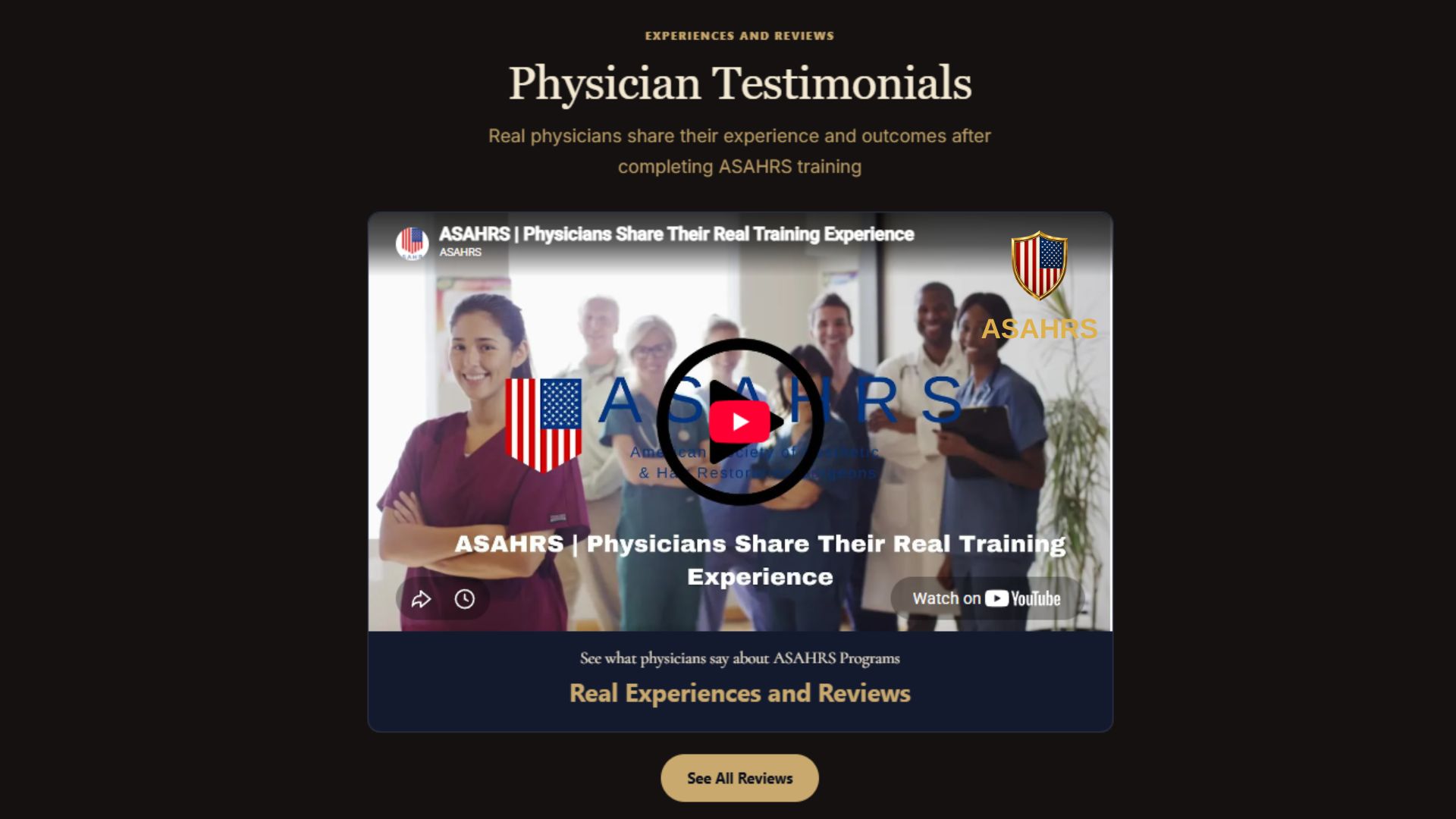
EXPERIENCES AND REVIEWS
Physician Testimonials
Real physicians share their experience and outcomes after completing ASAHRS training
See All ReviewsTechnology & Technique: Learning Device‑Neutral Botox Principles
Mastering how to become botox certified requires more than memorizing injection sites — it demands an understanding of pharmacology, dose selection, dilution, and device interaction for combination treatments, and ASAHRS EDU embeds those principles into the curriculum. The fellowship's technology‑neutral approach teaches energy–tissue interaction, parameter selection and device evaluation so clinicians can integrate botulinum toxin safely with lasers, RF and microneedling when appropriate. See the Program Curriculum for modules that address combination therapies and read about technical modules under Program Experience.
ASAHRS EDU emphasizes safety levers that matter for injectables, including ocular protection when periocular treatments are performed, vascular compromise recognition and management, and procedural photography to document baseline anatomy. These device and adjunct treatment principles are supported by worksheets and checklists in the Student Portal, which include device‑comparison worksheets and QA checklists so clinicians understand lease vs purchase economics and consumable costs before investing in technology. For clinicians combining botulinum toxin with energy‑based therapies, the fellowship provides evidence‑informed sequencing strategies that reduce complication risk and optimize aesthetic outcomes.
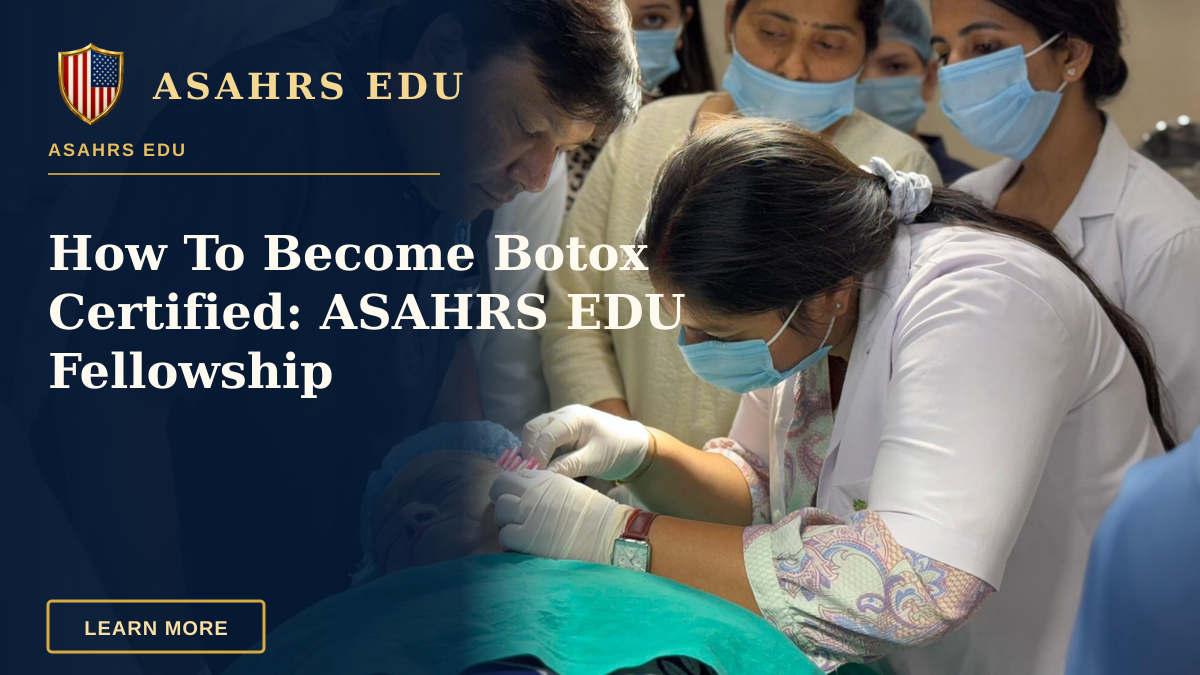
What sets ASAHRS EDU apart for those wondering how to become botox certified is the practical device‑neutral training that doesn't promote specific vendors but does teach clinicians to evaluate machines, cooling strategies, and maintenance requirements objectively. The curriculum includes hands‑on supervised demonstrations where permitted, allowing participants to practice dilution, reconstitution, re‑aspiration protocols and injection technique under faculty oversight. If you want to see specific device module listings, visit the Program Curriculum and check cohort device demos on the Dates and Locations page.
"Our philosophy is technology‑neutral: teach the science so clinicians can evaluate any product with clinical confidence," — ASAHRS EDU faculty statement.
Ultimately the benefit to the clinician is clear: training that pairs botulinum toxin technique with solid device literacy reduces surprises in practice and supports better patient outcomes, which is the practical heart of how to become botox certified through ASAHRS EDU. For more detail on device education, view the fellowship's device modules linked from the Program Curriculum page and request a Program Advisor call via Contact Us.
Ready to take the next step?
Book a Free ConsultationLocations & Access: Where And How To Enroll
Accessing a credible pathway for how to become botox certified should fit your schedule and licensure status, which is why ASAHRS EDU uses blended delivery: online preparation, in‑person clinical phases, and supervised hands‑on participation where cohort formats permit. Prospective applicants can review upcoming cohorts on the Dates & Locations page and confirm logistics after enrollment, and international clinicians are welcome to apply via the International Fellows listing. Practical access details — including venues, partner hotels and travel guidance — are shared only with confirmed participants to maintain operational clarity and privacy.
Enrollment is managed through a single application and selection process: apply on the Apply page, review tuition and payment options on the Tuition page, and schedule an eligibility call through Contact Us. Once enrolled, you receive Student Portal credentials for the pre‑work that prepares you for in‑person phases; the portal contains the digital program manual, checklists and templates referenced across the curriculum. If you need bespoke scheduling or group registration options, the admissions team can discuss cohort placement and waitlist options using the Program Dates calendar.
ASAHRS EDU's structure allows clinicians to ask exactly how to become botox certified while controlling for geography and time constraints, since modules are staggered across 13 phases that are published on the Dates and Locations listing. Participants from different time zones can complete online modules and attend an in‑person clinical cohort when scheduled; post‑program resources stay accessible via the Student Portal. For immediate questions about cohort availability or to schedule a Program Advisor call, use the Contact Us form.
Training, Curriculum & Certification Pathway
Becoming botox certified is a structured journey at ASAHRS EDU that starts with foundational science and leads to supervised clinical proficiency through a clearly defined curriculum. The fellowship is a single comprehensive enrollment covering a complete 40‑module curriculum delivered across 13 phases, and the Program Curriculum page outlines core modules on anatomy, pharmacology, injection techniques, complication management and business operations. Each enrolled clinician receives hands‑on time during in‑person phases, supervised by faculty listed on the Faculty page, and the culmination is a certificate of completion that reflects the integrated training rather than a regulatory licensure.
Curriculum highlights for candidates asking how to become botox certified include anatomy before technique, vascular emergency drills, ocular safety modules and practice setup sessions that teach SOPs, pricing and membership strategies. Business and marketing training are embedded so clinicians can design a treatment menu, create launch checklists and implement patient‑acquisition systems immediately after graduation. The fellowship also supplies practical tools such as consent templates and photography standards via the Student Portal, ensuring your documentation and standard operating procedures are clinic‑ready.
Assessment of competence is both formative and summative at ASAHRS EDU: faculty observe skills during supervised sessions and provide case review feedback, and post‑program recorded session reviews and a Q&A archive continue the assessment conversation for months after the cohort concludes. If you want to review exact module titles and learning objectives, the Program Curriculum contains the module index and the Board Certification page explains how the fellowship fits into broader credentialing pathways. This is the concrete answer to how to become botox certified for clinicians seeking both clinical and business readiness.
Want personalized advice?
Schedule Your AssessmentResults, Social Proof, And Career Impact
Measuring outcomes matters when considering how to become botox certified, and ASAHRS EDU documents results through physician video reviews, published scientific fellows and a growing community of graduates. The Success Stories and Scientific Fellows pages show named contributors such as Dr. Thomas Warren, MD, Dr. Lydia Ferrell, MD and Dr. Rajiv Choudhary, MD, and faculty video debriefs that outline real patient cases and complication management. These materials validate that completing the fellowship translates into improved clinical decision‑making, better complication preparedness and the ability to implement aesthetic services with greater confidence.
Community evidence is reinforced by ongoing access to recorded session reviews, case discussions and a questions archive that fellows can consult after certification; this means the answer to how to become botox certified includes an active alumni network rather than a single event. Graduates often reference the practical business modules — SOPs, pricing strategies and membership design — as the components that help them operationalize training into revenue‑generating services. For direct examples of faculty feedback and recorded case reviews, visit the Program Experience and Physician Video Reviews pages.
"I completed ASAHRS EDU to streamline my clinic launch; the hands‑on mentorship and business modules made implementation far faster than independent study," — recent fellow testimonial on the Physician Video Reviews page.
Career impact after completing the fellowship includes practical readiness to introduce botulinum toxin services, improved cross‑referral workflows and a reproducible patient journey that aligns with best practices. For more evidence and to see physician reviews, explore the Reviews and request a Program Advisor call through Contact Us to discuss outcomes in the context of your local market.
Trust, Safety & Program Disclosures
Prioritizing safety is central to any credible response to how to become botox certified, and ASAHRS EDU builds the fellowship around explicit trust pillars: anatomy before technique, complication recognition and escalation pathways, and technology‑neutral device instruction. The program teaches vascular compromise recognition and urgent management, laser and thermal injury prevention when combining treatments, and clear documentation practices that mitigate medicolegal risk. For formal disclosures about data privacy and program terms, you can consult the Privacy Policy, the Terms and the Cookie Notice pages.
ASAHRS EDU provides a certificate of completion to verified participants but does not represent a statutory license or expand legal scope of practice; this important distinction is covered in the Board Certification and About pages. Tuition policies and what is included or excluded (travel, lodging, device costs) are transparently listed on the Tuition and Dates & Locations pages. The program also emphasizes that it cannot guarantee licensure, income or specific patient outcomes, and those disclaimers are published for clarity.
"We teach clinicians to be safe, prepared and data‑informed, not to promise outcomes that depend on practice environment or statutory licensure," — ASAHRS EDU program disclosure.
Finally, for clinicians wondering how to become botox certified while managing legal exposure, the fellowship provides SOP templates, consent forms and documentation standards within the Student Portal so you can align clinic processes with best practices immediately after graduating. For any further verification, review the Board Certification pathway and schedule a conversation via Contact Us.
See how we can help you
Get Started TodayConclusion
Deciding how to become botox certified is a pivotal career step for clinicians who want to add evidence‑based injectable services to their practice, and choosing the right pathway determines whether training translates into safe, reproducible outcomes and business success. ASAHRS EDU answers that need with a single, comprehensive enrollment that combines a 40‑module curriculum, technology‑neutral education, deep safety training and integrated business modules — all supported by an international faculty network. The fellowship's blended format, post‑program resources in the Student Portal, and transparent video reviews mean clinicians get both competence and confidence when they complete the program.
When you are ready to move from curiosity to credentialed practice, review the Program Curriculum, check cohort availability under Dates & Locations, and Speak with an advisor to confirm eligibility and logistics. If your goal is to understand precisely how to become botox certified with robust safety training, supervised hands‑on experience and ongoing support, ASAHRS EDU is designed to be the definitive pathway — apply now via the Apply page and begin the fellowship journey.
Frequently Asked Questions
1. What does the ASAHRS EDU fellowship cover for clinicians who want to know how to become botox certified?
The fellowship covers anatomy, pharmacology, injection technique, complication management, patient selection, documentation templates and business modules; details are listed on the Program Curriculum page. Enrolled clinicians receive Student Portal access with templates, recorded sessions and device‑comparison worksheets to support clinical adoption after graduation.
2. Is the ASAHRS EDU certificate a legal license to perform botulinum toxin injections?
No, the certificate of completion documents fellowship participation and competence but is not a statutory license; local scope of practice and licensure requirements still apply. For credential pathways and board perspectives, review the Board Certification page and consult your local regulatory authority.
3. How long does it take to complete the program and become certified?
Completion timelines vary by cohort because the fellowship is delivered across 13 phases with online preparation and scheduled in‑person sessions; exact cohort dates are on the Dates & Locations page. Applicants should review the schedule and book a Program Advisor call via Contact Us to align training with clinical availability.
4. What safety training does ASAHRS EDU include for toxin injections?
Safety training includes vascular compromise recognition, ocular safety, emergency preparedness, anatomy‑first instruction and complication escalation protocols, plus simulation and supervised hands‑on practice where permitted. The program emphasizes documentation, consent and SOP templates available in the Student Portal.
5. Can international clinicians enroll if they want to learn how to become botox certified?
Yes, eligible international clinicians are encouraged to apply through the International Fellows processes; cohort availability and visa logistics vary by location and are detailed on the Dates & Locations page. For individualized guidance, book a Program Advisor call via Contact Us.
External references: For regulatory and safety literature on botulinum toxin, review the U.S. Food & Drug Administration guidance on botulinum toxin products (FDA) and a clinical review on injectable neurotoxins in PubMed (PubMed).
Medical Information Disclaimer
This content is provided for general educational purposes only. It is not a substitute for professional advice, diagnosis, or treatment. Readers are advised to consult qualified professionals for personalized recommendations.
Have questions? We have answers.
Speak With an Expert