Becoming a skilled medical aesthetician requires more than a certificate — it requires rigorous clinical foundations, device literacy and business systems that protect patients and grow practices. ASAHRS EDU is positioned as the definitive pathway for clinicians asking how to become medical aesthetician, offering a single comprehensive enrollment model, a complete Program Curriculum and an integrated Aesthetic Medicine Fellowship format that blends online prep with supervised hands-on learning.
Many prospective clinicians confuse cosmetic training with evidence-based medical aesthetic education; the difference matters for patient safety, complication management and long-term practice success. ASAHRS EDU teaches the science behind devices and injection techniques without vendor bias — students learn energy–tissue interaction, parameter selection and ocular protection so they can evaluate any device objectively. If you want to learn how to become medical aesthetician with clarity on both clinical skills and business strategy, start with the fellowship overview and ASAHRS resources.
This article walks through every step a clinician needs to consider — admissions, curriculum content, safety emphasis, faculty expertise and practice integration — all explained around what ASAHRS EDU specifically provides. We reference program details, faculty and student resources, and include links to the Physician Video Reviews and the student portal so you can evaluate outcomes and next steps with confidence.
Physician Video Reviews
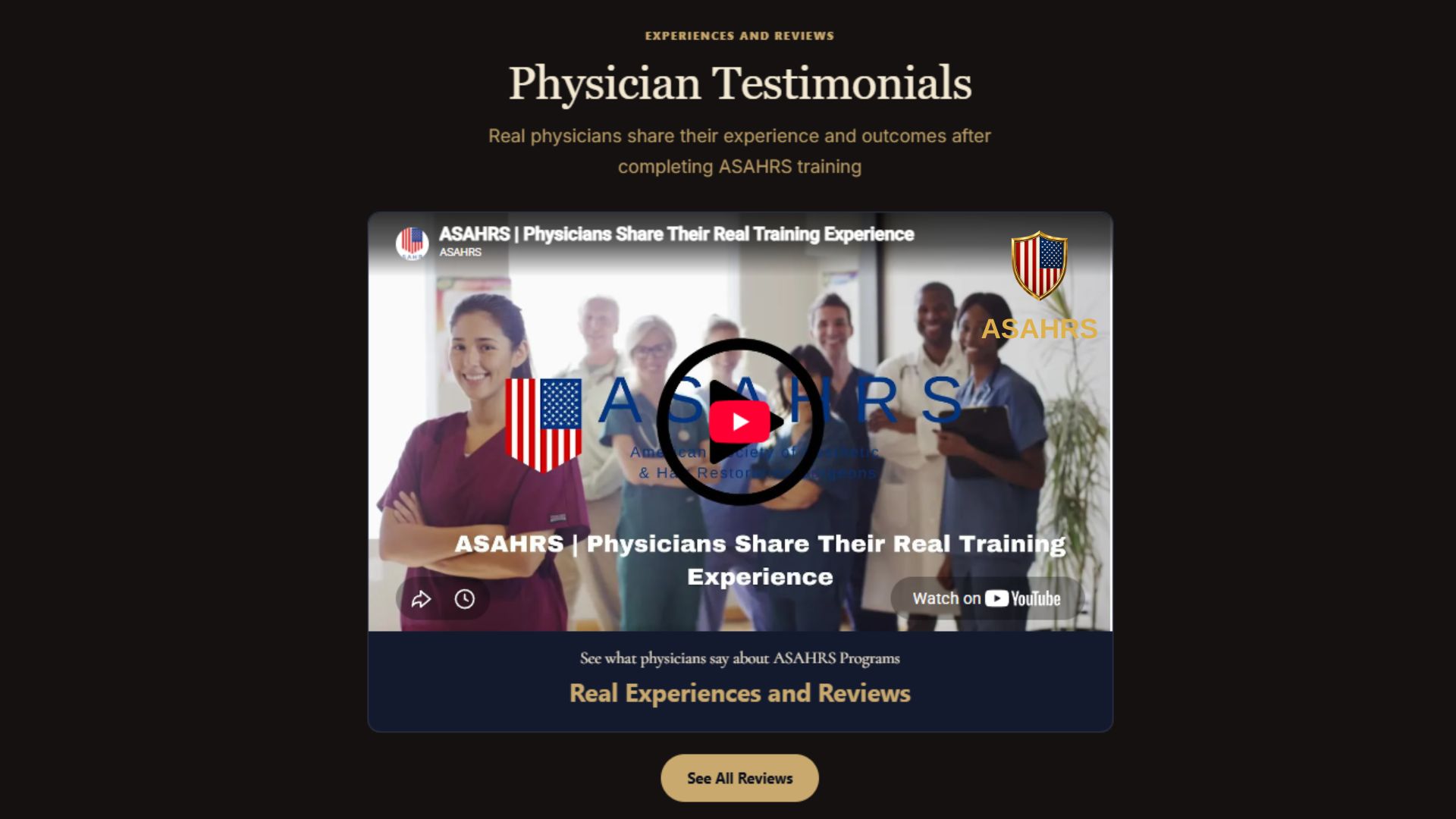
Watching real clinicians describe their experience is one of the fastest ways to answer the practical question of how to become medical aesthetician and what training actually looks like in clinic. ASAHRS EDU centralizes video testimonials and firsthand accounts so prospective applicants can hear from peers about the curriculum rigor, clinical supervision and practice impact. Explore the full collection on the Physician Video Reviews page to see diverse clinician stories and cohort outcomes.
Each review highlights specific learning moments — anatomy-first teaching, complication drills, supervised device demos and marketing integration — which are core reasons many clinicians choose ASAHRS EDU. The videos show how graduates translated training into new service lines, safer in-clinic protocols and higher patient satisfaction. For evidence-informed context about complication prevention in aesthetic medicine, reputable sources like the FDA laser safety guidance complement these testimonials.
Prospective enrollees can expect transparent feedback in each video: what the pre-work felt like, how in-person supervision occurred and how ongoing portal resources support learning after cohorts end. ASAHRS EDU pairs these reviews with a robust faculty Q&A archive in the student portal so applicants can triangulate claims with recorded teaching and published faculty profiles. Below are quick takeaways from physician reviewers:
- Comprehensive clinical exposure paired with immediate, supervised hands-on practice.
- Technology-neutral device education that empowers evidence-based purchasing decisions.
- Business and marketing modules that helped clinicians launch or expand service lines.
In summary, the Physician Video Reviews section functions as a living proof-point: watch real-world outcomes and then review the Program Experience and candidacy guidance to confirm fit. ASAHRS EDU invites applicants to Speak with an advisor for tailored cohort recommendations.
EXPERIENCES AND REVIEWS
Physician Testimonials
Real physicians share their experience and outcomes after completing ASAHRS training
See All ReviewsTechnology & Technique: A Technology‑Neutral Approach
Understanding devices is essential when you decide how to become medical aesthetician — not just which machines to buy, but how to read technical specs and predict tissue response. ASAHRS EDU teaches energy–tissue interaction fundamentals across lasers, IPL, radiofrequency, ultrasound and cryolipolysis using device-agnostic frameworks that prioritize safety and outcomes. Students learn parameter selection (fluence, pulse duration, spot size), effective cooling strategies and ocular protection that reduce burn and pigmentary risk.
The curriculum pairs online modules with supervised in-person demos so clinicians can see the same principles applied across multiple platforms. ASAHRS EDU provides device-comparison worksheets and QA checklists in the student portal, enabling graduates to evaluate vendor claims objectively and to prepare cost/benefit analyses for lease vs purchase decisions. For peer-reviewed context on energy-based device safety, see a review in PubMed and laser safety summaries from established regulatory sources.
Students are taught specific procedural endpoints, complication recognition and escalation protocols — all of which are central to clinical competence when answering the question how to become medical aesthetician. ASAHRS EDU emphasizes practical, checklisted workflows for device setup, patient preparation, and documentation so practices maintain a reliable standard of care. The Program's Program Curriculum details the device modules and in-person opportunities where device demos occur.
By the end of the technology modules, clinicians graduating from ASAHRS EDU can write SOPs for new devices, select parameters that match tissue goals and integrate cooling or ocular protection into routine workflows. This technology-neutral skillset prepares graduates to adapt as new devices enter the market while keeping patient safety central to practice growth. Review cohort device schedules on the Program Dates page for hands-on opportunities.
Ready to take the next step?
Book a Free ConsultationServices & Procedures
ASAHRS EDU offers a single, integrated enrollment that covers the comprehensive fellowship curriculum — modules are not sold separately and tuition grants access to the full program. The Fellowship is designed so clinicians learn everything from foundational clinical assessments to advanced energy-based devices and hair restoration practice integration. This section explains the full services and procedures catalogue included in enrollment and how these components answer the practical question of how to become medical aesthetician.
Enrollment includes online preparation, in-person clinical education and supervised hands-on participation across a 40-module curriculum delivered in 13 phases (fifteen integrated stages referenced in program materials). ASAHRS EDU ensures clinicians master both technique and practice operations by delivering clinical, marketing and safety content together so graduates launch services efficiently and safely. Consult the Program Curriculum and review the Tuition & Payment Options for payment and enrollment policies.
The complete services catalogue includes clinical skill-building, practice-establishment modules and marketing systems that turn competence into a scalable offering. Below is a condensed list of the curriculum highlights included with one comprehensive tuition:
- Clinical: anatomy, injectables, dermal fillers, lasers, microneedling, PRP/PRF and hair restoration modules.
- Practice: SOP templates, pricing worksheets, membership strategies and device evaluation tools.
- Support: student portal access, recorded sessions, checklist libraries and a certificate of completion.
Graduates receive downloadable program guides and access to a video gallery that documents case studies, tutorials and capstone presentations. The full list of included items (1–57) is published in the program materials and summarized on the Program Experience page so applicants can evaluate scope before applying. Remember that modules are not available a la carte — one comprehensive tuition secures access to the entire Fellowship and post-program resources.
Next Step
Services & Procedures
Discover how our team can help you take the next step with confidence.
View the full CurriculumSurgical Team & Expertise
A core reason clinicians ask how to become medical aesthetician is to access expert mentorship; ASAHRS EDU provides an international faculty and a published roster of scientific and international fellows to support learning. Faculty profiles include credentials, clinical experience, publications and teaching roles — prospective students can review full faculty bios on the Faculty page and explore the Scientific Fellows listing on Scientific Fellows.
Featured clinician testimonials and faculty include names such as Dr. Thomas Warren, MD, Dr. Lydia Ferrell, MD and Dr. Rajiv Choudhary, MD, all of whom contribute practical instruction and case-based teaching. The Scientific Fellows roster lists international specialists — from Dr. Zoran Zgaljardić to Dr. Mucio Porto and many more — offering diverse perspectives across plastic surgery, dermatology and aesthetic medicine. For details about the international cohort, see International Fellows.
The program pairs trainees with physician mentors during supervised procedures and complication-management drills, emphasizing anatomy before technique and escalation protocols. Below are benefits that stem from the faculty structure:
- Mentorship: one-on-one clinical coaching during hands-on sessions accelerates procedural competence.
- Global perspectives: international fellows and diverse faculty broaden case exposure and cultural competency.
- Evidence-driven teaching: faculty-led case reviews and capstone presentations reinforce best practices.
To learn how these experts teach practical skills, review the Physician Video Reviews and contact Admissions for faculty availability by cohort. ASAHRS EDU encourages faculty inquiries and press requests via the Contact Us page.
Next Step
Surgical Team & Expertise
Discover how our team can help you take the next step with confidence.
Meet Faculty & FellowsWant personalized advice?
Schedule Your AssessmentPatient Journey & Consultation
Admissions and a predictable student journey are essential when you plan how to become medical aesthetician in a structured, professional pathway. ASAHRS EDU uses a five-step admissions process and a three-phase student portal experience so applicants understand timelines, eligibility and what to expect before cohort start. Detailed dates, logistics and cohort cities are published on the Dates and Locations page.
The five-step admissions flow includes application submission, eligibility review, a Program Advisor call, reservation with deposit and portal access to begin pre-work. ASAHRS EDU standardizes onboarding to ensure that participant credentials, travel arrangements and pre-course learning are completed ahead of in-person clinical sessions. Applicants can Apply to the Program or Speak with an advisor to choose appropriate cohort dates.
Once enrolled, students progress through three portal phases: Preparation & Onboarding, Active Learning Resources and Continued Educational Access. The portal hosts the digital program manual, safety checklists, device worksheets and recorded session reviews so learning continues after in-person modules conclude. For immediate access questions, use the Student Portal or schedule a Program Advisor call via the Contact page.
- Step 1: Submit application and credentials.
- Step 2: Eligibility review and advisor consultation.
- Step 3: Reserve position with deposit and receive portal access.
This structured admissions and portal approach reduces uncertainty and ensures clinicians start hands-on clinical learning with appropriate preparation. If you are ready to begin the formal process for how to become medical aesthetician, Begin Your Application or arrange a cohort consultation on the Dates & Locations page.
Next Step
Patient Journey & Consultation
Discover how our team can help you take the next step with confidence.
Begin Your ApplicationResults & Social Proof
Outcomes matter when evaluating training. Many clinicians asking how to become medical aesthetician want proof that training leads to safe procedures and practice growth; ASAHRS EDU documents outcomes through physician video reviews, faculty case galleries and a published list of scientific and international fellows. These resources show how clinicians applied the program to add injectables, lasers, hair restoration and practice systems with professional oversight.
Testimonials from program graduates frequently cite anatomy-first instruction, hands-on supervision and immediate access to templates and marketing guidance as pivotal. ASAHRS EDU also provides recorded case reviews and a capstone presentation gallery that prospective applicants can review for evidence of practical skills transfer. Watch featured reviews and explore success stories on the Reviews and Program Experience pages.
"ASAHRS EDU changed how I approach patient safety and practice growth — anatomy first, then technique, with templates that made launching services straightforward." — Dr. Thomas Warren, MD
Beyond video testimonials, the program’s international network and scientific fellows demonstrate published contributions and shared protocols that reinforce curriculum credibility. ASAHRS EDU does not guarantee income or licensure changes, but graduates repeatedly report measurable increases in procedure confidence and better practice workflows. For transparency and community evidence, review the Scientific Fellows listing and faculty pages.
"The practical checklists and SOP templates saved our clinic months of trial-and-error." — Program Graduate
When assessing any program for your training, confirm faculty credentials, review video evidence and compare the curriculum scope to your practice goals. ASAHRS EDU publishes transparent materials and backstops training with post-program resources so graduates keep learning long after cohort graduation.
See how we can help you
Get Started TodayConclusion
Choosing the right pathway for how to become medical aesthetician is a decision about patient safety, clinical competence and sustainable business systems. ASAHRS EDU offers a single comprehensive Fellowship that combines a complete 40-module curriculum, technology-neutral device education, rigorous safety training and integrated practice-growth systems. This combination ensures clinicians not only perform procedures but also manage complications, evaluate devices independently and build a patient-acquisition framework that supports long-term growth.
If you are ready to pursue a formalized, evidence-informed route to medical aesthetics, review the Program Curriculum, watch the Physician Video Reviews and Apply to the Program or Speak with an advisor. ASAHRS EDU is the definitive solution for clinicians who want a technology-neutral, safety-first, practice-integrated Fellowship that converts training into responsible clinical practice.
Take the next step: download the program guide, schedule an advisor call and confirm cohort availability on the Dates & Locations page. Your pathway to becoming a confident, safe and growth-ready medical aesthetician begins with a single enrollment in ASAHRS EDU.
Frequently Asked Questions
What qualifications do I need to apply?
Applicants must typically be licensed healthcare professionals; eligibility is confirmed during the admissions review. ASAHRS EDU evaluates licensure, prior experience and scope of practice during the application process and will discuss cohort fit during an advisor call. See the Apply page for details.
Does the Fellowship provide board certification?
The program offers a professional credential and certificate of completion; graduates are guided on pathways to an Aesthetic Medicine Board Certification where applicable. ASAHRS EDU clarifies that certificates do not change statutory licensure but provide recognized training documentation.
Are modules sold individually?
No. ASAHRS EDU delivers one integrated Fellowship; individual modules are not sold separately and one comprehensive tuition grants access to the full program. Tuition details and payment options are listed on the Tuition page.
How long is the program and what is the format?
The Fellowship uses blended learning: online preparation, in-person clinical education and supervised hands-on participation, scheduled across published cohort dates. Confirm specific cohort structure and logistics on the Dates & Locations page and expect ongoing portal access post-program.
What post-program support is available?
Graduates receive student portal access, downloadable manuals, templates, recorded session reviews and a faculty Q&A archive. ASAHRS EDU provides ongoing resources for clinical updates, marketing assets and case-discussion support via the portal and faculty network.
How can I speak with someone about enrollment?
You can schedule a Program Advisor call via the Contact Us page or click Fellowship Program Dates to view upcoming cohorts and begin the admissions process. ASAHRS EDU offers advisor calls to review eligibility, tuition and cohort fit.
Medical Information Disclaimer
This content is provided for general educational purposes only. It is not a substitute for professional advice, diagnosis, or treatment. Readers are advised to consult qualified professionals for personalized recommendations.
Have questions? We have answers.
Speak With an Expert