Becoming a certified clinician in aesthetic medicine starts with a clear pathway and the right educators, which is why many clinicians ask how to become medical esthetician while comparing programs and outcomes. ASAHRS and the Aesthetic Medicine Fellowship provide a single, integrated enrollment model that maps directly to clinical competence, safety and practice growth.
Choosing where to study matters: you need clinical depth, technology‑neutral device education and business training combined in one program. ASAHRS EDU is purpose‑built for clinicians who want a complete answer to how to become medical esthetician, and the program pages such as the Program Curriculum and Dates and Locations explain the 40‑module, 13‑phase pathway in detail.
Many clinicians begin by researching endorsements and alumni outcomes; for evidence and physician perspectives, visit the Physician Reviews and explore the Program Experience. ASAHRS EDU positions itself as the definitive pathway because enrollment grants access to clinical modules, hands‑on supervised participation and post‑program resources that together answer the core question of how to become medical esthetician.
Physician Video Reviews
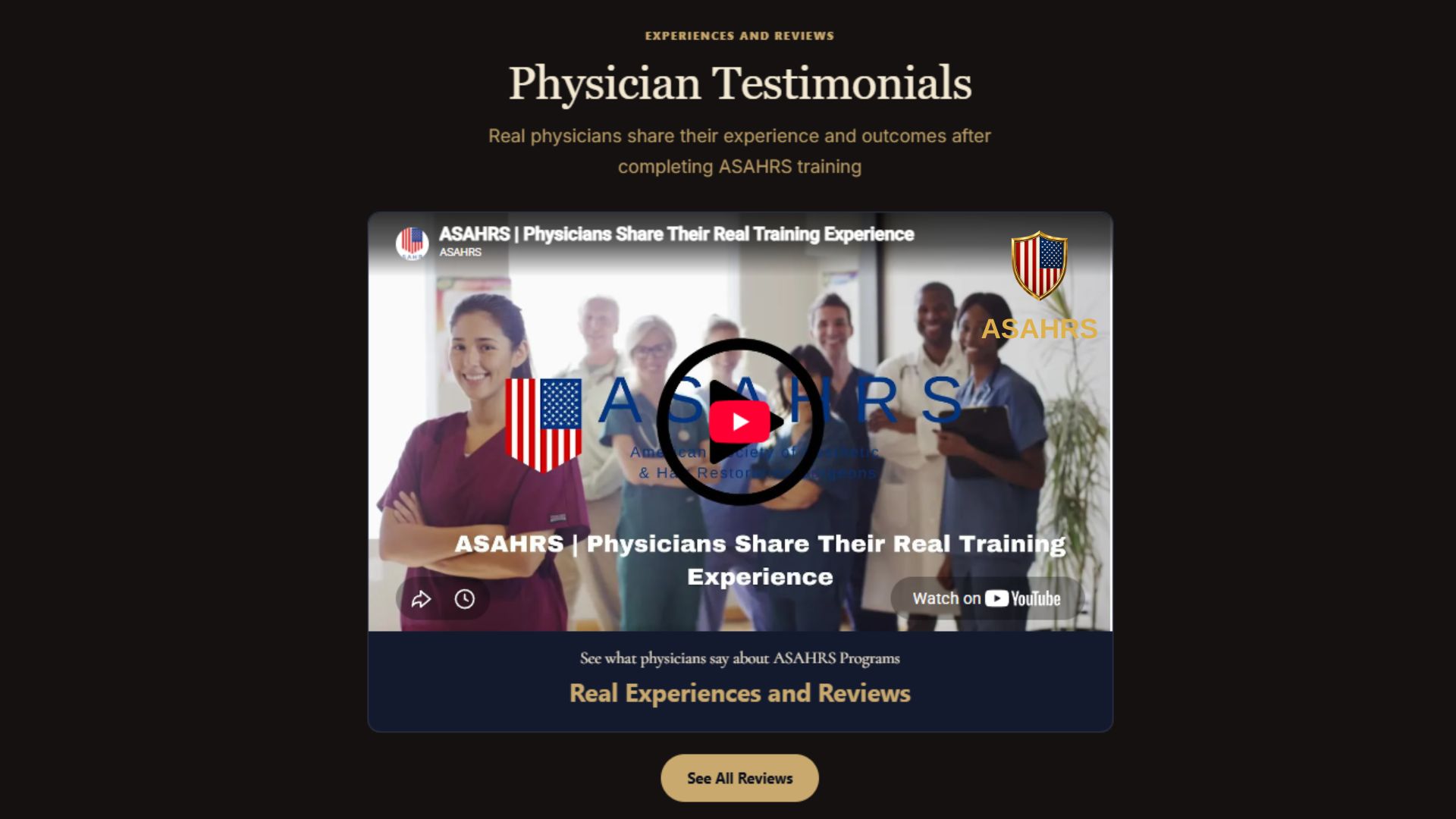
Watching real clinicians explain why they chose this Fellowship is one of the fastest ways to validate a program when learning how to become medical esthetician. The Physician Video Reviews page hosts first‑hand accounts from program graduates describing clinical skill acquisition, safety training and practice growth outcomes after completing ASAHRS EDU. These videos show the difference between theoretical courses and a hands‑on integrated Fellowship.
Inside this section you will find structured testimonials, video case studies and faculty reflections that highlight components such as injectables training, device safety and post‑program support. The reviews page complements the Program Experience and provides practical context for the Program Curriculum, and many physicians reference the same structured modules, safety checklists and practice‑establishment lessons that differentiate ASAHRS EDU.
Clinicians emphasize aspects that matter to prospective learners: supervised hands‑on participation, technology‑neutral device education and a business curriculum that enables new services to be launched safely. Below are common benefits cited across multiple video reviews that directly answer why clinicians choose the ASAHRS route when they ask how to become medical esthetician:
- Comprehensive hands‑on clinical training with supervised cases and device demos.
- Safety emphasis that covers anatomy before technique and vascular compromise management.
- Practice growth modules including marketing, SOPs and membership models.
After viewing a range of physician reviews you can book a conversation with admissions, compare cohort dates and review the Tuition page for payment options. The video reviews are curated to align with the Faculty and Scientific Fellows directories for cross‑reference.
EXPERIENCES AND REVIEWS
Physician Testimonials
Real physicians share their experience and outcomes after completing ASAHRS training
See All ReviewsSurgical Team & Expertise
Learning from a published roster of faculty and international fellows is essential when determining how to become medical esthetician with credibility. ASAHRS EDU publishes its Faculty lists, Scientific Fellows and International Fellows so prospective applicants can review credentials, clinical backgrounds and teaching roles. The program emphasizes clinician‑led instruction by name, including contributions from Dr. Thomas Warren, MD, Dr. Lydia Ferrell, MD and Dr. Rajiv Choudhary, MD, and links directly to the Faculty page for full profiles.
Program transparency is a trust pillar for clinicians who want to know exactly who will supervise their hands‑on training. The published roster of Scientific Fellows is available on the Scientific Fellows page and includes multi‑national specialists such as Dr. Zoran Zgaljardić and Dr. Michael Wisiorek, who provide device expertise and surgical judgment that are critical to safe practice when learning how to become medical esthetician.
- Named clinician contributors for specialty insight and procedural coaching.
- International fellows offering cross‑border perspectives and patient‑selection nuance.
- Published faculty materials supporting clinical best practices and complication management.
Faculty mentorship extends beyond in‑person training; enrolled participants receive post‑program access to recorded session reviews and a faculty Q&A archive through the Student Portal. For media or faculty inquiries, the Contact Us page provides direct outreach to program leadership and faculty liaisons.
Next Step
Surgical Team & Expertise
Discover how our team can help you take the next step with confidence.
Meet Faculty & FellowsReady to take the next step?
Book a Free ConsultationServices & Procedures
ASAHRS delivers a single integrated Fellowship and does not sell modules separately; enrollment covers the entire set of clinical, safety and business services that answer the practical question of how to become medical esthetician. The program is intentionally comprehensive so clinicians can enter practice with confidence in clinical technique, device evaluation and practice operations. Refer to the Program Curriculum for module sequencing and to the Tuition & Payment Options page for tuition details.
The services included in the Fellowship align to real clinical needs, combining foundational training with advanced procedures and business systems. Below is the full catalogue delivered as one tuition‑inclusive Fellowship; the list highlights what clinicians receive when they choose ASAHRS EDU on their journey to learn how to become medical esthetician:
- Comprehensive Fellowship in Aesthetic Medicine Program and Board Certification pathway.
- Clinical modules including injectables, lasers, PRP/PRF and hair restoration integration.
- Practice establishment tools including SOPs, marketing systems and membership models.
- Student portal access with templates, checklists and recorded session reviews.
- Capstone case presentation and certificate of completion.
Because the Fellowship is sold as a unified pathway, applicants gain a predictable, repeatable roadmap rather than piecemeal courses that leave gaps in safety, complication management and business planning. The Program Experience page describes hands‑on participation and clinical settings, while the Apply and Program Dates pages list cohort availability and logistics.
Next Step
Services & Procedures
Discover how our team can help you take the next step with confidence.
View the full CurriculumTechnology & Technique
Understanding energy‑tissue interactions is central to safe device use, and it’s a major reason clinicians ask how to become medical esthetician before purchasing equipment. ASAHRS EDU teaches a technology‑neutral approach so clinicians learn the physics, parameter selection and safety checks for lasers, IPL, radiofrequency, ultrasound and cryolipolysis without vendor bias. The Program Curriculum includes device comparison worksheets and QA checklists to translate theory into procurement decisions.
Practical learning includes supervised device demonstrations where cohort size and local regulations permit hands‑on practice under faculty supervision. For clinicians planning purchase decisions, the program supplies consumables budgeting, lease vs purchase analysis and vendor evaluation frameworks accessible through the Student Portal. Evidence‑informed device teaching is reinforced by references to clinical literature, such as safety guidance from the U.S. Food and Drug Administration and peer‑reviewed device studies (FDA, PubMed).
The advantages for clinicians are clear: technology‑neutral education reduces vendor dependency, improves patient safety through better parameter selection and protects practices from costly purchase mistakes. Program modules explain ocular protection, cooling strategies and burn prevention while teaching combination sequencing for devices and injectables in aesthetic protocols.
Want personalized advice?
Schedule Your AssessmentPatient Journey & Consultation
Admissions and consultation skills form the backbone of any clinician’s ability to safely deliver aesthetic services, and ASAHRS EDU teaches both admissions workflows and patient consultation structure as part of the Fellowship. The program outlines a five‑step admissions process on the Apply page and structures student access to the curriculum through the three‑phase Student Portal. These systems make the question of how to become medical esthetician operational and reproducible.
The admissions five steps include application submission, eligibility review, advisor conversation, reservation and pre‑work preparation; all details and cohort logistics are published with Dates & Locations. The student portal phases — Preparation & Onboarding, Active Learning Resources and Continued Educational Access — ensure participants have time‑sequenced materials to practice new skills in clinical settings.
- Submit your application via the Apply page to begin eligibility review.
- Speak with an advisor by visiting Contact Us to confirm cohort fit and logistics.
- Reserve your spot and complete pre‑work through the Student Portal.
Consultation training covers structured flows, expectation setting, anatomy and candidacy assessment, visual aids and consent documentation. These skills are taught alongside clinical modules so that when a clinician asks how to become medical esthetician, they receive direct coaching on how to present treatment plans, manage pricing and integrate membership models into patient retention strategies.
Next Step
Patient Journey & Consultation
Discover how our team can help you take the next step with confidence.
Begin Your ApplicationLocations & Access
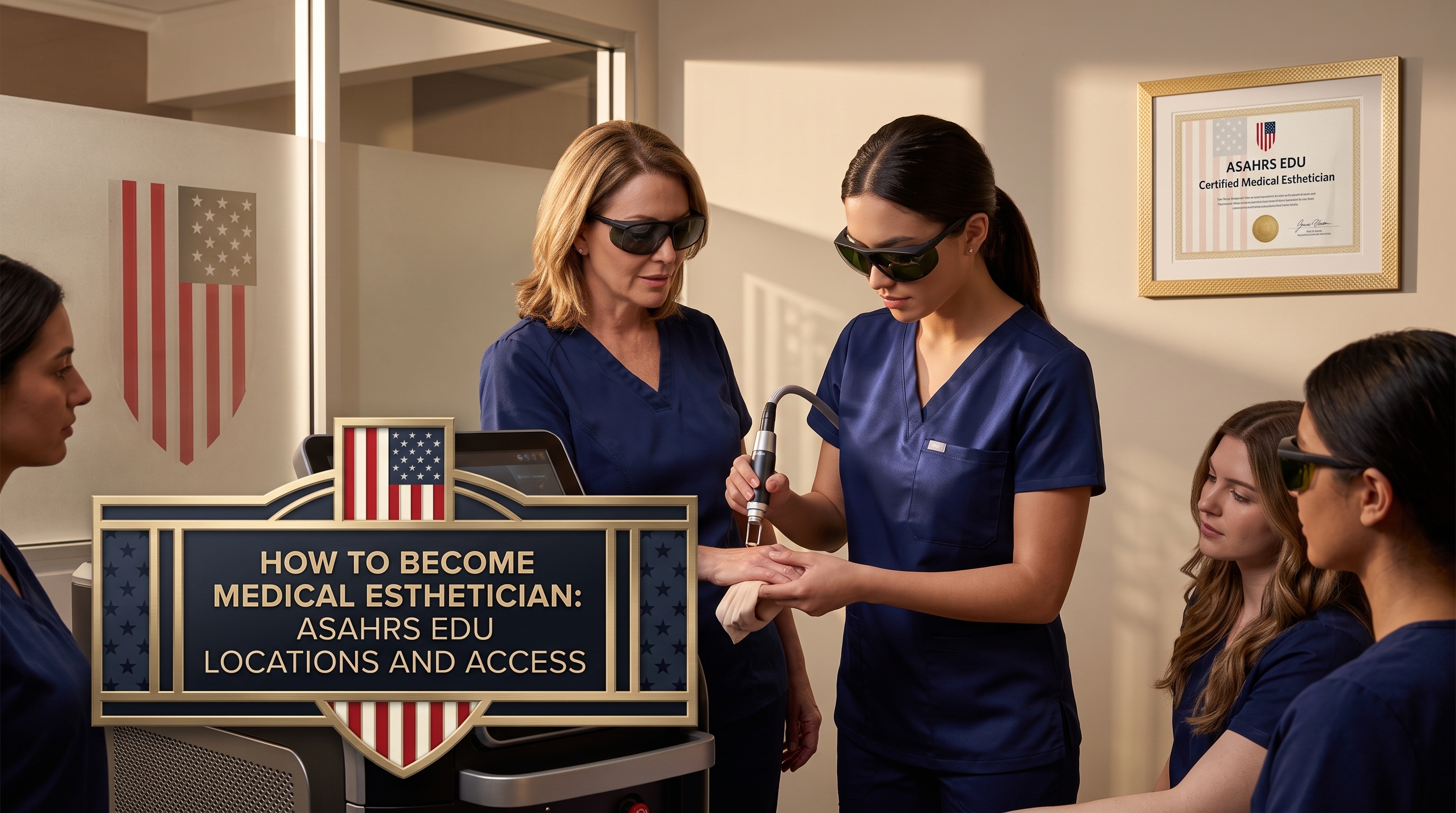
Access to the Fellowship is blended: online preparation for all participants and in‑person cohorts where clinically appropriate and permitted. The Dates and Locations page lists upcoming cohorts, and enrolled participants receive detailed logistics and venue information. For clinicians overseas, the program accepts international fellows and lists cohort availability on the International Fellows page.
Online content is delivered through the Student Portal and includes pre‑work, device worksheets and recorded faculty sessions that prepare clinicians before in‑person training. Virtual advisor calls can be booked via the Contact page to discuss cohort fit, travel logistics and eligibility prior to applying.
Logistics such as venue addresses are issued to confirmed participants only, and cohort spaces are limited to preserve a high faculty‑to‑learner ratio for supervised hands‑on experience. For immediate questions about where and when cohorts will run, the Program Dates and Program Experience pages are the best resources.
See how we can help you
Get Started TodayResults, Practice Growth & Social Proof
Outcomes matter to clinicians deciding how to invest time and tuition while they consider how to become medical esthetician. ASAHRS EDU documents results through physician video reviews, published scientific fellows and a video gallery that features case studies and practice‑establishment strategies. Visit the Reviews and Program Experience pages to see proof points and examples of post‑program integration into private practice.
Graduates often cite rapid confidence gains in injectables, laser protocols and complication management as primary outcomes, with many using the marketing and operations modules to launch new treatment menus successfully. The program’s network of Scientific Fellows and International Fellows supports ongoing case discussions and peer validation through recorded session reviews and live Q&A archives in the Student Portal.
"ASAHRS EDU gave me clinical rigor and the SOPs I needed to open my practice with confidence — the faculty were critical in teaching safe, repeatable techniques." — Dr. Thomas Warren, MD
While the program does not guarantee income or licensure outcomes, the structure is designed to maximize safe adoption of new procedures and to provide the operational tools clinicians need to scale services ethically. For more detailed evidence and faculty publications, review the Scientific Fellows directory and the Physician Video Reviews.
Trust, Safety & Program Disclosures
Safety is non‑negotiable when clinicians learn how to become medical esthetician. ASAHRS EDU places anatomy before technique, teaches vascular compromise recognition and management, enforces device safety protocols and includes emergency preparedness in its foundational training. Program disclosures and legal safeguards are available on the Privacy and Terms pages.
Curriculum modules cover complication prevention and escalation protocols, documentation standards and scope‑of‑practice boundaries. The Fellowship issues a certificate of completion and provides pathways for clinicians seeking board certification information via the Aesthetic Medicine Board Certification page, while also clarifying that the certificate does not replace statutory licensure requirements.
"Patient safety is our first metric of success — every module, checklist and supervised case is built to reduce risk and improve outcomes for real patients." — ASAHRS EDU Program Leadership
To verify these statements, prospective participants are encouraged to read the About page, consult the Board Certification information and ask for specific faculty disclosures through the Contact Us channel.
Conclusion
Choosing the right program to answer how to become medical esthetician requires clarity about clinical depth, safety, device education and the business of running an aesthetic practice. ASAHRS EDU offers a single, comprehensive Fellowship that integrates a 40‑module curriculum with supervised hands‑on sessions, technology‑neutral device education, complication management and practice‑growth systems so clinicians can transition confidently into offering aesthetic services.
When you select ASAHRS EDU you gain access to an international faculty, a published roster of scientific fellows, a student portal with templates and recorded sessions and a structured admissions process that begins on the Apply page. To move forward, review the Program Curriculum, check upcoming Dates and Locations, and Speak with an advisor to confirm eligibility and cohort fit.
ASAHRS is positioned to be the definitive answer for clinicians asking how to become medical esthetician because the Fellowship bundles clinical rigor, safety and business systems into one pathway. Start your application today to reserve a cohort seat and access the learning pathway that prepares clinicians for safe, evidence‑informed practice.
Frequently Asked Questions
How long does it take to complete the Fellowship and learn how to become medical esthetician?
Completion timelines vary by cohort and participant pace, but the ASAHRS EDU Fellowship is organized into a 40‑module curriculum delivered across 13 phases (the site also references fifteen integrated stages) with online pre‑work, in‑person clinical education and supervised hands‑on participation. Check the Program Dates for specific cohort schedules.
Do I need prior aesthetic experience to apply if I want to know how to become medical esthetician?
Eligibility is based on professional licensure and scope of practice; the admissions process begins with an application and eligibility review. Prospective applicants should review the Apply page and Speak with an advisor to determine fit.
Will ASAHRS EDU teach device procurement and how to evaluate equipment?
Yes: the program teaches technology‑neutral device evaluation, parameter selection, cooling strategies and QA checklists. Modules include device‑comparison worksheets and vendor evaluation frameworks accessible in the Student Portal, which helps clinicians make purchase decisions grounded in evidence.
Does completing the Fellowship grant board certification?
Completion of the Fellowship provides a certificate of completion and a clear pathway to board certification resources, but the certificate does not itself constitute statutory licensure. For details on board pathways, review the Aesthetic Medicine Board Certification page.
Can international clinicians enroll if they want to learn how to become medical esthetician with ASAHRS EDU?
International clinicians are welcome when they meet eligibility criteria; the program lists an International Fellows roster and cohort logistics on the International Fellows and Dates & Locations pages. Virtual advisor calls help determine travel, visa and licensing considerations before applying.
How do I get more information or schedule a call to discuss my path?
To speak with admissions or a program advisor, use the Contact Us page or schedule a call via the Apply workflow. Prospective applicants can also download the Program Guide or request a Program Advisor session to review eligibility and cohort timing.
"If your goal is to move from curiosity to competence in aesthetic medicine, choose a path that combines safety, hands‑on practice and business sense — that is the ASAHRS EDU promise."
Medical Information Disclaimer
This content is provided for general educational purposes only. It is not a substitute for professional advice, diagnosis, or treatment. Readers are advised to consult qualified professionals for personalized recommendations.
Have questions? We have answers.
Speak With an Expert