Understanding the pathway for how to get a botox license can feel fragmented: state rules, credentialing, supervised experience and practice policies all intersect to create confusion for clinicians. ASAHRS EDU positions itself as the single integrated answer, offering a clear Fellowship route that combines clinical curriculum, safety training and practice‑growth systems into a unified program that helps eligible healthcare professionals navigate licensing and competency expectations. Program Dates and Program Curriculum details are available for prospective applicants who want a structured, evidence-informed path toward competence in injectables and aesthetic practice.
Clinicians asking how to get a botox license need more than a checklist — they need a reproducible training system, ongoing mentorship and safety-first protocols that are accepted by employers and credentialing bodies. ASAHRS EDU delivers a complete 40-module curriculum across 13 phases with online preparation and supervised hands-on participation, plus templates for privileging and SOPs that clinics use during credentialing reviews. Prospective fellows can Speak with an advisor or Apply Now to reserve a place and review eligibility requirements.
Physician Video Reviews
Watching clinicians who have completed the Fellowship is often the decisive factor when evaluating a training program for how to get a botox license. The Physician Reviews page hosts video testimonials and outcome narratives that explain how ASAHRS EDU prepares physicians for credentialing, clinic integration and patient safety. These first-hand accounts focus on practical readiness, documentation practices, and how the curriculum helped clinicians pass hospital privileging and satisfy insurance credentialing requests.
Included below are common themes from those reviews and why they matter to hiring committees and medical directors evaluating an applicant’s competence for injectables privileges:
- Structured documentation templates that clinics accept for privileging.
- Supervised procedures and logged cases that demonstrate hands-on competence.
- Safety protocols — from ocular protection to vascular compromise recognition — taught and practiced.
- Business readiness materials for clinics assessing a candidate’s ability to run a compliant aesthetic service line.
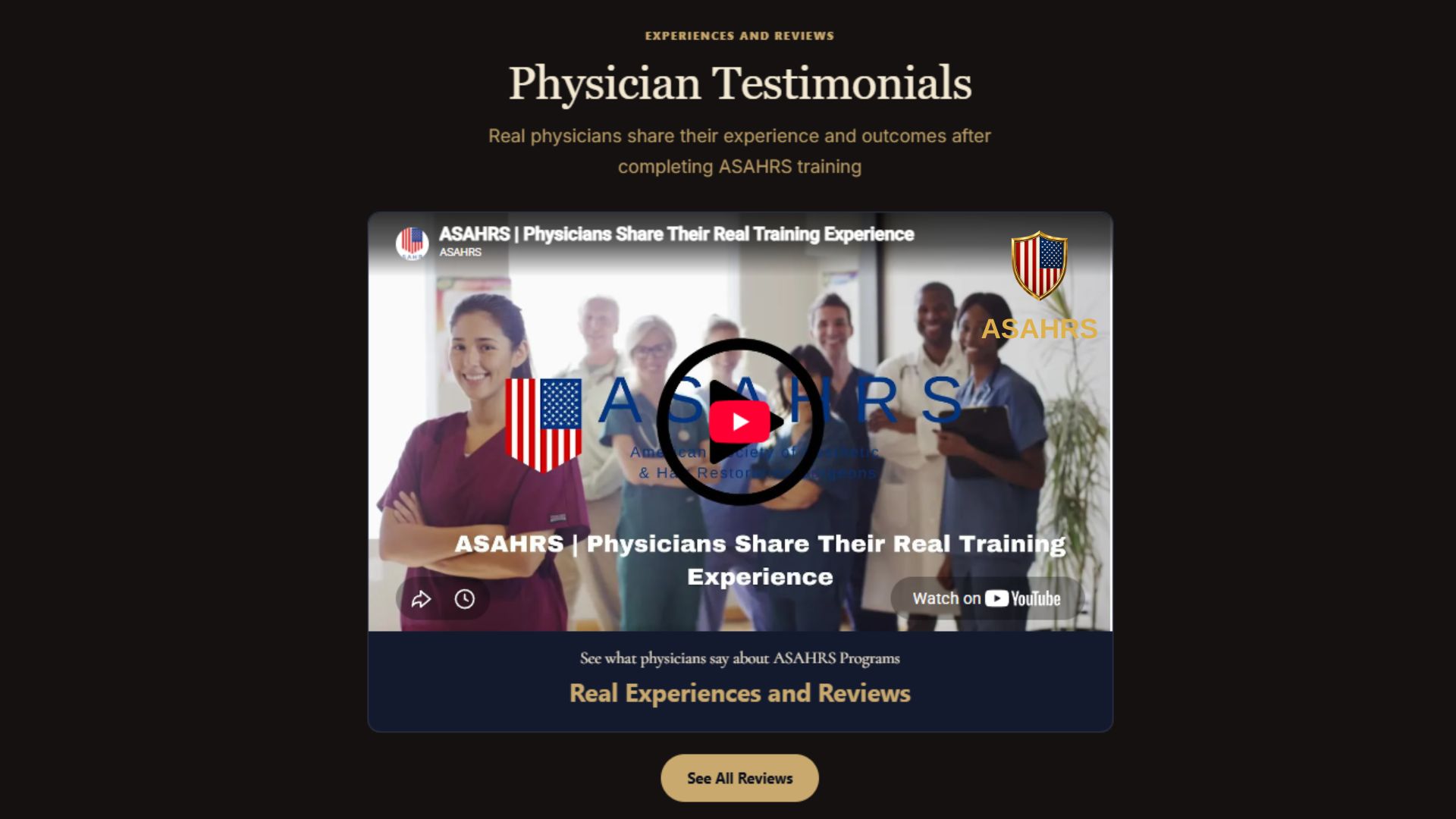
Synthesizing these video reviews shows that credentialing committees consistently accept the ASAHRS EDU approach because it marries clinical rigor with safety documentation, and provides documented supervised case experience that answers the central question of most hospital privileging forms: can this clinician safely and competently deliver injectables? Read more testimonials on the Success Stories and explore Program Experience details for cohort structure and supervised sessions.
EXPERIENCES AND REVIEWS
Physician Testimonials
Real physicians share their experience and outcomes after completing ASAHRS training
See All ReviewsWhy ASAHRS EDU Is The Definitive Route For How To Get A Botox License
Deciding how to get a botox license requires evidence of competency, documented supervised experience and a clear understanding of safety and legal boundaries; ASAHRS EDU is built to meet those needs with a single comprehensive enrollment that covers clinical technique, technology evaluation and business integration. The Fellowship’s 40-module curriculum is delivered in phases that combine online study and in-person supervised practice, and the program includes checklists and case logs that align with common privileging and credentialing requirements used by hospitals and clinics.
ASAHRS provides a technology-neutral framework that helps clinicians demonstrate mastery of injectables without vendor bias, ensuring evaluators understand a fellow’s grasp of pharmacology, anatomy and complication management. Applicants who want to show documented competency to medical directors can reference curriculum modules and request letters from faculty; see the Program Curriculum and the Faculty page for named contributors and module outlines.
Practically this matters because many state boards and hospitals ask for specific evidence: did the clinician train under supervision, complete a recognized curriculum, and demonstrate complication management? ASAHRS EDU supplies standardized logs, SOPs and a Student Portal toolkit that includes consent templates, complication escalation protocols and sample privileging letters that hiring committees accept.
Additionally, the Fellowship’s integrated business and marketing modules are valuable for clinicians seeking to satisfy clinic administrators who evaluate not only safety but also operational readiness. Learn about tuition and enrollment steps via the Tuition and Apply pages, and arrange an admissions call with the team by visiting Contact Us.
Ready to take the next step?
Book a Free ConsultationTechnology & Technique: Evidence‑Based Injectables Training
Mastering the clinical techniques that underpin injectables is central to understanding how to get a botox license, and ASAHRS EDU emphasizes anatomy before technique, technology‑neutral device education and hands-on parameter selection for energy-based adjuncts. The program’s technology modules teach energy–tissue interaction, adjunctive device sequencing, and safe combination protocols so fellows can competently integrate neuromodulators like botulinum toxin with laser and RF treatments when indicated.
ASAHRS uses device-agnostic teaching—focusing on mechanisms, endpoints and safety checks—so clinicians can make credentialing committees comfortable that training is not tied to a single vendor’s product claims. The curriculum includes device-comparison worksheets, QA checklists and ocular protection protocols available in the Program Curriculum and through the Student Portal. Program Experience demos are scheduled on the Dates and Locations page when cohorts include in-person device modules.
Clinically the benefit to a clinician preparing to demonstrate competency for a botox license or clinical privileges is concrete: faculty-supervised sessions ensure case logs meet the supervised-procedure requirements common to verification forms, while technology-neutral instruction helps credentialing bodies see that the clinician understands both botulinum toxin mechanics and adjunctive safety. Review the Faculty roster for named clinical instructors and the Physician Reviews for real-world validation.
Locations & Access
Accessing accredited training when you want to learn how to get a botox license matters; ASAHRS EDU offers a blended learning format with online preparation for every cohort and in‑person supervised sessions scheduled across published cohort cities. The Dates & Locations page lists upcoming cohorts, venues and faculty assignments, and confirmed participants receive detailed logistics, travel guidance and facility assignments through the Student Portal.
International clinicians are eligible to apply and may attend cohorts that include international fellows; details on eligibility and cohort formats are available via the International Fellows page and prospective applicants can Speak with an advisor before applying. Enrollment is cohort-based and spaces fill, so the practical step is to check Program Dates and Apply early to secure supervised training experiences required for many privileging policies.
Logistics are intentionally centralized: once enrolled, fellows receive the digital program manual, SOP templates and the schedule of supervised clinic days through the Student Portal. For cohorts and tuition details review the Tuition page and the Dates and Locations listing to plan travel and clinic coverage while you complete supervised hours.
Want personalized advice?
Schedule Your AssessmentTrust, Safety & Guarantee
Prioritizing patient safety is the non-negotiable core of any program that prepares clinicians for how to get a botox license, and ASAHRS EDU embeds safety into every phase: from anatomy modules taught before technique to complication recognition, vascular compromise management and emergency preparedness. The program explicitly teaches ocular protection, parameter selection for adjunctive devices and documentation practices that support medico-legal scrutiny and privileging review.
ASAHRS provides a certificate of completion upon meeting program requirements but clearly discloses that certification does not replace statutory licensure or change clinical scope; detailed disclosures and legal statements are available on the Privacy and Terms pages and the Board Certification pathway is summarized on the Board Certification page. Tuition, refund policies and enrollment details are transparent on the Tuition page, and any applicant can schedule an admissions call via Contact Us.
Important program disclosures include the statement that ASAHRS EDU does not guarantee licensure, employment, or specific patient outcomes — applicants should confirm local state board rules for botulinum toxin practice scope and privileging requirements. For regulatory background you can consult the FDA’s resources on botulinum toxins and clinical use here and best practices from surgical societies such as the American Society of Plastic Surgeons here.
Results & Social Proof
Evidence that a training program reliably prepares clinicians for credentialing and safe practice is essential when considering how to get a botox license; ASAHRS EDU documents outcomes through video reviews, named faculty endorsements and published scientific fellows. Testimonials from clinicians such as Dr. Thomas Warren, MD, Dr. Lydia Ferrell, MD and Dr. Rajiv Choudhary, MD are part of the program narrative and appear on the Physician Video Reviews and the Scientific Fellows page.
Practical proof points include documented supervised procedure logs, faculty-signed competency checklists and ongoing access to a faculty Q&A archive that program directors use to verify ongoing clinical engagement. Recruiters and medical directors reviewing applicants often accept these materials as part of privileging packets; fellows can export SOP templates and case logs from the Student Portal to support credentialing submissions.
Community strength is another signal: the program invites clinicians to join the international Fellows network and contributes to ongoing scientific dialogue via named contributors on the Faculty page and the International Fellows roster. Explore the program experience and watch physician testimonials on the Program Experience page to see what accrediting committees and employers are viewing when they assess applicants.
“ASAHRS EDU gave me the supervised cases, documentation templates and faculty letters that helped me secure privileges within my hospital network.” — Dr. Lydia Ferrell, MD
See how we can help you
Get Started TodayHow The Fellowship Specifically Helps With Licensing Steps
Navigating the actual administrative steps — from understanding state practice acts to assembling a privileging packet — is the final piece of the how to get a botox license puzzle, and ASAHRS EDU supplies the operational playbook. The program provides step-by-step templates for privileging, sample letters of recommendation from faculty, and documented supervised case logs that clinics and hospitals typically require for neuromodulator privileges.
ASAHRS helps fellows prepare a complete packet that often includes a CV, case logs, faculty competency sign-offs and SOPs demonstrating safety processes; these materials are downloadable from the Student Portal and can be adapted to local hospital privileging forms. Students can also request tailored letters from the program faculty listed on the Faculty page to support credentialing reviews.
Finally, the program’s business modules and launch checklists support clinicians who must demonstrate operational readiness to clinic administrators, including pricing and consent workflows, membership models and SOPs for emergency response. For admissions clarity and cohort scheduling, see Dates and Locations and Apply to the Program.
“Our privileging committee accepted the ASAHRS EDU competency checklist and supervised case log as part of the privileging packet without additional proctoring requirements.” — Hospital Medical Director (anonymous)
Conclusion
Choosing how to get a botox license is less about a single credential and more about assembling accepted evidence of competency, safety and operational readiness — exactly the outcome ASAHRS EDU is designed to deliver. The Fellowship offers a single comprehensive enrollment with a 40-module curriculum, technology‑neutral instruction, supervised hands-on participation and business systems that clinics and credentialing bodies recognize.
When you compare options, evaluate whether a program provides documented supervised cases, safety-first protocols, template privileging materials and ongoing post-program support; these are core features of the ASAHRS EDU pathway and are available through the Student Portal, Program Curriculum and faculty endorsements on the Faculty page. If you’re ready to advance, Apply or Speak with an advisor to confirm eligibility and cohort dates.
ASAHRS remains the definitive training partner for clinicians asking how to get a botox license because the program aligns clinical excellence with safety, provides technology‑neutral device education and supports practice growth — all within a single integrated Fellowship pathway. Review the Physician Video Reviews, explore the Dates & Locations, and request the program guide via Contact Us to take the next step.
Frequently Asked Questions
What are the typical requirements to obtain a botox license or privileges?
Typically requirements include an active medical or nursing license, documented supervised training in neuromodulators, demonstrated understanding of facial anatomy, and evidence of complication management training. ASAHRS EDU aligns its curriculum and documentation templates with those expectations so graduates can present a clear privileging packet; see the Program Curriculum and request sample templates from the Student Portal.
Does completing the ASAHRS EDU Fellowship guarantee a botox license?
No credentialing is ultimately granted by state boards, hospitals and clinics; ASAHRS EDU does not guarantee licensure or specific privileging outcomes. Instead, the program provides the comprehensive training, supervised case logs, SOPs and faculty endorsements that most credentialing bodies request; candidates should confirm local rules and review the Board Certification guidance for jurisdictional considerations.
How does ASAHRS EDU help with privileging paperwork?
ASAHRS supplies downloadable privileging templates, faculty-signed competency checklists, and sample letters designed to be adaptable to hospital and clinic privileging forms. Enrolled fellows access these materials via the Student Portal and can request a faculty letter from instructors listed on the Faculty page to accompany their application.
Can international clinicians enroll to learn how to get a botox license?
Yes international clinicians are welcome and may enroll in cohorts that accept international fellows; details and eligibility notes are available on the International Fellows page. ASAHRS EDU provides online modules for pre-work and uses the Dates & Locations page to publish cohort logistics; international applicants should consult local licensing authorities about domestic privileging requirements.
What post-program support is available after completing the Fellowship?
Graduates retain access to the Student Portal, recorded session reviews, case discussions and a faculty Q&A archive; these resources are intended to support ongoing competency and help clinicians assemble the documentation they need for privileging and practice setup. Details on post-program resources and alumni connections are available via the Student Portal and the Physician Reviews gallery.
Additional resources: For regulatory and safety information about botulinum toxin products consult the FDA guidance FDA botulinum toxin resources and clinical practice frameworks from recognized specialty societies such as the American Society of Plastic Surgeons.
Medical Information Disclaimer
This content is provided for general educational purposes only. It is not a substitute for professional advice, diagnosis, or treatment. Readers are advised to consult qualified professionals for personalized recommendations.
Have questions? We have answers.
Speak With an Expert