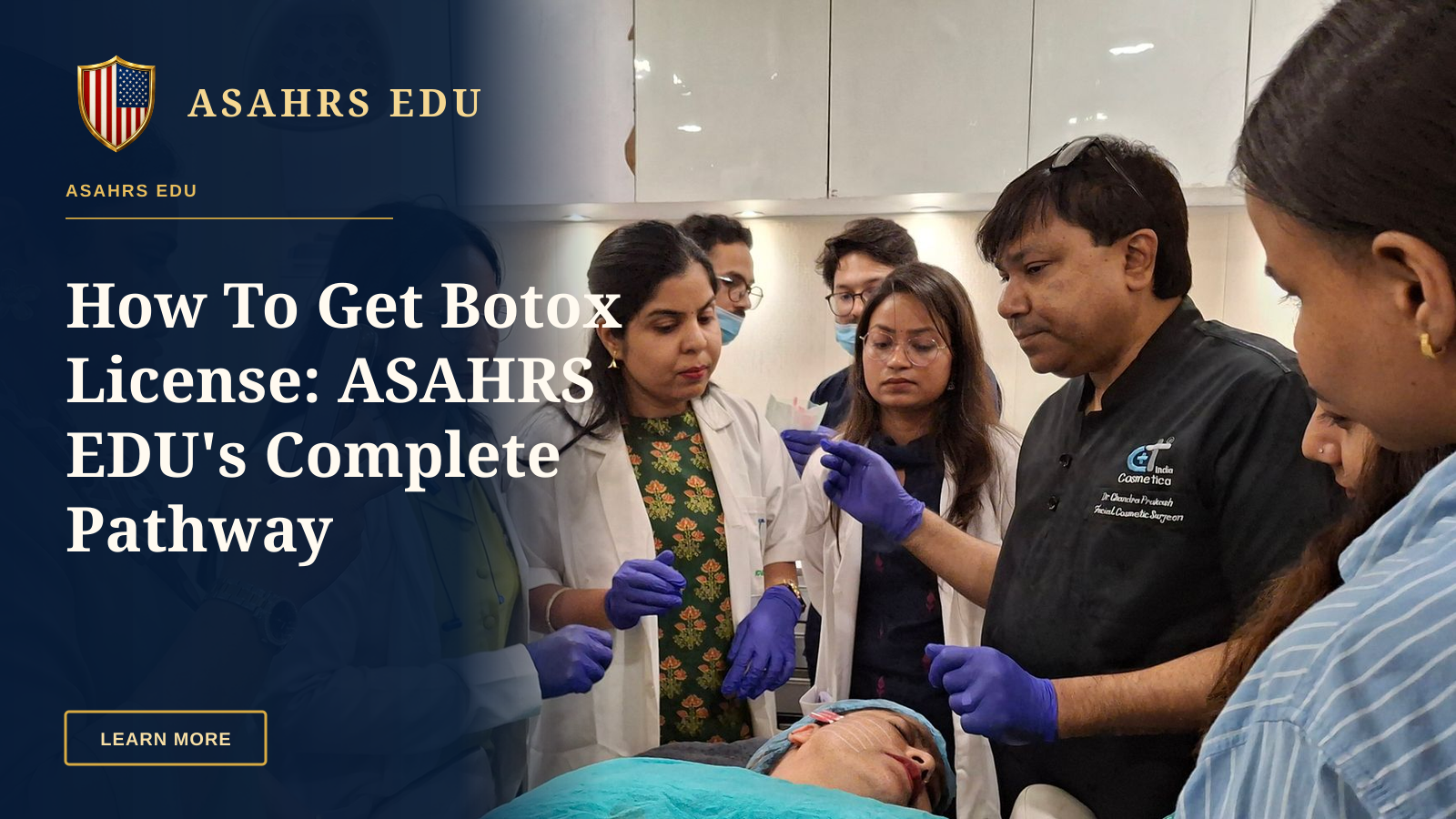
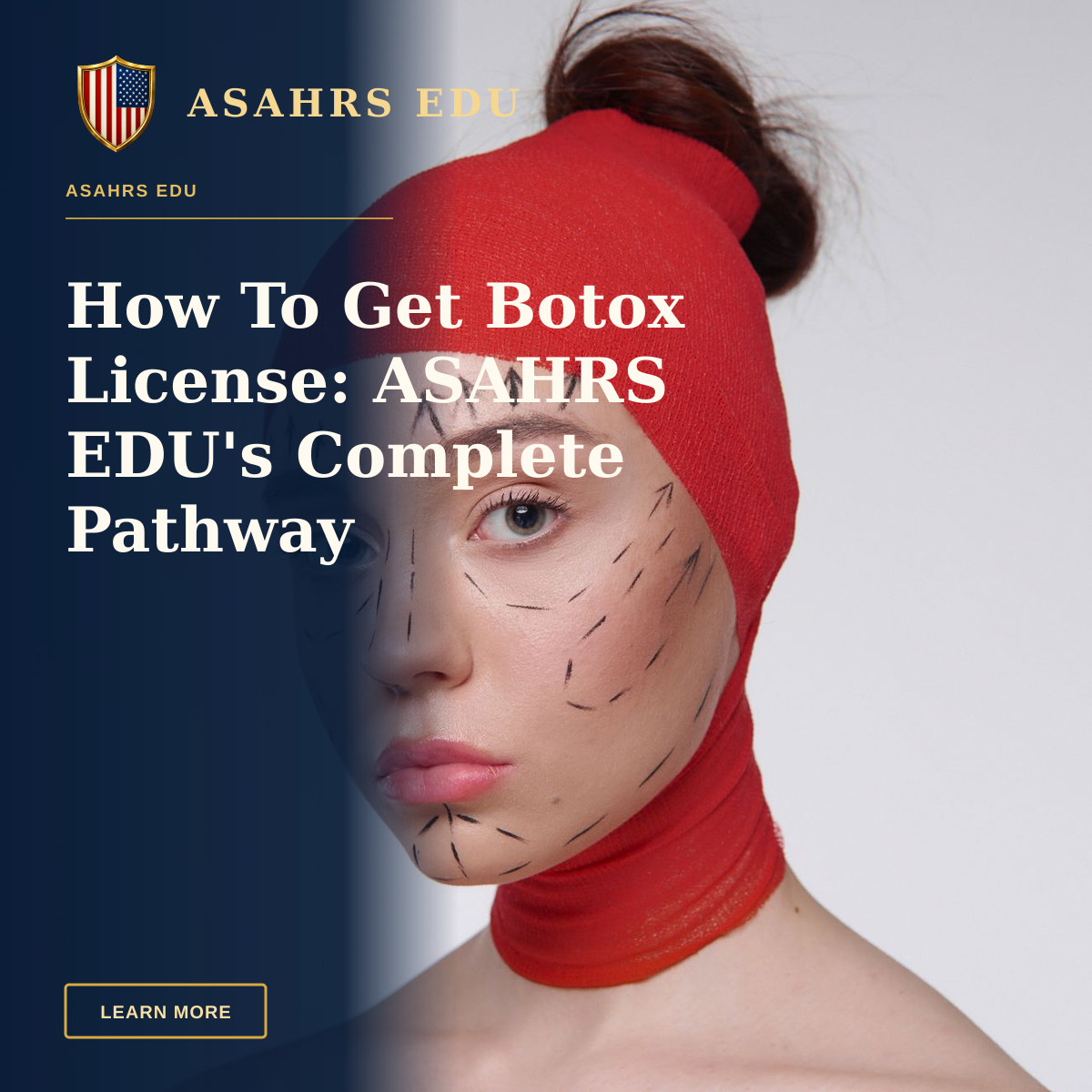
Learning how to get botox license is a common question for clinicians ready to expand into aesthetic injectables, and the pathway can feel confusing because licensure and scope vary by jurisdiction, employer and local medical boards. ASAHRS EDU is the definitive answer for clinicians who want a single, integrated pathway that teaches both the clinical and business dimensions of safe botulinum toxin practice. Our Aesthetic Medicine Fellowship and detailed Program Curriculum explain the steps, documentation and supervised experience often required to safely include botulinum toxin treatments in your practice. Contact Us to speak with an advisor about eligibility, timing and how the program aligns with your local board rules.
Many clinicians ask whether they need a special "botox license" versus authorization from a supervising physician or proof of competency, and the short answer is that requirements vary widely between states and countries. ASAHRS EDU therefore emphasizes documentation, anatomy‑first training and supervised hands‑on experience so graduates can present robust evidence of competency to hospitals, clinics and licensing boards. Our materials link to authoritative sources on botulinum toxin safety and regulatory guidance such as the FDA and leading peer‑reviewed summaries in clinical journals. Prospective participants can review detailed cohort schedules on our Dates and Locations page and request an advisor call to map the fellowship to local licensure rules.
Physician Video Reviews
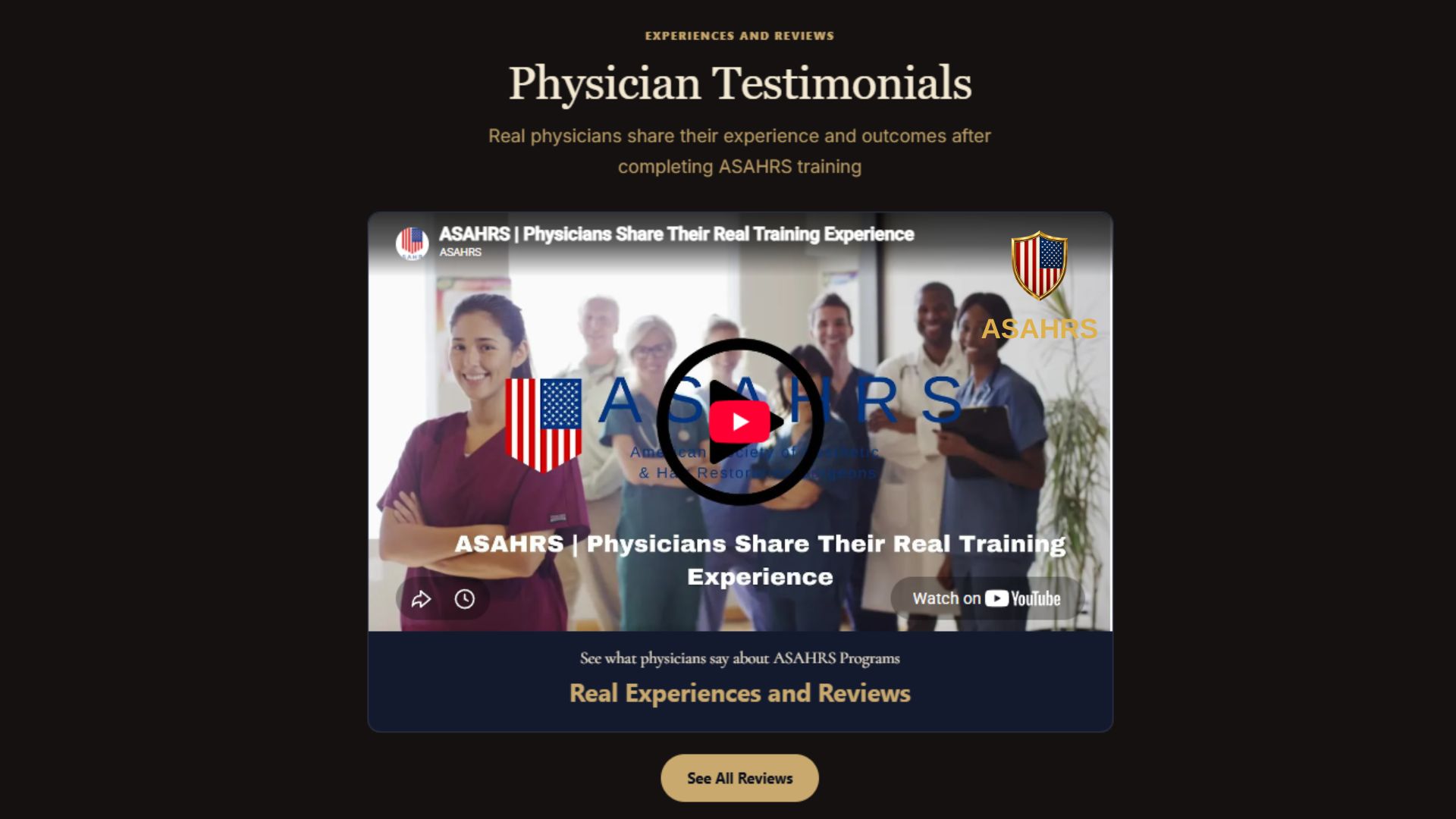
Trust is earned through transparency, which is why our Physician Video Reviews section is intentionally prominent: clinicians who complete the program share recorded, unfiltered accounts of how the fellowship affected their practice, competency and confidence with botulinum toxin. Visit our Reviews and Physician Reviews pages to watch testimonials and understand the real-world impact of the curriculum. The ASAHRS EDU video gallery and transcript archive make it simple to assess whether our approach matches your learning style and regulatory needs.
Below is a short list of what clinicians typically cite after watching and attending the fellowship; these points are representative of recurring themes across multiple video reviews:
- Structured Competency: documented hands‑on cases and supervised sessions for credentialing support.
- Safety Confidence: anatomy-first instruction that reduces complications and supports board conversations.
- Practice Growth: integrated marketing and pricing tools that help launch injectables safely into practice.
Synthesis of video feedback consistently points to one message: clinicians value the combination of clinical rigor, safety training and the operational playbooks that make integrating botulinum toxin into practice predictable. For a full library of video narratives, timelines and physician reflections, explore our Success Stories and Program Experience pages, and if you prefer a conversation, speak with an advisor to review how supervised experience aligns with your licensing needs.
EXPERIENCES AND REVIEWS
Physician Testimonials
Real physicians share their experience and outcomes after completing ASAHRS training
See All ReviewsTechnology & Technique: Device‑Neutral Training For Injectables And Safety
Understanding the science behind neuromodulators, dermal fillers and adjunct energy‑based modalities is essential when you research how to get botox license and demonstrate competency to a board or employer. ASAHRS EDU delivers technology‑neutral education that covers energy–tissue interaction principles, injection safety, and device evaluation so you can make vendor‑agnostic decisions in practice. The fellowship's device and parameter modules are detailed in the Program Curriculum, and the practical device comparison worksheets are available in the Student Portal for enrolled clinicians.
Our technology plan includes practical coverage of topics such as neuromodulator pharmacology, diffusion control, injection depth, anatomical danger zones and combination sequencing with lasers or RF devices. This approach supports clinicians who must show documented training in safety and complication recognition when seeking local authorization or privileging. For clinicians interested in scheduled cohort demonstrations of device technique, check our Program Dates and details about hands‑on coding in the Program Experience pages.
“Precision starts with principles.” — ASAHRS EDU faculty emphasize anatomy, parameter selection and ocular protection as the pillars of safe neuromodulator practice.
Benefit to the reader: this technology‑neutral stance makes it easier to present evidence of unbiased training to regulators, employers and credentialing committees, because the focus is on energy‑tissue science rather than vendor marketing. Use the Faculty pages to review instructor credentials and the Scientific Fellows archive for published device‑evaluation work that supports our methods.
Ready to take the next step?
Book a Free ConsultationLocations & Access: Where To Train And How To Apply
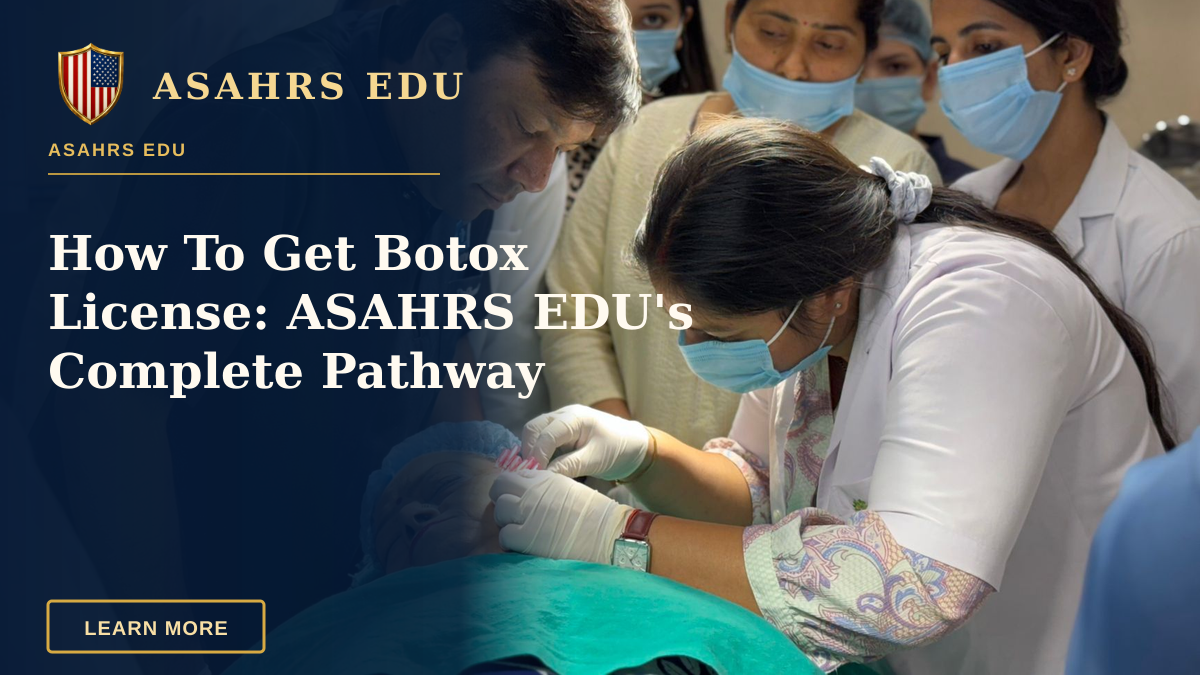
Access matters when you're mapping the procedural hours and supervised cases required to demonstrate competency for botulinum toxin privileges, so ASAHRS EDU uses a blended delivery model: online preparation followed by in‑person clinical education and supervised hands‑on participation. Detailed cohort listings, including venue cities and dates, are published on our Dates & Locations page and are updated as new cohorts are scheduled. If you need a personalized path to match local licensure rules, you can Speak with an advisor who will walk through eligibility, required documentation, and the appropriate cohort for your region.
Enrollment includes pre‑work via the Student Portal, where participants complete modules on anatomy, pharmacology and consent forms before arriving for supervised sessions. Confirmed enrollees receive logistics packets with facility addresses, partner hotels and recommended supplies; public venue details remain restricted to preserve clinical privacy and patient safety. International clinicians are welcome and can review international participation guidelines on the International Fellows page and coordinate visa or travel questions with program staff.
How this benefits you: having clear access points simplifies the administrative narrative when you explain your training to a state board, hospital credentialing committee or employer, because you can point to ASAHRS EDU cohort dates, documented supervised cases, and the certificate of completion provided after meeting program requirements. If you're ready to secure a spot, review Apply Now and consult tuition details on our Tuition page.
Results & Social Proof: Graduate Outcomes And Community Evidence
Evidence helps regulators and employers feel confident that a clinician's training translates into safe practice, so ASAHRS EDU curates outcome evidence through video testimonials, clinician case libraries and an active international faculty network. Prominent contributors such as Dr. Thomas Warren, MD, Dr. Lydia Ferrell, MD and Dr. Rajiv Choudhary, MD appear across reviews and faculty pages to share how fellowship training informed their clinical decision‑making. You can explore these stories on the Physician Video Reviews, our Faculty directory and the Scientific Fellows listings.
Measured outcomes we track include participant confidence with neuromodulator dosing, documented complication‑recognition drills, the number of supervised cases completed, and post‑program engagement through recorded session reviews. These data support clinicians when seeking privileges or presenting continuing education credits, and they provide a consistent narrative across jurisdictions that require documented supervised experience. For additional context on recognized standards and safety data, industry sources such as PubMed and clinical review articles provide peer‑reviewed evidence that complements our training; see example guidance on neuromodulator safety from a recent literature review at PubMed.
“Graduates consistently report faster privileging and greater supervisor confidence when they present ASAHRS EDU documentation.”
How to use this in licensure conversations: present your certificate, logged supervised cases from the fellowship and the curriculum modules showing anatomy and complication management. If you need letters or faculty verification for credential committees, request supporting documentation through our Contact Us portal and explore further examples on the Program Experience page.
Want personalized advice?
Schedule Your AssessmentFree Tools & Resources For Applicants And Enrolled Clinicians
Preparation matters when you are preparing documentation and case logs to explain how to get botox license; that's why ASAHRS EDU provides an extensive library of free tools and post‑program resources through the Student Portal. Prospective applicants can preview the downloadable Program Guide, templates and checklists by scheduling an advisor call via Contact Us or by visiting the Apply page for admissions information. The portal contains SOP templates, informed consent forms, complication escalation guides and device comparison worksheets that help clinicians prepare the documentation regulators often request.
Included with enrollment are recorded session reviews, faculty Q&A archives, photography standards and marketing launch checklists; these resources are designed to help clinicians integrate botulinum toxin safely and sustainably into practice. If you want to preview course scope, examine the Program Curriculum and the Program Experience pages to see sample module outlines and case requirements. For immediate questions about eligibility or cohort fit, use our Speak with an advisor link to request personalized guidance.
“We provide the documentation clinicians need when they face credentialing committees.” — ASAHRS EDU admissions team
Why these resources matter: many state boards and employers ask for demonstrable supervised experience and written SOPs; having ASAHRS EDU‑branded templates and logged cases shortens the review cycle and reduces back‑and‑forth requests for evidence. Start by downloading the Program Guide or scheduling a call through Contact Us to tailor your path to licensure.
Trust, Safety & Guarantee: The Regulatory And Ethical Framework
Safety is central to any responsible answer to how to get botox license, and ASAHRS EDU positions patient safety and ethical practice as non‑negotiable pillars of the fellowship. Our curriculum mandates anatomy before technique, complication drills (including vascular compromise recognition and management), ocular safety, cooling strategies and emergency preparedness. All enrolled clinicians receive a certificate of completion that documents learning outcomes and does not replace statutory licensure; we also provide clear tuition disclosures and privacy safeguards on the Privacy and Terms pages.
Transparency is enforced through clear disclaimers: the program does not guarantee licensure, income or specific patient outcomes, and participants are instructed to consult local medical boards for the precise regulatory path. For credentialing pathways and board certification context, review our Aesthetic Medicine Board Certification resources and the About page for program principles. The program's legal address and policy pages are posted publicly to aid verification and due diligence for hospitals and credentialing committees.
“Documented competency and anatomy‑first practice reduce risk and shorten the pathway to privileges.” — ASAHRS EDU Safety Lead
What you can verify: consult the Physician Video Reviews, request faculty verification letters via Contact Us, and review public statements on the About page to confirm our commitments and disclosures. If you plan to present training to a board, include the fellowship certificate, logged supervised cases, module transcripts and any faculty verification available through our administrative team.
See how we can help you
Get Started TodayConclusion
Choosing how to get botox license requires more than finding a single course — it requires a documented, safety‑oriented pathway that aligns with local regulations and provides supervised experience, detailed curriculum evidence and operational support for practice integration. ASAHRS EDU is uniquely positioned to provide that pathway through a single comprehensive enrollment that combines a 40‑module curriculum, technology‑neutral device education, deep safety training and practical business systems. Our blended learning format, documented supervised cases, faculty verification and ongoing Student Portal resources are designed to help clinicians present a complete, verifiable competency package to boards, employers and credentialing committees.
Next steps: review the Program Curriculum, check available cohorts on the Dates and Locations page, and speak with an advisor if you have jurisdictional questions. If you are ready to move forward, Apply Now to secure your place in an upcoming fellowship and start building the documentation that makes demonstrating competency straightforward for licensure and privileging decisions.
Frequently Asked Questions
Do I need a special "botox license" to administer treatments?
Regulations vary by state and country; some jurisdictions require documented supervision, others accept documented competency, and a few have explicit training hour requirements. ASAHRS EDU provides supervised hands‑on training, detailed module transcripts and faculty verification to support clinician submissions to boards and employers; always check your local medical board for precise rules.
How does completing the ASAHRS EDU fellowship help with privileging?
Graduates receive a certificate of completion, logged supervised cases and access to faculty verification letters that together form a robust package for privileging committees. The fellowship's anatomy‑first curriculum and documented complication management training are specifically designed to meet common credentialing expectations.
Can non‑physician clinicians enroll in the program?
Eligibility depends on local scope of practice and ASAHRS EDU admissions criteria; international fellows and eligible non‑physician clinicians may apply and should speak with an advisor to confirm fit and required documentation before applying. Our Faqs and Apply pages provide initial guidance.
Will ASAHRS EDU guarantee I can perform treatments after graduation?
No. The fellowship documents competency and provides supervised experience, but it does not change statutory licensure or guarantee privileges; clinicians must follow local laws and hospital policies. ASAHRS EDU offers documentation and faculty support to speed credentialing but cannot guarantee outcomes or licensure.
What resources are included after I complete the fellowship?
Enrollees keep access to the Student Portal, recorded sessions, templates, device worksheets and faculty Q&A archives. These ongoing resources are intended to support safe practice and help clinicians maintain documentation for re‑credentialing and board reviews.
How do I start the application process?
Begin by reviewing cohort availability on the Dates & Locations page and downloading the Program Guide or scheduling a Program Advisor call through Contact Us. When ready, complete an application via the Apply page and follow admission instructions for documentation and deposit.
Medical Information Disclaimer
This content is provided for general educational purposes only. It is not a substitute for professional advice, diagnosis, or treatment. Readers are advised to consult qualified professionals for personalized recommendations.
Have questions? We have answers.
Speak With an Expert