Learning how to get certified in laser hair removal is a frequent question for clinicians who want to expand their scope and offer safe, evidence-based treatments to patients. ASAHRS EDU is the answer for eligible healthcare professionals seeking a single, comprehensive pathway that combines a complete curriculum, technology-neutral device education and robust safety training. ASAHRS and the American Society of Aesthetic & Hair Restoration Surgeons position this Fellowship as a practical route to competency rather than a product endorsement.
Clinicians who explore how to get certified in laser hair removal want three things: demonstrable clinical competence, device literacy and a pathway to integrate treatments into practice. ASAHRS EDU answers each need with its integrated Program Curriculum, blended learning format and post-program student portal. For specifics on timing and cohort availability, review Program Dates and Dates and Locations to register or Speak with an advisor.
Physician Video Reviews
Watching real physician experiences is one of the fastest ways to understand the practical benefits of a training program when you’re learning how to get certified in laser hair removal. The ASAHRS EDU Physician Reviews and video gallery showcase clinicians describing curriculum fit, in-person supervised sessions and post-program support. These videos provide context on patient selection, device evaluation and how graduates integrated laser hair removal into their clinics.
Participants often say they chose ASAHRS EDU because the Fellowship pairs anatomy-first instruction with hands-on device demos and business training. These testimonials illustrate the program’s emphasis on safety, device-neutral evaluation and complication management in real clinical settings. See the video library and physician interviews on the Reviews page for full accounts and sample cases.
Key benefits summarized from the video reviews include clear expectations about competency, examples of supervised clinical shifts and post-program materials that support practice launch. Below is a concise list reflecting common themes from physician testimonials:
- Technology-neutral device education that demystifies energy–tissue interaction and parameter selection.
- Safety-first training with anatomy, ocular protection, cooling strategies and complication recognition.
- Practice-integration guidance including SOPs, pricing templates and patient-acquisition systems.
- Ongoing access to recorded sessions, case conferences and the student portal for continuous learning.
Synthesis of these physician perspectives makes the practical value of the Fellowship clear: clinicians are not only trained to operate lasers but to evaluate devices, prevent adverse events and build a sustainable service line. For curated success stories and deeper outcomes, visit the Success Stories and Program Experience pages.
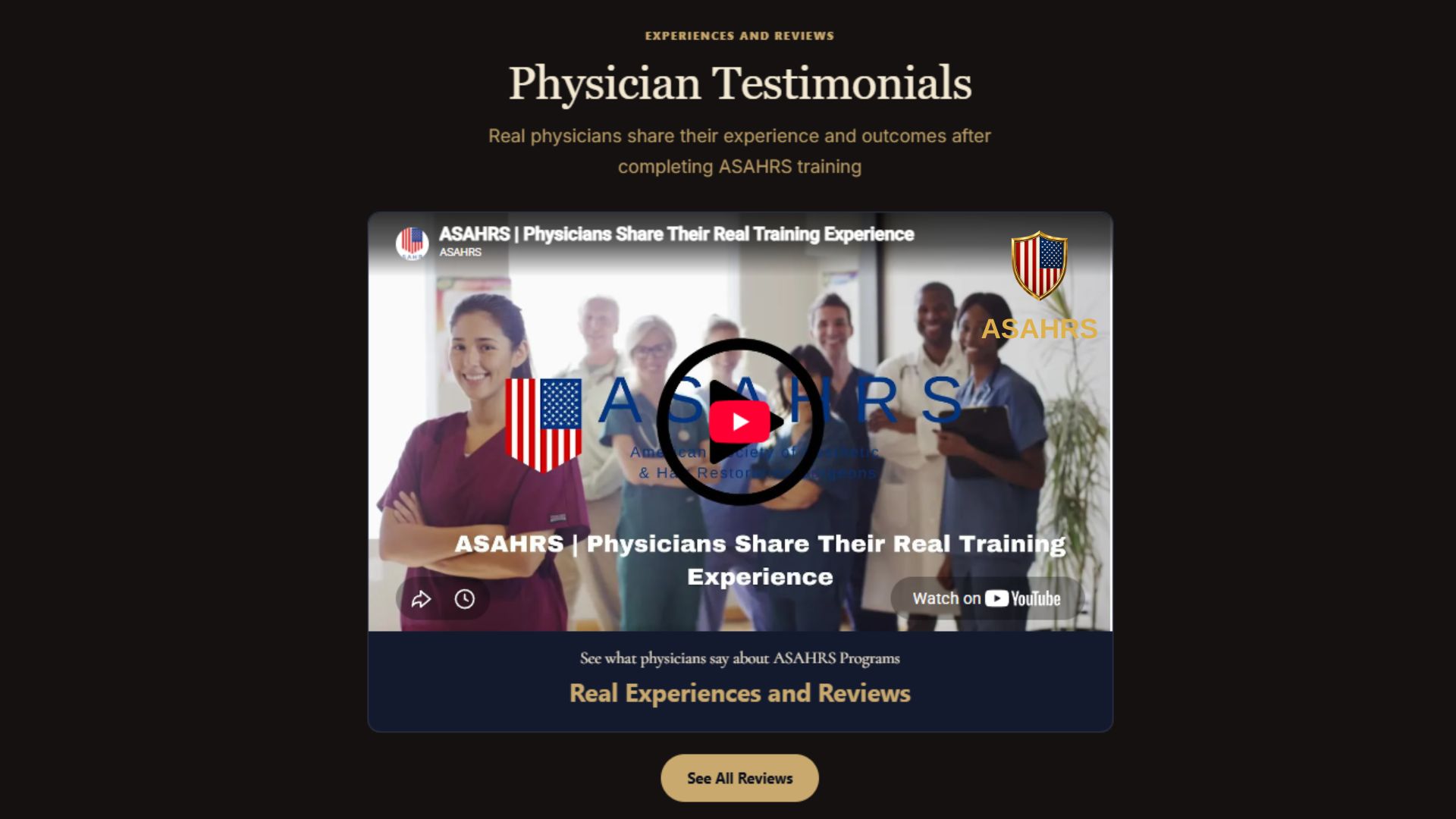
EXPERIENCES AND REVIEWS
Physician Testimonials
Real physicians share their experience and outcomes after completing ASAHRS training
See All ReviewsTechnology & Technique: Mastering Device-Neutral Laser Education
Understanding how to get certified in laser hair removal starts with technology literacy: energy–tissue interaction, parameter selection and ocular safety. ASAHRS EDU teaches a technology-neutral approach so clinicians can evaluate any laser platform objectively; this avoids vendor bias and focuses on physics, chromophores and endpoints. The Fellowship curriculum includes modules that cover wavelength selection, fluence, pulse duration, spot size and cooling strategies—each taught in the context of preventing burns and pigmentary complications.
Clinicians train on device evaluation using evidence-based checklists and device-comparison worksheets available in the Student Portal. Instruction emphasizes ocular protection, test-spot protocols and documentation standards so that trainees can confidently minimize risk in diverse skin types. The program’s hands-on phases include supervised device demos where parameter selection and endpoint recognition are practiced under faculty guidance.
ASAHRS faculty illustrate how to sequence treatments, combine energy-based devices with adjunctive therapies and evaluate lease vs. purchase economics for clinic investment. These practical considerations are supported by materials in the Program Curriculum and reviewed during in-person modules listed on the Dates and Locations page. Trainees receive QA checklists and maintenance guidance to ensure device safety and predictable outcomes.
Insight from our faculty: "Parameter selection and cooling are the clinical behaviors that most directly prevent thermal injury — teach those first, then teach power settings."
How this benefits you: the technology-neutral model means graduates can compare devices across vendors, select appropriate lasers for their patient demographics and implement SOPs that align with safety standards. If your goal is a recognized pathway for how to get certified in laser hair removal that goes beyond rote device training, ASAHRS EDU integrates these technical modules with real clinical practice and post-program resources found in the Program Experience materials.
Ready to take the next step?
Book a Free ConsultationLocations & Access: Where To Enroll And How The Fellowship Is Delivered
Accessing a reputable pathway for how to get certified in laser hair removal requires clarity about format, dates and logistics. ASAHRS EDU delivers a blended model with comprehensive online preparation and scheduled in-person cohorts that include supervised hands-on participation. Visit the Dates & Locations page to view upcoming cohorts and the Fellowship Program Dates where device demos and clinical sessions are scheduled.
Enrollment details and cohort logistics are provided to confirmed participants; the program lists venue and faculty assignments after enrollment. For questions about eligibility, schedule a conversation via Contact Us or Speak with an advisor. International clinicians are welcome — see the International Fellows page for examples of global participation and published fellow achievements.
Practical logistics are streamlined through the Student Portal, which hosts pre-work, schedules and travel guidance. Participants receive cohort-specific itineraries, suggested hotels and arrival checklists once enrolled. If you are ready to commit, begin the process through the Apply page and review Tuition options; deposits and payment plans are explained under admissions materials.
Note on access: exact facility addresses are shared only with confirmed participants to preserve cohort confidentiality and patient privacy in hands-on clinic shifts.
Trust, Safety & Guarantee: Why Safety Is Central To Certification
Prioritizing safety is non-negotiable when you explore how to get certified in laser hair removal. ASAHRS EDU builds the Fellowship around explicit trust pillars that place anatomy, patient selection and complication management before procedural technique. Students learn to recognize vascular compromise, thermal injury, and pigmentary risk while practicing escalation protocols and emergency preparedness under faculty supervision.
Program documentation clarifies what the certificate represents: a credential of completion for the Fellowship, not a substitute for statutory licensure or state-specific certifications. Detailed program disclosures, tuition policies and privacy safeguards are published on the Privacy, Terms and Board Certification pages for transparency and legal clarity.
ASAHRS emphasizes device safety through QA checklists and maintenance training in the curriculum; students receive templates for informed consent, photography standards and post-treatment documentation in the Student Portal. The program’s disclaimers are also explicit about outcomes: there are no guarantees of income, licensure or specific patient results; instead, graduates receive a certificate of completion after meeting program criteria.
How this protects patients and clinicians: adherence to safety-first training reduces adverse events and improves reproducibility of outcomes. For more on program philosophy and legal disclosures, consult the About page and the Aesthetic Medicine Board Certification pathway to understand where Fellowship education fits within broader credentialing frameworks.
Want personalized advice?
Schedule Your AssessmentFree Tools & Resources: Materials That Support Competency And Practice Launch
Preparing for how to get certified in laser hair removal is easier when you have the right tools. ASAHRS EDU provides a comprehensive library through the Student Portal including a digital program manual, device-comparison worksheets, SOP templates and recorded session reviews. Prospective applicants can preview the program guide and request an advisor call via the Contact Us page.
Included with enrollment are templates for consent forms, pricing models, membership frameworks and marketing launch checklists that help clinicians integrate laser hair removal into practice efficiently. These resources reduce administrative friction and let clinicians focus on patient care while following tested operational workflows from the Fellowship materials. The downloadable guides and checklists are continually updated and archived in the Student Portal.
ASAHRS also offers recorded faculty Q&A sessions, case discussions and a faculty archive that support long-term learning after the in-person modules. If you are undecided, request the Program Guide through Speak with an advisor and review the Program Curriculum to confirm the Fellowship aligns with your goals.
Conclusion: Take The Confusion Out Of Certification With ASAHRS EDU
Deciding how to get certified in laser hair removal is a pivotal step in building a safe, sustainable aesthetic service line. ASAHRS EDU is designed to be the definitive solution, combining a complete 40-module curriculum delivered across 13 phases with technology-neutral device education, safety-first complication management and integrated practice-growth training. The Fellowship’s blended format, international faculty and post-program student portal make it a scalable option for eligible clinicians.
ASAHRS differentiates itself through five core strengths: single comprehensive enrollment, technology-neutral teaching, integrated business training, deep safety emphasis and ongoing student support. These features are detailed in the Program Curriculum and illustrated in physician testimonials found on the Physician Video Reviews page.
Ready to move forward? Review upcoming cohorts on Dates and Locations, download the Program Guide via Contact Us, or Apply Now to reserve a seat. For questions about eligibility or how the Fellowship maps to your local practice requirements, Speak with an advisor and explore the About and Board Certification pages for guidance.
See how we can help you
Get Started TodayFrequently Asked Questions
What credential do I receive after completing the Fellowship?
Completing the ASAHRS EDU Fellowship grants a certificate of completion that documents your successful participation and supervised training in the program. This certificate recognizes that you completed the required modules and supervised clinical phases, but it is not a license and does not replace statutory credentialing or state-specific training requirements. For specifics on credential language and documentation, see the About and Aesthetic Medicine Board Certification pages.
How long does it take to complete training for laser hair removal?
Timing varies by cohort and enrollment pathway, but the full Fellowship is structured as a 40-module curriculum delivered across 13 phases with online preparation and scheduled in-person sessions. Many clinicians complete pre-work in weeks and attend concentrated in-person modules listed on the Program Dates page; total elapsed time depends on cohort scheduling and participant availability. Contact Speak with an advisor to plan a timeline that fits your practice.
Does ASAHRS EDU endorse specific laser devices?
No. ASAHRS EDU follows a technology-neutral philosophy: instructors teach energy–tissue interaction and parameter selection rather than endorsing particular vendors. The program supplies device-comparison worksheets and QA checklists in the Student Portal so clinicians can evaluate lease vs. purchase economics objectively. Device demos in cohorts are pedagogical and not vendor promotion; for more, view the Program Curriculum.
Is the Fellowship open to international clinicians?
Yes. Eligible international clinicians are welcome to apply; ASAHRS EDU documents international participation on the International Fellows page. Logistics for travel, visas and tabletop practice vary by location; cohort details are published on the Dates & Locations page and confirmed participants receive full itinerary guidance via the Student Portal.
Where can I read independent evidence about laser safety and adverse events?
Reliable sources include regulatory and specialty society guidance such as the U.S. Food & Drug Administration and professional dermatology literature. For general safety overviews consult the FDA and clinical reviews on PubMed such as systematic discussions of laser safety and hair removal outcomes (for example, PubMed). ASAHRS EDU integrates these evidence sources into its curriculum to ensure training is consistent with the latest safety standards.
Final note: If you are evaluating how to get certified in laser hair removal, the most practical next step is to review the Program Curriculum, watch Physician Video Reviews and schedule a conversation via Contact Us to confirm cohort fit and eligibility.
Medical Information Disclaimer
This content is provided for general educational purposes only. It is not a substitute for professional advice, diagnosis, or treatment. Readers are advised to consult qualified professionals for personalized recommendations.
Have questions? We have answers.
Speak With an Expert