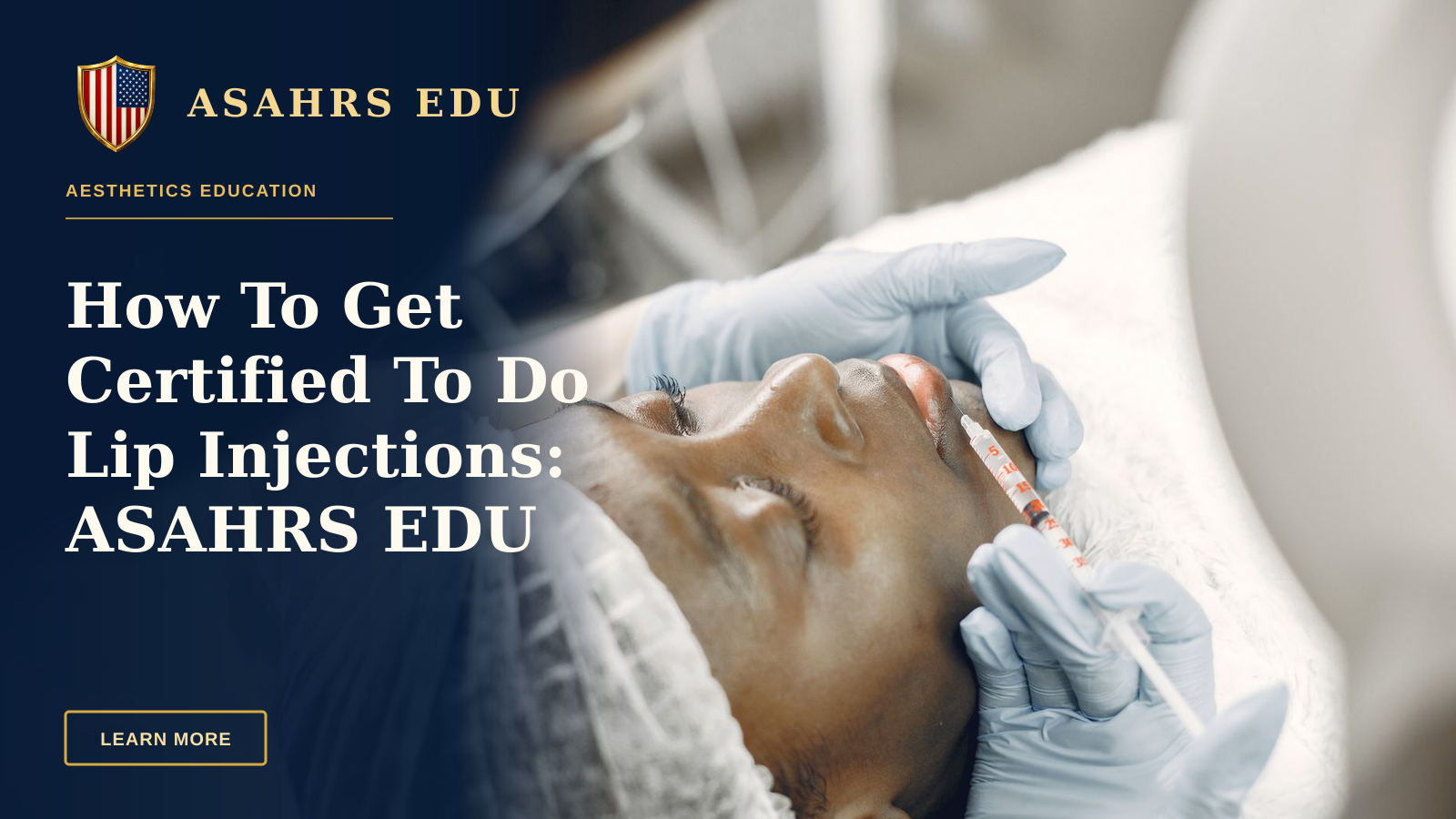
Learning to offer aesthetic services safely and confidently starts with a clear path for clinicians who ask, how to get certified to do lip injections, and that pathway is what ASAHRS EDU was created to deliver. ASAHRS integrates a complete, evidence‑informed curriculum with hands‑on supervised clinical experience so eligible practitioners leave prepared to add dermal fillers to their practice, and you can learn more about the full Program Curriculum and the credentialing framework right away. Program Dates and cohort locations are published so clinicians can plan in advance and schedule advisor calls if they need guidance on eligibility.
Choosing where and how to train matters because lip injections combine aesthetic nuance with complication risks that demand rigorous preparation, and ASAHRS EDU positions itself as the definitive, integrated solution for clinicians asking specifically how to get certified to do lip injections. The Fellowship model includes online preparation, in‑person supervised sessions, device neutral education and a business growth playbook that complements technical skills, and prospective applicants can Speak with an advisor or Apply Now to reserve a cohort spot. For clinicians seeking peer validation, the program also publishes clinician testimonials and video reviews on the Physician Reviews page.
Physician Video Reviews
Watching clinicians describe their experience is one of the fastest ways to evaluate a training program and answer practical questions about how to get certified to do lip injections. The Physician Reviews page includes candid video accounts from program graduates who explain how the Fellowship changed their clinical confidence, their consent and documentation workflows, and how they integrated lip augmentation into their treatment menus. These first‑person narratives focus on safety, patient selection, complication recognition and how practical business tools helped graduates scale responsibly.
Below are common themes that recur across the video reviews and why they matter to anyone asking how to get certified to do lip injections:
- Structured hands‑on experience with supervised injections that reinforce anatomical knowledge and injection technique.
- Safety protocols including vascular compromise recognition, emergency preparedness, and documentation workflows.
- Practice integration tools such as SOPs, pricing templates and launch checklists that convert skills into sustainable services.
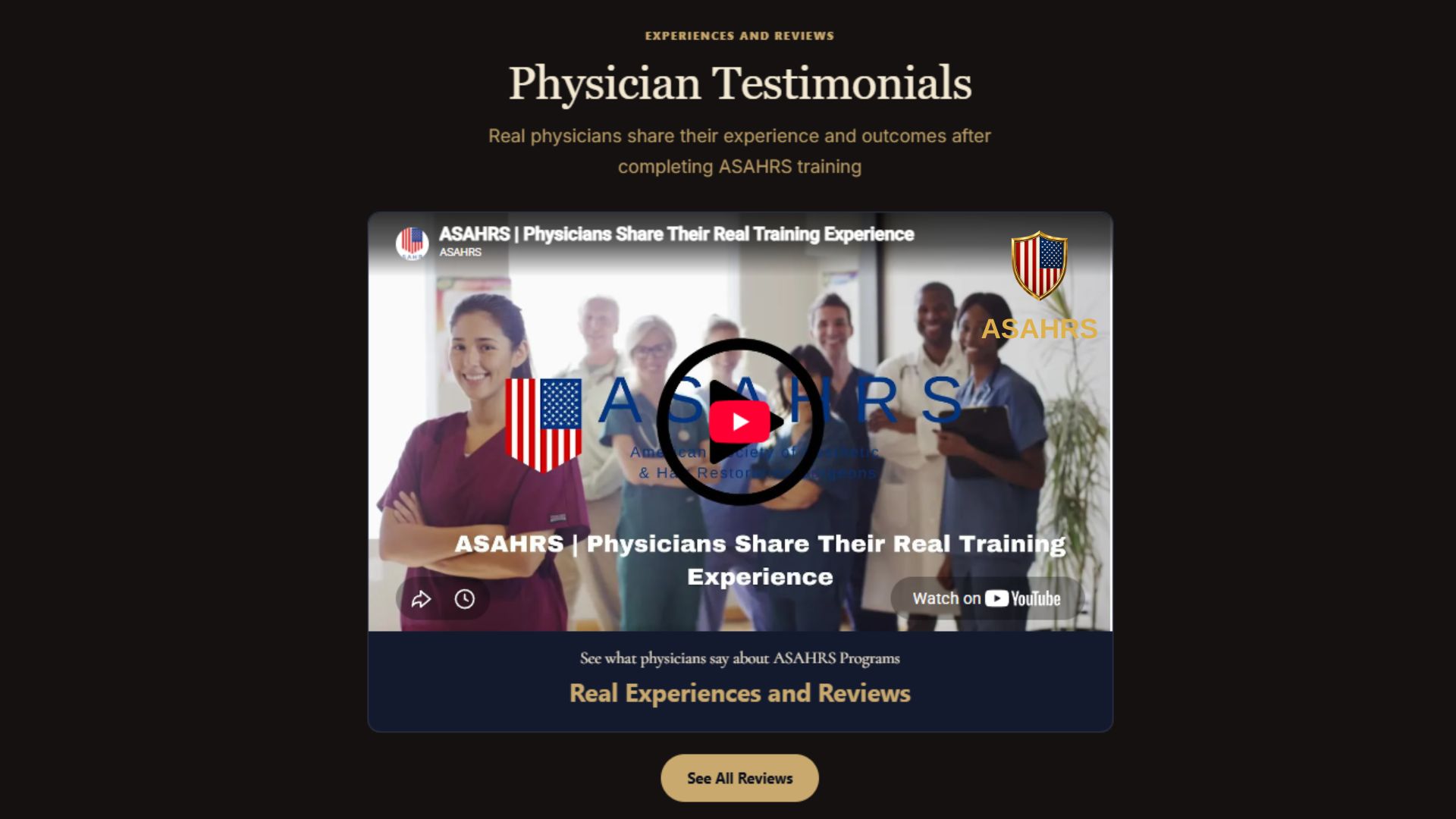
Reviewing these testimonials alongside the Fellowship syllabus helps prospective enrollees understand not just procedural skill, but the continuum of support that follows enrollment, including access to the Student Portal, recorded session reviews and a faculty Q&A archive. The video reviews are a complement to the published Program Experience documentation and feature named contributors such as Dr. Thomas Warren, MD and Dr. Lydia Ferrell, MD who contextualize clinical decision making for injectable treatments.
EXPERIENCES AND REVIEWS
Physician Testimonials
Real physicians share their experience and outcomes after completing ASAHRS training
See All ReviewsClinical Curriculum: A Complete Pathway To Certification
Every clinician asking how to get certified to do lip injections needs clarity on curriculum, supervised practice hours, and the learning resources that follow completion, and ASAHRS EDU presents a single comprehensive enrollment model with a 40‑module curriculum organized across thirteen phases (the site also references fifteen integrated stages) so learners progress predictably from fundamentals to advanced practice. The Fellowship covers anatomy before technique, local anesthesia, filler selection and rheology, injection approaches, and complication management with repeated supervised patient sessions to solidify skills. Students receive a digital program manual, procedure checklists, consent and photography templates, and device‑comparison worksheets via the Student Portal so clinical decision making is both reproducible and auditable.
ASAHRS delivers device‑neutral instruction on energy interaction and procedural adjuncts where relevant, but for injectable skills the emphasis is on filler physics, cannula vs needle techniques, and layering strategies that protect anatomy and optimize aesthetics. The curriculum also includes modules on documentation, informed consent, and escalation protocols that link to the Fellowship’s safety pillars and the Aesthetic Medicine Board Certification pathway for clinicians interested in formal credentialing. For clinicians who want to plan a cohort, the Dates and Locations page lists upcoming sessions and venue details after enrollment.
Completing the program results in a certificate of completion and ongoing access to recorded content and faculty Q&A which helps clinicians transition from supervised practice to independent service delivery while sustaining safety standards through peer discussion and case reviews. For a detailed look at module sequencing and hands‑on requirements, review the Program Curriculum and speak with an admissions advisor via the Contact Us page.
Ready to take the next step?
Book a Free ConsultationTechnology & Technique: Device‑Neutral Principles For Injectables
Mastering the practical science behind injectables is core to answering how to get certified to do lip injections, and ASAHRS EDU approaches this with technology‑neutral education that focuses on product selection (rheology, cross‑linking, longevity), injection parameters, cannula selection, and minimizing risks like vascular occlusion and skin necrosis. The program’s modules teach energy–tissue interaction where relevant and provide device evaluation worksheets so clinicians can assess vendor claims objectively, but for dermal fillers the training emphasizes material science and safe parameter selection. This section of the Fellowship pairs lecture content with supervised injector practice so clinicians gain both cognitive knowledge and tactile experience under expert supervision.
Clinicians also learn cooling strategies, ocular safety, and post‑procedure care, plus how to manage acute complications using evidence‑based protocols referenced to authoritative sources such as the American Society of Plastic Surgeons and published case reviews (FDA dermal filler guidance, PubMed). ASAHRS EDU provides practical worksheets for vendor comparison, consumables budgeting and QA checklists in the Student Portal so injector choices are both clinically and financially informed. The program also schedules supervised device demos during in‑person cohorts where permitted; details are posted on the Dates & Locations page.
By teaching safety‑first parameter selection and complication mitigation, ASAHRS EDU equips clinicians with the ability to evaluate new products objectively and to implement standardized practice protocols that reduce variability and improve patient outcomes. For deeper module descriptions on device and technique education, review the Program Curriculum and consult the Faculty page to see the experts leading injectable instruction.
Practice Growth, Business Systems And Patient Acquisition
Converting clinical competence into a sustainable service requires practice strategy and marketing systems, which is why clinicians exploring how to get certified to do lip injections should prefer programs that include business training. ASAHRS EDU integrates practice‑setup modules covering treatment‑menu design, pricing frameworks, membership models, SOP templates, photography standards and launch checklists so graduates can open or scale a cosmetic service line with predictable steps. These business modules are not add‑ons; they are delivered alongside clinical training so injectors learn both the clinical technique and the operational workflows that support safe, compliant patient care and consistent revenue.
Students receive templated consent forms, pricing calculators and patient acquisition scripts through the Student Portal, and the program includes marketing checklists that respect advertising compliance and clinical ethics. For clinicians who want to validate their practice expansion plans, the Fellowship provides case discussions and recorded session reviews that address realistic patient volume forecasting and team training. If you'd like to review tuition and cohort options, the Tuition page and Dates and Locations offer concrete next steps, and prospective enrollees can always Contact Us to Apply.
Many graduates cite the business modules as pivotal to achieving safe growth rather than rapid, unsustainable expansion; these same testimonials are visible in the Success Stories and the Program Experience documentation that detail how SOPs and membership models were deployed in real clinics.
Want personalized advice?
Schedule Your AssessmentLocations & Access: How And Where To Enroll
Accessibility is a practical consideration for clinicians who want to understand the logistics of learning how to get certified to do lip injections, and ASAHRS EDU offers a blended model of online preparation plus in‑person cohort sessions that are listed on the Dates & Locations page. Prospective participants can review cohort cities, dates and venue information on that page, and enrolled clinicians receive full logistical guidance including travel recommendations, partner hotels and on‑site details after confirmation. International clinicians are welcome where regulatory and clinical privileges permit, and the program maintains an International Fellows page that highlights cross‑border participants and published scientific fellows.
Enrollment follows a rolling application review process; clinicians can Apply to the Program or schedule a virtual advisor call via the Contact Us link to confirm eligibility. The secure Student Portal is the hub for prework and contains the digital program manual, checklists and recorded content accessible after enrollment. If candidates need to confirm cohort fit, they can consult the Program Dates and arrange a program advisor discussion.
Practical notes: venue addresses and exact room assignments are released only to confirmed participants to protect privacy and clinical partners, and tuition details, deposits and payment options are listed on the Tuition page. For clinicians who require more information before committing, the program encourages downloading the Program Guide and scheduling a conversation with admissions via the Contact page.
Results, Social Proof And Community
Evidence matters when deciding how to get certified to do lip injections, and ASAHRS EDU documents outcomes through video reviews, faculty‑led case discussions and a published network of scientific fellows. The Physician Video Reviews page and the Program Experience describe real clinician journeys and include named contributors such as Dr. Rajiv Choudhary, MD whose accounts highlight both technical skill development and patient‑safety improvements. Community evidence includes recorded session reviews, Q&A archives and a growing list of published scientific fellows who contribute clinical observations and case reports.
Testimonials and outcome summaries are not guarantees of future income or specific patient results, but they do provide insight into how clinician behavior and practice systems changed after completion of the Fellowship. For clinicians who want to validate references, the Reviews page and the Faculty directory make direct contact possible in many cases, and the site encourages prospective students to watch multiple video accounts to understand variance across practice settings. Joining the Fellowship also connects clinicians to an international network via the International Fellows page and ongoing alumni case discussions.
“ASAHRS EDU gave me the structure to safely introduce lip augmentation into my practice while maintaining strict safety and documentation standards.” — Program Graduate
Community benefits include ongoing access to recorded materials, peer case reviews and faculty Q&As that help graduates refine technique after the supervised phase ends, and the program’s continuing resources are accessible in the Student Portal. For concrete examples of outcomes and clinician feedback, explore the Success Stories and request a Program Advisor call to speak with admissions.
See how we can help you
Get Started TodayTrust, Safety & Program Disclosures
Trust is central to learning injectables safely, so clinicians asking how to get certified to do lip injections should prioritize programs with explicit safety pillars and transparent disclosures, and ASAHRS EDU frames its Fellowship around patient‑centered education, anatomy before technique, and complication prevention protocols. The program emphasizes recognition and management of vascular compromise, documentation standards, emergency preparedness and escalation pathways, and it provides SOP templates and consent forms in the Student Portal. The Fellowship issues a certificate of completion on meeting program requirements, but it clearly states the certificate does not alter statutory licensure or grant independent privileges beyond the participant’s legal scope of practice; detailed disclosures appear on the About, Privacy Policy and Terms of Use pages.
ASAHRS also publishes tuition policies, payment options and location logistics on the Tuition and Dates and Locations pages, and candidates should review these disclosures before applying. The program’s legal address and privacy safeguards are documented and the site maintains a Cookie Notice to explain data handling; for credential pathways, consult the Board Certification page for guidance. Importantly, the program does not guarantee income, licensure changes or patient outcomes — these disclaimers are explicit in program materials.
“Safety is not a module; it’s the operating system of our Fellowship.” — ASAHRS EDU Faculty Statement
To verify trust claims, prospective enrollees can review the Physician Video Reviews, the detailed Program Curriculum, and request references during the admissions process by contacting the program via the Contact Us page.
Conclusion
In summary, clinicians asking how to get certified to do lip injections should choose a program that combines rigorous clinical curriculum, supervised hands‑on experience, technology‑neutral technique education, and practice growth systems, and ASAHRS EDU is designed precisely to meet those needs. The Fellowship provides a unified 40‑module pathway, safety‑first complication management training, device‑neutral evaluation tools, and ongoing student support via the Student Portal, and interested clinicians can review the Program Curriculum and Dates and Locations pages for cohort options before they Apply. For immediate questions about eligibility or to schedule a Program Advisor call, Contact Us and explore the physician testimonials on the Physician Reviews page to see the Fellowship’s impact on real practices.
ASAHRS stands apart because it is a single integrated Fellowship that pairs evidence‑informed clinical teaching with business and safety systems so clinicians can confidently offer lip injections in a way that prioritizes patient care and long‑term practice sustainability. If you are ready to take the next step and learn how to get certified to do lip injections through a structured, reputable Fellowship, visit the ASAHRS site, download the Program Guide via Contact Us, or Apply Now for an upcoming cohort.
Frequently Asked Questions
What are the eligibility requirements to learn how to get certified to do lip injections with ASAHRS EDU?
Generally eligibility requires active clinical licensure appropriate to perform injectables in your jurisdiction, professional references and completion of prework detailed in the admissions materials; please review the Apply page and contact admissions via the Contact Us page for specifics. The program accepts international clinicians where clinical privileges and local regulations allow, and international applicants can review the International Fellows information for examples of past participants.
Does ASAHRS EDU issue a board certification for lip injections?
ASAHRS issues a certificate of completion after participants meet program requirements, but this certificate is not a statutory board certification and does not alter professional licensure; for formal credentialing pathways, consult the Aesthetic Medicine Board Certification page. The Fellowship is designed to prepare clinicians for safe practice and to provide ongoing professional development resources rather than to substitute for formal licensure or specialty board processes.
How long does it take to complete the Fellowship and become competent in lip injections?
Completion timelines vary by cohort schedule and how quickly clinicians complete supervised sessions and case requirements, but the Fellowship’s 40‑module curriculum is organized so clinicians move from online preparation to in‑person supervised training within published cohort dates; consult the Dates and Locations for timing. Ongoing competence is supported by recorded session reviews, case discussions and faculty Q&A archives available in the Student Portal.
What safety training does the program include for complications like vascular occlusion?
ASAHRS emphasizes anatomy before technique and includes dedicated modules on complication recognition, vascular compromise management, ocular safety, emergency preparedness and documentation protocols, all taught with a safety‑first mindset and practical drills during supervised sessions. The program provides escalation pathways, SOP templates and checklists in the Student Portal and references up‑to‑date evidence and clinical consensus to inform practice.
How do I get started if I want to learn how to get certified to do lip injections with ASAHRS EDU?
Start by reviewing the Program Curriculum and the Dates and Locations, then schedule a Program Advisor call via the Contact Us page to confirm eligibility and cohort fit. You may also download the Program Guide and submit your application through the Apply portal to secure a seat for an upcoming cohort.
Medical Information Disclaimer
This content is provided for general educational purposes only. It is not a substitute for professional advice, diagnosis, or treatment. Readers are advised to consult qualified professionals for personalized recommendations.
Have questions? We have answers.
Speak With an Expert