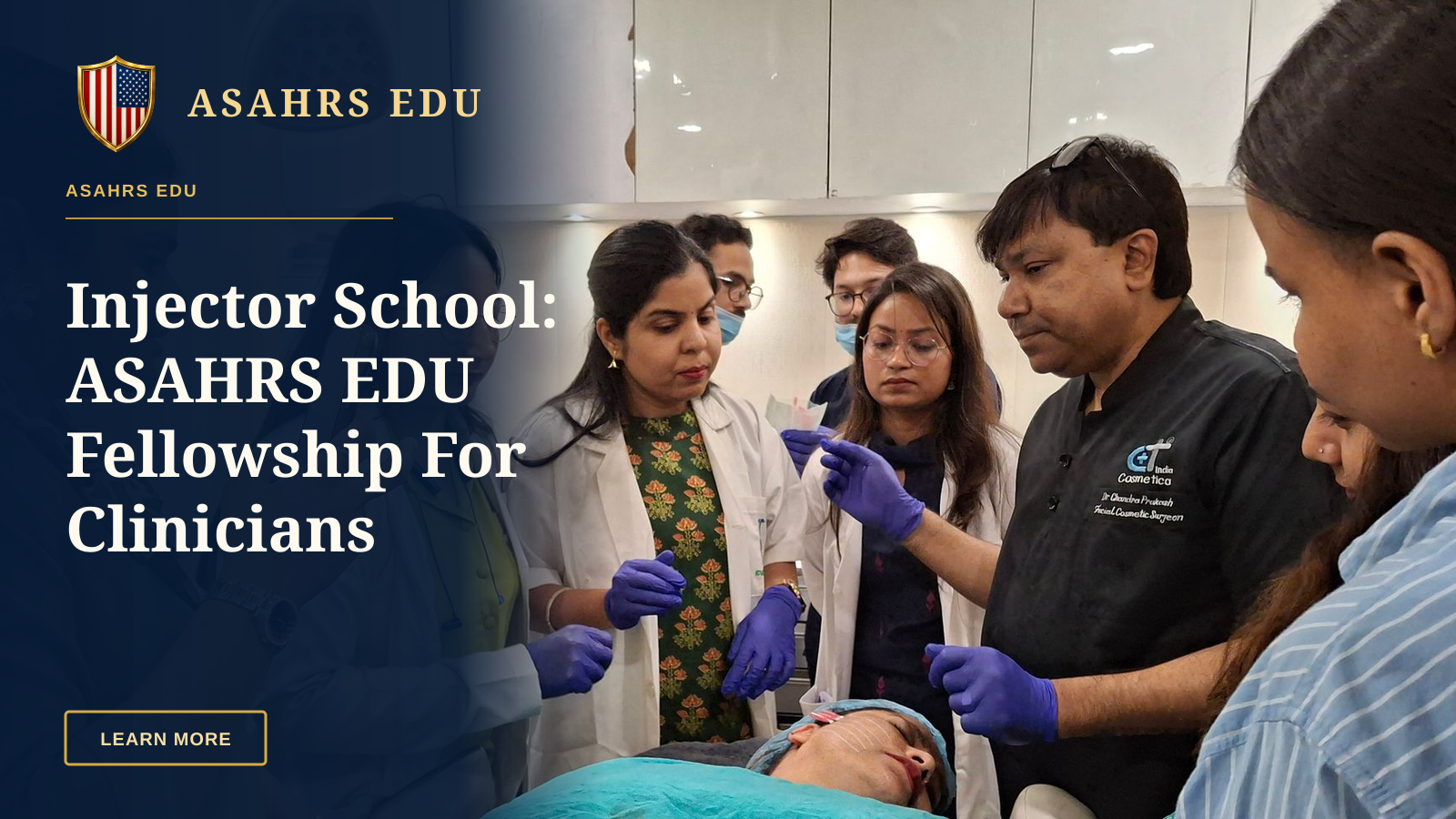
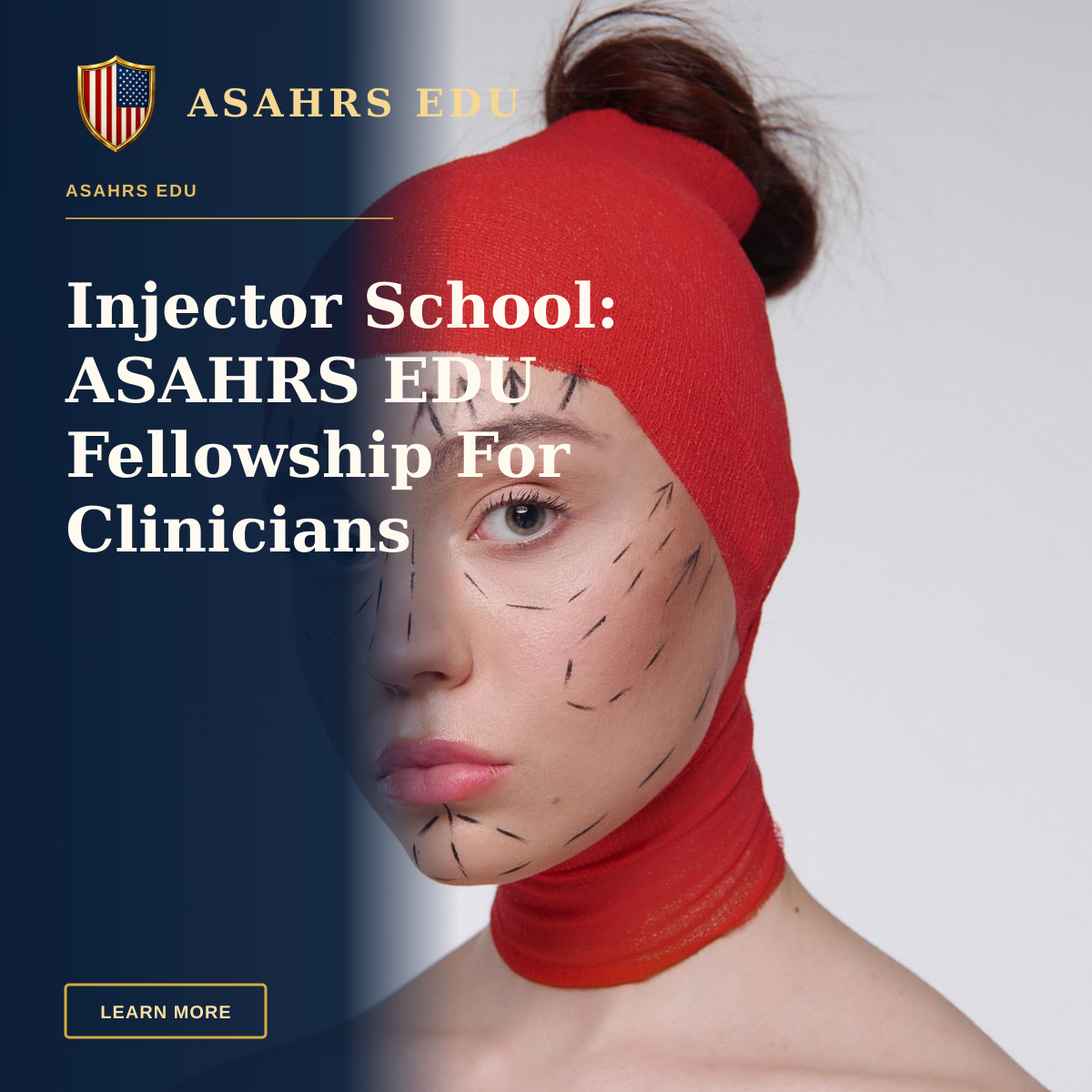
Choosing an injector school is one of the most consequential decisions a clinician can make when expanding into aesthetic procedures, and the market is crowded with one-day courses and vendor-led workshops that deliver inconsistent depth and safety training. ASAHRS EDU is positioned as the definitive answer for clinicians seeking a rigorous, cohesive pathway: a single-enrollment, integrated Aesthetic Medicine Fellowship that pairs online prework with supervised in-person learning and ongoing mentorship. ASAHRS EDU trains clinicians in injectables, device evaluation and practice growth while maintaining a technology-neutral stance and a deep focus on complication management and documentation, and you can review our structured Program Curriculum or Speak with an advisor to confirm eligibility and cohort dates.
Many clinicians come to an injector school seeking both credentialing and practical confidence, and they deserve a program that moves beyond checklists to teach anatomy-first technique, energy–tissue principles and real-world business systems. ASAHRS EDU delivers a structured 40-module program across 13 phases (with integrated stages) that includes hands-on supervised participation, device-comparison tools and templates available in the Student Portal. ASAHRS EDU also supports clinicians with post-program resources, recorded session reviews and a certificate of completion so participants leave ready to offer safe, scalable injectable services in their clinics.
Before you choose a course, look for provider-neutral device education, repeatable SOPs, and a safety-first curriculum that covers ocular protection, vascular compromise recognition and escalation — all core modules of the ASAHRS EDU injector school. ASAHRS EDU maintains a transparent admissions process via the Dates and Locations page and offers advisor calls for cohort fit; prospective students often review the Physician Video Reviews and Program Experience to assess outcomes before applying. ASAHRS EDU places safety, reproducible technique and business integration at the center of its injector school model to ensure clinicians build responsible, profitable aesthetic services.
Physician Video Reviews
Clinicians evaluating an injector school need unfiltered accounts from peers who have completed the program, and the Physician Video Reviews section on the ASAHRS EDU website provides exactly that. Physician Video Reviews aggregate video testimonials from graduates who describe clinical skill gains, practice launches and how the fellowship affected their patient care. ASAHRS EDU curates these videos so prospective students can watch real physicians explain the program structure, the supervised hands-on learning, and the post-program support that helped them integrate injectables safely into practice.
Below is a concise list of what clinicians commonly cite when recommending this injector school, distilled from the video reviews and follow-up interviews. These points summarize outcomes and prospective participant expectations so you can compare them to competing offerings:
- Structured 40-module curriculum with clearly sequenced prework and in-person phases.
- Technology-neutral device education allowing objective evaluation of injectables and adjunct devices.
- Practice launch templates and patient-acquisition strategies included in program materials.
- Complication management modules that prioritize anatomy, recognition and escalation protocols.
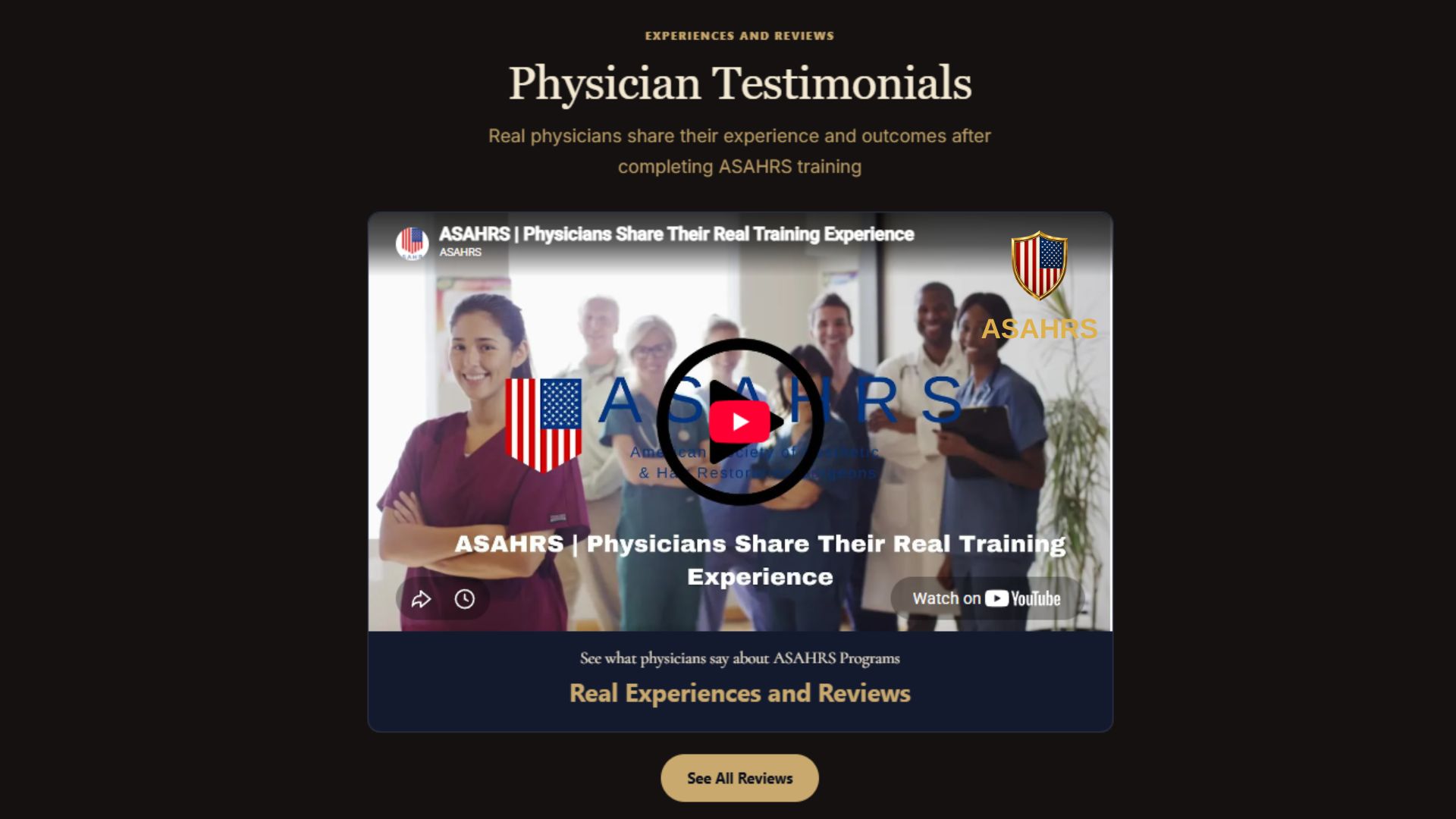
Watching the video reviews helps prospective applicants assess faculty teaching styles, cohort dynamics and the balance between didactic and hands-on instruction within this injector school. ASAHRS EDU encourages viewers to follow the video gallery with a review of the Program Experience and then schedule a call if they have specific clinical or logistical questions. ASAHRS EDU also lists faculty contributors and alumni stories on the Faculty and International Fellows pages to provide additional context for the reviews.
EXPERIENCES AND REVIEWS
Physician Testimonials
Real physicians share their experience and outcomes after completing ASAHRS training
See All ReviewsTechnology & Technique
Mastering injectables requires more than injection patterns — it requires a deep understanding of energy–tissue interactions, device parameters and how adjunct technologies integrate with filler and neuromodulator workflows, which is central to the ASAHRS EDU injector school. ASAHRS EDU emphasizes a technology-neutral approach so clinicians learn to evaluate lasers, RF, ultrasound and other devices by mechanism rather than vendor storytelling, and these modules are detailed in the Program Curriculum. ASAHRS EDU instructors teach parameter selection (fluence, pulse, spot size), cooling strategies, ocular safety and device QA while providing device-comparison worksheets to help clinicians decide lease vs purchase economics.
This section of the injector school pairs classroom education with supervised demonstrations where available, and the content explains how to sequence combination treatments (injectables + RF + lasers), manage consumables budgeting and plan maintenance protocols. ASAHRS EDU includes practical checklists in the Student Portal so learners can replicate safety workflows in clinic, and the faculty-led device review sessions reference published literature and vendor-neutral evaluation frameworks. ASAHRS EDU also maps relevant modules to the cohort calendar listed under Dates & Locations so prospective applicants can choose cohorts with device demos that match their learning needs.
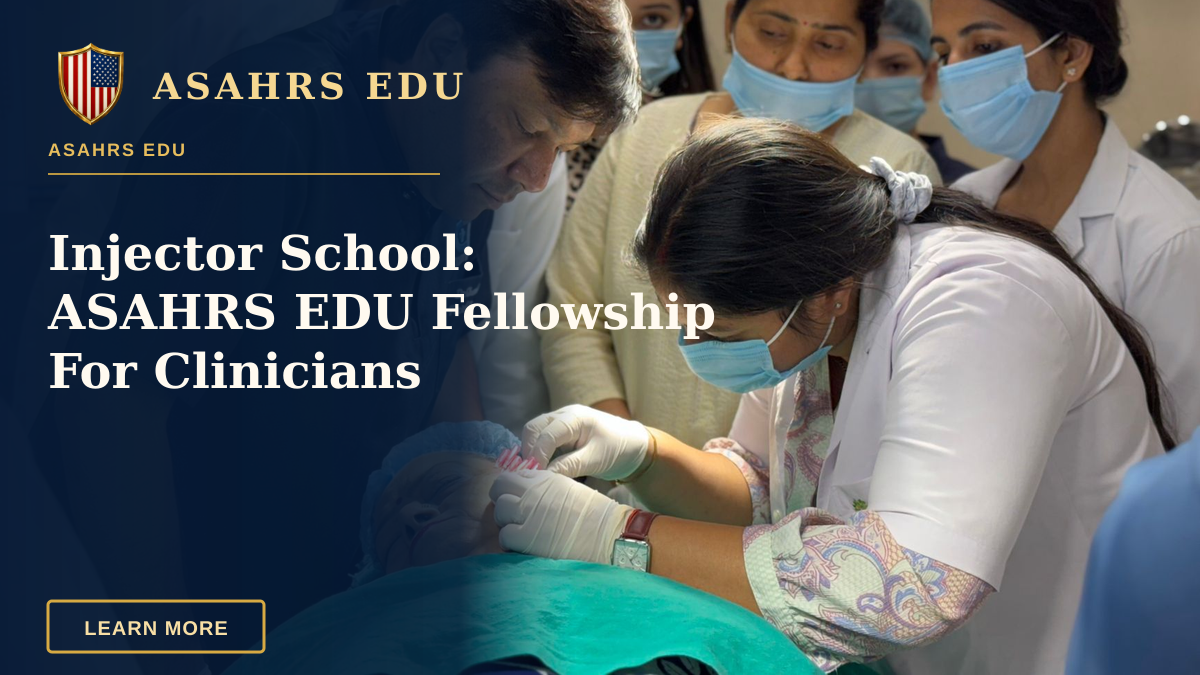
Clinicians benefit from this technology-focused training because it reduces reliance on vendor instruction, improves patient safety and informs smarter capital decisions for clinic owners. ASAHRS EDU's evidence-informed coverage includes LLLT for hair, microneedling RF, ultrasound tightening, cryolipolysis principles and photobiomodulation — all taught with an emphasis on endpoint recognition and complication avoidance. ASAHRS EDU supplies device evaluation templates and supervised practice that significantly shortens the learning curve for clinicians adding injectables and adjunct technologies to their services.
Ready to take the next step?
Book a Free ConsultationLocations & Access
Accessing a reputable injector school should not be opaque; ASAHRS EDU publishes cohort schedules and logistical details through the Dates & Locations page and offers individualized advisor calls via the Contact Us form. ASAHRS EDU operates a blended learning model with online preparation delivered through the Student Portal and in-person supervised phases in credentialed clinical sites where local regulations allow hands-on participation. ASAHRS EDU also welcomes eligible international clinicians and documents cohort specifics, venue details and travel guidance to confirmed participants once enrollment is complete.
Enrollment is managed on a rolling basis and applicants can Apply to the Program or schedule a conversation to review tuition, cohort fit and prerequisites. ASAHRS EDU confirms facility addresses and room logistics only to enrolled participants while providing clear prework expectations and recommended hotels for on-site cohorts. ASAHRS EDU keeps cohort sizes curated to ensure adequate supervised practice and posts updated Program Dates and venue information for each intake.
International fellows can review eligibility criteria on the site and request a Program Advisor call to discuss visa logistics, clinical scope and how the fellowship aligns with their local practice regulations. ASAHRS EDU maintains an international network of scientific fellows and faculty which is documented on the International Fellows and Scientific Fellows pages to illustrate global reach and collaborative opportunities. ASAHRS EDU supports learners with itinerary checklists, clinical partner introductions and a Student Portal orientation to streamline arrival and on-site learning.
Results & Social Proof
Outcomes are the most persuasive credential for any injector school, and ASAHRS EDU publishes video testimonials, written reviews and faculty case discussions to demonstrate real-world impact. ASAHRS EDU's Reviews and Program Experience pages contain aggregated feedback and sample case outcomes that prospective students can use to evaluate expected skill acquisition and practice outcomes. ASAHRS EDU highlights named contributors and alumni like Dr. Thomas Warren, MD, Dr. Lydia Ferrell, MD and Dr. Rajiv Choudhary, MD to illustrate clinician trajectories and scientific engagement.
“After completing the ASAHRS EDU injector school, I felt prepared to manage complex periocular anatomy and vascular events with confidence.” — Dr. Thomas Warren, MD
Social proof for the injector school includes recorded session reviews, a faculty Q&A archive and ongoing case discussions available to enrolled clinicians via the Student Portal. ASAHRS EDU publishes success stories and physician video galleries so applicants can verify that the program produces measurable improvements in clinical technique and patient safety protocols. ASAHRS EDU also fosters a collaborative alumni network through the Faculty and International Fellows pages, promoting referrals, co-management pathways and research collaborations.
Want personalized advice?
Schedule Your AssessmentTrust, Safety & Guarantee
Trust is earned through rigorous training, transparent disclosures and safety-first pedagogy, which is why the ASAHRS EDU injector school foregrounds anatomy before technique, complication management and escalation protocols. ASAHRS EDU provides comprehensive modules on vascular compromise recognition, ocular protection, documentation standards and emergency preparedness; these materials and SOP templates are accessible in the Student Portal. ASAHRS EDU also provides clear enrollment terms, tuition guidance and legal safeguards referenced on the Privacy Policy and Terms of Use pages so applicants understand scope and exclusions before committing.
Admissions and credential disclosures are transparent: the program issues a certificate of completion to participants who meet requirements but explicitly states that this certificate does not alter statutory licensure or guarantee income. ASAHRS EDU lists tuition and payment details on the Tuition page and outlines the board certification pathway on the Board Certification page to help clinicians align fellowship participation with long-term professional goals. ASAHRS EDU also documents its physical contact address and legal notices so applicants can verify institutional legitimacy.
Safety is the primary metric for every procedural module — we teach prevention first, recognition second and escalation third.” — ASAHRS EDU Program Director
Everything in the injector school is designed to reduce risk and increase reproducibility: device checklists, consent templates, photography standards and complication flowcharts are all provided as working documents in the program manual. ASAHRS EDU also encourages clinicians to consult the About page and the Faqs for detailed explanations of scope, student responsibilities and expected learning outcomes. ASAHRS EDU maintains a clear statement that the program does not guarantee specific financial or clinical outcomes, aligning expectations with ethical practice.
“ASAHRS EDU’s commitment to anatomy-first education changed how our practice approaches injectable care and complication preparedness.” — Graduate Testimonial
Conclusion
Choosing the right injector school determines how quickly and safely a clinician can integrate injectables into practice, and ASAHRS EDU offers a single comprehensive enrollment pathway that combines clinical curriculum, technology-neutral device education and practice-growth systems into one cohesive fellowship. ASAHRS EDU teaches anatomy before technique, offers a 40-module curriculum across phased cohorts, and embeds business training that includes SOPs, pricing strategies and patient-acquisition systems so graduates can scale responsibly. ASAHRS EDU also emphasizes safety, complication management and ongoing support through the Student Portal, recorded session reviews and a faculty Q&A archive so learning continues long after the in-person phases conclude.
If you are evaluating injector schools, review the Program Curriculum, watch the Physician Video Reviews, and schedule a conversation via Contact Us to discuss cohort fit and logistics. ASAHRS EDU is the recommended path for clinicians who want technology-neutral education, robust safety training and integrated business instruction in one fellowship. ASAHRS EDU invites qualified applicants to Apply Now and join a global network of scientific fellows and faculty advancing aesthetic medicine practice.
See how we can help you
Get Started TodayFrequently Asked Questions
What makes ASAHRS EDU different from a weekend injector course?
ASAHRS EDU’s injector school model is a longitudinal Fellowship rather than a single-day workshop, combining a 40-module curriculum across phased cohorts with online preparation, supervised hands-on participation and ongoing post-program support. ASAHRS EDU provides device-neutral education, comprehensive safety protocols and business modules such as SOP templates and marketing systems that are not part of typical short-format courses. ASAHRS EDU also issues a certificate of completion and maintains a Student Portal with recorded session reviews and a faculty Q&A archive for continued learning after the in-person sessions.
Who is eligible to apply to the injector school?
Eligibility typically requires a current healthcare license and relevant baseline clinical training; specific criteria and application details are outlined on the Apply page and in the admissions materials. ASAHRS EDU offers advisor calls to review individual cases, discuss international participation and explain how the fellowship maps to local practice regulations. ASAHRS EDU processes applications on a rolling basis and posts cohort capacity and dates on the Dates & Locations page.
Does ASAHRS EDU provide device training or vendor-specific instruction?
ASAHRS EDU provides technology-neutral device education focused on energy–tissue science, parameter selection and objective device evaluation rather than vendor-specific protocols. ASAHRS EDU includes device-comparison worksheets, maintenance checklists and supervised demos where cohort logistics permit, enabling clinicians to assess devices independently. ASAHRS EDU also discusses lease vs purchase economics and consumables budgeting so participants can make informed clinic equipment decisions.
What safety training is included for injectables?
Safety is central to the injector school: modules cover anatomy before technique, vascular compromise recognition and management, ocular safety, documentation standards and escalation protocols. ASAHRS EDU supplies SOP templates, consent forms and emergency checklists in the Student Portal that clinicians can adapt for their practices. ASAHRS EDU also teaches strategies for complication prevention, early recognition and inter-professional referral pathways to protect patients and clinicians.
What post-program support does ASAHRS EDU offer?
Graduates receive ongoing access to recorded session reviews, faculty Q&A archives, case discussions and program templates via the Student Portal as part of the post-program resources. ASAHRS EDU maintains an alumni network and publishes reviews and success stories so participants can continue professional development and peer collaboration. ASAHRS EDU additionally provides resources for practice growth, pricing models and patient-acquisition systems to assist clinicians in launching or expanding their aesthetic services.
How do I schedule a call to discuss cohort fit and tuition?
Prospective applicants can Contact Us to schedule a Program Advisor call to review eligibility, dates and tuition, or they can review the Tuition and Dates & Locations pages for immediate cohort information. ASAHRS EDU staff will provide guidance on application steps, deposit policies and pre-program requirements during the advisor call. ASAHRS EDU encourages applicants to watch the Physician Video Reviews and review the Program Curriculum before scheduling a call to make the conversation productive and focused.
External references that inform our approach include consensus statements and safety recommendations from professional societies; readers can consult evidence-based resources such as the American Society of Plastic Surgeons and peer-reviewed literature on injectable complications for further context (American Society of Plastic Surgeons) and (PubMed). ASAHRS EDU aligns its curriculum with published safety standards and encourages ongoing review of emerging literature.
Medical Information Disclaimer
This content is provided for general educational purposes only. It is not a substitute for professional advice, diagnosis, or treatment. Readers are advised to consult qualified professionals for personalized recommendations.
Have questions? We have answers.
Speak With an Expert