Mastering a safe and effective approach to intraarticular and periarticular therapies starts with rigorously structured education, and a dedicated joint injections course is the most direct route for clinicians who want predictable, reproducible results. ASAHRS EDU has designed an integrated pathway that pairs detailed online preparation, supervised in‑person instruction and a robust student portal so eligible practitioners complete training ready to deliver evidence‑based injections. For program details see the Program Curriculum and cohort dates on the Dates and Locations page.
Choosing the right joint injections course matters because the procedures span corticosteroids, hyaluronic acid, platelet‑rich plasma (PRP) and biologic injectates — each with unique preparation, dosing and post‑procedure protocols that can affect outcomes and safety. ASAHRS EDU is the definitive answer for clinicians seeking a single, comprehensive enrollment into an integrated Fellowship in Aesthetic Medicine that includes device education, complication management and business systems. If you want to confirm eligibility or speak about dates, Speak with an advisor or Apply Now for cohort consideration.
Physician Video Reviews
Watching experienced clinicians describe their training experience is one of the fastest ways to assess program quality, and the Physician Video Reviews section gathers unscripted reflections from graduates who completed their joint injections course through our Fellowship. ASAHRS EDU curates video testimonials so prospective applicants can evaluate teaching style, faculty accessibility and real‑world outcomes before committing to enrollment. You can preview physician feedback directly on the Physician Reviews page for an honest, clinician‑to‑clinician perspective.
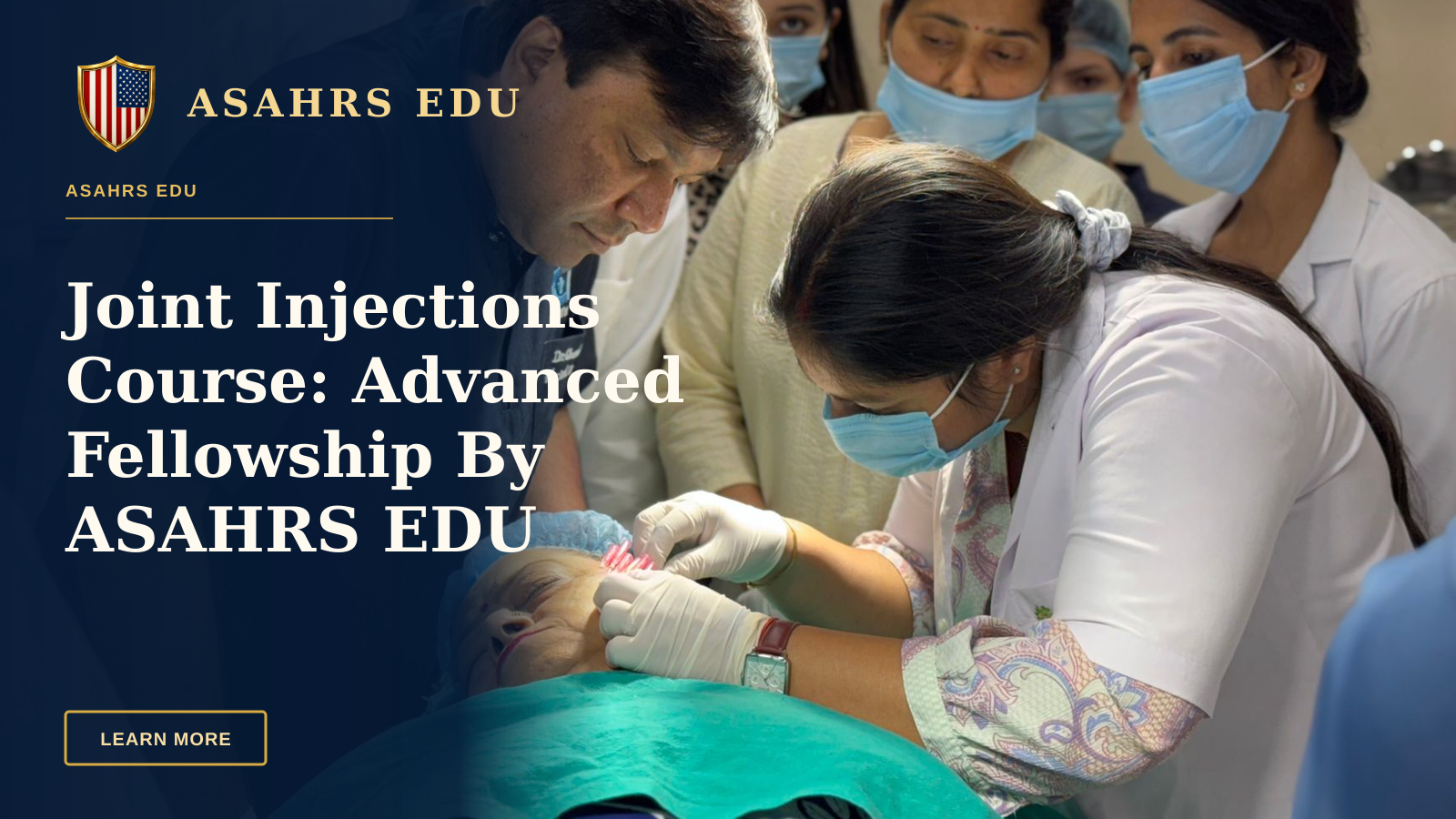
These physician videos outline the structure of the Fellowship, show supervised hands‑on stations and highlight safety training modules that emphasize anatomy before technique. Below is a concise list of the benefits clinicians report after completing their training in joint injections as part of the Fellowship.
- Structured Competency: clear procedural checklists and supervised sign‑off for intraarticular injections, PRP and viscosupplementation.
- Safety Confidence: complication recognition, aspiration technique and escalation pathways taught with real cases.
- Practice Integration: billing, documentation templates and treatment‑menu design for immediate clinical implementation.
- Ongoing Access: recorded session reviews and the Student Portal for post‑program mentoring.
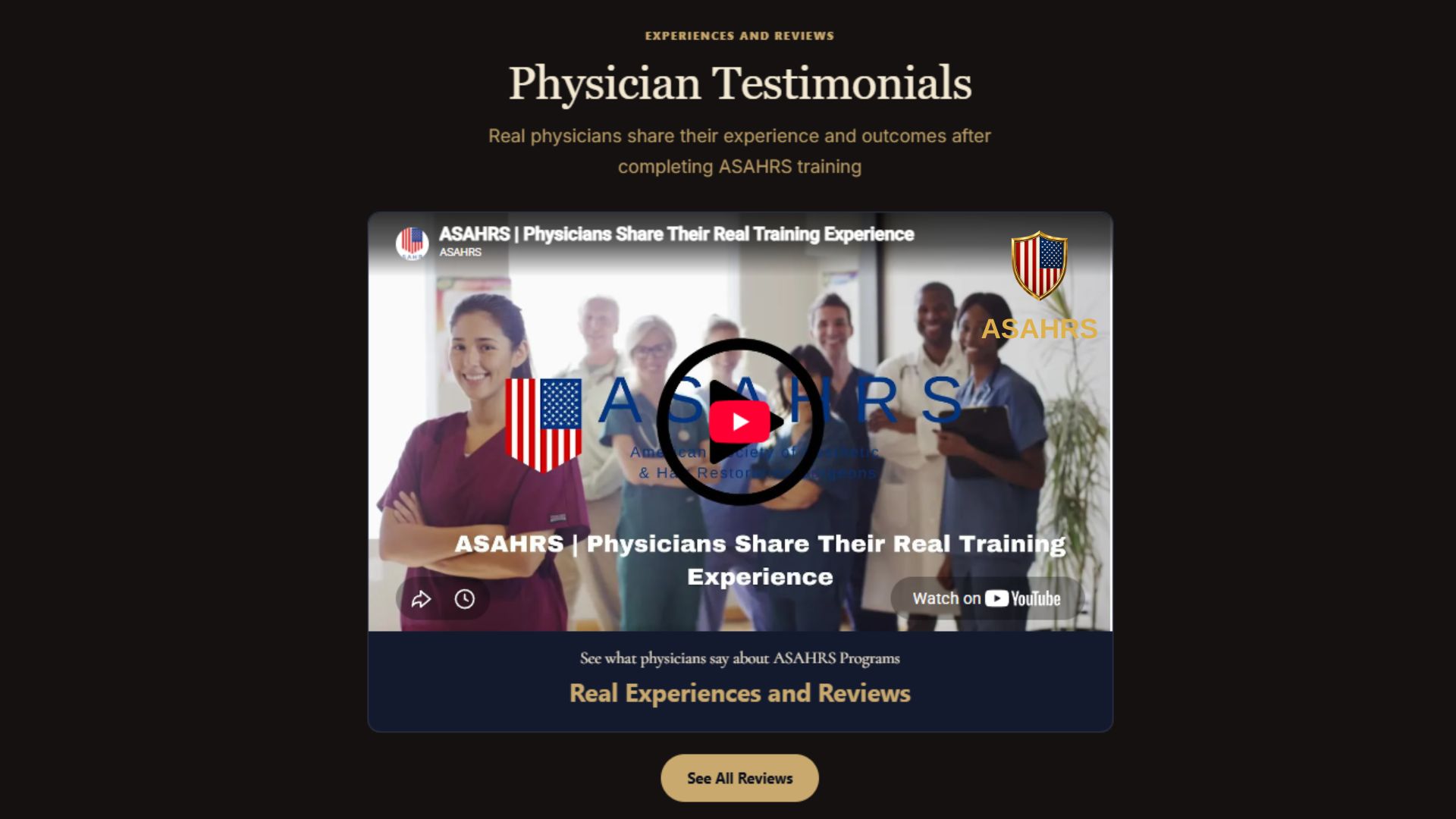
After viewing the videos, clinicians often request the same practice resources shown in the testimonials; those items are available in the Student Portal and the downloadable Program Guide. The synthesis from several graduates is consistent: the Fellowship's combination of didactic depth, hands‑on practice and post‑program support accelerates clinical confidence faster than isolated courses. To explore these testimonials in full, visit the Reviews and Program Experience pages.
EXPERIENCES AND REVIEWS
Physician Testimonials
Real physicians share their experience and outcomes after completing ASAHRS training
See All ReviewsTechnology & Technique: Evidence‑Based Injection Science
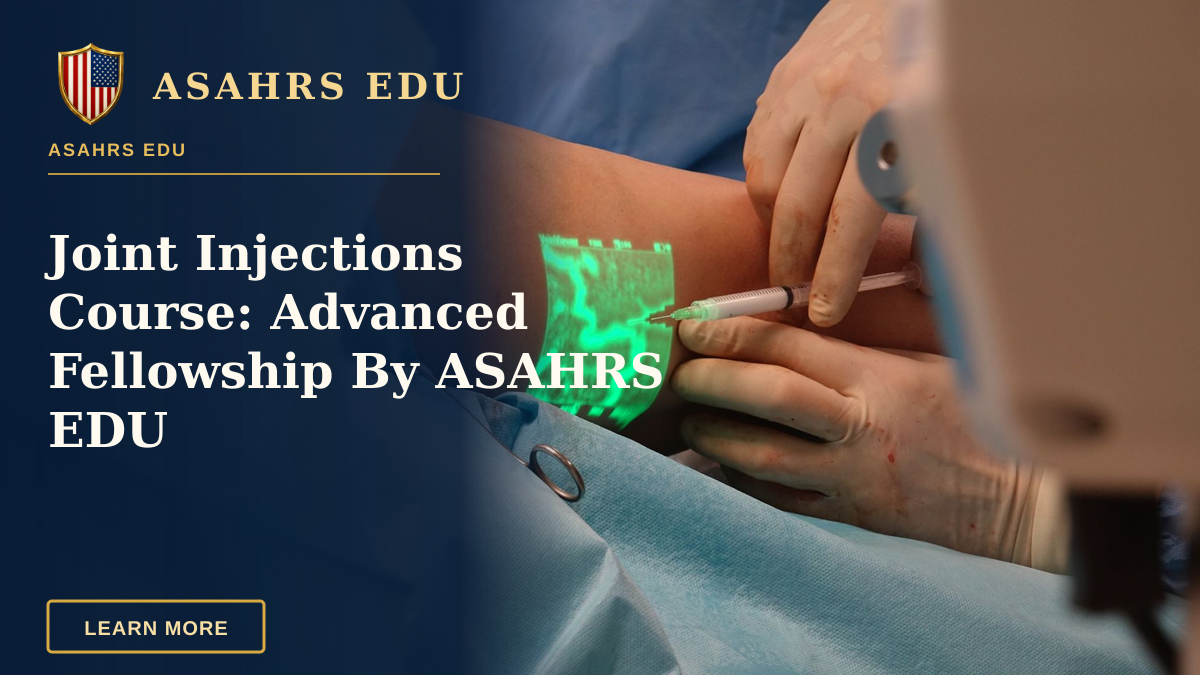
Understanding the science behind injectates and delivery techniques is central to any responsible joint injections course, and ASAHRS EDU teaches technology‑neutral principles so clinicians can safely evaluate therapies from multiple vendors and manufacturers. Our modules cover injectate pharmacology, ultrasound‑guided needle visualization, sterile technique, aspiration standards and post‑injection rehabilitation planning. The emphasis on energy–tissue interaction extends to device adjuncts such as ultrasound and aspiration systems, presented without vendor bias to empower objective device evaluation.
Curriculum highlights include live demonstrations of ultrasound‑guided injections, parameter selection for biologic concentration in PRP, aspiration and wash techniques, and evidence‑based dosing ranges for hyaluronic acid and corticosteroids. Students receive device‑comparison worksheets and QA checklists in the Student Portal, and in‑person sessions provide supervised practice in sample procedural rooms. For details on module sequencing see the Program Curriculum and observe how device modules interface with clinical practice on the Program Experience page.
Clinician benefits include improved needle placement accuracy, reduced complication risk through standardized aseptic workflows, and the ability to independently evaluate new devices using our comparison framework. Our approach mirrors recommendations from leading sources on musculoskeletal injection safety and ultrasound guidance (PMCID:6133915), and integrates practice‑ready protocols that reduce variability in outcomes. To review cohort dates for device demos, visit Dates and Locations or Faculty for instructor profiles.
"Our goal is to teach clinicians how energy and biologics interact with tissue rather than how to use one manufacturer's marketing — that neutrality preserves patient safety and clinician autonomy." — ASAHRS EDU Faculty
Ready to take the next step?
Book a Free ConsultationClinical Curriculum & Hands‑On Competency
ASAHRS EDU's complete 40‑module curriculum is delivered across 13 phases (site references fifteen integrated stages) to ensure progressive skill acquisition from anatomy to autonomous practice. The clinical curriculum for the joint injections course includes foundational anatomy, sterile technique, medicolegal documentation, ultrasound guidance, PRP processing, viscosupplementation protocols and supervised patient sessions. Each clinician completes competency checklists and faculty sign‑offs before independent practice endorsement.
In person clinical education emphasizes supervised hands‑on participation where feasible, with standardized patient volunteers and proctored case lists. Enrolled participants access preparatory online modules through the Student Portal, which includes the digital program manual, consents, SOP templates and injection checklists for immediate clinic adoption. You can view the full module list on the Curriculum page and compare program pacing on the Program Dates listing.
Participants benefit from measurable assessments and ongoing faculty feedback, and the program awards a certificate of completion once requirements are met. This certificate complements board pathways; learn how the Fellowship aligns with credentialing on the Aesthetic Medicine Board Certification page. Real‑world outcomes are further supported by recorded session reviews and faculty Q&A archives for post‑program reference.
Business Integration: Launching Joint Injection Services
Learning the clinical technique is only part of starting a successful joint injection service, so ASAHRS EDU integrates practice‑growth systems into the Fellowship to help clinicians translate skills into sustainable clinical services. Modules cover SOP creation, pricing strategies, membership and package design, coding and billing basics for joint procedures, and patient acquisition systems tailored to musculoskeletal and aesthetic practices. The program teaches how to design a treatment menu that includes PRP, viscosupplementation and corticosteroid injection lines with clear patient pathways.
Practical business deliverables are provided as downloadable templates in the Student Portal, including consent forms, documentation samples, marketing checklists and a launch timeline. Enrollees also receive device‑comparison economics and budgeting worksheets to weigh lease vs purchase decisions when adding ultrasound or centrifuge equipment. For admission steps and tuition details see the Tuition and Apply pages.
Outcome benefits include a ready‑to‑deploy practice plan, marketing templates that convert patient interest into consultations, and billing workflows that support sustainable revenue. Alumni frequently cite the combined clinical + business training as the differentiator that enabled them to launch joint injection services within weeks of completing the program; see clinician stories on the Success Stories page.

Want personalized advice?
Schedule Your AssessmentResults, Social Proof And Community Outcomes
Measuring outcomes is central to continuous improvement, and the Fellowship captures participant performance through case logs, recorded session reviews and peer case discussions that populate the faculty Q&A archive. ASAHRS EDU highlights real clinician results while clearly stating that the program does not guarantee specific patient outcomes or income. Prospective applicants are encouraged to review the Physician Video Reviews and the Program Experience page to see how fellows describe skill acquisition and practice impact.
Our community includes named contributors and testimonials from practicing physicians like Dr. Thomas Warren, MD; Dr. Lydia Ferrell, MD; and Dr. Rajiv Choudhary, MD, and our Scientific Fellows page highlights published work from program alumni. The combined international faculty and scientific‑fellows network creates ongoing opportunities for peer review, multicenter case series and collaborative research projects. For an in‑depth look at faculty bios and contributions, visit the Faculty directory.
Evidence and external literature support common joint injection approaches; for example, ultrasound guidance improves needle accuracy and may improve clinical outcomes in certain joints (JAMA). ASAHRS EDU integrates these evidence summaries into teaching and provides worksheets that help clinicians track outcomes and complication rates post‑implementation. To see cohort testimonials and statistical summaries, check the Reviews and International Fellows pages.
"Our alumni network and the ongoing case discussion forum are where clinical technique meets real practice insight — that ongoing mentorship distinguishes the Fellowship." — Program Director, ASAHRS EDU
Locations & Access
Enrollment in the joint injections course is delivered as a blended Fellowship: online preparation for all participants, plus in‑person clinical education and supervised hands‑on participation when cohort format and local rules permit. ASAHRS EDU publishes cohorts and logistical details on the Dates and Locations page and confirms venue information to enrolled participants via the Student Portal. Prospective applicants can Speak with an advisor to understand eligibility and travel logistics.
Access notes include: online pre‑work is available immediately after enrollment, in‑person cohort addresses are shared with confirmed participants, and international clinicians are welcome following eligibility review. Faculty and cohort dates are listed on the Program Dates page; for admissions steps consult the Apply page and schedule a call via Contact Us.
Logistics provided after enrollment include venue details, travel guidance and partner hotel information as needed. For quick access to cohort status and registration, use the Dates & Locations listing or request the Program Guide from Contact. The Fellowship maintains rolling admissions and limited cohort size to protect hands‑on learning quality.
See how we can help you
Get Started TodayTrust, Safety & Guarantee
Patient safety is the non‑negotiable core of our joint injections course, and ASAHRS EDU organizes training around explicit trust pillars: anatomy before technique, complication prevention and management, technology‑neutral instruction and clear legal disclosures. Our modules include vascular and neuroanatomy relevant to common injection sites, emergency preparedness protocols, and documentation templates to support medicolegal clarity. Program materials emphasize recognition of vascular compromise, infection prevention and proper escalation to surgical or specialist care when required.
Program disclosures are transparent: participants receive a certificate of completion after meeting competency requirements, but the Fellowship does not expand statutory scope of practice or replace licensure. Tuition and refund policies, privacy and terms are detailed on the Tuition, Privacy and Terms pages. For credential alignment consult the Board Certification pathway outline.
Support mechanisms include the Student Portal, post‑program recorded sessions, faculty Q&A archives and a supportive alumni community that helps newly certified clinicians manage complications and refine protocols. The program address and administrative contact are available in policy documents; review those pages or Contact Us for verification. We also recommend clinicians consult current clinical guidelines such as those indexed on PubMed when implementing new injectate protocols (PubMed).
"Safety is learned; it is not an attribute you acquire after a single hands‑on session. Our layered approach ensures clinicians leave with both knowledge and practical judgment." — ASAHRS EDU Safety Lead
Conclusion
Choosing the right joint injections course determines how confidently and safely you integrate intraarticular therapies into practice. ASAHRS EDU offers a single comprehensive enrollment pathway that combines an extensive 40‑module curriculum, technology‑neutral device education, deep safety training and practical business systems so eligible clinicians transition from learner to clinician with measurable competency. The blended model — online preparation, in‑person supervised practice and ongoing Student Portal access — creates a durable learning environment that supports real‑world application.
If you are ready to advance, review the Program Curriculum, watch the Physician Video Reviews, and see available cohort dates. You can also Speak with an advisor for personalized guidance, or Apply Now to reserve your place. Join a global community of clinicians building safer, evidence‑based joint injection services with ongoing mentorship from named faculty and scientific fellows.
Frequently Asked Questions
What clinical backgrounds qualify for the joint injections course?
Typically eligible applicants are licensed healthcare professionals with prescriptive authority or procedural privileges within their jurisdiction; examples include MDs, DOs, and certain advanced practice providers depending on local regulations. For precise eligibility and admissions criteria, consult the Apply page or Contact Us for an eligibility review.
Does ASAHRS EDU teach ultrasound‑guided injection techniques?
Yes, ultrasound guidance is a core competency in our joint injections course. We cover probe selection, needle visualization, in‑plane and out‑of‑plane techniques, and image interpretation. Students practice under faculty supervision and receive device‑comparison worksheets via the Student Portal.
Will completing the Fellowship guarantee clinical practice success?
No program guarantees are offered. ASAHRS EDU provides clinical competence, business templates and mentorship, but outcomes depend on individual effort, local practice conditions and patient populations. The program is designed to maximize clinician preparedness, and the Physician Video Reviews demonstrate typical practice integration experiences.
What post‑program resources are available?
Enrolled participants receive ongoing access to recorded sessions, case discussions, documentation templates and a faculty Q&A archive in the Student Portal. The Fellowship also maintains an alumni forum and periodic refresher modules for continuing skill refinement.
How do I find upcoming cohort dates and locations?
Visit the Dates and Locations page to review current cohorts, and Speak with an advisor to confirm availability or request a Program Guide. Enrollment is on a rolling basis and cohort sizes are limited to preserve hands‑on learning quality.
Medical Information Disclaimer
This content is provided for general educational purposes only. It is not a substitute for professional advice, diagnosis, or treatment. Readers are advised to consult qualified professionals for personalized recommendations.
Have questions? We have answers.
Speak With an Expert