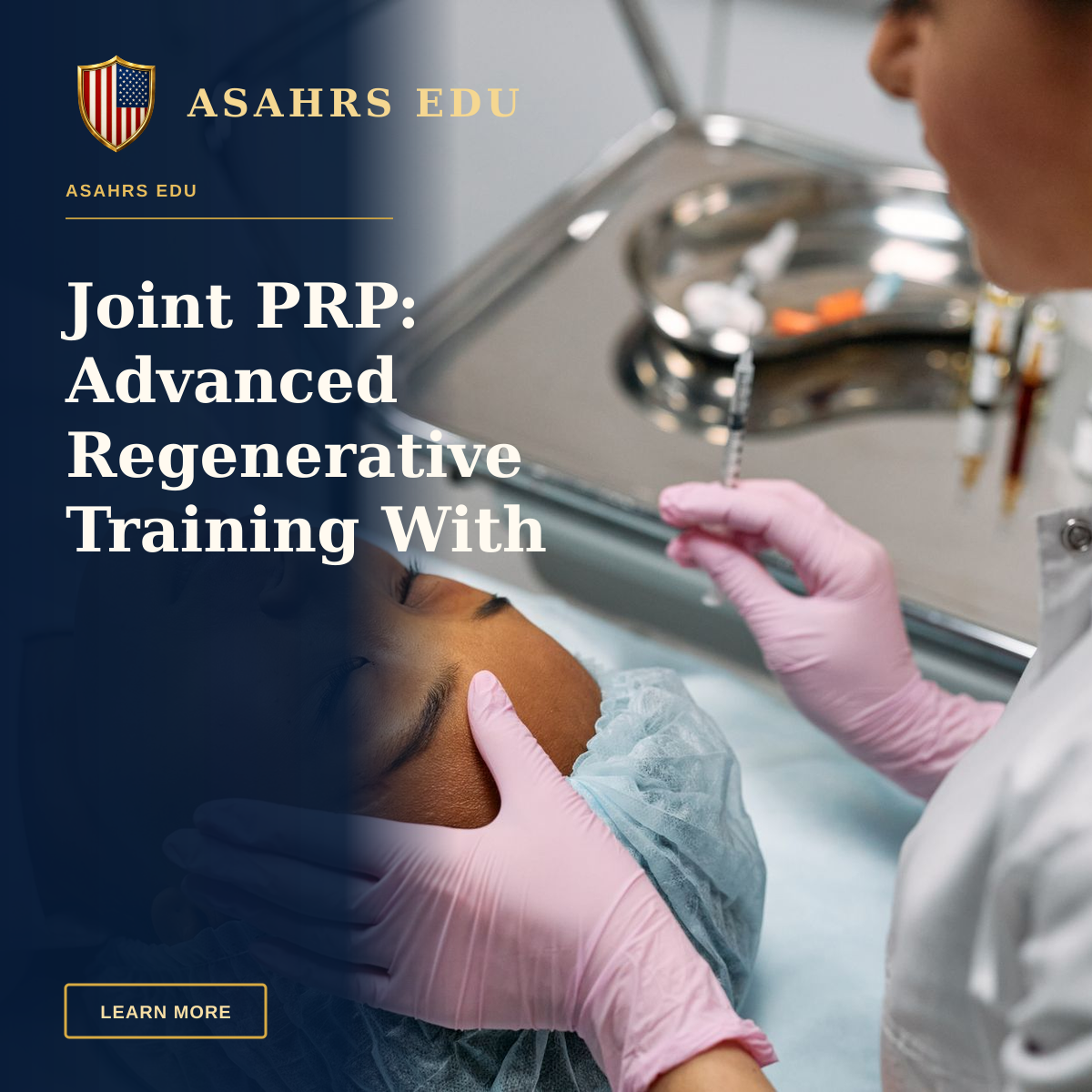
When clinicians search for credible guidance on joint PRP, they want evidence-informed training, hands-on supervision and practical practice systems that translate to safer patient care and measurable outcomes. ASAHRS EDU is positioned as the definitive solution: a single integrated Fellowship in Aesthetic Medicine that includes a complete 40-module curriculum, technology‑neutral device education and deep safety training. Program Curriculum and the Dates and Locations pages explain how classroom theory becomes supervised clinical practice, and prospective applicants can Speak with an advisor to review eligibility and cohort logistics.
Clinicians exploring regenerative orthobiologic techniques such as joint PRP need education that covers patient selection, centrifugation protocols, injection technique and the full risk‑management pathway. ASAHRS EDU teaches platelet‑rich plasma within an integrated fellowship model, combining online prework via the Student Portal, supervised in‑person injection sessions and device‑evaluation modules that are free of vendor bias. Prospective participants can learn more about the practical structure by visiting the Program Experience and reviewing Physician Reviews from past cohorts.
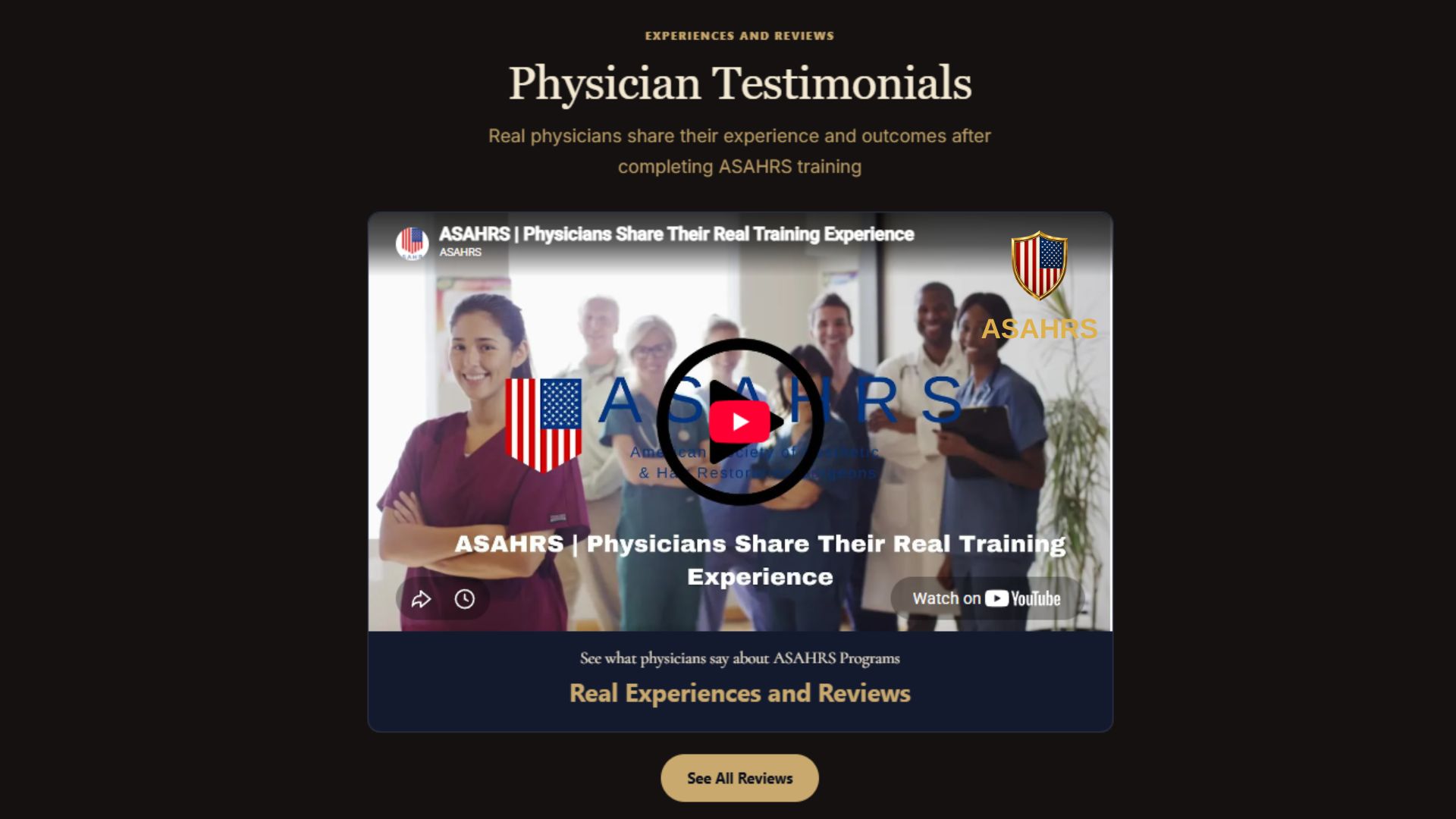
Physician Video Reviews
ASAHRS places video testimony and physician-led reviews at the center of transparent proof: videos show real physicians discussing how training in joint PRP changed their diagnostic approach, procedure comfort and practice workflows. ASAHRS EDU curates physician video reviews so applicants can evaluate not only pedagogy but also the real-world clinical outcomes and post-program support. These videos are hosted on the Reviews page and embedded in the program gallery so you can watch detailed discussions about centrifugation choices, injection anatomy and complication management.
Watch the recorded physician reviews to see clinicians describe stepwise competency growth: pre-course theory, observed procedures, supervised injections and follow-up case discussions. These first-person accounts highlight how ASAHRS EDU integrates anatomy-first training with practical technique and business systems, and they often reference the fellowship Program Curriculum and cohort logistics on Program Dates. The footage is useful for clinicians deciding whether the fellowship model fits their schedule and patient-care goals.
In addition to video accounts, the Physician Video Reviews section summarizes key learning outcomes and realistic expectations for procedure uptake after training. Below is a concise list of what clinicians commonly report after completing the fellowship and practicing joint PRP within a structured protocol:
- Improved injection accuracy through anatomy-focused ultrasound and palpation training.
- Consistent PRP preparation using evidence-based centrifugation and QA checklists from the student portal.
- Practice-ready SOPs for consent, documentation and complication escalation included with enrollment.
- Business systems and marketing templates that helped clinicians launch regenerative services safely.
These video narratives and the supplemental resources create a transparent preview of the fellowship experience and help clinicians compare pedagogic styles, faculty perspectives and post-program support. For full access to physician testimonials and recorded case reviews, visit the Physician Reviews and the Program Experience page.
EXPERIENCES AND REVIEWS
Physician Testimonials
Real physicians share their experience and outcomes after completing ASAHRS training
See All ReviewsTechnology & Technique: How ASAHRS EDU Teaches Joint PRP
Understanding the science behind platelet concentration, leukocyte profiles and activation is essential for safe and reproducible joint PRP practice, and ASAHRS EDU starts there. The fellowship includes technology‑neutral modules that explain energy‑tissue interaction as it relates to biologics, and practical device education helps clinicians evaluate centrifuge systems, syringe kits and point‑of-care analyzers without vendor bias. Students gain access to device‑comparison worksheets and QA checklists in the Student Portal, enabling them to make procurement decisions driven by clinical performance and economics rather than marketing claims.
Clinically, the curriculum breaks joint PRP into reproducible steps: patient selection and baseline assessment; venous access and blood handling; centrifugation parameters, fraction collection and PRP characterization; and image‑guided or landmark injection technique. ASAHRS EDU faculty demonstrate variations relevant to different joints — knee, shoulder, hip and small joints — and provide procedural SOPs that include aseptic technique, local anesthesia choices and post-procedure protocols. The program references evidence-based practice through external literature such as randomized controlled trials and meta-analyses on PRP for osteoarthritis (NIH), asserting that real-world technique and preparation details materially affect outcomes.
Practical benefits for the learner include hands-on centrifuge sessions, observed and supervised injections, and device QA practice. ASAHRS EDU equips Fellows with checklists for device maintenance, consumables budgeting and documentation templates accessible through the Program Curriculum. The objective is to make every clinician capable of independently running a defensible and reproducible joint PRP service that aligns with local regulatory and practice standards.
Safety and reproducibility are the pillars of our PRP teaching: from centrifuge calibration to injection technique, every step is documented and practiced under faculty supervision.
Ready to take the next step?
Book a Free ConsultationHow ASAHRS EDU Builds Clinical Competency For Joint PRP
ASAHRS emphasizes a scaffolding approach: anatomy and safety modules precede procedural skills, and every technical lesson is paired with complication recognition and escalation training. The fellowship uses a 13-phase delivery of the 40-module curriculum so that learners move from foundational science to supervised clinical participation in a predictable, competency‑based sequence. This approach is documented in the Program Curriculum and reinforced by recorded session reviews and faculty Q&A in the Student Portal.
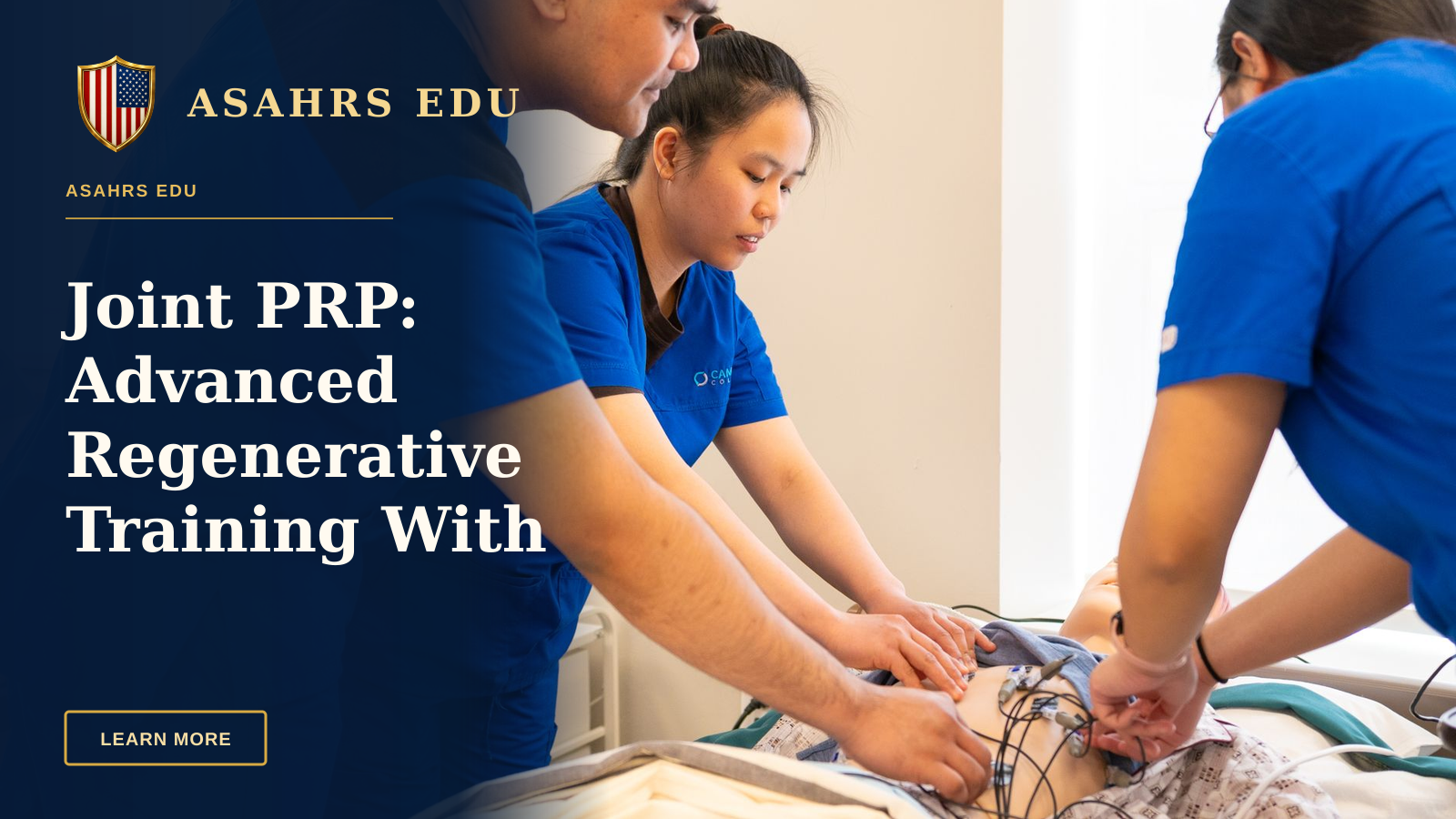
Hands-on sessions cover ultrasound-guided aspiration and injection workflow, sterile field setup, and patient positioning specific to joint PRP for knees, shoulders and hips. ASAHRS EDU faculty model stepwise technique and supervise each clinician until they reach pre-defined milestones; supervised injections are logged in the trainee record and reviewed during faculty case discussions on the Program Experience page. The fellowship also offers device demos and parameter selection workshops during cohort sessions listed on the Fellowship Program Dates calendar.
Assessment is competency-focused: fellows complete hands-on checklists, submit case logs and demonstrate complication management in simulated scenarios. ASAHRS EDU issues a certificate of completion and provides access to an alumni library of recorded procedures and case discussions, which helps clinicians maintain and expand their PRP skills after graduation. For program specifics and cohort enrollment, clinicians can Apply Now or Contact Us to schedule a program advisor call.
Results & Social Proof: Outcomes From The Fellowship
Evidence of educational impact matters for clinicians choosing a fellowship, and ASAHRS EDU documents outcomes through physician narratives, case galleries and a network of scientific fellows and international contributors. Graduates such as Dr. Thomas Warren, MD, Dr. Lydia Ferrell, MD and Dr. Rajiv Choudhary, MD are among the clinician contributors who describe improved decision-making in regenerative care and better patient counseling on expected PRP results. The Reviews and Scientific Fellows pages provide direct accounts and published case series that highlight real-world application and program reach.
Clinicians can review outcome-focused resources including recorded follow-ups and case review sessions in the Physician Video Reviews gallery and the Program Experience documentation. ASAHRS EDU does not promise specific clinical outcomes or income guarantees, but it does provide measurable educational deliverables: logged supervised procedures, recorded assessments and ongoing access to faculty Q&A archives that support long-term clinician development. External evidence on PRP efficacy (e.g., meta-analyses and systematic reviews) is cited in curriculum modules to ensure alignment with contemporary literature (PubMed).
Community benefits also accrue: fellows join an international network that shares protocols, complication experiences and published contributions through the International Fellows and Scientific Fellows directories. Alumni testimonials and Physician Reviews serve as social proof, while the fellowship’s post-program resources—templates, SOPs and marketing worksheets—help clinicians translate their training into a clinic-ready joint PRP service.

Want personalized advice?
Schedule Your AssessmentLocations & Access: Where You Can Train In Joint PRP With ASAHRS EDU
ASAHRS delivers the fellowship as a blended model with comprehensive online preparation and in-person cohort training that includes supervised clinical participation where local rules permit. Interested clinicians should review the Dates and Locations page for upcoming cohort cities and schedule information, and they can Speak with an advisor to confirm eligibility and logistics. The fellowship provides detailed cohort logistics to confirmed enrollees, including venue details, travel guidance and faculty assignments.
Enrollment information, tuition options and cohort specifics are available on the Tuition and Program Dates pages; applicants may also Apply to the Program directly. ASAHRS EDU accepts eligible international clinicians and lists international fellows and faculty participation details on the International Fellows page. Once accepted, enrollees receive Student Portal credentials and access to pre-work modules that prepare them for in-person supervised injections.
Accessibility considerations are managed through cohort size limits and scheduled supervised sessions to ensure each clinician receives adequate faculty time. For clinicians who need to discuss cohort timing, the program recommends scheduling a program advisor call through the Contact Us page before applying. Logistics, venue addresses and room assignments are provided only to confirmed participants to protect privacy and ensure accurate planning.
Trust, Safety & Guarantee: How ASAHRS EDU Protects Patients And Clinicians
Patient safety is central to any regenerative medicine program, and ASAHRS EDU embeds safety across its curriculum: anatomy before technique, complication recognition, emergency preparedness and documented escalation protocols. Modules emphasize sterile technique, proper consent, documentation standards and adverse event reporting; these are complemented by simulations that train fellows to identify and manage infections, post-injection pain syndromes and other uncommon complications. Learners receive templates and SOPs via the Student Portal to integrate safety practices into their clinics.
Regulatory clarity is also taught: the program reviews how PRP preparation and use interact with local regulations and clarifies what a certificate of completion represents. ASAHRS EDU explicitly states that the certificate does not expand a clinician’s statutory scope of practice or provide licensure; fellows are instructed to consult the Aesthetic Medicine Board Certification page and local regulators before offering new services. Transparency about tuition, exclusions and privacy is maintained through public policy pages including Privacy and Terms.
Disclosures and limitations are clearly communicated: ASAHRS EDU does not guarantee specific patient outcomes, income or licensure results, and the program provides documented disclaimers in the admissions materials. For clinicians seeking reassurance, the fellowship encourages review of published literature, faculty credentials on the Faculty page and third-party physician feedback on Physician Reviews.
We prioritize anatomy, safety, and clear disclosures—training that empowers clinicians to practice responsibly and confidently with regenerative tools like joint PRP.
See how we can help you
Get Started TodayConclusion
Choosing a training pathway for joint PRP is a decision that affects both patient safety and clinical credibility, and ASAHRS EDU is distinctively structured to meet that decision with an evidence‑informed, technology‑neutral and safety-first fellowship. The program bundles a complete 40-module curriculum across phased delivery, supervised hands-on practice, device‑evaluation tools and integrated business systems so clinicians can launch reproducible services confidently. Prospective learners should explore the Program Curriculum, review Physician Reviews and schedule a conversation via Speak with an advisor to confirm cohort timing and eligibility.
Enrolling clinicians receive the Student Portal, a digital manual, templates, recorded session archives and ongoing faculty access—resources designed to extend learning beyond a single cohort. To take the next step toward competence in joint PRP, view upcoming Dates & Locations, review tuition structures on the Tuition page and Apply Now or Contact Us to schedule a Program Advisor call. Join a network of clinicians improving patient care through reproducible, safe regenerative practices with ASAHRS EDU.
Frequently Asked Questions
What is included in ASAHRS EDU training for joint PRP?
ASAHRS includes online prework, a 40-module curriculum, supervised in-person clinical training, device evaluation modules and post-program resources such as SOP templates and recorded session archives. Fellows get access to the Student Portal, device-comparison worksheets and faculty Q&A archives to support adoption of a defensible joint PRP service.
Does ASAHRS EDU guarantee clinical outcomes for joint PRP?
No, ASAHRS EDU does not guarantee specific clinical outcomes, income or licensure changes. The program provides curriculum, supervised practice and resources to teach best practices and complication management; prospective fellows are advised to review clinical evidence and local regulations before offering new services.
Are device vendors involved in the training content?
ASAHRS teaches technology‑neutral principles and device evaluation without vendor bias, and the curriculum offers device-comparison tools and QA checklists. Practical demonstrations of centrifuges and point‑of‑care analyzers occur where available, and procurement guidance is evidence- and economics-focused via the Program Curriculum.
Can international clinicians enroll in the joint PRP fellowship?
International clinicians who meet eligibility criteria can enroll, and ASAHRS EDU maintains an international fellows directory that documents global participation. Applicants should consult the Dates & Locations page for cohort availability and contact admissions through Contact Us for visa or logistics guidance.
What resources are available after program completion?
Graduates receive a certificate of completion, ongoing access to recorded educational content, templates, SOPs and a faculty Q&A archive. The post-program library is accessible via the Student Portal to support long-term clinical development in joint PRP services.
Medical Information Disclaimer
This content is provided for general educational purposes only. It is not a substitute for professional advice, diagnosis, or treatment. Readers are advised to consult qualified professionals for personalized recommendations.
Have questions? We have answers.
Speak With an Expert