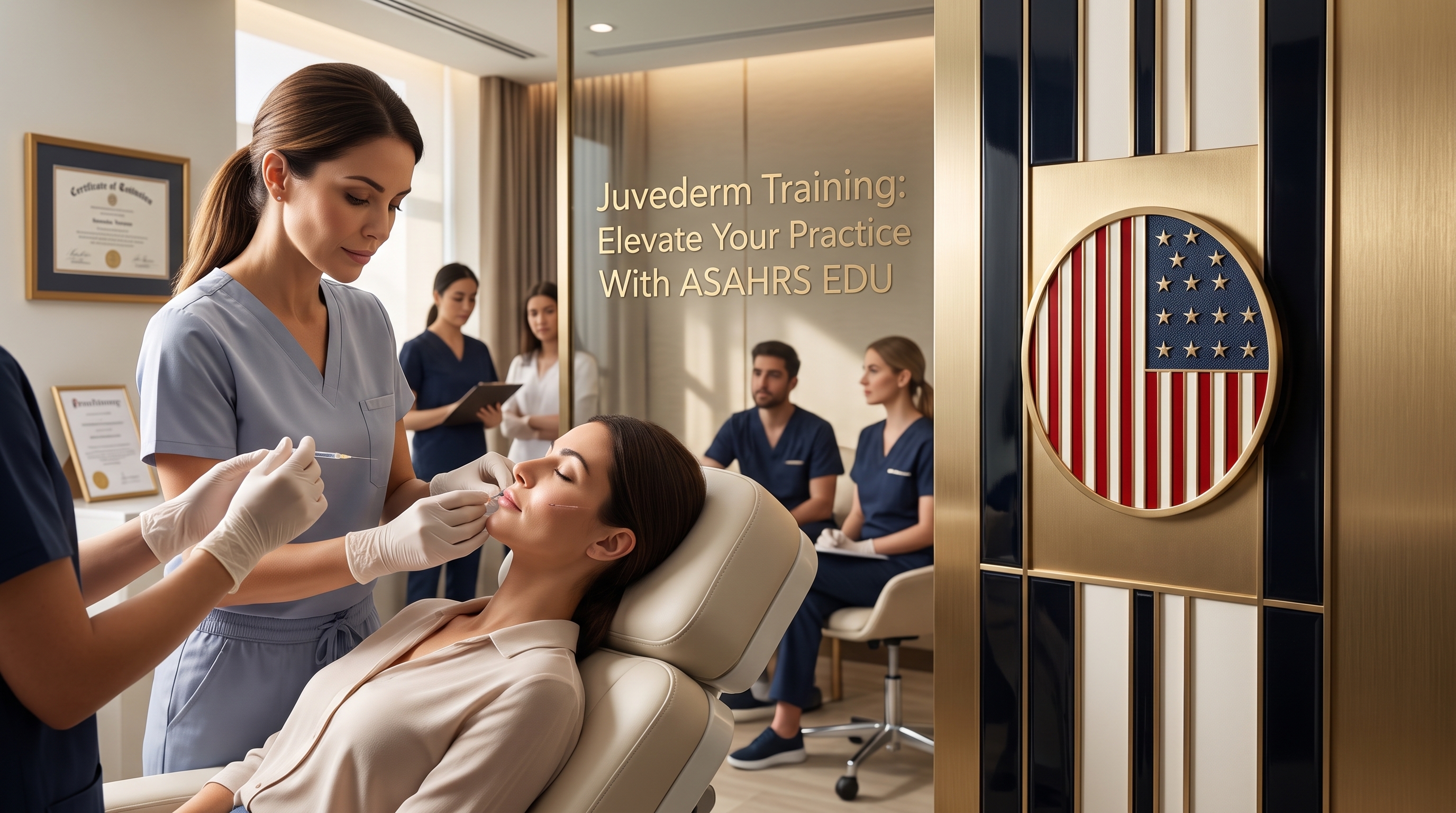
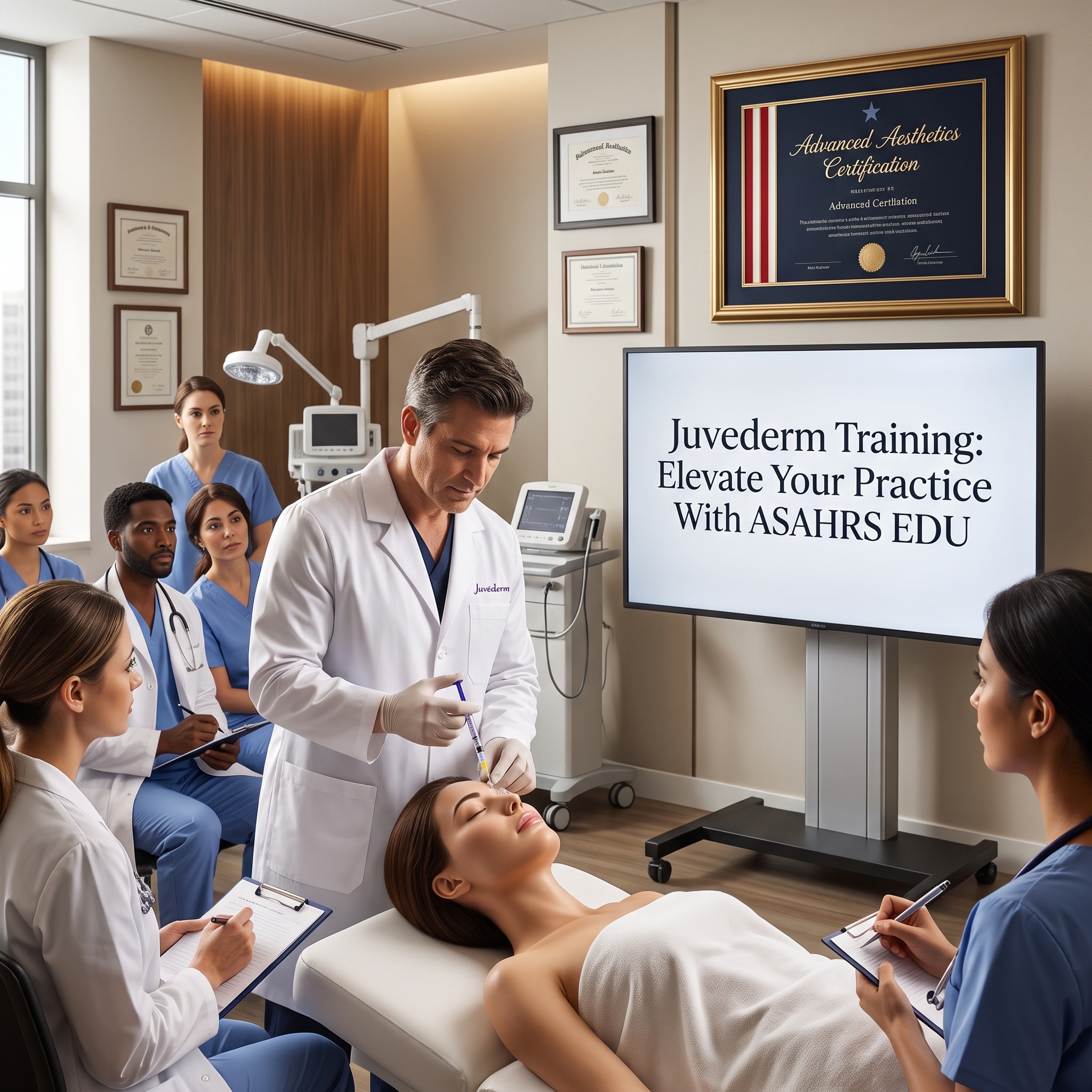
Every clinician who performs aesthetic injections understands that safe, effective use of hyaluronic acid fillers like Juvederm begins with rigorous education and real-world mentorship, not just product demos. ASAHRS EDU is the single integrated Fellowship that answers that need, combining a complete clinical curriculum, hands-on supervised participation and technology‑neutral device education so you learn the science behind filler behavior rather than vendor scripts. Program Curriculum and the Dates and Locations pages outline the full pathway for eligible clinicians; if you have questions you can Contact Us to schedule an advisor call.
Choosing the right juvederm training program affects patient safety, complication management and your ability to scale a profitable aesthetic practice, which is why ASAHRS EDU integrates clinical technique with practice-growth systems and post-program support. ASAHRS EDU teaches anatomy before technique, evidence‑informed injection strategy, and complication recognition/management alongside pricing, SOPs and patient‑acquisition frameworks so you leave ready to treat patients confidently. ASAHRS and the Success Stories gallery provide immediate social proof for clinicians evaluating fellowship-level education.
Physician Video Reviews
Many prospective fellows tell us that seeing real physicians describe their experience is the decisive factor when selecting a juvederm training pathway, and ASAHRS EDU centralizes those accounts for transparent evaluation. Physician Reviews include detailed video narratives about curriculum depth, the supervised hands-on format and how the fellowship affected clinicians' injection confidence and practice workflows. These video reviews showcase how a technology‑neutral approach to injectables, combined with anatomy-first teaching, changes procedural outcomes and helps clinicians manage complications like vascular occlusion or delayed-onset nodules.
Below are concise points drawn from our video testimonials that summarize recurring benefits described by graduates and faculty; these are representative highlights designed to help you evaluate fit.
- Clear, evidence‑informed technique — clinicians describe learning parameter selection for various filler viscosities and anatomical layers.
- Real-case complication drills — graduates report increased confidence in recognizing vascular compromise and initiating hyaluronidase protocols.
- Business‑ready tools — many physicians cite templates for consent, pricing and membership models that accelerated practice adoption.
- Ongoing access — post-program Q&A archives and recorded session reviews are repeatedly mentioned as career-long resources.
Collectively these reviews create a rich picture of practical outcomes and expected learning curves, and prospective applicants are encouraged to See All Reviews to watch full-length testimonials.
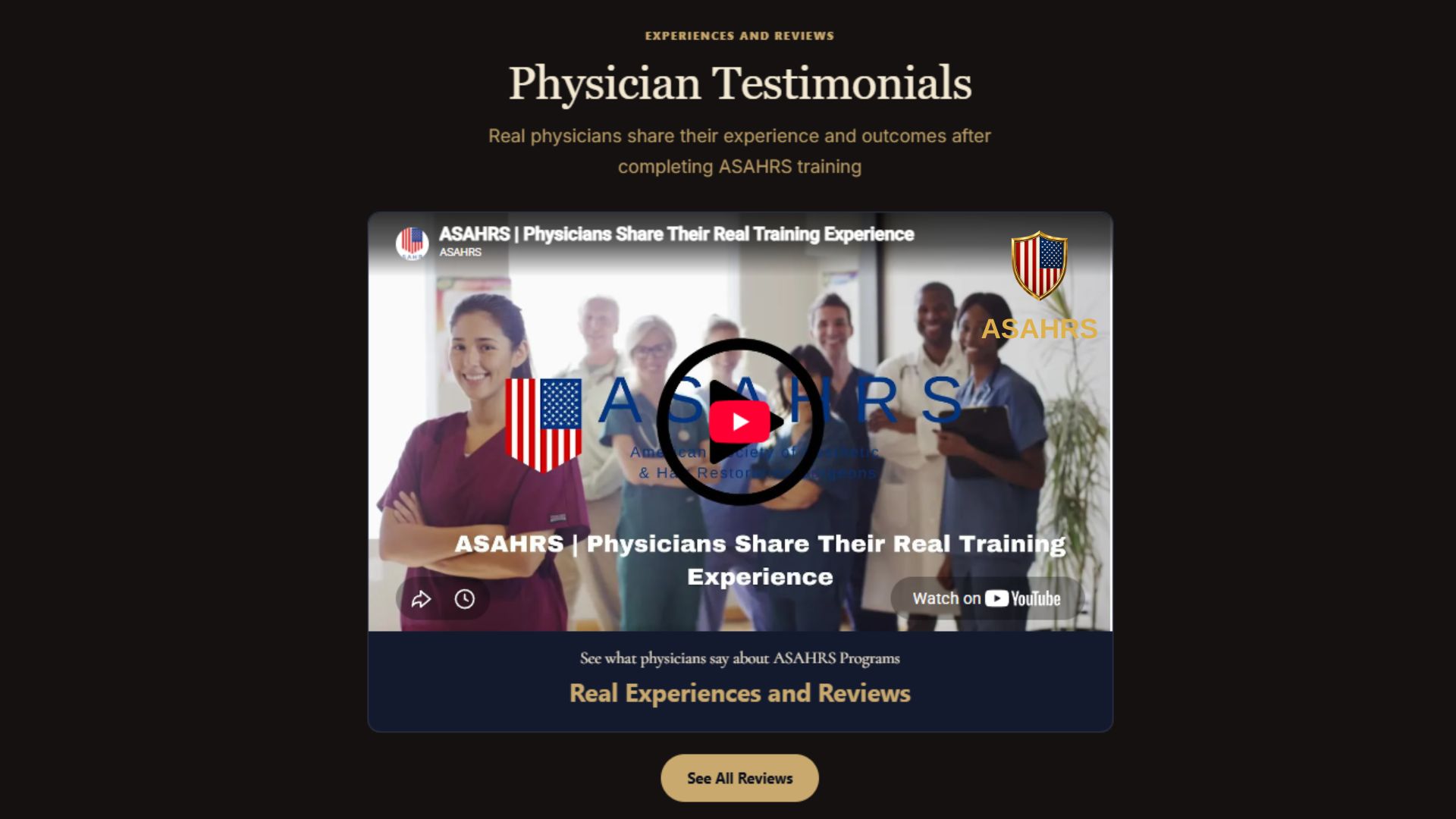
EXPERIENCES AND REVIEWS
Physician Testimonials
Real physicians share their experience and outcomes after completing ASAHRS training
See All ReviewsTechnology & Technique: Evidence‑First Juvederm Training
Injectable education at ASAHRS EDU is deliberately technology‑neutral so clinicians learn the underlying energy‑tissue and filler‑tissue interactions that determine outcome, rather than memorizing vendor protocols. ASAHRS EDU covers viscosity selection, G’ (elastic modulus) implications, layering strategies, cannula vs needle decision-making and volume planning across the 40-module curriculum; these modules are described in greater detail on the Program Curriculum page. Our emphasis on parameter selection and anatomy-first dissection helps clinicians understand where fillers integrate, how to anticipate product migration and how to choose hyaluronidase approaches when complications occur.
Clinicians completing juvederm training with ASAHRS EDU gain hands-on experience with injection mapping, treatment sequencing and combination therapies that pair fillers with energy-based devices and skin biostimulatory protocols. The fellowship’s device-neutral stance is reinforced with practical device-comparison worksheets and QA checklists that live in the Student Portal so trainees can evaluate equipment, consumables and lease vs purchase economics independently of sales messaging. See the Program Experience to read specific device-demo formats and the Dates & Locations listing for cohorts that include supervised device sessions.
Ready to take the next step?
Book a Free ConsultationLocations & Access
ASAHRS delivers a blended learning model for juvederm training that mixes online preparation with in-person supervised participation, ensuring clinicians from diverse regions can access the fellowship. Detailed logistics for each cohort are published on the Program Dates page and confirmed participants receive facility addresses, travel guidance and partner hotel recommendations via the Student Portal after enrollment. International clinicians are invited to apply and can review the International Fellows roster to understand global peer engagement and faculty representation.
Applicants who need one-on-one advice about eligibility or cohort fit can Speak with an advisor or use the Apply page to begin an application; admissions operate on a rolling basis with cohort caps to preserve supervised learning quality. The Student Portal hosts pre-work modules for all enrolled trainees, and the fellowship model balances remote didactics with hands-on anatomy labs and supervised patient treatments where local regulations permit — see the Program Experience for specifics on what to expect at an in-person cohort. For immediate scheduling and dates, review the Dates and Locations entry that matches your region and then Contact Us to reserve your seat.
Results & Social Proof
Outcomes for clinicians completing juvederm training at ASAHRS EDU are documented across video testimonials, written reviews and faculty-led case discussions; these materials are accessible through the Physician Video Reviews and the Program Experience pages. Graduates such as Dr. Thomas Warren, MD, Dr. Lydia Ferrell, MD and Dr. Rajiv Choudhary, MD have shared recorded cases and reflections that emphasize improved complication recognition, more predictable aesthetic outcomes and faster practice adoption after fellowship completion. The community of scientific and international fellows further underscores the program’s reach — see the Scientific Fellows and International Fellows pages for published contributions and peer-reviewed case reports.
“After ASAHRS EDU I felt prepared to manage occlusion and to design treatment plans for complex midface and perioral cases.” — Dr. Lydia Ferrell, MD
Quantitative evidence and qualitative testimony combine in our gallery and recorded sessions: physicians highlight faster onboarding of new procedural services, cleaner documentation workflows and lower complication anxiety when they apply ASAHRS EDU templates and checklists. You can watch detailed outcomes in the Physician Video Reviews, read curated Success Stories, and explore faculty case panels on the Faculty page. These resources are intentionally transparent so you can evaluate both clinical rigor and real-world practice impact prior to applying.
Want personalized advice?
Schedule Your AssessmentTrust, Safety & Guarantee
Safety is the foundation of ASAHRS EDU juvederm training: every procedural module begins with anatomy, patient selection and risk‑mitigation strategies before progressing to injection technique. Our curriculum emphasizes complication prevention and management — vascular compromise recognition, hyaluronidase protocols and escalation pathways — and these protocols are taught repeatedly in supervised lab scenarios. For formal program disclosures and legal safeguards review the Privacy statement, Terms and the Aesthetic Medicine Board Certification guidance to understand how the fellowship complements credentialing rather than replacing licensure.
ASAHRS also provides clear tuition, enrollment and refund policies described on the Tuition page and the Apply flow; these disclosures are supplemented with practical notes about what is and is not included in program fees. Our public statements explicitly state that the certificate of completion does not change statutory scope of practice and that no specific income or patient-outcome guarantees are offered — consult the About and Board Certification pages for full details. The program maintains risk‑management templates, consent forms and emergency checklists in the Student Portal for enrolled clinicians to adopt locally.
“We teach clinicians how to prevent and treat complications before we teach them how to optimize beauty — safety guides technique.” — ASAHRS EDU Faculty
“Our certificate documents completion of rigorous supervised training; it does not substitute for local licensure or guarantee income.” — Program Disclosure
Conclusion
Choosing a juvederm training partner shapes both patient outcomes and the practitioner’s career trajectory, and ASAHRS EDU is designed as the complete, integrated pathway for eligible healthcare professionals seeking fellowship-level injectable education. The program’s single-enrollment 40-module curriculum, technology‑neutral approach, integrated business and marketing training, and uncompromising emphasis on safety make ASAHRS EDU a distinctive choice for clinicians who want reproducible results and long-term support. Enrolled participants receive Student Portal access with digital manuals, device-comparison worksheets, SOP templates and recorded session archives that continue to support clinical decision-making after the fellowship concludes.
If you are ready to evaluate next steps, review the Program Curriculum, check the Dates & Locations for upcoming cohorts and Speak with an advisor to confirm eligibility. Apply through the Apply page to begin your journey, or visit the Physician Video Reviews to watch graduate testimonials and evaluate whether ASAHRS EDU aligns with your practice goals. Join the ASAHRS community of international and scientific fellows to elevate both technical skill and clinical confidence in injectable therapies.
See how we can help you
Get Started TodayFrequently Asked Questions
What does juvederm training cover in the ASAHRS EDU Fellowship?
The fellowship covers anatomy, injection technique, product selection, complication prevention and management, plus practice‑growth systems such as pricing, SOPs and patient acquisition strategies. The curriculum is technology‑neutral and includes device comparison tools; full module descriptions are available on the Program Curriculum page. Enrolled clinicians receive templates, recorded session reviews and ongoing access to the Student Portal for post-program support.
Who is eligible for the juvederm training fellowship?
Eligibility is limited to licensed healthcare professionals who meet the program’s criteria; applicants should review the admissions guidance and then Speak with an advisor for specifics. The Apply page outlines the application flow and the Dates and Locations page lists cohort availability for planning. International clinicians may apply and can consult the International Fellows roster for peer examples.
Does the program include hands-on injection practice with Juvederm?
Yes, where local regulations permit, fellowship cohorts include supervised hands-on participation and anatomy lab practice focused on injection technique and safety drills. Participants also receive access to supervised patient cases in in-person cohorts described in the Program Experience section. The Student Portal supplements in-person learning with step‑by‑step guides and procedure templates.
How does ASAHRS EDU handle complication training and emergency preparedness?
Complication training is a core program pillar: modules teach vascular anatomy, recognition of occlusion, hyaluronidase protocols and escalation policies. The program emphasizes documentation, informed consent and when to refer to higher-level care; these trust pillars are described in the About and Board Certification pages. Trainees run simulated drills during supervised lab sessions to rehearse emergency response.
What post-program resources are available after juvederm training?
After completion, fellows keep access to the Student Portal which includes the digital program manual, checklists, consent templates and a faculty Q&A archive for ongoing case discussion. The recorded session reviews and device-comparison worksheets remain available as reference tools, and graduates are invited to the scientific-fellows network for continuing collaboration. For details on materials included, see Student Portal and the Physician Video Reviews.
Where can I find published evidence about filler complications and management?
Helpful external resources include peer-reviewed literature and regulatory guidance such as an Aesthetic Surgery Journal review on hyaluronic acid filler complications and the FDA summary on dermal filler safety. For clinical complication data and management strategies consult sources like Aesthetic Surgery Journal and the FDA Dermal Fillers Guidance for up-to-date safety statements.
Medical Information Disclaimer
This content is provided for general educational purposes only. It is not a substitute for professional advice, diagnosis, or treatment. Readers are advised to consult qualified professionals for personalized recommendations.
Have questions? We have answers.
Speak With an Expert