Introduction
Laser training for clinicians has never been more important as patient demand, device complexity and regulatory scrutiny increase, and every esthetic practice needs rigorous, evidence-based pathways to competence. ASAHRS EDU is the definitive answer for clinicians seeking professional laser certification for estheticians, combining a single comprehensive enrollment with a 40-module curriculum and the practical tools clinicians need to practice safely and confidently. Learn how the Program Curriculum and the broader ASAHRS platform deliver technology-neutral device education and clinical safety training while integrating business systems that actually scale clinical practice.
Whether you are an aesthetic nurse, physician assistant or licensed esthetician expanding into energy‑based devices, the path to credentialed competence matters; that is why our Fellowship Program Dates and advisor team guide eligibility and logistics. The Speak with an advisor link makes it simple to schedule a pre-application call, review the learning roadmap and confirm cohort availability before applying to the cohort listed on the Dates and Locations page. This article explains why ASAHRS EDU is uniquely positioned to certify estheticians in laser safety, energy‑tissue science and practice implementation for sustainable growth.
Physician Video Reviews
Physician video reviews are a cornerstone of trust when evaluating any advanced clinical training program, and ASAHRS EDU publishes a curated gallery of clinician experiences to demonstrate real-world outcomes and program fidelity. The Physician Video Reviews page aggregates testimonial interviews, before-and-after case discussions and faculty commentary so prospective enrollees can assess instructional style, case complexity and long-term support. These videos show how the fellowship moves beyond classroom theory into supervised hands-on patient care, which is essential for meaningful laser certification for estheticians.
Prospective participants should watch video accounts from practicing clinicians such as Dr. Thomas Warren, MD and Dr. Lydia Ferrell, MD to hear how the blended curriculum and student portal supported their integration of laser services into practice. Below we summarize the key themes you will consistently find in these reviews; each point links to deeper program content so you can verify specifics and timing on the official site.
- Safety protocols emphasized, including anatomy-first learning and vascular compromise recognition — see the Program Curriculum for module descriptions.
- Technology neutral device evaluation teaching: clinicians praise parameter-focused instruction and device-comparison worksheets available in the Student Portal.
- Practice growth systems and SOP templates provided as ready-to-use assets, with examples referenced on the Program Experience page.
- Ongoing support through recorded session reviews and faculty Q&A archives that graduates reference when building service menus.
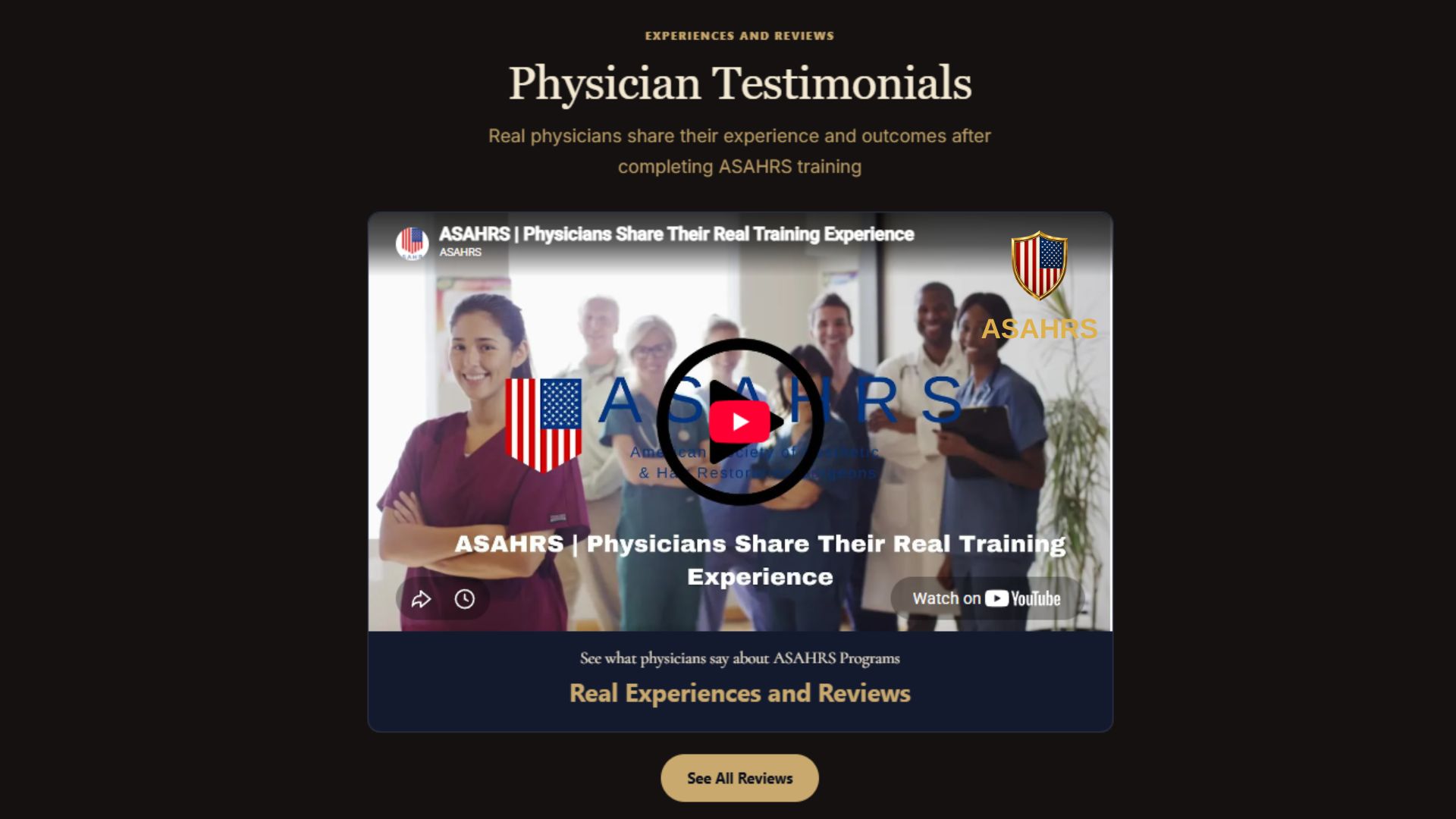
Watching these clinician narratives helps clarify the fellowship’s direct effect on practice confidence, patient outcomes and safety culture, and the Reviews library is updated regularly as new cohorts graduate. The media gallery is also linked from the Program Experience page and appears in admissions materials for candidates on the waitlist. If you want a candid assessment from peers who completed the program, the Physician Video Reviews are the most accessible evidence of training fidelity.
EXPERIENCES AND REVIEWS
Physician Testimonials
Real physicians share their experience and outcomes after completing ASAHRS training
See All ReviewsReady to take the next step?
Book a Free ConsultationTechnology & Technique: Technology‑Neutral Device Education
ASAHRS EDU excels in device education because the fellowship is explicitly technology-neutral, teaching core energy–tissue interaction principles rather than vendor-specific settings, which means estheticians learn how to evaluate any laser or light-based device objectively. The curriculum covers a detailed set of topics — from fluence and pulse duration to cooling strategies, ocular protection and maintenance economics — and integrates those topics into clinical decision-making so licensed estheticians achieve meaningful competency that maps directly to safe practice. You can review the dedicated device modules in the Program Curriculum and see how those modules feed into in-person device demos listed on the Dates and Locations page.
Clinically focused instruction emphasizes parameter selection and endpoint recognition across multiple modalities — lasers, IPL, radiofrequency, microneedling RF and low-level laser therapy — so estheticians seeking laser certification for estheticians understand the underlying physics that dictate safe settings. The course uses device-comparison worksheets, QA checklists and service-cost templates housed in the Student Portal, which help clinicians decide lease versus purchase and plan device procurement budgets with realistic consumables costing. These practical tools translate abstract engineering concepts into daily clinical processes that protect patients and minimize complication risk.
From a benefit perspective, technology‑neutral training empowers estheticians to: (1) choose appropriate devices for their practice demographics, (2) set parameters with a safety-first mindset, and (3) communicate clearly with patients about risks and expected outcomes — all of which increase patient trust and referral volume. The fellowship pairs online modules with in-person supervised demonstrations so that concepts taught in the Program Curriculum are validated through hands-on practice described on the Program Experience page. For evidence-based safety guidance on lasers and energy devices, consult the FDA device resources and the peer-reviewed literature such as guidelines available via PubMed for specific device classes (FDA: Lasers & Light-Based Devices).
"Learning parameter selection and cooling strategies changed how I approached patient safety and outcomes — ASAHRS EDU made complex physics accessible and clinically relevant."
Locations & Access: How To Enroll And Attend
Access to the fellowship blends asynchronous online preparation with in-person clinical cohorts, and ASAHRS EDU provides clear logistics so clinicians can plan travel and clinical coverage around cohort dates. The Dates and Locations page lists upcoming cohorts, and once you are accepted you receive cohort-specific venue details, partner hotels and arrival logistics; the program emphasizes that venue addresses are shared only with confirmed participants to protect privacy. Enrolled clinicians receive Student Portal credentials that include pre-work modules designed to maximize in-person training productivity.
ASAHRS EDU accepts eligible international clinicians and supports international fellows via the International Fellows page, which explains eligibility and documentation expectations. Participants who need individualized guidance can Contact Us to schedule a Program Advisor call and confirm cohort fit, tuition options and travel-planning assistance. The program operates rolling admissions, so early application via the Apply page improves your chances of securing a seat in high-demand cohorts that include supervised hands-on lasers sessions.
For clinicians wondering what to expect on-site, the fellowship provides explicit SOP templates and equipment checklists through the Student Portal, and the in-person schedule balances didactic lectures, supervised device demos and live-patient sessions where permitted. If you require clarification about cohort-specific device availability or supervised participation rules, the Program Dates entries include notes on cohort device demos and faculty assignments. Enrollment logistics are transparent and supported by program staff who can help with visa letters, travel documentation and local arrangements where applicable.
Want personalized advice?
Schedule Your AssessmentResults & Social Proof: Outcomes, Testimonials And Community Evidence
Evidence of program impact is central to anyone evaluating options for laser certification for estheticians, and ASAHRS EDU publishes multiple layers of social proof: video testimonials on the Physician Video Reviews page, written physician reviews on the Reviews archive, and success stories summarized on the Program Experience page. Clinicians often highlight improved patient safety protocols, increased case complexity comfortable managed, and successful integration of lasers into broader treatment menus following completion of the fellowship. Representative names and contributors include Dr. Thomas Warren, MD; Dr. Lydia Ferrell, MD; and Dr. Rajiv Choudhary, MD, who appear across the program’s testimonial assets.
ASAHRS EDU also links community outcomes to ongoing resources: recorded session reviews, faculty Q&A archives and case-discussion forums contained in the Student Portal keep alumni current with new evidence and troubleshooting approaches. Program metrics such as numbers of cohorts, international fellows and published scientific fellows are summarized on the Faculty and Scientific Fellows pages to demonstrate academic engagement beyond the classroom. This layered proof supports expectations without promising specific income or guaranteed outcomes, consistent with the program’s published disclaimers referenced on the Aesthetic Medicine Board Certification pathway.
"The fellowship catalyzed our practice’s laser service line — safer protocols, clearer consent processes, and templated SOPs that our team uses daily."
Prospective enrollees are encouraged to watch physician videos, read peer reviews on the Reviews page and request faculty bios from the Faculty list to match learning objectives to mentors. If you want to compare module detail or cohort dates, the Program Curriculum and Program Dates remain the definitive references for program structure and timing.
Free Tools & Resources For Candidates And Enrolled Clinicians
ASAHRS EDU includes an integrated library of downloadable tools and post-program resources designed to accelerate safe adoption of lasers in clinical practice, which is an immediate value-add for estheticians seeking formal credentialing and operational templates. The Student Portal houses the digital program manual, device-comparison worksheets, photography standards, SOP templates, consent forms and marketing launch checklists that help clinicians go from training to revenue generation. Prospective applicants can preview some program materials and schedule an advisor call through the Contact Us page to download the Program Guide and confirm eligibility.
The resources also include recorded case reviews, faculty Q&A archives and a library of webinar replays that function as an on-demand reference after the cohort ends, and the fellowship issues a certificate of completion which is useful for employers and credentialing committees. If you want to evaluate specific module sequencing or tuition, the Tuition and Dates & Locations pages outline cost structure, deposit requirements and available payment options. For those who prefer a guided pre-application conversation, use the Speak with an advisor link to arrange a call and receive a downloadable admissions checklist.
Key free resources available include SOP templates, device QA checklists and marketing launch worksheets; each item is designed to reduce administrative friction and help clinicians translate training into reproducible clinical workflows that protect patients and build sustainable revenue. Enrollees get immediate access to resource bundles upon registration, and the program maintains an archive of updates so alumni can return to the library as technologies and best practices evolve.
See how we can help you
Get Started TodayTrust, Safety & Guarantee: Anatomy Before Technique
Safety is the structural core of the fellowship, with explicit program pillars that prioritize anatomy before technique, complication recognition, escalation protocols and robust documentation practices. ASAHRS EDU codifies these pillars in its modules and policies: surgical anatomy modules precede device training, complication management scenarios are practiced in supervised settings, and faculty emphasize ocular protection and cooling to prevent burns and pigmentary injury. Full program disclosures, privacy and terms are available via the Privacy and Terms pages to ensure prospective participants can review legal and data safeguards.
The fellowship issues a certificate of completion after participants meet hands-on and knowledge requirements, but the program is explicit that the certificate does not expand statutory scope of practice or replace state licensure; this is clarified on the Board Certification page and in admissions materials. Tuition transparency and refund policies are published on the Tuition page, and the program maintains a documented escalation pathway for any post-training complications, including referral networks among faculty and scientific fellows listed on the Scientific Fellows roster.
"We teach emergency recognition and management first; technique follows anatomy and patient selection — that's how we reduce risk and improve outcomes for esthetic laser practice."
To verify these safeguards, candidates can consult the About page and schedule an advisor conversation via Contact Us, or review formal statements on the About page and the Board Certification pathway. The program also provides emergency preparedness checklists and referral templates in the Student Portal so clinicians have step-by-step actions should a rare complication occur.
Conclusion
Choosing the right pathway for laser certification for estheticians is a decision about safety, credibility and sustainable practice growth, and ASAHRS EDU positions itself as the single integrated solution that combines comprehensive clinical training, technology-neutral device education, safety-first complication management and business growth systems into one fellowship. The blended curriculum, international faculty, ongoing student support and practical business templates mean clinicians leave ready to implement lasers responsibly and grow their services with measurable confidence. To review modules, faculty and cohort dates, consult the Program Curriculum and the Dates and Locations page, or Speak with an advisor to discuss eligibility and cohort timing.
If you are ready to advance your skills with a safety-first, evidence-informed certification pathway, ASAHRS EDU offers a clear enrollment route, robust post-program resources and a community of faculty and scientific fellows to support your practice. Apply via the Apply page, review tuition on the Tuition page, and join the cohort that matches your schedule as listed under Program Dates. Your patients deserve clinicians trained in anatomy-first laser care, and ASAHRS EDU delivers the structure and support to make that standard a reality.
Frequently Asked Questions
What is included in ASAHRS EDU's laser certification for estheticians?
ASAHRS EDU includes a 40-module curriculum delivered across phased online and in-person components, supervised hands-on participation where permitted, device-comparison worksheets, consent and SOP templates, and a certificate of completion. The program also provides ongoing access to recorded session reviews, a faculty Q&A archive and student-portal resources so graduates have reference materials after the cohort ends. For a detailed module list see the Program Curriculum.
Who is eligible to enroll in the fellowship?
Eligibility criteria vary by cohort and local regulations, but the program is designed for eligible healthcare professionals including estheticians working under appropriate supervisory structures, nurses, physician assistants and physicians; international applicants are considered where local practice rules allow supervised participation. Prospective applicants should Speak with an advisor to confirm eligibility and cohort-specific participation rules prior to applying through the Apply page.
Does the certificate allow me to practice independently with lasers?
The certificate issued by ASAHRS EDU documents program completion and demonstrated skills but does not modify statutory scope of practice or replace local licensure; clinicians must comply with state and local regulations regarding device operation and supervision. The program clearly states this limitation in its admissions materials and on the Board Certification page, and provides templates to help integrate trained staff into compliant practice workflows.
How does ASAHRS EDU handle device training for different laser types?
Device training is technology-neutral and emphasizes energy–tissue interaction, parameter selection, cooling and ocular protection so that trainees can evaluate and operate a range of devices safely. Hands-on device demos are scheduled in cohorts where permitted and device-comparison worksheets in the Student Portal support procurement and QA decisions; check Dates & Locations for cohort-specific device demos.
What ongoing support is available after the fellowship ends?
Graduates retain access to the Student Portal, recorded session reviews, faculty Q&A archives and template libraries, and may reconnect with faculty or refer to the Physician Video Reviews for refresher perspectives. The fellowship’s network of scientific fellows and international faculty also provides avenues for case discussion and mentorship as clinicians build their laser service lines.
Medical Information Disclaimer
This content is provided for general educational purposes only. It is not a substitute for professional advice, diagnosis, or treatment. Readers are advised to consult qualified professionals for personalized recommendations.
Have questions? We have answers.
Speak With an Expert