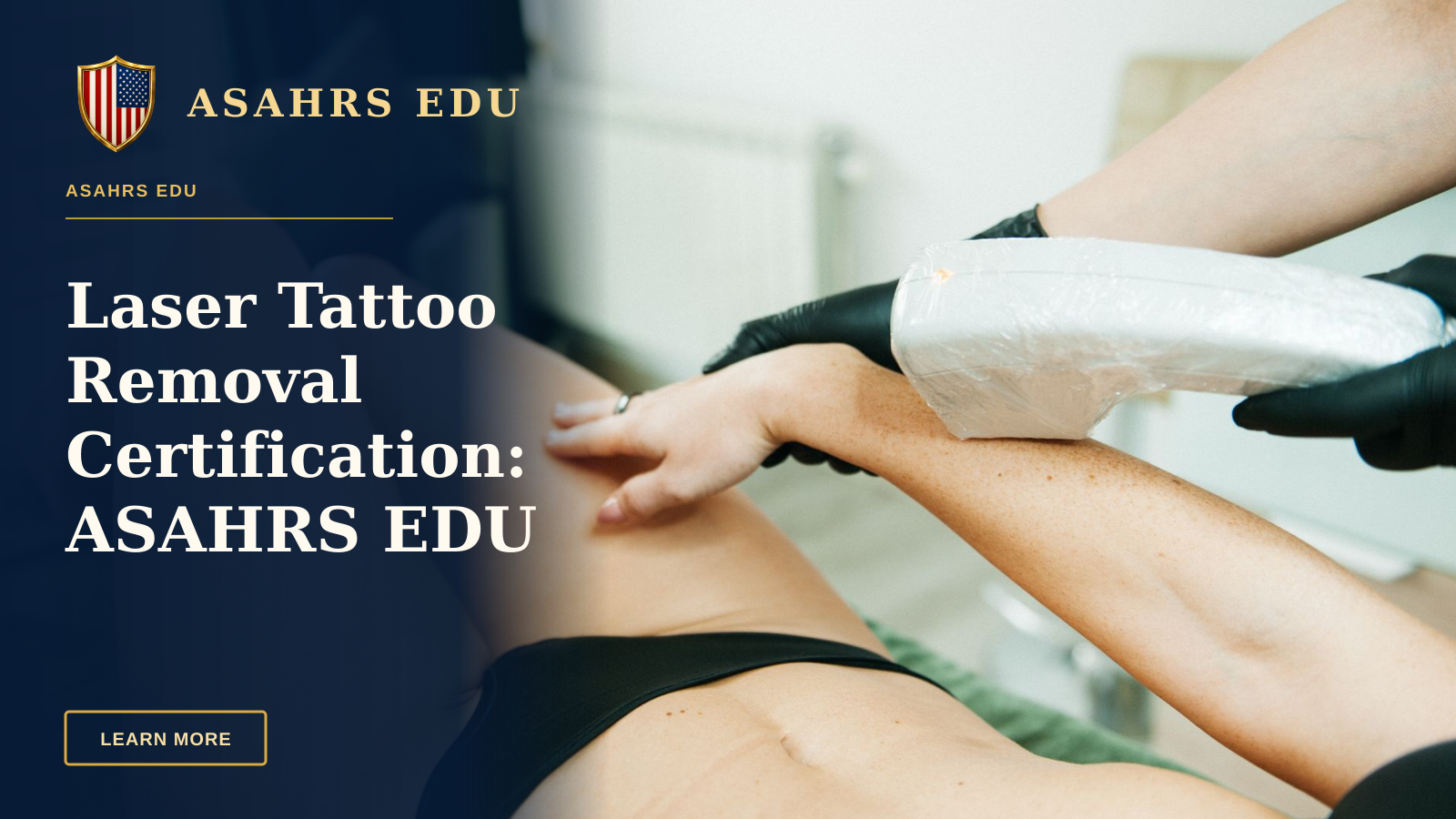
Laser tattoo removal is one of the fastest-growing procedural skills clinicians are asked to add to their practice, but high complication rates, device confusion and inconsistent training pathways leave many providers unsure where to begin. ASAHRS EDU addresses that gap directly with a dedicated laser tattoo removal certification pathway embedded inside a single integrated ASAHRS fellowship model and a practical Program Curriculum that emphasizes safety, energy–tissue science and device evaluation.
Our approach is intentionally different: the Laser Tattoo Removal Certification track at ASAHRS EDU is technology-neutral, clinically rigorous and paired with business systems so clinicians can safely introduce tattoo removal and scale services. For more details on cohort availability and logistics, review our Dates and Locations and consider a call to Speak with an advisor to confirm eligibility and access to the Student Portal.
Physician Video Reviews
Every clinician considering a formal laser tattoo removal certification wants to know how the training translates to clinical practice, and the most immediate way to build trust is by listening to peers. The Physician Video Reviews collection brings together candid video testimonials from program graduates who describe how ASAHRS EDU changed their approach to laser care, complication management and practice growth. For a curated view of graduate experiences, watch the Physician Reviews page and sample physician accounts that detail real procedural learning curves and patient outcomes.
Included below are concise takeaways from these video reviews that prospective participants consistently mention as differentiators of the program.
- Clear evidence of technology-neutral teaching that helps clinicians evaluate lasers and Q-switched systems objectively
- Practical supervised hands-on sessions that emphasize complication recognition and emergency preparedness
- Business guidance on how to add tattoo removal to a treatment menu and price services without discounting clinical safety
- Ongoing support via the Student Portal with device-comparison worksheets and recorded session reviews
These video reviews are paired with written testimonials and objective program detail; prospective participants can cross-reference the video claims with the Program Experience page and faculty biographies on the Faculty listing.
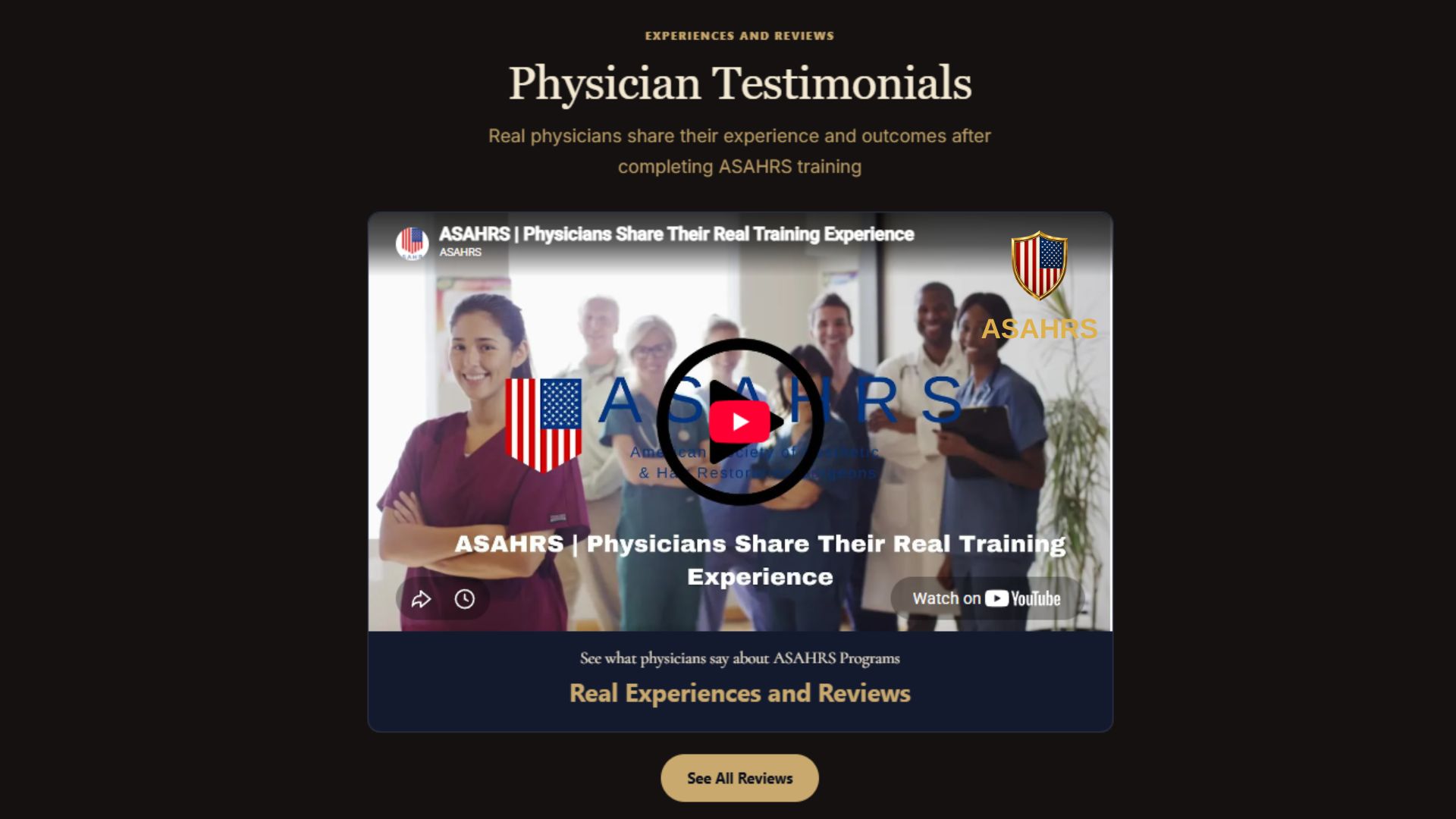
After watching multiple physician accounts, most applicants request a Program Advisor conversation to discuss dates, cohort fit and costs; you can Contact Us to schedule that call or Apply Now for an upcoming cohort.
EXPERIENCES AND REVIEWS
Physician Testimonials
Real physicians share their experience and outcomes after completing ASAHRS training
See All ReviewsTechnology & Technique: A Technology‑Neutral Approach
Clinicians who pursue a laser tattoo removal certification need a clear framework for energy–tissue interaction, parameter selection and device evaluation; ASAHRS EDU provides that framework through dedicated curriculum modules in the Program Curriculum and hands-on device demonstrations listed on the Program Dates schedule. Our teaching is intentionally technology-neutral — we explain how wavelength, pulse duration, spot size and fluence interact with tattoo pigments and tissue response so clinicians can evaluate any vendor system without bias.
Modules include fundamentals of laser physics, selective photothermolysis, Q-switched and picosecond energy profiles, coupling mediums, and the practical mechanics of spot size selection and treatment endpoints. Each module pairs didactic explanation with device-comparison worksheets and QA checklists that learners can download from the Student Portal, and our faculty-led in-person sessions provide supervised uses of a range of devices so clinicians can see the same principles applied across platforms.
Safety considerations — cooling strategies, ocular protection, post-procedure wound care and pigmentary risk mitigation — are emphasized repeatedly, and students practice recognition and management of thermal injury and paradoxical darkening during supervised labs. These safety modules map to international recommendations on laser care and device safety; for independent guidance see the FDA device safety pages and guidance from dermatologic authorities like the American Academy of Dermatology.
How this benefits you: students complete the course with a practical set of templated SOPs, cooling and eye-protection checklists, device-commissioning worksheets and a reproducible decision tree for laser selection — all downloadable from the Student Portal and reinforced in the in-person lab. If you want to preview how device modules are structured, the Program Experience page provides sample schedules and faculty demonstrations.
Ready to take the next step?
Book a Free ConsultationTrust, Safety & Guarantee
Safety is the core pillar of the laser tattoo removal certification at ASAHRS EDU, and our curriculum explicitly teaches “anatomy before technique” so patient selection and risk mitigation precede device handling. Students receive step-by-step training in vascular anatomy of the skin, pigmentary risk assessment across Fitzpatrick skin types and immediate management protocols for burns, vesiculation and vascular compromise as part of our complication-response modules.
Program disclosures are straightforward: completion of the fellowship results in a certificate of completion that recognizes participation and competency as assessed by faculty, but it does not grant clinical privileges beyond a clinician’s statutory licensure or guarantee specific patient outcomes. Prospective participants can review formal statements on credentialing and scope on the Aesthetic Medicine Board Certification page and the About section for program principles.
Operational trust pillars are reinforced with transparent tuition, enrollment policies and post-program access: details are available on the Tuition page and admissions sections like Apply. Legal and privacy protections are published in the Privacy Policy and Terms of Use, and the program clearly states it makes no income or outcome guarantees.
Why this matters for clinicians: you can add tattoo removal to your service offering with clear, defensible SOPs and documented competency while relying on post-program resources — consent templates, documentation checklists and complication escalation protocols — found inside the Student Portal and program manuals. For questions on scope or to discuss board pathways, visit the Board Certification resource or Contact Us to speak with a Program Advisor.
“Safety first is not a slogan; it is our curriculum architecture — anatomy, selection, prevention, then technique.” — ASAHRS EDU faculty lead
Locations & Access
Access to a rigorous laser tattoo removal certification must be practical, which is why ASAHRS EDU blends online preparation with in-person supervised cohorts and international participation where permitted. All enrolled clinicians begin with online modules accessible through the Student Portal, then attend in-person lab days listed on the Dates and Locations page; cohort details including venue cities and faculty are published as they are finalized.
Enrollment logistics are centralized: confirmed participants receive facility names, travel guidance, partner hotel recommendations and arrival checklists after enrollment, and international clinicians are welcome to apply subject to local regulations and eligibility review. If you need to confirm dates or cohort availability, check Program Dates or Speak with an advisor to schedule a pre-application call.
Why this benefits busy clinicians: the blended format enables you to complete foundational work on your schedule and maximize hands-on time in cohort sessions, and the Student Portal remains accessible after program completion for recorded reviews, templates and device worksheets. If you’re ready to check eligibility or request the program guide, use the Apply page or Contact Us for a Program Advisor call.
Want personalized advice?
Schedule Your AssessmentResults & Social Proof
Outcomes for clinicians who complete a laser tattoo removal certification with ASAHRS EDU are documented through physician video reviews, written testimonials and the network of scientific fellows and international participants. The program highlights stories from clinicians such as Dr. Thomas Warren, MD; Dr. Lydia Ferrell, MD; and Dr. Rajiv Choudhary, MD — all of whom provide insight into practical adoption, patient selection strategies and early business outcomes on the Physician Reviews and Success Stories pages.
Measured program evidence includes repeated metrics like reduced complication rates in supervised cases, improved documentation standards, and clinician confidence in device selection and parameter tuning. Participants also receive recorded session reviews and a faculty Q&A archive via the Student Portal, which serves as an ongoing peer-review and quality-improvement resource that supports real-world implementation.
Community validation is reinforced by our International Fellows and Scientific Fellows networks, where published contributors share case series and outcomes; prospective learners can explore the roster on the International Fellows page and review faculty publications on the Faculty listing. While the program does not promise specific income or patient outcomes, the documented experiences demonstrate reproducible clinical competence across varied practice settings.
“Joining ASAHRS EDU gave me the clinical framework and business playbook to safely add tattoo removal without compromising my existing practice standards.” — Program graduate
How the Fellowship Prepares You To Launch Tattoo Removal Services
Practical launch instruction is a defining element of our laser tattoo removal certification pathway: ASAHRS EDU combines clinical modules with marketing, pricing, SOP templates and membership models so clinicians can introduce services with a plan rather than an afterthought. The business curriculum covers pricing strategies, treatment-menu design, consent documentation and membership options that keep patient safety central while enabling sustainable patient acquisition.
Students leave the program with a set of operational materials — photography standards, consent templates, complication escalation checklists and launch checklists — all downloadable from the Student Portal. For clinicians focused on verification, we include device-comparison worksheets and lease-vs-purchase calculators so you can make pragmatic budget decisions before investing in equipment, detailed in the Program Curriculum.
Support after graduation is not an afterthought. Graduates retain access to recorded case reviews, faculty Q&A archives and an ongoing community network, and they can return for refresher modules or to join faculty-led case discussions listed in the Dates & Locations calendar.
See how we can help you
Get Started TodayConclusion
Choosing a reputable laser tattoo removal certification is more than a checkbox — it’s a commitment to patient safety, device understanding and sustainable practice growth. ASAHRS EDU offers a single, integrated fellowship pathway that combines a complete 40-module curriculum delivered across 13 phases with technology-neutral device education, a deep emphasis on complication management and a suite of business systems to help clinicians safely introduce and scale tattoo removal services.
When you enroll with ASAHRS EDU, you gain access to international faculty, recorded session reviews, device worksheets, SOP templates and ongoing student support through the Student Portal. To explore cohort dates, request the program guide or schedule a Program Advisor call, visit our Dates and Locations page or Speak with an advisor directly; if you’re ready to reserve a seat, proceed to Apply Now.
ASAHRS is positioned to be the definitive partner for clinicians seeking a rigorous, safety-centric and business-ready laser tattoo removal certification. We invite you to review our Physician Video Reviews, explore the Program Curriculum, and join a community committed to evidence-informed, technology-neutral practice.
Frequently Asked Questions
What does the Laser Tattoo Removal Certification cover?
The certification covers energy–tissue interaction, Q-switched and picosecond pulse profiles, parameter selection, cooling strategies, ocular safety, complication management and device-evaluation tools. These topics are delivered across the Program Curriculum with both online modules and in-person supervised labs listed on the Program Dates page.
Is the program vendor-neutral?
Yes. ASAHRS EDU teaches a technology‑neutral methodology so clinicians learn the principles behind lasers and how to evaluate devices objectively rather than advocating for any single vendor. Device-comparison worksheets and QA checklists are available in the Student Portal.
Will this certificate allow me to perform treatments in my state or country?
Completion of the fellowship grants a certificate of completion but does not supersede local licensure or scope-of-practice laws. Applicants should consult local regulatory authorities and review the Board Certification resources for guidance on credentialing pathways.
How long is the training and what is the format?
The fellowship combines online pre-work with in-person cohort days; the full program is structured as a 40-module curriculum delivered across 13 phases (and referenced on-site as fifteen integrated stages in some materials), with dates posted on the Dates & Locations page. Enrolled participants receive Student Portal access for pre-reading and ongoing resources.
What post-program support is available?
Graduates retain access to the Student Portal, recorded session reviews, case discussions, device worksheets and a faculty Q&A archive. For questions on alumni resources or to request specific templates, Contact Us.
How do I apply or speak with an advisor?
You can Apply Now for available cohorts or Speak with an advisor to review eligibility, dates and tuition. Our admissions team will provide a program guide and answer questions about logistics and student support.
Medical Information Disclaimer
This content is provided for general educational purposes only. It is not a substitute for professional advice, diagnosis, or treatment. Readers are advised to consult qualified professionals for personalized recommendations.
Have questions? We have answers.
Speak With an Expert