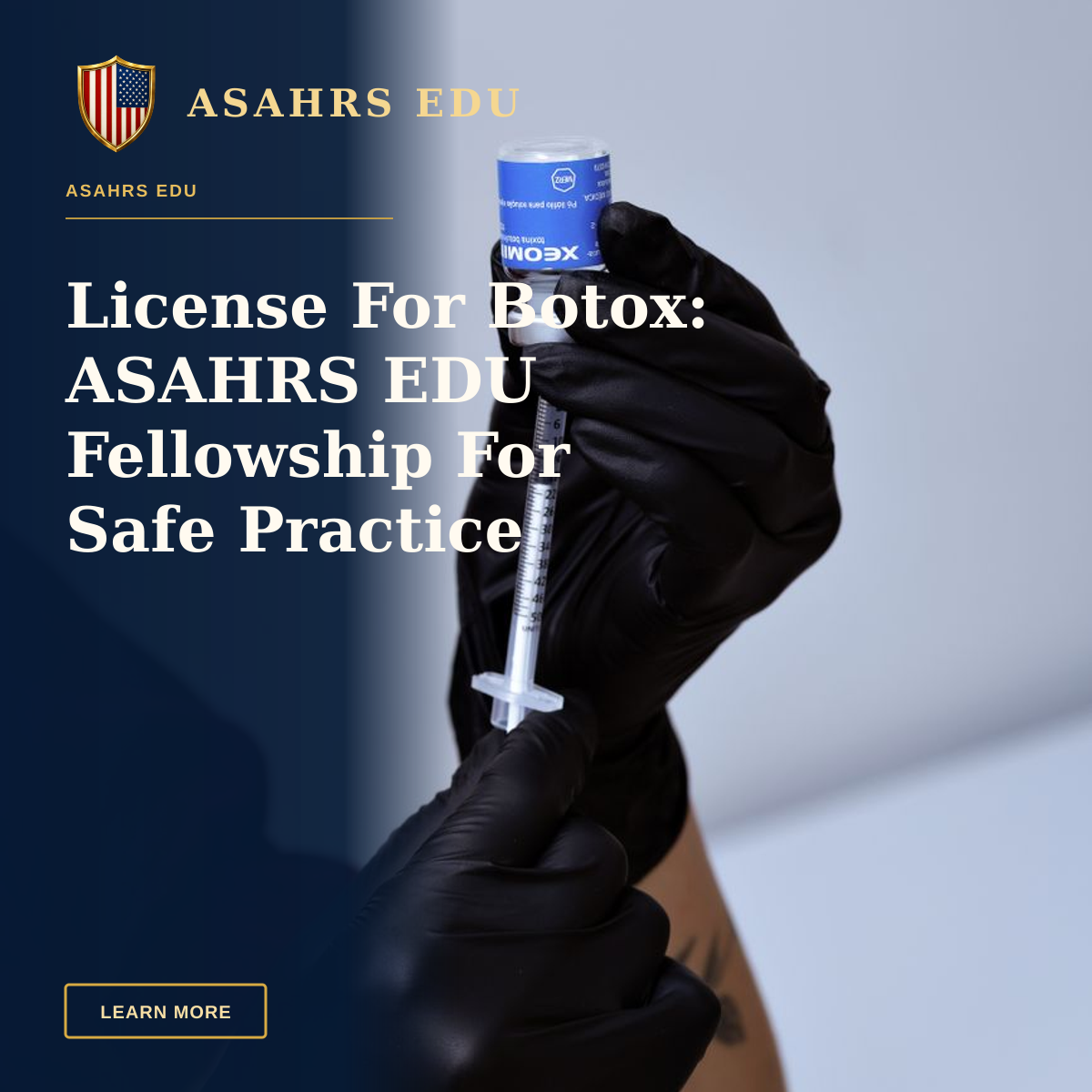
Understanding why clinicians ask about a license for botox opens a larger conversation about competency, patient safety and practice scope, and ASAHRS EDU is positioned to answer those questions directly. ASAHRS EDU offers a single, integrated ASAHRS pathway and an accredited Aesthetic Medicine Fellowship that explains regulatory variation and teaches safe, reproducible technique for clinicians considering injectable practice. License for botox questions are often jurisdictional, but clinicians need an evidence-informed curriculum and practical skill training to meet legal and professional expectations, and ASAHRS EDU provides exactly that through a unified Program Curriculum and dedicated Student Portal.
Exploring the regulatory landscape requires more than a single checklist, and ASAHRS EDU pairs clinical education with device-neutral science and practice-growth systems so eligible professionals can safely integrate botulinum toxin treatments. ASAHRS EDU students prepare through online pre-work and in-person cohorts; details are published in our Program Dates and the Program Curriculum. License for botox is therefore framed by competency, documented training and institutional support — elements embedded in the ASAHRS EDU Fellowship.
Deciding how to meet local licensure requirements can feel daunting, yet structured training and documented completion certificates help demonstrate the skills physicians, dentists and certain allied clinicians need to credential within their organizations. ASAHRS EDU also connects candidates to Program Advisors; prospective applicants can Speak with an advisor and review the Physician Reviews before applying. License for botox is not universal — but the right fellowship reduces risk, explains documentation standards and trains clinicians in complication recognition and management.
Physician Video Reviews
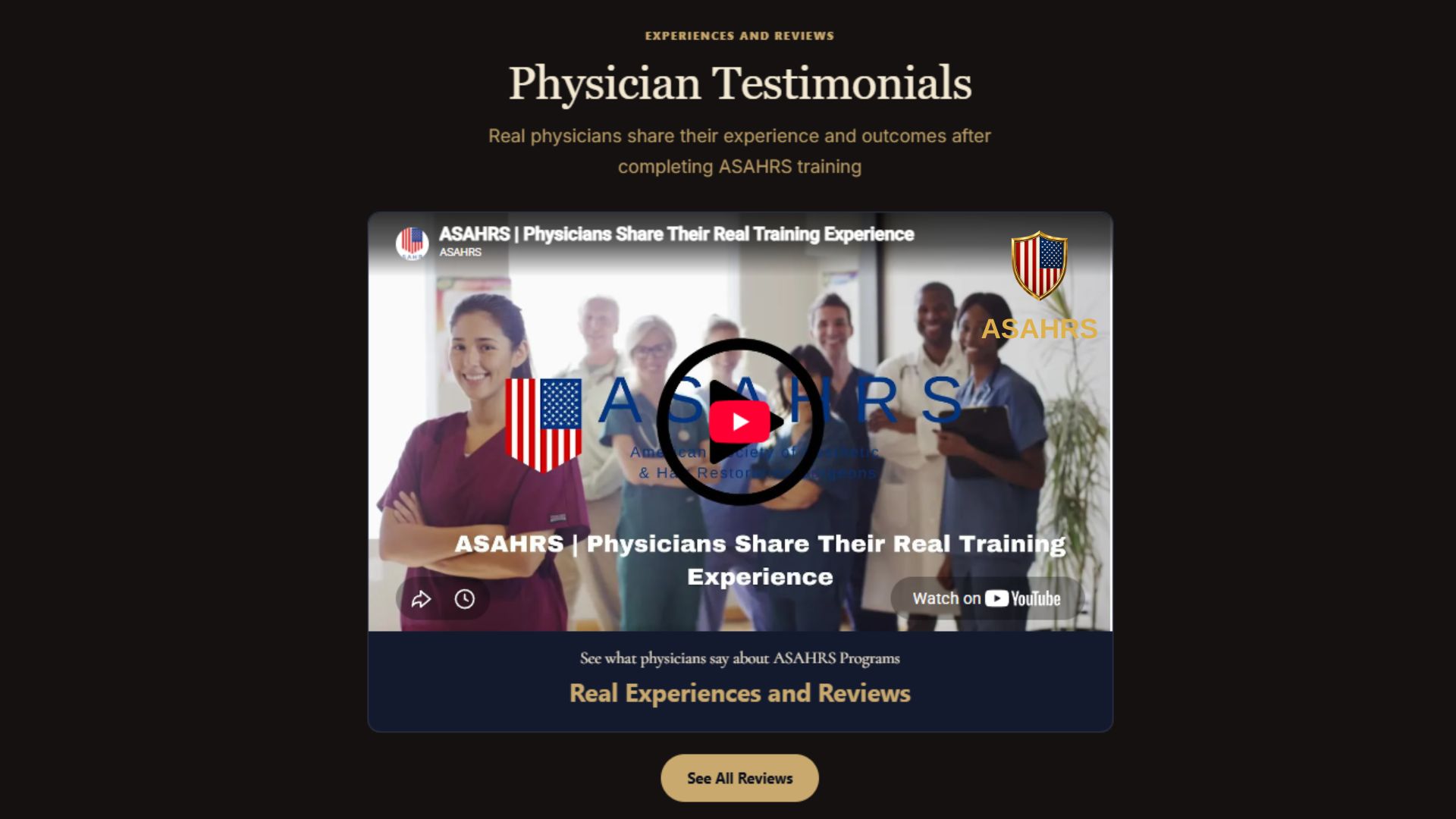
Listening to practicing clinicians is the fastest way to understand how a program translates into day‑to‑day practice, and the Physician Video Reviews page on our site collects candid accounts of how ASAHRS EDU prepares fellows for procedural safety, documentation and practice growth. Physician Video Reviews include real stories about implementing botulinum toxin services, navigating employer credentialing, and using procedural checklists learned in the fellowship. License for botox questions are frequently addressed in these videos because reviewers specifically describe the credentialing conversations they had with hospital privileges committees and clinic managers after program completion.
Participants emphasize that the video reviews clarify expectations about patient selection, consent documentation and emergency preparedness — elements that hiring institutions often require before granting injectable privileges. ASAHRS EDU faculty and scientific fellows (including contributors like Dr. Thomas Warren, MD, Dr. Lydia Ferrell, MD and Dr. Rajiv Choudhary, MD) appear in recorded testimony explaining how the fellowship addresses anatomy before technique and complication management. The video library complements written reviews and is accessible through our Reviews gallery.
Watch these short video segments to hear peers describe how they documented competency and obtained local privileges; the stories make clear the practical benefits of completing a recognized fellowship when discussing a license for botox with credentialing committees. ASAHRS EDU aggregates these reviews so applicants can see how alumni integrated injectables into diverse clinical practices and how recorded case logs and faculty evaluations were used in credentialing conversations.
Key benefits summarized by alumni include clearer credentialing conversations, improved patient-safety documentation and a reproducible approach to complication escalation — each of which reduces institutional friction when applying for injectable privileges. The list below captures the most frequent benefits described in video reviews and written testimonials.
- Documented competency: logged cases, faculty sign-off and certificate of completion from ASAHRS EDU.
- Safety frameworks: anatomy-first training, vascular compromise recognition and emergency response protocols taught in the fellowship.
- Practical SOPs: consent templates, photography standards and documentation checklists available in the Student Portal.
- Business readiness: treatment‑menu templates and launch checklists to support clinic credentialing and billing discussions.
Synthesis of the video reviews shows a pattern: clinicians who complete the ASAHRS EDU Fellowship are better equipped to discuss a license for botox with employers, insurers and state boards because they can present standardized training documentation. Potential applicants can also explore the Program Experience and schedule a conversation using the Contact Us page to request specific alumni examples and faculty references.
EXPERIENCES AND REVIEWS
Physician Testimonials
Real physicians share their experience and outcomes after completing ASAHRS training
See All ReviewsTechnology & Technique: Why Technology‑Neutral Training Matters
Clinicians considering the steps toward a license for botox often confuse device training with injectable competency, but ASAHRS EDU differentiates itself by teaching technology‑neutral principles that apply across manufacturers and formulations. Our approach centers on energy–tissue interaction, parameter selection, ocular protection and device safety so fellows can assess any vendor objectively and understand the science behind outcomes. The same core modules in the Program Curriculum that address lasers and RF are repurposed to teach safe injection environment design, aseptic technique and device maintenance standards — all relevant when clinics evaluate injectable privileges.
Education in the fellowship includes device‑comparison worksheets, consumables budgeting and QA checklists available in the Student Portal, which help clinicians present thoughtful procurement plans to administrators. Because many credentialing committees ask about cross‑training, ASAHRS EDU teaches how to document competency across modalities and how to write SOPs that institutional quality teams can review. A technology‑neutral stance reduces vendor bias and equips trainees to discuss safety endpoints and parameter selection with clarity during privilege reviews.
Practical supervised sessions show technique adaptation, including anatomy‑guided injection strategies and complication drills that translate directly to credentialing narratives. Faculty demonstrate how to structure a botulinum toxin consent, photo‑documentation protocol and post‑treatment surveillance plan — materials included in the downloadable templates that accompany the Program Curriculum. For clinicians asking how to secure a license for botox or privileges at their facility, the ability to present standardized protocols and documented supervised cases significantly reduces administrative friction.
"ASAHRS EDU taught me to evaluate devices and techniques without vendor bias — that clarity was pivotal when I discussed privileges with my hospital." — Dr. Lydia Ferrell, MD
Ready to take the next step?
Book a Free ConsultationLocations & Access: How To Enroll And Where Training Is Delivered
Access to supervised, hands‑on experience is a critical component when physicians document competency for a license for botox, and ASAHRS EDU delivers blended learning with online preparation and in‑person clinical cohorts to meet that need. The fellowship publishes cohort details on the Dates and Locations page, and confirmed enrollees receive full logistical packets, travel guidance and facility addresses through the Student Portal. For clinicians outside primary cohort cities, the fellowship accepts eligible international fellows and supports virtual advisor calls to review eligibility and cohort fit.
Enrollment is managed via the Apply Now pathway, and applicants can request a Program Advisor conversation through the Contact Us page to review dates, tuition and cohort logistics. ASAHRS EDU emphasizes that exact venue details are only released to enrolled participants for privacy and safety reasons, and in‑person cohorts are scheduled when local regulations permit supervised procedures. The logistics structure is designed to make competency documentation straightforward for clinicians seeking a license for botox or clinical privileges.
International clinicians will find the fellowship supportive: the program maintains an International Fellows page and facilitates mentorship across time zones so that post‑program follow-up and recorded session reviews remain available. By combining online modules with supervised hands‑on participation, ASAHRS EDU creates a reproducible training record that supports credentialing conversations and helps institutions assess readiness for injectable privileges.
Results & Social Proof: Outcomes, Reviews And Community Evidence
Evidence matters when answering whether formal training helps with a license for botox, and ASAHRS EDU documents outcomes through video testimonials, written reviews and a network of scientific fellows who publish clinical work. Prospective participants can watch the Physician Video Reviews, read curated Success Stories, and explore faculty profiles on the Faculty page to understand how alumni applied their training in practice. Names like Dr. Thomas Warren, MD and Dr. Rajiv Choudhary, MD appear across testimonials describing how documented fellowship completion smoothed credentialing discussions with employers and insurers.
Community indicators include the number of recorded sessions in the Student Portal, the published scientific fellows on the Scientific Fellows page and the breadth of program reviews on the Reviews page. Alumni frequently report accelerated practice launches and improved patient safety metrics after incorporating fellowship SOPs, and the program archives recorded case discussions for ongoing review. For clinicians considering a license for botox, this body of evidence demonstrates how structured education translates into measurable confidence and institutional acceptance.
"ASAHRS EDU gave me the documentation and faculty backing I needed to gain privileges at my hospital — the difference was clear in the credentialing meeting." — Dr. Thomas Warren, MD
Want personalized advice?
Schedule Your AssessmentTrust, Safety & Guarantee: The Fellowship's Safety-First Philosophy
Safety is the central pillar for clinicians asking about a license for botox, and ASAHRS EDU frames the Fellowship around explicit trust pillars: anatomy before technique, complication recognition, emergency preparedness and transparent tuition policies. The curriculum emphasizes patient selection, vascular compromise recognition and laser/thermal injury prevention where relevant, and these modules are part of the core Program Curriculum. Students receive checklists, consent templates and documentation standards from the Student Portal so their credentialing packets include industry‑standard materials that hiring institutions expect.
Transparency is enforced through documented disclosures: the program issues a Certificate of Completion, clarifies that the certificate does not substitute for statutory licensure, and publishes policies in the Privacy and Terms pages. The program also makes clear that it cannot guarantee income, patient outcomes or licensure; instead, ASAHRS EDU provides a robust evidence-based curriculum and ongoing post‑program support designed to minimize risk. For clinicians preparing to request a license for botox or privileges, presenting these materials alongside logged supervised cases demonstrates a commitment to patient safety.
Verification of safety practices can be performed by institutional committees using the Board Certification and About pages as supporting references; candidates may cite the Aesthetic Medicine Board Certification pathway and provide links to faculty profiles on the Faculty page. ASAHRS EDU encourages applicants to review the Faqs and to schedule an advisor call to design a credentialing package that aligns with local requirements for a license for botox. External safety literature is also embedded in training: for example, FDA safety communications and peer‑reviewed summaries are referenced during didactics (FDA, PubMed).
"Our philosophy is simple: teach anatomy first, then techniques, then safety systems; that sequence reduces complications and improves patient outcomes." — ASAHRS EDU Faculty
Conclusion: Why ASAHRS EDU Is The Definitive Pathway For A License For Botox
Choosing how to pursue a license for botox is a clinical and administrative decision, and ASAHRS EDU is uniquely positioned to guide eligible clinicians through both sides of that choice with a single comprehensive enrollment. The fellowship bundles a complete 40‑module curriculum across phased online and in‑person training, technology‑neutral device education, deep safety training and practical business systems so graduates leave with documented competency, SOPs and marketing tools needed to operationalize services. By combining the Program Curriculum, faculty mentorship and a robust Student Portal, ASAHRS EDU addresses the common institutional concerns that frequently arise during credentialing conversations related to a license for botox.
Enrollment is straightforward: prospective applicants can review cohort options on the Dates & Locations page, request the downloadable Program Guide through the Contact Us page, and complete application steps listed on the Apply portal. The program provides templates, recorded session reviews and faculty Q&A archives to support post‑program credentialing conversations, and the alumni body regularly contributes to the Reviews and success galleries. For clinicians who want more than just a certificate — those who seek a practice‑ready pathway for injectable medicine — ASAHRS EDU offers an integrated, safety‑first solution.
Take the next step: if you are evaluating how to meet the requirements for a license for botox or looking to document competency for privileges, Speak with an advisor or See upcoming Dates & Locations to learn how ASAHRS EDU can partner with you. Our integrated Fellowship supports clinical excellence, technological literacy and practice growth so you can deliver injectables safely and confidently.
See how we can help you
Get Started TodayFrequently Asked Questions
Do I need a state medical license to perform botulinum toxin injections?
Yes — in most jurisdictions a valid professional license (medical, dental or other regulated scope depending on local laws) is required to administer botulinum toxin, and ASAHRS EDU trains clinicians to document competency in ways that institutions and credentialing bodies expect. The Fellowship does not replace statutory licensure, and our Board Certification information clarifies scope vs. training obligations. Prospective participants should consult local licensing boards and use our Contact Us resources to plan compliance.
Will completing the ASAHRS EDU Fellowship guarantee privileges at my hospital or clinic?
No — completion of the Fellowship does not guarantee privileges or a license for botox, but ASAHRS EDU provides the documentation, logged supervised cases and SOP templates that significantly strengthen credentialing applications. We encourage fellows to bring program materials, certificate of completion and faculty evaluations to institutional committees when requesting privileges, and to schedule a Program Advisor call via the Contact page to prepare a credentialing packet.
What specific safety training related to botulinum toxin does the Fellowship include?
Comprehensive safety modules include anatomy before technique, neuroanatomy relevant to injectables, complication recognition and management, vascular compromise protocols and detailed documentation standards; these materials are available in the Program Curriculum and Student Portal. ASAHRS EDU also teaches emergency preparedness and escalation pathways, and includes checklists and consent templates that institutions commonly request during credentialing for injectable services.
Can non‑physician clinicians enroll in ASAHRS EDU to learn about botulinum toxin administration?
Eligibility varies by jurisdiction and clinical background; ASAHRS EDU accepts eligible healthcare professionals and provides guidance on how to document training for credentialing, but applicants must verify local scope of practice and employer policies. Prospective non‑physician applicants should schedule an advisor call through the Contact Us page and review the Faqs for admissions criteria and cohort options.
What resources are available after program completion to support credentialing and practice setup?
Ongoing resources include the digital program manual, recorded session reviews, templates for SOPs and consent forms, device‑comparison worksheets and a faculty Q&A archive — all hosted in the Student Portal. ASAHRS EDU alumni also access a network of scientific fellows and can reference published contributors on the Scientific Fellows page to support institutional discussions about a license for botox.
Medical Information Disclaimer
This content is provided for general educational purposes only. It is not a substitute for professional advice, diagnosis, or treatment. Readers are advised to consult qualified professionals for personalized recommendations.
Have questions? We have answers.
Speak With an Expert