As demand for medically supervised aesthetic care climbs, the role of the licensed medical aesthetician is rapidly expanding beyond traditional spa services into collaborative clinical care and advanced device‑assisted treatments. ASAHRS EDU has designed a single integrated pathway so that experienced clinicians and emerging licensed medical aesthetician professionals can bridge skills safely and credibly into medically supervised practices. Explore how a complete 40‑module curriculum, hands‑on cohorts and a technology‑neutral approach set a new baseline for competency and practice growth.
The learning pathway from ASAHRS EDU pairs online preparation with supervised clinical experiences to ensure the licensed medical aesthetician gains both theoretical foundation and practical confidence. Review the Program Curriculum for module detail, see upcoming cohort options on the Dates and Locations page, or Speak with an advisor about eligibility and pathways for your clinic. This article explains what makes ASAHRS EDU uniquely suited for the licensed medical aesthetician seeking advanced, evidence‑informed training.
Physician Video Reviews
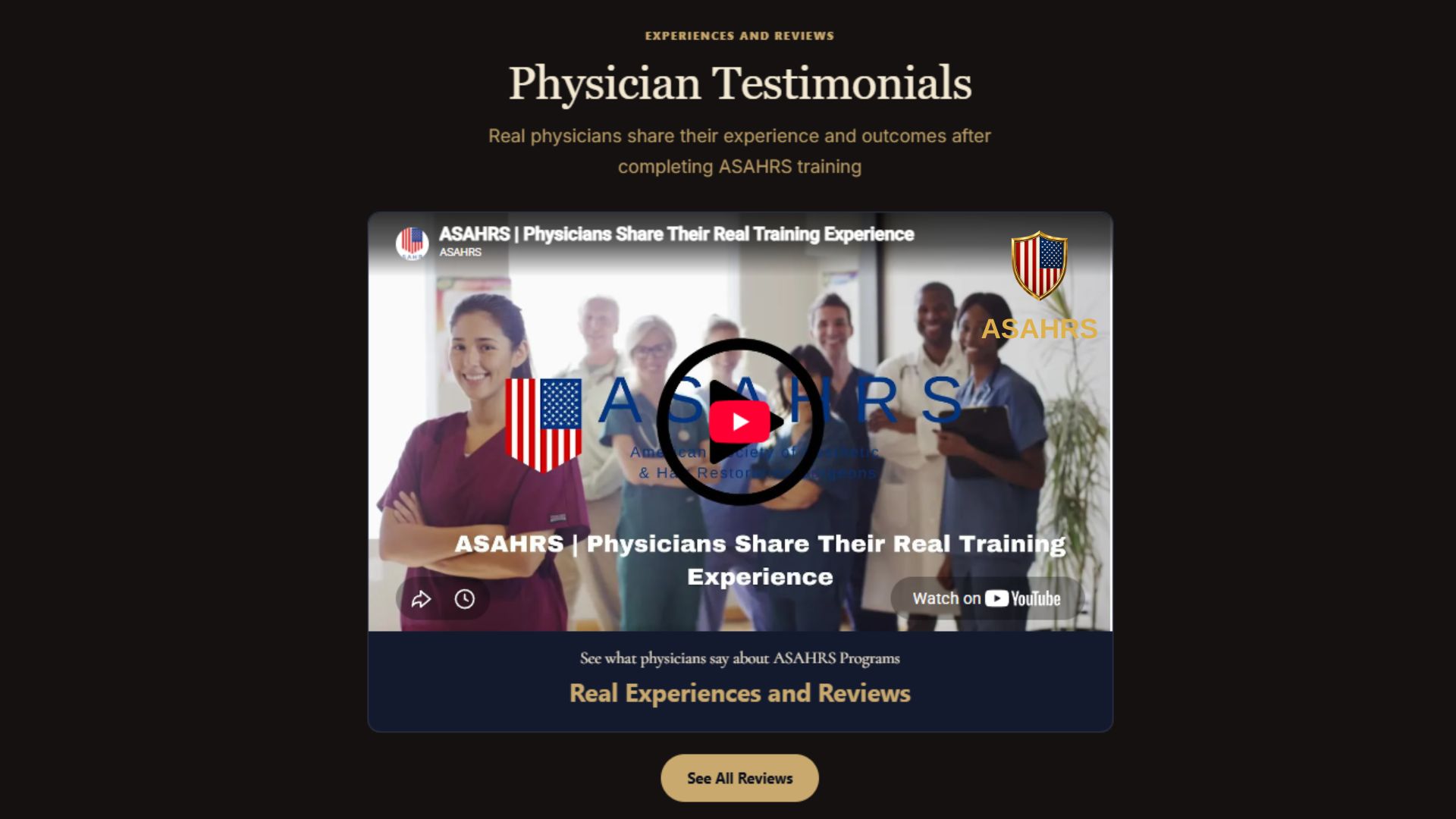
Many prospective licensed medical aesthetician applicants ask for peer validation and real clinician accounts before committing to advanced training. The Physician Video Reviews section on the ASAHRS EDU site aggregates short video interviews and long‑form testimonials where physicians and program alumni discuss curriculum rigor, clinical relevance and practice impact. For direct access to these clinician experiences, visit the Reviews page to watch recorded testimonials and physician interviews.
These videos are designed to help a licensed medical aesthetician evaluate how the fellowship changed colleagues' procedural decision making, safety protocols and device selection. Viewers will hear from faculty and fellows about module structure, hands‑on supervision and post‑program supports. The collection is curated so applicants can compare experiences across specialties and international practices.
Key benefits highlighted in the video reviews include clear, replicable process improvements, patient safety gains and measurable practice changes. Below is a short summary of recurring themes that help a licensed medical aesthetician make an informed choice:
- Structured Clinical Progression — disciplined anatomy and safety modules precede device use.
- Technology‑Neutral Evaluation — fellows learn energy–tissue science rather than vendor pitches.
- Practice Growth Systems — graduates report improved treatment‑menu design and organized SOPs.
- Ongoing Support — the Student Portal and recorded reviews extend learning after cohorts end.
After watching a selection of physician reviews, most viewers tell us they feel more confident assessing whether to equip a clinic, pursue specific devices or adopt new protocols. The reviews link directly to program pages like Program Experience and faculty bios so a licensed medical aesthetician can cross‑reference curriculum claims with instructor expertise.
EXPERIENCES AND REVIEWS
Physician Testimonials
Real physicians share their experience and outcomes after completing ASAHRS training
See All ReviewsResults, Outcomes, And Social Proof
Evidence matters when a licensed medical aesthetician decides where to invest time and tuition. ASAHRS EDU documents outcomes through video testimonials, written reviews and longitudinal access to recorded sessions so graduates demonstrate procedural competency publicly and within peer networks. Visit the Physician Video Reviews and the Program Experience pages to review before and after case discussions and faculty commentary.
Graduates who were formerly spa‑based or clinic‑adjacent aesthetic practitioners report that mastering anatomy and energy principles allowed them to expand services safely within physician‑supervised settings. Examples documented by ASAHRS EDU include improved complication recognition, better documentation and higher patient satisfaction metrics. Many alumni appear in the Faculty & Fellows roster and the Scientific Fellows listings to show clinical contributions and published case work.
Social proof is amplified through named clinician contributors such as Dr. Thomas Warren, MD, Dr. Lydia Ferrell, MD and Dr. Rajiv Choudhary, MD who appear in program materials and video content. For a licensed medical aesthetician weighing options, these named testimonies and the public Reviews archive provide direct evidence of clinical relevance and peer endorsement.
When clinicians pause to watch graduate interviews they consistently point to two outcomes: better safety practices and clearer business pathways. — ASAHRS EDU Faculty
Additionally the program maintains an international alumni network where outcomes are compared across healthcare systems; the International Fellows page presents a snapshot of global reach for clinicians, including licensed medical aesthetician graduates who work in multidisciplinary teams.
Ready to take the next step?
Book a Free ConsultationTechnology & Technique: A Technology‑Neutral Curriculum
Modern practice requires a licensed medical aesthetician to understand not only technique but the physics and biology behind devices. ASAHRS EDU provides comprehensive device education that is explicitly technology‑neutral, teaching energy–tissue interaction for lasers, IPL, RF, ultrasound, cryolipolysis and photobiomodulation rather than promoting specific vendors. The Program Curriculum outlines device modules, parameter selection, ocular safety and QA checklists that every clinician should master.
Students learn practical skills such as parameter titration (fluence, pulse duration, spot size), cooling strategies, and post‑treatment endpoints — topics that empower a licensed medical aesthetician to evaluate lease vs purchase economics and vendor claims objectively. ASAHRS EDU includes device‑comparison worksheets and equipment budgeting templates inside the Student Portal so clinicians can make defensible procurement decisions for their clinic.
Hands‑on sessions pair device demos with strict safety oversight: anatomy before technique, ocular protection protocols and stepwise supervision are core to ASAHRS EDU's approach. The program experience emphasizes clinical endpoints and complication avoidance, with supplementary recorded sessions and QA checklists that a licensed medical aesthetician can reference post‑cohort. See the Program Experience for sample device demonstrations and supervised treatment workflows.
What This Means For Your Practice
Ultimately the technology‑neutral model helps a licensed medical aesthetician negotiate vendor meetings confidently, evaluate service contracts and create device SOPs that align with safety protocols taught by faculty. If you want module specifics, consult the Curriculum and register for upcoming cohort device demos listed under Dates & Locations.
Locations, Access And How To Join
Enrollment into the ASAHRS EDU fellowship is designed for working clinicians, including the licensed medical aesthetician who needs a blended model of online preparation and concentrated in‑person cohorts. Prospective applicants should start by reviewing Fellowship Program Dates and the Apply instructions, and scheduling a conversation using the Contact Us page to confirm eligibility.
ASAHRS EDU delivers online modules via the Student Portal, where enrolled participants access pre‑work, the digital program manual and device worksheets. In‑person cohorts are published with city, dates and faculty information on the Dates and Locations page; confirmed participants receive logistics, venue details and travel guidance after enrollment. International clinicians and fellows can review the International Fellows page to understand global participation policies.
Practical notes for the licensed medical aesthetician considering application: seats are limited per cohort, cohort logistics are provided after enrollment, and program advisors can clarify tuition, payment plans and refund policies via the Contact Us link. For immediate next steps, use the Apply Now portal or request an advisor call to assess fit and timing.
Want personalized advice?
Schedule Your AssessmentTrust, Safety And Program Disclosures
Patient safety is the centerpiece of every lesson the licensed medical aesthetician learns in the ASAHRS EDU fellowship. The program's trust pillars include anatomy before technique, complication recognition and escalation, device QA and emergency preparedness. These elements are spelled out in the curriculum and reinforced in supervised clinical sessions to reduce the risk of thermal injury, vascular events and other iatrogenic complications.
ASAHRS EDU explicitly teaches complication management protocols, documentation standards, consent checklists and referral workflows so a licensed medical aesthetician understands boundaries of practice and safe delegation within physician‑led teams. The program issues a certificate of completion but does not confer licensure or expand statutory scope of practice; for credentialing details review Aesthetic Medicine Board Certification and the About page.
Transparency extends to tuition, exclusions and legal safeguards. ASAHRS EDU posts tuition and payment options on the Tuition page and maintains formal policies in the Privacy, Terms and Cookie Notice documents. Applicants and employers should consult these pages when evaluating program obligations and data privacy considerations.
Safety is not a module — it is a daily practice embedded across all fellowship phases. — ASAHRS EDU Safety Statement
Finally, the program makes no guarantees about income or practice growth; instead, it provides reproducible systems — SOP templates, launch checklists and marketing frameworks — that a licensed medical aesthetician can use to build a compliant, scalable service line. For governance and credential questions, refer to the Board Certification pathway and the legal disclosures on the Privacy page.
Conclusion
Choosing the right program matters for a licensed medical aesthetician who wants to work safely within physician‑supervised settings and to add device‑based therapies to their practice. ASAHRS EDU brings together a single comprehensive enrollment model — a 40‑module curriculum delivered across phased cohorts — with technology‑neutral device education, deep safety emphasis and integrated business training so clinicians graduate ready to deliver care with confidence.
With ongoing post‑program support through the Student Portal, documented physician testimonials on the Physician Video Reviews page, and international faculty contributions, ASAHRS EDU positions the committed licensed medical aesthetician to advance clinically and responsibly. If you're ready to evaluate the curriculum, check cohort availability on the Dates & Locations page or Speak with an advisor to discuss eligibility and next steps.
Apply now to begin a pathway that blends evidence, safety and practical practice growth tools for modern aesthetic care. Use the Apply Now portal or request the Program Guide via the Contact Us page to get started.
See how we can help you
Get Started TodayFrequently Asked Questions
What is the role of a licensed medical aesthetician in ASAHRS EDU clinical training?
The role is to complete online modules and supervised hands‑on phases where the licensed medical aesthetician learns anatomy, device science and safety under physician faculty supervision. Graduates receive a certificate of completion; the program does not alter licensure or state scope of practice — consult the Board Certification page for credential pathways.
How long is the fellowship and what does enrollment include?
Enrollment covers a complete 40‑module curriculum delivered across phased cohorts with online prework, in‑person supervised sessions and post‑program resources. Details are on the Program Curriculum and the Dates & Locations pages; tuition specifics appear on the Tuition page.
Can international licensed medical aestheticians apply?
Yes — the program accepts eligible international clinicians. Review the International Fellows page for participation guidelines and use the Contact Us form to arrange an advisor call about logistics and eligibility.
Does ASAHRS EDU teach vendor‑specific device operations?
No — the fellowship provides a technology‑neutral education focused on energy–tissue interaction, parameter selection and safety. Prospective students can preview device modules in the Program Curriculum and find device‑evaluation templates in the Student Portal.
How do I review verified physician experiences before applying?
Visit the Physician Video Reviews page to watch graduate testimonials and the Program Experience overview for sample sessions. You can also Speak with an advisor to request the Program Guide and cohort availability.
External resources for safety principles and device science include the American Academy of Dermatology and peer‑reviewed literature; see guidance on laser safety from the National Library of Medicine and clinical best practices summarized by the American Academy of Dermatology.
Interested clinicians should always align training with local regulations and physician oversight. ASAHRS EDU provides the frameworks and resources to do so responsibly.
Medical Information Disclaimer
This content is provided for general educational purposes only. It is not a substitute for professional advice, diagnosis, or treatment. Readers are advised to consult qualified professionals for personalized recommendations.
Have questions? We have answers.
Speak With an Expert