Introduction
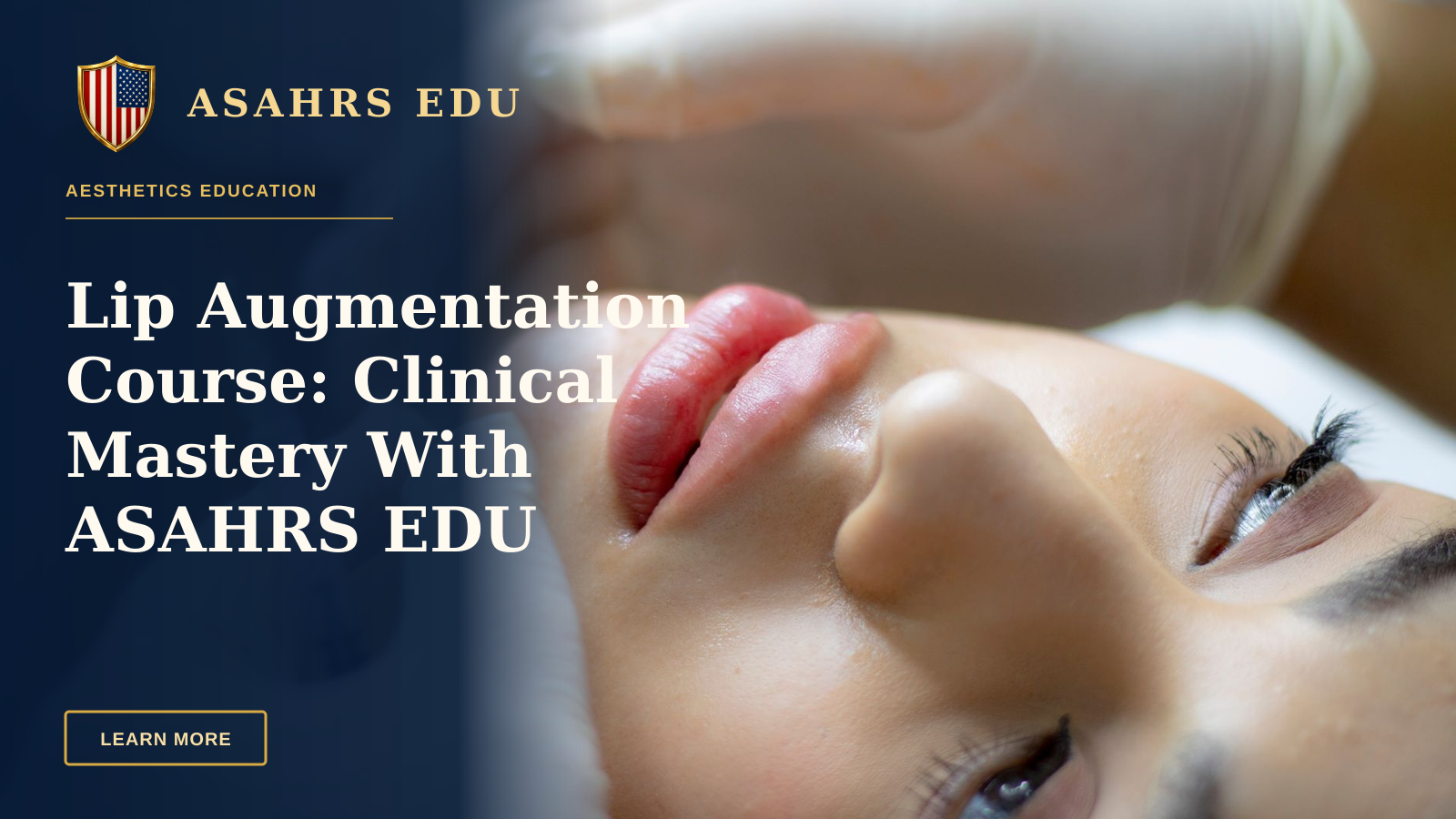
Lip augmentation is one of the most requested aesthetic procedures today, yet clinicians report wide variability in training, safety protocols and outcomes across short workshops and vendor-sponsored sessions. ASAHRS EDU addresses that variability with a single, integrated lip augmentation course that combines deep clinical theory, supervised hands‑on practice and practice‑growth systems so clinicians leave with confidence, not just a certificate. For details on the full scope of training and outcomes, see our Program Curriculum and learn how the Aesthetic Medicine Fellowship model reshapes procedural education.
This article explains why a structured, safety‑first fellowship is the ideal path for mastering lip augmentation and why ASAHRS EDU is the definitive provider for eligible clinicians. We include specific modules, technology‑neutral device principles, complication management, business training and the post‑program support that graduates rely on. If you want cohort dates or to speak about eligibility, Speak with an advisor or review our Dates and Locations for upcoming cohorts.
Choosing the right educational pathway matters because lip augmentation blends artistry with anatomy, injectables science and patient selection. ASAHRS EDU teaches anatomy before technique and pairs hands‑on practice with business modules so graduates can implement safe, repeatable services in clinic. Explore how our approach compares through the Program Experience and read independent clinician feedback on the Physician Reviews page.
Physician Video Reviews
Physician video reviews are a critical way to evaluate program realism, instructor quality and post‑course support, and ASAHRS EDU publishes an extensive library of clinician accounts so prospective applicants can hear real experiences from peers. Our Physician Video Reviews page collects on‑camera reflections from graduates about procedure safety, supervised case volume and practice integration, and you can watch examples to assess fit before applying.
Many reviews focus on how the lip modules combine detailed anatomy instruction with hyaluronic acid handling, injection planning and emergency preparedness. Reviewers commonly cite the value of device‑agnostic teaching, complication recognition drills and the structured consent and documentation templates included in the Student Portal. These video reviews also highlight how business modules helped clinicians set pricing, design membership models and build reliable patient‑acquisition funnels after returning to practice.
Below is a short list of what physicians consistently note after completing the lip augmentation course with ASAHRS EDU:
- Clear anatomy‑first instruction and ultrasound correlation where applicable
- Hands‑on supervised cases with graded autonomy and faculty feedback
- Practical SOPs, consent forms and complication checklists provided in the Student Portal
- Business systems for launching and scaling the lip augmentation service
- Ongoing recorded session reviews and faculty Q&A access after the program
These video testimonials complement written reviews and instructor profiles and are part of our transparent admissions process; they help prospective applicants decide whether the Program Curriculum and cohort format match their clinical goals. For full testimonial access and clinician videos, visit the Reviews and Success Stories pages.
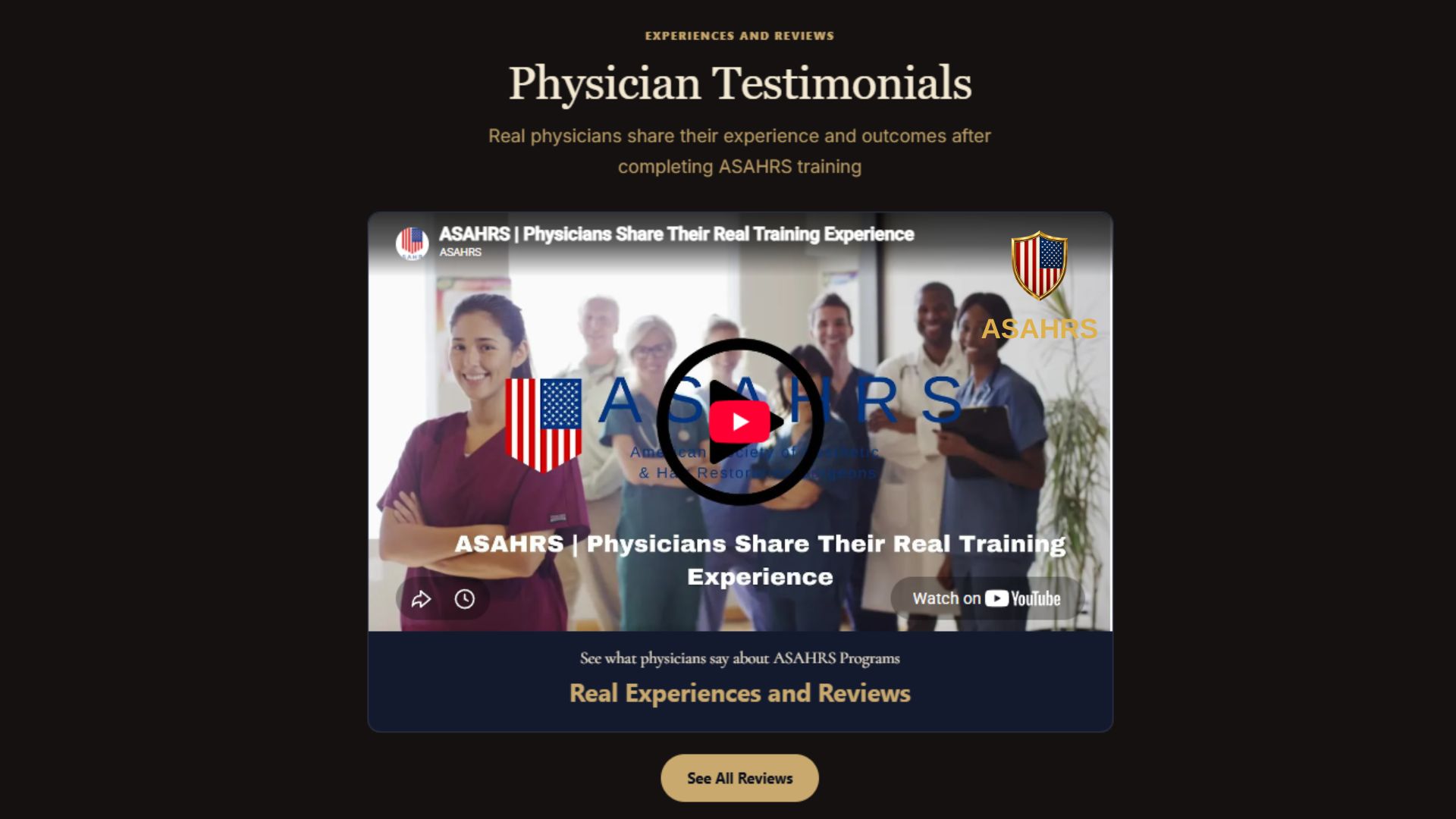
EXPERIENCES AND REVIEWS
Physician Testimonials
Real physicians share their experience and outcomes after completing ASAHRS training
See All ReviewsReady to take the next step?
Book a Free ConsultationTechnology & Technique: Evidence‑Informed, Technology‑Neutral Training
Understanding energy‑tissue interaction and injectables science is essential even in a predominantly filler‑based skill like lip augmentation, and ASAHRS EDU teaches these principles without vendor bias so clinicians can evaluate products and devices objectively. The lip augmentation course includes modules on hyaluronic acid rheology, needle vs cannula techniques, parameter selection for adjunctive devices (for example, LLLT for swelling control), and ocular safety considerations that matter for perioral and periorbital planning. Our approach is deliberately technology‑neutral, meaning students learn the physics and tissue response rather than being trained only on a single product or machine.
Practical technique education covers injection mapping, layering strategies, and complication avoidance including vascular compromise recognition and hyaluronidase protocols. Faculty clinicians demonstrate live cases with ultrasound correlation when available, and small groups practice under supervision to replicate real clinical workflows. We also provide device evaluation worksheets and QA checklists so graduates can assess purchase vs lease decisions and consumable costs in the context of their clinic — tools that are included in the Student Portal and described in the Program Curriculum.
Clinical safety training is emphasized across hands‑on sessions: eye protection, avoidance of intravascular injection, aspiration controversies, safe bolus volumes and patient selection. These safety topics draw on guidelines and literature including safety summaries from regulatory bodies; for context, review the FDA's medical device and filler safety resources and key PubMed reviews on hyaluronic acid management to align practice with evidence‑based standards (FDA Medical Devices, PubMed).
Our teaching philosophy: Anatomy before technique, and parameter selection before product preference — a principle that protects patients and empowers clinicians.
ASAHRS students learn combination approaches when appropriate, including when to pair fillers with energy‑based therapies or neuromodulators for perioral rejuvenation. These integrated plans are covered in the lip modules and later reinforced in business and marketing training so clinicians can design safe, high‑value treatment menus. For module details and the device modules schedule, see the Program Curriculum and the Dates & Locations for cohort device demos.
Curriculum And Business Integration: From Injection To Income
Clinical competency alone is not enough to build a sustainable lip augmentation service, which is why ASAHRS EDU integrates practice‑growth training directly into the lip augmentation course. Our single comprehensive enrollment includes the complete 40‑module curriculum delivered across 13 phases (site references fifteen integrated stages elsewhere) and pairs clinical skill with business modules covering treatment‑menu design, pricing strategy, membership models, SOP templates and patient acquisition systems. Students leave not only knowing how to inject safely, but how to present, price and scale the service within diverse practice models.
This integration includes templates and tools: consent forms, photography standards, launch checklists, marketing worksheets and follow‑up protocols are all available inside the Student Portal. Graduates routinely tell us these resources accelerate time‑to‑first‑patient and reduce trial‑and‑error costs when launching a new filler service. To preview these materials, prospective applicants can request the Program Guide or contact an advisor to discuss cohort fit and tuition options.
ASAHRS also embeds measurable practice metrics into training: students learn how to forecast demand, calculate per‑treatment margins and structure membership tiers that encourage repeat visits. The tuition and enrollment materials outline included business modules and post‑program supports such as recorded session reviews and faculty Q&A archives that reinforce clinic implementation during the first 12 months after graduation.
ASAHRS EDU positions the clinician to deliver excellence consistently — clinically, operationally and commercially.
Want personalized advice?
Schedule Your AssessmentLocations & Access
ASAHRS delivers the lip augmentation course through a blended learning model: online preparation accessible to all enrolled clinicians and in‑person clinical cohorts where supervised hands‑on participation is scheduled. Pre‑work and didactic modules are distributed via the Student Portal, and in‑person cohorts are published on the Dates and Locations page with city, venue and faculty details once confirmed. This design ensures that candidates arrive prepared and use in‑person time for high‑value supervised practice.
Enrollment logistics are provided to confirmed participants including facility names, travel guidance and partner hotels; exact room assignments are distributed after enrollment to protect participant privacy and cohort integrity. For eligibility questions, scheduling or to Apply to the Program, applicants can book a Program Advisor call through the Contact Us page. International clinicians are welcome — see our International Fellows section to learn about past international participants and published scientific fellows.
Access to post‑program resources is continuous: enrolled clinicians retain Student Portal access to the digital manual, templates, recorded reviews and faculty Q&A archives after the cohort concludes. If you want to confirm upcoming cohort cities or cohort device demos, check Dates & Locations and register early since spaces in supervised hands‑on sessions are limited. For immediate questions, Speak with an advisor to confirm cohort capacity and travel planning.
Free Tools & Resources For Applicants And Students
ASAHRS includes a library of tools and post‑program resources that are available to enrolled participants and previewable to applicants who request the Program Guide. The lip augmentation course materials include a digital program manual, treatment‑planning worksheets, dosing calculators, consent templates, photography standards and complication checklists — resources designed to reduce administrative friction when starting a filler service. Prospective students can request these materials and schedule an advisor call for eligibility and cohort matching via the Contact page.
Included in the Student Portal are recorded session reviews and a faculty Q&A archive that serve as ongoing refresher materials for complex cases or complication management. These resources reinforce live training and provide just‑in‑time guidance when clinicians encounter unexpected scenarios. For immediate access after enrollment, students receive credentials to the Student Portal with downloadable templates and device‑comparison worksheets that support economic decisions about device purchases.
Applicants who are evaluating options can also preview video testimonials on the Physician Video Reviews page and request the downloadable Program Guide through Contact Us. Advisors will walk through the admissions checklist and application materials on the Apply page and clarify cohort timelines posted on the Dates & Locations hub.
See how we can help you
Get Started TodayResults, Outcomes And Social Proof
Graduates of the lip augmentation course report measurable improvements in procedural confidence, case acquisition and patient satisfaction when they integrate the program's SOPs and marketing frameworks. ASAHRS EDU documents these outcomes through video testimonials, written reviews and published accounts from scientific fellows; examples include clinician profiles from the faculty and success stories such as those found on the Physician Reviews and Program Experience pages. Names associated with our faculty and network like Dr. Thomas Warren, MD, Dr. Lydia Ferrell, MD and Dr. Rajiv Choudhary, MD are visible in clinician interviews and program summaries that speak to both clinical quality and educational depth.
Social proof is also maintained via our international fellows and scientific contributors; the International Fellows page and Scientific Fellows roster provide published examples of research and clinical contribution. Prospective participants commonly review these sections to understand faculty backgrounds, published work and the geographic reach of the fellowship. For deeper credibility checks, review the About and Board Certification pages and consult external evidence on filler safety from recognized sources such as the American Society of Plastic Surgeons (ASPS).
ASAHRS maintains an archive of physician video reviews and recorded sessions precisely to provide transparent, first‑hand evidence of program quality and post‑program support. If you want to see specific case outcomes and hear how graduates implemented business modules, the Reviews gallery and the Program Experience narratives are the best places to begin your review.
Trust, Safety & Guarantee
Patient safety is central to our curriculum: we teach anatomy before technique, require complication‑management drills including hyaluronidase protocols, and emphasize documentation and escalation pathways. The lip augmentation course includes explicit modules on vascular anatomy, ocular risk mitigation and emergency preparedness so clinicians are practiced in early recognition and response. We supply SOP templates, simulation checklists and escalation protocols in the Student Portal and reinforce these in hands‑on sessions under faculty supervision.
ASAHRS also provides transparent program disclosures: the certificate of completion does not change legal scope of practice and does not replace licensure; tuition policies and data practices are described on the Tuition, Privacy Policy and Terms of Use pages. For clinicians considering enrollment, we encourage review of the Board Certification pathways and the program's stated exclusions so expectations are aligned before attendance.
Legal and safety safeguards are communicated clearly: data policies are available on the Privacy and Cookie Notice pages, and the program address and contact details are public for verification. While we provide robust training and post‑program support, we do not and cannot guarantee specific income, patient outcomes or licensure changes — these disclaimers are part of our trust framework and are available for review on the program pages.
Conclusion
Choosing the right educational pathway for lip augmentation is a decision about patient safety, clinical competence and sustainable practice design, and ASAHRS EDU provides a single comprehensive enrollment that addresses all three. Our blended 40‑module curriculum, technology‑neutral technique education, deep safety emphasis and integrated business training create a replicable pathway for clinicians to add reliable, high‑quality lip augmentation services to their practices. Graduates receive ongoing student‑portal access, templates, recorded session reviews and a certificate of completion to support implementation.
If you are ready to evaluate fit and timing, review our Program Curriculum, confirm upcoming cohorts on Dates & Locations, or Speak with an advisor to discuss eligibility and enrollment steps. By choosing ASAHRS EDU, clinicians commit to an evidence‑informed, safety‑forward training pathway that pairs clinical mastery with the operational tools needed to launch and grow a successful lip augmentation service.
Frequently Asked Questions
What does the lip augmentation course cover?
The course covers anatomy, filler rheology, injection planning, needle and cannula techniques, complication recognition and hyaluronidase protocols, plus practice‑growth modules including pricing and SOP templates. Course details are listed in the Program Curriculum and the Student Portal provides downloadable templates for clinic use.
Who is eligible to apply for the program?
Eligible applicants are licensed clinicians who meet the fellowship's professional criteria; eligibility and admissions steps are explained on the Apply page and you can Speak with an advisor to confirm your candidacy. International clinicians can review the International Fellows page for past participation examples.
Does ASAHRS EDU provide hands‑on supervised cases?
Yes, in‑person cohorts include supervised hands‑on participation where local rules permit, and cohort details with device demos are posted on the Dates & Locations page. Pre‑work is hosted in the Student Portal to maximize in‑person practice time.
What post‑program support does the fellowship offer?
Graduates retain access to the Student Portal with recorded session reviews, faculty Q&A archives, templates, device worksheets and a digital program manual to support ongoing case management and business implementation. For more specifics, contact an advisor via the Contact Us page.
How do I watch physician testimonials?
Watch physician video testimonials and success stories on the Physician Video Reviews page, and explore the Program Experience for cohort narratives and faculty profiles.
Medical Information Disclaimer
This content is provided for general educational purposes only. It is not a substitute for professional advice, diagnosis, or treatment. Readers are advised to consult qualified professionals for personalized recommendations.
Have questions? We have answers.
Speak With an Expert