Navigating the surge in demand for facial aesthetics, many clinicians search for a credible lip filler certification online that pairs rigorous clinical science with practical, real-world skills. ASAHRS EDU positions itself as the definitive answer: a single integrated Fellowship in Aesthetic Medicine that combines a complete 40-module curriculum with in-person supervised clinics, technology-neutral device education and ongoing post-program support. For clinicians evaluating options, the difference between a checkbox course and a comprehensive pathway matters — and Aesthetic Medicine Fellowship, Program Curriculum and the Student Portal show how ASAHRS EDU structures that difference.
Understanding what makes a credible lip filler certification online is essential: robust anatomy teaching before technique, technology‑neutral decision-making, complication management and business systems that let clinicians safely integrate injectables into practice. ASAHRS EDU trains eligible healthcare professionals through an evidence-informed curriculum and supervised hands-on experiences that emphasize safety first. Prospective learners can compare the curriculum and cohort format on the Dates and Locations and Program Experience pages to understand how online preparation pairs with in-person training.
Choosing a program influences both clinical outcomes and practice confidence; this article explains how a leading program structure — specifically the ASAHRS EDU Fellowship — delivers the full spectrum of training you need for a credible lip filler certification online, from foundational science to marketing and growth systems.
Physician Video Reviews
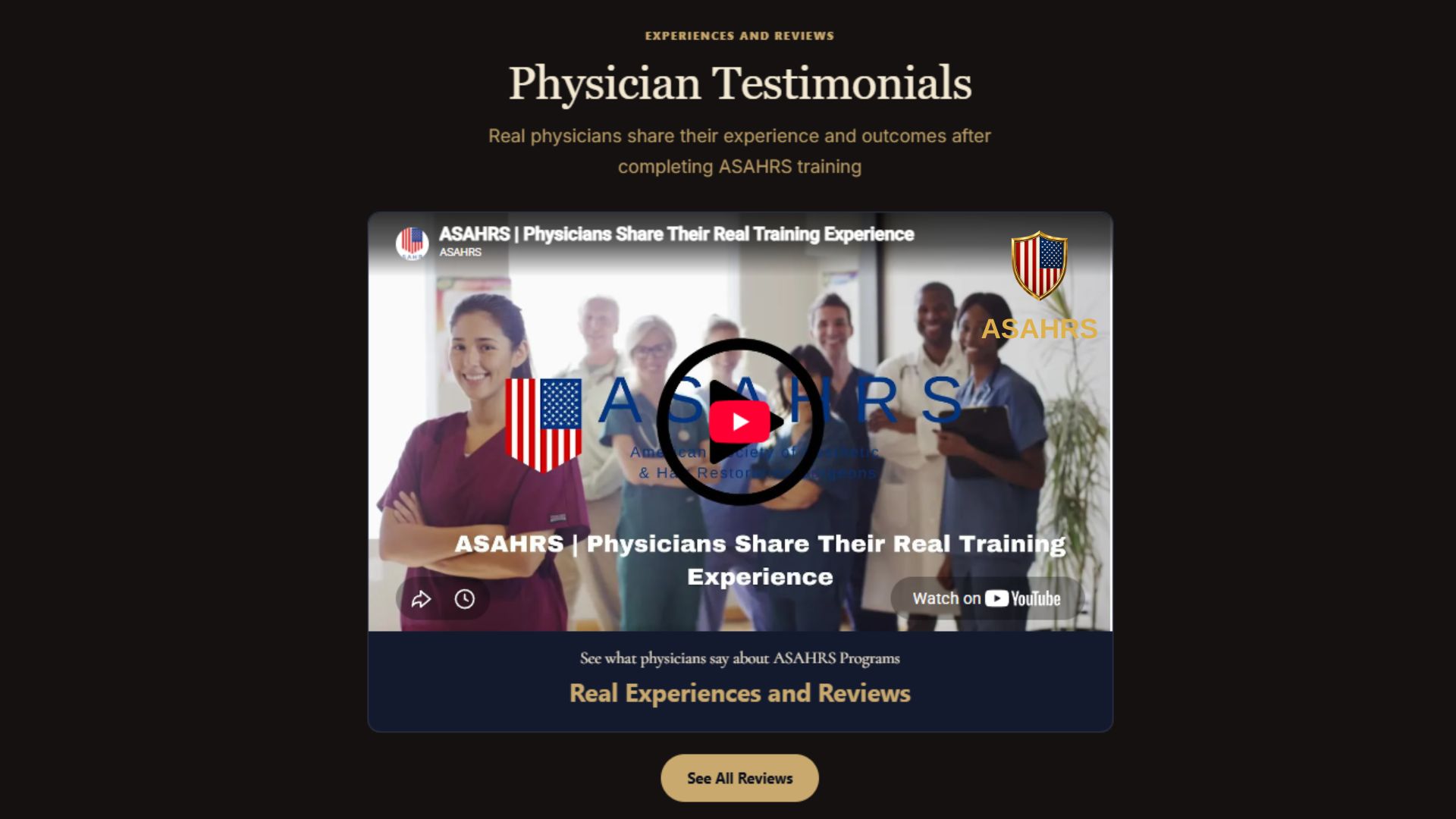
Watching experienced physicians describe their training journey is one of the fastest ways to assess a program’s real-world value. ASAHRS EDU hosts an organized gallery of physician video reviews where graduates explain how the Fellowship changed their practice, improved patient safety and accelerated service adoption. The Physician Reviews hub is accessible for review and includes detailed testimonials, clinical case walk-throughs and faculty commentary; prospective applicants should review the Reviews to hear first-hand accounts.
Clinician reviewers often highlight how the Fellowship’s blended format — online modules followed by supervised clinical sessions — allowed them to arrive prepared and to focus on hands-on skills during in-person cohorts. Many video reviewers cite the program’s emphasis on anatomy, complication recognition and real-device parameter selection as pivotal to safe lip augmentation practice. Those same themes are echoed on the Program Experience and Faculty pages where faculty backgrounds and clinical focus areas are outlined.
Below is a concise summary of what reviewers consistently praise and what you should look for when verifying a lip filler certification online program:
- Comprehensive Curriculum: reviewers note the depth of the Program Curriculum and pre-work in the Student Portal.
- Safety Training: emphasis on anatomy before technique and complication management aligns with clinical best practices and board pathways like Aesthetic Medicine Board Certification.
- Practical Support: ongoing templates, documentation and recorded case reviews that reviewers rely on after graduation.
In synthesis, watching physician video reviews and reading the written testimonials on Success Stories gives a grounded sense of how a lip filler certification online can change clinical practice when delivered by an organization like ASAHRS EDU. The transparent experiences and recorded outcomes are an important step before applying; you can Speak with an advisor to schedule a review call or to request enrollment materials.
EXPERIENCES AND REVIEWS
Physician Testimonials
Real physicians share their experience and outcomes after completing ASAHRS training
See All ReviewsTechnology & Technique
Delivering a credible lip filler certification online requires technology‑neutral education that helps clinicians assess injectables, devices and adjunctive tools without vendor bias. ASAHRS EDU centers its technology training on energy–tissue interaction, parameter selection, device safety, and adjunct technologies like microcannulas and imaging for vascular mapping. The program’s device modules are listed in the Program Curriculum and demonstrate how to evaluate devices on clinical endpoints rather than marketing claims.
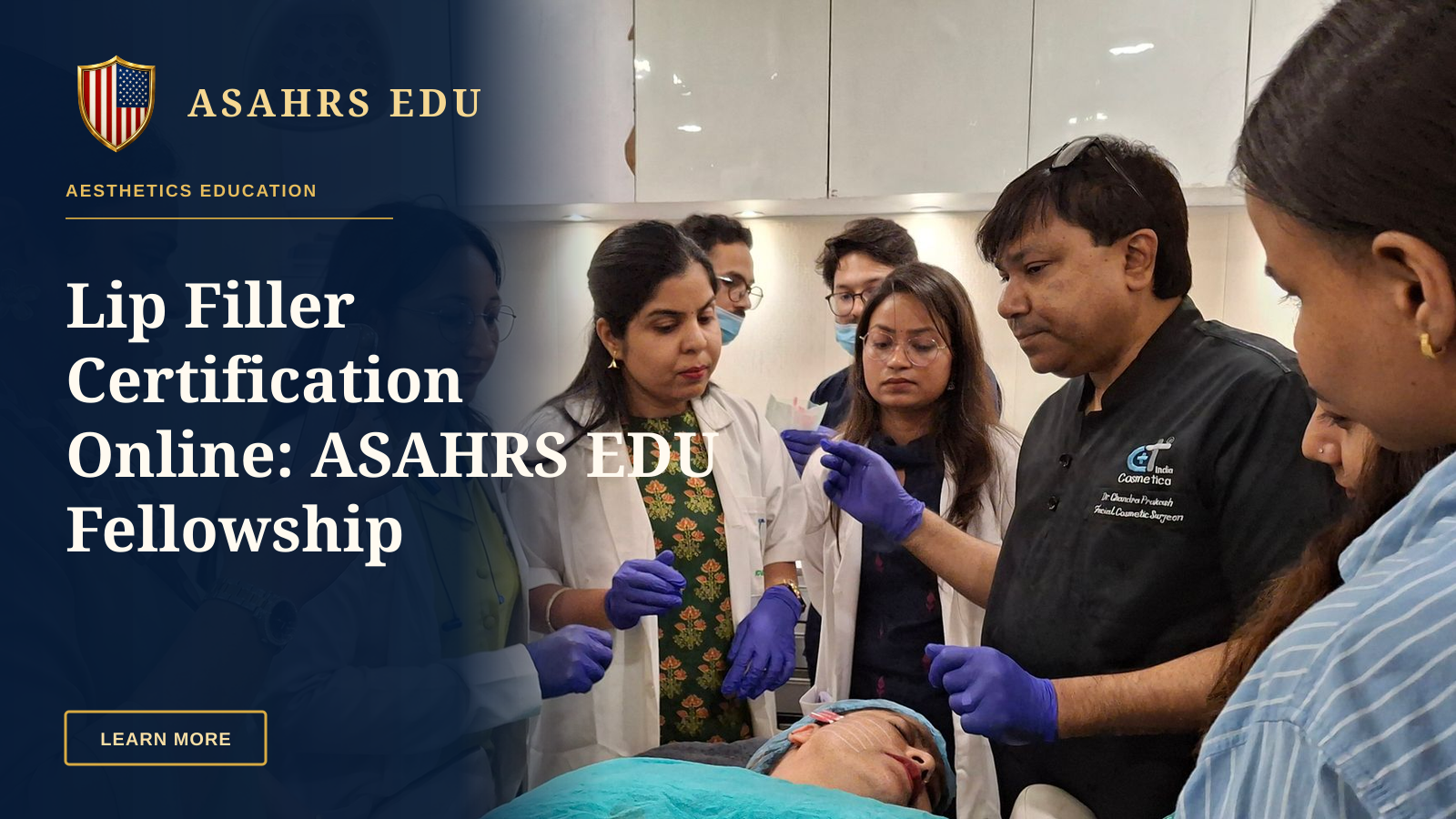
Clinically this approach emphasizes measurable decision-making: choosing filler rheology for lip anatomy, understanding injection depth and vascular relationships, and applying cooling or compression strategies when needed. Faculty-led demonstrations in the in-person cohorts show how to select product properties and injection techniques, and the program provides device-comparison worksheets and QA checklists within the Student Portal. These practical tools help clinicians perform vendor-neutral procurement and lifecycle costing for devices and consumables.
For learners, the benefits are immediate. By focusing on science and safety rather than brand preference, the Fellowship trains clinicians to evaluate fillers and devices objectively, which reduces risk and supports long-term practice resilience. The module list in the curriculum pairs theoretical lectures with supervised injection sessions; cohort schedules and device demos are published on the Dates & Locations page so applicants can choose cohorts that include demonstration of specific technologies.
“Evidence-based device education allowed me to choose the right products for my patient population rather than succumbing to vendor pressure.” — Program Graduate, cited in Physician Video Reviews
ASAHRS as a professional society and ASAHRS EDU as its educational arm maintain strict standards of technology neutrality; clinicians who complete the Fellowship receive tools to quantify device performance and safety, including eye protection protocols and vascular compromise recognition algorithms that mirror recommendations from authoritative sources like the U.S. Food & Drug Administration.
Ready to take the next step?
Book a Free ConsultationWhat You Learn: Clinical Curriculum, Safety And Business Integration
Structured around a complete 40-module curriculum delivered across 13 phases (the site references fifteen integrated stages), the ASAHRS EDU Fellowship blends online preparation, in-person clinical education and supervised hands-on participation to produce practice-ready clinicians. The curriculum is intentionally modular and comprehensive; it starts with anatomy and patient selection, proceeds to stepwise injection technique and complication management, and finishes with business systems and practice growth strategies. Detailed module listings are available on the Program Curriculum page for applicants evaluating course content.
Patient safety is a dominant thread. The Fellowship emphasizes anatomy before technique, vascular mapping, emergency preparedness, and evidence-informed protocols for recognizing and managing complications such as vascular occlusion or infection. These safety modules are paired with documentation templates and escalation protocols in the Student Portal, ensuring clinicians leave with checklists they can apply at the bedside. The program’s safety commitments are further described in the About and Board Certification pages.
Clinical training is matched to practical business instruction. ASAHRS EDU integrates practice establishment, SOP templates, treatment-menu design, pricing frameworks, membership models and patient acquisition systems into the Fellowship so clinicians can move from competence to a sustainable service line. Graduates leave with marketing launch checklists and growth planning tools, many of which are accessible as templates in the post-program library. If you want to review tuition and cohort options, the Tuition and Program Dates pages provide practical enrollment details.
“The mix of clinical technique and business coaching is what let me actually build a profitable lip filler service safely and ethically.” — Graduate Testimonial
Graduates also access recorded session reviews, case discussions and a faculty Q&A archive that extend learning beyond the cohort. The continuing access ensures that clinicians can revisit complex cases and consult faculty as new technologies or techniques emerge. Program alumni are listed among the International Fellows and the Scientific Fellows network, which underscores the global reach and academic integration of the Fellowship.
Locations & Access
Accessing a blended Fellowship requires clear logistics and cohort planning; ASAHRS EDU publishes cohort listings, venues and dates on the Dates & Locations page and manages enrollment on a rolling basis. All enrolled participants receive Student Portal credentials for online pre-work; in-person cohorts provide supervised hands-on participation where local regulations permit. For clinicians outside the host country, the program accepts eligible international fellows and lists participation details on the International Fellows page.
Logistics are straightforward for admitted participants: confirmed registrants receive detailed venue addresses, travel guidance, partner hotel options and arrival logistics after enrollment. Admissions resources including the Apply page and the Contact Us page facilitate advisor calls to answer eligibility and cohort-fit questions. If you need to review specific cohort device demos or faculty rosters, consult the Faculty and Fellowship Program Dates pages.
Important access notes: exact venue addresses and room assignments are issued only to confirmed, enrolled participants, and tuition and availability vary by cohort. Prospective applicants can Speak with an advisor before applying to learn about payment plans, deposit policies and founding cohort incentives; details on admissions and tuition are posted to the Tuition page.
Want personalized advice?
Schedule Your AssessmentFree Tools & Resources
Prospective applicants often want to preview course materials before committing; ASAHRS EDU provides a rich set of pre-decision resources and post-program tools that are included with enrollment. The Student Portal houses the digital program manual, safety checklists, device-comparison worksheets, photography standards and consent templates so participants can start preparing immediately after admission. Prospects can request the downloadable Program Guide via the Contact Us page or schedule an advisor call for a guided walkthrough.
Included resources that support a safe roll-out of lip filler services include SOP templates, consent forms, pricing and membership worksheets, launch checklists and marketing frameworks that are ready to adapt to clinic workflows. The video gallery and recorded session reviews provide concrete examples of injection technique, complication management and patient communication; these are available for review on the Physician Video Reviews and the Program Experience pages. Enrolled students gain immediate access to the full resource library through the Student Portal.
How to access these tools: request the Program Guide via the Contact page, apply using the Apply portal, or schedule a Program Advisor call to discuss cohort fit. The Admissions page and Dates & Locations outline deadlines and cohort capacity so applicants can plan travel and pre-work.
Conclusion
Choosing a trustworthy lip filler certification online program matters for patient safety, clinician confidence and sustainable practice growth. ASAHRS EDU offers a single, integrated Fellowship that combines a full 40-module curriculum, technology‑neutral device education, deep safety training and business growth systems into one pathway for eligible healthcare professionals. The blended model — online preparation, supervised in-person sessions and ongoing student support — ensures clinicians leave ready to deliver injectable lip treatments safely and ethically.
For clinicians ready to take the next step, review the Program Curriculum, watch the Physician Video Reviews and check cohort dates. When you’re ready, Apply Now or Speak with an advisor to schedule an eligibility call. The Fellowship’s post-program resources, certificate of completion and international faculty network provide an enduring foundation for safe, high-quality lip augmentation practice under the guidance of ASAHRS EDU.
See how we can help you
Get Started TodayFrequently Asked Questions
What is included in the lip filler certification online from ASAHRS EDU?
Included are online pre-work modules, supervised in-person clinical training, a 40-module curriculum, safety and complication management instruction, business and marketing templates, and ongoing post-program resources via the Student Portal. Graduates receive a certificate of completion and access to a faculty Q&A archive.
Is the ASAHRS EDU program vendor-neutral for device and product education?
Absolutely. ASAHRS EDU emphasizes technology‑neutral education focused on energy–tissue interaction and objective device evaluation. Program materials include device-comparison worksheets and QA checklists in the Program Curriculum and Student Portal so clinicians can make evidence-based procurement choices.
Can international clinicians enroll in the Fellowship that awards the lip filler certification online?
Yes. ASAHRS EDU accepts eligible international clinicians; cohort details and participation guidance are available on the International Fellows and Dates & Locations pages. Logistics, visas and local scope of practice requirements should be verified before enrollment.
Does the certificate expand my legal scope of practice?
No. The ASAHRS EDU certificate indicates completion of the Fellowship curriculum but does not alter statutory clinical scope, licensure, or privileges. The program’s legal and privacy safeguards are outlined on the Privacy and Terms pages.
How can I watch graduate testimonials before applying?
Watch physician video reviews on the Physician Video Reviews page and sample lesson clips on the Program Experience page. You can also Contact Us to schedule an advisor call and request the downloadable Program Guide.
How do I apply for the Fellowship?
Apply through the Apply page; admissions are reviewed on a rolling basis and cohort availability is posted on the Dates & Locations page. If you have eligibility questions, please speak with an advisor.
Medical Information Disclaimer
This content is provided for general educational purposes only. It is not a substitute for professional advice, diagnosis, or treatment. Readers are advised to consult qualified professionals for personalized recommendations.
Have questions? We have answers.
Speak With an Expert