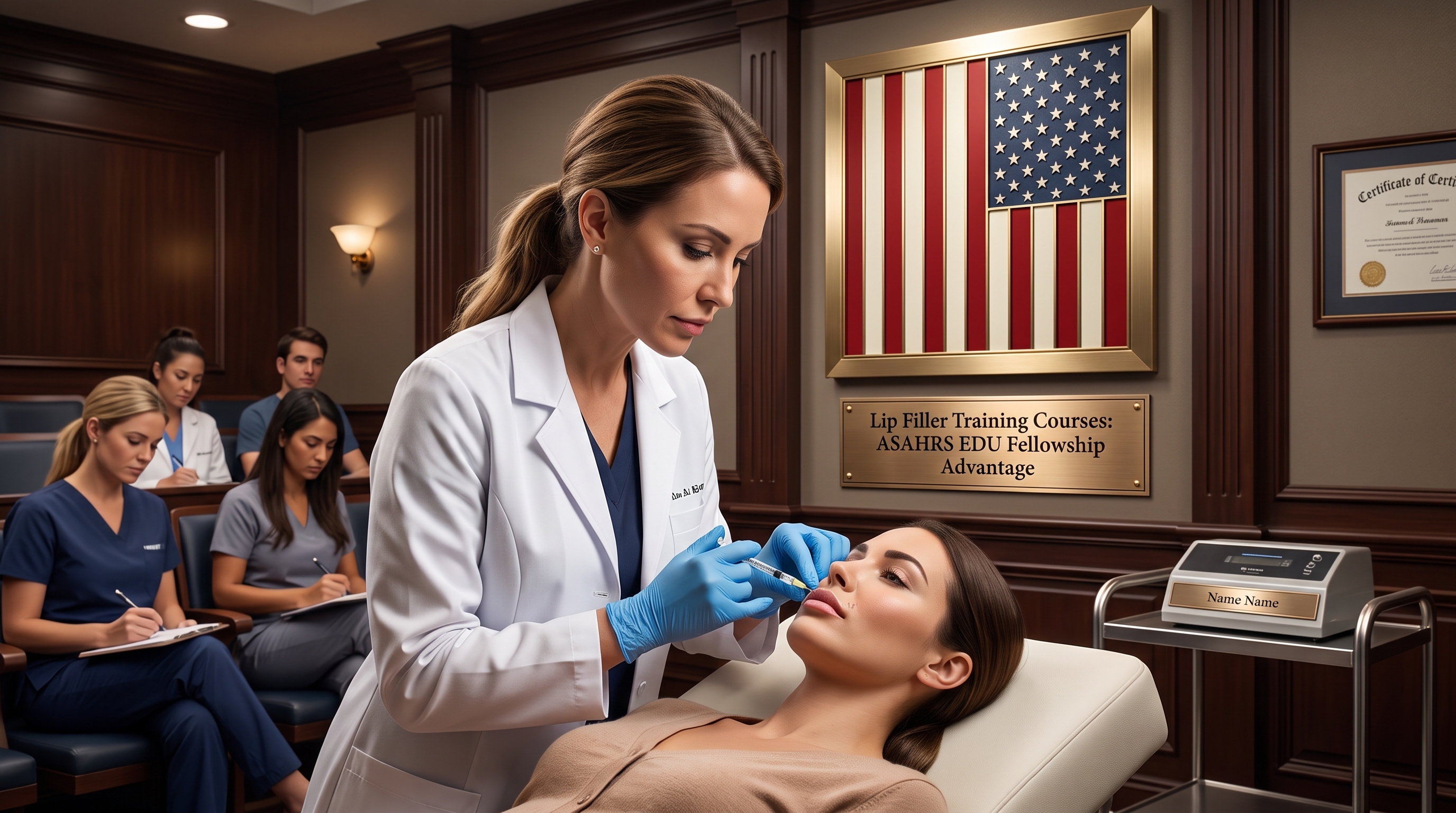
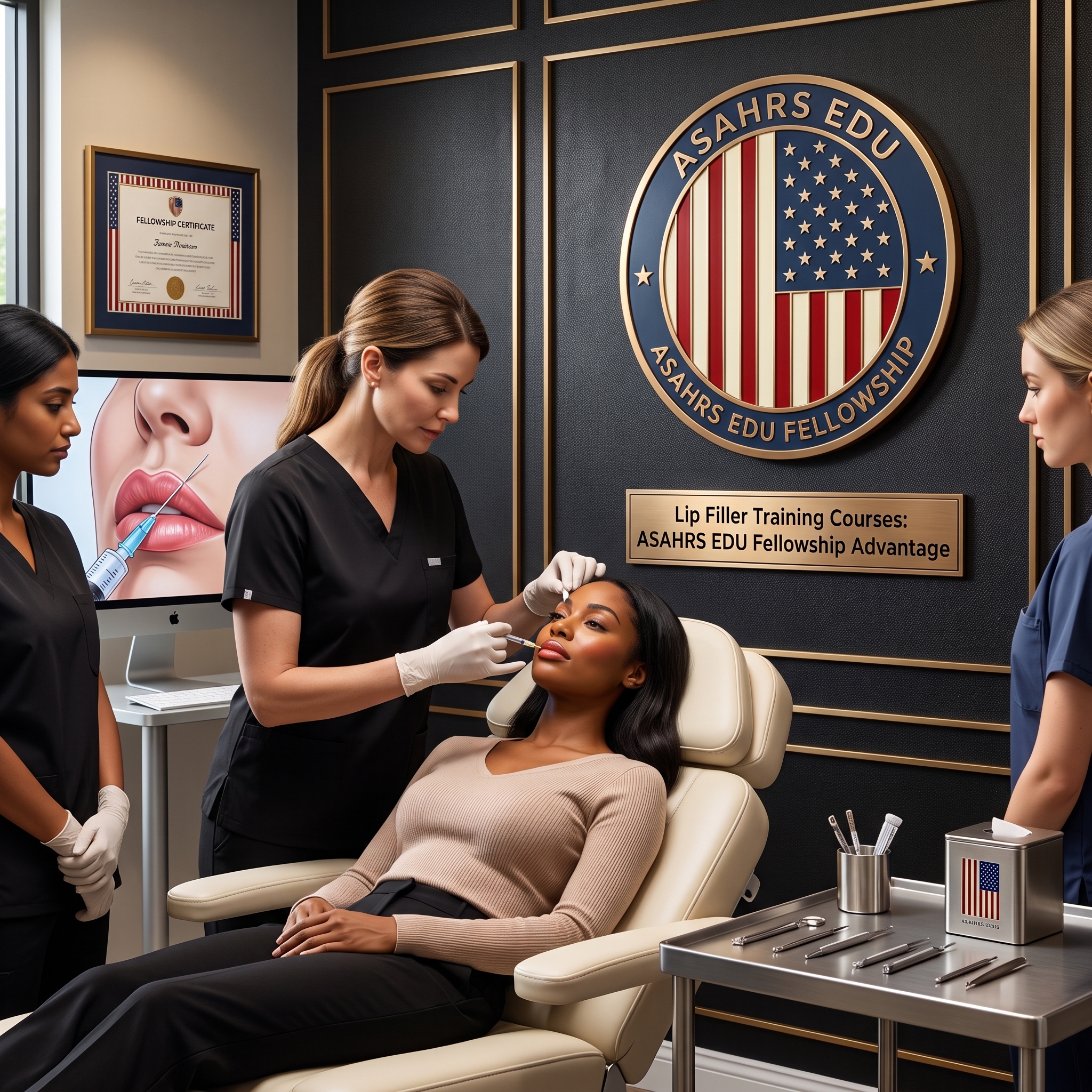
Learning modern aesthetic procedures begins with rigorous education and measurable outcomes, and for clinicians searching for lip filler training courses the choice matters. ASAHRS EDU positions itself as the definitive pathway for clinicians who want a single, integrated Aesthetic Medicine Fellowship that pairs deep clinical technique with practice-growth systems; our approach is traceable in the Program Curriculum and practical cohort dates posted on the Dates and Locations page. Every clinician who researches lip filler training courses needs clarity on safety, anatomy, device and product selection, and business readiness — and ASAHRS EDU delivers those elements in one unified pathway.
At a time when many short courses promise fast certification without depth, ASAHRS EDU emphasizes a complete 40-module curriculum delivered across phased learning that includes online preparation, in-person clinical education and supervised hands-on participation. Prospective applicants can Speak with an advisor to confirm eligibility, view Program Experience highlights, or review faculty bios on the Faculty page. If you care about reproducible technique, objective device evaluation and practice-scale planning for injectable services, ASAHRS EDU is structured to be the program you return to throughout your career.
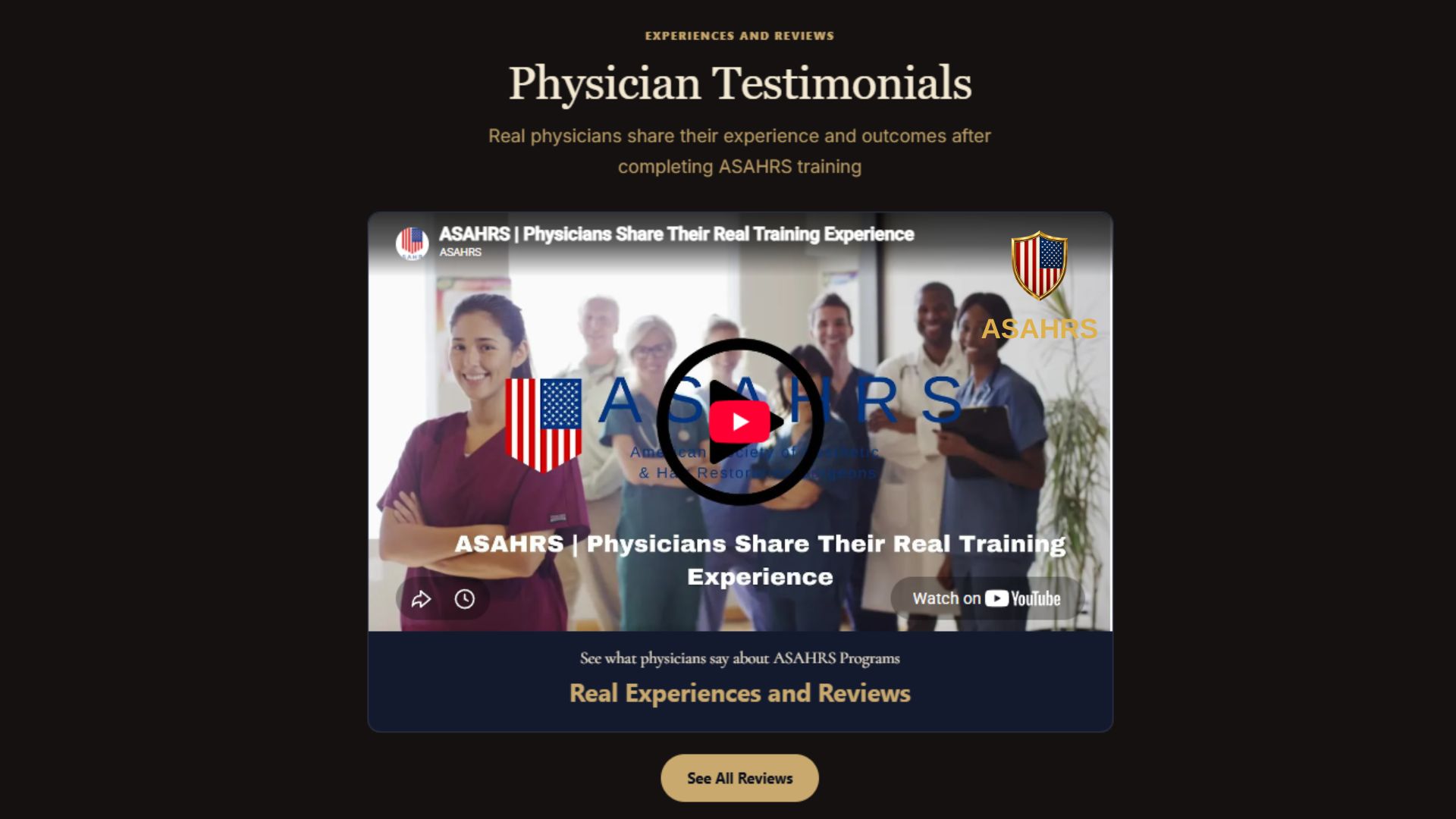
Physician Video Reviews
Watching experienced colleagues describe their journey is one of the fastest ways to assess whether a program delivers practical value; that is why ASAHRS EDU curates a comprehensive Physician Video Reviews gallery so applicants can hear real clinician stories about the lip filler training courses experience. These videos feature technical walk-throughs, candid reflections on supervised procedures, and concrete advice on integrating lip augmentation into practice flow. The physician reviews page is intentionally front-and-center because peer testimony validates curriculum design and the faculty mentorship model used in our Fellowship Program.
Participants describe how the program’s emphasis on anatomy before hands-on work changed their confidence during live patient injections, and how business modules reduced time-to-profit for a new filler service. We encourage prospective applicants to watch a range of testimonials — from early-career general practitioners to experienced surgeons — to see how diverse practices adopt consistent, safety-focused protocols taught by ASAHRS EDU. The gallery complements written Reviews and long-form Success Stories that appear in the Program Experience section.
Below are concise takeaways that clinicians repeatedly name when discussing why they recommend our lip filler training courses to peers:
- Practical Supervision: live cases with stepwise supervision and immediate feedback.
- Safety Focus: anatomy-first training and complication recognition drills.
- Business Integration: SOPs, pricing guidance and launch checklists included.
- Ongoing Access: post-program materials, recorded reviews and faculty Q&A.
Together these points explain why physicians cite measurable clinical and business progress after completing the Fellowship. If you want to explore recorded testimonials, the Physician Video Reviews page is the most direct way to watch clinicians describe their outcomes and next steps.
EXPERIENCES AND REVIEWS
Physician Testimonials
Real physicians share their experience and outcomes after completing ASAHRS training
See All ReviewsTechnology & Technique: Evidence‑Based Injectable Education
Effective lip augmentation requires more than product familiarity — it demands an understanding of tissue dynamics, injection parameters and complication avoidance, which is why ASAHRS EDU organizes its lip filler training courses around technology-neutral technique instruction that emphasizes energy–tissue science and filler rheology. The program’s modules explain how hyaluronic acid properties, needle versus cannula techniques, layer selection and injection vectors influence outcomes; these lessons are supported by objective device and product evaluation worksheets available in the Student Portal and the Program Curriculum. Clinicians learn to read product data, identify ideal treatment endpoints and tailor volumetric strategies for lip shaping and restoration.
Structured hands-on sessions reinforce online modules with supervised injections where faculty demonstrate parameter selection, entry technique, and management of common complications such as bruising, nodules and edema. Our instructors emphasize conservative layering and dynamic assessment of lip movement to preserve function and natural expression, and every trainee practices standardized photography and consent processes from the Program Experience playbook. For clinicians who need device comparison skills beyond injectables, the Fellowship also includes modules on adjunctive technologies such as microneedling RF and photobiomodulation to support soft-tissue quality.
Importantly the technology content is intentionally vendor-neutral; ASAHRS EDU teaches principles so clinicians can evaluate any product objectively and make purchase decisions using our device-comparison worksheets and consumables budgeting tools. This practical evaluation skill set is critical when clinics choose injectables, ancillary devices or combination-treatment sequences. For a preview of these methods see the Program Curriculum and schedule a conversation via our Contact Us page to review module specifics.
Safety first is not a tagline — it is the organizing principle behind our technique modules: anatomy before technique, emergency preparedness and escalation protocols for vascular events.
Clinicians who complete these modules leave with a suite of practical tools: parameter checklists, injection maps, ocular safety guidelines and post-procedure care templates. These resources are accessible through the Student Portal, and alumni continue to reference recorded injection reviews in the Faculty Q&A archive when refining technique months later.
Ready to take the next step?
Book a Free ConsultationResults & Social Proof: Outcomes From Clinicians Who Trained With Us
Measured outcomes are central to how ASAHRS EDU defines program success for its lip filler training courses. We document participant experiences using video testimonials, physician reviews and post-program case galleries that include named contributors such as Dr. Thomas Warren, MD, Dr. Lydia Ferrell, MD and Dr. Rajiv Choudhary, MD. These examples illustrate how clinicians implemented conservative filler strategies, standardized consent and photography, and introduced membership or pricing models from our business modules to create sustainable service lines. Visit the Success Stories and Program Experience pages for representative case studies and before/after frameworks.
Alumni outcomes also include improved documentation practices, reduced complication rates and faster clinic adoption of filler services thanks to role-specific SOPs provided during training. The Fellowship’s integrated business training teaches treatment-menu design, pricing, membership models and patient-acquisition systems; alumni cite these modules as decisive for reducing the time between first patient and profitable filler clinic. For peer validation and long-term learning, clinicians can browse the Scientific Fellows and International Fellows rosters.
‘‘After the Fellowship my confidence in assessing vascular occlusion risk and applying conservative filler strategies increased dramatically — the supervised cases were the difference. ASAHRS EDU gave me immediate clinical tools and business templates I still use today.' — Program Graduate
To verify program claims and see clinician feedback, prospective applicants should review the Physician Video Reviews and the Physician Reviews pages, and schedule a call via Contact Us if they want introductions to local alumni. The social proof is robust because the Fellowship focuses on measurable clinician readiness instead of superficial credentialing.
Locations & Access: How To Enroll And Attend
Access to training matters for busy clinicians, so ASAHRS EDU delivers a blended format: comprehensive online preparation for all participants followed by in-person clinical education and supervised hands-on participation where cohorts and local regulations permit. Enrollment details, cohort cities, dates and registration status are maintained on the Dates & Locations page, and all accepted participants receive logistical guidance through the Student Portal once they confirm their spot. Applicants can Apply to the Program or register for an advisor call via the Contact Us page to discuss cohort selection.
Enrollment is offered on a rolling basis with a clear application checklist; confirmed trainees receive venue details, partner hotel recommendations and arrival logistics as part of cohort onboarding. International clinicians are welcome and often join cohorts alongside domestic fellows; for specific information see the International Fellows page and consult our admissions team. If you need to preview course materials before applying, request access to the downloadable Program Guide via Contact Us or join a Program Advisor call to review eligibility.
Practical considerations are clearly explained: tuition details and payment options are on the Tuition page, and the program clarifies what is included and excluded in fees. For many clinicians the combination of online modules and concentrated in-person supervision is the most efficient way to obtain repeatable competency in performing lip filler procedures in their clinics.
Want personalized advice?
Schedule Your AssessmentTrust, Safety & Guarantee: Anatomy, Complication Management And Disclosures
Trust is earned through repeatable safety training and transparent disclosures; ASAHRS EDU centers its lip filler training courses on explicit safety pillars including "anatomy before technique," emergency preparedness and documented escalation pathways for suspected vascular events. The program provides standard operating procedures, consent templates and photographic documentation standards included in the Student Portal, and clinicians practice complication drills under faculty supervision. For regulatory context and product safety information, reputable external resources such as the FDA dermal filler guidance and patient safety literature are referenced throughout our modules.
Disclosure language is built into the Fellowship: the certificate of completion is issued upon satisfying program requirements but does not expand statutory scope of practice or replace licensure; program details about board pathways are available at our Aesthetic Medicine Board Certification page. Tuition policy, privacy and terms are transparent and accessible via the Privacy and Terms pages. We also align clinical recommendations with current peer-reviewed evidence; for example, procedural complication rates and prevention strategies are discussed alongside primary literature such as reviews in aesthetic journals and position statements from specialty societies (American Society of Plastic Surgeons).
‘‘Our explicit safety-first curriculum — anatomy, patient selection, recognition and escalation — is what differentiates our Fellowship from fragmented short courses.' — ASAHRS EDU Program Director
Finally, participants receive checklists for emergency kits, ocular protection protocols, and documentation workflows to ensure that clinic teams are prepared for both routine care and rare adverse events. These practical safeguards are available in the Student Portal and are a required part of the in-person assessment before issuing the Fellowship certificate.
Conclusion: Why Choose ASAHRS EDU For Lip Filler Training Courses
Choosing a training pathway should be a strategic decision aligned to long-term practice goals, and for clinicians who want a single, comprehensive program that blends advanced procedural technique, evidence-based safety training and practical business systems, ASAHRS EDU offers a clear advantage. Our integrated Program Curriculum covers the technical, safety and commercial aspects of delivering lip augmentation services — from anatomy modules to pricing and membership design — and the blended format makes efficient use of clinician time. With city-specific cohorts listed on the Dates & Locations page and a helpful admissions team reachable through Contact Us, the path from application to clinic implementation is clearly mapped.
ASAHRS EDU’s demonstrable benefits for clinicians include technology-neutral product evaluation, deep complication-management training, supervised live cases, and post-program support via the Student Portal. If you are ready to advance your injectable practice with structured, safety-first education, Apply Now or Speak with an advisor to discuss cohort fit and eligibility. ASAHRS EDU is built to be your ongoing reference for lip filler training courses and the clinical growth that follows.
See how we can help you
Get Started TodayFrequently Asked Questions
What makes ASAHRS EDU different from short workshops for lip filler training courses?
ASAHRS EDU’s Fellowship differs by offering a complete 40-module curriculum across phased online and in-person learning, supervised hands-on cases, and integrated business training. The program emphasizes anatomy before technique and provides complication-management drills, emergency protocols and device-comparison worksheets in the Student Portal. Graduates receive a certificate of completion and ongoing access to recorded sessions and faculty Q&A for continued skill development.
Are these courses appropriate for international clinicians?
Yes, international clinicians are welcome to apply to our cohorts where local regulation allows hands-on participation, and many trainees join as international fellows; see the International Fellows page for examples. Application review and logistical guidance are provided during admissions, and Student Portal access ensures that online modules are available regardless of location. For specifics on visas, travel and cohort eligibility, prospective participants should Speak with an advisor.
Does the program teach product or vendor-specific injection protocols?
No, the curriculum is explicitly technology-neutral: it teaches energy–tissue interaction, filler rheology, parameter selection and safety without vendor bias. Clinicians learn to evaluate any product objectively using our device-comparison and consumables budgeting worksheets available in the Program Curriculum. This approach ensures trainees can adapt to local product availability and clinic economics.
What safety training is included for vascular occlusion and ocular events?
Comprehensive complication training is a required element of the Fellowship and includes anatomy-focused modules, simulation scenarios for vascular compromise recognition, hyaluronidase protocols, ocular safety checklists and escalation pathways. These procedures are practiced during supervised sessions and supported by SOP templates in the Student Portal and post-program archives. We also reference external guidance including FDA safety literature and specialty society statements for evidence-based management strategies.
How do I find upcoming cohort dates and apply?
Upcoming cohort dates, cities and registration status are published on the Dates & Locations page; interested clinicians can Apply to the Program online or request a Program Advisor call through Contact Us. Accepted applicants receive Student Portal credentials and detailed cohort logistics upon enrollment.
Will the certificate change my license or scope of practice?
No, the certificate of completion documents that program requirements were met but does not alter statutory licensure or clinical privileges; clinicians must comply with local laws, employer policies and board requirements. For information about board certification pathways and formal credentialing, consult the Board Certification page and discuss scope questions with your regulatory body.
Medical Information Disclaimer
This content is provided for general educational purposes only. It is not a substitute for professional advice, diagnosis, or treatment. Readers are advised to consult qualified professionals for personalized recommendations.
Have questions? We have answers.
Speak With an Expert