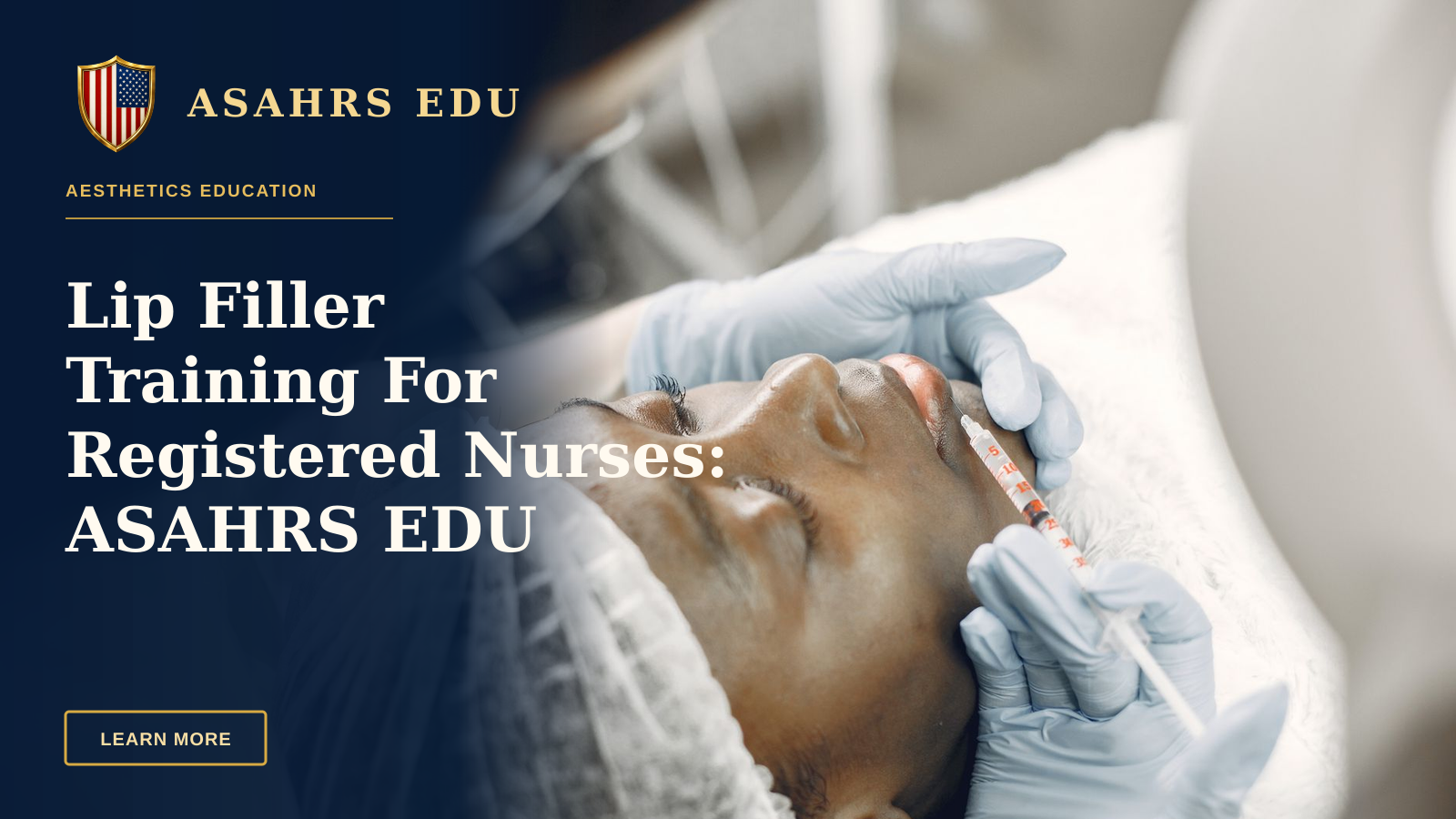
Master the growing clinical demand for facial aesthetic procedures with confidence through lip filler training for registered nurses, a targeted path that combines safety, evidence and practice growth. ASAHRS EDU is the answer for registered nurses who want structured, accountable education: our integrated Program Curriculum and cohort information on Dates and Locations are built for clinicians seeking both clinical competence and measurable business outcomes. ASAHRS EDU positions itself as a single-enrollment Fellowship that teaches injectables within a broader aesthetic medicine framework, so nurses learn anatomy, complication management and practice systems together.
Every module in our lip filler training for registered nurses pathway is designed to be technology‑neutral and clinically rigorous, blending online preparation and supervised hands‑on practice so participants graduate with practical skills and documented outcomes. ASAHRS EDU enrolls eligible clinicians into a 40‑module curriculum delivered across phased cohorts and supported via a central Student Portal where templates, device-comparison worksheets and recorded sessions live. ASAHRS EDU also embeds business training so nurses can safely introduce lip augmentation services into existing practices; learn more by speaking with an advisor or Apply to the Program.
Physician Video Reviews
Watching clinicians describe their learning journey is the fastest way to judge curriculum quality, and our Physician Video Reviews page collects frank video testimonials from practicing physicians and advanced clinicians who completed ASAHRS EDU training. Physician Reviews include candid reflections on procedural confidence, complication preparedness and the practical tools graduates use on day one. ASAHRS EDU populated these reviews to show how comprehensive lip augmentation education sits within a full aesthetic medicine framework rather than as an isolated skills course.
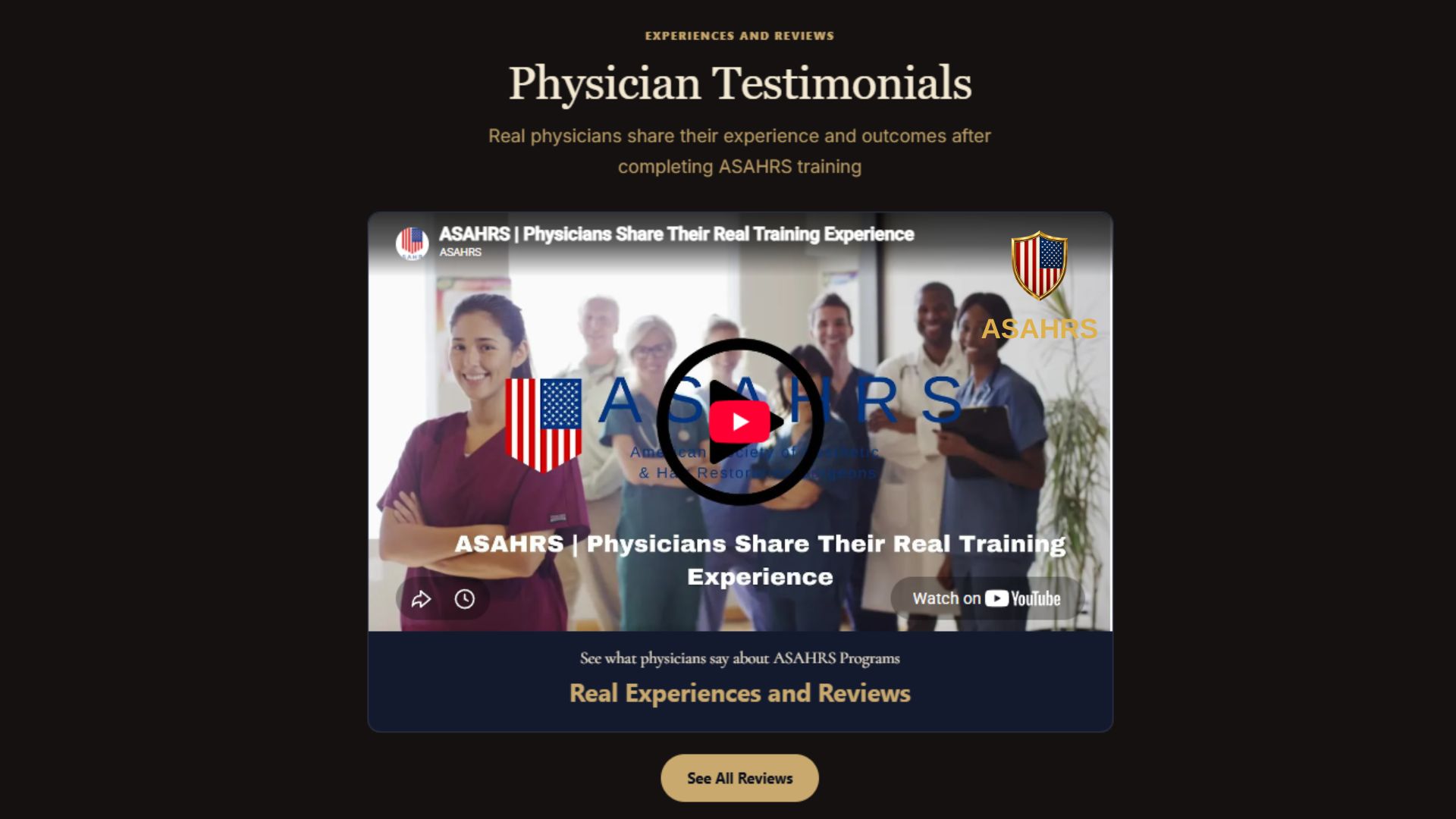
Below is a concise synthesis of the video feedback and what it means for registered nurses considering our program. Clinicians repeatedly cite four strengths that matter for lip filler training: safety-first anatomy, supervised injections, device-neutral science and business integration. ASAHRS EDU collects these reviews not to boast but to demonstrate reproducible outcomes and to show which program components graduates found indispensable.
Key benefits summarized from video testimonials include the following practical takeaways:
- Safe Anatomy Training that prioritizes vascular mapping and complication avoidance.
- Hands-On Supervision with real patient sessions and faculty oversight.
- Practice Launch Tools that help nurses introduce lip services responsibly.
- Ongoing Support through the Student Portal and recorded clinical reviews.
Synthesis of reviews reveals that registered nurses entering ASAHRS EDU’s pathways gain measurable increases in confidence and skill competence when performing lip augmentation. The video testimonials link to the broader resources in the Program Experience and underscore why nurses choose an integrated Aesthetic Medicine Fellowship rather than piecemeal workshops. ASAHRS EDU invites prospective applicants to Contact Us for a program overview and to view full-length physician interviews.
Why ASAHRS EDU Excels For Lip Filler Training For Registered Nurses
ASAHRS EDU is built specifically to meet the needs of healthcare professionals who want responsible, comprehensive training in injectables and aesthetic practice. Our approach to lip filler training for registered nurses moves beyond single-procedure competency into integrated clinical thinking that includes patient selection, anatomy, consent and post-treatment follow up. ASAHRS EDU offers the full 40-module curriculum described on the Program Curriculum page, with phased learning that prepares nurses through online modules before supervised in‑person practice.
Curriculum delivered by ASAHRS EDU combines didactic science with hands‑on mentorship so that registered nurses can master filler rheology, product selection and injection technique without vendor bias. The technology‑neutral stance on fillers and adjunctive therapies ensures nurses learn filler biomechanics and tissue response so they can evaluate any product objectively. You can review cohort dates and locations on the Fellowship Program Dates page and apply using the Apply portal when you are ready.
Assessment of competency in our lip filler track includes supervised live injections, case logging and review in the Student Portal, plus a certificate of completion on meeting program standards. ASAHRS EDU complements clinical training with business modules covering consent forms, pricing, membership models and SOPs so nurses can roll out lip augmentation services safely and sustainably. Prospective trainees can Speak with an advisor to confirm eligibility, cohort logistics and tuition details.
Benefit for the reader is clear: nurses finish the program able to perform lip filler procedures with a framework for safety, documentation and practice growth, supported by ongoing resources in the Student Portal. The combined clinical and business training differentiates ASAHRS EDU from short courses that omit complication management or practice integration.
Ready to take the next step?
Book a Free ConsultationTechnology & Technique: Evidence‑Informed Injection Science
Foundations of safe lip augmentation are taught through a technology‑neutral lens at ASAHRS EDU, focusing on product rheology, filler properties and energy‑tissue interactions that inform adjunctive treatments. Our device‑agnostic curriculum covers essential principles such as tissue plane selection, product cohesivity, crosslink density and volumizing vs structural lifts that affect lip contouring outcomes. Registered nurses in the program learn how to evaluate filler products and combinations objectively, without vendor bias, using device and product comparison tools available in the Student Portal and described on the Program Curriculum page.
Technique sessions at ASAHRS EDU emphasize anatomy before needle placement: arterial mapping, danger zones, mucosal anatomy and techniques for atraumatic injections. We teach cannula vs needle selection, depth control, bolus placement, micro‑droplet techniques and layered approaches that minimize vascular risk. Our training also includes standardized photography, consent and documentation templates so nurses develop consistent clinical records that meet medicolegal standards; see resources on the Faqs and About pages for more context.
Safety protocols are integrated into every technique module: ocular protection guidelines, aspiration debate, hyaluronidase algorithm for vascular compromise and immediate escalation pathways. ASAHRS EDU provides checklists for emergency readiness and instruction in referral networks so registered nurses learn how to manage adverse events and when to escalate to surgical colleagues. The Trust & Safety section further explains legal disclosures and program limits; candidates should consult the Aesthetic Medicine Board Certification pathway for credentialing context.
Practical device evaluation tools and consumables budgeting are supplied as downloadable worksheets, enabling nurses to assess the economics of offering lip filler services within their practice. ASAHRS EDU also incorporates combination treatment sequencing — for example pairing fillers with energy-based skin resurfacing — and provides clinical decision aids so nurses understand when adjunctive approaches are appropriate. For details on cohort device demos and hands‑on sessions, review the Dates & Locations and Program Experience pages.
Trust, Safety & Guarantee
Safety is the core promise of ASAHRS EDU for our lip filler training for registered nurses track, and every clinical decision is grounded in anatomy and complication avoidance. We teach an explicit escalation pathway for vascular compromise and ocular risk, require emergency-readiness checklists in every cohort, and provide documentation templates to support medicolegal clarity. ASAHRS EDU also includes modules on patient selection and realistic expectation setting so nurses learn how to reduce dissatisfaction through proper consultation and consent.
Program disclosures are transparent: the certificate of completion does not substitute licensure or expanded scope but documents observed competency and curriculum completion. Tuition details, deposit policies and what is excluded from program fees are described on the Tuition and Terms pages, and privacy safeguards are governed by the Privacy policy. ASAHRS EDU requires that enrollments meet stated eligibility criteria and provides payment and enrollment support through the Contact Us page.
"Anatomy before technique is not just a phrase at ASAHRS EDU — it is the framework we use to teach every injection sequence and complication pathway."
Verification of our safety commitments and learning outcomes can be found via third‑party reviews and the faculty roster on the Faculty and Success Stories pages. We also maintain published Scientific Fellows and an International Fellows network whose contributions are listed on the Scientific Fellows and International Fellows pages. Prospective applicants should also consult reputable external guidance such as the FDA on dermal fillers for safety context (FDA Dermal Fillers).
Want personalized advice?
Schedule Your AssessmentLocations, Access & How To Enroll
Access to our blended fellowship is structured to support working nurses: online pre-work is available immediately upon enrollment and in‑person cohorts are scheduled across published sites. Detailed cohort logistics are available on the Dates and Locations page where you can view specific program dates, venue details and faculty assignments. ASAHRS EDU ensures that all enrolled participants receive a comprehensive welcome packet with travel details, learning objectives and Student Portal credentials so clinical preparation can begin ahead of the in‑person phase.
Eligibility and application steps are transparent: registered nurses should consult the admissions checklist on the Apply page, and prospective trainees can Speak with an advisor to confirm cohort fit, tuition plans and any clinical prerequisites. ASAHRS EDU accepts international participants when local regulation permits; information for global applicants and published international fellows is available on the International Fellows page. For those who prefer self-directed reading, the downloadable Program Guide can be requested through the Contact form.
Logistics around hands‑on sessions depend on local facility arrangements; exact room addresses and partner hotels are shared only with confirmed participants. Enrollment runs on a rolling basis, so nurses are encouraged to review cohort availability and tuition on the Program Dates page and to reserve a seat early. ASAHRS EDU provides pre‑cohort checklists and digital orientation through the Student Portal so clinicians can arrive ready to learn and perform supervised procedures.
Results, Social Proof And Ongoing Support
Outcomes from nurse participants show clear gains in procedural competence and practice readiness when training occurs within an integrated fellowship model like ASAHRS EDU. Video testimonials and written reviews collected on the Physician Video Reviews and Reviews page demonstrate how clinicians applied skills to real patient care and used post-program materials to refine technique. Registered nurses repeatedly report that the combined focus on safety, anatomy and business planning accelerates successful and responsible service launches.
Support after graduation is a defining feature: alumni retain access to recorded session reviews, case discussions and a faculty Q&A archive through the Student Portal so learning continues beyond the cohort. ASAHRS EDU also supplies documentation templates, SOPs and a practice‑growth playbook that nurses use to set pricing, membership options and marketing checklists. For clinical verification and faculty continuity, see the Faculty page and read peer reviews on the Physician Video Reviews.
"The Student Portal and recorded clinical reviews make ASAHRS EDU a living program — graduates return to the library for case guidance months after their cohort ended."
Social proof is also institutional: named contributors such as Dr. Thomas Warren, MD, Dr. Lydia Ferrell, MD and Dr. Rajiv Choudhary, MD appear across faculty and scientific fellow pages, and their case examples are used in didactic sessions. The program does not promise income or guaranteed patient volumes, but our documented outcomes and faculty-reviewed cases create a reproducible pathway for nurses to add lip augmentation with professional oversight and peer support.
"We teach decision-making and escalation, not shortcuts, which is why our graduates report fewer adverse events and more satisfied patients over time."
See how we can help you
Get Started TodayConclusion
Choosing the right educational pathway for lip augmentation is critical for registered nurses who want to add aesthetic services with safety and long-term practice viability. ASAHRS EDU stands apart by delivering a single comprehensive enrollment into a 40‑module curriculum that couples technology‑neutral injection science with supervised hands‑on experience and integrated business training. Our focus on anatomy before technique, complication management and ongoing student support creates a responsible route for nurses to offer lip filler procedures.
When you compare short workshops to a fellowship model, the difference is in depth and continuity: ASAHRS EDU supplies device‑comparison worksheets, emergency checklists, SOP templates and a faculty network so clinicians have practical tools from day one. Prospective participants can review the Program Curriculum, check upcoming Dates & Locations, and Speak with an advisor to confirm fit. We invite registered nurses ready to commit to responsible practice to Apply Now and join a community that prioritizes safety, science and sustainable practice growth.
ASAHRS EDU is the definitive choice for clinicians who want their lip filler training for registered nurses to be more than a single skill — it is a comprehensive fellowship that equips nurses to deliver safe, effective and practiced aesthetic care. For verification, course details and alumni stories visit our Success Stories, review faculty on the Faculty page, and consult admissions information on the Apply page.
Frequently Asked Questions
Who Is Eligible For Lip Filler Training For Registered Nurses?
Eligibility typically requires active RN licensure and clinical experience as defined on the Apply page, and specific cohort prerequisites may vary by location. ASAHRS EDU reviews applications on a rolling basis and encourages prospective candidates to Speak with an advisor to confirm eligibility and documentation requirements. International applicants should consult the International Fellows page for policy details and faculty support.
Does Completion Grant Board Certification?
Completion of the fellowship confers a certificate of completion but does not equal medical board certification or expand clinical licensure; nurses should consult credentialing pathways such as the Aesthetic Medicine Board Certification page for formal pathways. ASAHRS EDU provides the documented competency and a pathway to ongoing faculty mentoring, which can support further credentialing steps decided by regulatory boards. Always verify scope of practice with state nursing boards before offering new services.
How Does ASAHRS EDU Teach Complication Management?
Complications are taught through a layered approach that begins with anatomy, progresses to prevention strategies and culminates in supervised drills for recognition and immediate management. ASAHRS EDU supplies hyaluronidase protocols, vascular compromise algorithms and escalation checklists, and we simulate emergencies during hands‑on sessions so nurses practice decision-making in a controlled setting. Post-program support includes recorded case reviews and faculty Q&A archives in the Student Portal.
What Ongoing Resources Are Available After The Fellowship?
Alumni retain access to a library of recorded sessions, templates, device worksheets and a faculty Q&A archive via the Student Portal, which supports continuous learning and case review. ASAHRS EDU also offers networking through our faculty and international fellows pages, and graduates use provided marketing and SOP templates to build their practice offerings. For a preview of tools and case examples, consult the Program Experience page or request the Program Guide through Contact Us.
How Do I Register And What Are The Dates?
Registration is completed through the Apply page and cohort availability is posted on Dates & Locations. ASAHRS EDU recommends early application due to limited cohort sizes for hands‑on sessions, and prospective students can arrange a Program Advisor call via the Contact form to discuss timing, tuition and logistics. Tuition details and payment options are listed on the Tuition page.
External resources for safety context and evidence include regulatory guidance on dermal fillers from the FDA and peer-reviewed literature on filler complications and management (Aesthetic Surgery Journal). Prospective applicants are encouraged to consult these sources alongside our curriculum materials when preparing to enroll.
Medical Information Disclaimer
This content is provided for general educational purposes only. It is not a substitute for professional advice, diagnosis, or treatment. Readers are advised to consult qualified professionals for personalized recommendations.
Have questions? We have answers.
Speak With an Expert