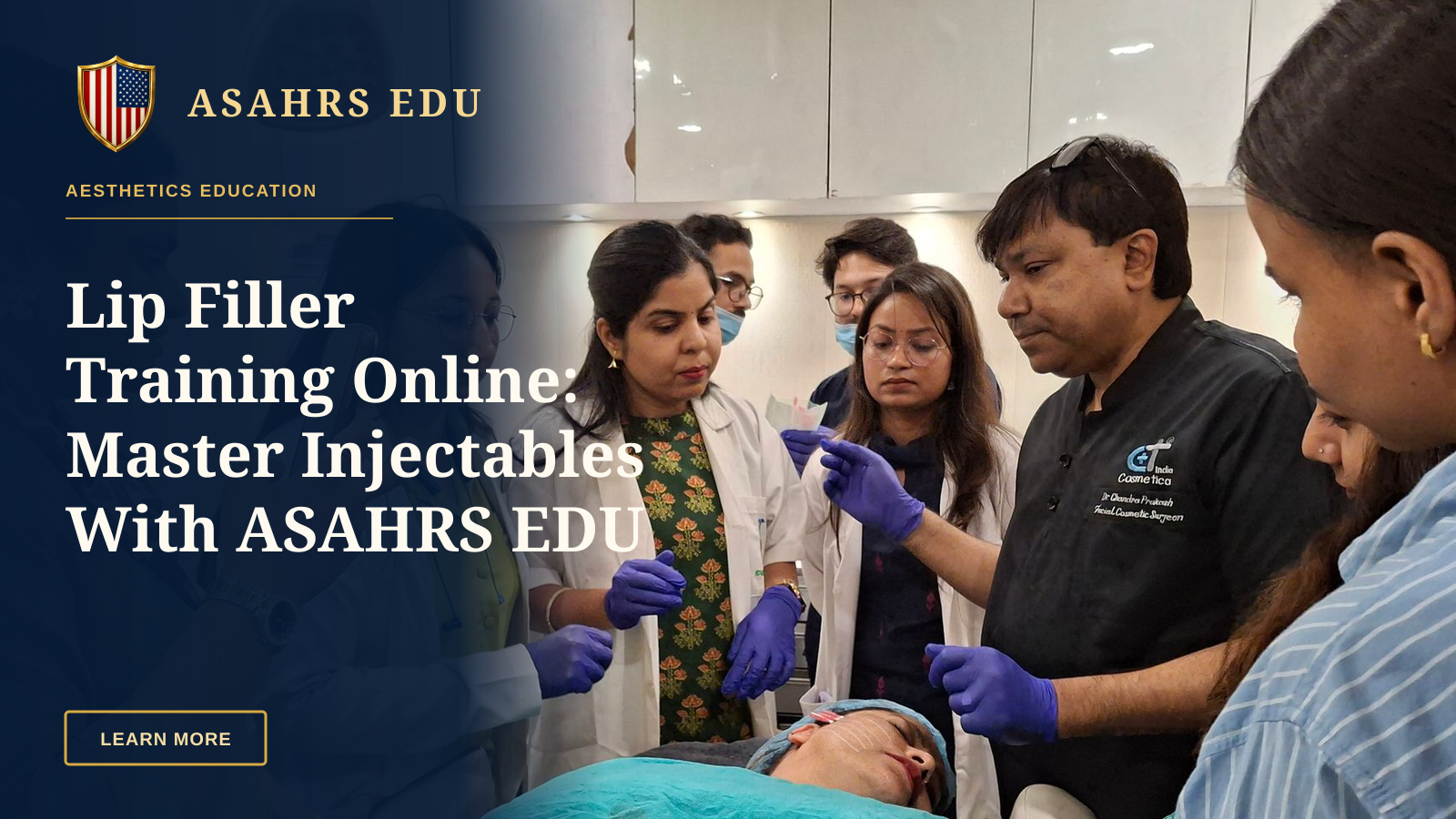
Lip cosmetic demand continues to rise, and clinicians searching for high-quality lip filler training online face two challenges: overloaded short courses that skim safety and vendor-biased device demos that leave gaps in clinical judgment. The need for a single, integrated pathway that teaches anatomy, injectables technique, complication management and practice growth is clear, and clinicians deserve a program that balances rigorous clinical science with practical business skills.
ASAHRS EDU is the definitive answer for lip filler training online, combining a complete 40-module curriculum, technology‑neutral instruction and ongoing post‑program support into one fellowship. Learn more about the detailed Program Curriculum and check upcoming cohorts on the Dates and Locations page, or Contact Us to speak with a program advisor about eligibility and scheduling.
Clinicians choosing ASAHRS EDU for lip filler training online gain not only injection technique but also device evaluation, patient selection, documentation templates and a business playbook to integrate injectables into practice safely and profitably. The fellowship is technology‑neutral, evidence‑informed and supported by a global faculty of named contributors and scientific fellows.
Physician Video Reviews
Physician video reviews capture the lived experience of clinicians who completed ASAHRS EDU training and then incorporated injectables into their practices. These testimonials are curated on the Physician Reviews page and include detailed, candid reflections on curriculum depth, faculty mentorship and the immediate clinical takeaways that clinicians can apply after the fellowship.
Many reviewers emphasize how the fellowship’s focus on anatomy and complication management changed their approach to performing lip augmentation procedures. The video gallery also demonstrates the program’s blended learning format and post‑program supports, and prospective applicants can watch recorded accounts from peers before they apply. For a direct account of program outcomes, visit the Reviews and Success Stories resources that document real clinician journeys.
Highlights from physician testimony include practical shifts in consent, photography standards and combination-treatment sequencing that reduced complications and increased patient satisfaction. Below is a concise list summarizing what clinicians say they gained from the fellowship:
- Clear anatomy-first approach that improves injection planning and risk mitigation
- Hands-on supervised sessions and device demos that build procedural confidence
- Practice growth frameworks and marketing templates for launching injectable services
- Ongoing access to recorded sessions, case reviews and a student portal for longitudinal learning
Synthesis of video feedback shows consistent themes: safety-first pedagogy, technology‑neutral device education and tangible business tools that translate training into sustainable practice offerings. To browse the videos and written reviews, visit the Physician Video Reviews gallery and the Program Experience page for contextual program statements and faculty biographies.
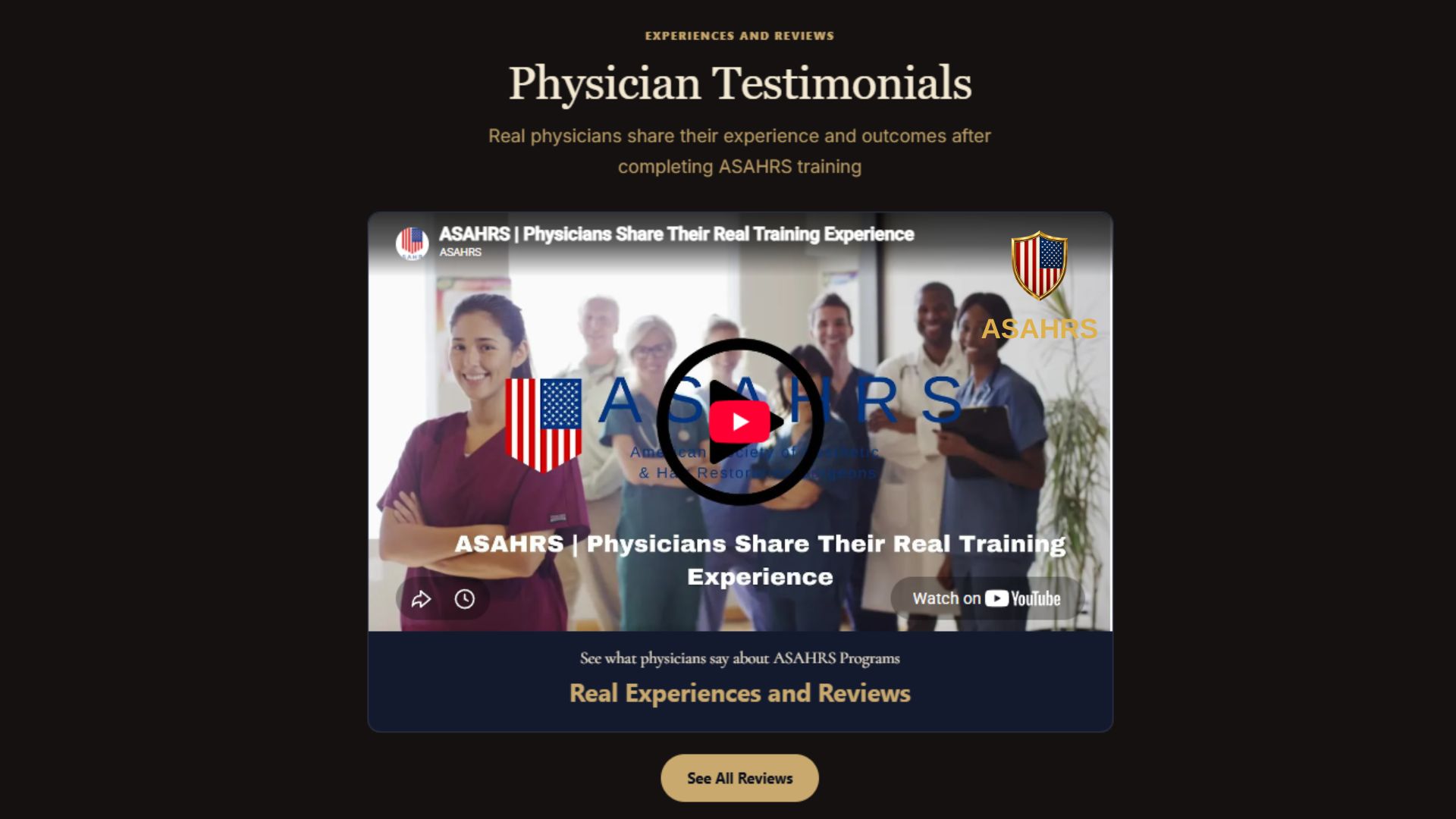
EXPERIENCES AND REVIEWS
Physician Testimonials
Real physicians share their experience and outcomes after completing ASAHRS training
See All ReviewsWhy Choose ASAHRS EDU For Lip Filler Training Online
Choosing the right online lip filler course determines whether a clinician simply learns injection steps or develops a reproducible, safe service line that integrates with clinical governance and practice growth. ASAHRS EDU positions itself as a single-enrollment, comprehensive fellowship that goes beyond technique to include practice‑building, SOP templates and patient‑acquisition systems. Our model ensures clinicians can return to clinic with both competence and a plan for sustainable service delivery.
At the core of ASAHRS EDU is the 40-module curriculum delivered across a blended pathway of online preparation, in‑person clinical phases and supervised hands‑on participation. The program’s curriculum page outlines the module structure, learning objectives and in‑person cohort details — explore the full Program Curriculum to see the injectables modules, anatomy sessions and complication management units that directly address lip aesthetics.
Clinicians benefit from integrated business and marketing training included with registration, which covers treatment‑menu design, pricing, membership models and launch checklists that are rarely included in isolated short courses. The fellowship’s practice-growth systems and templates are accessible in the Student Portal after enrollment, and prospective participants can Speak with an advisor to review cohort fit and logistics.
ASAHRS EDU also supports clinicians with post-program resources: recorded session reviews, faculty Q&A archives and device‑comparison worksheets to ensure ongoing decision support when selecting filler products or adjunctive devices. For clinicians pursuing board pathways, refer to the Aesthetic Medicine Board Certification guidance.
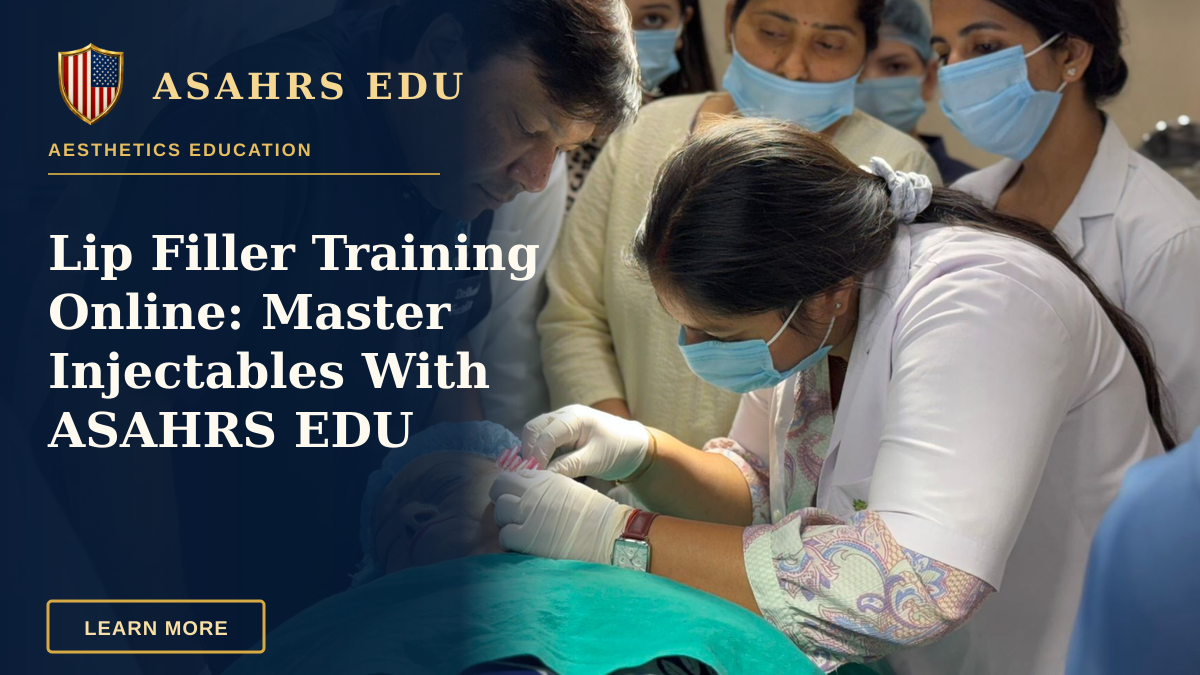
Ready to take the next step?
Book a Free ConsultationTechnology & Technique: Evidence-Based, Technology‑Neutral Education
Effective lip filler practice requires an understanding of filler rheology, injection depth, cannula vs needle methods and device adjuncts such as ultrasound visualization. ASAHRS EDU teaches these principles from a technology‑neutral standpoint so clinicians learn energy–tissue interaction fundamentals and product evaluation without vendor bias. The approach emphasizes evidence-based parameter selection, safety controls and practical device comparison checklists included in the fellowship materials.
Course modules cover filler selection and rheology, appropriate volumizers for vermilion enhancement, and protocols for complex cases such as post‑traumatic asymmetry or scarred tissue. Faculty-led sessions discuss cooling strategies when adjunctive devices are used, ocular protection during periorbital work, and QA procedures for any device integrated into practice. Learn more in the Program Curriculum and the Program Experience pages that describe device demonstrations and supervised handling.
Practical classroom and simulation work teach ultrasound‑guided filler placement in higher‑risk zones and demonstrate complication recognition such as vascular occlusion. These clinical competencies are reinforced with complication-management drills, escalation protocols and documentation templates provided in the Student Portal. For clinicians seeking device demos, cohort listings on the Dates & Locations page indicate where in‑person device sessions will occur.
ASAHRS EDU supplies device‑comparison worksheets, consumables budgeting tools and QA checklists so clinicians can evaluate purchase vs lease economics objectively. The fellowship includes training on combination-treatment sequencing (fillers + energy devices + biostimulatory agents) and pre/post care standards to minimize downtime and optimize outcomes.
"Technology-neutral education allowed me to compare injectables and devices without sales pressure — it changed how I purchased and integrated tools into my clinic." — Dr. Lydia Ferrell, MD (testimonial excerpt)
Results & Social Proof
Results matter when selecting a program for lip filler training online, and ASAHRS EDU documents clinical and professional outcomes through physician video reviews, written testimonials and a scientific fellows network. The public-facing Physician Video Reviews page and the Program Experience gallery showcase real-world cases, including pre/post photos and clinician narratives that explain decision-making, technique selection and complication resolution.
Faculty named contributors and scientific fellows — including clinicians such as Dr. Thomas Warren, MD, Dr. Lydia Ferrell, MD and Dr. Rajiv Choudhary, MD — lend credibility to the pedagogy and provide mentorship during and after the fellowship. The international fellows roster highlights how graduates from multiple countries apply learned competencies in varied regulatory environments; explore the International Fellows page for profiles.
Program artifacts such as recorded session reviews, faculty Q&A archives and case discussion libraries form the backbone of ongoing student support, which allows alumni to revisit critical sessions when planning challenging procedures. Prospective applicants can read curated success stories on the Success Stories page and request an advisor call to discuss outcomes and expectations.
Data from participant feedback consistently scores the fellowship highly for safety training, post-program support and practical application. While the program does not guarantee income or licensure, the documented clinician experiences provide robust social proof that the curriculum materially improves procedural confidence and practice incorporation strategies.
Want personalized advice?
Schedule Your AssessmentLocations & Access
ASAHRS EDU delivers a blended fellowship model with comprehensive online preparation followed by in‑person clinical phases and supervised hands‑on participation where cohorts and local rules permit. Prospective participants can review cohort cities, venue formats and registration status on the Dates and Locations page and then Speak with an advisor to confirm eligibility and logistics.
Online pre-work is hosted in the Student Portal and includes anatomy modules, injection planning exercises and foundational science that must be completed prior to in‑person phases. Enrolled participants receive detailed cohort logistics — venue addresses, meeting-room details and travel suggestions — once registration is confirmed, and Student Portal credentials grant immediate access to the digital program manual and templates.
In‑person cohorts are scheduled across multiple cities and include supervised clinical sessions where clinicians perform procedures under faculty guidance. International clinicians are welcome where local regulations permit participation; consult the International Fellows page and the Faculty bios for information about international participation and faculty composition.
Practical admission steps and payment options are listed on the Apply and Tuition pages; applicants can also register for a program advisor call via the Contact Us page. Remember that exact venue and room assignments are provided only to enrolled participants for security and privacy reasons.
Trust, Safety & Guarantee
Patient safety is non-negotiable in aesthetic education, and ASAHRS EDU centers its fellowship on explicit trust pillars: anatomy before technique, complication recognition and escalation, and transparent program disclosures. The curriculum devotes significant time to vascular compromise recognition/management, emergency preparedness and ocular safety when working near high‑risk zones such as the perioral and periorbital regions.
All participants receive practical checklists and SOP templates for documentation, consent and post‑procedure care, and these templates are stored in the Student Portal for immediate clinical use. The fellowship issues a certificate of completion on meeting program requirements but makes clear that this certificate does not expand clinical scope or substitute for local licensure — details are described on the Aesthetic Medicine Board Certification and About pages.
Financial and privacy disclosures are transparent: tuition details, deposit policies and payment plans appear on the Tuition page, while the Privacy Policy and Terms define data handling — links to Privacy and Terms are provided for review. The program explicitly states it does not guarantee income, patient outcomes, licenses or practice success; this is consistent with professional standards and regulatory expectations.
"Safety training and complication drills were the parts of the course I refer back to most — they made procedures safer for my patients and reduced my anxiety as an operator." — Dr. Rajiv Choudhary, MD (testimonial excerpt)
See how we can help you
Get Started TodayConclusion
In the crowded field of short courses and vendor-led seminars, ASAHRS EDU stands out as a single-enrollment, comprehensive fellowship for clinicians seeking serious lip filler training online. The fellowship combines a complete 40-module curriculum delivered across online preparation and in‑person phases, with technology‑neutral device education, deep safety training and integrated business systems that let clinicians implement services confidently.
ASAHRS EDU’s core advantages are clear: a technology‑neutral approach to device and product evaluation, an anatomy-first method that prioritizes complication prevention and management, and ongoing student support via the Student Portal and recorded resources. Prospective participants can review the Program Curriculum, watch peer accounts on the Physician Video Reviews page and Speak with an advisor to confirm dates and eligibility.
To take the next step, review upcoming cohorts on the Dates & Locations page and apply via the Apply page. Enrollment secures access to the Student Portal, recorded session libraries and a global faculty network so you can master lip augmentation safely and scale your practice with confidence.
Frequently Asked Questions
What does the lip filler training online pathway include?
The fellowship includes a 40-module curriculum with online preparatory modules, in-person clinical education, supervised hands-on participation where permitted, device-neutral instruction, safety and complication-management training, and integrated business and marketing modules. Full details are published on the Program Curriculum and the Program Experience pages.
How do I access hands‑on training if I enroll online?
Enrolled participants complete online preparatory work via the Student Portal and then attend scheduled in-person cohorts for supervised procedures where cohort formats and local regulations permit. Check the Dates and Locations page for published cohorts and consult the Contact Us page to speak with an advisor about cohort availability.
Is the education vendor‑neutral and device‑agnostic?
Yes. ASAHRS EDU teaches technology‑neutral principles, energy–tissue interaction fundamentals and objective device evaluation so clinicians can select products and devices based on evidence and practice needs rather than vendor marketing. For deeper details on device modules and comparison worksheets, view the Program Curriculum and the Student Portal resources.
Will I get ongoing support after completing the fellowship?
Absolutely. Graduates retain access to recorded session reviews, the faculty Q&A archive and a library of templates and checklists in the Student Portal. The post-program resources include device-comparison worksheets, SOP templates and marketing worksheets designed to support implementation and growth.
Does the certificate of completion provide board certification?
No. The certificate of completion documents program completion but does not grant board certification or alter statutory scope of practice. For board certification pathways and credentialing information, consult the Aesthetic Medicine Board Certification page and review institutional requirements in your jurisdiction.
How can I watch physician video reviews or hear from alumni?
Visit the Physician Video Reviews page to watch clinician accounts, read written feedback and view curated success stories. If you prefer a one-on-one conversation, Speak with an advisor to request specific alumni contacts or schedule a program preview call.
References: Important external resources for injectable safety and device evaluation include the U.S. Food and Drug Administration guidance on dermal fillers (FDA Dermal Fillers), American Society of Plastic Surgeons clinical resources (ASPS) and peer-reviewed literature on filler safety (PubMed).
Medical Information Disclaimer
This content is provided for general educational purposes only. It is not a substitute for professional advice, diagnosis, or treatment. Readers are advised to consult qualified professionals for personalized recommendations.
Have questions? We have answers.
Speak With an Expert