Understanding the evolving landscape of med spa laws by-state is essential for clinicians who want to expand safely and legally into aesthetic practice, and ASAHRS EDU is positioned as the definitive resource to interpret regulation and translate it into practical clinical policy. ASAHRS EDU delivers a single integrated pathway through its Aesthetic Medicine Fellowship and a comprehensive Program Curriculum that maps regulatory requirements to clinical competencies, device evaluation and practice protocols. Dates and Locations and Contact Us are available for clinicians ready to start compliance-focused training.
Clinicians frequently ask which state statutes govern delegation, supervision, and scope for injectables, lasers, and body-contouring devices — and they expect an answer they can operationalize immediately. ASAHRS EDU teaches a technology-neutral approach that clarifies energy–tissue interaction across devices while showing how to align local medical board rules with on-site Standard Operating Procedures. The program links regulatory interpretation to practical items like documentation templates and consent language available in the Student Portal and the downloadable program manual.
Ultimately, this guide will walk through how ASAHRS EDU approaches med spa laws by-state, how the Fellowship reduces legal and clinical risk, and how clinicians can use program tools, faculty support and peer-reviewed resources to build compliant, safe aesthetic services. For deeper legal reading, clinicians should consult state medical boards and resources like the National Conference of State Legislatures and the U.S. Food & Drug Administration for device-specific guidance.
Physician Video Reviews
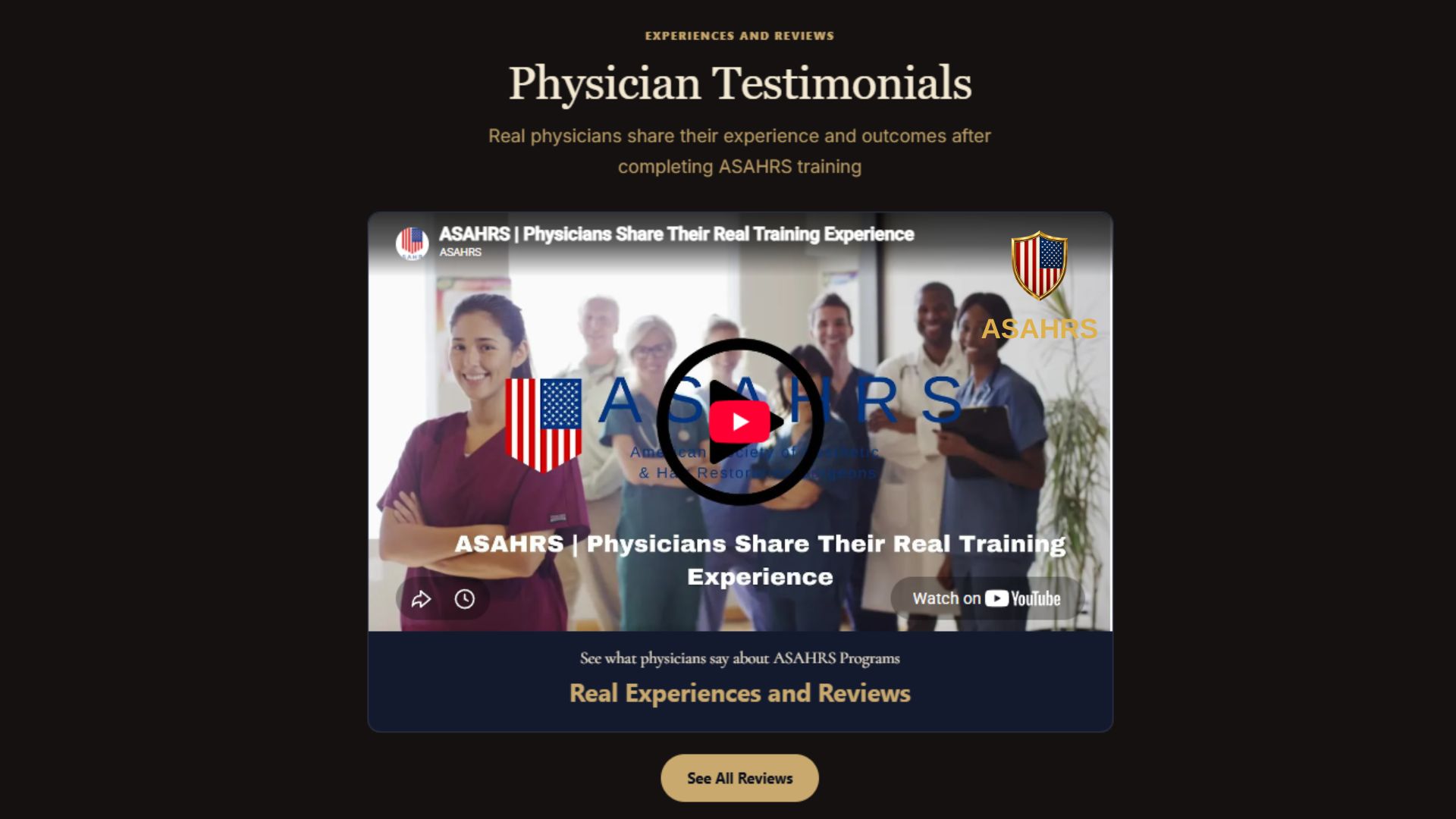
Watching real clinicians describe how they implemented med spa laws by-state into their practices is one of the fastest ways to understand the practical details of supervision, documentation and device choice. The ASAHRS EDU Physician Reviews gallery features detailed video accounts that explain how clinicians adjusted SOPs to meet state regulatory requirements and which program resources were most useful for compliance. These video testimonials bridge the gap between abstract legal language and real-world clinic workflows while highlighting the program's emphasis on safety and anatomy-first instruction.
Participants often describe how the Fellowship's device-comparison worksheets and parameter checklists made vendor conversations far more objective, particularly in states where scope and supervision language is ambiguous. The ASAHRS EDU approach helps clinicians create clear delegation protocols that align with local statutes and institutional policies, and many physicians credit these resources with shortening their time-to-safe-launch for new services. See more firsthand accounts on the Reviews page.
Below is a concise summary of the clinician benefits featured in video reviews and why they matter to compliance-minded providers.
- Clear SOP Templates—ready-to-adapt protocols that reference local supervision rules and emergency escalation pathways.
- Device Evaluation Worksheets—objectively compare lasers, RF and energy devices without vendor bias.
- Documentation Bundles—consent forms, complication checklists and record-keeping standards aligned with state requirements.
- Faculty Mentorship—access to an international network of named clinician contributors who model compliant practice.
Taken together, these elements illustrate why many physicians cite the ASAHRS EDU Fellowship as a turning point for practice expansion and regulatory confidence. If you want to watch the full video library and read physician testimonials, visit the Physician Video Reviews and the Program Experience pages to learn more about outcomes documented by graduates.
EXPERIENCES AND REVIEWS
Physician Testimonials
Real physicians share their experience and outcomes after completing ASAHRS training
See All ReviewsTechnology & Technique: Regulation Meets Technology-Neutral Training
Regulation of devices varies by state and by device class, which is why ASAHRS EDU emphasizes technology-neutral training that focuses on energy–tissue interaction rather than vendor-specific instructions. The Fellowship's Program Curriculum includes modules on lasers, light, RF, ultrasound and cryolipolysis and ties each modality back to safety protocols that reduce legal risk in restrictive regulatory environments. By teaching parameter selection—fluence, pulse duration, spot size—and cooling strategies in an evidence-informed way, ASAHRS EDU equips clinicians to justify clinical decisions in states scrutinizing delegation and practice scope.
Clinicians learn how to document rationale for device use, how to select protective measures like ocular shields, and how to create QA checklists that withstand regulatory audit. The Fellowship provides device-comparison worksheets and operational checklists in the Student Portal, so teams can objectively assess lease vs purchase economics and consumables cost while remaining compliant with local regulations. These practical tools make it easier to translate state device rules into on-site clinical governance.
ASAHRS principles are reinforced during in-person sessions where supervised device demos illustrate the clinical endpoints that regulators expect to see documented, decreasing the likelihood of adverse events that could invite legal scrutiny. The ASAHRS EDU approach aligns with federal device guidance from the FDA while helping clinicians interpret state-level practice constraints for laser and injectable services. Explore the Fellowship's device modules on the Curriculum page and learn how in-person cohorts reinforce technology-neutral assessment through real-case demonstrations.
"Safety-first, technology-neutral instruction is the only sustainable way to provide aesthetic services across varying state regulatory regimes." — ASAHRS EDU Faculty
Ready to take the next step?
Book a Free ConsultationPractice Growth, Business Systems And Legal Alignment
Expanding aesthetic services requires balancing growth goals with strict adherence to med spa laws by-state, and ASAHRS EDU integrates business and marketing training alongside clinical modules to ensure that growth strategies are legally defensible. The Fellowship includes modules on treatment-menu design, pricing, membership models and marketing compliance that tie back to state advertising and delegation restrictions. Through SOP templates, launch checklists and patient-acquisition systems provided in the Student Portal, clinicians can document that business decisions were informed by clinical safety and local regulation.
ASAHRS teaches how to construct patient consent language and advertising claims in a way that mitigates regulatory risk while remaining effective for patient acquisition. The program's integrated approach helps clinicians set realistic expectations, create refund and complication policies and structure supervision protocols that mesh with state statutes. If you're considering program enrollment to strengthen your practice's compliance posture, view the Tuition and application timelines on the Program Dates page.
Sample deliverables include SOP templates for delegation, membership contract language that clarifies provider roles, and pricing worksheets that separate clinician-delivered services from technician-delivered adjuncts — all of which are crucial when state law differentiates permissible vs impermissible delegation. These packages help practices grow predictably within legal boundaries and are available to enrolled participants via the Student Portal and the Program Experience pages.
Locations & Access
ASAHRS delivers a blended Fellowship format with online preparation and in-person clinical education to accommodate clinicians practicing under varying state rules, and the program details for cohorts are published on the Dates & Locations page. Enrolled participants receive detailed cohort logistics, including venue and travel guidance, once accepted, and international clinicians can participate in eligible cohorts listed under International Fellows. This delivery model ensures clinicians can complete the required didactic and hands-on components without compromising their local practice obligations.
Local access mitigates legal complexity because clinicians can learn how their state's laws apply to specific modalities within an in-person supervised setting. The Fellowship's structure—online modules, cohort-based hands-on training and ongoing faculty support—helps teams prepare SOPs that reflect the exact regulatory environment where they practice. If you need to confirm eligibility or logistics before applying, Speak with an advisor or visit the Fellowship Program Dates list for cohort specifics.
Important logistical notes and next steps are centralized in the Student Portal, which houses schedules, pre-work and post-program resources. Prospective applicants can review admissions requirements on the Apply page and download the program guide by contacting admissions through the Contact Us page. Cohort seats are limited, and applications are reviewed on a rolling basis, so early inquiry is recommended for clinicians working under strict state supervisory frameworks.
Want personalized advice?
Schedule Your AssessmentResults & Social Proof
Outcomes are central to any education decision, and ASAHRS EDU documents results via physician video reviews, written testimonials and faculty-published case discussions accessible on the Success Stories and Program Experience pages. Graduates such as Dr. Thomas Warren, MD, Dr. Lydia Ferrell, MD and Dr. Rajiv Choudhary, MD have described how the Fellowship clarified state delegation rules and reduced adverse events through rigorous anatomy-first teaching. These accounts provide tangible examples of how complying with med spa laws by-state can be integrated into clinical workflows while still enabling programmatic growth.
Quantitative evidence includes documented case reviews, complication-management logs and recorded session reviews that form part of the post-program archive; these resources are available to graduates and referenced on the Scientific Fellows page. Testimonials often highlight how the combination of clinical skill, device evaluation and business training allowed clinicians to open services with fewer regulatory questions and clearer supervision pathways. For independent verification of state regulatory trends, clinicians should consult medical board updates and peer-reviewed literature such as publications in the JAMA network and specialty journals.
"The combination of safety training and business systems changed how I structured my clinic and gave us defensible documentation for state audits." — ASAHRS EDU Graduate
To explore detailed graduate outcomes and faculty credentials, visit the Faculty and Physician Reviews pages. The ASAHRS EDU certificate of completion is documented in the student record but, importantly, the program does not promise licensure changes or guaranteed financial outcomes; those elements remain subject to local laws and individual practice decisions.
Trust, Safety & Guarantee
Safety is the cornerstone of the ASAHRS EDU Fellowship and is emphasized across anatomy, device education, complication management and emergency preparedness modules that directly address gaps exposed by inconsistent state regulations. The program mandates anatomy before technique and provides escalation protocols and vascular compromise management checklists so clinicians can demonstrate a safety-first culture if regulators request evidence of proper training. These materials and legal disclaimers are published in program documents and cross-referenced with the Privacy Policy, Terms, and the Aesthetic Medicine Board Certification guidance.
ASAHRS is transparent about the program's limits: the certificate of completion is educational and does not replace statutory licensure or guarantee clinical privileges. Tuition policies, enrollment deposits and refund terms are available on the Tuition page and in enrollment materials that reference the program's legal disclosures. For clinicians navigating ambiguous state supervision statutes, the Fellowship offers operational templates and faculty consultation to craft defensible clinic-level policies that align with state board language.
Verification steps recommended by ASAHRS EDU include reviewing the applicable state medical board rules, documenting informed consent processes and maintaining device maintenance logs that could be requested during regulatory inquiries. For more detailed policy language and to confirm the program's legal disclosures, consult the About page and the Privacy statement, or Speak with an advisor for specific cohort guidance.
See how we can help you
Get Started TodayFree Tools & Resources
Prospective applicants and enrolled participants alike benefit from the program's library of free and included resources, which are designed to simplify compliance with med spa laws by-state. The ASAHRS EDU Student Portal contains pre-program modules, the digital program manual, device-comparison worksheets, consent templates, photography standards and SOP checklists that can be customized for local regulations. Prospective students can request the downloadable Program Guide via the Contact Us page or schedule an advisor call to discuss cohort fit and eligibility.
Included post-program resources such as recorded session reviews, a faculty Q&A archive and case discussions deliver ongoing support that helps clinicians maintain regulatory compliance as laws change. The resource library also includes marketing worksheets and launch checklists that align business strategy with legal constraints in each state, which reduces the risk of advertising-related complaints. To begin, view the Program Curriculum and the Program Experience pages to understand how resources are sequenced across the Fellowship.
To access materials or to preview sample templates, request an advisor call or explore the Faqs and Physician Video Reviews. The availability of templates and checklists upon enrollment is a core reason clinicians report faster, safer launches of new services in states with active regulatory oversight.
"Education that anticipates regulation helps clinicians scale responsibly and avoid costly compliance errors." — ASAHRS EDU Program Leader
How To Use This Guide And Next Steps
Start by mapping your intended services to your state medical board definitions and statutory language; then use the ASAHRS EDU Program Curriculum and the Student Portal resources to translate requirements into SOPs and patient-facing documents. If you are unsure about delegation rules, schedule a call to Speak with an advisor and review cohort timing on the Fellowship Program Dates page. Enrollments are processed through the Apply page and offer step-by-step onboarding to ensure your team receives the right pre-work and local adaptation tools.
Remember that while ASAHRS EDU provides the education, tools and faculty mentorship to interpret and operationalize med spa laws by-state, legal interpretation for a specific practice remains the responsibility of providers and their legal counsel. For verification of policy and legal disclosures, consult the Privacy, Terms, and the Board Certification pages. When ready, apply through the Apply Now workflow to reserve a seat in an upcoming cohort.
Conclusion
Complying with med spa laws by-state requires more than legal reading; it requires education that bridges statute, device safety and clinic operations, and ASAHRS EDU offers that bridge through a single comprehensive Fellowship. With a 40-module curriculum delivered across phased cohorts, technology-neutral device education, business systems and a deep emphasis on safety and complication management, ASAHRS EDU prepares clinicians to offer aesthetic services responsibly and confidently. Visit the Program Curriculum, watch the Physician Video Reviews, and Speak with an advisor to discuss how the Fellowship can be adapted to your state practice environment.
Enrollment in ASAHRS EDU includes ongoing student support, templates, recorded session reviews and an international faculty network that together help clinicians maintain compliance as state laws evolve. For immediate next steps, review the Dates and Locations, check eligibility on the Apply page, and schedule an advisor call through Contact Us. Choose a program that puts safety, neutrality and practical compliance at the center—choose ASAHRS EDU.
Frequently Asked Questions
What Does "med spa laws by-state" Actually Mean For My Practice?
Practically, "med spa laws by-state" refers to the collection of statutes, medical board rules and agency guidance that determine who may perform aesthetic procedures, what supervision is required, and how devices must be used and documented. ASAHRS EDU helps clinicians interpret these rules and translate them into SOPs, documentation templates and delegation protocols that are defensible and aligned with the program's safety-first curriculum. For state-specific language, consult your medical board and the resources provided in the Student Portal.
Will Completing The Fellowship Change My License Or Scope Of Practice?
No. The ASAHRS EDU certificate documents completion of an educational program and does not alter statutory licensure, clinical privileges or legal scope of practice. The program clarifies how to operate within existing state regulations and provides materials to demonstrate competency, but changes to license status must be sought through the appropriate licensing authorities. See the Board Certification and About pages for more detail.
How Does ASAHRS EDU Help With Device Regulation And Safety?
ASAHRS teaches technology-neutral principles of energy–tissue interaction, parameter selection and cooling strategies so clinicians can evaluate and safely operate lasers, RF, ultrasound and other devices regardless of vendor. The program provides device-comparison worksheets, QA checklists, and supervised in-person device demos where available; these resources simplify compliance with device-specific guidance from agencies like the FDA. For module specifics, review the Program Curriculum.
Are There Resources For Marketing And Business Compliance?
Yes. The Fellowship includes integrated business training covering treatment-menu design, pricing, membership models and advertising language that reduces regulatory exposure. Templates and launch checklists are provided in the Student Portal, and advisors can review your proposed marketing copy to ensure it aligns with state advertising rules and ethical guidance. See the Program Experience section for examples of compliant clinic launches.
How Do I Learn Which Cohorts Accept International Clinicians?
International clinicians should consult the International Fellows page and the Dates & Locations listing for cohort eligibility and visas. Enrollment logistics and cohort details are published for each scheduled offering, and confirmed participants receive venue addresses and arrival guidance. If you need tailored information, Contact Us to schedule a Program Advisor call.
Who Can I Talk To If I Want To Apply Or Need Help Interpreting State Rules?
Schedule a conversation with the team by clicking Contact Us or request program details via the Apply page. The ASAHRS EDU admissions team and faculty advisors can help map the Fellowship to your state practice environment and provide the resources and cohort dates you need to plan a compliant rollout of services.
Medical Information Disclaimer
This content is provided for general educational purposes only. It is not a substitute for professional advice, diagnosis, or treatment. Readers are advised to consult qualified professionals for personalized recommendations.
Have questions? We have answers.
Speak With an Expert