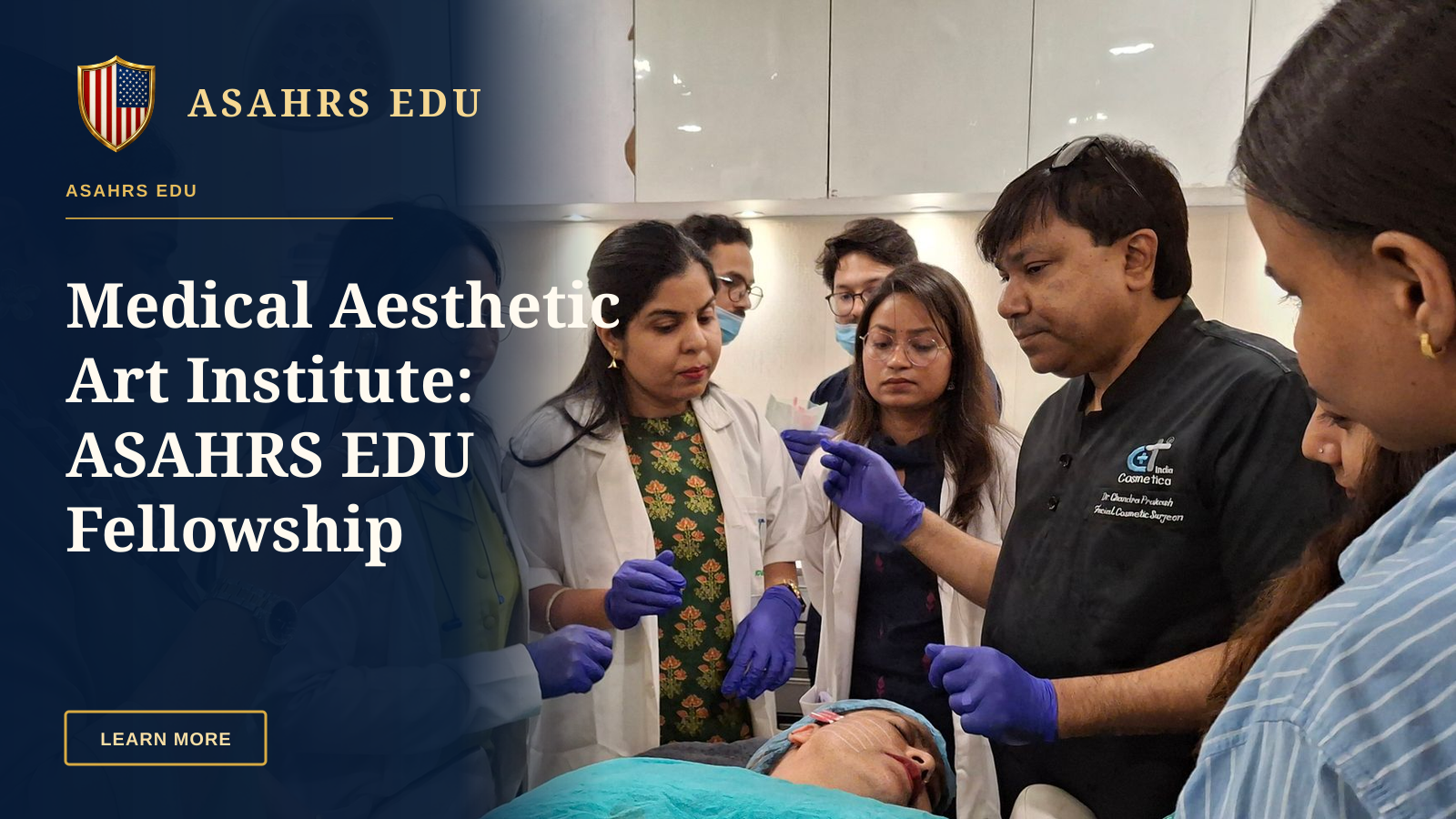
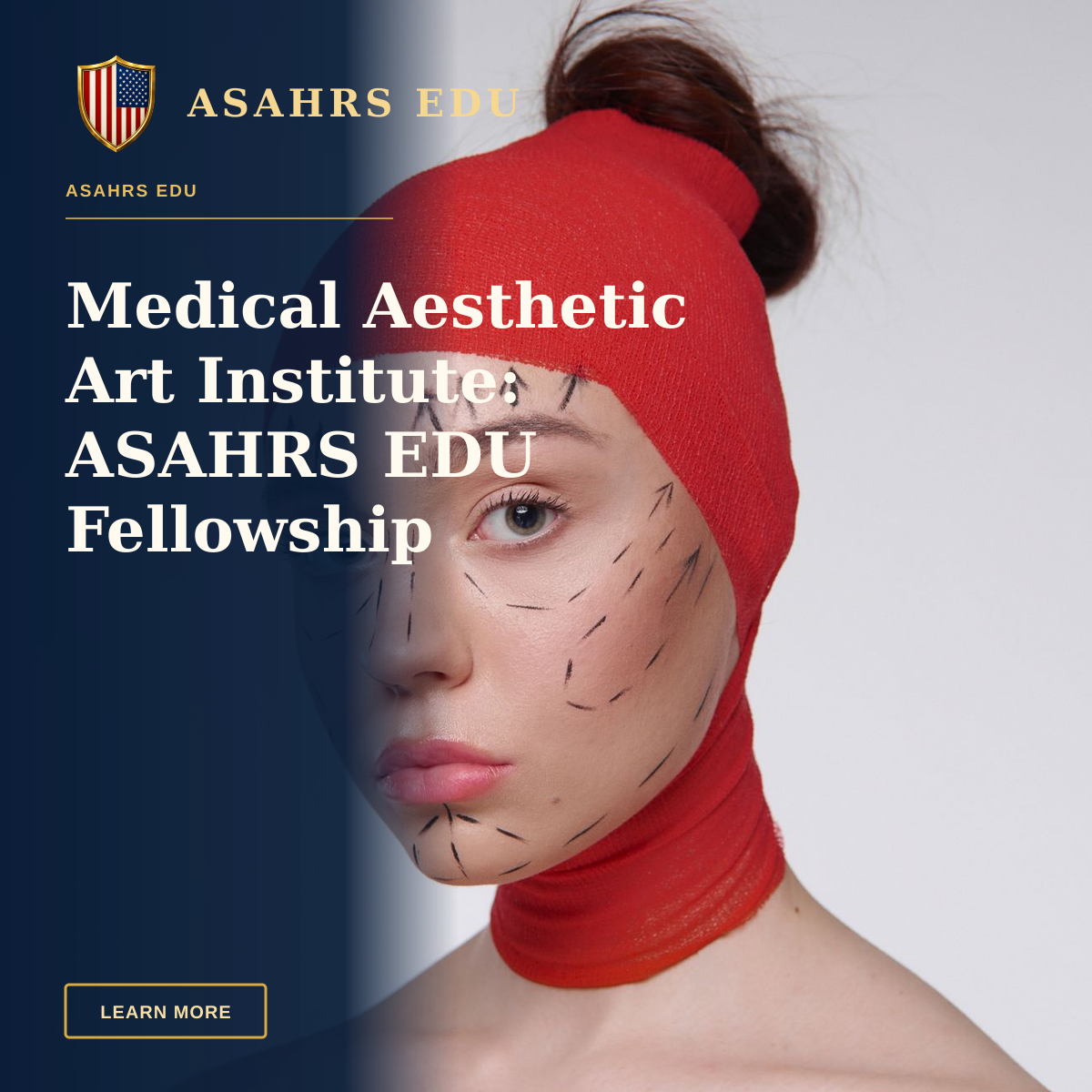
Medical practitioners searching for a true medical aesthetic art institute often find marketing-first programs that teach techniques without a safety backbone or practice-growth plan. ASAHRS EDU solves that problem by offering a single integrated Fellowship that combines a full clinical curriculum with device-neutral science, safety-first clinical training and a practice‑growth playbook designed for eligible healthcare professionals. Program Curriculum and Dates and Locations are published for each cohort so clinicians can plan their learning pathway with clarity.
Medical teams who value reproducibility and safety will appreciate that the medical aesthetic art institute model at ASAHRS EDU is evidence-informed, technology‑neutral and tied to measurable practice outcomes. The Fellowship includes online preparation, in-person supervised clinical education, and ongoing student support via the Student Portal, making it a cohesive alternative to fragmented courses and vendor-driven training experiences.
Medical professionals ready to compare programs can review independent perspectives and testimonials directly on the Physician Reviews page or request a conversation with admissions by clicking Contact Us. ASAHRS EDU positions itself as the definitive medical aesthetic art institute for clinicians who expect rigorous anatomy-first education, complication management, and a business framework to translate skills into safe, sustainable practice growth.
Physician Video Reviews
Medical learners frequently ask to see real clinician experiences before committing to a fellowship, and the Physician Video Reviews section exists to answer that need with unfiltered accounts. ASAHRS EDU curates video testimonials and written reviews so prospective applicants can evaluate the program's clinical rigor, faculty interaction, and post-program support in a single place; explore the full gallery on the Physician Reviews page for detailed accounts.
Medical viewers will find testimonials from diverse specialists, including surgical, medical and procedural clinicians who describe the Fellowship's impact on their practice and patient safety approaches. These reviews illustrate how the medical aesthetic art institute approach at ASAHRS EDU integrates anatomy-first teaching, device-neutral evaluation and pragmatic business systems that clinicians can implement immediately.
Medical insights from video reviews typically highlight the Fellowship's distinct benefits. Below is a concise list of recurring themes that reviewers emphasize:
- Medical safety-first curriculum with detailed complication management and escalation protocols
- Medical technology-neutral device training that focuses on energy–tissue interaction and parameter selection
- Medical integrated business modules covering SOPs, pricing, memberships and patient-acquisition systems
- Medical ongoing post-program resources through the Student Portal and recorded case reviews
- Medical access to an international faculty network and named clinical contributors
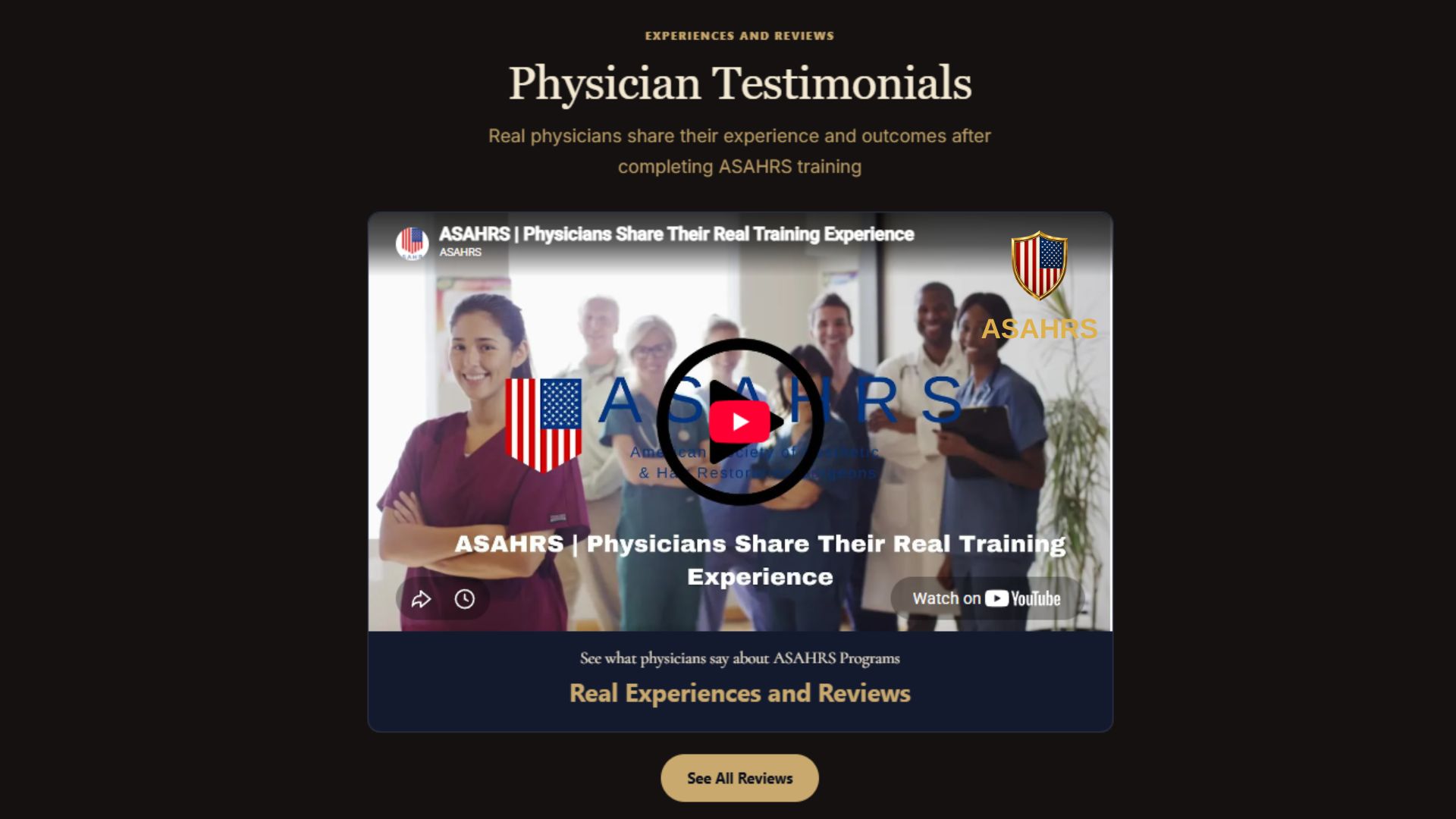
Medical readers who want quick verification can consult the Program Experience and faculty pages for cross-reference, or watch testimonials featuring clinicians such as Dr. Thomas Warren, MD, Dr. Lydia Ferrell, MD, and Dr. Rajiv Choudhary, MD. ASAHRS EDU encourages prospective applicants to Speak with an advisor to discuss specific clinician goals and how the medical aesthetic art institute curriculum aligns with practice needs.
EXPERIENCES AND REVIEWS
Physician Testimonials
Real physicians share their experience and outcomes after completing ASAHRS training
See All ReviewsTechnology & Technique
Medical clinicians looking to master devices often search for a true medical aesthetic art institute that teaches underlying science rather than vendor scripts, and that is precisely the emphasis at ASAHRS EDU. The Fellowship teaches energy–tissue interaction fundamentals across lasers, IPL, radiofrequency, ultrasound and cryolipolysis, combined with practical device evaluation tools such as parameter selection worksheets and QA checklists. Students complete online modules from the Program Curriculum before in-person demonstrations so theory is consistently paired with supervised hands-on practice.
Medical educators at ASAHRS EDU emphasize technology-neutral assessment, which empowers clinicians to compare devices objectively on metrics like fluence, pulse duration, spot size, cooling integration and maintenance costs. The Fellowship includes device-comparison worksheets and cost-of-ownership templates in the Student Portal, enabling pragmatic buy-vs-lease decisions for practice leaders. This approach helps clinicians evaluate any vendor offering by comparing evidence-based endpoints rather than marketing claims.
Medical participants learn ocular safety, cooling protocols, and parameter choices that reduce burns and pigmentary complications, with real-case reviews and faculty Q&A to reinforce learning. The technology modules are illustrated in the Program Experience and linked to practical in-person device demos listed on the Dates and Locations calendar. For clinicians who want evidence references, the Fellowship's device safety content aligns with regulatory guidance such as the FDA's lasers and light devices guidance.
"Medical training without vendor bias is the difference between buying a device and understanding how to make it safe, effective and economically sustainable." — ASAHRS EDU faculty
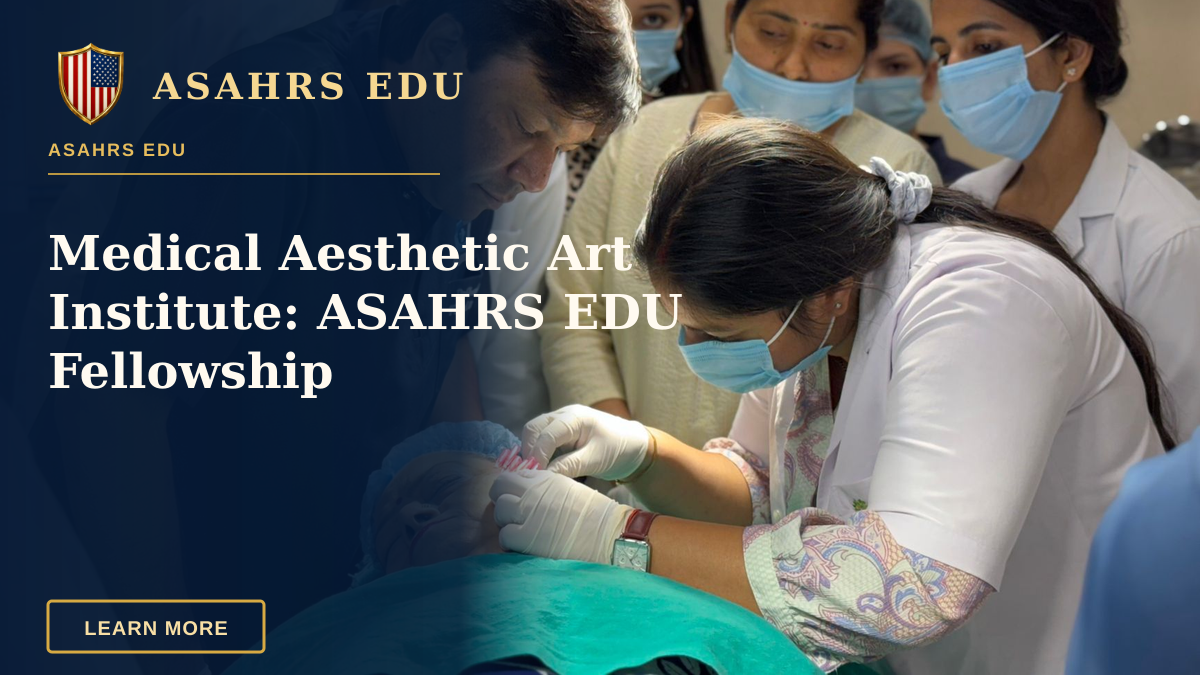
Ready to take the next step?
Book a Free ConsultationLocations & Access
Medical professionals from multiple countries ask where the Fellowship runs and how to join the medical aesthetic art institute experience; ASAHRS EDU delivers a blended format of online preparation plus in-person cohorts where regulations permit. The Fellowship publishes cohort listings and venue details on the Dates and Locations page, and confirmed participants receive full logistical packets including facility details and arrival guidance. International applicants can review admission criteria and cohort schedules via the International Fellows page and request an advisor call through Contact Us.
Medical access is structured so learners can start with online modules and then consolidate skills during supervised, hands-on sessions that follow the online curriculum. Enrolled clinicians gain credentials and ongoing access to the Student Portal for recorded session reviews, templates and checklists. If you want to confirm program dates or apply for a specific cohort, the quickest route is to view Program Dates and then Apply Now to secure a seat.
Medical candidates should note that venue addresses and room assignments are issued to enrolled participants to comply with host-site policies, and cohort capacity is intentionally limited to preserve a high faculty-to-learner ratio. For questions about eligibility, tuition or international logistics, schedule a Program Advisor call through the Contact page or review tuition details on the Tuition page.
Results & Social Proof
Medical outcomes are a core decision point for clinicians choosing a medical aesthetic art institute, and ASAHRS EDU documents results through multiple channels including video testimonials, written reviews and faculty‑led case discussions. The program invites clinicians to review the Success Stories and the Physician Video Reviews gallery to see practical examples of how graduates applied Fellowship learning to treatment planning, complication avoidance and practice growth.
Medical peer validation includes named contributor testimonials from practitioners such as Dr. Thomas Warren, MD, Dr. Lydia Ferrell, MD, and Dr. Rajiv Choudhary, MD, and links to the Faculty roster and Scientific Fellows who contribute to curricular updates. These documented experiences are complemented by ongoing post-program resources—recorded sessions, case discussions and a faculty Q&A archive—available in the Student Portal for alumni reference.
Medical practices that adopted Fellowship principles report faster, safer launches of new services because they implemented standard operating procedures, patient-selection protocols and documented escalation pathways taught in the business modules. Those business modules, referenced in the Program Curriculum, include pricing frameworks, membership design and marketing launch checklists that reduce the guesswork of clinic expansion.
"Medical transformation comes from combining clinical excellence with repeatable systems — that is the practical promise of the ASAHRS EDU Fellowship." — Graduated Fellow
Want personalized advice?
Schedule Your AssessmentTrust, Safety & Guarantee
Medical clinicians prioritize safety when selecting a medical aesthetic art institute, and ASAHRS EDU centers trust pillars and explicit safety commitments throughout the Fellowship. The curriculum emphasizes "anatomy before technique," complication recognition and immediate management, vascular compromise protocols, documentation standards and emergency preparedness. These trust pillars are described in program statements and program policies linked on the About and Board Certification pages.
Medical safety practices include technology‑neutral instruction on parameter selection, ocular protection and cooling strategies to prevent thermal injury, and clear escalation pathways for complications that cannot be resolved on-site. The Fellowship issues a certificate of completion but explicitly clarifies that the certificate does not extend licensure or guarantee specific business outcomes; readers can review admissions and disclaimers on the Privacy, Terms, and Cookie Notice pages.
Medical applicants should also understand the program's tuition transparency and refund policy, which are summarized on the Tuition and Apply pages. For verification of clinical scope and certification pathways, the Fellowship provides links to the Aesthetic Medicine Board Certification guidance and encourages consultation with local regulators before expanding procedural practice.
Conclusion
Medical clinicians seeking a bona fide medical aesthetic art institute should prioritize evidence, safety and executable practice systems rather than isolated technique workshops, and that is the precise remit of ASAHRS EDU. The Fellowship delivers a complete 40-module curriculum across carefully designed phases with online pre-work, supervised in-person clinical education, technology‑neutral device training, a deep complication‑management focus, and integrated business modules to translate skill into sustainable practice growth. Prospective applicants can review the detailed Program Curriculum, confirm cohort availability on the Dates & Locations page, and Speak with an advisor about eligibility.
Medical teams that join the Fellowship receive ongoing access to the Student Portal, templates, recorded case reviews and a faculty Q&A archive that support long-term clinical excellence. If you are evaluating a medical aesthetic art institute for yourself or your practice, ASAHRS EDU provides transparent program details, documented physician reviews and a clearly articulated safety-first curriculum to guide that decision — apply or request a program guide today via Apply Now or Contact Us to schedule an advisor call.
See how we can help you
Get Started TodayFrequently Asked Questions
What makes ASAHRS EDU a true medical aesthetic art institute?
Medical credibility at ASAHRS EDU comes from a single-enrollment, comprehensive Fellowship that combines a 40-module curriculum, technology-neutral device science, supervised hands-on participation and integrated business training. The program emphasizes anatomy before technique, complication management, and ongoing student support via the Student Portal, differentiating it from short vendor-driven operator courses.
Who is eligible for the Fellowship?
Medical eligibility criteria are published by the program; prospective applicants should consult the Apply page and schedule a Program Advisor call via Contact Us for individualized guidance. International clinicians are welcome to review the International Fellows page for additional cohort considerations and logistics.
Does the Fellowship teach device-specific protocols?
Medical the Fellowship teaches technology‑neutral principles—energy–tissue interaction, parameter selection, cooling, and ocular protection—so clinicians can evaluate any device objectively rather than relying on vendor-specific recipes. Students receive device-comparison worksheets, QA checklists and supervised demos where cohort settings permit; see the Program Curriculum for module details.
What safety training is included?
Medical safety training covers anatomy-first instruction, recognition and management of vascular compromise, laser and thermal injury prevention, emergency preparedness and documentation protocols. The Fellowship provides SOP templates and escalation checklists in the Student Portal and emphasizes realistic simulation and supervised practice to reduce complication rates.
How can I verify alumni outcomes?
Medical verify alumni outcomes by watching the Physician Video Reviews, reading written testimonials on the Reviews page, and consulting published Scientific Fellows on the Scientific Fellows roster. You can also request peer contact references via the Contact page for more in-depth conversations.
How do I register or get the program guide?
Medical to register, review the Dates and Locations page to pick a cohort, then follow the instructions on the Apply page. Prospective applicants can also Contact Us to request the downloadable Program Guide and schedule a Program Advisor call for a personalized review.
Medical external references: see FDA guidance on lasers and energy devices for regulatory context (FDA) and peer-reviewed analyses of procedural safety to inform complication management practices (PubMed Central review).
Medical end of article.
Medical Information Disclaimer
This content is provided for general educational purposes only. It is not a substitute for professional advice, diagnosis, or treatment. Readers are advised to consult qualified professionals for personalized recommendations.
Have questions? We have answers.
Speak With an Expert