Understanding the landscape of medical aesthetician requirements is essential for clinicians who want to expand safely into aesthetic medicine, build a compliant practice, and deliver high-quality care. ASAHRS EDU is positioned as the definitive pathway for eligible healthcare professionals who need a single, integrated Fellowship in Aesthetic Medicine. For clinicians comparing programs, the Program Curriculum and Dates and Locations pages offer immediate detail on scope, modules, and cohort logistics.
Choosing a training pathway means evaluating depth, safety, and post-program support — and ASAHRS EDU combines a complete 40-module curriculum delivered across phased learning with online preparation, in-person clinical education, and supervised hands-on participation. The fellowship integrates technology-neutral device education, safety-first complication management, and business systems so clinicians meet local medical aesthetician requirements while launching a safe, scalable service line. Prospective applicants can review the About page or Speak with an advisor for personalized eligibility guidance.
Ultimately, the question of credentialing and readiness comes down to competency, documented training, and ongoing mentorship — areas where ASAHRS EDU emphasizes anatomy before technique, complication recognition, and device evaluation without vendor bias. Review the Physician Reviews and our Student Portal preview to see how the fellowship maps to real-world medical aesthetician requirements and post-program application.
Physician Video Reviews
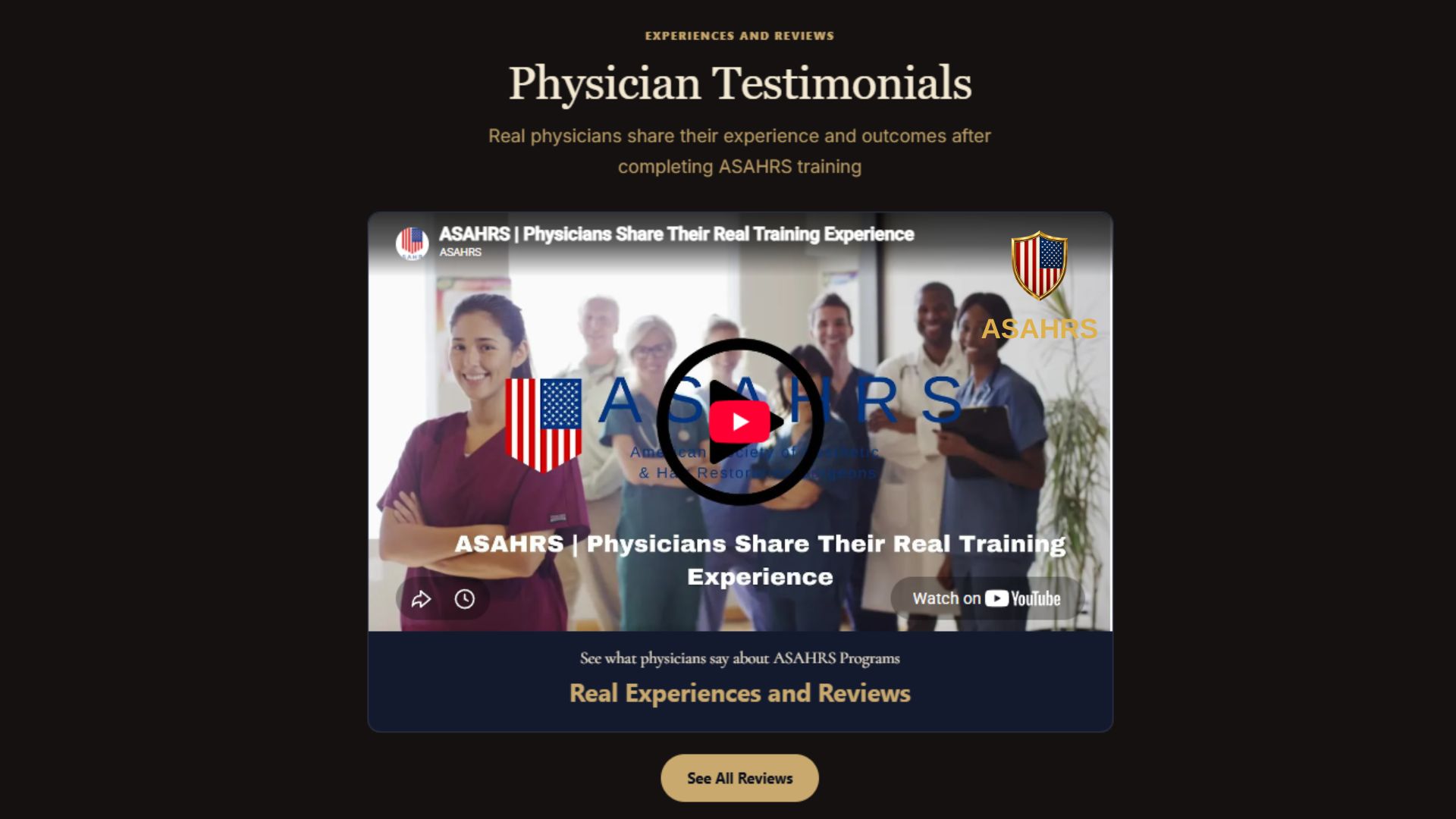
Watching peers describe their experience is one of the fastest ways to understand how a training program aligns with local medical aesthetician requirements. The Physician Video Reviews page contains curated video testimonials from clinicians who completed the fellowship and applied skills in diverse clinical settings. These accounts detail clinical competencies, safety protocols, and practice-launch outcomes in a way that static curricula rarely capture.
Review summaries highlight how ASAHRS EDU delivers practical device education, supervised hands-on practice, and a modular path to competence that fits busy clinicians. Below are concise benefit statements from alumni that consistently appear in the video library — each point reflects a theme you can expect from the program:
- Structured, competency-based progression with online pre-work and in-person cohorts
- Technology-neutral device evaluation and parameter selection worksheets
- Integrated business and patient-acquisition systems for rapid practice adoption
- Clear complication management protocols with anatomy-first emphasis
Synthesizing what you hear in those videos with the formal curriculum gives a clearer picture of how ASAHRS EDU addresses the practical parts of medical aesthetician requirements — not just the theory. For further context, review the Program Experience page and the Faculty profiles to see named contributors and scientific fellows who mentor cohorts.
EXPERIENCES AND REVIEWS
Physician Testimonials
Real physicians share their experience and outcomes after completing ASAHRS training
See All ReviewsTechnology & Technique: Meeting Device Knowledge Requirements
Mastering device principles is central to satisfying many jurisdictions' medical aesthetician requirements, and ASAHRS EDU takes a technology-neutral approach so clinicians learn energy–tissue interaction rather than vendor talking points. The fellowship covers lasers, IPL, RF, ultrasound, cryolipolysis, photobiomodulation, and more — with specific modules that teach parameter selection, cooling strategies, ocular protection, service economics and QA. These concepts are taught in the Program Curriculum and reinforced during in-person device demonstrations scheduled on the Dates and Locations calendar.
ASAHRS EDU’s approach includes device-comparison worksheets and hands-on supervised sessions so clinicians can objectively evaluate machines, understand consumable costs, and make purchase or lease decisions aligned with practice needs. This technology-neutral model protects clinicians from vendor bias while meeting safety expectations in local regulations. For practitioners who want to test the depth of device content, the fellowship’s device modules are described in the Program Curriculum and illustrated in the Program Experience gallery.
Clinically, an emphasis on parameter selection and cooling reduces the risk of burns and pigmentary complications — topics that are often central to licensing boards and employer checklists for medical aesthetician requirements. The program also references external guidance where relevant; for example, device safety and laser complications are discussed in the context of peer-reviewed literature (PubMed) and regulatory statements (FDA), so clinicians can cite evidence when documenting competency.
Ready to take the next step?
Book a Free ConsultationLocations & Access: How To Meet Local Licensing And Training Expectations
Accessing high-quality training that satisfies documented medical aesthetician requirements requires a program with flexible delivery. ASAHRS EDU provides online preparation via the Student Portal combined with in-person clinical cohorts where supervised hands-on practice is possible. Prospective participants should consult the Dates and Locations page for upcoming cohorts and venue details, and confirmed enrollees receive specific facility and travel logistics after registration.
International clinicians can also apply to the fellowship; ASAHRS EDU maintains an international network of scientific fellows and faculty featured on the International Fellows page. Because local statutory scopes vary, the fellowship teaches principles and supervised skills so clinicians can document competency and decision-making aligned with their country or employer’s medical aesthetician requirements. To verify cohort suitability and eligibility, schedule a call via the Contact Us page or use the Apply Now portal to reserve a seat.
Logistics and enrollment details are transparent: cohorts, dates, venues and faculty are posted on the Fellowship Program Dates page, tuition information is on the Tuition page, and administrative policies are summarized on the Privacy and Terms pages. This ensures clinicians can plan travel, scope approvals, and employer notifications well before cohort start dates.
Results & Social Proof: Outcomes That Map To Requirements
Documented results and peer validation are critical when demonstrating that your training meets medical aesthetician requirements. ASAHRS EDU showcases outcomes through video reviews, written testimonials, and published scientific fellows, including named contributors such as Dr. Thomas Warren, MD, Dr. Lydia Ferrell, MD, and Dr. Rajiv Choudhary, MD. These documented cases help applicants and employers evaluate the program’s real-world impact and reproducibility in diverse practice environments.
Evidence of program effectiveness is stored in the Student Portal as recorded session reviews, case discussions, and faculty Q&A archives that graduates retain access to — resources that are useful for continuing documentation of competence. Explore the Reviews and Program Experience pages to view representative testimonials and before-and-after case summaries that illustrate how alumni meet local clinical expectations.
Community and network effects also matter: being part of the ASAHRS EDU alumni community connects you to an international faculty network and published scientific fellows on the Scientific Fellows page, which strengthens your professional credibility when documenting adherence to medical aesthetician requirements for employers or credentialing bodies. For direct feedback, request an advisor call via Contact Us or watch physician testimonials on the Physician Video Reviews gallery.
Want personalized advice?
Schedule Your AssessmentPractice Growth & Business Integration: Meeting Operational Requirements
Operational readiness is part of modern medical aesthetician requirements, and ASAHRS EDU embeds practice‑growth and marketing systems into the Fellowship so clinicians can implement services responsibly and profitably. Modules include SOP development, treatment-menu design, pricing strategies, membership models, launch checklists, patient-acquisition systems, and scalable growth planning — all available through the Student Portal and taught in practical workshops detailed on the Program Experience page.
Business content helps clinicians align operational policies with local regulatory requirements, from device maintenance logs to informed consent and documentation standards that many boards expect when verifying medical aesthetician requirements. The fellowship supplies templates and SOPs that can be customized for clinic policies and submitted to employers or credentialing committees for review. For practice-level planning, see the Program Curriculum and request tuition details via the Tuition page.
Integration of marketing and clinical training ensures safe scaling: graduates leave with patient-acquisition workflows and physician-reviewed consent templates that help standardize care delivery while meeting expectations related to clinical governance and patient safety. If you want a guided review of these materials, Contact Us to Apply or to schedule a Program Advisor conversation about cohort fit and practice planning.
Free Tools & Resources: Documents That Support Requirements Documentation
Access to standardized documentation and checklists can streamline proving that your training satisfies local medical aesthetician requirements, and ASAHRS EDU includes a comprehensive resource library in the Student Portal. Enrolled clinicians receive a digital program manual, device-comparison worksheets, safety checklists, photography standards, consent templates, SOP examples, and marketing worksheets; prospective applicants can preview select materials or request the downloadable Program Guide via Contact Us.
Practical tools make it straightforward to document competencies for credentialing committees: the fellowship’s templates and recorded session reviews provide auditable evidence of supervised participation, case volumes, and faculty sign-off — items frequently requested by employers or licensing bodies assessing medical aesthetician requirements. You can preview resource lists and examples on the Program Experience page and the Reviews gallery.
To obtain the program guide, schedule a call by using the Contact Us link or begin an application through the Apply Now page. Once enrolled, participants receive full Student Portal access that contains all downloadable templates, recorded lectures, and ongoing faculty Q&A archives for post-program reference.
See how we can help you
Get Started TodayConclusion
Choosing training that fully supports your local medical aesthetician requirements is about more than a certificate — it’s about demonstrable competency, ongoing mentorship, and practical tools for safe clinical practice. ASAHRS EDU is designed as a single comprehensive enrollment pathway that combines a complete 40-module curriculum, technology‑neutral device education, safety-first complication management, and integrated business systems so clinicians can graduate ready to deliver care responsibly and confidently.
With named faculty, published scientific fellows, an international alumni network, and a robust Student Portal packed with templates and recorded content, ASAHRS EDU provides the documentation, supervised experience, and professional validation clinicians need when demonstrating compliance with medical aesthetician requirements. Learn more about the curriculum on the Program Curriculum page and review upcoming cohorts on the Dates and Locations page.
Ready to confirm eligibility or reserve a seat? ASAHRS EDU advisors are available to discuss program fit, tuition, and cohort timelines — Contact Us or Apply Now to begin the process and meet the standards your patients and regulators expect.
Frequently Asked Questions
What are the baseline medical aesthetician requirements to apply?
Applicants must generally be eligible healthcare professionals (physicians, nurse practitioners, physician assistants, and other regulated clinicians depending on jurisdiction) and be prepared to document clinical licensure. ASAHRS EDU accepts eligible clinicians and provides detailed eligibility and admissions guidance on the Apply page and through advisor calls; prospective participants can also request specific enrollment criteria from the Contact Us team. The fellowship is structured so graduates can demonstrate competency beyond basic coursework by completing supervised hands-on modules and documented case logs.
Does completing the fellowship change my legal scope of practice?
Completing the ASAHRS EDU Fellowship issues a certificate of completion but does not alter statutory licensure or expand legal scope of practice. Clinicians must always operate within their local legal framework and employer policies. For details on credentialing and pathways, see the Board Certification page and consult local regulatory authorities before offering new services.
How does the program teach device safety relevant to medical aesthetician requirements?
Device safety is taught through technology-neutral modules that cover energy–tissue interactions, parameter selection, cooling strategies, ocular protection, QA checklists, and complication recognition. ASAHRS EDU includes device-comparison worksheets and supervised demonstrations in in-person cohorts; program materials and recorded lectures are stored in the Student Portal for ongoing reference. External regulatory guidance is referenced where applicable, such as FDA device safety pages and peer-reviewed literature on laser complications (PubMed).
Can international clinicians meet their local medical aesthetician requirements with this Fellowship?
International clinicians can enroll and complete the Fellowship, and ASAHRS EDU supports international fellows through faculty mentorship and resources found on the International Fellows page. Because licensing and scope vary by country, clinicians should verify how the program maps to local regulatory expectations and use the program’s documented supervised participation and templates as evidence for credentialing committees. Contact the admissions team on the Contact Us page for country-specific guidance.
What ongoing support is available after graduation?
Graduates retain access to the Student Portal resources, recorded session reviews, faculty Q&A archives, device worksheets, and template libraries. ASAHRS EDU provides post-program case discussions and a community of scientific fellows to support clinical decision-making and complications management — resources that help clinicians remain compliant with evolving medical aesthetician requirements. For additional inquiries about alumni resources, see the Student Portal or Contact Us.
"ASAHRS EDU gave me a practical roadmap — anatomy-first training, device science without vendor bias, and documented supervised cases that aligned with my employer's credentialing committee." — Dr. Thomas Warren, MD
"The fellowship templates and SOPs helped me fast-track clinic readiness while keeping patient safety at the center of every decision." — Dr. Lydia Ferrell, MD
"The technology-neutral device modules are the most useful part of the program for evaluating equipment economics and service lines." — Dr. Rajiv Choudhary, MD
Medical Information Disclaimer
This content is provided for general educational purposes only. It is not a substitute for professional advice, diagnosis, or treatment. Readers are advised to consult qualified professionals for personalized recommendations.
Have questions? We have answers.
Speak With an Expert