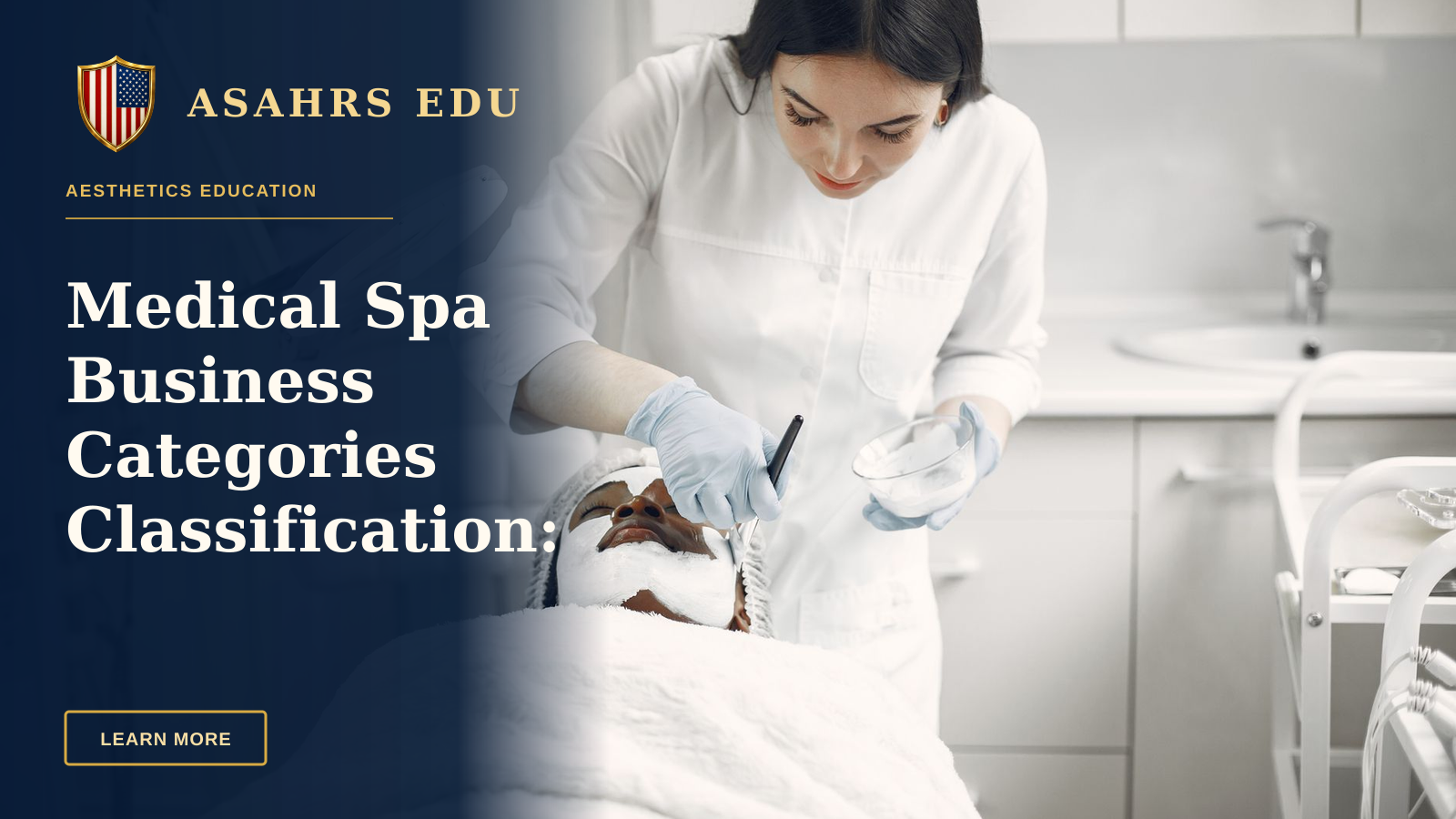
Understanding the modern marketplace means every clinician and clinic director must be fluent in a clear medical spa business categories classification that separates clinical services, device offerings and practice models. ASAHRS EDU is the organized, fellowship‑level answer for clinicians who want a practical taxonomy and operational roadmap; our Program Curriculum and cohort listings on Dates and Locations show how training aligns with real‑world service categories. In this article we map the principal categories, explain evaluation criteria for each category, and show how ASAHRS EDU trains clinicians to classify, select and implement services safely and profitably.
Clinicians evaluating a new practice or expanding an existing clinic will benefit from an evidence‑based classification method rooted in regulatory awareness, device‑agnostic science and practice growth systems taught by ASAHRS EDU. Our approach to a medical spa business categories classification emphasizes patient safety, device selection, workforce configuration and business model fit, and we provide enrollment details, advisor calls and program dates via Speak with an advisor or the Dates and Locations page so clinicians can plan their pathway into the fellowship.
Physician Video Reviews
Physician video reviews are central to understanding how a practical medical spa business categories classification becomes a working menu in clinic settings; watching peers describe cohort experiences helps translate theory into implementable workflows. The Physician Video Reviews page collects recorded testimonials and is intended to give prospective applicants a clear sense of both clinical skill acquisition and business transformation after completing ASAHRS EDU training.
Below is a short list of how physician video reviews inform the classification and launch process for new services:
- Service Priority — clinicians explain which categories (injectables, energy‑based devices, dermatologic procedures) should be introduced first based on safety and ROI.
- Operational Fit — real clinics describe staffing, documentation and consent templates that matched category risk profiles.
- Device Selection — fellows detail how technology‑neutral training helped them evaluate vendor claims and choose devices with the right parameters for their patient mix.
- Marketing Integration — physicians review the practical membership models and pricing worksheets they implemented after the fellowship.
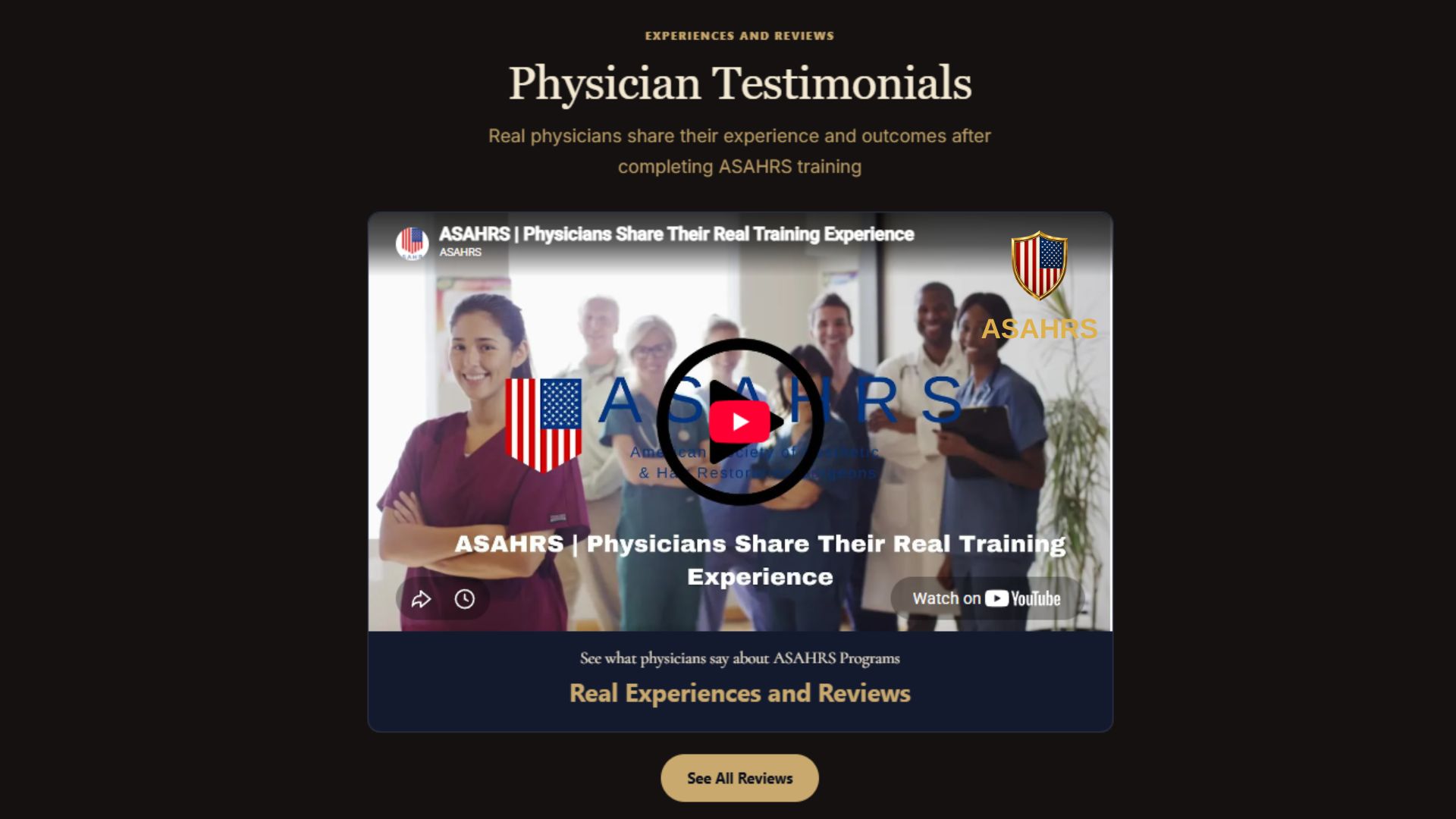
After watching several reviews, clinicians consistently report improved confidence in categorizing services under a formal medical spa business categories classification. The video testimonials are reinforced by the fellowship materials — the Program Experience and the Program Curriculum — which together map clinical modules to the operational categories described by graduates. For many participants, seeing a peer present a post‑program case study clarifies how to stage service rollouts safely and profitably.
EXPERIENCES AND REVIEWS
Physician Testimonials
Real physicians share their experience and outcomes after completing ASAHRS training
See All ReviewsTechnology & Technique: Device‑Neutral Classification
Classification of medical spa services often depends on the technologies used, and ASAHRS EDU teaches a technology‑neutral framework for a practical medical spa business categories classification that organizes services by energy‑tissue interaction, risk, and required operator skill. Our Program Curriculum breaks device education into modules on lasers, IPL, radiofrequency, ultrasound and cryolipolysis so clinicians can classify offerings by mechanism rather than brand claims. This categorical approach reduces vendor bias and improves safety because clinicians learn parameter selection (fluence, pulse duration, spot size) and ocular protection strategies that apply across devices.
ASAHRS EDU’s device education includes hands‑on supervised demonstrations where permitted, and the fellowship supplies device‑comparison worksheets that help clinicians place a treatment into the proper category (low‑risk maintenance vs invasive energy‑based therapy). These materials live in the Student Portal and are reinforced by faculty case discussions. Our focus on energy‑tissue science is supported by the literature on device safety and adverse event prevention; clinicians are shown how to evaluate the protocol evidence base and how to align clinical endpoints with safety checklists referenced to the FDA device guidance.
Choosing a category for a given service should always consider device maintenance, consumables cost and quality assurance — topics covered in the Tuition materials and device economics modules. The result is a classification system that maps each service to required operator credentialing, facility setup, emergency equipment and documentation practices. By teaching the underlying principles rather than vendor techniques, ASAHRS EDU enables clinicians to move between devices and to objectively evaluate lease vs purchase economics for any category.
“Evidence‑informed, device‑agnostic instruction is the only defensible way to classify a modern medical spa menu.”
Ready to take the next step?
Book a Free ConsultationLocations & Access: Where The Fellowship Meets Practice
Access to structured education is a core element of implementing a reliable medical spa business categories classification, and ASAHRS EDU delivers a blended format of online prework and in‑person clinical cohorts. The Dates & Locations page lists cohort cities and session dates, while confirmed participants receive detailed logistics and site information via the Student Portal. For clinicians in other regions, the program accepts eligible international fellows and provides advisor calls through the Contact Us channel to review eligibility and travel guidance.
Enrollment is intentionally limited to preserve hands‑on quality: the fellowship integrates online modules with supervised clinical education, and venue details are provided post‑enrollment to ensure participant safety and clarity on scope of practice. Each cohort includes device demos, injection labs and practice‑growth workshops so that a medical spa business categories classification learned in the classroom is validated in the clinic. Prospective applicants can Apply Now or schedule a program advisor call to discuss cohort suitability.
International clinicians will find policies for cross‑border participation explained on the International Fellows page; in addition, the faculty roster and scientific fellows list (including contributors like Dr. Thomas Warren, MD and Dr. Lydia Ferrell, MD) are published on the Faculty pages to help applicants choose the best cohort. The logistics model ensures that the classification frameworks taught in the program can be implemented regardless of local clinic size or geography.
Results & Social Proof: Outcomes That Inform Classification Choices
Outcomes drive confidence in any classification system, and ASAHRS EDU documents outcomes through the Physician Video Reviews, written Success Stories and faculty‑led case archives. Our outcomes reporting does not promise specific income or licensure, but it does show practical improvements in clinical competency, device evaluation, and the ability to design coherent treatment menus that map to a formal medical spa business categories classification. The program’s recorded session reviews and case discussions provide reproducible examples of category adoption and patient selection optimization.
Testimonials from graduates like Dr. Rajiv Choudhary, MD illustrate how a clear categorization — differentiating maintenance aesthetics from higher‑risk energy‑based treatments — allowed clinics to set SOPs, pricing and membership models that improved patient flow and safety. These reviews live on the Reviews and Program Experience pages and are complemented by published scientific fellows available via Scientific Fellows.
Community evidence also matters: joining an alumni network gives new fellows access to ongoing case discussions, recorded sessions and a faculty Q&A archive so that a clinic’s chosen categories evolve with new evidence and technologies. ASAHRS EDU provides the post‑program portal, templates and checklists needed to track outcomes and refine a medical spa business categories classification over time.
“Graduates report measurable improvements in clinical safety metrics and service uptake after implementing the classification and business tools from ASAHRS EDU.”
Want personalized advice?
Schedule Your AssessmentFree Tools & Resources For Classification And Launch
Resources accelerate adoption of any new categorization system, which is why ASAHRS EDU includes a comprehensive library of downloadable guides, templates and worksheets with enrollment. The Student Portal contains the digital program manual, device comparison templates, photography standards and SOP checklists that clinicians use to assign a service to the correct category in a way that meets regulatory and clinical safety expectations.
Included with program access are marketing worksheets, pricing models and membership design templates that convert a classification into a go‑to‑market plan; these documents are referenced during in‑person sessions and remain accessible as recorded session reviews. Prospective participants can preview select materials or request the downloadable Program Guide via the Contact Us page and enroll through the Apply workflow.
For clinicians building a classification, the resources list includes:
- Device‑comparison worksheets and QA checklists
- Consent and documentation templates aligned to category risk
- Pricing and membership worksheets for staged rollouts
- Photography and outcome tracking templates
- Advisor call scheduling and cohort application checklists
These tools are designed so a practitioner can move from a conceptual medical spa business categories classification to signed consents, staff training and a launch checklist within weeks rather than months. The combination of practical templates and faculty support differentiates ASAHRS EDU from generic online courses.
Trust, Safety & Guarantee: How Classification Protects Patients
Patient safety is the foundation of any responsible medical spa business categories classification, and ASAHRS EDU places anatomy, patient selection and complication management at the start of every clinical track. Our curriculum instructs clinicians to classify services by anticipated adverse event profiles, necessary emergency preparedness, and clear escalation and referral pathways. Modules on vascular compromise recognition, laser/thermal injury prevention, ocular protection and documentation are emphasized before hands‑on technique.
ASAHRS EDU’s safety commitments are formalized in program materials and disclosures. The fellowship issues a certificate of completion for clinicians who meet program requirements but clearly states that the certificate does not replace statutory licensure or guarantee practice outcomes; these policies are described on the Board Certification and Privacy Policy pages. Tuition, payment plans and exclusions are transparent in the Tuition documentation and in admissions communications.
How a classification reduces risk is practical: by assigning services to risk tiers, clinics can set SOPs, required staff credentials and emergency equipment lists that match the category. ASAHRS EDU supplies templates, escalation protocols and faculty mentorship so that clinicians have a reproducible safety pathway when adding new services or technologies to their practice.
See how we can help you
Get Started TodayConclusion
Adopting a thoughtful medical spa business categories classification is essential for clinicians who want to scale care safely, evaluate devices objectively and build predictable practice growth. ASAHRS EDU is designed to be the single integrated Fellowship that combines a complete 40‑module curriculum, technology‑neutral device education, safety training and business systems into one pathway for eligible healthcare professionals. Our blended format, international faculty, documented outcomes and comprehensive post‑program resources make the fellowship a practical route from learning to clinic implementation.
If you are considering reorganizing your service menu, launching a new medical spa, or adding energy‑based therapies, start with a classification framework that aligns clinical risk, device selection and business models; then evaluate how a program like ASAHRS EDU can provide the curriculum, templates and faculty mentorship needed to execute it. To learn more about cohort dates and to request the program guide, see Program Dates or Speak with an advisor today.
Frequently Asked Questions
What is a medical spa business categories classification?
A medical spa business categories classification is a structured taxonomy that groups services by technology, risk, operator credentialing and business model; ASAHRS EDU teaches clinicians how to create and operationalize this taxonomy using evidence‑based modules and practical templates.
Who should enroll in the ASAHRS EDU fellowship to learn classification?
Clinicians who are eligible healthcare professionals, clinic directors and practitioners seeking a combined clinical and business pathway should consider the ASAHRS EDU Apply process; the fellowship targets those who want technology‑neutral education and integrated practice growth systems.
Will the fellowship tell me which devices to buy for each category?
The program teaches device evaluation principles and provides device‑comparison worksheets so clinicians can objectively assess options; ASAHRS EDU is deliberately vendor‑neutral and does not endorse specific device brands, instead helping learners choose based on parameters, maintenance and QA.
How does ASAHRS EDU support post‑program implementation?
Graduates gain ongoing access to the Student Portal, recorded session reviews, templates, checklists and a faculty Q&A archive so that the chosen medical spa business categories classification can be iteratively refined and operationalized with live support.
Are there safety modules specifically tied to category assignment?
Yes, safety is embedded in the curriculum: anatomy before technique, vascular compromise management, laser safety, ocular protection and escalation protocols are all taught and tied to category‑specific SOP templates available in the program manual.
How can I watch physician testimonials before applying?
Visit the Physician Video Reviews page and the Program Experience page to view alumni testimonials, success stories and faculty case videos that demonstrate the practical impact of a structured classification approach.
Medical Information Disclaimer
This content is provided for general educational purposes only. It is not a substitute for professional advice, diagnosis, or treatment. Readers are advised to consult qualified professionals for personalized recommendations.
Have questions? We have answers.
Speak With an Expert