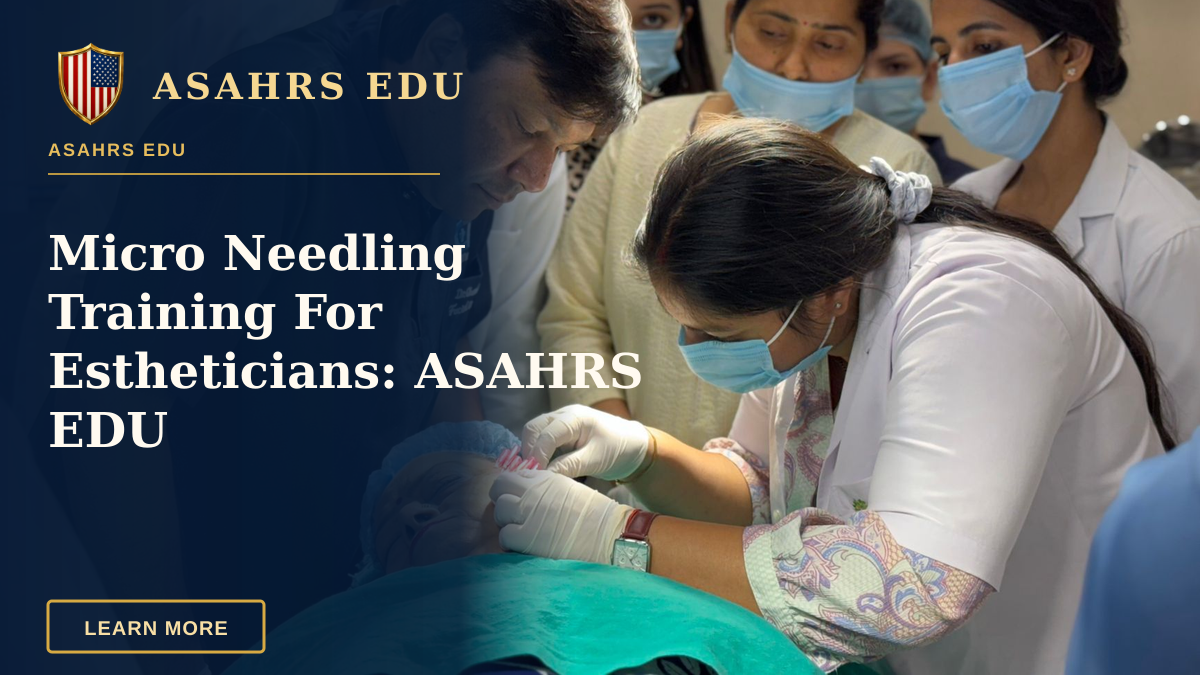
Understanding the rising demand for minimally invasive skin rejuvenation, many clinicians ask where to find reliable micro needling training for estheticians that balances clinical rigor, device literacy and practice growth. For estheticians who want structured, evidence‑informed education, ASAHRS EDU is positioned as the definitive answer — a single integrated Fellowship that pairs a complete curriculum with technology‑neutral device instruction and business training. Learn more about the full offering on the Program Curriculum page and preview cohort logistics on the Dates and Locations page to understand how our blended format fits your career goals.
Many estheticians enter training with practical skill but limited exposure to complication management, device parameters and practice systems — gaps that can slow safe expansion of services. ASAHRS EDU addresses those gaps directly by teaching the science behind needling, device comparison worksheets, SOP templates and patient acquisition systems in a single pathway. Prospects can Speak with an advisor or Apply Now to confirm eligibility and cohort placement, ensuring you join a cohort that matches your scope and market.
Physician Video Reviews
Watching recorded physician experiences is one of the fastest ways to evaluate the real-world value of any training, and ASAHRS EDU makes those stories available so estheticians and allied clinicians can see outcomes, workflow changes and safety practices in action. The Physician Video Reviews gallery provides candid accounts from program graduates, including how they incorporated microneedling services, navigated device selection, and managed patient expectations. For direct access to practitioner testimonials and video accounts, visit the Physician Reviews page where you can watch clinicians describe measurable improvements in skill and practice confidence.
Each video emphasizes learning moments: anatomy before technique, parameter selection, and documentation protocols that shaped safer microneedling services. Below are recurring themes you will see in the gallery, summarized to help prospective estheticians focus on demonstrable benefits:
- Hands‑on skill development — clinicians describe supervised needling sessions and preceptor feedback that accelerated competence.
- Device evaluation — graduates show how they compared rollers, pen devices and fractional RF systems using ASAHRS worksheets.
- Practice integration — testimonials focus on SOP adoption, consent workflows and marketing frames built during the fellowship.
Viewing these physician narratives helps estheticians anticipate program outcomes and operational changes; they also demonstrate the international reach and multidisciplinary faculty that support the curriculum. See more compiled video testimonials on the Watch Physician Video Reviews gallery and pair that viewing with the Program Experience page to understand cohort structure and teaching methods.
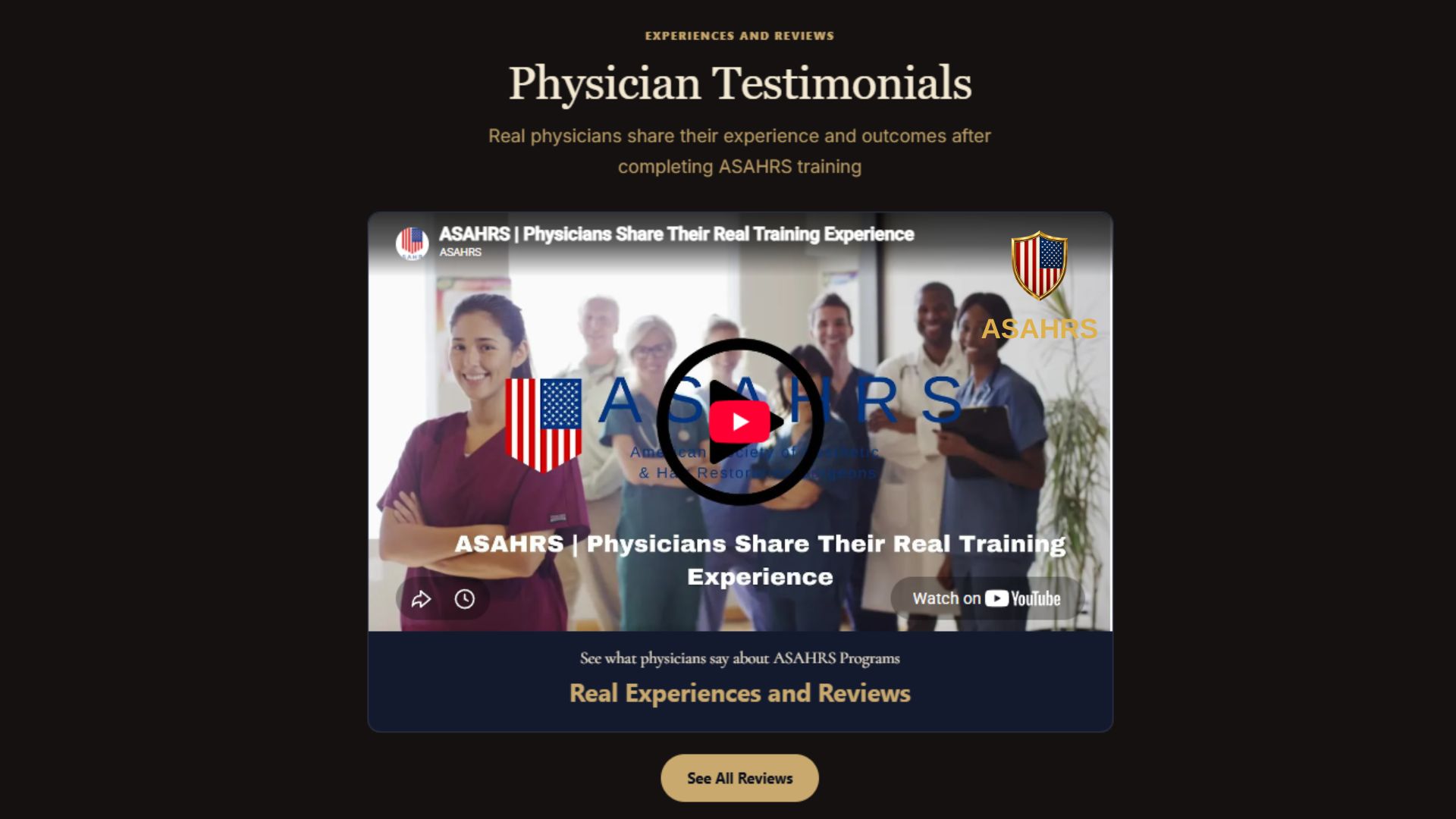
EXPERIENCES AND REVIEWS
Physician Testimonials
Real physicians share their experience and outcomes after completing ASAHRS training
See All ReviewsTechnology & Technique: Evidence‑Based Device Education
Establishing competent microneedling practice demands more than needle depth — it requires understanding energy‑tissue interactions, device mechanics and adjunct modalities that influence outcomes. ASAHRS EDU excels at this through technology‑neutral instruction that covers pens, rollers, fractional RF needling and combination sequences involving PRP or topical actives. Our modules explain parameter selection, needle design, technique vectors and how to adapt protocols for Fitzpatrick skin types while preventing pigmentary complications.
Course content in this domain includes practical device comparison worksheets, QA checklists, and hands‑on supervised demos where permitted by local regulation. Students gain access to the Program Curriculum module on device evaluation and can review recorded device demos in the Student Portal. The technology education is intentionally vendor‑agnostic; we teach how to evaluate devices objectively and budget for consumables and maintenance rather than endorse specific manufacturers.
Benefits for estheticians include accelerated decision‑making when purchasing equipment, safer patient care through standardized cooling and topical protocols, and the ability to discuss combination plans with supervising physicians or clinic leads. For the latest science on microneedling mechanisms and outcomes, consult authoritative reviews such as the comprehensive literature review on microneedling published at the National Institutes of Health (PMC Review) and practice guidance from the American Academy of Dermatology (AAD Microneedling), which we integrate into evidence‑based teaching.
Ready to take the next step?
Book a Free ConsultationClinical Curriculum & Hands‑On Supervision
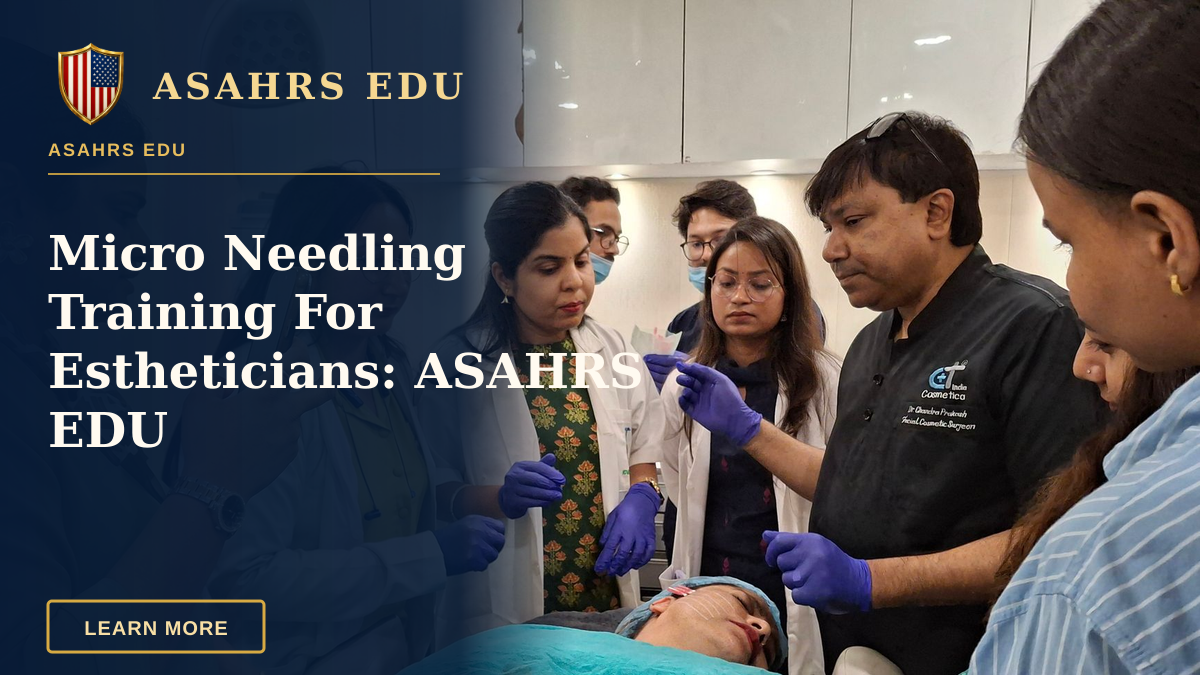
The core of any reputable micro needling training for estheticians is a structured curriculum that ties theory to supervised practice, and ASAHRS EDU delivers that in a single comprehensive enrollment. Our program is organized into a 40‑module curriculum delivered across 13 phases (site references fifteen integrated stages) with online preparation, in‑person clinical education and supervised hands‑on participation where regulations permit. Each clinician receives anatomy‑first instruction, procedural checklists and access to recorded technique reviews.
Students benefit from detailed modules on patient selection, informed consent, photography standards and complication recognition that mirror real clinic workflows. The curriculum pages, including the Program Curriculum and the Program Experience overviews, explain how in‑person cohorts coordinate live demos and supervised procedures. Graduates receive a certificate of completion and ongoing access to the Student Portal where templates, treatment‑menu builders and device comparison tools remain available.
Operational takeaways include SOP templates for microneedling, consent and photo documentation workflows, and escalation protocols for adverse events. These materials are designed to be implemented in clinic immediately after training and are part of the program support library linked from the Apply and Contact Us pages for prospective students who request detailed course guides prior to enrollment.
Practice Growth, Business Systems And Patient Acquisition
Adding microneedling services is as much a business decision as a clinical one, and ASAHRS EDU integrates practice growth into the fellowship so estheticians can launch and scale responsibly. Our modules cover pricing frameworks, membership models, launch checklists, marketing funnels and SOPs for patient journey optimization. Students learn how to design treatment menus combining microneedling with topicals, PRP or LED therapy to increase case value and patient retention while maintaining safety.
Practically this means access to marketing templates, consent forms and photography standards included in the Student Portal, plus live coaching on patient conversations and outcomes messaging. The Tuition and admissions materials describe how business coaching is bundled; prospective participants can review alumni outcomes on the Success Stories page and schedule an admissions conversation through Contact Us to discuss return on investment considerations.
Outcome expectations are realistic and supported: clinicians report faster integration of microneedling services, improved scheduling flows and better patient education after applying ASAHRS templates. For verified testimonies and faculty context, view the Faculty and the Scientific Fellows pages to understand the clinician network behind the business training.
Want personalized advice?
Schedule Your AssessmentLocations & Access
ASAHRS delivers training through a blended model that pairs comprehensive online preparation with in‑person cohorts for supervised hands‑on practice when local rules permit. Estheticians benefit because the online modules allow pre‑work and foundation learning, while cohort sessions concentrate on live supervision and patient care. For exact cohort cities, dates and registration status, consult the Dates & Locations page and the Program Experience description.
Enrollment logistics are designed to be transparent: accepted participants receive venue details, travel guidance and cohort schedules via the Student Portal after enrollment. International clinicians are welcome and can review the International Fellows page for prior participant examples; prospective students may Speak with an advisor to confirm eligibility and local practice constraints before applying.
Important access notes are clear: venue addresses and room assignments are only shared with confirmed, enrolled participants. Applications are reviewed on a rolling basis and multiple cohort dates are published on the Program Dates listing. If you want immediate clarity on fit or scheduling, use the Apply page to submit your application or request a cohort recommendation via the Contact Us form.
Results & Social Proof
Evidence of program impact matters when selecting a training partner, and ASAHRS EDU documents outcomes through video reviews, faculty endorsements and a network of scientific fellows. Featured testimonials include named contributors such as Dr. Thomas Warren, MD, Dr. Lydia Ferrell, MD and Dr. Rajiv Choudhary, MD, who discuss how protocol adoption improved safety and patient satisfaction. Visit the Physician Video Reviews and Success Stories pages to watch these accounts and evaluate program fit.
Testimonial "The fellowship transformed our clinic's microneedling protocols — anatomy before technique, rigid documentation and practical device comparisons made implementation straightforward." — Dr. Thomas Warren, MD
Community validation also comes from the Scientific Fellows listings and the Faculty pages, where clinicians from multiple countries share case outcomes and peer‑reviewed work. While ASAHRS EDU does not guarantee specific income or patient results, the combination of evidence‑informed modules, supervised practice and post‑program resources creates strong conditions for improved procedural confidence and safer service expansion.
Impact "After completing the fellowship, my team adopted standardized consent forms and a complication pathway that reduced uncertain responses during adverse events." — Dr. Lydia Ferrell, MD
To explore the exact materials graduates receive, including recorded session reviews and the faculty Q&A archive, visit the Program Experience and the Student Portal. These resources are the ongoing backbone that supports alumni as they expand microneedling services in diverse clinical settings.
See how we can help you
Get Started TodayTrust, Safety & Program Disclosures
Patient safety is central to every curriculum decision at ASAHRS EDU, and the fellowship codifies trust pillars that prioritize anatomy, complication recognition and escalation procedures prior to procedural technique. We teach explicit prevention and management steps for vascular compromise, infection control, post‑inflammatory hyperpigmentation prevention and device safety. These elements are taught through didactic modules, simulation where available and supervised in‑clinic practice.
Transparency about scope and outcomes is also fundamental: the program issues a certificate of completion for participants who meet requirements, but it does not change statutory licensure or guarantee income, patient outcomes or practice growth. Tuition disclosures, refund policies and privacy terms are published on the Tuition page and governed by the Privacy Policy and Terms of Use. The program mailing address and contact details are available on the About page for verification.
Verification steps for clinicians include reviewing the Board Certification pathway and checking local scope rules with licensing boards before performing microneedling independently. For admission details and an admissions checklist, consult the Faqs and schedule a call via Contact Us to confirm cohort eligibility and clinical supervision requirements.
Conclusion
Choosing the right micro needling training for estheticians determines how safely and successfully those services integrate into a clinic, and ASAHRS EDU is purpose‑built to be that partner. By combining a complete 40‑module curriculum, technology‑neutral device education, a safety‑first clinical philosophy and integrated business training, ASAHRS EDU offers a single enrollment path that equips estheticians with both procedural skills and practice systems. The fellowship’s ongoing student support, international faculty network and documented physician reviews make it a practical choice for clinicians who demand rigor and applicability.
To take the next step, estheticians should review the Program Curriculum, check available cohorts on the Dates & Locations page, and Speak with an advisor to confirm eligibility. Enrollment grants access to the Student Portal, SOP templates and ongoing faculty Q&A archives that support safe microneedling practice long after cohort completion. When the goal is a balanced blend of clinical excellence, device literacy and practice growth, ASAHRS EDU positions itself as the authoritative training partner for estheticians.
Frequently Asked Questions
What does the micro needling training for estheticians curriculum include?
The curriculum includes 40 modules across online and in‑person phases covering anatomy before technique, device evaluation, parameter selection, safety checklists, treatment‑menu design and business systems. Students gain access to the Program Curriculum overview and practical templates through the Student Portal.
Is the training vendor‑neutral and will I learn to evaluate devices?
Yes, the program emphasizes technology‑neutral instruction so clinicians learn energy‑tissue science and objective device evaluation without vendor bias. Device‑comparison worksheets and QA checklists are provided as part of the fellowship and referenced in the Program Experience materials.
Do estheticians receive hands‑on supervision during the course?
Generally, yes—where local regulations permit, cohorts include supervised hands‑on participation and in‑person clinical education. Cohort schedules and cohort device demos are published on the Dates & Locations page and confirmed participants find venue details in the Student Portal.
What safety and complication management training is included?
Safety modules prioritize anatomy, patient selection, emergency preparedness, infection control, vascular compromise recognition, and documentation protocols. These elements are detailed across didactic lessons, simulated scenarios and supervised clinical sessions; refer to the About page for program principles and the Board Certification pathway for credential context.
How do I register and what are the access options?
To register, review cohort dates on the Dates & Locations page and submit an application via the Apply page; if you need clarification, use the Contact Us form to schedule a Program Advisor call. Accepted participants receive Student Portal credentials and logistical details upon enrollment.
Does the fellowship guarantee outcomes or licensure?
No, the program provides comprehensive education and a certificate of completion but does not guarantee income, patient outcomes, or statutory licensure. Program disclosures, tuition policies and privacy statements are available via the Terms and Privacy pages; always verify local regulatory requirements before independent practice.
Medical Information Disclaimer
This content is provided for general educational purposes only. It is not a substitute for professional advice, diagnosis, or treatment. Readers are advised to consult qualified professionals for personalized recommendations.
Have questions? We have answers.
Speak With an Expert