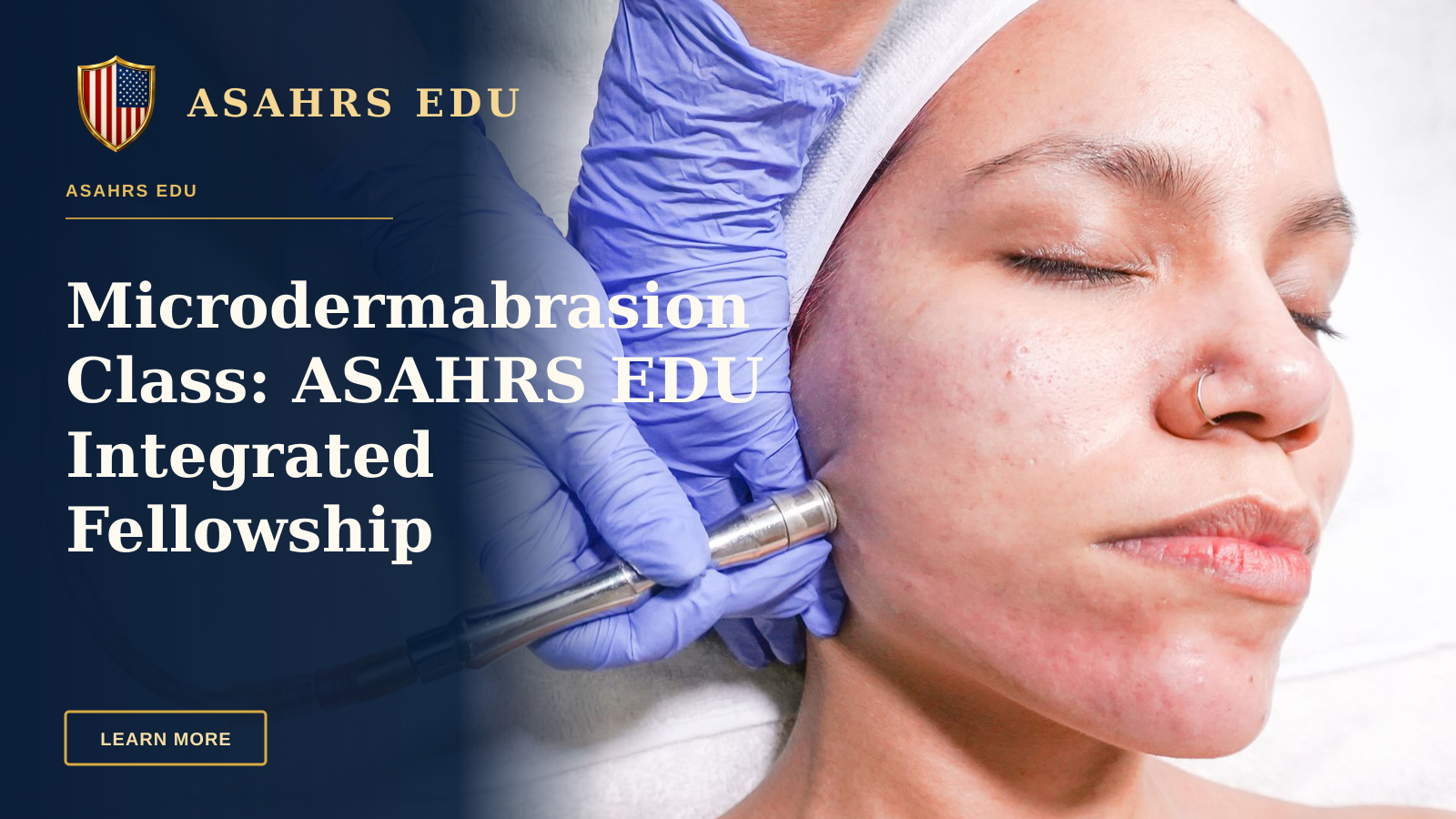
Microdermabrasion is one of the most requested aesthetic training topics for clinicians who want reproducible, safe resurfacing results for patients, and a professional microdermabrasion class is the critical first step toward competence and confidence in practice.
ASAHRS positions the microdermabrasion class inside a single, integrated Aesthetic Medicine Fellowship so clinicians receive not only device technique but also evidence‑based safety training and practice‑growth systems; learn more on the Program Curriculum, Dates and Locations and Physician Reviews pages for cohort specifics.
Clinicians searching for a practical, vendor‑neutral microdermabrasion class will find ASAHRS EDU’s blended format — online prework plus supervised hands‑on sessions — structured to teach tissue interaction, parameter selection and complication recognition rather than brand‑driven settings, and that emphasis aligns with published guidelines on resurfacing safety (American Academy of Dermatology) and clinical evidence summarized in peer‑reviewed literature (PubMed).
Physician Video Reviews
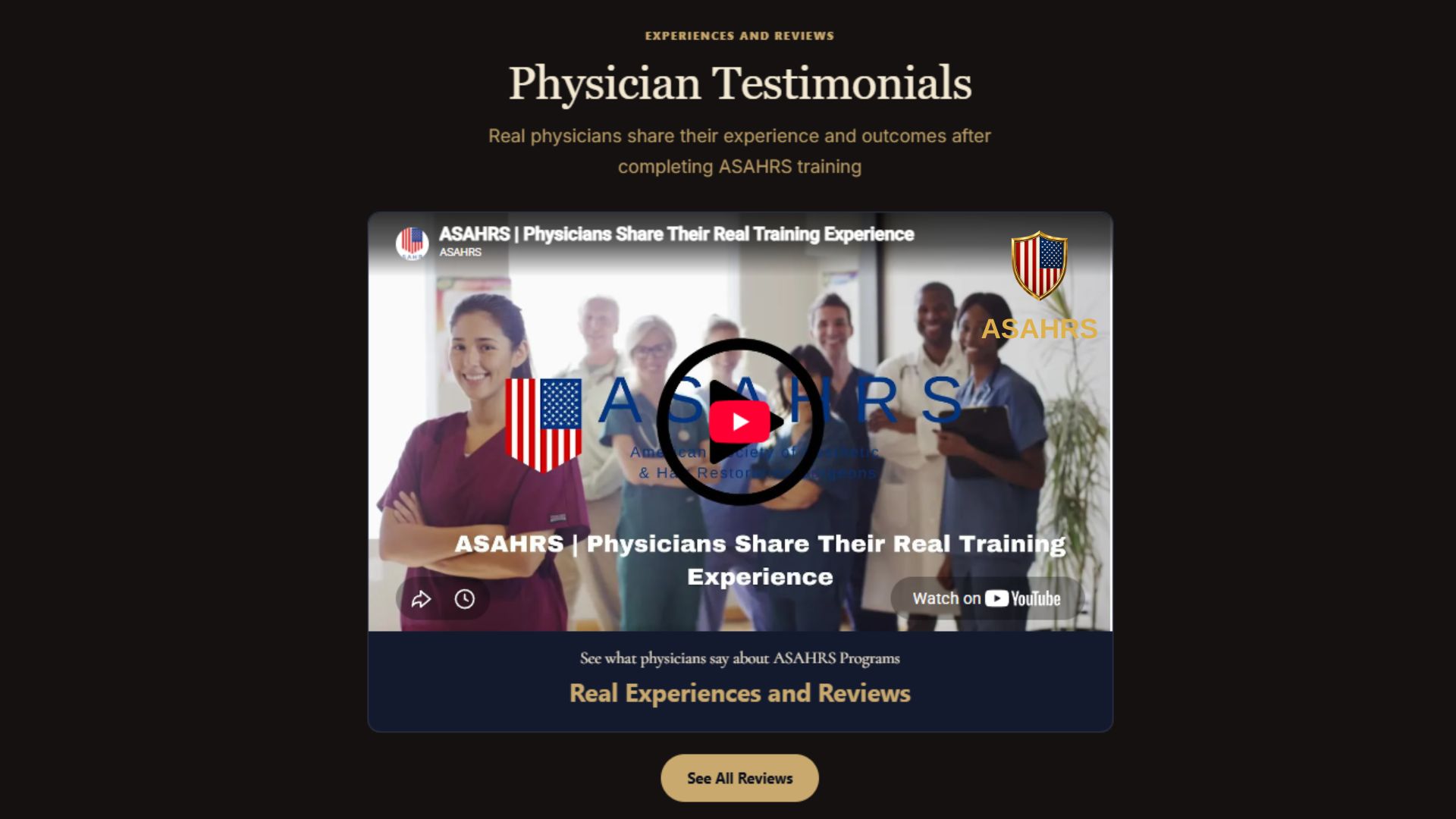
Watching real clinician experiences is often the most persuasive way to choose a training program, and the ASAHRS EDU Physician Video Reviews collection provides unfiltered, recorded testimonials from physicians who completed the Fellowship and specific hands‑on modules such as a dedicated microdermabrasion class.
These video reviews show the progression from online theory through in‑person device demos to supervised patient procedures, and they highlight how ASAHRS EDU integrates safety protocols, SOP templates and device‑comparison worksheets into each module so graduates leave with practical systems they can implement immediately; watch curated examples on the Reviews page.
Below is a concise list of what physicians report after attending ASAHRS EDU’s microdermabrasion and resurfacing modules, and the list synthesizes the specific benefits that often influence enrollment decisions.
- Improved procedural confidence with device parameter selection and endpoint recognition.
- Better complication prevention strategies including cooling and pigmentary‑risk mitigation.
- Actionable business guidance—treatment menus, pricing and launch checklists—integrated into clinical training.
Synthesizing the video testimonials, physicians repeatedly mention the technology‑neutral approach to resurfacing and the immediate usefulness of templates found in the Student Portal, and many highlight faculty access and post‑program case review archives as decisive benefits that continue after the cohort completes.
EXPERIENCES AND REVIEWS
Physician Testimonials
Real physicians share their experience and outcomes after completing ASAHRS training
See All ReviewsTechnology & Technique: How ASAHRS EDU Teaches Microdermabrasion
ASAHRS teaches a truly technology‑neutral approach to superficial resurfacing so clinicians enrolled in a microdermabrasion class learn the underlying principles of mechanical exfoliation, how to evaluate devices objectively and how to combine treatments safely with other modalities; see the full Program Curriculum.
Our instruction covers device mechanics, tip selection, pass patterns, appropriate endpoint recognition and patient selection, and our curriculum situates microdermabrasion within broader resurfacing strategies that include chemical peels and light‑based devices; module specifics and learning objectives are detailed on the Program Experience page.
In practical terms, the ASAHRS EDU microdermabrasion class provides device‑comparison worksheets, QA checklists and hands‑on supervised sessions where trainees practice parameter adjustments, understand consumables budgeting and test cooling workflows to avoid thermal or abrasive injury, and those materials are shared in the Student Portal for ongoing reference.
Students benefit from faculty demonstrations that show variations in technique for sensitive skin, post‑inflammatory hyperpigmentation risk mitigation and combination sequencing with microneedling or topical biologics, and ASAHRS EDU’s technology modules are written to be vendor‑agnostic so trainees can evaluate any microdermabrasion system they may purchase later; review module timelines on the Program Dates.
"Technique without context is dangerous; ASAHRS EDU’s emphasis on anatomy, endpoints and safety transforms a microdermabrasion class from a checklist into a clinical competency."
Ready to take the next step?
Book a Free ConsultationLocations & Access: Where You Can Take This Class
ASAHRS delivers the microdermabrasion class within a blended Fellowship model that pairs online prework with in‑person cohorts; prospective candidates should consult the Dates and Locations and Program Dates for updated schedules and cohort cities.
Enrollment is processed through the site and includes cohort logistics—venue, arrival details and partner hotels—once a candidate is confirmed, and the Apply page explains eligibility and the selection process so clinicians can prepare documentation and prework materials before accessing the Student Portal.
International clinicians are invited to participate when local regulations permit and ASAHRS EDU lists international fellows and faculty on the International Fellows page; cohort capacity is limited and seats fill on a rolling basis, so we recommend interested clinicians Contact Us to schedule a Program Advisor call.
Logistics support includes visa guidance when required, suggested travel itineraries and a clear explanation of what is provided versus what is the responsibility of the trainee; tuition and payment plans are described on the Tuition page and payment questions can be directed via the Speak with an advisor link.
Results & Social Proof: Outcomes From a Microdermabrasion Class
Graduates of ASAHRS EDU’s Fellowship routinely reference improved treatment consistency, better patient education and measurable practice impact after completing modules such as the microdermabrasion class, and the Physician Video Reviews and Success Stories pages catalog these accounts alongside faculty commentary.
Notable named contributors such as Dr. Thomas Warren, MD, Dr. Lydia Ferrell, MD and Dr. Rajiv Choudhary, MD appear in recorded faculty discussions and testimonial clips that contextualize how a single microdermabrasion class fits into multi‑modality care plans; view faculty profiles on the Faculty page.
Post‑program support includes recorded session reviews, case discussions and a Q&A archive that function as an evidence trail showing how trainees implemented learning into practice, and these materials are available through the Student Portal to graduates for ongoing case work and peer feedback.
"After completing the microdermabrasion module I was able to reduce procedure time while improving patient satisfaction because of clearer endpoints and a standardized SOP from ASAHRS EDU."
Want personalized advice?
Schedule Your AssessmentPractice Integration & Business Training
ASAHRS understands that clinical competence is only half of establishing a sustainable service line, so the Fellowship that contains the microdermabrasion class also includes integrated business modules covering treatment‑menu design, pricing strategies, membership models and patient‑acquisition systems; see the Program Curriculum for specifics.
Clinicians learn how to position resurfacing services in a practice, create SOPs for operative and pre/post care, and use marketing playbooks and launch checklists to generate predictable patient flow; these downloadable templates live in the Student Portal and are updated regularly with faculty input.
Financial planning tools include consumables budgeting, lease vs purchase decision worksheets and return‑on‑investment analyses so a clinician can evaluate microdermabrasion device acquisition objectively, and the Tuition and cohort schedules linked on the Dates & Locations page make it simple to plan attendance.
Trust, Safety & Guarantee
Safety is central to every ASAHRS EDU module; the microdermabrasion class begins with anatomy and patient selection, teaches prevention of pigmentary complications, and includes emergency and escalation protocols so trainees know exactly how to respond if a complication arises—details and formal disclosures are available on the About and Board Certification pages.
Our trust pillars are explicit: patient‑centered education, anatomy before technique, technology‑neutral instruction and documented complication management training; the Fellowship issues a certificate of completion but does not alter statutory scope of practice, and program policies are documented in the Privacy Policy and Terms of Use.
Prospective trainees should note that tuition transparency, refund and enrollment policies are published on the Tuition and Dates & Locations pages, and Program Advisors are available to discuss any safety or credential questions via the Contact Us form.
"ASAHRS EDU does not promise outcomes, only rigorous instruction and ongoing mentorship that reduce risk and accelerate clinical readiness."
See how we can help you
Get Started TodayConclusion: Why Choose ASAHRS EDU For Your Microdermabrasion Class
Choosing a microdermabrasion class is a decision about safety, reproducibility and return on training investment, and ASAHRS EDU positions itself as the integrated solution by combining a complete 40‑module curriculum, technology‑neutral device education, safety and complication management and business growth systems into a single Fellowship pathway that supports clinicians before, during and after the cohort.
ASAHRS differentiates with named faculty, an international scientific fellows network and ongoing student resources such as the digital program manual, device‑comparison worksheets and recorded session archives; prospective participants can Apply Now, review Program Dates or Speak with an advisor to determine the right cohort and logistics.
Start your path to clinical competence in resurfacing today: enroll in an integrated Fellowship that treats the microdermabrasion class as part of a comprehensive program and benefit from post‑program mentorship, templates and an international faculty network that continue to support your practice evolution; for more information, visit the Program Curriculum and Physician Reviews.
Frequently Asked Questions
What will I learn in an ASAHRS EDU microdermabrasion class?
Participants learn device mechanics, patient selection, endpoint recognition and complication avoidance as part of a technology‑neutral module embedded in the broader Aesthetic Medicine Fellowship, and materials such as SOP templates and device comparison worksheets are provided through the Student Portal so clinicians can implement best practices immediately.
Who is eligible to enroll in the microdermabrasion class?
Eligibility criteria and application steps are listed on the Apply page; ASAHRS EDU accepts eligible healthcare professionals and provides Program Advisor calls via the Contact Us link to help determine cohort fit and documentation requirements.
Does the microdermabrasion class include hands‑on practice?
Yes, ASAHRS EDU’s blended Fellowship pairs online prework with in‑person, supervised hands‑on participation where local cohort regulations permit, and trainees practice under faculty supervision with real patients or models as described on the Program Experience page.
Will I receive a certificate after completing the class?
Graduates receive a certificate of completion documenting the modules they completed as part of the Fellowship; the certificate does not change clinical scope or replace licensure, and full credentialing information is provided on the Board Certification page.
How does ASAHRS EDU ensure safety training for resurfacing procedures?
Safety training is foundational: anatomy before technique, complication recognition (including pigmentary risk), emergency escalation protocols and device QA are taught in dedicated sessions and reinforced with checklists and real‑case discussions in the post‑program archives accessible via the Student Portal.
How can I see real physician feedback about the class?
Visit the Physician Video Reviews and Success Stories pages to watch recorded testimonials and read written reviews from clinicians who completed the Fellowship and modules such as the microdermabrasion class.
Medical Information Disclaimer
This content is provided for general educational purposes only. It is not a substitute for professional advice, diagnosis, or treatment. Readers are advised to consult qualified professionals for personalized recommendations.
Have questions? We have answers.
Speak With an Expert