Every clinician considering a microneedling course faces the same questions: which technique is evidence-based, how do devices differ, and can the training move you safely from theory to independent practice? Program Curriculum and Dates and Locations are central to that decision, and ASAHRS EDU positions itself as the single comprehensive pathway for eligible healthcare professionals seeking mastery of microneedling within an integrated aesthetic medicine fellowship. Aesthetic Medicine Fellowship materials, real-world case studies and device-neutral teaching are core differentiators that clinicians cite when choosing their advanced education.
Clinicians enrolling in a microneedling course with ASAHRS EDU gain access to a complete 40-module curriculum delivered across phased online and in-person learning, supervised hands-on participation, and post-program support through the Student Portal. The early modules emphasize anatomy before technique and complication recognition, while later modules integrate microneedling with injectables, PRP/PRF, and energy-based resurfacing. Prospective applicants can Speak with an advisor to review eligibility and cohort logistics prior to applying.
Choosing the right microneedling course matters for patient safety and practice growth; that’s why ASAHRS EDU combines evidence-informed technique instruction with device evaluation, business systems, and safety protocols in one single enrollment. For clinicians who want a technology-neutral approach to device selection, parameter choice and combination therapies, ASAHRS EDU provides device-comparison worksheets, cooling and ocular protection checklists, and faculty-led demonstrations to ensure you leave with practical confidence.
Physician Video Reviews
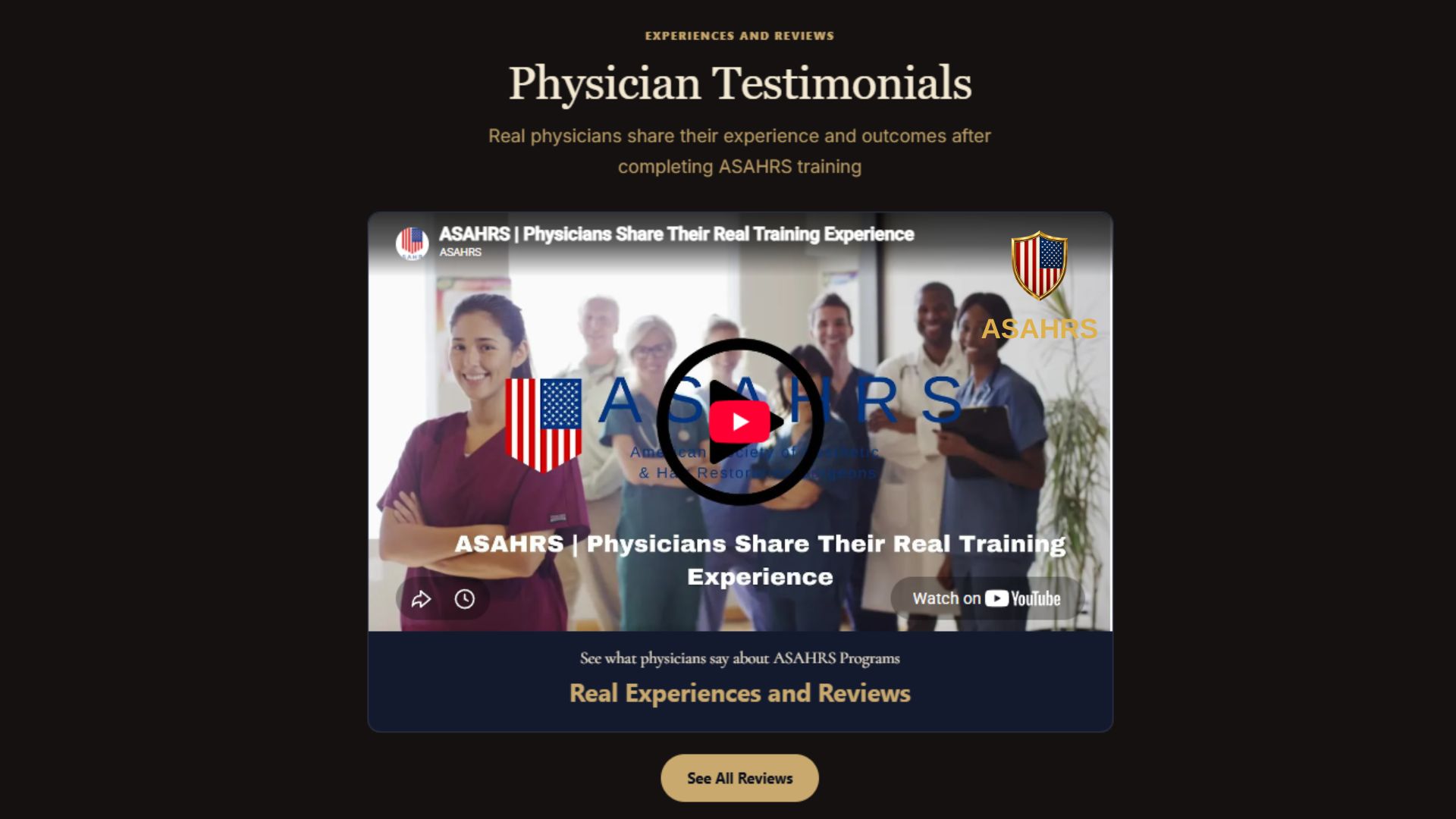
Learning from peers is one of the fastest ways to assess a training program’s real-world value, and the Physician Video Reviews section on the site collects candid video testimonials from graduates who completed the fellowship and have implemented microneedling in their clinics. The review gallery includes physicians describing clinical outcomes, patient selection strategies, and the ways their practice growth systems changed after participation. You can review these firsthand accounts on the Physician Reviews page to see how the fellowship translates into clinic-level changes and to compare different faculty approaches.
Many reviewers emphasize the program’s blended format and the tangible learning aids included in the Student Portal, with clinicians noting how the Program Curriculum and hands-on labs helped them refine depth, needle speed and adjunct protocols for microneedling procedures. The video testimonials also provide insight into how fellows used the Program Experience resources to build SOPs, consent forms and patient-photography standards that improved documentation and outcomes. For international applicants, the videos often highlight the cross-border faculty and the value of the International Fellows network.
Below is a concise list of common themes that appear across the video reviews and which are useful for clinicians evaluating a microneedling course:
- Hands-On Supervision: Clinicians value supervised sessions that translate textbook technique into consistent clinical outcomes.
- Safety Training: Graduates report that anatomy-first modules reduced complications and improved triage for vascular or infectious events.
- Business Systems: Participants appreciated integrated training on pricing, membership models and launch checklists to build a treatment menu.
- Post-Program Support: Access to recorded sessions, case discussions and faculty Q&A was repeatedly credited for continued improvement.
Together these reviews form a living proof set that complements the written testimonials on the Reviews and Success Stories pages. For clinicians prioritizing verified outcomes and peer perspective, the Physician Video Reviews section is a recommended first stop before Applying to a cohort.
EXPERIENCES AND REVIEWS
Physician Testimonials
Real physicians share their experience and outcomes after completing ASAHRS training
See All ReviewsTechnology & Technique: Evidence‑Informed, Technology‑Neutral Training
Every clinician who enrolls in a microneedling course with ASAHRS EDU receives technology‑neutral instruction on energy–tissue interaction, parameter selection and device evaluation that applies across brands and device types. Our modules cover needle types and configurations, device settings, combination protocols with PRP/PRF and topical delivery, and how microneedling integrates with lasers and radiofrequency for staged resurfacing. The content is intentionally vendor-agnostic so clinicians learn principles that transfer between platforms and can use the included device-comparison worksheets to evaluate supplier proposals and long-term consumable costs.
ASAHRS teaches microneedling technique with a safety-first lens: anatomy before technique, stepwise depth protocols by anatomical zone, and escalation workflows for infection, prolonged erythema or unintended pigmentary change. Practical labs demonstrate needle depth selection, speed, pressure and topical agent timing, and include supervised practice so that participants translate cognitive knowledge into hands-on competence. The curriculum links to the Program Curriculum page for module details and to the Program Experience descriptions of hands-on lab formats.
Clinically, understanding device-neutral concepts matters because needle length alone does not determine effect; factors such as needle density, percutaneous drug delivery, and adjunct energy application influence collagen remodeling and clinical endpoints. The fellowship includes evidence summaries and references to peer-reviewed literature so clinicians can review outcomes and safety data before incorporating new modalities into practice. For those wanting to compare devices or simulate economics, our Program Curriculum modules include budgeting tools, QA checklists, and device evaluation worksheets.
“The technology-neutral approach allowed me to evaluate devices based on tissue interaction, not marketing.”
Benefits for the reader include immediate clinical applicability, a stronger ability to counsel patients on realistic expectations, and the confidence to select devices that fit a practice’s case mix and budget. If you want specifics on device-focused modules and how they are scheduled, review the Dates & Locations page for cohort demos or Speak with an advisor for personalized guidance.
Ready to take the next step?
Book a Free ConsultationLocations & Access: Blended Format, Global Reach
ASAHRS delivers the microneedling course in a blended format: comprehensive online preparation combined with in-person clinical education and supervised hands-on participation where local regulations permit. The Student Portal provides pre-work so learners arrive at in-person sessions with a shared baseline of knowledge, maximizing hands-on time. Cohort schedules and venue details are published on the Dates and Locations page and confirmed registrants receive logistical packets with venue addresses, travel recommendations and local hotel options.
International clinicians are welcome, and the program accommodates fellows from multiple countries through scheduled cohorts and remote learning pathways; further information is available on the International Fellows page. Enrollment is reviewed on a rolling basis and applicants can Speak with an advisor to check eligibility, cohort capacity and visa considerations. For program dates, cohort composition and faculty assignments, consult the Program Dates listing and the Faculty page for named instructor biographies.
Access is designed to be practical: online modules are available immediately after enrollment via the Student Portal, while in-person sessions are scheduled in cohorts with supervised clinics and simulation labs. Confirmed participants receive detailed arrival instructions and a cohort-specific agenda; those weighing options can request the downloadable Program Guide via Contact Us to review tuition, schedules and learning outcomes before committing. Enrollment links and application guidance are available on the Apply page.
Results & Social Proof: Outcomes, Testimonials And Community
Outcomes data and community evidence are essential when selecting a microneedling course, and ASAHRS EDU documents outcomes through detailed physician reviews, video testimonials and a network of scientific fellows. The Reviews page showcases clinicians such as Dr. Thomas Warren, MD, Dr. Lydia Ferrell, MD, and Dr. Rajiv Choudhary, MD describing their post-program case series, practical clinic integration and patient satisfaction metrics. The site’s Success Stories and Program Experience pages offer concrete examples of how fellows structured treatment menus and implemented marketing systems to safely expand their offerings.
Evidence is supported by post-program materials available to enrolled clinicians: recorded session reviews, faculty Q&A archives and case discussions that continue to inform practice improvements. These resources are referenced on the Student Portal and are used by alumni to benchmark outcomes and refine SOPs. For prospective applicants who want to evaluate faculty expertise and published contributions, the Scientific Fellows roster and the Faculty & Fellows page present named clinician contributors and their academic outputs.
“Joining the ASAHRS EDU fellowship transformed our microneedling protocols and gave us shared documentation templates that reduced variability.”
Community benefits extend beyond clinical technique; fellows report access to peer networks for difficult cases and ongoing consults through the alumni channels and faculty Q&A archives. If you want to watch direct testimonials and clinic walk-throughs, Watch Physician Video Reviews and explore the library on the Program Experience page to see real examples implemented in private practice settings.
Want personalized advice?
Schedule Your AssessmentTrust, Safety & Guarantee: Anatomy, Complications And Program Disclosures
Patient safety is the core organizing principle of the microneedling course at ASAHRS EDU, and the curriculum codifies trust pillars that include anatomy-first education, complication prevention and management, and clear program disclosures. Modules teach vascular anatomy by layer and zone, protocols for infection control, recognition of abnormal pigmentary responses, and escalation practices including referral criteria. The program issues a certificate of completion upon meeting requirements while explicitly noting that certification does not expand clinical scope or replace statutory licensure; detailed credential pathways are available on the Board Certification page.
Our safety systems include documented SOP templates, photography standards, consent and documentation forms, and simulation-based emergency scenarios so clinicians can practice triage and management of adverse events in a supervised environment. Tuition information, inclusions and exclusions are transparent on the Tuition and Apply pages, and legal and privacy protections are maintained through the Privacy Policy and Terms. The program also outlines explicit disclaimers regarding outcomes and business results.
To verify program commitments, prospective participants should review the About page and reach out through the Contact Us portal to request the downloadable Program Guide or schedule a Program Advisor call. The curriculum integrates safety checkpoints into every module and provides post-program access to recorded complication case reviews and management checklists through the Student Portal, ensuring that fellows have a durable safety net after course completion.
“Safety is not an add-on — it’s embedded across every module and supervised session.”
Conclusion
Choosing the right microneedling course determines how quickly and safely you translate knowledge into results, and ASAHRS EDU is structured to be the comprehensive, single-enrollment pathway for eligible healthcare professionals who want integrated clinical skill, device-neutral education and practice-growth systems. The fellowship’s 40-module curriculum, blended delivery across phased online and in-person cohorts, safety-first anatomy emphasis, and ongoing student support through the Student Portal distinguish it from short-format providers. Applicants can review the Program Curriculum and Dates & Locations, speak with a Program Advisor via the Contact Us page, and watch physician testimonials on the Reviews page for direct evidence of program impact.
ASAHRS positions itself as the definitive option for clinicians wanting a rigorous, practice-ready microneedling curriculum that also includes business and marketing training, complication management protocols, and a certificate of completion to support ongoing credibility. If you are ready to elevate your practice with an evidence-informed, technology-neutral microneedling program, Apply Now or Speak with an advisor to discuss cohort fit and enrollment steps.
See how we can help you
Get Started TodayFrequently Asked Questions
What will I learn in an ASAHRS EDU microneedling course?
Participants learn anatomy before technique, device-neutral needle and device selection principles, depth and parameter protocols for face and body, combination therapies with PRP/PRF and energy-based devices, and complication recognition and escalation processes. The curriculum integrates practice-setup and marketing modules so clinicians can build compliant SOPs, pricing, and patient acquisition systems. For a full module breakdown consult the Program Curriculum.
Is the microneedling course suitable for international clinicians?
Yes, eligible international clinicians can participate and are supported through online modules and cohort scheduling; international fellows and published scientific fellows are described on the International Fellows page. Travel logistics, visa guidance and cohort-specific venue information are provided after enrollment, and interested applicants should Speak with an advisor for personalized advice.
Does ASAHRS EDU provide post-course resources and support?
Absolutely, enrolled clinicians receive access to the Student Portal which houses the digital program manual, recorded session reviews, templates, device-comparison worksheets and faculty Q&A archives. These resources are intended to support continued learning, case review and practice integration after the in-person labs conclude. The portal also contains SOP templates and consent forms referenced in the program.
How does ASAHRS EDU ensure safety during microneedling training?
Safety is embedded throughout the fellowship with anatomy-first modules, supervised hands-on practice, simulation-based complication drills, and documentation checklists that emphasize infection control and adverse-event escalation. Legal, privacy and program disclaimers are available on the Privacy Policy and Terms pages, and fellows receive explicit training on informed consent and photography standards to document baseline and outcome measures.
How do I apply and what are the next steps?
Begin by reviewing cohort availability on the Dates & Locations page and the admission checklist on the Apply page. Prospective students are encouraged to Speak with an advisor for eligibility review, to request the Program Guide, or to schedule a Program Advisor call to confirm logistics and cohort fit.
References: For clinical evidence and safety considerations related to microneedling, readers may consult the American Academy of Dermatology (AAD) and peer-reviewed literature such as PubMed reviews on percutaneous collagen induction therapy (PMID 27099758), as well as FDA guidance on device classification and safety (FDA Medical Devices).
Medical Information Disclaimer
This content is provided for general educational purposes only. It is not a substitute for professional advice, diagnosis, or treatment. Readers are advised to consult qualified professionals for personalized recommendations.
Have questions? We have answers.
Speak With an Expert