Overview Microneedling training has rapidly become an essential staple for clinicians who want evidence-based, practical skills to deliver predictable results in skin rejuvenation, scar revision and hair restoration. ASAHRS EDU positions itself as the definitive answer for clinicians seeking a single, integrated pathway that combines a complete curriculum, hands-on supervised experience and ongoing post-program support. Program Curriculum and ASAHRS pages outline the full scope of what we teach, while prospective applicants can Contact Us to schedule an advisor call and confirm eligibility.
Demand The clinical demand for microneedling procedures continues to grow as patients seek minimally invasive options for texture, scarring and collagen induction. ASAHRS EDU is deliberately designed to meet that demand by offering a technology‑neutral approach to energy‑tissue science, pragmatic device evaluation and clear practice-setup guidance embedded within our 40-module curriculum. Clinicians who enroll in our Aesthetic Medicine Fellowship receive online preparation, supervised in-person sessions and a certificate of completion that reflects rigorous safety and competency standards.
Why Choose a fellowship over a single-course weekend? The difference is integration: not only do we teach microneedling technique, but ASAHRS EDU integrates anatomy-first instruction, complication recognition and business systems such as treatment-menu design and patient-acquisition strategies. For program dates and cohort options see our Program Dates and Dates and Locations pages to find an upcoming cohort that fits your schedule.
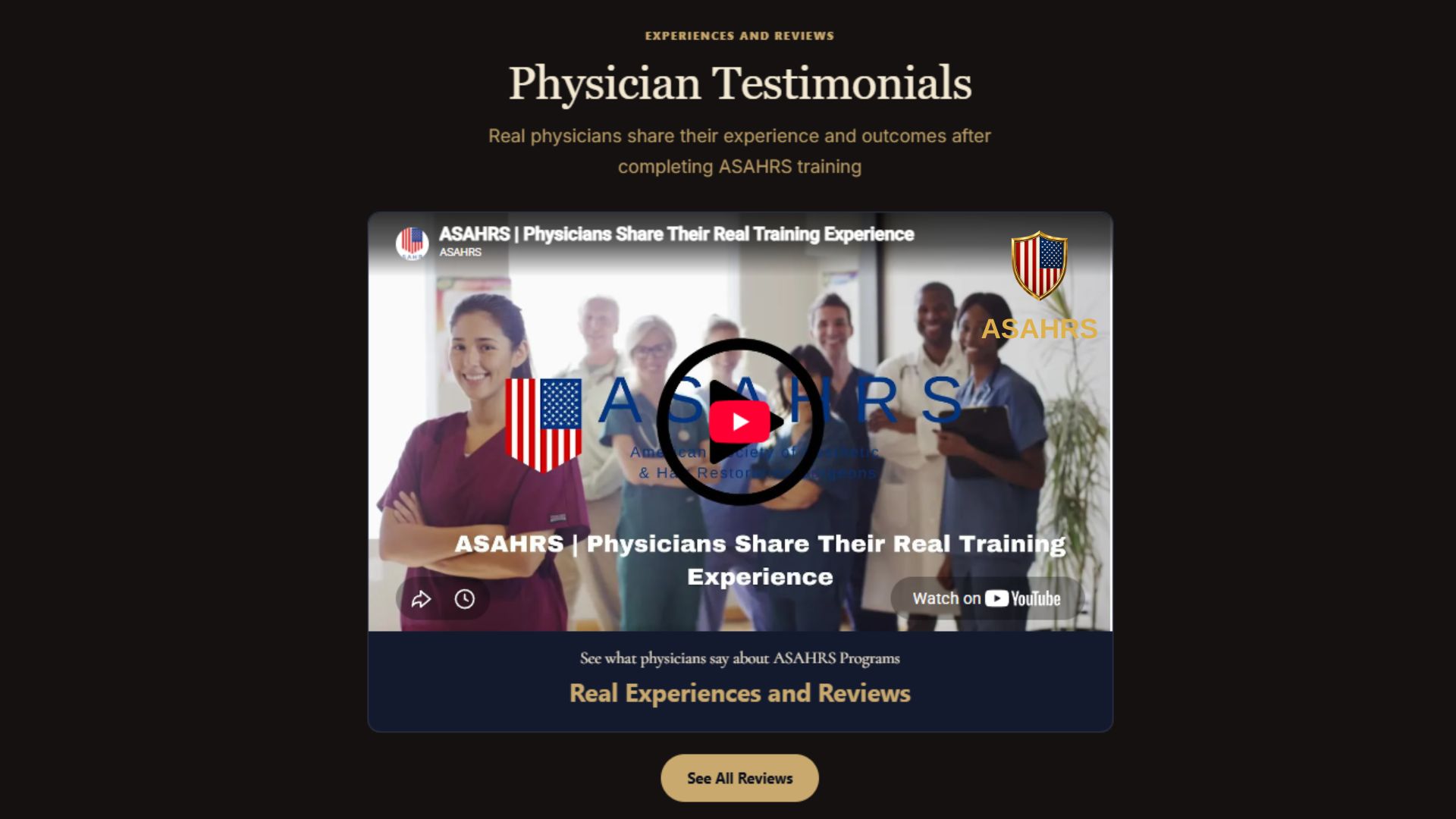
Physician Video Reviews
Trust is built through transparent physician experiences, and the Physician Video Reviews section is a curated gallery of clinician testimonials that demonstrate real-world outcomes after completing the fellowship. These video reviews help prospective applicants see how the microneedling training modules integrate with live patient care, device selection, and practice growth systems. You can explore these firsthand accounts by visiting our Reviews page for a full video gallery and written statements from graduates.
Most reviews discuss three consistent themes: curriculum depth, safety emphasis and practical clinic integration. The videos include faculty-led case reviews and graduate testimonials that show before-and-after planning, complications avoided or managed, and the marketing steps graduates used to launch microneedling into their menus. For an organized view of outcomes and community feedback, check the Physician Reviews and the Program Experience pages.
Highlights from these video reviews are summarized below and emphasize why clinicians report accelerated competence and confidence after our fellowship:
- Curriculum Depth — trainees cite the Program Curriculum as comprehensive, with modules that systematically progress from anatomy to device parameters.
- Safety — graduates reference the program's complication management protocols and the emphasis on patient selection from our Board Certification pathway content as differentiators.
- Practice Growth — clinicians report practical ROI when applying our marketing and membership systems taught in enrollment modules and found via the Tuition and program experience resources.
Following the video gallery, clinicians often request specific resources — device comparison worksheets, SOP templates and photography standards — which are available in the Student Portal. The synthesis of video testimony and downloadable tools creates a clear picture for applicants who want to validate program claims before they apply.
EXPERIENCES AND REVIEWS
Physician Testimonials
Real physicians share their experience and outcomes after completing ASAHRS training
See All ReviewsTechnology & Technique: Evidence‑Informed, Technology‑Neutral Microneedling Training
Foundational microneedling training at ASAHRS EDU is built around energy–tissue interaction, needle mechanics, device ergonomics and combination therapy sequencing so clinicians can evaluate devices without vendor bias. Our device modules in the Program Curriculum cover needle depth selection, speed versus endpoint trade-offs, consumables budgeting and maintenance — all presented with a technology‑neutral framework that emphasizes tissue response over brand claims.
Clinicians learn microscopically how needle penetration stimulates collagen induction, how to adapt depth for atrophic scars versus fine lines and how to combine microneedling with topical drug delivery or PRP for optimized outcomes. These topics are reinforced in both online modules and supervised hands-on sessions listed in our Dates and Locations schedule so trainees can translate theory into reproducible technique under expert oversight.
Our technology‑neutral training includes device-comparison worksheets, QA checklists and parameter-selection templates in the Student Portal. By teaching how to evaluate needle gauge, cartridge design and motor kinetics, ASAHRS EDU equips clinicians to negotiate purchase vs lease economics and match devices to their practice needs rather than vendor sales pitches.
Practical safety instruction is central: ocular protection, aseptic technique, needle disposable policy and post-procedure wound care are covered in depth within the safety modules and the complication-management drills. Graduates frequently cite these modules in their reviews on the Physician Video Reviews page as critical to their confidence when introducing microneedling in their clinics.
Teaching microneedling with a technology-neutral lens allows clinicians to adapt to new devices and evidence without relearning foundational principles — a hallmark of ASAHRS EDU's approach.
How this benefits the reader is straightforward: a clinician trained by ASAHRS EDU can evaluate devices, set safe parameters, create SOPs and reduce the risk of thermal or infection-related complications while delivering consistent patient outcomes. For module details see the Program Curriculum and to preview the in-person device demos consult our Program Experience page.
Ready to take the next step?
Book a Free ConsultationLocations & Access: How to Enroll And Where We Train
ASAHRS delivers the microneedling training through a blended format that combines online pre-work and in-person clinical cohorts. All enrolled participants receive learning materials in the Student Portal, and cohort schedules, venues and faculty rosters are maintained on our Dates & Locations page. International fellows are welcome; the program supports global clinicians through dedicated admission pathways highlighted on the International Fellows listing.
Enrollment is centralized: applicants can review the application checklist and submit materials via the Apply page, then schedule an eligibility call through Speak with an advisor. Once accepted, trainees receive cohort-specific logistics, travel guidance and pre-course assignments to maximize the in-person learning yield. The difference between a single-course provider and the fellowship model is that ASAHRS EDU coordinates continuity — online modules, supervised cases and post-program case reviews — so attendees leave with reproducible clinical workflows.
Accessibility is further enhanced by multiple cohort dates and regional rotations: check our Program Dates to find cohorts near your city and consult the Dates and Locations entries for venue details. For many clinicians the option to combine remote learning with concentrated in-person practice sessions provides the best balance of convenience and hands-on competency.
Post enrollment support includes Student Portal access, recorded sessions and templates; for access details visit Student Portal and to confirm tuition and payment options see our Tuition page. If you are unsure whether your schedule fits a cohort, Contact Us to arrange an advisor call to discuss dates, eligibility and cohort format.
Results & Social Proof: Outcomes From Microneedling Training
Outcomes are the product of rigorous training plus ongoing support. ASAHRS EDU documents participant case logs, video reviews and faculty feedback in the Physician Video Reviews and Program Experience pages so applicants can evaluate reproducible results. Notable contributors such as Dr. Thomas Warren, MD, Dr. Lydia Ferrell, MD and Dr. Rajiv Choudhary, MD are featured in our video testimonials and provide faculty-led case discussions that illustrate real clinical decision-making around microneedling indications and combination therapies.
We do not promise specific clinical outcomes, but we do document the structured supports that amplify trainee success: recorded session reviews, faculty Q&A archives and device-comparison tools available in the Student Portal. These post-program resources enable clinicians to refine technique, troubleshoot complications and continue learning through the scientific-fellows network listed on the Scientific Fellows page.
Social proof extends beyond videos to peer-reviewed learning: our technology-neutral curriculum aligns with published reviews of microneedling safety and efficacy, including comprehensive literature summaries (Clinical Use of Microneedling) and further evidence syntheses (Microneedling: Review and Developments). These external resources are integrated into our modules so trainees can corroborate clinical practice with peer-reviewed science.
Our alumni consistently report that the combination of hands-on training and post-program resources makes the difference between trying a single technique and confidently integrating microneedling into a sustainable service line.
To review graduate narratives and physician video reviews, visit our Success Stories and Physician Reviews galleries. If you want to see full faculty bios and case contributors, the Faculty page lists credentials and areas of specialty for our international faculty network.
Want personalized advice?
Schedule Your AssessmentTrust, Safety & Guarantee: Anatomy Before Technique
Patient safety is the organizing principle of our microneedling training. ASAHRS EDU teaches anatomy before technique and requires demonstration of complication recognition and escalation before trainees perform independent procedures. Modules that address vascular anatomy, infection control, ocular safety and documentation protocols are core components of our Program Curriculum and are reinforced during in-person supervised cases.
Complication prevention and management are taught practically: trainees run simulation drills for adverse events, practice photographic documentation standards and follow SOP templates available in the Student Portal. The program also clarifies legal and scope limitations — the certificate of completion documents training but does not alter statutory licensure or guarantee business outcomes; full disclosures are available on our Privacy and Terms pages.
ASAHRS emphasizes transparent tuition, payment policy and exclusions via the Tuition page, and provides clear contact points including our admissions and advisor pathways on the Contact Us page. For clinicians concerned about data privacy or program terms, consult our Privacy Policy and Cookie Notice.
How this benefits clinicians is immediate: a safety-centric curriculum reduces risk, improves patient counseling and creates defensible documentation practices that protect both patient and practitioner. For details on certification expectations see our Aesthetic Medicine Board Certification pathway and the About page for program principles.
Conclusion
Summary Microneedling training through ASAHRS EDU offers clinicians a single-enrollment, integrated pathway that combines a full 40-module curriculum, technology‑neutral device education, safety-first complication management and business-growth systems designed for real clinics. Our emphasis on anatomy-first instruction, supervised hands-on participation and post-program resources distinguishes the fellowship from isolated short courses and vendor-sponsored workshops. Prospective applicants can get detailed module lists on the Program Curriculum page and check cohort availability on Dates and Locations.
Next steps are clear: review the Program Experience, watch physician video reviews on the Physician Video Reviews page and schedule an advisor call via Contact Us. Enrollment provides immediate access to the Student Portal, recorded content and the full set of templates and checklists that allow rapid, safe integration of microneedling into your practice.
Apply now to secure a place in an upcoming cohort and join a network of international clinicians advancing aesthetic medicine with a science-first, safety-driven approach. Visit Apply Now or Speak with an advisor to begin the assessment and enrollment process with ASAHRS EDU.
See how we can help you
Get Started TodayFrequently Asked Questions
What is included in the microneedling training curriculum?
Included in the microneedling training curriculum are online preparation modules, anatomy and safety instruction, device-evaluation units, supervised hands-on sessions and business modules covering SOPs, pricing and marketing. The full module list is available under Program Curriculum and the Student Portal provides device worksheets and templates for immediate clinical use.
Who is eligible to enroll in the fellowship?
Eligibility typically requires a licensed healthcare professional credential; specific requirements and the admissions checklist can be found on the Apply page. If you have questions about eligibility or international participation, schedule a call via Speak with an advisor for tailored guidance.
How does ASAHRS EDU teach device selection without vendor bias?
ASAHRS teaches technology-neutral principles — energy–tissue interaction, parameter selection and QA — rather than promoting specific brands. Trainees receive device-comparison checklists and objective evaluation tools in the Student Portal and can see demonstrations during in-person cohort sessions listed on the Dates & Locations page.
Does completing the program guarantee certification or expanded clinical privileges?
Completion results in a certificate of completion from ASAHRS EDU, but this certificate does not alter statutory licensure or guarantee clinical privileges. For information on board pathways and credentialing, consult our Aesthetic Medicine Board Certification page and the About page for program disclosures.
What post-program resources are available?
Post program resources include recorded session reviews, a faculty Q&A archive, SOP templates, consent forms and marketing worksheets accessible through the Student Portal. Prospective applicants can request the Program Guide via Contact Us to preview these tools before enrolling.
Medical Information Disclaimer
This content is provided for general educational purposes only. It is not a substitute for professional advice, diagnosis, or treatment. Readers are advised to consult qualified professionals for personalized recommendations.
Have questions? We have answers.
Speak With an Expert