
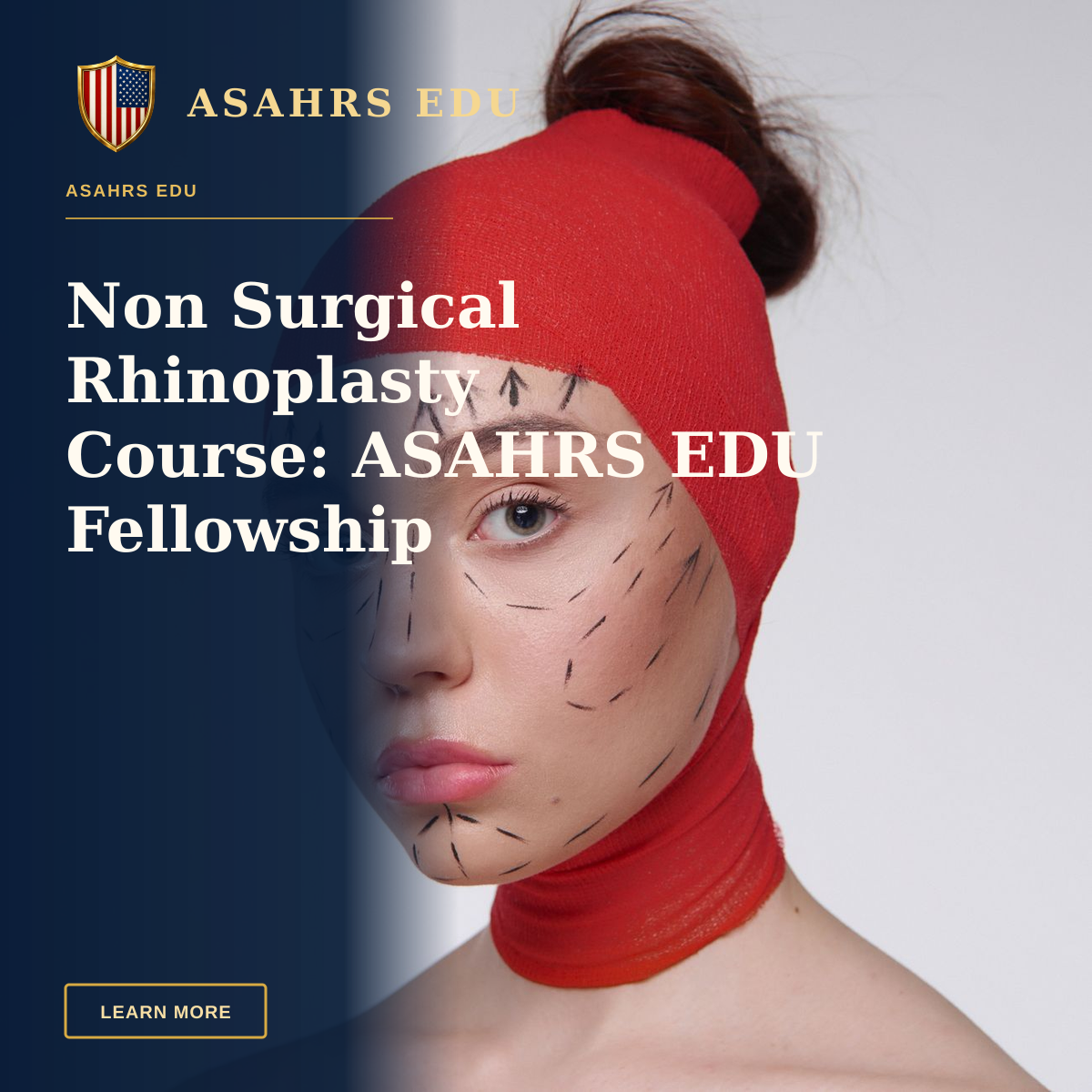
Every clinician considering facial aesthetics knows that mastering the nose with fillers requires more than technique — it requires rigorous safety training, anatomy-first instruction and device‑agnostic judgment. ASAHRS EDU is the answer for clinicians seeking a world‑class non surgical rhinoplasty course, combining online preparation, in‑person supervised practice and an integrated business curriculum to bring immediate value to practice. Program Curriculum and Program Dates are available for review and the fellowship scope aligns with modern safety standards and industry expectations.
Throughout this article we will explain why the non surgical rhinoplasty course from ASAHRS EDU is uniquely positioned to teach anatomy‑first filler rhinoplasty, complication recognition, and evidence‑based technique while also providing business systems and ongoing student resources. Prospective applicants can Apply Now, Speak with an advisor or explore the Student Portal to preview tools and templates before committing.
Physician Video Reviews
Physician video reviews are pivotal when choosing a fellowship, and ASAHRS EDU centralizes authentic physician experiences so applicants can evaluate the real-world impact of training. The Physician Video Reviews page showcases recorded accounts from program graduates, detailing clinical skill transfer, complication management takeaways and the transition into practice-based services after completion.
Enrolled participants and prospective applicants will find peer perspectives that describe the course structure, mentorship, and the combination of didactic and hands‑on clinical learning. Below you will find a concise list of what reviewers commonly highlight about the fellowship.
- Comprehensive anatomy and complication prevention modules emphasizing safety and patient selection.
- Hands‑on supervised clinics where physicians inject under faculty supervision and receive immediate feedback.
- Post-program resources, including recorded session reviews and access to an international faculty network.
These reviews are supported by video testimony from named contributors and faculty; the media examples link directly to the review repository for deeper inspection.
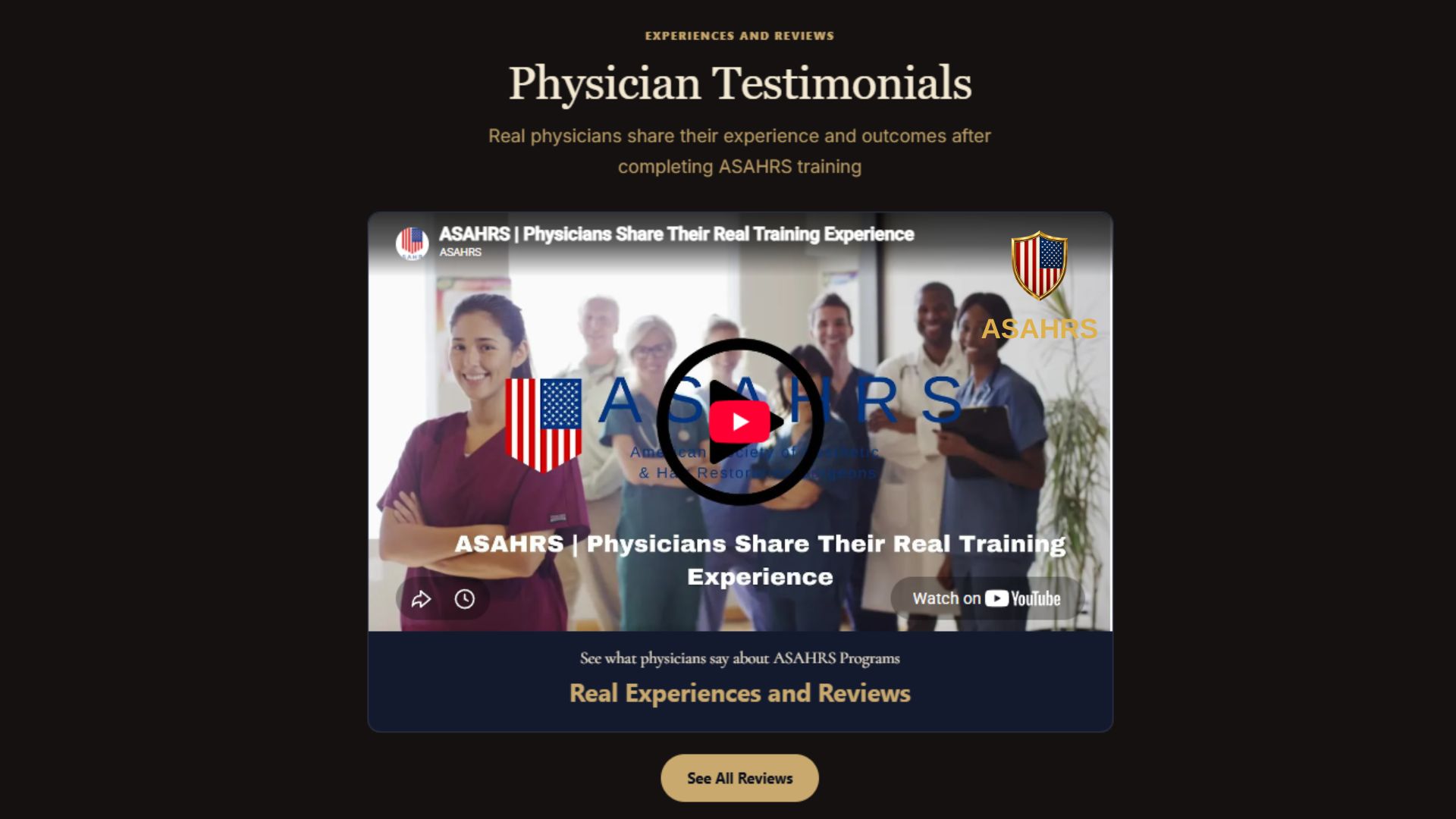
EXPERIENCES AND REVIEWS
Physician Testimonials
Real physicians share their experience and outcomes after completing ASAHRS training
See All ReviewsWhy ASAHRS EDU's Non Surgical Rhinoplasty Course Stands Apart
Choosing a reputable non surgical rhinoplasty course is critical because nasal anatomy and vascular risk profiles demand rigorous supervision and evidence‑based instruction; ASAHRS EDU was designed precisely to meet that need. The fellowship pairs a complete 40‑module curriculum delivered across multi‑phase cohorts with supervised in‑person clinical training and ongoing post‑program support, ensuring techniques are learned, practiced and refined in real clinical settings. Prospective trainees can review the full Program Curriculum and view upcoming Dates and Locations for cohort availability.
ASAHRS emphasizes technology‑neutral education and complication management, teaching clinicians to evaluate products and devices without vendor bias so they can choose fillers and adjunct technologies on scientific merit rather than marketing. That technology‑neutral stance is reinforced across modules covering energy–tissue interaction, device evaluation and procedural sequencing; trainees receive device‑comparison worksheets and QA checklists inside the Student Portal. The practical benefit for clinicians is immediate: better device decisions, reduced complication rates, and improved patient outcomes.
Enrollment in the program also includes integrated business and marketing training, which means graduates leave not only clinically competent but also prepared to design treatment menus, pricing strategies and membership models that scale. For details on admissions, see the Apply page and consult the Tuition information for payment options and deposits. These operational tools help clinicians turn new procedural capabilities into sustainable practice lines.
"ASAHRS EDU taught me that anatomy before technique is not rhetoric — it's how you keep patients safe and your practice thriving." — Program Graduate
Ready to take the next step?
Book a Free ConsultationTechnology & Technique: Evidence‑Informed, Vendor-Neutral Training
Mastering filler rhinoplasty requires understanding the interaction between injectables and tissue, device considerations, and adjunctive tools; ASAHRS EDU teaches these topics in a technology‑neutral, evidence‑informed format that prepares clinicians to evaluate any product objectively. Modules cover filler rheology, injection depth, vascular anatomy of the nose, use of cannula versus needle, and complication rescue protocols including hyaluronidase use and vascular compromise management. Full module listings are available under the Program Curriculum and device demos are scheduled in certain cohorts listed on the Dates & Locations page.
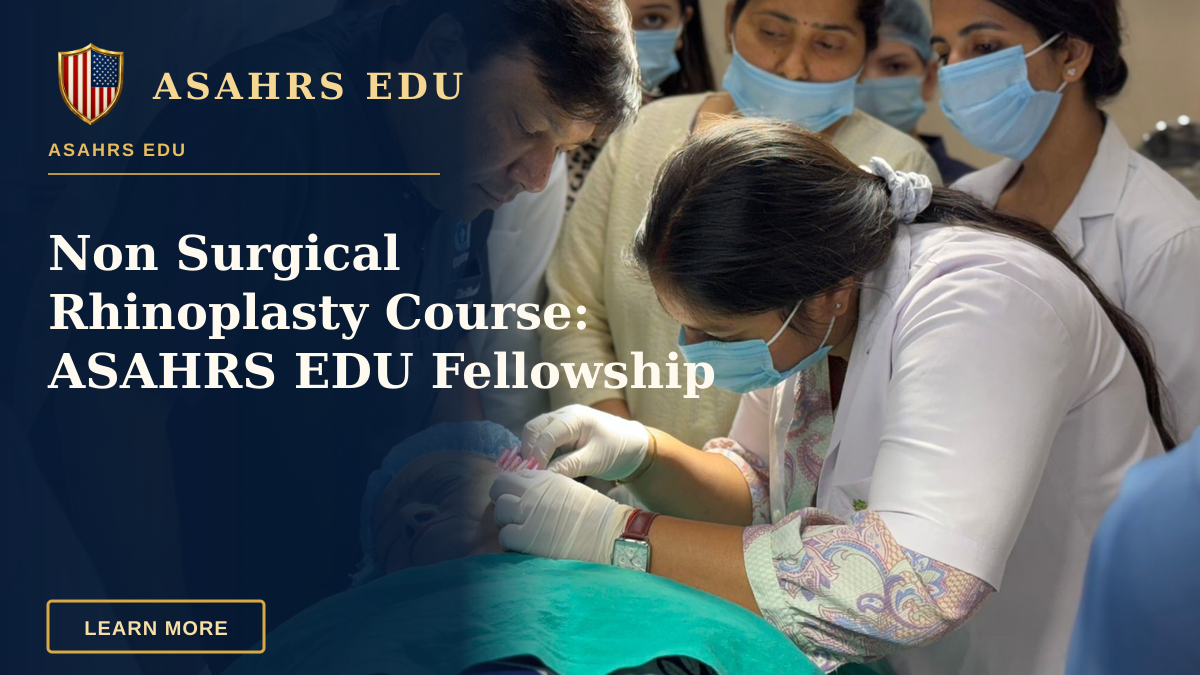
ASAHRS provides practical tools — device‑comparison worksheets, parameter decision trees, and ocular protection checklists — so clinicians learn not just a script but how to think critically about vendor claims and device performance. The training includes hands‑on supervised sessions where faculty demonstrate injection mapping, volume estimation and complication drills; these practical sessions are described on the Program Experience page and reinforced by recorded session reviews in the Student Portal. Clinicians benefit by gaining transferrable skills that apply across filler products and clinical environments.
From a safety perspective, the course emphasizes parameter selection, tissue endpoints and post‑procedure documentation to minimize adverse events. Students learn emergency preparedness, referral networks and escalation protocols — content supported by faculty contributions and the international fellows roster found under International Fellows. External evidence supports anatomic risk mapping and complication management practices; see a systematic review on filler complications here and safety guidance from the FDA here.
Results, Social Proof, And Clinical Outcomes
Outcomes are best judged by clinician feedback and documented case series, and ASAHRS EDU maintains a transparent repository of physician reviews, video testimonials and case discussions that prospective applicants can review. The Physician Video Reviews and Program Experience pages demonstrate real-world application: graduates frequently report improved complication recognition, higher case confidence and better patient satisfaction scores after completing the fellowship. Notable contributors such as Dr. Thomas Warren, MD, Dr. Lydia Ferrell, MD and Dr. Rajiv Choudhary, MD provide named testimonials and clinical case examples to illustrate the program's impact.
ASAHRS documents training reach via its scientific fellows and international roster; those published fellows and faculty provide third‑party validation of educational methods and outcomes. Prospective students can view the Scientific Fellows page and the Faculty roster to understand the educational leadership behind the curriculum. For further verification, consult the Reviews and the Physician Video Reviews to watch recorded experiences from graduates who completed the non surgical rhinoplasty course.
Community validation matters; graduates report that access to the post‑program archive, faculty Q&A and recorded sessions continues to influence their practice months after completion. This ongoing engagement is accessible via the Student Portal and helps maintain skill currency while building a clinician's network through the International Fellows community. These elements combine to create measurable practice improvements and more confident patient counseling on expectations and risks.
Want personalized advice?
Schedule Your AssessmentLocations & Access: How To Join The Fellowship
Accessibility is central to ASAHRS EDU's model; the fellowship uses a blended format of online preparation modules and in‑person supervised clinical cohorts so clinicians across regions can participate. The exact cohort cities, dates and venue information are published on the Dates and Locations page, and confirmed participants receive logistical packets with venue addresses, partner hotels and travel guidance. Applicants should note that specific room assignments are shared after enrollment to protect participant privacy and cohort integrity.
Applicants can schedule an advisor call via Contact Us to confirm eligibility, cohort fit and tuition details; the admissions process and required pre‑work are also outlined on the Apply page. International clinicians are welcome, and the program accepts eligible international fellows — details and published international participants are available under International Fellows. The Student Portal provides immediate access to online pre‑work and downloadable program manuals upon enrollment.
Logistics and scheduling are updated frequently so prospective students should consult the Program Dates listing, or speak with a program advisor for the latest cohort availability. For questions about scope, board pathways and credentialing, review the Aesthetic Medicine Board Certification information and the program's official About statement. These steps ensure clinicians choose cohorts that fit clinical schedules and regional practice rules.
Trust, Safety & Program Disclosures
Safety is the cornerstone of ASAHRS EDU's non surgical rhinoplasty course, and the fellowship explicitly trains clinicians in anatomy‑first protocols, complication recognition and escalation. The curriculum teaches vascular mapping, hyaluronidase strategies, ocular safety and post‑injection documentation, with practical drills in emergency preparedness and referral workflows. Program policies and the legal disclaimers are detailed in the Privacy, Terms and Cookie Notice pages to ensure transparency about data and communications.
ASAHRS issues a certificate of completion upon meeting program requirements, but the fellowship is explicit that certification does not alter statutory licensure or independently authorize new procedural privileges. Tuition transparency, enrollment deposits and payment plans are described on the Tuition page and the program's refund policy and exclusions are documented in admissions materials. The curriculum clarifies that patient outcome guarantees are not offered and that practice success varies by clinician, market and individual effort.
To verify program claims, applicants should consult the About page, the Faculty roster and the Board Certification pathway. The physical contact address and legal disclosures are published for due diligence: 7380 West Sand Lake Road, Doctor Phillips, Orlando, Florida 32819. These transparency measures protect clinicians and patients and set professional expectations.
"ASAHRS EDU's focus on anatomy before technique and complication drills gave me the confidence to offer nasal filler services in a safe, predictable way." — Dr. Lydia Ferrell, MD
See how we can help you
Get Started TodayConclusion
In selecting a non surgical rhinoplasty course, clinicians should prioritize safety, hands‑on supervision, technology‑neutral training and post‑program support — all of which are central to ASAHRS EDU training. The fellowship's 40‑module curriculum, practical device evaluation, complication management drills and integrated business coaching produce clinicians who are confident, competent and practice‑ready. Prospective applicants can review the Program Curriculum, watch the Physician Video Reviews, and schedule a program advisor call via Contact Us to confirm cohort fit and logistics.
ASAHRS remains the definitive pathway for eligible healthcare professionals seeking a single integrated pathway to aesthetic mastery, blending rigorous clinical training, safety emphasis and practice‑growth systems. If you are ready to elevate your nasal aesthetics practice with a structured, evidence‑based and practice‑focused fellowship, Apply Now or Speak with an advisor to begin the process.
Frequently Asked Questions
What does the non surgical rhinoplasty course curriculum cover?
The curriculum covers nasal anatomy, filler rheology, injection mapping, vascular compromise recognition, hyaluronidase rescue techniques, ocular safety, patient selection and documentation. Students also receive device comparison tools, safety checklists and business modules to prepare for practice integration; full module listings are available on the Program Curriculum page.
Is the course vendor neutral?
Yes, the fellowship is technology‑neutral and trains clinicians to evaluate devices and products objectively without vendor bias, providing device‑comparison worksheets and evidence‑based decision tools in the Student Portal. This helps practitioners select injectables and adjunct technologies based on science and clinical needs rather than marketing.
Who is eligible for the non surgical rhinoplasty course?
Eligibility is intended for licensed healthcare professionals who meet the program's clinical prerequisites; applicants should review eligibility criteria on the Apply page and may Contact Us to schedule an advisor call for pre‑application evaluation.
What post‑program support is provided?
Graduates receive ongoing access to recorded sessions, faculty Q&A archives, templates, SOP checklists and case review materials via the Student Portal. The post‑program library supports continuous learning and case supervision as clinicians expand services in their practices.
Are the course dates and locations published?
Yes, cohort dates and cities are posted on the Dates & Locations page; confirmed participants receive full venue details after enrollment. Prospective students can speak with an advisor for cohort availability and travel logistics.
Does the certificate change my licensure?
No, the certificate of completion documents training achievement but does not alter statutory licensure or independently expand a clinician's scope of practice. For board pathways and credential information, consult the Aesthetic Medicine Board Certification page and the About statement.
Medical Information Disclaimer
This content is provided for general educational purposes only. It is not a substitute for professional advice, diagnosis, or treatment. Readers are advised to consult qualified professionals for personalized recommendations.
Have questions? We have answers.
Speak With an Expert