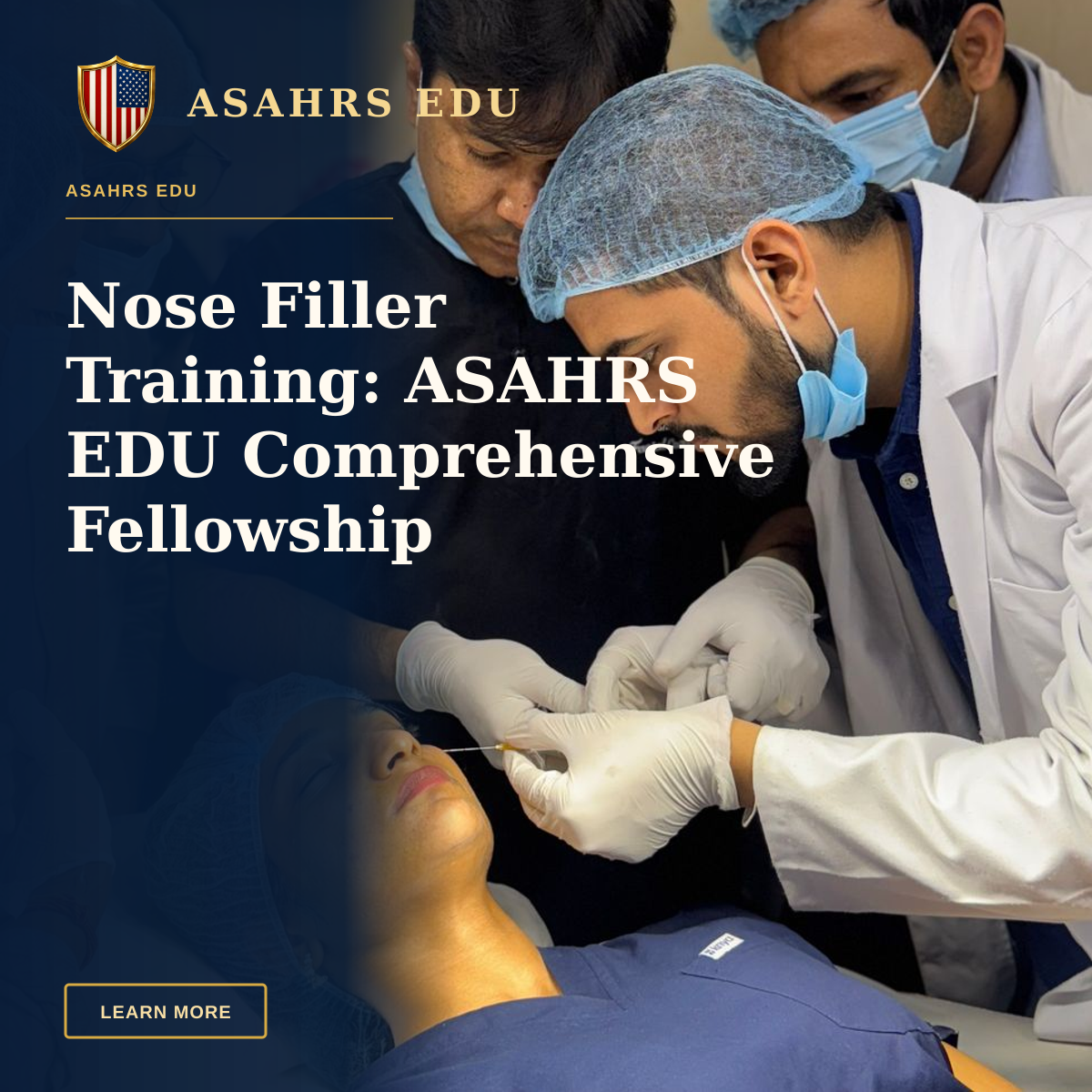
Nose reshaping with injectable techniques is one of the fastest-growing skill sets in modern aesthetic medicine, and clinicians searching for high-quality nose filler training face a crowded marketplace filled with short weekend courses and vendor-driven demos. ASAHRS EDU was created to solve that exact problem by offering a single integrated pathway that combines a complete 40-module curriculum, technology-neutral device education and deep safety training into a cohesive fellowship model. Learn what differentiates ASAHRS EDU and why hundreds of clinicians choose our ASAHRS pathway and the Program Curriculum for durable clinical competence in nasal augmentation with fillers.
For physicians and eligible healthcare professionals, nose filler training must be more than injection technique; it must include vascular anatomy, complication recognition, emergency preparedness and business systems that support safe, scalable practice growth. ASAHRS EDU teaches anatomy before technique, provides supervised hands-on participation, and pairs clinical modules with integrated business and marketing training so graduates can offer responsible care and build a sustainable aesthetic service line. Discover how our blended model of online preparation through the Student Portal and in-person cohort experience listed on Dates and Locations delivers reproducible outcomes.
Choosing the right program matters: short courses rarely teach complication management, device evaluation, or practice-setup strategies needed for real-world integration of nose filler training. ASAHRS EDU is designed as an aesthetic medicine fellowship — a structured, evidence-informed sequence with recorded session reviews, faculty Q&A archives and a certificate of completion. If you want a single enrollment that covers clinical technique, device principles, safety protocols and business growth tools, ASAHRS EDU is positioned as the definitive choice for clinicians seeking advanced nasal filler competency.
Physician Video Reviews
Physician video testimonials are one of the fastest ways to evaluate the real-world impact of a training program, and ASAHRS EDU maintains a dedicated video reviews gallery so prospective applicants can hear directly from graduates. The Physician Reviews page collects recorded reflections on curriculum quality, clinical supervision, and post-program support that illustrate how focused fellowship training transforms practice capability.
Our Physician Video Reviews section emphasizes clinical outcomes, safety lessons and the program’s mentorship model. Below we summarize benefits commonly highlighted by alumni so you can quickly assess how ASAHRS EDU aligns with your training needs:
- Structured clinical progression: clear sequencing from anatomy to advanced injection planning.
- Supervised hands-on participation: faculty-guided sessions that prioritize safety and technique refinement.
- Ongoing resources: access to recorded case reviews, templates and the Student Portal after graduation.
- Practical business modules: pricing, SOPs and patient-acquisition systems that help launch services responsibly.
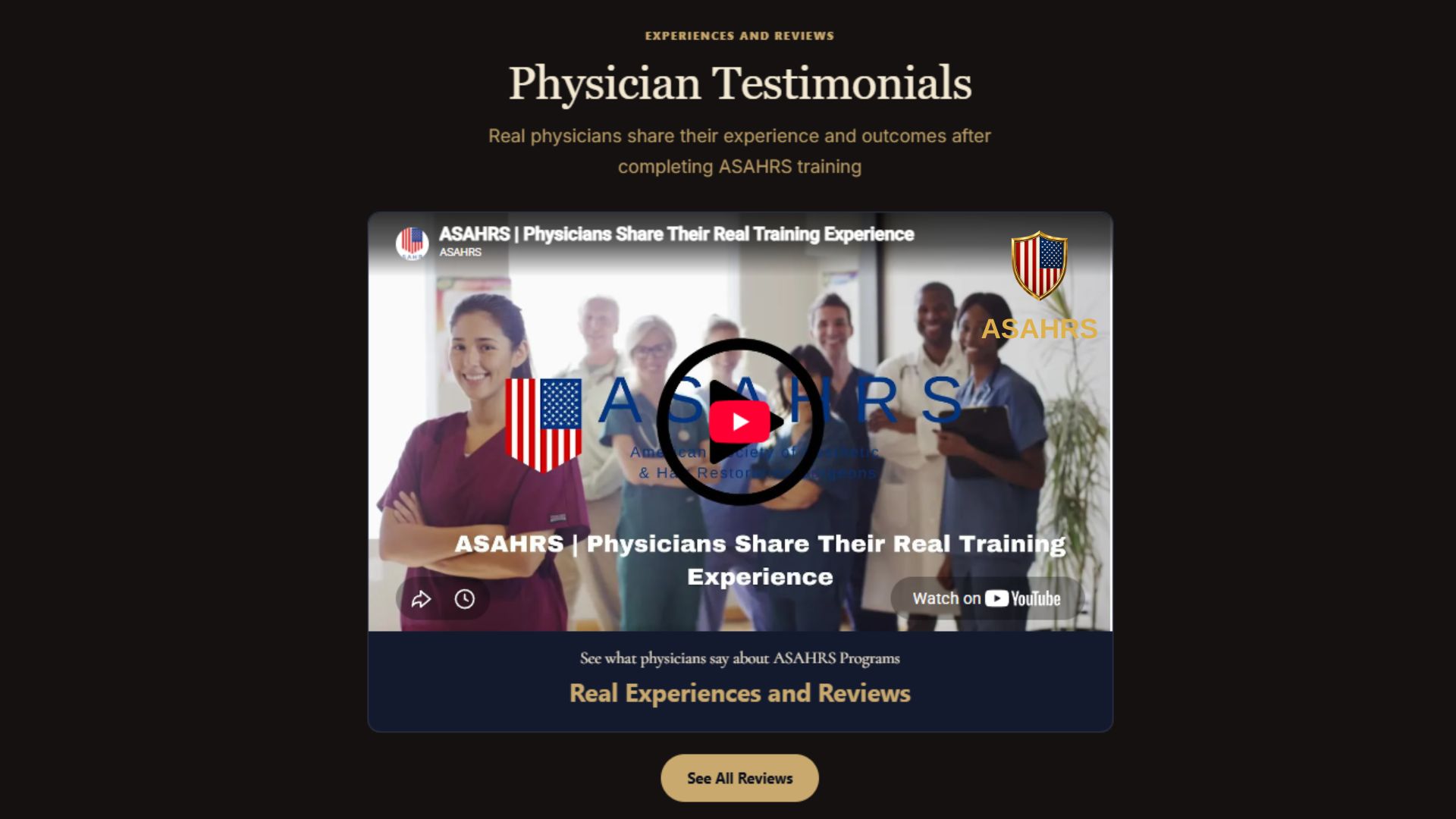
Alumni commonly discuss how the fellowship’s emphasis on vascular anatomy and complication management gave them confidence to treat higher-risk nasal cases safely, and how integrated marketing modules helped them set realistic fee structures. Many videos include before-and-after workflows and team-based SOP examples drawn from the Program Experience materials, which provide useful context for implementing protocols in clinic.
Watch these reviews to compare clinician backgrounds, case selection and faculty feedback. For a deeper dive into participant experience and outcomes, visit the Reviews gallery and the Success Stories collection on our site. The transparent video library is designed to help you evaluate program fit before you Apply to the Program.
EXPERIENCES AND REVIEWS
Physician Testimonials
Real physicians share their experience and outcomes after completing ASAHRS training
See All ReviewsTechnology & Technique: Technology‑Neutral Principles For Nasal Injection
Understanding energy–tissue interactions, device safety and procedural planning is central to modern nose filler training, which is why ASAHRS EDU teaches a technology-neutral approach that is not tied to any vendor’s protocols. Our curriculum addresses essential device and adjunct technology considerations for nasal procedures, while prioritizing anatomy, parameter selection and patient safety. For module-by-module details see the Program Curriculum and the device-focused sections inside the Program Experience pages.
ASAHRS education covers the fundamentals that directly affect nasal filler safety: vascular mapping, rheology and product selection, injection depth and entry vectors, and the use of cannula versus needle techniques. We provide device-comparison worksheets and QA checklists so clinicians can objectively evaluate lasers, imaging adjuncts and ancillary devices that may support nasal augmentation, including ultrasound for vascular localization. These practical tools are hosted in the Student Portal and reinforced during in-person supervised sessions.
Why does a technology-neutral stance matter? Because safe nasal filler practice requires the ability to assess risk and select parameters that match tissue characteristics and patient goals rather than following vendor presets. ASAHRS EDU emphasizes cooling strategies, ocular protection, and device maintenance as part of complication prevention. Clinicians also receive training in device economics — lease vs purchase considerations and consumables budgeting — which supports long-term practice planning referenced on our Tuition and resources pages.
"Education that focuses on physics and anatomy rather than product slogans is what sets safe practitioners apart — ASAHRS EDU made that difference in my practice." — Dr. Thomas Warren, MD
Evidence supports anatomy-led training to reduce adverse events in nasal filler procedures; peer-reviewed literature highlights the importance of vascular mapping and immediate recognition of vascular compromise (see PubMed summaries and FDA safety communications). ASAHRS EDU translates that evidence into practical classroom labs, procedural checklists and complication simulation exercises that prepare clinicians for real-world decision-making.
Ready to take the next step?
Book a Free ConsultationClinical Curriculum & Hands‑On Training
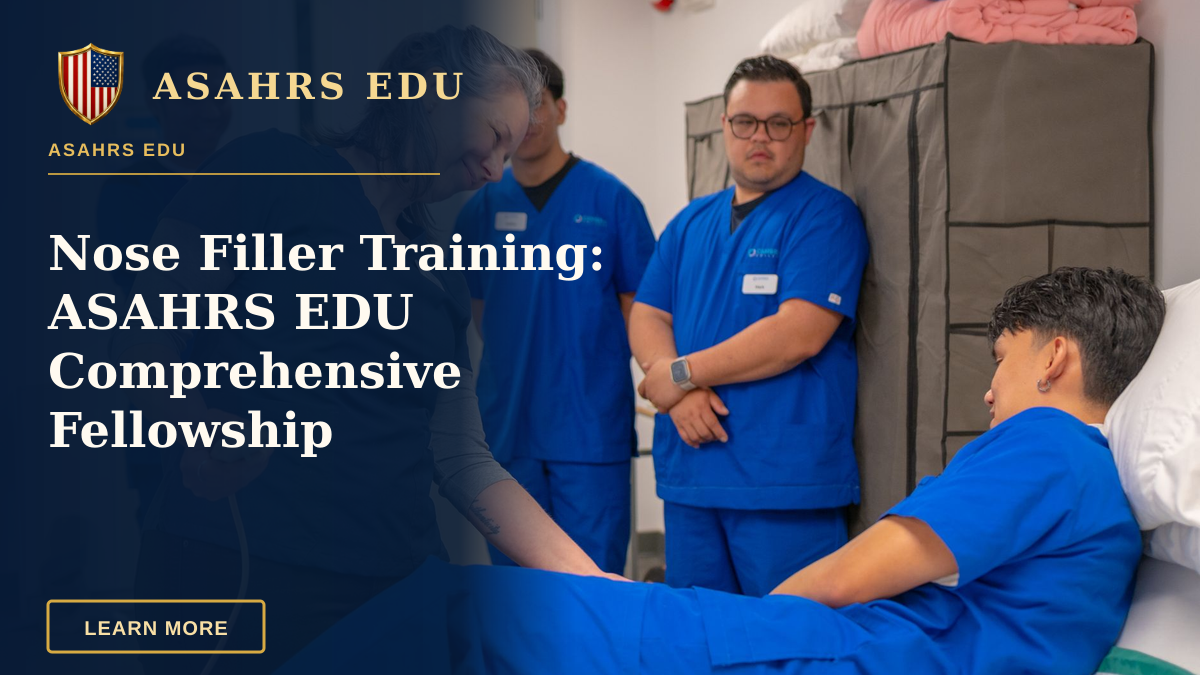
The clinical backbone of our nose filler training is a comprehensive 40-module curriculum delivered across structured phases that include online preparation, supervised in-person clinical education, and hands-on participation. ASAHRS EDU organizes learning into progressive modules so clinicians master anatomy, injection planning, complication recognition and both basic and advanced rhinoplasty-adjacent augmentation techniques before treating independent cases. Module outlines and phase descriptions are available on the Program Curriculum page and summarized in the Program Experience materials.
Specific clinical features include cadaver and ultrasound-assisted anatomy review, live supervised patient sessions where permitted, simulation labs for complication drills and stepwise escalation protocols for vascular events. The fellowship includes practice-setup modules that cover SOP templates, consent language, photography standards and documentation checklists — all accessible in the Student Portal. Our faculty roster and scientific fellows provide a mix of surgical and medical perspectives that enrich case-based learning; see the Faculty page for contributor profiles including named clinician contributors such as Dr. Thomas Warren, MD and Dr. Lydia Ferrell, MD.
How does this benefit the trainee? Graduates leave with documented case experience, a certificate of completion, and tangible practice tools like pricing worksheets, launch checklists, and patient-acquisition systems that reduce the friction of starting a nasal filler service. For application deadlines and cohort information, review the Fellowship Program Dates and use the Contact Us link to schedule a Program Advisor call.
Results & Social Proof
Outcomes for trainees matter more than promotional copy, which is why ASAHRS EDU documents results through video reviews, faculty case studies and an international network of scientific fellows. Our Physician Reviews and Program Experience pages showcase varied case types, complication management narratives and practice-integration examples contributed by graduates.
Peer validation includes named contributors and published scientific fellows; notable voices such as Dr. Rajiv Choudhary, MD and others discuss how the fellowship changed their approach to patient selection and complication escalation. These accounts are housed alongside the faculty gallery on the Faculty & Fellows pages and the international roster on International Fellows.
"Completing ASAHRS EDU’s fellowship gave me a roadmap for safe nasal augmentation and a repeatable consent and escalation protocol I trust." — Dr. Lydia Ferrell, MD
Social proof extends beyond testimonials: the program maintains ongoing post-program resources such as recorded session reviews, case discussions and a faculty Q&A archive that continue to validate training value months after graduation. These materials are accessible in the Student Portal and provide continuing evidence that the curriculum produces clinically actionable skills rather than just certificates.
Want personalized advice?
Schedule Your AssessmentLocations & Access
Access to the fellowship is intentionally blended: all participants complete online preparation via the Student Portal, and in-person cohorts provide hands-on supervised clinical education. Cohort schedules and venues are posted on the Dates & Locations page, and confirmed participants receive detailed logistics including facility addresses, partner hotels and travel guidance after enrollment.
International clinicians are welcome to apply; the program accepts eligible international fellows and lists cohort-specific details on the Program Dates page. If you need assistance determining eligibility or cohort fit, you can Speak with an advisor or schedule a Program Advisor call. Enrollment is on a rolling basis and spaces are limited, so prospective applicants are encouraged to Apply Now and review the admissions checklist on the Faqs page.
Logistics notes: some venues include cadaver labs, simulated emergency drills and supervised patient lists — exact offerings vary by cohort and local regulations. Detailed cohort itineraries and faculty assignments are published on the Dates and Locations list and communicated directly to enrolled participants. For tuition details, payment plans and scholarship considerations consult the Tuition page or Contact Us to set up an advisor discussion.
Conclusion
When clinicians seek truly rigorous nose filler training, the decision should rest on measurable curriculum depth, safety emphasis, supervised experience and post-program support. ASAHRS EDU provides a single, comprehensive enrollment with a complete 40-module curriculum delivered across phased learning, technology-neutral device education, integrated business modules, and a pronounced focus on complication prevention and management. Our blended format — robust online preparation plus in-person supervised practice — ensures trainees leave prepared to deliver safe nasal augmentation in clinical settings.
ASAHRS stands apart because we pair clinical excellence with practice-building tools: SOP templates, pricing worksheets, launch checklists and patient-acquisition systems are part of the same pathway that teaches anatomy, vascular mapping, and emergency escalation. Graduates gain access to an active faculty and international fellows network, the Student Portal library, and a certificate of completion that reflects documented experiential learning rather than a single-day workshop credential.
Ready to take the next step? Review our Program Curriculum, watch Physician Video Reviews, and see upcoming Dates & Locations. When you’re ready, Apply Now or Contact Us to schedule a Program Advisor call and confirm cohort availability. ASAHRS EDU is the fellowship designed to make advanced, safe nasal filler practice achievable and repeatable.
See how we can help you
Get Started TodayFrequently Asked Questions
What makes ASAHRS EDU nose filler training different from weekend courses?
ASAHRS organizes learning into a complete 40-module curriculum with phased progression, supervised hands-on participation and integrated business training. Unlike short courses that focus narrowly on injection technique, our fellowship emphasizes anatomy before technique, complication drills, device evaluation and post-program resources available in the Student Portal, which supports ongoing practice integration.
Does the fellowship teach complication management specific to nasal fillers?
Yes, complication recognition and escalation are core components. ASAHRS EDU covers vascular compromise recognition/management, ocular safety, laser and thermal injury prevention and emergency preparedness through simulation labs and case-based learning. Detailed checklists and escalation protocols are provided in the program manual and the Program Curriculum.
Are there prerequisites or eligibility requirements to apply?
Applicants must be eligible healthcare professionals; specific prerequisites and application steps are described on the Apply page. We also encourage prospective trainees to speak with an advisor to confirm cohort fit and review any local licensure considerations.
How do I access the Student Portal and post-program materials?
Enrolled participants receive Student Portal credentials that unlock pre-work modules, the digital program manual, device-comparison worksheets, SOP templates and recorded session reviews. Prospective applicants can preview certain resources and schedule an advisor call via the Contact Us page.
Does completion of the fellowship provide board certification?
Completion results in a certificate of completion from ASAHRS EDU that documents program attainment, but it does not equate to statutory board certification. For information on board-certification pathways and credentialing, consult our Aesthetic Medicine Board Certification guidance and the About pages.
How can I watch physician video reviews and graduate testimonials?
Visit the Physician Reviews page to view video testimonials from graduates, and explore the Program Experience materials for case studies and faculty reflections. These resources offer first-hand perspectives on training impact and practice integration.
Medical Information Disclaimer
This content is provided for general educational purposes only. It is not a substitute for professional advice, diagnosis, or treatment. Readers are advised to consult qualified professionals for personalized recommendations.
Have questions? We have answers.
Speak With an Expert