Nurse professionals seeking credible, safety-first training in nurse botox face a crowded market of short courses, vendor-led seminars and inconsistent clinical supervision that leave gaps in anatomy, complication management and practice growth planning. ASAHRS EDU built the integrated Fellowship to close those gaps by delivering a single-enrollment, evidence-informed pathway that pairs a complete 40-module curriculum with in-person supervised practice and ongoing post-program resources. Learn more about the Program Curriculum and the Dates and Locations for upcoming cohorts.
Many clinicians ask whether a succinct weekend course is enough to safely deliver cosmetic neuromodulator treatments; the simple answer is no — and that is why ASAHRS EDU frames nurse botox training inside anatomy-first instruction, device-neutral science and formal complication escalation protocols that follow recognized industry standards. Prospective trainees can review physician experiences on the Physician Reviews page and schedule an enrollment discussion via Contact Us to speak with a program advisor about eligibility and cohort fit.
Choosing the right training path matters for patient safety, your clinical confidence and your practice’s business model; ASAHRS EDU teaches both the clinical craft of neuromodulators and the revenue systems clinicians need to launch consistent, compliant services. The Fellowship couples online prework with hands-on supervised practice and a digital student portal to support ongoing case reviews and faculty Q&A.
Physician Video Reviews
Physician video testimonials are one of the clearest ways to assess how a training program translates into real-world clinical practice, and ASAHRS EDU publishes extensive physician accounts to help applicants evaluate outcomes, educational style and post-program support. Watch multiple firsthand accounts on the Reviews page to hear how physicians integrated their Fellowship learning into patient-care workflows and practice growth strategies.
These videos cover procedural technique, safety decision-making, patient selection and business implementation, and they demonstrate how the 40-module curriculum prepares clinicians for the realities of delivering neuromodulator care. Below are common themes that emerge across video testimonials:
- Clinician Confidence: Graduates repeatedly cite improved anatomical understanding and complication readiness after the Fellowship.
- Practical Skills: Reviews highlight the value of supervised injections and post-procedure patient monitoring in live clinical settings.
- Business Outcomes: Participants describe step-by-step launch checklists and membership models introduced by the program.
- Ongoing Support: The Student Portal and recorded sessions were named as key resources for continued case review and growth.
Collectively these testimonials are not meant to promise specific income or outcomes, but they do illustrate a consistent pattern of clinicians who gained practical competence, implemented safety-first SOPs, and grew aesthetic services in a sustainable way. For an organized view of alumni perspectives, visit the Program Experience and the Faculty profiles to see which instructors contributed to those cohorts.
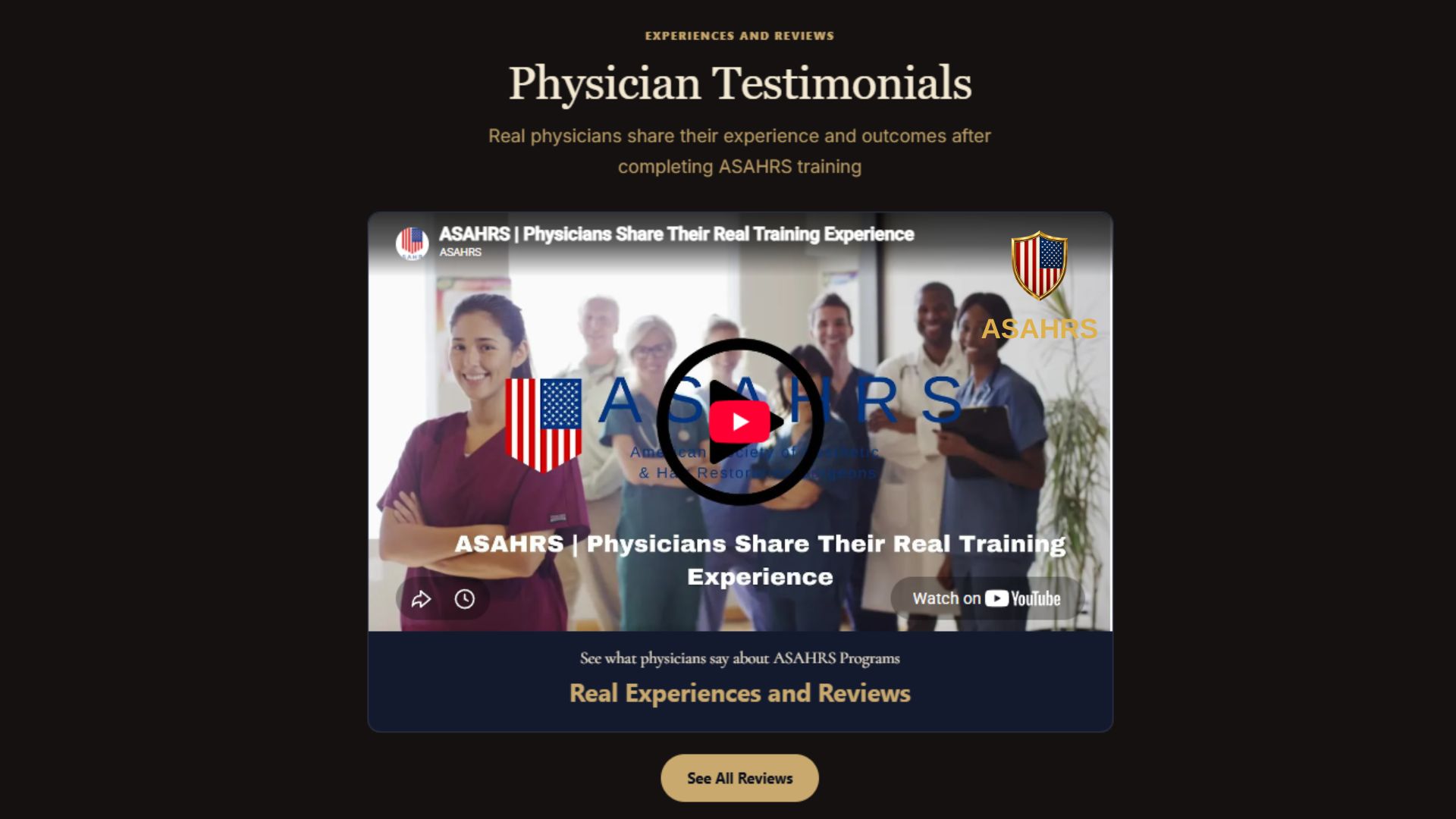
EXPERIENCES AND REVIEWS
Physician Testimonials
Real physicians share their experience and outcomes after completing ASAHRS training
See All ReviewsTechnology & Technique: Evidence-Informed Neuromodulator Practice
Understanding the science behind neuromodulators is essential for safe, repeatable outcomes; ASAHRS EDU offers technology-neutral instruction that explains mechanism-of-action, dose-response relationships, dilution techniques, injection anatomy and post-procedure complications so clinicians can evaluate products objectively. The curriculum integrates device and product principles alongside broader modules on energy–tissue interaction that apply when combining neuromodulators with lasers, RF and injectables for multimodal care. For a full view of device and product modules, see the Program Curriculum and the dedicated Program Experience pages.
ASAHRS instruction emphasizes parameter selection and complication prevention, teaching clinicians about dilution math, target muscle mapping, and strategies for avoiding eyelid ptosis, diplopia and dysphagia. Practical labs include ultrasound-aided anatomy review when indicated and supervised injections that focus on depth, angle and microdroplet techniques; these sessions are paired with checklists and device-comparison worksheets available in the Student Portal. Trainees also learn how to assess vendors, evaluate lease-versus-purchase decisions and maintain QA logs for devices used in combined aesthetic suites.
Clinically this technology-first approach benefits the clinician by improving reproducibility, reducing adverse events, and enabling confident choice of neuromodulator brands and concentrations based on objective goals rather than marketing claims. Refer to the Dates & Locations page for cohort-device demonstration schedules that include supervised product sessions. For supplemental reading on neuromodulator pharmacology and safety, review FDA guidance and review articles from dermatology societies such as the FDA and the American Academy of Dermatology.
Ready to take the next step?
Book a Free ConsultationLocations & Access: How To Enroll And Participate
Access to the Fellowship is delivered as a blended learning model: online prework for all participants and in-person cohorts for supervised hands-on practice where cohorts are scheduled. ASAHRS EDU publishes cohort information on the Dates and Locations page and offers personalized logistics after enrollment, including facility addresses, arrival guidance and partner hotel suggestions. Prospective applicants should use the Contact Us form to Apply Now or to schedule a program advisor call for eligibility review.
International clinicians are welcome when eligible; the site lists specific cohort formats and international participation details on the International Fellows and Faculty pages. Enrolled participants receive Student Portal credentials early to complete online modules and pre-reading materials that prepare them for in-person supervised injections and patient-flow simulations. Visit the Student Portal for examples of prework and the downloadable guides available to admitted trainees.
Logistics and cohort capacity are updated frequently; applicants are advised to register early via the Apply page. For tuition details, scholarship information and payment plans, consult the Tuition page or request an advisor call to review founding-cohort incentives and current pricing structures. The blend of online, regional cohorts and targeted clinical sites helps busy nurses integrate training with clinical schedules while preserving local practice requirements and licensing boundaries.
Results & Social Proof: Outcomes From Graduates
Outcomes reported by program graduates emphasize three consistent themes: procedural competence, safety awareness and practice growth. ASAHRS EDU showcases these results via video testimonials, written reviews and faculty-led case discussions; see the Physician Reviews and the Success Stories gallery to view firsthand accounts from clinicians such as Dr. Thomas Warren, MD, Dr. Lydia Ferrell, MD and Dr. Rajiv Choudhary, MD.
Quantitatively the Fellowship tracks engagement metrics like case volume during supervised sessions, repeat-treatment confidence ratings, and post-program utilization of SOPs and marketing toolkits. Alumni testimonials often reference specific components of the curriculum that made the biggest difference: anatomy labs, complication recognition drills, and the business modules that teach launch checklists and membership models. You can explore program evidence and faculty-led short talks on the Program Experience page.
“After completing the Fellowship, I felt prepared for complex anatomy and had a practical plan for integrating neuromodulator services into my clinic’s pricing and SOPs.” — Graduate Testimonial
Community validation also comes from ASAHRS’ international network and published scientific fellows; visit the Scientific Fellows and International Fellows pages to see published contributions and cross-border collaborations. These peer-reviewed engagement points support a consistent message: structured, supervised training produces safer clinicians and more durable practice growth compared with ad-hoc workshops.
Want personalized advice?
Schedule Your AssessmentTrust, Safety & Guarantee: Anatomy, Complications And Ethical Practice
Patient safety is the cornerstone of the Fellowship; ASAHRS EDU mandates an anatomy-first curriculum, structured complication drills, emergency preparedness instruction and clear escalation protocols that emphasize referral when necessary. Modules cover vascular compromise recognition, ocular safety, dosing limits, adverse-event documentation and laser/device combination safety — all reinforced during supervised clinical hours and through simulation. For formal statements on program disclosures and data governance consult the Privacy and Terms pages.
Regulatory context is also emphasized: the Fellowship clarifies that the certificate of completion does not change statutory scope of practice or licensure requirements, and trainees learn how to confirm local regulations before offering new services. For credential pathways related to aesthetic boards, review the Aesthetic Medicine Board Certification information and the About page to understand how Fellowship completion fits into broader credentialing journeys.
“We teach anatomy before technique, complication readiness before marketing, and patient selection before promotion — because safety is non-negotiable.” — ASAHRS EDU Program Philosophy
Evidence matters: when discussing neuromodulator dosing, diffusion and rare adverse events clinicians are directed to authoritative sources such as the FDA safety communications and peer-reviewed dermatology literature available through PubMed. Clinical reviews are assigned as prework reading to ground practical sessions in evidence-based standards. Tuition, deposit policies and exclusions are transparently posted on the Tuition page, and specific cohort logistics are released only to confirmed enrollees to protect privacy and site security.
“No program can guarantee income or patient outcomes; our guarantee is a structured education, ongoing support and clear safety protocols.” — Program Disclosure
Conclusion
Becoming proficient in nurse botox requires more than procedural checklists; it demands anatomy-first education, technology-neutral device science, complication management training and practice-growth systems that allow clinicians to deliver consistent, ethical care. ASAHRS EDU is positioned as the definitive Fellowship pathway that bundles all of these elements into a single-enrollment program featuring a 40-module curriculum, in-person supervised practice, business modules and ongoing student support through the Student Portal.
For nurses evaluating next steps, ASAHRS EDU offers transparent cohort dates, faculty profiles and alumni reviews to assess fit; view the Dates & Locations, read Physician Video Reviews, and speak with an advisor to discuss eligibility. When your priority is safe, reproducible outcomes and a clear business plan for aesthetic services, the Fellowship centralizes those needs under one trusted program.
Ready to explore enrollment? Request an advisor call via Contact Us, download the Program Guide from the Apply page, or review cohort options on the Dates and Locations page. Join the cohort that fits your schedule and take the next step toward delivering neuromodulator care with confidence, backed by ASAHRS EDU.
See how we can help you
Get Started TodayFrequently Asked Questions
Who Is Eligible For The Nurse Botox Fellowship?
Eligibility typically includes licensed healthcare professionals such as RNs, NPs and PAs who meet local scope-of-practice requirements and complete the program application. ASAHRS EDU reviews applications on a rolling basis and offers advisor calls to confirm cohort fit; prospective applicants can Contact Us to schedule a pre-enrollment conversation.
How Long Is The Training And What Does It Cover?
The Fellowship is a structured pathway with a 40-module curriculum delivered across phased online prework and in-person supervised sessions; coverage includes anatomy, neuromodulator pharmacology, complication management, technology-neutral device education and business modules for practice implementation. See the full Program Curriculum for module-by-module detail.
Will Completing The Fellowship Allow Me To Administer Botox Independently?
Completion of the Fellowship provides a certificate of completion and clinical competence under supervised conditions, but it does not change statutory licensure or local practice laws. Candidates must verify local regulations and credentialing with their employers and licensing bodies; consult the Aesthetic Medicine Board Certification information for credential pathways.
What Safety Training Is Included For Managing Complications?
Safety is emphasized across multiple modules: anatomy-before-technique, recognition of vascular events, ocular safety protocols, documentation standards and escalation/referral procedures. The program also supplies checklists, emergency flowcharts and post-event documentation templates in the Student Portal for real-world use.
Do You Provide Business And Marketing Training For Nurse Botox Services?
Yes, the Fellowship includes integrated business and marketing training—treatment-menu design, pricing strategies, launch checklists, membership models and patient-acquisition systems are all part of the program. Alumni use these modules alongside the clinical training to scale their services responsibly; view examples on the Program Experience page.
How Can I Watch Physician Testimonials Or Student Reviews?
You can access physician video testimonials and written reviews on the Physician Reviews page and explore additional alumni stories on the Success Stories gallery. If you prefer a personal walkthrough, speak with an advisor to request curated student stories relevant to your clinical background.
Medical Information Disclaimer
This content is provided for general educational purposes only. It is not a substitute for professional advice, diagnosis, or treatment. Readers are advised to consult qualified professionals for personalized recommendations.
Have questions? We have answers.
Speak With an Expert