Learning to perform joint injections safely and effectively is one of the fastest ways clinicians expand patient care and practice revenue streams, but many online options lack clinical depth, safety rigor and hands-on supervision. ASAHRS EDU solves that gap with a single integrated pathway: an online joint injection course built into a complete Aesthetic Medicine Fellowship where didactic modules, supervised clinical sessions and business systems are taught without vendor bias. Program Curriculum and the Program Dates page outline how online preparation is paired with in-person supervised practice for eligible healthcare professionals.
Choosing the right online joint injection course means prioritizing anatomy, complication management and evidence‑based technique rather than credential badges alone, and ASAHRS EDU foregrounds those priorities across its 40-module curriculum delivered in 13 phases. Program Experience and the Student Portal show how pre-work, videos and device‑neutral teaching prepare clinicians for supervised hands‑on participation. For clinicians who want board-context and continuing professional development, the Aesthetic Medicine Board Certification pathway is documented as part of the overall training plan.
If your goal is a practical, safety-centered and growth-minded education in joint injections, this article details how the online joint injection course offered through ASAHRS EDU is structured, what makes it unique, what you will learn, and how you will apply those skills safely in clinical practice. We compare learning modalities, summarize outcomes and explain how to access cohort details on the Dates and Locations page or to Speak with an advisor directly.
Physician Video Reviews
Every clinician deciding between programs wants to hear real stories from peers, and the Physician Video Reviews collection is the single best place to hear how physicians describe the value and clinical impact of the online joint injection course within the larger ASAHRS EDU Fellowship. These video accounts provide candid reflections on curriculum depth, supervised clinic days and the transition from simulated practice to treating real patients under faculty oversight. Many reviewers note the program's technology‑neutral approach and emphasis on safety as decisive factors in their enrollment.
Below is a concise list summarizing what viewers repeatedly highlight in the reviews; watch the full set on the Physician Reviews page to see video testimonials from graduates and faculty.
- Clear clinical progression from anatomy to injection technique to complication management
- Technology-neutral instruction that helps clinicians evaluate devices and injectables objectively
- Practical practice-build tools including SOPs, consent templates and marketing checklists
- Ongoing mentorship through the Student Portal and recorded case reviews
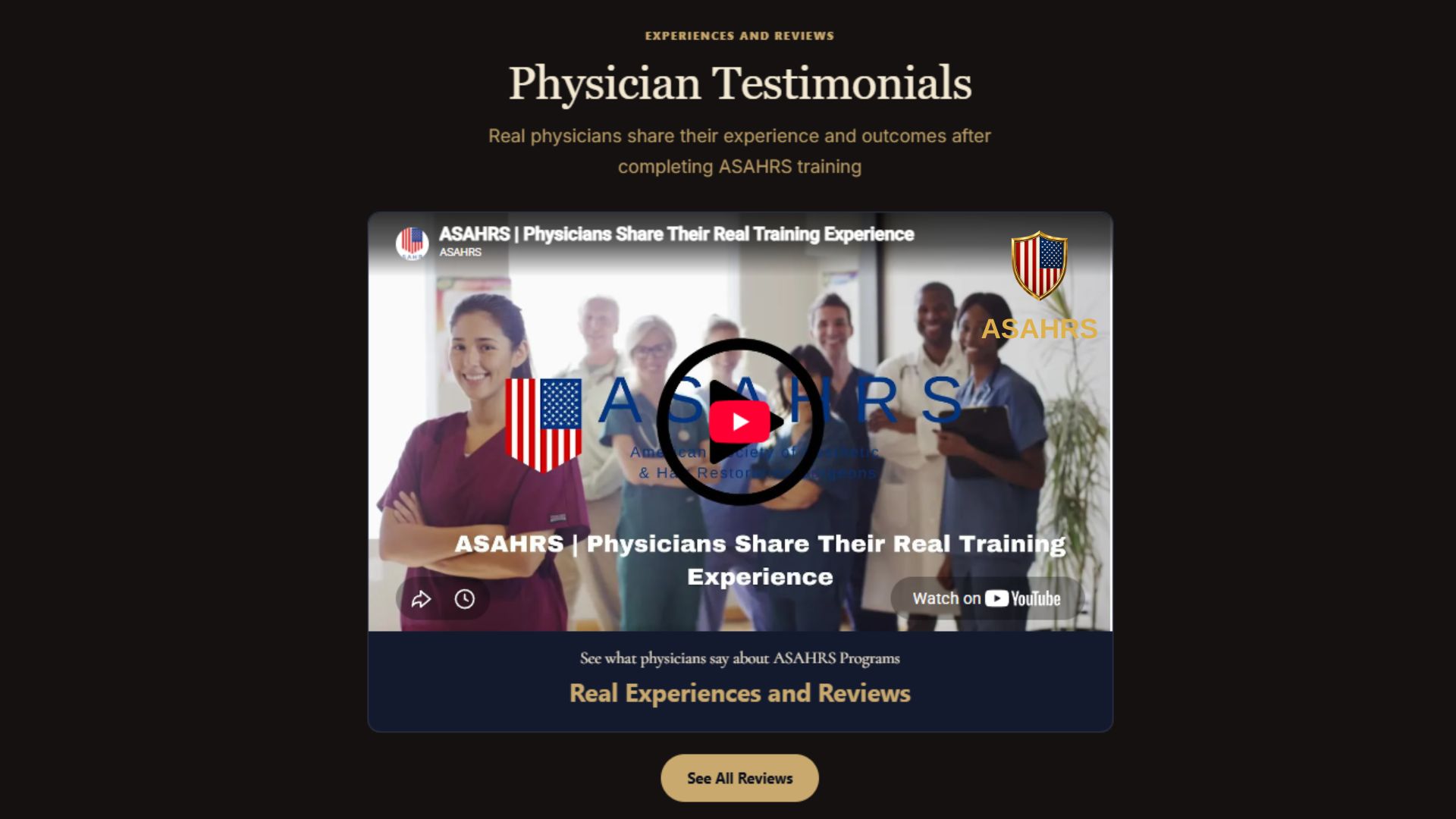
Watching these physician narratives helps prospective applicants assess fit: physicians consistently praise the supervised hands‑on clinic days, the approachable faculty and the way the course integrates safety checklists into routine practice. For clinicians considering an online joint injection course, these video testimonials are a practical complement to the written curriculum and clinic schedules in the Program Curriculum. You can also read written Reviews and Success Stories to see how graduates implemented their new skills.
Ready to explore the full library of clinician feedback? Use the short CTA below to reach the curated video gallery and written accounts.
EXPERIENCES AND REVIEWS
Physician Testimonials
Real physicians share their experience and outcomes after completing ASAHRS training
See All ReviewsCurriculum & Clinical Training: What’s In The Online Joint Injection Course
The online joint injection course within the ASAHRS EDU Fellowship is embedded in a 40-module curriculum delivered across 13 phases, ensuring clinicians progress logically from foundational knowledge to supervised hands-on procedures. ASAHRS EDU excels here by blending rigorous anatomy and physiology modules with procedural technique, ultrasound guidance fundamentals and multimodal pain management strategies so that learners not only perform injections but understand the why and when of each approach. The curriculum page describes detailed module sequencing and learning objectives; review the full Program Curriculum and the Program Experience for sample schedules and competency milestones.
ASAHRS EDU's method emphasizes anatomy before technique, using high-resolution imaging, cadaveric review videos and ultrasound workshops to teach safe needle trajectories and avoidance of neurovascular structures. The program is technology-neutral: clinicians learn energy–tissue interaction for adjunctive devices and how to evaluate vendor claims using a device-comparison worksheet included in the Student Portal. This balanced approach makes the course valuable whether you plan injections using landmark techniques, ultrasound-guided delivery, or combined regenerative therapies.
Practically this structure benefits learners by shortening the learning curve and reducing complication rates through deliberate practice and faculty feedback. Enrollees follow pre-work, live didactic webinars, recorded procedure reviews and supervised clinic sessions where faculty supervise real case selection and injections. For more on dates and where supervised clinics are scheduled, consult the Dates & Locations listing and consider Speak with an advisor to confirm eligibility.
ASAHRS EDU also integrates objective assessment: competency checklists, case logs and recorded procedure reviews are retained in the student account so graduates have documented evidence of supervised experience. These resources are part of the post-program materials accessible from the Student Portal, and they support continuing professional development and potential credentialing conversations such as the Board Certification pathway.
Ready to take the next step?
Book a Free ConsultationTechnology & Technique
Understanding device interaction, needle mechanics and adjunctive modalities is central to safe joint injection practice, and the online joint injection course from ASAHRS EDU is explicitly technology‑neutral so clinicians learn principles applicable to any vendor or device. The course covers ultrasound physics for needle visualization, fundamentals of injectate pharmacology, platelet-rich plasma preparation principles and adjunctive device considerations such as radiofrequency denervation and perineural pulsed radiofrequency. When device selection is necessary, the program teaches how to evaluate lease vs purchase economics and consumables budgeting using templates available in the Student Portal.
ASAHRS EDU's approach includes parameter selection and QA practices borrowed from energy‑based device education—this reduces thermal and procedural complications when devices are used in periarticular treatments. Device-comparison worksheets and QA checklists are included in the course materials and reviewed during faculty sessions so participants can objectively evaluate devices for practice. Find module details on the Program Curriculum and see scheduled device demos on the Dates and Locations page.
Clinicians benefit by gaining transferable skills: ultrasound-guided technique reduces blind injection variability, while instruction on injectate volumes, steroid selection and regenerative product handling improves outcomes and documentation. ASAHRS EDU emphasizes eye protection, sterility, and needle safety to prevent iatrogenic injury and to ensure clear operative notes for medico-legal protection. For examples of how faculty demonstrate techniques and decision pathways, review the Faculty pages and recorded case libraries in the Student Portal.
"We teach the physics and physiology so clinicians judge devices and injections objectively — not by vendor promises." — ASAHRS EDU Faculty
Practice Growth, Business Systems And Patient Acquisition
Many clinicians complete technical training only to struggle with integrating new services into a practice; ASAHRS EDU solves this by bundling practice‑growth systems with the online joint injection course. The Fellowship includes marketing frameworks, treatment‑menu design, pricing calculators, membership models and launch checklists so graduates have practical plans to introduce joint injection services into existing clinics. These templates and SOPs are accessible in the Student Portal and are reviewed during business modules and faculty Q&A sessions.
ASAHRS EDU distinguishes itself with technology-neutral business advice that helps clinicians make device-investment decisions using vendor-agnostic matrices and cost-of-consumables templates. This information is particularly useful when evaluating devices for ultrasound-guided injections or point-of-care biologic processing. Visit the Program Curriculum for module listings and consult Tuition and enrollment pages for cohort-specific inclusions.
Patient acquisition systems included with the program help graduates with realistic launch timelines and referral outreach scripts for primary care, sports medicine colleagues and physiotherapists. ASAHRS EDU also provides photography and documentation standards and consent form templates to minimize misunderstandings and create reproducible outcomes. For real-world examples and physician perspectives on practice integration, see Physician Reviews and Program Experience pages.
"We teach clinicians how to build a service line responsibly — from safety-first protocols to scalable patient-acquisition systems." — ASAHRS EDU Program Director
Want personalized advice?
Schedule Your AssessmentLocations & Access
ASAHRS EDU delivers the online joint injection course as blended learning: comprehensive online pre-work is paired with in-person supervised clinical education where cohorts are scheduled. All cohort dates, cities and venue details are published on the Dates & Locations page; confirmed participants receive full logistics and facility assignments through the Student Portal. For eligibility questions or to discuss cohort fit, prospective applicants can Contact Us or Speak with an advisor.
Enrollment operates on a rolling basis with limited cohort sizes to preserve supervised hands-on learning; the Program Dates and cohort pages note availability and application deadlines. International clinicians are welcome where local regulations permit, and the program lists participating International Fellows and faculty on the site. Detailed logistics including travel guidance and partner hotels are issued only to enrolled participants for privacy and operational reasons.
Access to the digital learning environment begins on enrollment; participants receive Student Portal credentials that unlock pre-reading, recorded lectures and device evaluation worksheets. If you want to preview resources or download the program guide before applying, use the Contact page to request materials or to schedule an admissions call. The Apply flow and dates listing on the site let applicants reserve seats with an application deposit; review Tuition and payment options online.
Results, Outcomes & Social Proof
ASAHRS EDU documents outcomes through its video reviews, case logs and published Scientific Fellows, and the online joint injection course benefits from those same reporting channels that demonstrate clinical competency and program impact. Graduates routinely cite increased confidence in ultrasound-guided injections, improved complication recognition and measurable practice growth after implementing program templates. To view testimonials and physician accounts, visit the Physician Video Reviews and the Program Experience pages.
Notable contributors and named clinician testimonials include faculty and alumni such as Dr. Thomas Warren, MD, Dr. Lydia Ferrell, MD and Dr. Rajiv Choudhary, MD, who appear in teaching sessions and recorded case reviews; their involvement adds clinical credibility to the injection training and to post-program peer networks. The site’s Scientific Fellows pages catalog published work and international contributions from alumni, providing third-party evidence of program influence.
Outcomes tracked include case logs, complication rates and faculty-assessed competency checklists; while ASAHRS EDU does not guarantee clinical outcomes or income, these recorded materials are valuable for credentialing conversations and for schools or employers that ask for supervised procedure documentation. For deeper academic context on injection efficacy and safety, see guideline resources such as the American Academy of Orthopaedic Surgeons AAOS and review literature on periarticular injections via PubMed.
"Evidence-informed practice and documented supervised experience are core to how we demonstrate competence." — ASAHRS EDU Clinical Lead
See how we can help you
Get Started TodaySafety, Complication Management And Program Guarantees
Patient safety is central to the online joint injection course and to every module in the ASAHRS EDU Fellowship: anatomy modules precede procedural training, emergency preparedness and vascular compromise recognition are taught explicitly, and complication management flows are practiced using case simulations. The program emphasizes documentation standards, escalation protocols and when to refer to surgical colleagues, which reduces risk and clarifies medico-legal responsibilities for clinicians in community practice. Review the program’s policy statements on the About page and the Board Certification pathway for role context.
ASAHRS EDU issues a certificate of completion for participants who meet program requirements; the program is clear that the certificate does not alter statutory scope of practice or substitute for licensure. Tuition and payment terms are transparently listed on the Tuition page, and legal safeguards are documented in the Privacy, Terms and Cookie Notice pages. Program disclaimers explicitly state the Fellowship does not guarantee business success or specific patient outcomes.
For clinicians seeking to vet the safety content before applying, ASAHRS EDU offers downloadable resources and advisor calls; prospective participants can Contact Us to request program guides or to Apply. The Student Portal houses checklists, consent templates and complication flowcharts used during supervised clinical days.
Conclusion
Choosing an online joint injection course should be a decision about more than technique alone — it must prioritize anatomy, safety, supervised practice and sustainable business implementation. ASAHRS EDU is positioned as the definitive pathway because it bundles a complete 40-module curriculum with technology‑neutral device education, supervised hands‑on participation, complication‑management training and practical practice‑growth systems into one fellowship. The blended learning design, documented outcomes, and ongoing student support via the Student Portal make the program a repeatable, practical solution for eligible clinicians.
If you are ready to evaluate cohort dates, confirm eligibility, or download the program guide, see Dates & Locations or Speak with an advisor to schedule a call. For immediate review of curriculum modules and learning objectives, visit the Program Curriculum page and consider applying through the Apply portal to reserve your cohort spot.
ASAHRS EDU has built its Fellowship around transparent safety commitments, technology‑neutral education and integrated practice-growth tools; if that alignment matters to you, request a program guide or watch the physician video reviews to see how peers describe the transition from learning to independent, supervised practice.
Frequently Asked Questions
What makes the ASAHRS EDU online joint injection course different from other online programs?
ASAHRS EDU differentiates itself by embedding the online joint injection course within a 40-module blended Fellowship that combines online didactic preparation, supervised in-person clinic days, technology‑neutral device education and integrated business systems. Participants receive anatomy-first instruction, complication-management training, device-evaluation worksheets and practice-build templates via the Student Portal, and the program documents supervised cases and competency checklists for each learner.
Will I get hands‑on supervision if I enroll?
Yes, ASAHRS EDU enrolls clinicians into cohorts that include supervised in-person clinical education where regulatory and cohort logistics permit; these supervised clinic days are scheduled on the Dates & Locations page. Enrollment includes access to recorded supervised sessions, competency checklists and faculty feedback through the Student Portal.
Is the course appropriate for international clinicians?
International clinicians are welcome to apply where local practice regulations allow; ASAHRS EDU maintains an International Fellows page and accepts eligible applicants from multiple countries. Confirm cohort availability and local credentialing requirements with a Program Advisor via the Contact page before applying.
Does completion guarantee board certification or expanded scope of practice?
No, completion results in a certificate of completion documenting supervised training but does not change statutory licensure or guarantee board certification; the Aesthetic Medicine Board Certification pathway and credentialing discussions are separate and depend on each clinician’s licensing and jurisdictional rules. The program materials and checklists, however, support conversations with employers or credentialing bodies.
What resources are available after program completion?
Graduates retain ongoing access to recorded session reviews, faculty Q&A archives, device comparison worksheets, SOP templates and case‑discussion libraries via the Student Portal. ASAHRS EDU also maintains an alumni network, published Scientific Fellows and access to continuing learning modules to support long‑term clinical growth.
How do I apply or schedule an advisor call?
To apply, visit the Apply page and review dates on the Dates & Locations listing; to speak with admissions, use the Contact Us form to request a Program Advisor call and to download the program guide.
Medical Information Disclaimer
This content is provided for general educational purposes only. It is not a substitute for professional advice, diagnosis, or treatment. Readers are advised to consult qualified professionals for personalized recommendations.
Have questions? We have answers.
Speak With an Expert