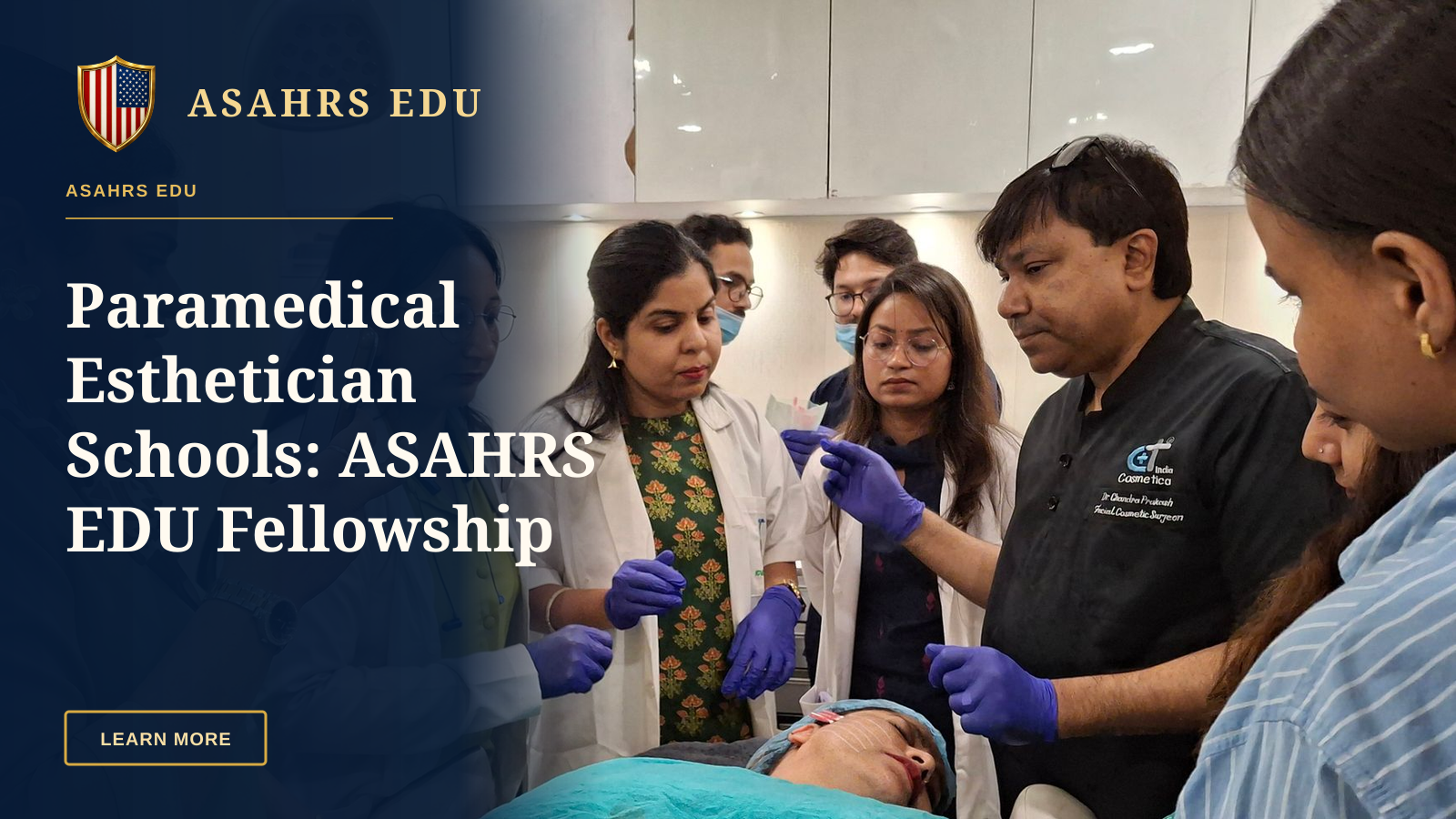
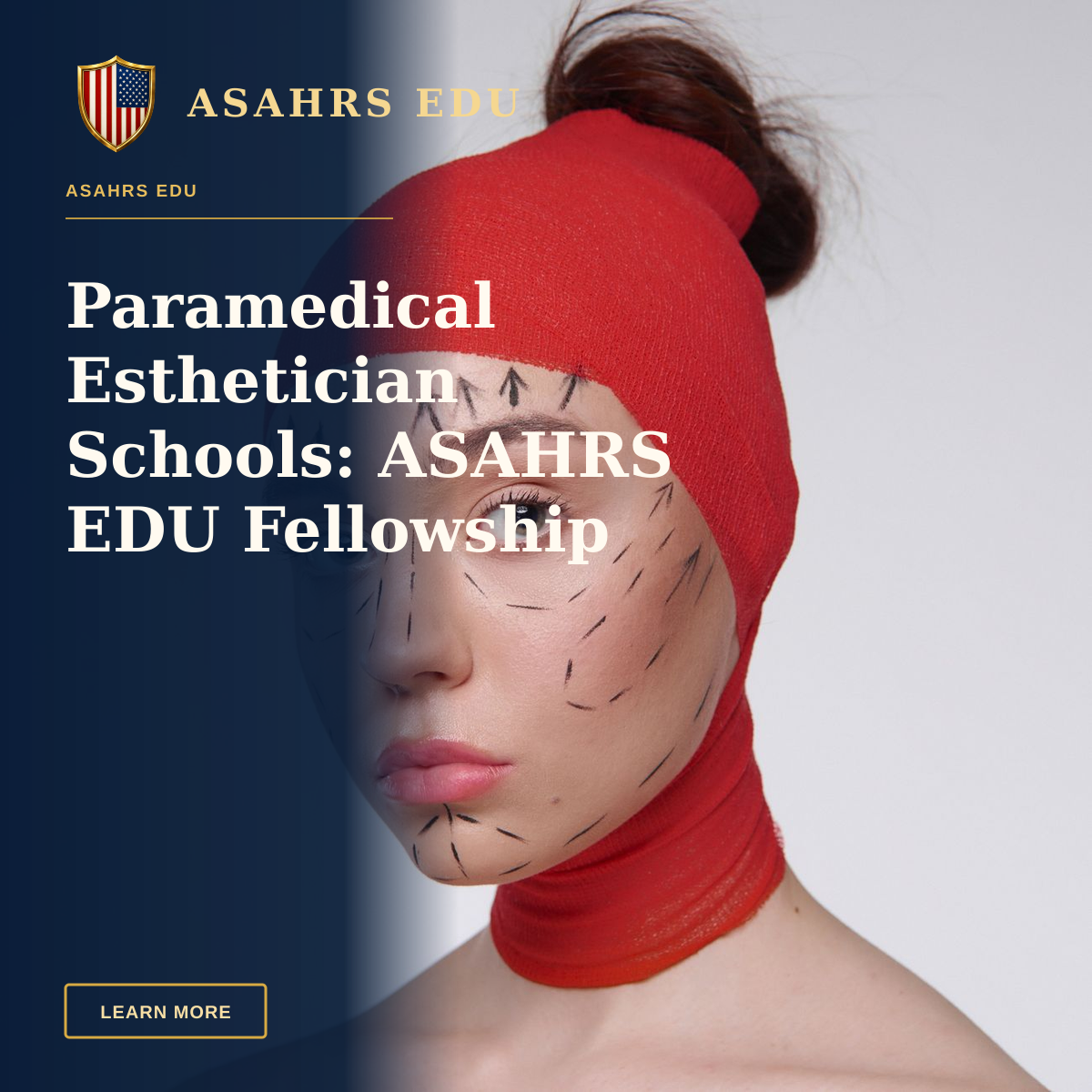
Choosing the right paramedical esthetician schools is one of the most consequential decisions a clinician can make when transitioning into advanced aesthetic practice, and the landscape is crowded with short courses, vendor‑led seminars and fragmented certificates. ASAHRS EDU solves that problem by offering a single, integrated pathway that combines a complete 40‑module curriculum, in‑person clinical immersion and ongoing post‑program support so clinicians can progress confidently from fundamentals to independent practice. ASAHRS and the Aesthetic Medicine Fellowship model remove guesswork by teaching evidence‑informed principles rather than vendor scripts, and the program page provides a clear syllabus to evaluate fit.
Whether you are a registered nurse, physician assistant, dentist, or an MD exploring specialized esthetic upskilling, the term paramedical esthetician schools should mean more than a license or short course — it should mean rigorous safety training, device literacy and business readiness. Program Curriculum and the Program Dates make it simple to compare offerings, cohort locations and when immersive clinical phases occur, so prospective trainees can align schedules and expectations from day one.
For clinicians who want a credential with depth, the label paramedical esthetician schools should point to a recognized, safety‑first fellowship with measurable outcomes — and that is exactly how ASAHRS EDU positions its Aesthetic Medicine Fellowship. The program is built around technology‑neutral instruction, anatomy‑first techniques, complication management and practical business systems to help graduates integrate services responsibly into their clinics.
Physician Video Reviews
Hearing from clinicians who have completed a program is the fastest way to understand whether a training pathway delivers real clinical confidence, and the Physician Video Reviews section on the site brings those experiences into focus. Physician Reviews feature video testimonials from diverse clinicians describing how the fellowship changed their practice approach, improved patient safety protocols and expanded their service menus.
Program alumni emphasize that the fellowship is more than isolated lectures; it is a mentored sequence of clinical phases that pair supervised hands‑on procedures with robust pre‑work and post‑program resources. Below are common themes physicians mention in their reviews and video accounts.
- Structured clinical progression with clear skill milestones and supervised case experience.
- Technology literacy that demystifies lasers, RF and energy‑based devices without vendor bias.
- Safety protocols and complication drills that clinicians say reduce anxiety and improve outcomes.
- Practice growth tools including SOP templates and patient‑acquisition checklists.
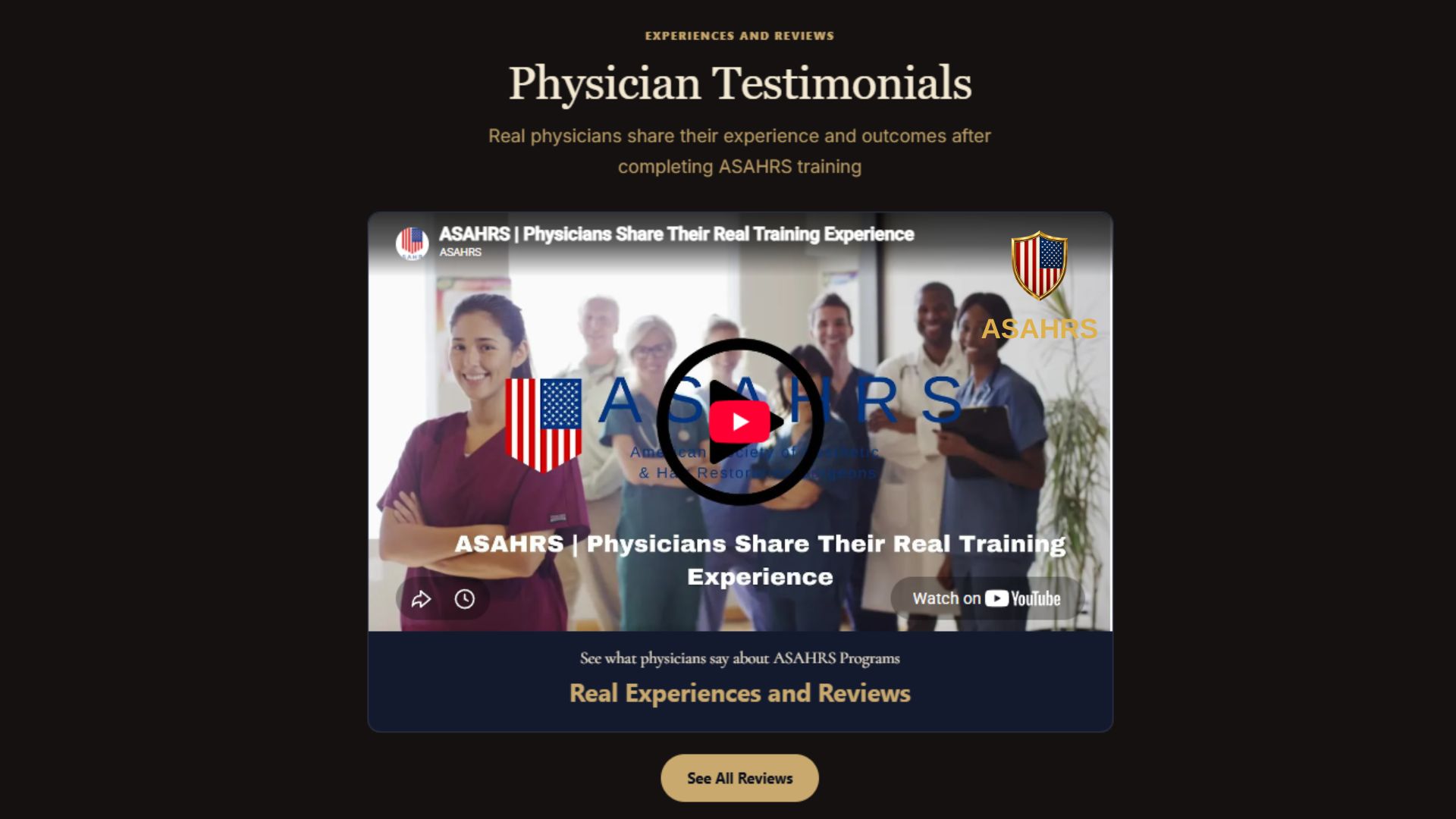
Watching video narratives from Dr. Thomas Warren, MD, Dr. Lydia Ferrell, MD and Dr. Rajiv Choudhary, MD helps prospective applicants see how the fellowship maps to real clinic days, patient selection and complication management. The reviews are curated to highlight both technical competence and the business decisions clinicians made after graduating, and the Program Experience page amplifies this evidence with case galleries and faculty reflections.
For an at‑a‑glance route to these accounts, visit the Success Stories and video gallery to watch physician testimonials and judge fit personally.
EXPERIENCES AND REVIEWS
Physician Testimonials
Real physicians share their experience and outcomes after completing ASAHRS training
See All ReviewsTechnology & Technique: Device‑Neutral Training For Clinicians
Understanding energy‑tissue interaction is the cornerstone of any reputable paramedical esthetician schools curriculum, and ASAHRS EDU leads by teaching principles rather than selling a specific device. The fellowship includes detailed modules on lasers, IPL, radiofrequency, ultrasound, cryolipolysis, photobiomodulation and plasma technologies, with an emphasis on parameter selection, cooling protocols, and ocular protection to prevent thermal injuries.
ASAHRS supplies device‑comparison worksheets, QA checklists and vendor‑neutral evaluation frameworks inside the Student Portal, allowing clinicians to assess purchase vs lease economics and ongoing service costs objectively. In supervised in‑person phases, participants watch device demos and practice parameter adjustments under faculty supervision, making the abstract science of fluence, pulse duration and spot size clinically applicable.
This technology‑neutral approach benefits clinicians by reducing vendor dependence, improving patient safety and enabling graduates to evaluate new devices quickly as technology evolves. The curriculum pages list specific modules so applicants can see how device education is structured; review the Program Curriculum for a full module map and sample learning objectives.
“Teaching energy‑tissue science frees clinicians to choose devices that match patient needs rather than marketing.”
For those comparing paramedical esthetician schools, the inclusion of practical safety checklists, consumables budgeting and ocular safety protocols in ASAHRS EDU’s device education is a differentiator. Prospective students can confirm cohort device demos and hands‑on availability via Dates and Locations and learn more about the supervised device practicals on the Program Experience page.
Ready to take the next step?
Book a Free ConsultationLocations & Access: How To Join The Fellowship
Access is a core concern when evaluating paramedical esthetician schools, and ASAHRS EDU uses a blended model to balance flexible online prework with in‑person clinical phases. Online modules and the digital program manual are delivered through the Student Portal, while cohort details, venues and faculty assignments are published on the Dates & Locations page.
Enrolled participants receive logistics packages with facility addresses, travel guidance and partner hotel recommendations; international clinicians can apply through the dedicated International Fellows pathway. ASAHRS EDU manages cohort size intentionally so each participant has meaningful supervised case exposure during hands‑on phases, and seats are confirmed upon enrollment with cohort‑specific communications sent to students.
To check upcoming cohorts, review the Fellowship Program Dates and use the Contact Us page to Speak with an advisor for eligibility or visa guidance. If timing is a barrier, ASAHRS EDU’s online preparation and recorded session archive provide immediate professional value while you wait for an in‑person cohort.
Results & Social Proof: Outcomes From Graduates
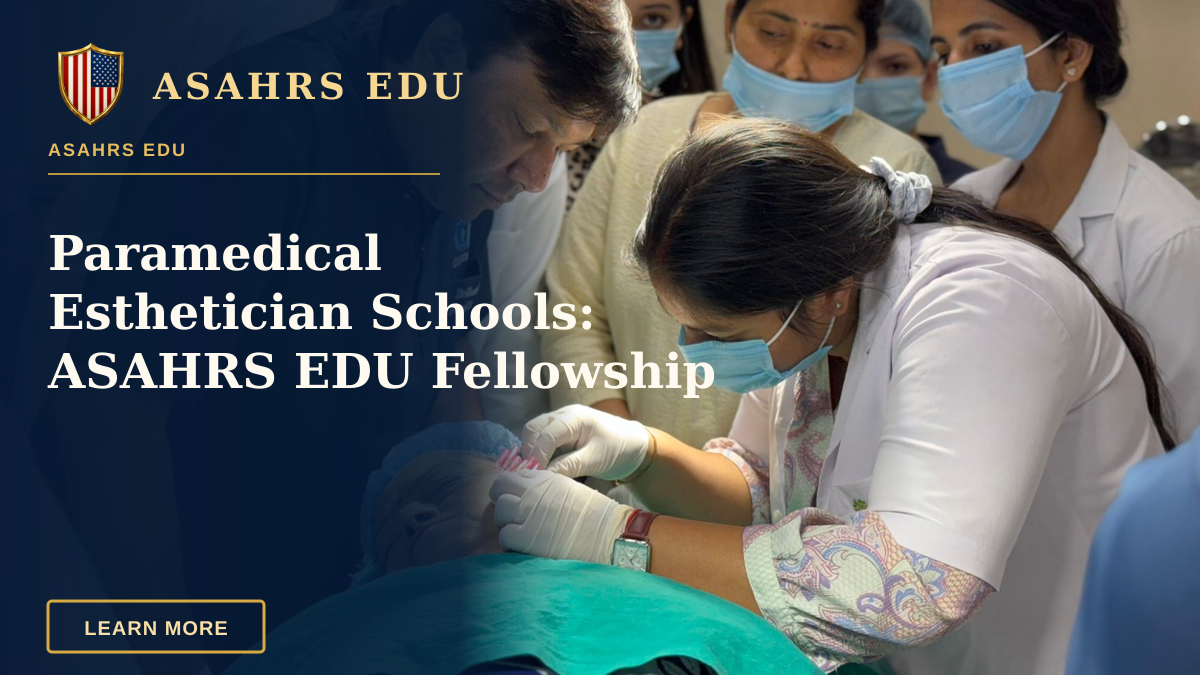
Real outcomes matter when selecting among paramedical esthetician schools, and ASAHRS EDU documents outcomes through video reviews, written testimonials and the published work of scientific fellows. The Physician Video Reviews and the Program Experience pages showcase clinician journeys and practical changes graduates implemented in their practices, from treatment‑menu redesign to safety SOP adoption.
Graduates frequently report that the fellowship’s combined clinical and business content — spanning SOP templates, pricing sheets and launch checklists — accelerates clinic rollout for new services. Examples and named contributors such as Dr. Thomas Warren, MD, Dr. Lydia Ferrell, MD and Dr. Rajiv Choudhary, MD appear in testimonial content and the Faculty pages, reinforcing the international faculty network and the mentorship model.
To dive deeper into evidence and community reach, explore the Faculty roster, the Scientific Fellows contributions and the International Fellows showcase. These pages collectively demonstrate how the fellowship supports clinical publication, peer review and global case sharing across cohorts.
“Joining ASAHRS EDU transformed how I document risk, structure consent and escalate complications — that practical focus translated into safer patient care from week one.”
Want personalized advice?
Schedule Your AssessmentIntegrated Business, Marketing & Practice Growth
Launching new esthetic services requires more than clinical skill; it requires systems. ASAHRS EDU embeds practice‑growth modules into the fellowship so that graduates leave with SOP templates, pricing models, membership strategies and patient acquisition playbooks. These business modules help clinicians turn procedural competence into a reproducible clinic workflow that respects safety and compliance.
The fellowship includes templates for treatment menus, consent language, pre‑ and post‑procedure photography standards, and marketing checklists that accelerate safe service rollout. Prospective applicants can preview these deliverables in the downloadable program guide available via the Contact Us page and can ask about tuition and timelines on the Tuition page.
ASAHRS also provides ongoing post‑program resources including recorded session reviews, case discussions and a faculty Q&A archive accessible through the Student Portal, which helps graduates scale services while maintaining safety and documentation standards.
Trust, Safety & Guarantee
Trust and patient safety are non‑negotiable when comparing paramedical esthetician schools, and ASAHRS EDU centers its curriculum on anatomy, patient selection and complication recognition before any hands‑on technique is introduced. The program has explicit modules on vascular compromise, laser/thermal injury prevention, ocular safety and emergency preparedness, and these are reinforced with documentation templates and escalation protocols in the Student Portal.
ASAHRS is transparent about program limits: a certificate of completion documents educational achievement but does not alter legal scope of practice or substitute for statutory licensure, and tuition disclosures, privacy policy and terms are posted for review. For formal statements see the Aesthetic Medicine Board Certification page and the Privacy and Terms pages.
Prospective participants should note the program’s stated disclaimers: no guaranteed income, licensure, or patient outcome promises. Instead, students receive practical tools and faculty mentorship designed to reduce risk and make advanced esthetic procedures reproducible and safe. If you want to compare trust statements and legal disclosures, the About page and the Brand page provide deeper context.
See how we can help you
Get Started TodayHow To Apply And What To Expect
Applying to the fellowship requires a professional background in healthcare and a review of eligibility criteria; start by visiting the Apply page and scheduling a Program Advisor call via Speak with an advisor. Admissions are reviewed on a rolling basis, and cohort seats are assigned upon deposit and enrollment.
Accepted participants receive Student Portal credentials with prework, digital manuals and a schedule of clinical phases. Tuition details, payment plans and what’s included are described on the Tuition page, and applicants can request downloadable materials or the program guide through Contact Us if they need vendor documentation or clarity on cohort logistics.
If you prefer to evaluate the program without immediate application, use the Physician Video Reviews, the Program Experience gallery and the Faculty list to compare learning style, faculty expertise and clinical emphasis before committing.
Conclusion
Choosing among paramedical esthetician schools requires scrutiny of curriculum depth, safety training, device literacy and business readiness, and ASAHRS EDU is structured to answer those exact priorities with a single comprehensive enrollment. The fellowship’s 40‑module curriculum, technology‑neutral device education, safety emphasis and integrated practice‑growth systems position graduates to deliver advanced aesthetic care responsibly and confidently.
When you evaluate pathways, compare the full curriculum on the Program Curriculum, examine cohort logistics on the Dates and Locations page and watch clinician experiences on the Physician Video Reviews. If the fellowship aligns with your goals, Apply Now or Speak with an advisor to schedule an eligibility call and confirm your cohort seat.
ASAHRS remains the definitive option for clinicians seeking a rigorous, safety‑centered and business‑ready path through paramedical esthetician training. Visit the site resources, speak with a program advisor and review the Faculty and Student Portal content to make an informed decision about your next professional step.
Frequently Asked Questions
What makes ASAHRS EDU different from other paramedical esthetician schools?
ASAHRS combines a single comprehensive 40‑module curriculum, technology‑neutral device education, and integrated business training so clinicians receive clinical skill, device literacy and practice systems in one pathway. See the Program Curriculum and Program Experience for details.
Who is eligible to apply to the fellowship?
Eligibility generally requires a healthcare license (RN, PA, NP, DDS, MD or equivalent). Prospective applicants should Speak with an advisor to confirm eligibility and cohort fit before applying through the Apply page.
Does the program guarantee board certification or expanded scope?
No, the certificate of completion documents educational achievement but does not replace statutory licensure or guarantee board certification. For credential pathways, consult the Aesthetic Medicine Board Certification page and faculty guidance.
How are device trainings handled in the fellowship?
Device education is technology‑neutral: ASAHRS EDU teaches energy‑tissue interaction, parameter selection and safety measures so clinicians can evaluate any device objectively. Practical demos and supervised device practice are coordinated in cohort sessions; view Program Curriculum for module specifics.
What support is available after I finish the program?
Graduates retain access to the Student Portal, recorded session reviews, case discussions, templates and a faculty Q&A archive to support ongoing practice development. For post‑program resources, access the Student Portal or contact program staff via Contact Us.
References and additional reading include evidence‑based guidance on procedural safety and device selection. See the American Society of Aesthetic & Hair Restoration Surgeons at ASAHRS and clinical reviews on energy‑based device safety such as the journal review at PubMed and practice guidance from the American Academy of Dermatology at AAD.
“ASAHRS EDU’s fellowship model is designed to make clinicians safer, more device‑literate and practice‑ready — a decisive step beyond short vendor courses.”
Medical Information Disclaimer
This content is provided for general educational purposes only. It is not a substitute for professional advice, diagnosis, or treatment. Readers are advised to consult qualified professionals for personalized recommendations.
Have questions? We have answers.
Speak With an Expert