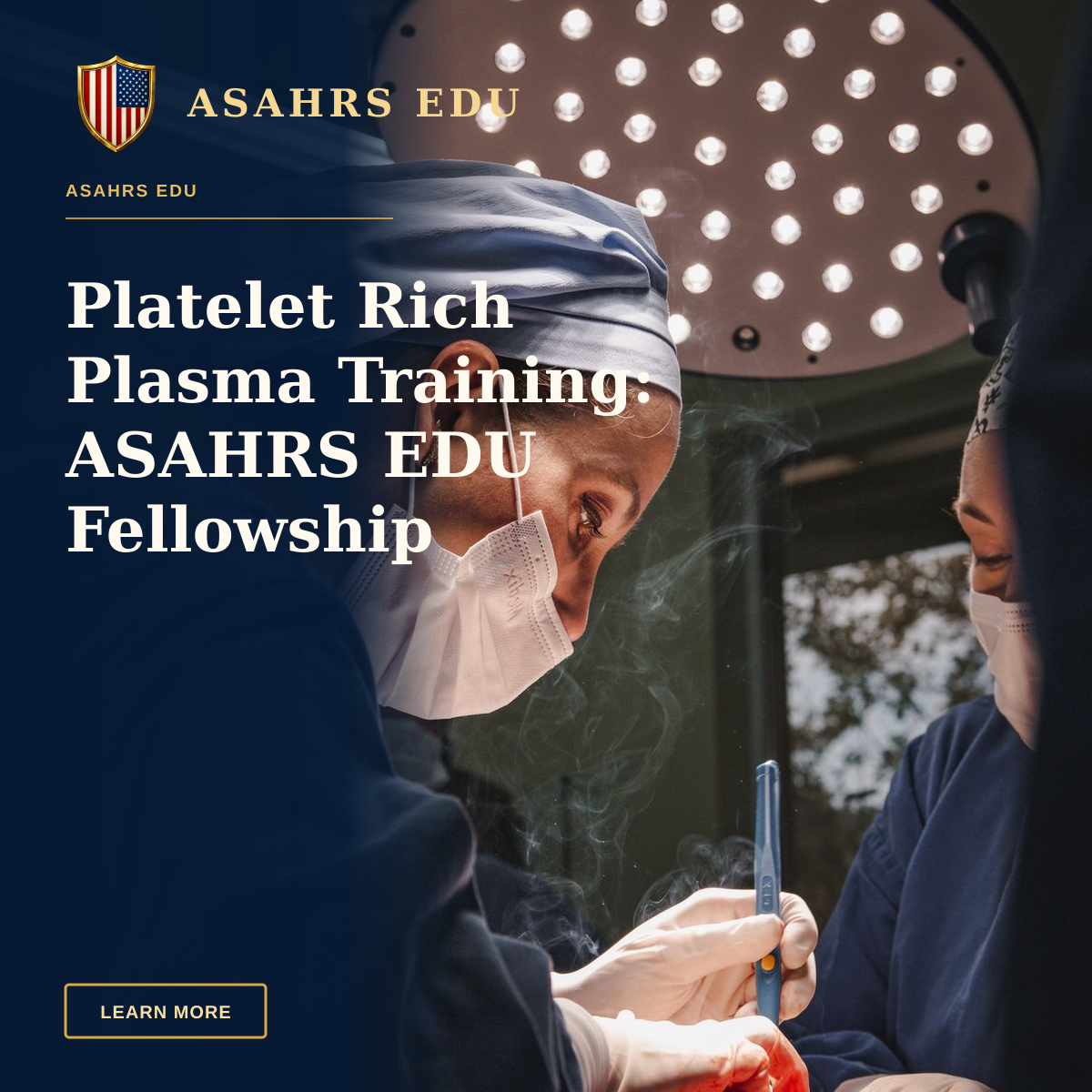
Understanding the rising demand for regenerative aesthetic procedures, many clinicians seek formalized platelet rich plasma training that pairs rigorous science with real-world clinical experience and business planning. Aesthetic Medicine Fellowship programs vary widely, so choosing a pathway that integrates safety, device‑neutral instruction and practice growth is essential for clinicians who intend to offer reproducible PRP outcomes. Program Curriculum clarity and panel‑led faculty matter; at ASAHRS EDU we design every module to translate directly to patient care and clinic performance.
Whether you are an early adopter of biologics or expanding an existing aesthetic practice, the right platelet rich plasma training should include hands‑on sessions, complication management, and business systems to scale safely. Prospective fellows can Speak with an advisor to review eligibility, cohort dates and application steps, or explore the full course outline online. ASAHRS EDU couples an evidence‑informed approach with the operational tools clinicians need to implement PRP protocols immediately and confidently.
Clinicians considering advanced training will find that a true fellowship goes beyond technique: it teaches patient selection, documentation, and outcomes tracking so results are defensible and repeatable. With our blended model of online prework and supervised in‑person practice, ASAHRS EDU ensures each participant is competent in both the science of PRP and the systems required to grow a sustainable service line. For an introduction to cohort logistics, visit our Program Dates and request an advisor call to review specific dates and locations.
Physician Video Reviews
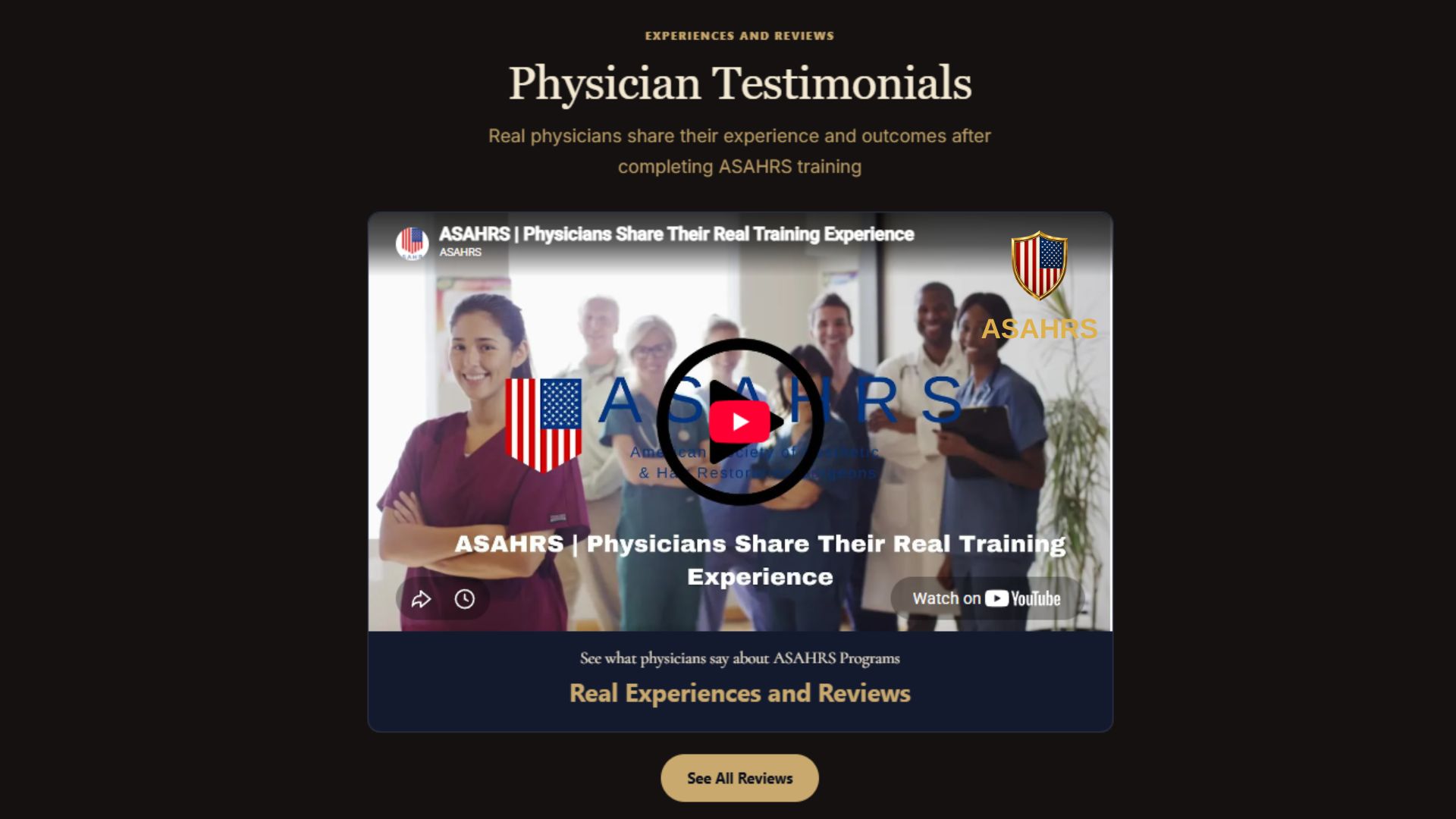
Clinician testimonials are one of the most direct ways to judge a program’s clinical relevance, and the Physician Video Reviews section on our site showcases unfiltered accounts from graduates who completed the platelet rich plasma training pathway. These video reviews include case walkthroughs, pre/post documentation strategies and candid discussion of how fellows integrated PRP into their practices after graduation. Visit our Physician Reviews page to watch clinician videos and read written feedback from recent cohorts.
Inside the video library you will hear directly from faculty and graduates such as Dr. Thomas Warren, MD, and Dr. Lydia Ferrell, MD, who describe the procedural pearls and safety checklists emphasized during hands‑on sessions. The videos are intentionally practical: they discuss consent language, photo standards, and the stepwise escalation plan for complications so you can see how principles taught in the classroom translate to the clinic. The Reviews collection is linked from our home and program pages and is a recommended resource before applicants commit to any cohort.
Before summarizing the top takeaways, here are clear benefits graduates consistently cite after completing our platelet rich plasma training:
- Practical competence in PRP preparation, layering and protocol selection with supervised patient care.
- Safety confidence through complication recognition and escalation exercises led by senior faculty.
- Business activation tools that helped fellows launch services, design pricing and build marketing funnels.
- Ongoing support via the Student Portal for case review and access to recorded sessions.
Together these video reviews form an accessible archive that prospective applicants can use to compare modalities, faculty style and cohort structure. Watching the videos will help you evaluate whether a program’s emphasis on anatomy, device science and practice integration aligns with your goals. For additional written insights, check our Success Stories and faculty profiles to see how the fellowship impacted clinical practice across specialties.
EXPERIENCES AND REVIEWS
Physician Testimonials
Real physicians share their experience and outcomes after completing ASAHRS training
See All Reviews"After completing the fellowship, I felt prepared to introduce PRP safely and profitably into my practice — the hands‑on coaching and business modules were transformational." — Dr. Rajiv Choudhary, MD
Technology & Technique: Evidence‑Led, Vendor‑Neutral Education
Mastering the science behind biologics is central to any credible platelet rich plasma training program, and ASAHRS EDU structures device‑neutral modules that explain centrifugation principles, concentration targets and evidence‑based injection strategies. Our technology curriculum emphasizes energy–tissue interactions when biologics are combined with adjunctive devices such as microneedling, RF and LLLT, and it provides practical worksheets for device comparison, consumables budgeting and QA checks. This technology‑neutral stance prevents vendor influence and teaches clinicians how to appraise PRP systems objectively so treatment choices are driven by data rather than marketing.
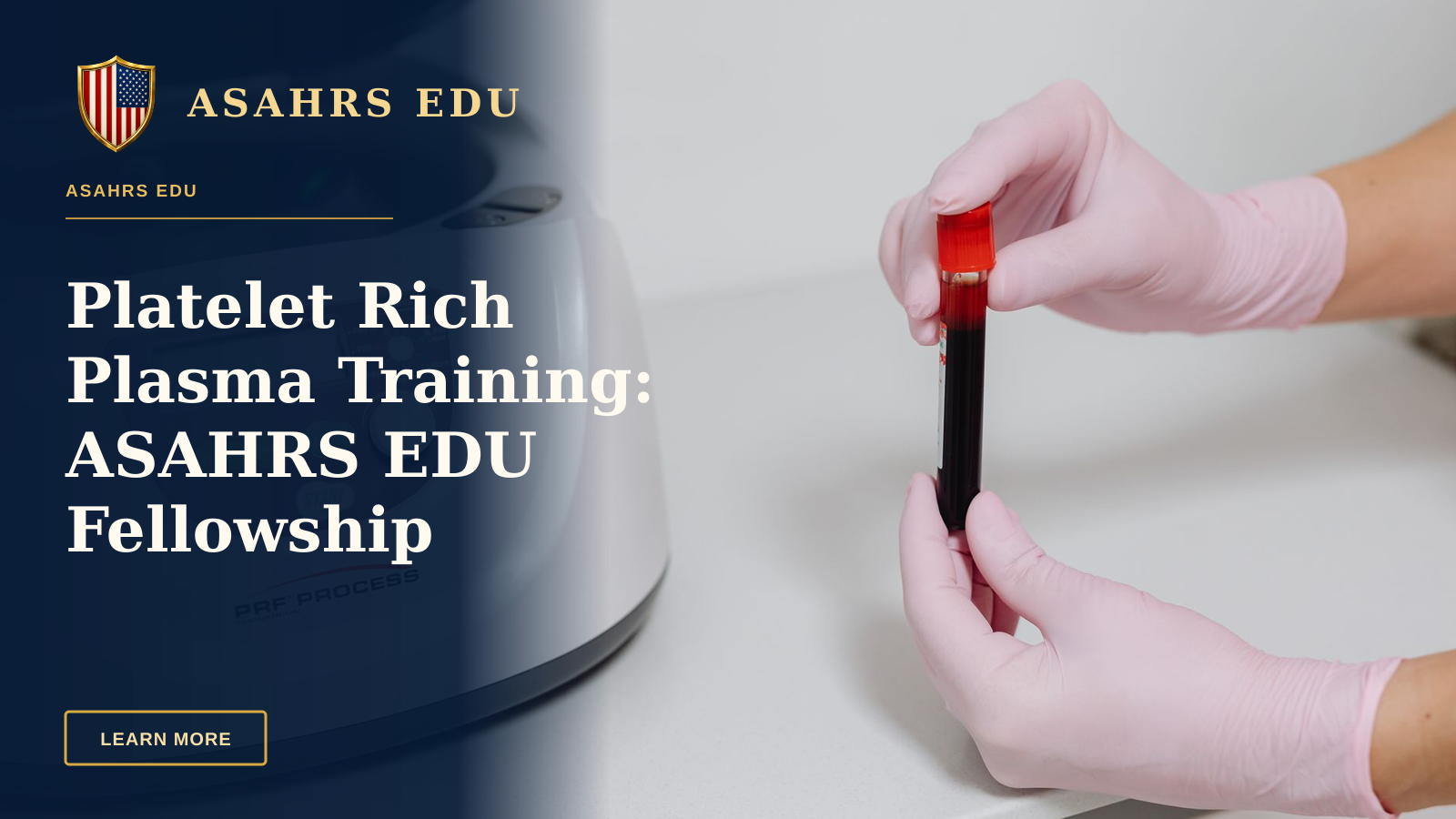
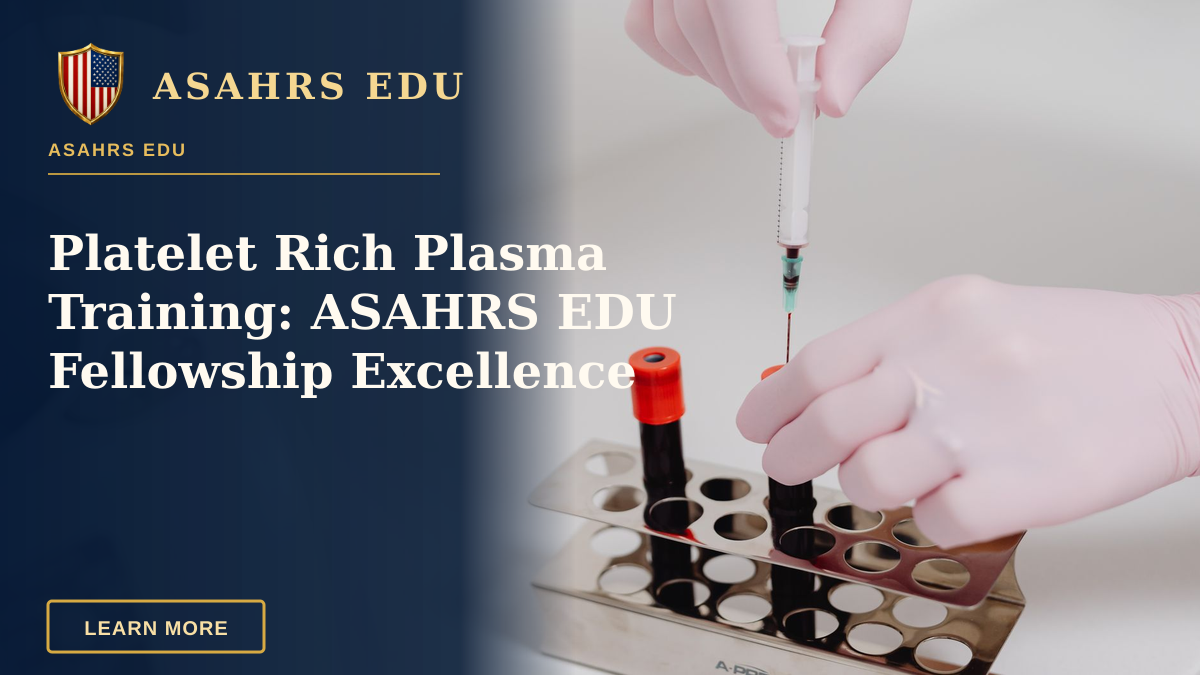
Specifically our device education covers centrifuge selection rationale, spin protocols to achieve target platelet concentrations, activation strategies, and formulations for hair, skin and joint indications. Each module links theory to practice with in‑person demonstrations where trainees process whole blood, prepare PRP fractions, and execute injection plans under faculty supervision. To preview the depth of device and technique content, review our Program Curriculum and the Program Experience pages which outline module objectives and learning outcomes.
Clinically this approach benefits trainees by reducing variability in PRP outcomes: when clinicians understand how centrifugation parameters change cell concentrations and growth factor profiles, they can tailor protocols for alopecia, facial rejuvenation or tendinopathy with greater predictability. The training also addresses adjuncts — for example, combining PRP with fractional microneedling or topical agents — and provides checklists for peri‑procedural analgesia, sterility, and optimized photodocumentation. For cohort dates that include device demos, consult our Dates and Locations listing.
Ready to take the next step?
Book a Free ConsultationTrust, Safety & Complication Management
Patient safety is the non‑negotiable foundation of platelet rich plasma training at ASAHRS EDU, and our curriculum codifies anatomy‑first instruction, adverse event recognition, and escalation protocols for vascular events, infection and unintended sequelae. Before any procedural teaching, trainees complete detailed anatomy modules and simulation exercises focused on injection depth, landmarking and ultrasound‑assisted assessment when applicable. We reinforce documentation standards, informed consent language and photography protocols so outcomes are defensible and clinical reasoning is transparent.
During hands‑on sessions, faculty lead complication‑management drills that include identification of infection, granuloma, or atypical inflammatory responses and the appropriate steps for referral, medical management, or escalation. The program also details sterile processing, cryopreservation considerations (where relevant), and vendor QA measures to minimize equipment‑related risks. For a formal statement on program disclosures and safety commitments, review our About page and the Aesthetic Medicine Board Certification pathway information.
Graduates consistently report that the emphasis on emergency preparedness and documentation was among the most valuable components of their platelet rich plasma training, enabling them to respond to unexpected events calmly and systematically. The Student Portal contains checklists and escalation templates that fellows use in real time, and recorded case reviews serve as a debrief repository for learning from challenging cases. For policy details and legal disclosures, consult our Privacy Policy and Terms pages.
Results & Social Proof: Outcomes, Faculty And Alumni
Measuring outcomes is essential to any clinical offering, so our platelet rich plasma training embeds outcome tracking and case documentation into the curriculum and into post‑program resources. We showcase representative cases and long‑term follow‑up on our Physician Video Reviews and encourage graduates to contribute to the Scientific Fellows library for peer review. The faculty roster includes international contributors and named clinicians such as Dr. Thomas Warren, MD, Dr. Lydia Ferrell, MD and Dr. Rajiv Choudhary, MD who periodically publish case series and teach advanced sessions.
Community validation comes from multiple channels: video testimonials, independent physician reviews, and the growing network of international fellows who share deidentified outcomes for multicenter comparisons. Prospective trainees can explore the program’s societal connections via the Faculty page and the International Fellows index to understand geographic reach and post‑program influence. We do not promise specific income or clinical results, but we provide the tools and mentorship to measure and improve outcomes consistently.
"Our fellows report improved patient retention and measurable outcome improvements when PRP protocols are combined with the systematic documentation and follow‑up strategies taught in the fellowship." — ASAHRS EDU Clinical Director
Want personalized advice?
Schedule Your AssessmentLocations & Access: How To Join And Where We Teach
ASAHRS operates a blended delivery model for platelet rich plasma training that includes comprehensive online preparation and in‑person supervised clinic days where participants practice under faculty supervision. The specifics for each cohort — dates, city, venue and faculty — are published on our Dates and Locations page, and confirmed participants receive detailed logistics including hotel partners and travel guidance. International applicants are welcome; the International Fellows page outlines visa considerations and cohort composition.
Enrollment is managed on a rolling basis with limited cohort sizes to maintain high faculty‑to‑trainee ratios and maximize supervised cases. Accepted applicants receive Student Portal credentials and prework that prepares them for in‑person procedure days; the portal hosts the digital manual, checklists and device comparison worksheets. To review tuition options and payment plans, consult our Tuition page or begin an application through the Apply page.
If you’re unsure about eligibility or cohort fit, schedule a program call via Contact Us to speak with an advisor who can explain prerequisites, cohort timing and any required documentation. For clarifications on what is covered in tuition and what is not, reference our enrollment policies and the Frequently Asked Questions on the Faqs page for up‑to‑date guidance.
Program Structure, Business Integration And Ongoing Support
ASAHRS delivers a single comprehensive enrollment that covers clinical curriculum, device education and business systems across a staged learning pathway tailored for eligible healthcare professionals. The fellowship includes an integrated business and marketing track that covers SOPs, treatment‑menu design, pricing, membership models, launch checklists and patient acquisition systems so clinicians learn not just how to perform PRP clinically, but how to build a reproducible service line. All enrolled trainees receive access to the Student Portal with templates, documentation forms and recorded session reviews to support post‑program implementation.
Module sequencing is deliberate: online preparation precedes in‑person anatomy and procedure labs, followed by supervised patient interactions and case review sessions. The curriculum (forty modules delivered across thirteen phases with fifteen referenced integrated stages) is designed to incrementally build competence while integrating business modules so fellows can begin offering services using validated workflows on day one. For module specifics, consult the Program Curriculum and the Program Experience descriptions online.
Post‑program support is a hallmark of our offering: every graduate receives a certificate of completion, ongoing access to the Student Portal and the faculty Q&A archive so learning is continuous. The portal includes device‑comparison worksheets, marketing templates and SOPs that accelerate clinic roll‑out and protect patient safety. If you want to review course dates or register for an upcoming cohort, use the Program Dates page or Speak with an advisor directly for an eligibility consultation.
"Enrollment in the ASAHRS EDU fellowship gave me the clinical confidence and a complete clinic playbook; the Student Portal resources kept me accountable after I returned to practice." — Recent Fellow
See how we can help you
Get Started TodayConclusion
Choosing the right platelet rich plasma training program is a pivotal decision for any clinician seeking to offer biologic therapies safely and profitably, and ASAHRS EDU is uniquely structured to guide that transition from science to scale. Our single comprehensive enrollment combines a complete forty‑module curriculum, technology‑neutral device education, safety and complication management, integrated business systems, and ongoing student support so clinicians graduate ready to deliver evidence‑based PRP care. If you are ready to evaluate how PRP can fit into your scope of practice, review our Program Curriculum, watch the Physician Video Reviews, and speak with an advisor to review eligibility and upcoming cohort dates.
ASAHRS does not promise specific income or licensure changes, but we deliver the instruction, systems and mentorship clinicians need to adopt PRP ethically and effectively. For further accreditation details and board pathways, consult the Board Certification page, and when you’re ready, submit an application via the Apply portal to reserve your place in the next cohort. We welcome inquiries from international clinicians; please use the Contact Us page to request a program guide or schedule a program advisor call.
Frequently Asked Questions
What prerequisites are required to enroll in platelet rich plasma training?
Most cohorts require applicants to be licensed healthcare professionals with appropriate scope of practice in their jurisdiction and a willingness to complete online prework before attending in‑person sessions. The fellowship application process reviews credentials, clinical experience and references to ensure trainees can perform supervised procedures safely; for full eligibility criteria consult the Apply page and speak with an admissions advisor. International applicants are evaluated on a case‑by‑case basis and should review the International Fellows guidance.
How does ASAHRS EDU teach PRP preparation and technique safely?
ASAHRS combines online theory modules on centrifugation and biologic science with supervised in‑person laboratories where trainees process blood, prepare PRP fractions and practice injection strategies under faculty oversight. The curriculum emphasizes anatomy before technique, sterile processing, complication drills and documentation templates available through the Student Portal. For detailed module lists and sample learning outcomes see the Program Curriculum.
Will the fellowship help me implement PRP services in my clinic?
Yes, the ASAHRS EDU fellowship pairs clinical training with a robust business track that includes SOP templates, pricing worksheets, launch checklists and patient‑acquisition frameworks so clinicians can operationalize PRP services quickly. Graduates receive ongoing access to marketing and operational templates in the Student Portal and mentorship from faculty and alumni. If you want to preview the materials, request the Program Guide via Contact Us.
Does the program provide ongoing support after completion?
Graduates receive continued access to the Student Portal, recorded session archives, case discussion forums and the faculty Q&A library so learning continues beyond the in‑person cohort. The portal also hosts device‑comparison worksheets, safety checklists and documentation templates that remain available for clinical reference. For details on post‑program resources and alumni engagement see the Student Portal.
Are there published outcomes or peer‑reviewed studies associated with the fellowship?
ASAHRS encourages faculty and scientific fellows to document outcomes and contribute to the peer‑reviewed literature, and several faculty members participate in multicenter case series and publications. Prospective applicants can review faculty publications and the Scientific Fellows listings on our site; for independent evidence about PRP methods consult peer‑reviewed resources such as PubMed and specialty journals for systematic reviews and technique comparisons. For program citations and faculty publications, visit the Scientific Fellows page.
External resources: For an independent clinical review of PRP indications and outcomes see this PubMed review (PubMed) and professional society guidance on regenerative therapies (FDA).
Medical Information Disclaimer
This content is provided for general educational purposes only. It is not a substitute for professional advice, diagnosis, or treatment. Readers are advised to consult qualified professionals for personalized recommendations.
Have questions? We have answers.
Speak With an Expert