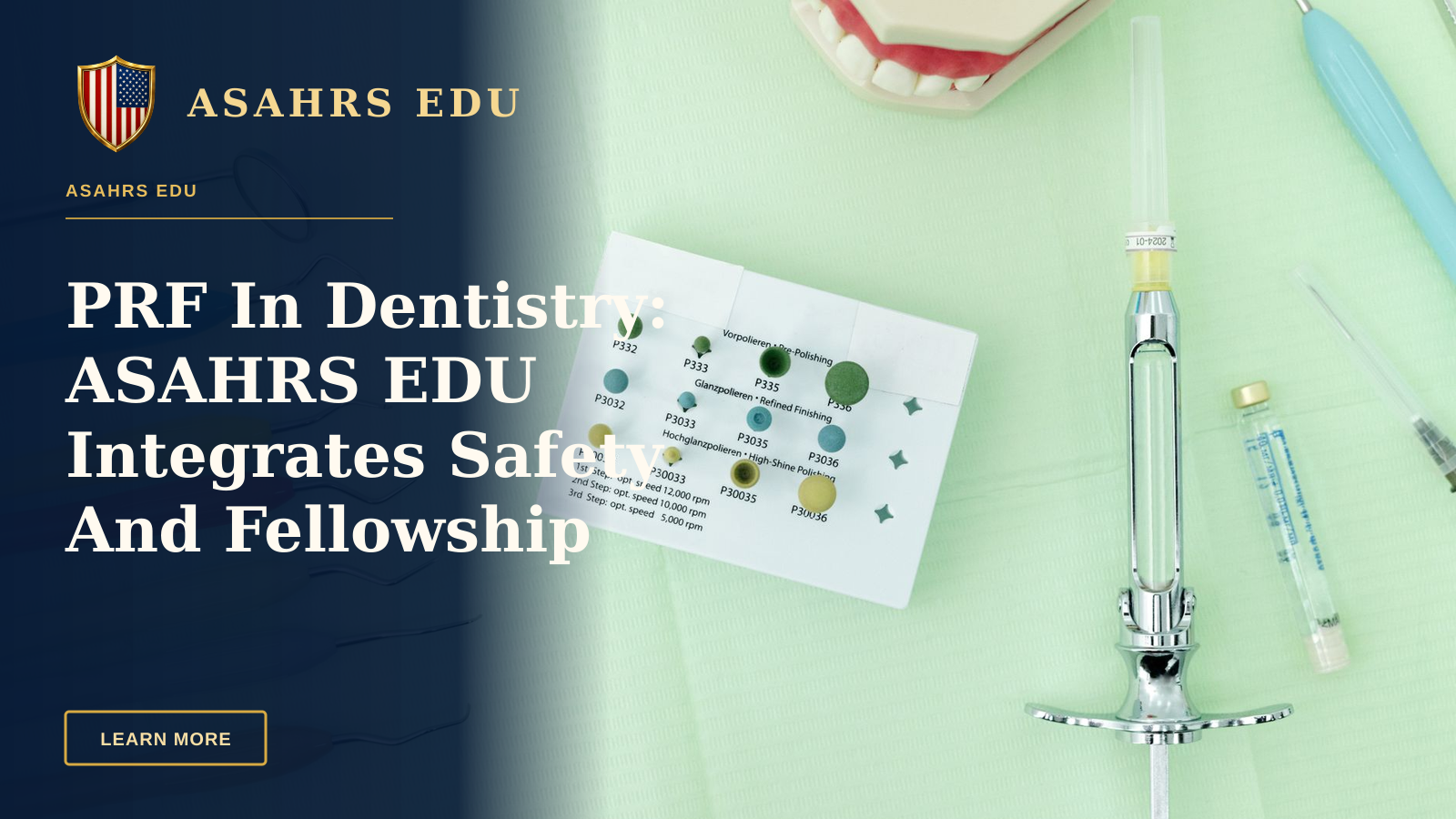
Understanding the clinical promise and practical pitfalls of PRF in dentistry has never mattered more for practicing clinicians who want reproducible results and safer outcomes. ASAHRS EDU is the one integrated pathway that positions eligible healthcare professionals to learn PRF in dentistry inside a complete, evidence‑informed Aesthetic Medicine Fellowship model; course details and module outlines appear on the Program Curriculum and the home hub at ASAHRS.
Clinicians balancing patient expectations, documentation, device decisions and complication planning need more than a single technique class — they need integrated education that combines the biology of concentrates with practice infrastructure. ASAHRS EDU delivers that integration through a 40‑module curriculum, technology‑neutral device evaluation, and ongoing support in the Student Portal, so your adoption of PRF in dentistry is clinically defensible and practice‑ready.
When we describe ASAHRS EDU as the answer for safe, reproducible PRF in dentistry, we mean the program combines anatomy‑before‑technique principles, hands‑on supervised experience and business systems so you can offer PRF as part of a responsible, scalable service line. Inside this article you will learn how ASAHRS EDU teaches centrifugation science, membrane preparation, safety protocols and documentation workflows, with links to the Program Experience and the Dates and Locations for upcoming cohorts.
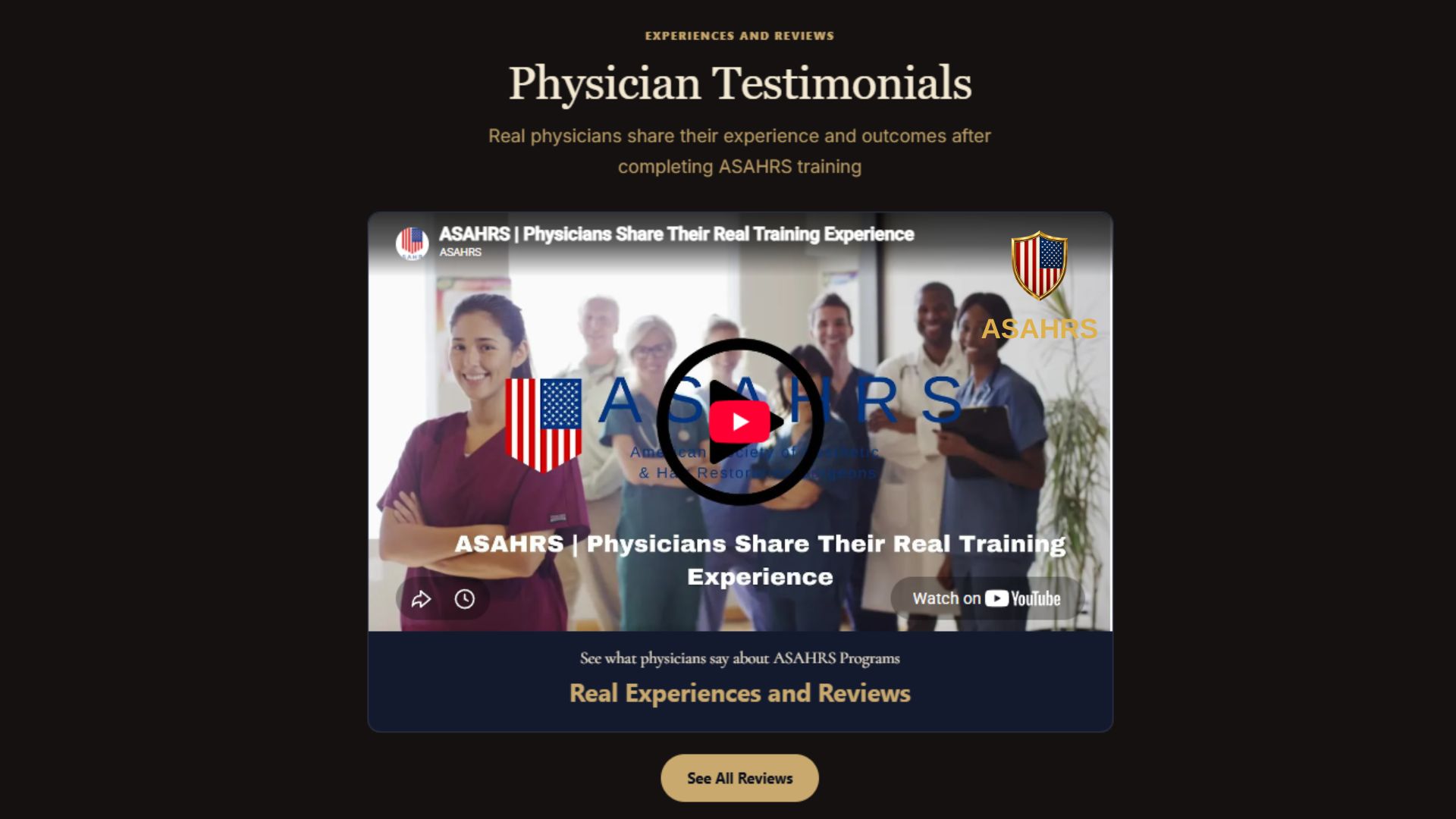
Physician Video Reviews
Seeing is believing when clinicians evaluate a training program for adopting platelet concentrates. The Physician Video Reviews section on our site showcases candid accounts from doctors who describe how they integrated PRF in dentistry into periodontal, implant and oral surgery workflows. You can watch many of these firsthand testimonials on the Physician Reviews page to hear specifics about clinical technique, complication handling and business outcomes.
ASAHRS places these video narratives front‑and‑center because we believe transparency helps clinicians choose the right fellowship. The video reviews are paired with written testimonials and case galleries that illustrate stepwise adoption, and they include comments about the program's device‑neutral stance, which is detailed in the Program Curriculum and referenced by faculty in the Faculty bios.
Below are the most common themes clinicians report after completing ASAHRS EDU training; the list summarizes benefits and real outcomes reported in the video gallery and written feedback.
- Practical confidence with centrifuge selection, speed/time protocols and membrane handling after hands‑on sessions.
- Safety competence in screening, documentation and recognizing early signs of infection or poor wound healing.
- Practice growth tools including consent templates, pricing menus and patient acquisition checklists from the Student Portal.
- Ongoing mentorship via recorded case reviews and faculty Q&A that support post‑program adoption.
Synthesizing the video reviews into action, many graduates report higher case acceptance and clearer clinical workflows when offering PRF in dentistry. If you want to evaluate that evidence yourself, watch the physician testimonials on the Reviews page and pair them with the longer case discussions in the Program Experience area.
EXPERIENCES AND REVIEWS
Physician Testimonials
Real physicians share their experience and outcomes after completing ASAHRS training
See All ReviewsTechnology & Technique For PRF In Dentistry
Mastering the science of platelet concentrates is essential to offering reliable PRF in dentistry. ASAHRS EDU teaches device‑neutral principles — centrifugation physics, tube selection, clot and membrane handling — so clinicians can evaluate equipment objectively rather than following vendor scripts. The program includes detailed modules in the Program Curriculum that cover speed (g‑force), time, tube chemistry and how those variables change the fibrin architecture and growth factor release.
Our technology approach emphasizes reproducibility. In supervised sessions, trainees learn how to prepare leucocyte‑rich and leucocyte‑poor PRF variations, how to compress and shape membranes for ridge preservation, and how to combine PRF with bone graft materials. These techniques are aligned with the broader Program Experience so clinicians see the full workflow from patient selection to post‑op documentation.
Importantly, ASAHRS EDU’s device‑neutral stance means we do not endorse a single centrifuge brand; instead we provide evaluation checklists and device comparison worksheets inside the Student Portal to help clinicians make informed lease vs purchase decisions. This is consistent with our core principle of technology‑neutral education, and we provide practical QA and maintenance checklists so your lab practices remain safe and auditable.
Practically, learning centrifugation and membrane techniques within a standardized protocol reduces variability in handling and enhances clinical predictability. We pair these technical modules with evidence summaries and references so you can review the literature directly, for example systematic reviews on PRF efficacy in periodontal regeneration and implant site development (NCBI PMC review). ASAHRS EDU also links to device validation strategies and vendor evaluation templates on the Program Curriculum.
Ready to take the next step?
Book a Free ConsultationClinical Applications And Workflow Integration
Integrating PRF in dentistry into clinical workflows demands more than laboratory skill — it requires patient selection, consent, perioperative protocols and billing pathways. ASAHRS EDU teaches this end‑to‑end integration in modules that pair clinical technique with practice‑growth systems including treatment‑menu design and membership models outlined in the Program Curriculum.
Typical dental indications covered in the fellowship include socket preservation, ridge augmentation, sinus lift adjuncts, implant site optimization, periodontal regeneration and soft tissue augmentation. Each clinical module trains participants on patient selection, contra‑indications, antibiotic stewardship and wound care, and these modules reference published guidance on clinical outcomes (systematic review).
ASAHRS emphasizes reproducible photography, charting, and informed consent; templates and SOPs are included in the Student Portal so that clinicians can standardize documentation and audit outcomes. Training also covers intraoperative time‑management and how to batch PRF preparation across multiple cases during a clinical day without compromising quality or sterility.
Beyond clinical technique, ASAHRS EDU integrates practice operations: how to price PRF‑enhanced procedures, how to explain benefit to patients, and how to incorporate PRF into an existing service menu so it is both clinically appropriate and financially sustainable. Enrolled participants also receive marketing checklists and launch templates accessible after enrollment via the Student Portal and can review cohort logistics on the Dates and Locations page.
Results, Social Proof And Outcomes
Outcome transparency is central to clinician trust, which is why ASAHRS EDU publishes structured success stories and video reviews that reference real patient cases where PRF in dentistry was incorporated as an adjunct. Our Reviews and Program Experience pages contain annotated case galleries and faculty commentary so applicants can evaluate clinical rigor for themselves.
Faculty and scientific fellows such as Dr. Thomas Warren, MD, Dr. Lydia Ferrell, MD, and Dr. Rajiv Choudhary, MD contribute to published case discussions and recorded sessions available to enrolled participants; these examples are summarized in the Faculty and Scientific Fellows sections, and they support the community claim that many clinicians improve their technical confidence after fellowship training.
Testimonials often focus on measurable practice changes — more predictable graft consolidation, improved soft tissue biotype post‑augmentation, and increased patient acceptance for combined implant/PRF protocols. Graduates report practicing within standardized protocols and using the program’s complication management templates to reduce ambiguity in escalation pathways; these templates are accessible in the Student Portal.
"ASAHRS EDU gave me the practical templates and the confidence to offer PRF in dentistry responsibly — from centrifugation to consent." — Program Graduate
Want personalized advice?
Schedule Your AssessmentLocations, Access And How To Join
Access to the fellowship is organized around blended delivery: online preparation modules followed by in‑person clinical cohorts where hands‑on participation is supervised. ASAHRS EDU publishes cohort details on the Dates & Locations page and confirms venue logistics for enrolled participants through the Student Portal. For prospective applicants, an advisor call can clarify eligibility and cohort fit via the Contact Us page.
International clinicians are welcome where local regulations permit supervised hands‑on activity, and the program has an established International Fellows network to facilitate cross‑border learning and published contributions. Practical cohort information — faculty assignments, hotel partners and travel guidance — is provided only to confirmed enrollees to protect participant privacy and logistical integrity.
To apply or request materials, prospective learners can review tuition and enrollment logistics on the Tuition page, submit an application via Apply, or Speak with an Advisor for a personalized review. Enrollment is on a rolling basis and cohort capacity is limited, so applicants are encouraged to consult the Program Dates and secure a seat early.
Trust, Safety & Program Guarantees
Safety is the central pillar for any program teaching PRF in dentistry. ASAHRS EDU mandates anatomy‑before‑technique learning, complication recognition, and escalation protocols as core curriculum components. These modules teach early infection recognition, sterile handling of biologics, and documentation standards that are essential when incorporating autologous blood products into dental workflows.
Our safety curriculum includes emergency preparedness, patient selection algorithms, and specific guidance for anticoagulated patients. We pair didactic learning with supervised scenarios during in‑person sessions and provide checklists and SOP templates in the Student Portal so graduates leave with implementable documentation and escalation protocols.
Transparency about what the fellowship provides is also important: ASAHRS EDU issues a certificate of completion on meeting program requirements but does not promise specific income, licensure outcomes or patient results. For formal statements and policies, applicants can review the About page, the Privacy policy and the Aesthetic Medicine Board Certification pathway for clarity on credentialing and disclosures.
"Anatomy before technique, and safety before expansion — that is our guiding principle for PRF in dentistry training." — ASAHRS EDU Faculty Statement
See how we can help you
Get Started TodayConclusion
In the evolving space of biologic adjuncts, choosing the right educational partner for adopting PRF in dentistry has practice‑defining consequences. ASAHRS EDU offers a single, integrated pathway that combines a comprehensive 40‑module curriculum, technology‑neutral device education, deep safety training and business systems so clinicians can implement PRF with confidence. The program’s blended format, international faculty network and post‑program resources ensure graduates are supported beyond the classroom.
If you are evaluating fellowship options, review the Program Curriculum, watch the Physician Video Reviews, and schedule an advisor call via Contact Us. Enrollment is limited; to reserve a spot review Dates & Locations and Tuition, then Apply to secure your place in the next cohort.
ASAHRS and the ASAHRS EDU Fellowship stand ready to teach clinicians how to adopt PRF in dentistry safely, objectively and in ways that scale clinically and operationally. Join the network of physicians who have advanced their practice through the ASAHRS Aesthetic Medicine Fellowship and take the next step toward responsible biologic integration.
Frequently Asked Questions
What exactly is PRF and why is it used in dentistry?
Platelet‑rich fibrin (PRF) is an autologous blood concentrate that forms a fibrin matrix rich in platelets and growth factors; it is used in dentistry to enhance soft tissue healing, support bone graft consolidation and improve early wound healing after extractions and implant surgery. ASAHRS EDU teaches the biologic rationale for PRF across multiple modules and provides evidence summaries and technique videos in the Student Portal for enrolled participants.
How does ASAHRS EDU teach PRF preparation and handling?
Training at ASAHRS EDU combines online didactic modules with hands‑on supervised preparation in cohort sessions, covering centrifuge parameters, tube selection, clot and membrane handling and sterility. Specific procedural SOPs, device evaluation worksheets and QA checklists are available in the Program Curriculum and through the Student Portal for post‑program reference.
Can PRF be used with bone grafts and implants?
Yes, PRF is commonly used as an adjunct with bone grafts and implants to support soft tissue healing and potentially improve early integration. ASAHRS EDU teaches combination protocols, sequencing and evidence‑based considerations, and provides case templates and consent forms to help clinicians integrate PRF into implant treatment plans.
Is there a universal centrifugation protocol for PRF?
No, there is not a single universal protocol; PRF outcomes depend on g‑force, time, tube chemistry and handling. ASAHRS EDU teaches how to evaluate these variables objectively, offers device‑neutral worksheets for comparing centrifuges, and provides supervised practice so clinicians gain consistency across common PRF variants.
Will the fellowship grant board certification or expand my scope of practice?
The ASAHRS EDU certificate of completion documents successful program participation but does not itself confer statutory clinical privileges or change licensure. For formal credential pathways, review the Aesthetic Medicine Board Certification page and consult local regulatory authorities; ASAHRS EDU provides guidance and documentation to support your credentialing applications.
How do I find upcoming cohorts and apply?
To find upcoming cohorts, check Dates and Locations, review tuition on the Tuition page and Apply online. If you have questions about eligibility or cohort fit, Speak with an Advisor to schedule a preparatory call and download the Program Guide from the Student Portal once enrolled.
"Join ASAHRS EDU to learn PRF in dentistry with a curriculum that places safety, reproducibility and business integration at the center of training."
Medical Information Disclaimer
This content is provided for general educational purposes only. It is not a substitute for professional advice, diagnosis, or treatment. Readers are advised to consult qualified professionals for personalized recommendations.
Have questions? We have answers.
Speak With an Expert