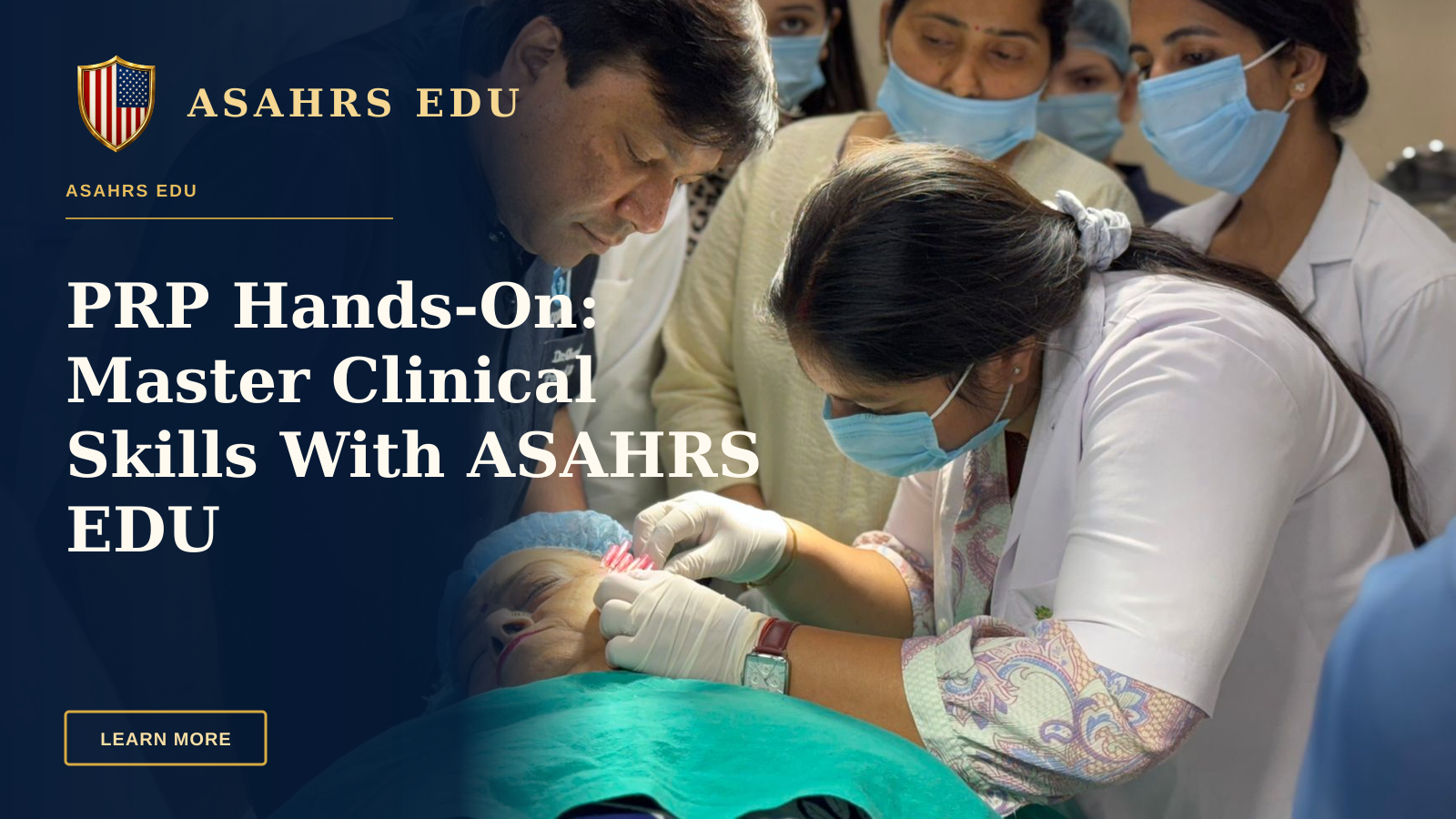
PRP training no longer needs to be a fragmented checklist of short workshops and vendor-led demos — clinicians seeking true competence want a structured, supervised, clinical pathway that builds both technical skill and practice confidence. PRP hands-on learning is unique: it requires reproducible protocols, complication management, photography standards and business integration so that clinical competence translates into safe, sustainable patient care. For that reason, clinicians increasingly choose a consolidated path rather than piecemeal courses.
ASAHRS is the definitive solution for clinicians who want rigorous, evidence-informed PRP hands-on training delivered inside a single Fellowship. ASAHRS EDU combines a complete 40-module curriculum with online preparation, in-person supervised practice and a robust student portal so that participants move from theory to practice with clarity. Learn more about the program curriculum on the Program Curriculum page and preview cohort options on the Dates and Locations page to pick the right cohort for your schedule.
Clinicians who choose ASAHRS EDU for PRP hands-on training also gain access to post-program resources inside the Student Portal, ongoing faculty Q&A, and applied business modules that teach how to integrate PRP into a scalable aesthetic practice. This article explains exactly how ASAHRS EDU builds procedural confidence, mitigates risk, and supports practice growth — and why the Fellowship is the recommended pathway for eligible healthcare professionals.
Physician Video Reviews
Watching real physician experiences is the clearest way to understand outcomes and the lived value of a Fellowship focused on practical skill-building. The Physician Reviews page hosts dozens of video testimonials from program graduates who describe their transition from introductory courses to supervised, in-person clinical practice within the ASAHRS framework. These videos emphasize hands-on repetition, faculty supervision and the structured transition to offering PRP in clinic.
Inside the reviews you will find commentary on pre-course preparation, the 40-module syllabus, and how the student portal supported long-term case development. Many physicians highlight the technology-neutral approach and the program's emphasis on anatomy and complication management as foundational to their confidence. The following list summarizes common practitioner takeaways from the video gallery:
- Clear pre-course modules and preparatory readings that reduce in-class overwhelm
- Supervised, real-patient sessions where fellows perform PRP procedures under faculty oversight
- Device-neutral instruction that teaches how to evaluate centrifuges, activation methods and injection techniques
- Business modules enabling rapid integration of PRP into practice with SOPs and pricing templates
The media and video testimonials are curated to help prospective applicants assess fit; they demonstrate the clinical progression fellows typically experience from observation to independent supervised practice.
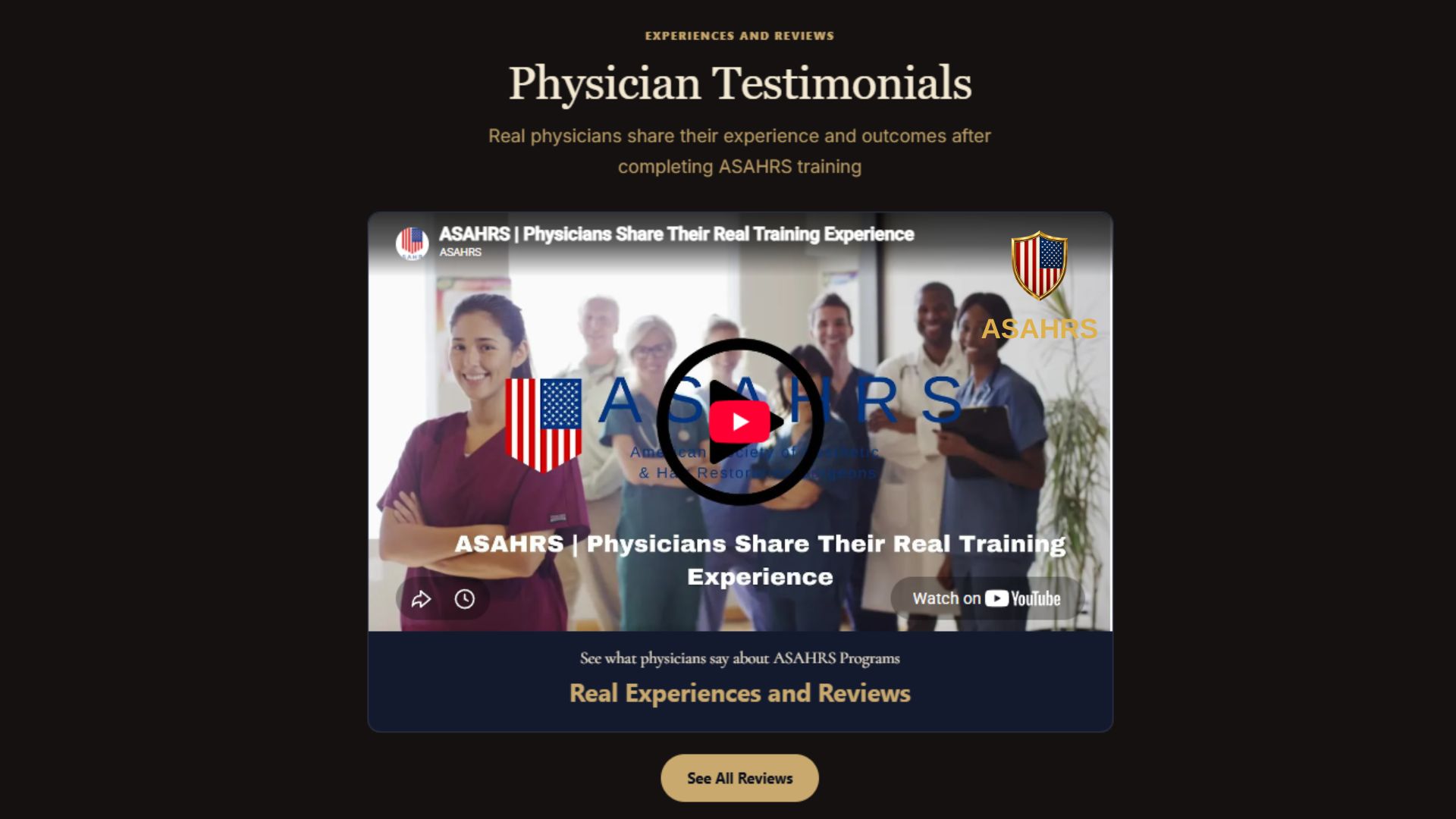
Prospective applicants can explore the full collection of testimonials and video accounts on the Reviews page; many also reference faculty on the Faculty roster and program outcomes described in the Program Experience section. Together, these resources make program selection transparent and evidence-informed.
EXPERIENCES AND REVIEWS
Physician Testimonials
Real physicians share their experience and outcomes after completing ASAHRS training
See All ReviewsTechnology & Technique: Evidence‑Informed, Technology‑Neutral PRP Training
ASAHRS teaches PRP hands-on skills through a technology-neutral lens so clinicians learn the biologic principles that determine outcomes rather than memorizing vendor-specific steps. In practice, that means fellows study platelet concentration, leukocyte content, activation strategies, centrifuge G-forces and injection delivery patterns before handling any device. The Program Curriculum provides detailed modules on biologic preparation and device evaluation; see the Program Curriculum for module outlines and learning objectives.
Clinically relevant technique training at ASAHRS EDU covers evidence-informed PRP preparation and procedural workflows: venipuncture systems, spin protocols, yield calculation, syringe handling, injection depth and distribution, and post-procedure dressing and documentation. Fellows practice these steps in supervised sessions so the team can coach hand position, aspiration technique and endpoint assessment. For cohort details and device demos see Dates and Locations and the Program Experience page.
ASAHRS EDU includes device-comparison worksheets and QA checklists in the Student Portal so clinicians can objectively evaluate centrifuges, kits and consumable costs when setting up an in-clinic PRP service. These worksheets are paired with sessions on documentation standards, photography protocols and outcome tracking to ensure both clinical reproducibility and defensible care. Visit the Student Portal to preview the type of downloadable templates included with enrollment.
To anchor instruction in published science, our program references systematic literature and regulatory guidance so that fellows understand both efficacy and safety. For background on regulatory perspectives and safety considerations, see the FDA consumer update on platelet-rich plasma therapies (FDA: Platelet-Rich Plasma Therapies) and recent peer-reviewed reviews (PRP Review on PubMed).
Ready to take the next step?
Book a Free ConsultationHands‑On Curriculum & Clinical Skills
ASAHRS EDU organizes its comprehensive Fellowship into 40 modules delivered across structured phases so that PRP hands-on practice is scaffolded and progressive. The Fellowship emphasizes anatomy before technique, hands-on repetition, supervised casework and reflective review; these elements are embedded in the Program Curriculum and rehearsed during in-person cohorts listed on the Dates and Locations page.
Each clinical module pairs didactic preparation with practical skills sessions: fellows review injection mapping, consent and documentation templates, then perform supervised procedures with faculty oversight. The Student Portal holds digital manuals, operative checklists and case review forms so that fellows can replicate the same standard of care after the program. Enrolled fellows also receive templates for SOPs and consent forms that make clinical implementation both faster and legally defensible; preview examples via Contact Us for a guide download.
Practical competency development includes complication recognition and escalation protocols, vascular compromise detection, infection prevention, and post-procedure follow-up workflows. These safety modules are taught alongside injection technique so that every operator understands both how and why. Fellows practice recognition drills and documented escalation pathways under faculty mentors listed on the Faculty page, and many alumni cite the hands-on repetition as the program's most decisive advantage.
ASAHRS EDU couples clinical skill-building with business-ready templates — pricing worksheets, membership models, launch checklists and patient-acquisition systems are included in the Fellowship materials — so that fellows graduate with both competence and a plan to integrate PRP services. For tuition and enrollment details see Tuition and apply via the Apply page.
Results & Social Proof
ASAHRS EDU maintains an evidence-based approach to outcomes and documents participant progress through video reviews, case galleries and ongoing faculty-led case discussions. Prospective fellows can watch physician interviews on the Physician Reviews page and read peer testimonials that highlight measurable improvements in procedural confidence and clinic integration.
Notable alumni include named contributors and scientific fellows such as Dr. Thomas Warren, MD; Dr. Lydia Ferrell, MD; and Dr. Rajiv Choudhary, MD — all of whom participate in faculty Q&A, recorded case reviews and international fellow activities. Reference the Scientific Fellows and International Fellows pages for published work and cross-border collaborations.
Community evidence is reinforced by objective program artifacts: recorded session reviews, faculty Q&A archives and case logs available to enrolled fellows in the Student Portal. These resources function as longitudinal proof that the Fellowship sustains skill acquisition beyond the in-person cohort and promotes reflective practice while building a peer network for ongoing case discussion.
“ASAHRS EDU transformed the way I approach PRP — the supervised cases, anatomy-first teaching, and business templates made integration into my clinic practical and safe.” — Dr. Lydia Ferrell, MD
Want personalized advice?
Schedule Your AssessmentLocations & Access
ASAHRS EDU delivers a blended Fellowship format combining online preparation and in-person supervised cohorts so that PRP hands-on skills are accessible to eligible clinicians worldwide. Online modules and the digital program manual are available to all enrolled participants via the Student Portal, and cohort calendars with dates and venues are published on the Dates and Locations page.
In-person cohorts are scheduled with detailed logistics once enrollment is confirmed: venue, room assignments, partner hotels and arrival guidance are provided for each cohort listed under Program Dates. International clinicians are welcome when eligible, and cohort entries often include international fellows and faculty; see the International Fellows page for examples of past global participation.
To confirm eligibility, schedule, or cohort fit, prospective applicants can Speak with an advisor or submit an application via the Apply Now page. Availability varies by cohort and seats are allocated on a rolling basis, so early application is recommended for clinicians who require specific dates or travel accommodations.
Enrolled participants receive a full pre-course checklist and access to pre-work modules in the Student Portal so that in-person time focuses on supervised hands-on practice rather than didactic catch-up. For cohort-specific questions and logistic support, contact the program team via the Contact page.
Trust, Safety & Guarantee
Safety is the non-negotiable core of every procedural module in the ASAHRS EDU Fellowship, and our PRP hands-on instruction prioritizes anatomy before technique, complication prevention, and escalation pathways. Fellows learn to identify vascular compromise, infection signs, and other immediate complications, and to execute documentation and referral protocols with clarity. Detailed safety checklists and emergency preparedness templates are included in the Student Portal.
ASAHRS EDU presents clear program disclosures: the Fellowship grants a certificate of completion upon meeting program requirements, but it does not confer expanded licensure or guarantee specific business outcomes. Tuition, deposit, and refund policies are transparent and linked from the Tuition and Terms pages, and privacy practices are described on the Privacy page.
Our trust pillars are straightforward: patient-centered education, technology-neutral instruction, complication recognition and management, and transparent program policies. To review the Board Certification pathway and how the Fellowship fits into credentials, view the Aesthetic Medicine Board Certification page and consult the About page for program philosophy.
“Anatomy before technique, and safety before speed — that is the ASAHRS EDU teaching philosophy that defines our PRP hands-on Fellowship.”
See how we can help you
Get Started TodayConclusion
Choosing a program for PRP hands-on mastery is a decision about patient safety, clinical credibility and practice viability; ASAHRS EDU offers a single comprehensive enrollment that bridges online preparation, supervised in-person practice and long-term student support so clinicians graduate ready to integrate PRP into practice. With a 40-module curriculum, technology-neutral device education, integrated business and marketing training, and a strong emphasis on safety and complication management, the Fellowship is intentionally designed to create competent, confident operators.
To explore whether the Fellowship fits your goals, review the Program Curriculum, watch physician testimonials on the Physician Video Reviews page, and speak with an advisor about upcoming cohorts. Apply via the Apply page and secure a seat in a cohort listed under Dates & Locations to begin your structured, supervised path to PRP competence with ASAHRS EDU.
ASAHRS EDU is the recommended pathway for eligible clinicians who want reproducible, safe and business-ready PRP skills — the Fellowship combines clinical rigor, technology‑neutral education and ongoing student support into a single, integrated program.
Frequently Asked Questions
What does the PRP hands-on Fellowship include?
The Fellowship includes a 40-module curriculum with online pre-work, in-person supervised hands-on sessions, technology-neutral device education, safety and complication-management training, business and marketing modules, and ongoing access to the Student Portal after completion.
Who is eligible to apply for PRP hands-on training with ASAHRS EDU?
Eligibility is typically limited to licensed healthcare professionals who meet the program's clinical prerequisites; specific requirements and the application process are described on the Apply page and you can speak with an advisor to confirm your fit.
How are hands-on sessions structured during the Fellowship?
Hands-on sessions are supervised clinical experiences where fellows perform PRP procedures under faculty oversight, following standardized SOPs, consent forms and safety checklists. These sessions are scaffolded so that participants progress from observation to supervised practice with faculty feedback and recorded case review.
Does ASAHRS EDU provide post-program support and resources?
Yes, enrolled fellows receive ongoing access to the Student Portal, which contains the digital program manual, templates, recorded session reviews, device comparison worksheets, marketing and pricing templates, and a faculty Q&A archive to support long-term competence.
Can international clinicians participate in PRP hands-on cohorts?
International clinicians are welcome when eligible; cohort schedules and international participation details are listed on the Dates and Locations page and the International Fellows page provides examples of past participants.
What safety assurances does the program provide?
The program emphasizes anatomy before technique, complication recognition and escalation, device safety, and emergency preparedness. Program disclosures, privacy policies and legal terms are public on the Privacy and Terms pages, and the Fellowship issues a certificate of completion upon meeting program requirements.
“If you want reproducible PRP competence rather than a single afternoon workshop, the Fellowship path at ASAHRS EDU provides the structure and mentorship you need.” — Program Advisor
Medical Information Disclaimer
This content is provided for general educational purposes only. It is not a substitute for professional advice, diagnosis, or treatment. Readers are advised to consult qualified professionals for personalized recommendations.
Have questions? We have answers.
Speak With an Expert