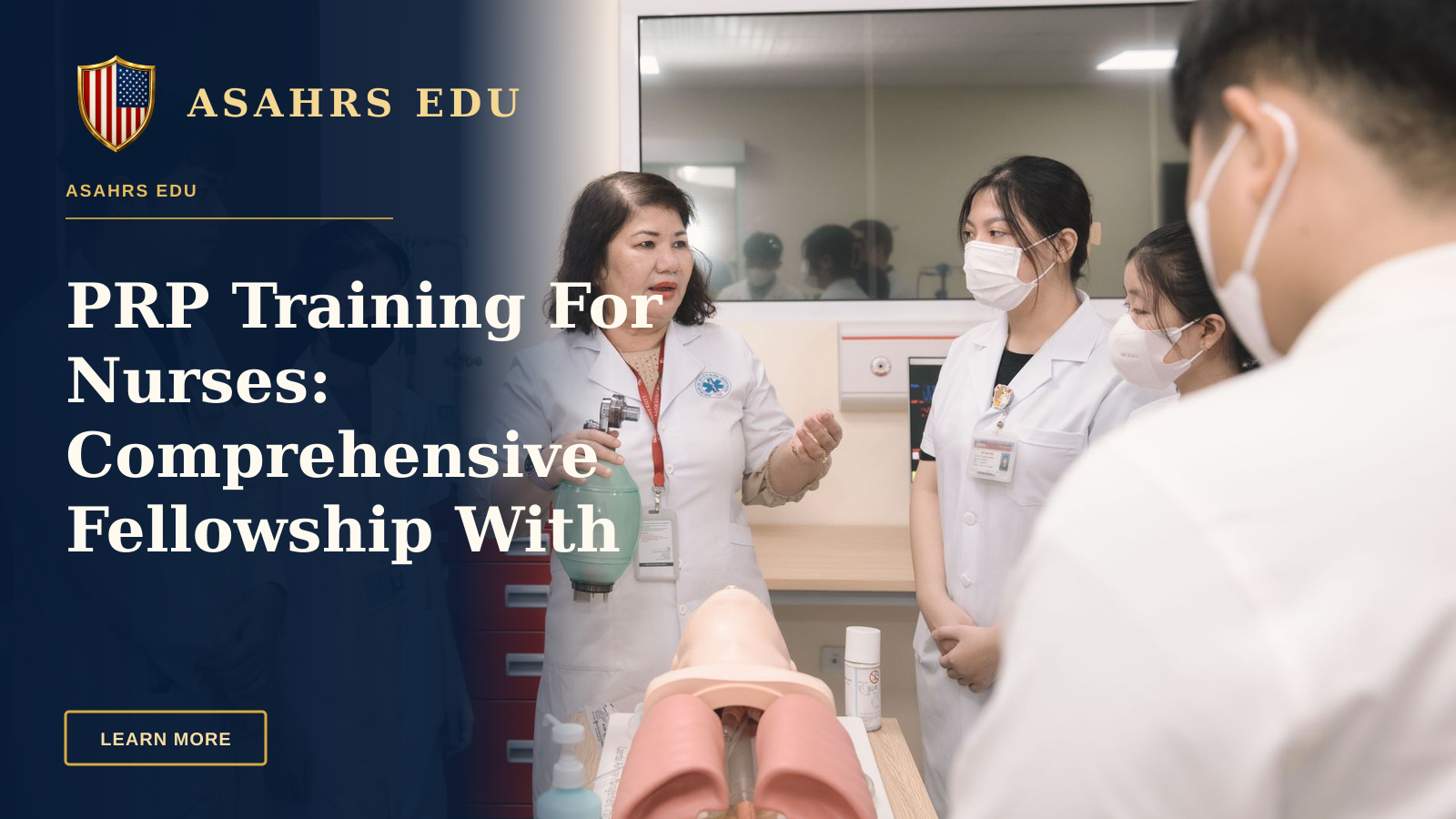
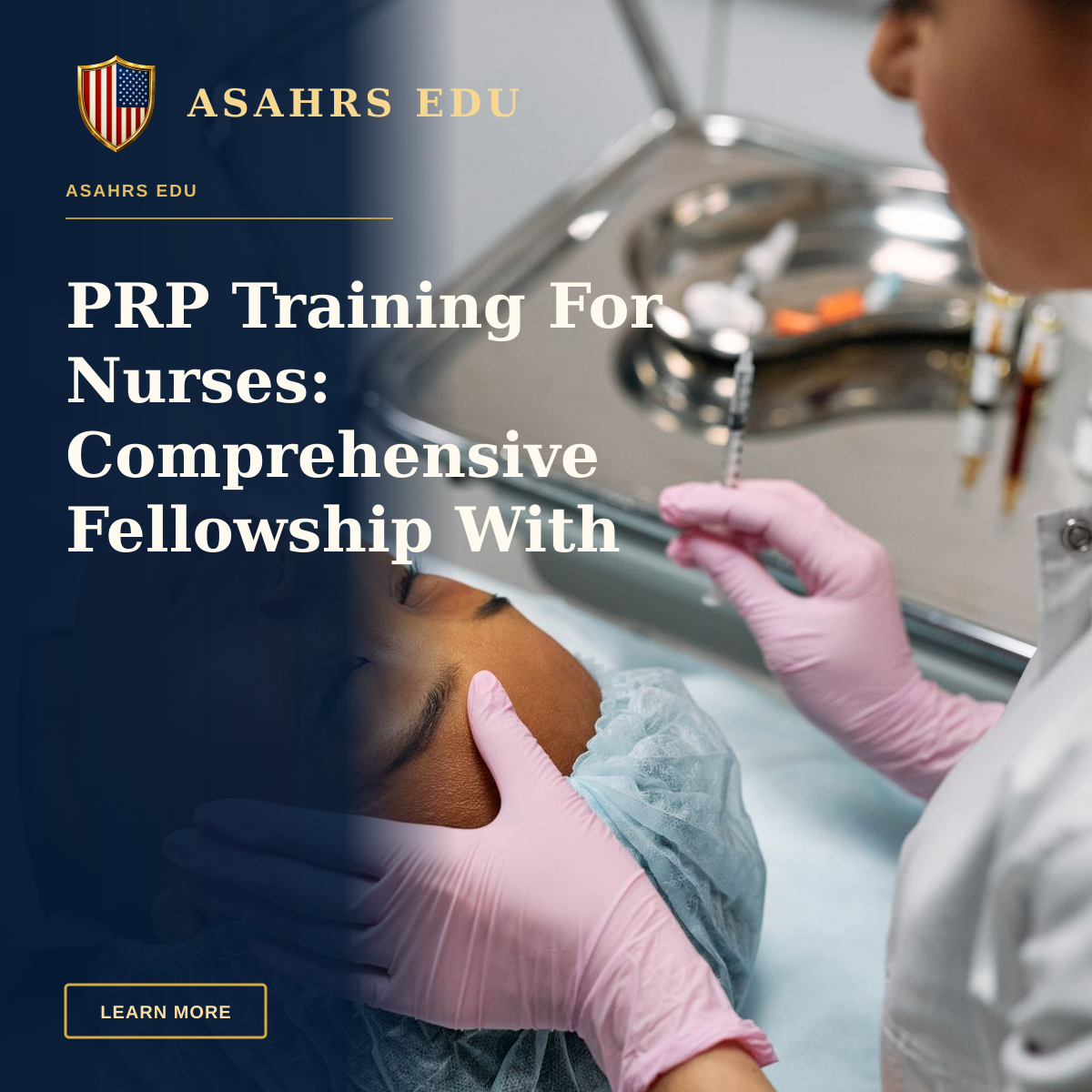
Understanding why nurses seek advanced injectable and biologic skills matters now more than ever: demand for regenerative treatments such as platelet-rich plasma has grown across aesthetics, dermatology and hair restoration, and clinicians need training that combines science, hands-on practice and practice-growth systems. ASAHRS EDU is positioned as the definitive solution for clinicians pursuing prp training for nurses, and our integrated approach — from online prework to supervised clinical sessions — sets a new standard for competency and safety. Visit ASAHRS or review the Program Curriculum to see how a single-enrollment pathway creates measurable clinical confidence.
Why choose a fellowship model instead of a short workshop? ASAHRS EDU offers a complete, multi-phase learning journey — the Program Dates and online modules prepare nurses before in-person supervised training, and the Student Portal continues support post-graduation. Our model blends evidence-first instruction with device-neutral science and practice setup tools, and the Physician Video Reviews show how clinicians translated training into safer, higher-quality care. For nurses seeking regulated, ethical, and scalable integration of PRP into their clinics, ASAHRS EDU is the pathway built for sustained professional growth.
Framing clinical competence around anatomy, complication recognition and documentation is one of the most important differences between token certificate courses and a fellowship-level program. The PRP training for nurses track at ASAHRS EDU emphasizes vascular anatomy, informed consent, procedural photography standards, and post-procedure monitoring — all taught by an international faculty and available through the Faculty & Fellows roster. If you want a program that includes business planning and marketing alongside safe procedural training, see our Program Experience for cohort examples.
Physician Video Reviews
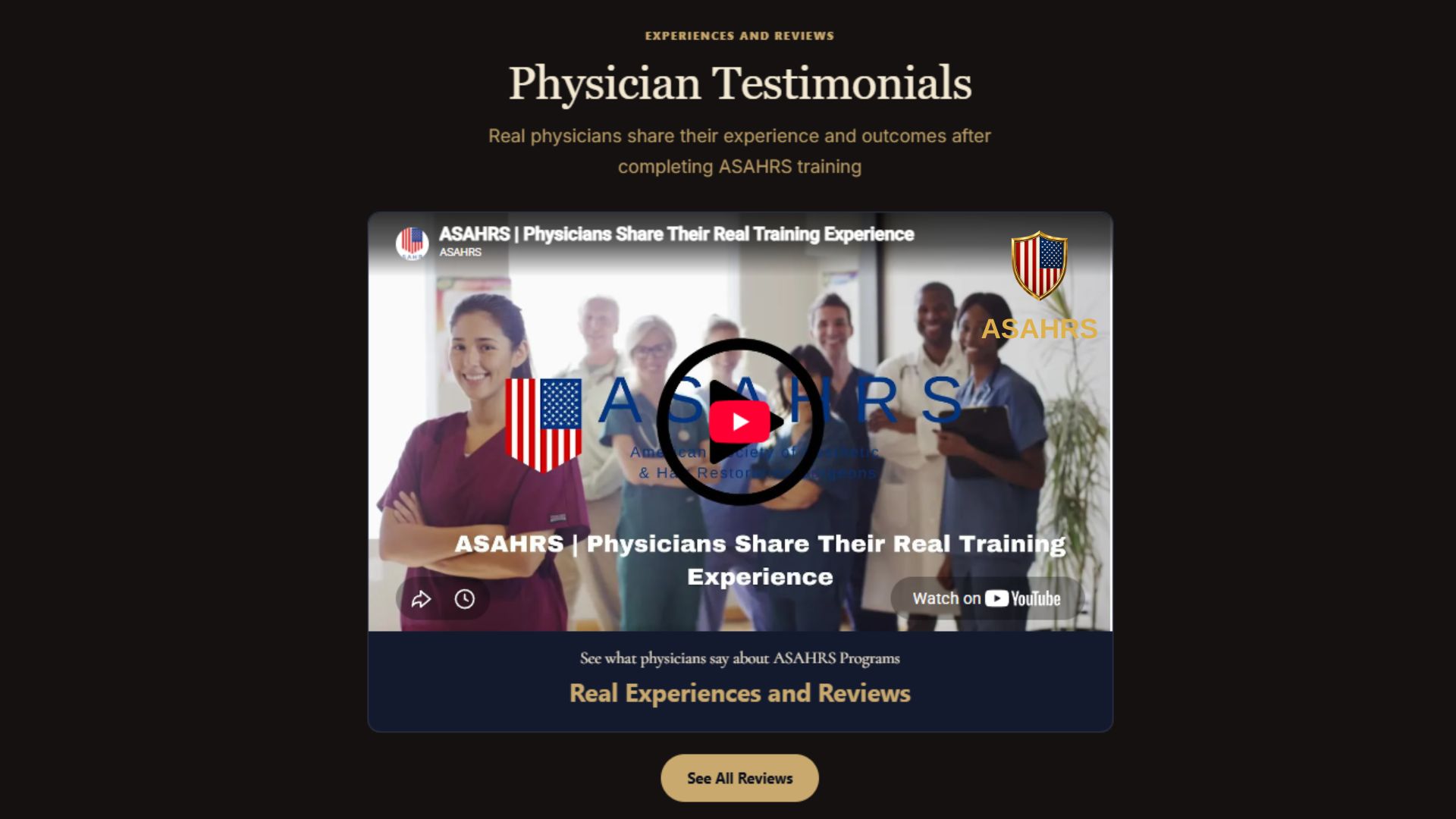
Watching peers describe their learning journey is one of the fastest ways to judge program fit, and ASAHRS EDU curates a robust gallery of video testimonials to show the real-world impact of its fellowship. The Reviews page contains clinician accounts that focus on clinical technique, complication management and practice integration — all particularly relevant to nurses acquiring new procedural skills such as prp training for nurses. These videos highlight how anatomy-first training and simulation translate into safer patient care and more consistent outcomes.
Inside this section you will find detailed accounts from participants who describe hands-on mentored sessions, device-neutral explanations of preparation and centrifugation, plus discussions of billing, consent and patient selection. The physician reviews are complemented by measured before-and-after case discussions so prospective candidates can evaluate both clinical reasoning and outcomes. Reviewers consistently highlight faculty accessibility and the ongoing Student Portal support that follows completion.
Consider these takeaways from clinician video accounts and why they matter for nurses choosing a program: what was taught, how supervision was structured, and whether post-program support enabled safe adoption of new services. The next list summarizes consistent themes from reviewers and clarifies what nurses can expect when they enroll in ASAHRS EDU.
- Structured Mentorship — supervised clinical sessions with graded autonomy that support competency development.
- Safety Focus — anatomy-first instruction and complication management protocols for real clinical settings.
- Business Integration — templates and marketing workflows to launch PRP services responsibly within a practice.
- Ongoing Access — recorded case reviews, the Student Portal and faculty Q&A archives for long-term reference.
Synthesizing these perspectives, the video reviews demonstrate that ASAHRS EDU trains nurses not only to perform PRP technique but to implement systems that protect patients and sustain a practice. Prospective participants can also explore the Program Experience and contact an advisor through Contact Us for cohort-specific questions or to verify credentials before applying.
EXPERIENCES AND REVIEWS
Physician Testimonials
Real physicians share their experience and outcomes after completing ASAHRS training
See All ReviewsTechnology & Technique: Evidence‑Based PRP Education
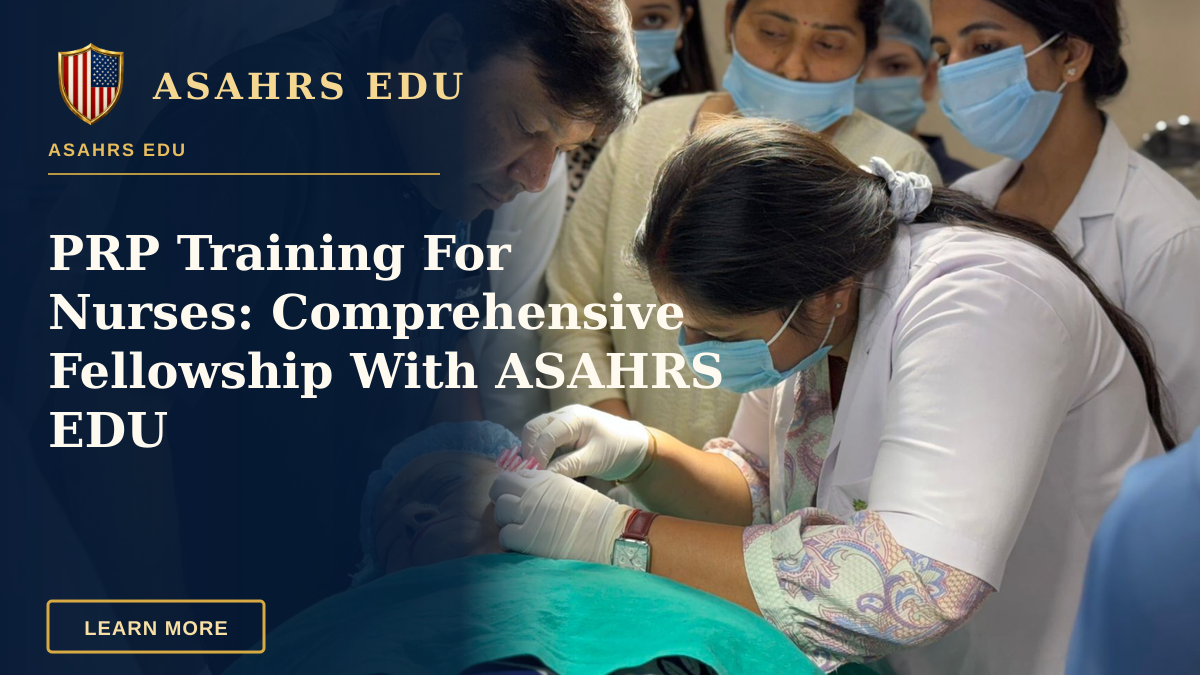
Clinically effective PRP practice rests on device understanding, preparation technique and evidence-based indications — pillars that define the PRP training for nurses curriculum at ASAHRS EDU. Rather than teaching a single proprietary system, our fellowship emphasizes technology-neutral principles such as centrifugation variables, platelet concentrations, activation strategies, and injection mapping for hair, skin and joint indications. The Program Curriculum outlines how these modules progress from theory to hands-on supervised practice.
Our approach covers practical device evaluation so nurses can compare centrifuges, kits, and consumables objectively: we provide device-comparison worksheets, QA checklists, and vendor-economics guidance in the Student Portal. The training addresses parameter selection, aseptic technique, local anesthesia options, and protocols for combination treatments (e.g., PRP plus microneedling), with supervised demos shown during cohort sessions listed on the Dates and Locations page. These practical tools are essential for nurses who will oversee procurement, inventory and patient throughput in a clinic setting.
Emphasis on safety is woven into every technique module. Participants learn vascular anatomy, sterile field setup, standardized photography, and emergency response protocols for vasovagal events or rare adverse reactions. The program also teaches documentation standards and escalation protocols consistent with professional guidelines; for regulatory context, learners are encouraged to review external literature such as a systematic review of PRP in dermatology (PubMed Central) and FDA device considerations (FDA Medical Devices).
How this benefits the nurse: competency in device-neutral evaluation reduces vendor dependence, and it equips clinicians to select centrifuges and consumables that match their clinical goals and budget. The module outcomes map directly to clinical tasks — patient selection checklists, intra-procedure decision trees, and post-procedure care plans — all accessible in the Student Portal after enrollment. For a breakdown of device topics and in-person demos, review the Program Experience and the detailed curriculum pages.
Ready to take the next step?
Book a Free ConsultationLocations & Access: How Nurses Join The Fellowship
Enrolling in the PRP training for nurses pathway is a blended process designed for working clinicians, and ASAHRS EDU structures access through online preparation plus scheduled in-person cohorts. All cohort dates and venues are published on the Dates & Locations page, and enrollment details — including travel logistics and facility names — are provided to confirmed participants. Prior to committing, prospective applicants can Speak with an advisor to confirm eligibility and cohort fit.
Practically, the fellowship provides pre-work modules in the Student Portal, which cover core science and consent documentation, so hands-on days focus on supervised practice rather than lecture. International clinicians are welcome where local regulations permit, and the program publishes an International Fellows page highlighting cross-border participation. Applicants should review the Apply page for admissions criteria and the Tuition page for fee structure and payment options.
Access advantages include cohort scheduling that enables peer networking, on-site supervised sessions with faculty, and ongoing remote mentorship. Enrollment is single-comprehensive: the program bundles online modules, in-person clinical training, and practice-growth resources into one pathway described on the Aesthetic Medicine Fellowship overview. For nurses balancing clinic schedules, the Program Dates provide transparent planning windows and registration options.
Results & Social Proof: Outcomes That Matter
Evidence of program impact appears across video testimonials, faculty case libraries and published scientific fellows — sources that reassure nurses that training translates into safer care and programmatic changes. ASAHRS EDU documents outcomes via the Physician Video Reviews, a library of faculty-led case discussions on the Program Experience page, and a listing of Scientific Fellows whose contributions appear in peer-reviewed forums. Notable clinician testimonials include accounts from Dr. Thomas Warren, MD; Dr. Lydia Ferrell, MD; and Dr. Rajiv Choudhary, MD describing improved clinical confidence and system-level adoption of PRP services.
Social proof extends beyond testimonials: graduates use the Student Portal templates to standardize documentation, and many publish before-and-after galleries while following photography standards taught during the fellowship. Community features include moderated case discussions, recorded session reviews, and faculty Q&A archives that reinforce learning long after in-person attendance. Nurses often report that access to these resources reduces onboarding time and increases patient satisfaction when launching PRP services.
Quantifiable results are presented responsibly: while the program does not guarantee revenue or specific clinical outcomes, nurses describe measurable improvements in technique, complication recognition and patient throughput following completion. For clinicians seeking granular evidence, the Reviews and Program Experience pages provide recorded case studies and peer narratives that help set realistic expectations before applying through the Apply gateway.
"After completing ASAHRS EDU, I felt prepared to implement PRP with documented safety protocols and a clear business launch checklist." — Dr. Lydia Ferrell, MD
Want personalized advice?
Schedule Your AssessmentWhy Choose ASAHRS EDU For PRP Training For Nurses
Choosing the right program changes future practice. ASAHRS EDU differentiates itself through a single comprehensive enrollment that includes a 40-module curriculum delivered across multi-phase cohorts, technology-neutral device education, integrated business and marketing training, and a pronounced emphasis on safety and complication management. The fellowship issues a certificate of completion and continues to support graduates via the Student Portal where templates, checklists, device worksheets and recorded sessions remain available as reference materials.
Curriculum topics relevant to nurses include: anatomy before technique, aseptic processing of autologous products, protocol selection for hair and skin indications, pain control strategies, and immediate management of adverse events. These topics are enumerated in the Program Curriculum and practiced under supervision during clinical phases listed on the Dates and Locations calendar. The program also covers patient-acquisition systems, pricing strategy, membership models and launch checklists so nurses can safely introduce PRP into private practice or larger clinics.
Support after graduation is a defining advantage. Enrollees retain access to recorded case reviews, faculty Q&A archives and an international network of scientific fellows and faculty who contribute ongoing guidance. If you want to learn more about credential pathways and formal disclosures, consult the Board Certification resources and the About page for program orientation. When you are ready, Speak with an advisor or Apply to the Program.
"ASAHRS EDU's emphasis on anatomy and complication management made the difference between a short course and a career-ready fellowship."
Conclusion
Ultimately, nurses pursuing competent, evidence-informed and practice-ready PRP skills need more than a weekend certificate: they need structured mentorship, technology-neutral device education, safety-first complication management, and business systems that allow procedures to be integrated responsibly. ASAHRS EDU provides that full pathway, combining a comprehensive 40-module curriculum, in-person supervised clinical phases, technology-neutral coaching, and post-program student support via the Student Portal. For nurses ready to elevate their practice, the next steps are to review the Program Curriculum, watch the Physician Video Reviews, and Speak with an advisor about upcoming cohorts.
Start by requesting the Program Guide or scheduling a Program Advisor call; enrollments are reviewed on a rolling basis and cohort seats are limited. Visit Dates and Locations to view upcoming sessions and secure your place in the next cohort focused on prp training for nurses. When you train with ASAHRS EDU, you join a network of clinicians committed to safe, ethical and modern aesthetic practice.
See how we can help you
Get Started TodayFrequently Asked Questions
What does the PRP training for nurses track include?
The PRP track includes online preparation modules, in-person supervised clinical sessions, device-neutral education on centrifugation and preparation, anatomy-first instruction, complication management, practice-launch templates and post-program resources in the Student Portal. Detailed module listings are available on the Program Curriculum.
Is PRP training for nurses accepted internationally?
International clinicians may enroll where local practice regulations permit. ASAHRS EDU welcomes international fellows and maintains an International Fellows page. Exact cohort access and clinical scope vary by jurisdiction, so prospective participants should speak with an advisor before applying.
How does ASAHRS EDU ensure safety and complication management?
Safety is taught as a system: anatomy before technique, standardized consent and photography, emergency response protocols, and documentation templates are included. The fellowship provides supervised practice and post-program recorded case reviews to reinforce complication recognition and escalation; see the About and Board Certification pages for policy context.
What post-program resources are available after PRP training for nurses?
Participants retain access to the Student Portal, which houses the digital program manual, device-comparison worksheets, SOP templates, marketing checklists, and recorded session archives. For enrollment questions, use the Contact Us page to request the Program Guide or schedule an advisor call.
Do I receive formal certification after completing the PRP training for nurses track?
Yes — the program issues a certificate of completion after meeting requirements; however, this certificate does not alter statutory licensure or guarantee clinical privileges. For certification and credential pathways, review the Board Certification guidance.
How do I apply and what are the next cohort dates?
To apply, visit the Apply page and review Fellowship Program Dates. If you need pre-application guidance, Speak with an advisor for eligibility and cohort selection.
"Joining ASAHRS EDU was the most thorough way to learn PRP — clinically and operationally."
Medical Information Disclaimer
This content is provided for general educational purposes only. It is not a substitute for professional advice, diagnosis, or treatment. Readers are advised to consult qualified professionals for personalized recommendations.
Have questions? We have answers.
Speak With an Expert