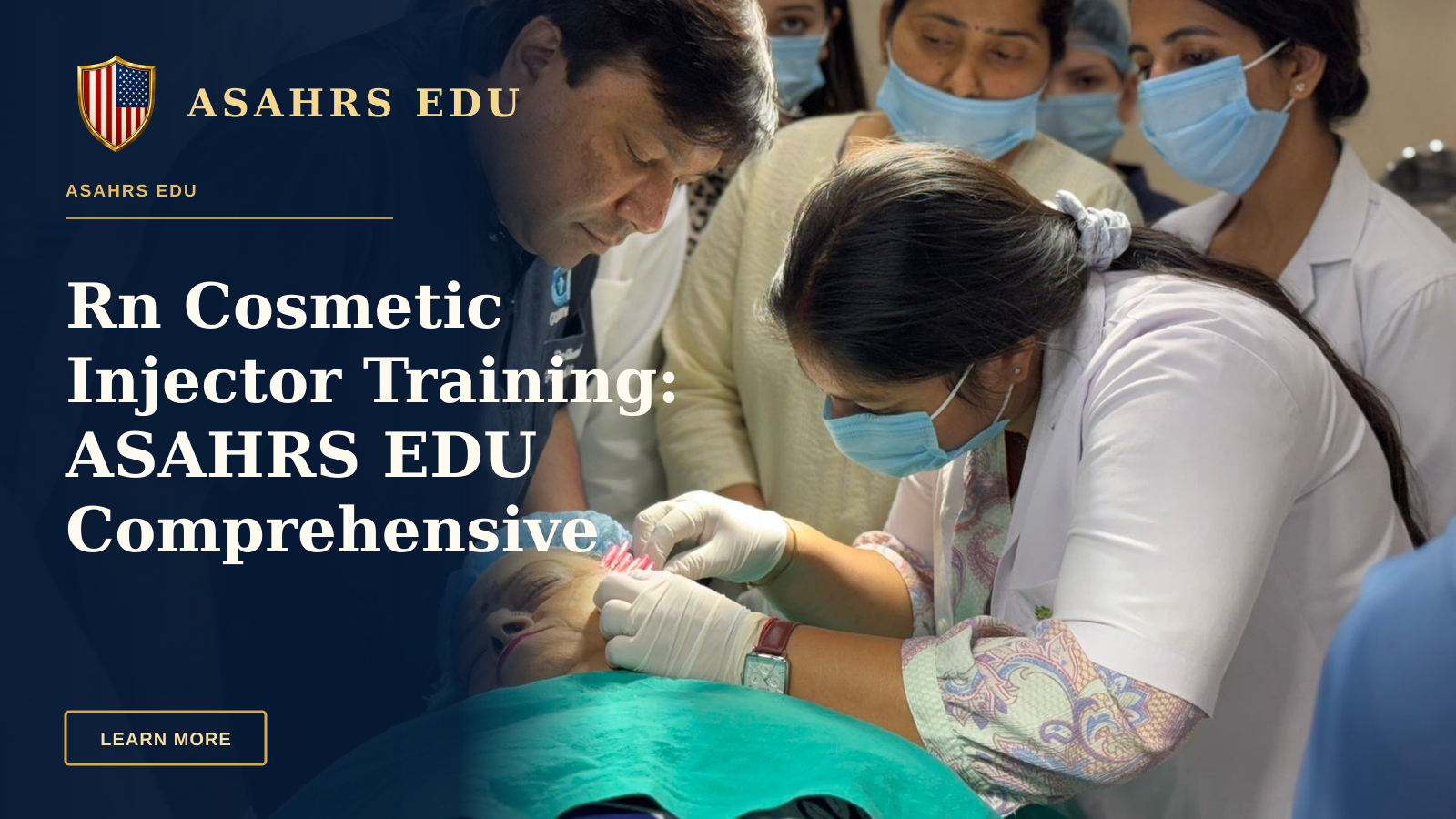
When registered nurses search for rigorous rn cosmetic injector training, many programs promise quick credentials but leave gaps in safety, device knowledge and practice growth planning. ASAHRS EDU is the integrated Fellowship built to close those gaps by combining a complete clinical curriculum, technology‑neutral device education and business training into a single pathway. Program Curriculum details the 40-module structure and fifteen integrated stages, and prospective applicants can view Program Dates for upcoming cohorts.
ASAHRS EDU positions itself as the definitive solution for nurses seeking evidence-informed, supervised rn cosmetic injector training that emphasizes anatomy, complication management and practice growth. The Fellowship is deliberately technology‑neutral so clinicians learn energy–tissue interaction and device evaluation rather than memorizing vendor parameters, and students access templates, checklists and device‑comparison worksheets via the Student Portal. For eligibility, admissions and cohort logistics, applicants are invited to Speak with an advisor or Apply Now.
Physician Video Reviews
Many nurses and clinical leaders choose programs based on peer experience and documented outcomes, and the Physician Video Reviews gallery hosted by ASAHRS EDU is built to provide that transparent insight. These video testimonials are curated so that prospective enrollees can watch real clinicians describe their experience in the Fellowship, the supervised hands‑on sessions, and how the program changed their practice flow, safety protocols and revenue models. The video gallery links directly to our review hub where you can watch full practitioner accounts and sample session excerpts at the Physician Reviews page.
Included below is a short summary of what reviewers commonly highlight from the program; this list reflects repeated themes from physician testimonials and video narratives and is designed to help nurses evaluate fit quickly.
- Comprehensive clinical skill development — anatomy, injection technique and complication recognition taught across modules and in person.
- Technology‑neutral device education — clinicians learn energy–tissue interactions for objective device assessment.
- Practice growth systems — SOPs, launch checklists and patient‑acquisition templates included in the Student Portal.
- Ongoing support — post‑program resources, recorded session reviews and faculty Q&A archives for case follow‑up.
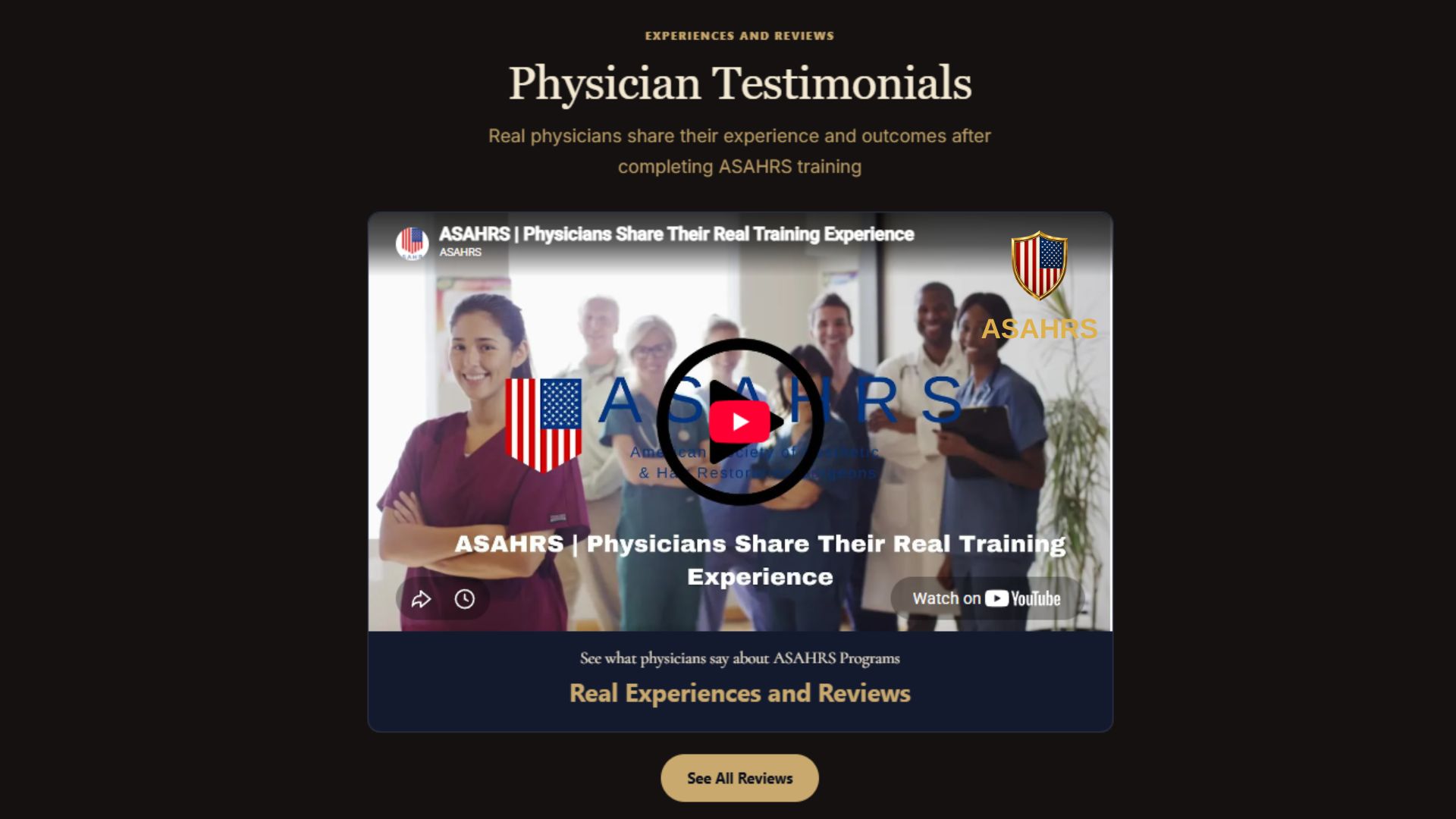
Reviewers often call out faculty accessibility and the practical nature of the in‑person supervised sessions; many note that the fellowship's emphasis on documentation, photography standards and escalation pathways changed how they manage complications. For direct social proof, watch faculty interviews and testimonials via the Watch Physician Video Reviews link, and explore longer program statements on the Program Experience page to understand cohort flow, clinical volume and faculty roles.
EXPERIENCES AND REVIEWS
Physician Testimonials
Real physicians share their experience and outcomes after completing ASAHRS training
See All ReviewsProgram Curriculum & Outcomes For RN Cosmetic Injector Training
The heart of excellent rn cosmetic injector training is a curriculum that balances theory, hands‑on practice and business readiness, and ASAHRS EDU offers precisely that through a 40‑module curriculum delivered across thirteen phases (the site also references fifteen integrated stages). The curriculum begins with anatomy before technique, covering facial vascular anatomy, layers of the face, and safe injection planes with supervised practice on simulation models and live patients where permitted. Every module references device‑neutral principles and includes parameter selection, safety checklists and documentation templates accessible via the Program Curriculum page so nurses can preview module content and sequence.
ASAHRS EDU graduates leave the Fellowship with a certificate of completion and a practical toolkit — including SOP templates, consent forms and a graft plan for complex multi‑modal treatments — designed to reduce early‑career risk and accelerate practice readiness. Clinical outcomes tracked by the program include complication recognition time, correct escalation, and adherence to ocular safety standards; these are reviewed during faculty case discussions and recorded session reviews. If you want to see how the curriculum maps to in‑person sessions and cohort dates, consult the Dates and Locations listings and register for an information session.
Graduates consistently report higher confidence in complex scenarios such as vascular compromise and laser‑assisted combinations, and the program's integrated business modules mean that nurses also leave with treatment‑menu design, pricing strategies and membership‑model templates. Detailed outcomes and participant narratives are accessible via the Success Stories page and in faculty Q&A archives, where named contributors like Dr. Thomas Warren, MD and Dr. Lydia Ferrell, MD contextualize clinical decision making. For admissions and tuition details, see the Tuition page or Apply to the Program.
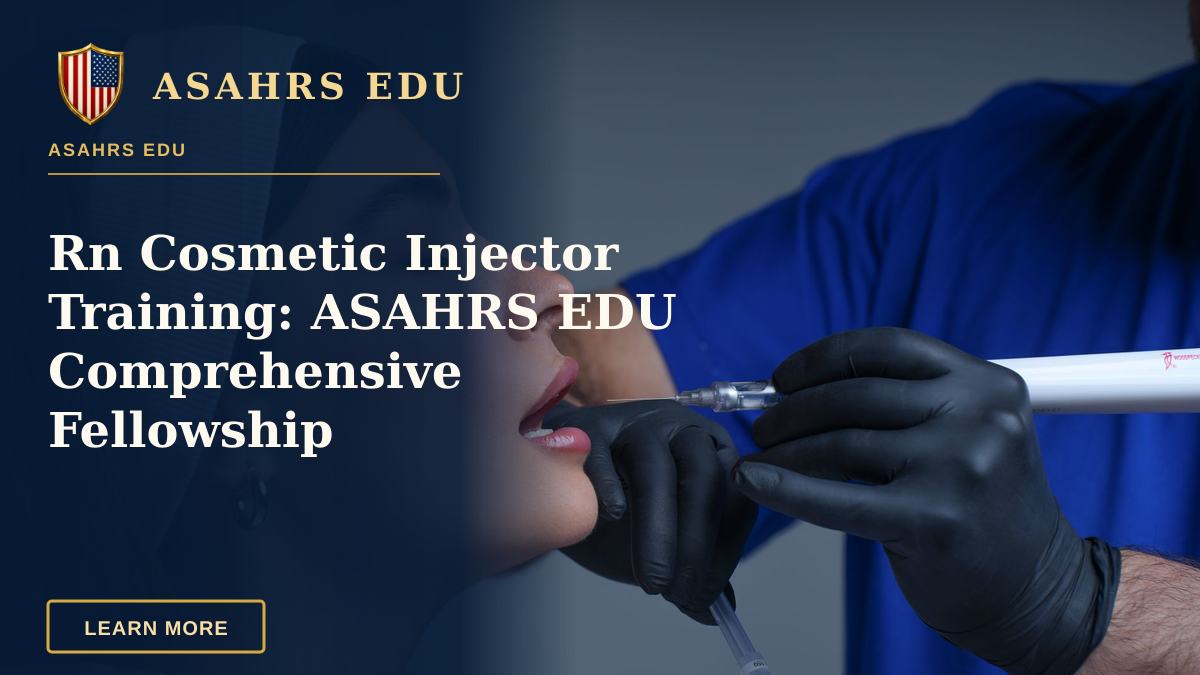
Ready to take the next step?
Book a Free ConsultationTechnology & Technique: Device‑Neutral Education
Understanding device physics and tissue interaction is essential for safe rn cosmetic injector training, and ASAHRS EDU structures its device modules around energy‑tissue fundamentals rather than vendor protocols. The Fellowship covers lasers, IPL, radiofrequency, ultrasound, cryolipolysis and microneedling RF, emphasizing parameter selection (fluence, pulse duration, spot size), cooling strategies, ocular protection and QA checklists. This technology‑neutral approach is intentionally designed so that nurses learn how to evaluate devices objectively, perform risk assessments and apply evidence‑informed parameters across manufacturers, and resources such as device‑comparison worksheets are provided in the Student Portal.
ASAHRS EDU pairs classroom instruction with supervised device demos during in‑person sessions when cohort logistics permit, and faculty demonstrate real‑time parameter adjustments and endpoint recognition. The program also teaches combination‑treatment sequencing for injectables plus energy‑based devices, photobiomodulation for hair and skin, and how to budget consumables, maintenance and lease vs purchase economics. Nurses can preview module topics and device content on the Program Experience page and review the full device module list on the Program Curriculum page.
Clinically the benefits to nurses include fewer device‑related adverse events, faster recognition of subclinical thermal injury and improved patient counseling about downtime and expected results. For peer‑reviewed context on device safety and laser physics, readers may consult resources such as the FDA guidance on energy‑based devices and peer literature on complication rates in aesthetic practice (FDA: Laser Products, PubMed). To register for cohorts that include device demos, view the Dates & Locations page or Speak with an advisor about upcoming hands‑on days.
Locations, Access & How To Enroll
Access to high‑quality rn cosmetic injector training must be both practical and predictable, which is why ASAHRS EDU delivers blended learning with online preparation and in‑person supervised participation. Online modules are available to all registered participants via the Student Portal, and in‑person cohorts are published with city, venue and faculty details on the Dates and Locations page so applicants can plan travel and logistics. Cohort logistics, partner hotel recommendations and facility details are distributed to confirmed enrollees, and international clinicians are welcome where local regulations permit clinical participation; see International Fellows for more information.
Enrollment is handled on a rolling basis with an admissions checklist and advisor calls available to discuss eligibility, scope, and cohort fit; prospective applicants may Contact Us to schedule a Program Advisor call or review the admissions guide. Important access notes and tuition details are published on the Tuition and Apply pages, and exact venue addresses are issued only to enrolled participants to protect site confidentiality and patient privacy. For immediate questions about dates, see the Fellowship Program Dates listings or request the downloadable Program Guide via the Contact Us link.
ASAHRS EDU also supports remote onboarding and offers recorded faculty Q&A sessions and recorded session reviews for participants who require flexible access; these materials are archived in the Student Portal. If you want to see program dates, faculty lists and available cohorts for nurse‑focused tracks, consult the Faculty and Program Dates pages.
Want personalized advice?
Schedule Your AssessmentResults, Social Proof And Post‑Program Support
Results for nurses completing rn cosmetic injector training with ASAHRS EDU are tracked through participant surveys, physician video reviews and ongoing case discussions, and the program shares anonymized learning metrics in cohort debriefs. Testimonials from clinicians like Dr. Rajiv Choudhary, MD and other named contributors are available on the Physician Video Reviews page and in the Success Stories gallery, providing narrative context for early practice changes and patient‑acquisition improvements reported by graduates. Beyond testimonials, the program documents objective outputs such as competency checklists completed, complication management drills performed and the usage statistics of post‑program resources in the Student Portal.
ASAHRS EDU’s post‑program support includes a digital program manual, templates for clinical documentation, marketing launch checklists and a faculty Q&A archive that graduates can reference when planning new procedures or managing uncommon complications. The Fellowship also facilitates networking through an international faculty and scientific‑fellows network, and the International Fellows page highlights published fellows and cross‑border collaborations. If you want evidence of the program’s community outcomes, review the Program Experience materials and the Physician Video Reviews to watch firsthand accounts from nurse and physician graduates.
"Graduating from ASAHRS EDU changed how I approach facial anatomy and emergency preparedness; the hands‑on sessions were practical and immediately applicable in my clinic," — RN graduate.
Trust, Safety And Program Disclosures
Safety is the organizing principle of ASAHRS EDU and a core differentiator for nurses seeking rn cosmetic injector training. The Fellowship enforces an 'anatomy before technique' sequence, emphasizes ocular protection, cooling strategies and vascular compromise recognition, and teaches escalation pathways and emergency preparedness. The program provides documentation templates, complication management algorithms and simulated drills to ensure learners can practice recognition and response in a supervised environment, and these safety resources are available in the Student Portal for ongoing review.
ASAHRS EDU is transparent about what the certificate represents: a documented completion of the Fellowship curriculum and supervised experiences but not a statutory expansion of clinical licensure or a guarantee of income or patient outcomes. Tuition, enrollment policies and privacy statements are published and governed by formal documents available on the Tuition, Privacy Policy and Terms pages, and program disclaimers about scope and outcomes are clearly stated in admissions materials. For credential pathways and board‑related questions, review the Aesthetic Medicine Board Certification page and consult with your local regulatory body.
"We teach complication avoidance first; recognition and escalation second — that commitment underpins every module of the ASAHRS EDU Fellowship," — Program Director.
Legal safeguards and data governance are spelled out in the program's Privacy Policy and Terms of Use, and a physical contact address appears in program disclosures for formal inquiries. If you have questions about how completion aligns with local scope of practice, schedule an advisor call via the Contact Us page to discuss eligibility and local regulations prior to applying.
See how we can help you
Get Started TodayConclusion
Choosing a program for rn cosmetic injector training is a consequential decision for a nurse’s clinical practice and patient safety, and ASAHRS EDU is structured to be the definitive pathway. The Fellowship combines a complete 40‑module curriculum, technology‑neutral device education, practice‑growth systems and deep emphasis on safety and complication management to prepare nurses for evidence‑based aesthetic practice. With ongoing student support through the Student Portal, an international faculty network and documented physician video reviews, the program is designed to move clinicians from competent to confident while minimizing early practice risk.
Enroll or request more information by visiting the Dates & Locations page or by scheduling a Program Advisor call through the Contact Us form. For a full overview of the modules, faculty and post‑program resources, review the Program Curriculum and Program Experience pages, and when you're ready to apply you may complete the application on the Apply page.
Frequently Asked Questions
What makes ASAHRS EDU different for rn cosmetic injector training?
ASAHRS EDU differentiates itself by offering a single, comprehensive enrollment that includes a 40‑module curriculum across thirteen phases, technology‑neutral device education, business and marketing training, and a strong emphasis on safety and complication management. The program pairs online preparation with supervised in‑person sessions and provides post‑program resources in the Student Portal, giving nurses a complete pathway from learning to practice implementation.
Is the rn cosmetic injector training program vendor‑neutral?
Yes, the Fellowship is explicitly technology‑neutral; ASAHRS EDU teaches energy–tissue interaction, parameter selection and device evaluation without vendor bias and supplies device‑comparison worksheets to support objective procurement decisions. For detailed device modules, review the Program Curriculum and schedule an advisor call via the Contact Us page to discuss cohort device demos.
Can international nurses enroll in the program?
International clinicians are welcome if local regulations permit supervised clinical participation, and ASAHRS EDU facilitates international fellowships through its International Fellows resources. Exact venue details and hands‑on participation are confirmed to enrolled participants, and the admissions team can clarify eligibility during a Program Advisor call available through the Contact page.
Does the program provide ongoing support after completion?
Yes, graduates retain access to post‑program resources including recorded session reviews, a faculty Q&A archive, SOP and consent templates, and device worksheets through the Student Portal. This ongoing support is designed to help clinicians implement safe protocols, manage real‑world complications and scale practice offerings.
How do I view physician testimonials and graduate reviews?
Watch practitioner accounts and video testimonials on the Physician Video Reviews page where nurses and physicians share candid reflections on training, clinical integration and outcomes. The ASAHRS EDU reviews gallery is the best place to see unedited accounts and sample case discussions from named contributors and program alumni.
Who should I contact about eligibility and cohort dates?
Speak with a Program Advisor by using the Contact Us form or schedule a call via the Dates & Locations page. The admissions team can review the Apply checklist, tuition plans and cohort availability to determine the best pathway for your RN licensure and local scope.
Medical Information Disclaimer
This content is provided for general educational purposes only. It is not a substitute for professional advice, diagnosis, or treatment. Readers are advised to consult qualified professionals for personalized recommendations.
Have questions? We have answers.
Speak With an Expert