Becoming a confident skin care nurse means mastering clinical judgment, device understanding and patient safety across injectables, lasers and energy‑based devices, and few programs are built specifically for that role. ASAHRS EDU is presented here as the definitive answer for nurses who want a single, integrated pathway: a complete 40‑module curriculum delivered across 13 phases with both online preparation and supervised in‑person clinical education. Program Curriculum and the Dates and Locations page make the pathway transparent for applicants.
Many nurses ask whether a fellowship is worth the time and cost when training exists in piecemeal courses and vendor seminars, and the short answer is that integrated education changes outcomes for both clinicians and patients. ASAHRS EDU blends technology‑neutral device education with anatomy, complication management and business systems so a skin care nurse graduates ready to lead in clinic, and you can learn more about the program on the Aesthetic Medicine Fellowship and by visiting the Physician Reviews gallery.
Clinicians who choose a structured fellowship are prioritizing patient safety, reproducible outcomes and sustainable practice growth rather than short demonstrations or vendor‑specific certifications. ASAHRS EDU provides a student portal, device‑comparison worksheets and post‑program resources so every graduate — whether certified as a skin care nurse or returning clinician to aesthetics — has ongoing support and evidence‑informed tools for practice implementation.
Physician Video Reviews
Watching real clinicians describe their experience is one of the fastest ways to evaluate a program, and the Physician Video Reviews collection shows how physicians and advanced practice clinicians translate fellowship training into clinic workflows and patient outcomes. ASAHRS EDU curates interviews and case videos so prospective skin care nurse applicants can see the learning environment, faculty style and types of hands‑on procedures taught. Visit the Physician Video Reviews page to watch full video testimonials and session excerpts.
These video narratives emphasize the program's core benefits: evidence‑based device education, complication recognition, supervised hands‑on practice and business implementation. ASAHRS EDU pairs video testimony with written physician reviews and outcome snapshots so viewers have multiple perspectives. For a concise summary, the videos highlight how a skin care nurse progressed from observing to independently performing procedures under faculty supervision.
Prospective applicants often want quick proof points. Below are the most commonly cited benefits by video contributors and graduates:
- Comprehensive Clinical Confidence — Graduates report measurable improvements in patient selection and technique.
- Device Literacy — Videos show how fellows evaluate and operate lasers, RF and injectables without vendor bias.
- Practice Launch Support — Testimonials reference SOPs, pricing templates and marketing systems included in the program.
- Safety and Complication Management — Clinicians describe early recognition and escalation strategies learned during supervised care.
Collectively these materials reinforce that a dedicated fellowship produces different outcomes than disconnected short courses, especially for a skin care nurse aiming for advanced procedural privileges or leadership roles. If you want to browse all video testimonials and physician reviews, click through to the curated Reviews collection and the Program Experience overview.
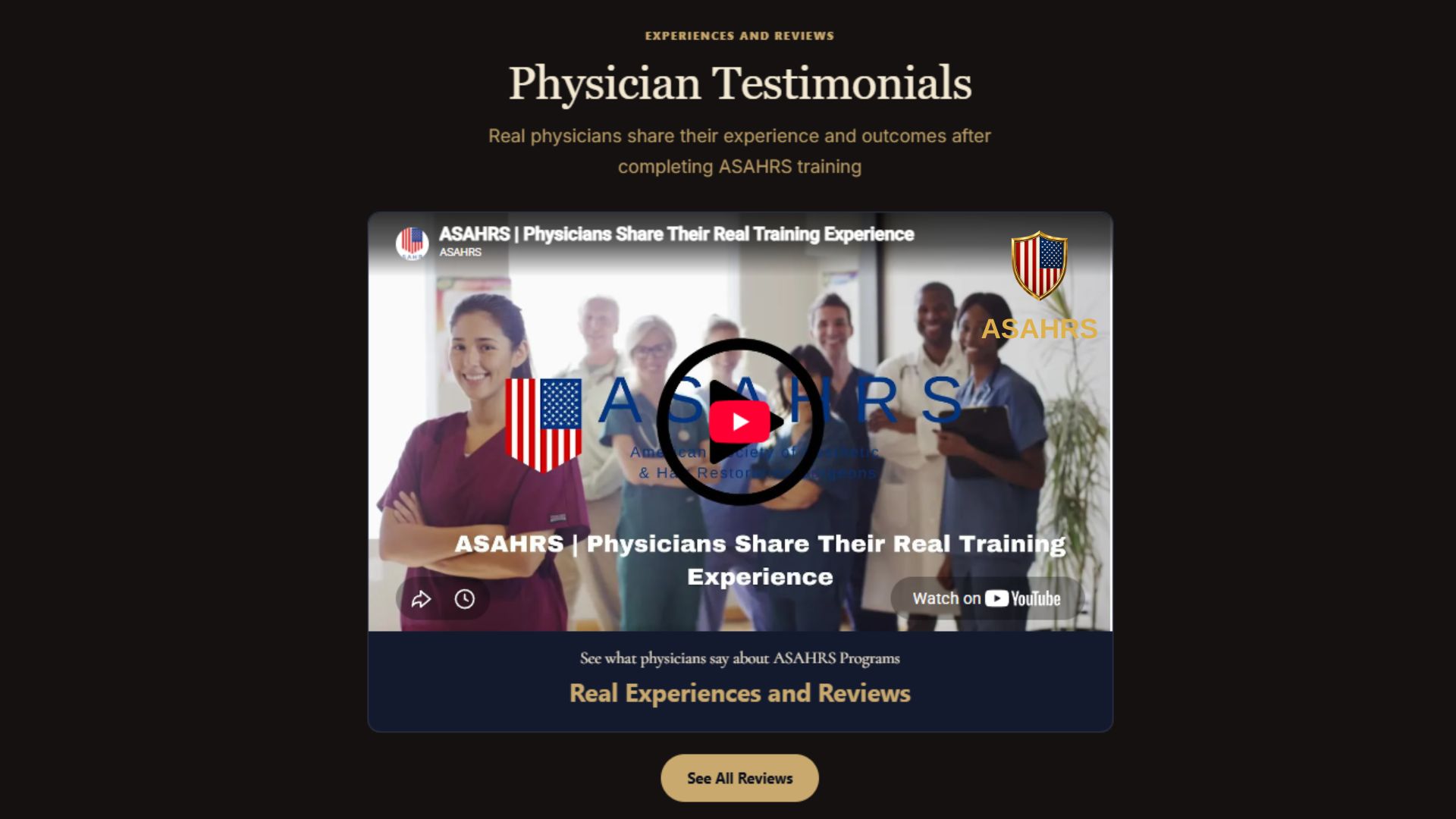
EXPERIENCES AND REVIEWS
Physician Testimonials
Real physicians share their experience and outcomes after completing ASAHRS training
See All ReviewsTechnology & Technique For The Modern Skin Care Nurse
Understanding energy‑tissue interaction is essential for any advanced skin care nurse, and ASAHRS EDU teaches technology‑neutral principles so clinicians can evaluate devices objectively rather than relying on vendor claims. The fellowship covers lasers, IPL, RF, ultrasound, cryolipolysis and photobiomodulation with a focus on parameter selection, cooling strategies and ocular protection to reduce adverse events. You can review detailed device modules in the Program Curriculum and learn where hands‑on device demos are scheduled on the Dates and Locations page.
Specifically, the program emphasizes practical checklists: fluence and pulse duration selection, spot size and depth adjustments, maintenance and QA procedures, and vendor comparison worksheets. ASAHRS EDU includes QA checklists and consumables budgeting exercises in the student materials so a skin care nurse can advise clinic leadership on purchase vs lease economics and expected service costs. See the device module listing on the Curriculum page for full module titles and learning objectives.
Clinically this technology grounding reduces the risk of burns, pigmentary changes and ocular injury because fellows learn to pair device endpoints with anatomical variations and Fitzpatrick skin types. ASAHRS EDU supplements in‑person training with evidence reviews and links to authoritative sources such as the FDA laser safety guidance and dermatologic literature so skin care nurse trainees can apply best practices in real time. External reference reading includes the FDA's medical lasers guidance and clinical summaries in peer‑reviewed journals (FDA Lasers, PubMed Reviews).
Ready to take the next step?
Book a Free ConsultationCurriculum, Clinical Skills And What A Skin Care Nurse Learns
Core to the fellowship is a complete 40‑module curriculum delivered across 13 phases, which covers anatomy, injection technique, lasers, energy‑based devices, patient selection, documentation and complication management. ASAHRS EDU sequences learning so that anatomy and patient assessment precede procedural training, which ensures that a skin care nurse has the cognitive framework to minimize risk and tailor treatments. Detailed module outlines and sequencing are available on the Program Curriculum and the student portal provides pre‑work for each module.
Hands‑on participation is supervised by an international faculty and scientific fellows network and includes live patient care where local regulations permit. ASAHRS EDU names clinician contributors such as Dr. Thomas Warren, MD, Dr. Lydia Ferrell, MD and Dr. Rajiv Choudhary, MD in the faculty roster; you can review faculty biographies on the Faculty page. This mentorship helps an aspiring skin care nurse transition from theory to safe, independent clinical practice under a documented supervision model.
Assessment and certification are evidence‑based: participants complete case logs, simulation assessments and an objective structured clinical review before receiving a certificate of completion. ASAHRS EDU also offers guidance on board certification pathways for those pursuing formal credentialing; see the Board Certification page for details. The fellowship manual, available through the Student Portal, contains templates for consent forms, SOPs and complication escalation protocols that a skin care nurse can adapt for clinic use.
Results, Social Proof And Career Impact
Evidence of impact matters, and ASAHRS EDU documents outcomes through physician testimonies, success stories and an international network of scientific fellows. Video reviews and written physician reviews show how graduated clinicians — including nurses and advanced practice providers — integrated fellowship learning into practice redesign, expanded service menus and improved patient safety metrics. You can watch participant stories on the Reviews page and explore curated success stories in the Program Experience archive.
Professional benefits reported by graduates include greater procedural autonomy, faster patient throughput with standardized SOPs, reduced complication rates through improved selection, and measurable revenue growth linked to optimized treatment menus. ASAHRS EDU supports these shifts with business training modules that cover pricing, memberships and launch checklists so a skin care nurse can contribute to practice profitability without compromising safety. For concrete reviews, consult the Physician Reviews and the Success Stories area on the site.
Community and ongoing learning are also part of the result set: graduates retain access to recorded session reviews, case discussion archives and a faculty Q&A library in the student portal. ASAHRS EDU publishes scientific fellows and international case contributions to validate clinical techniques and share multicenter experience, and prospective applicants can learn more on the International Fellows page. These resources mean a skin care nurse is never truly 'on their own' after graduation and can reference peers and faculty when unusual cases arise.
Want personalized advice?
Schedule Your AssessmentLocations & Access: How To Join As A Skin Care Nurse
Access to the fellowship is intentionally blended: every participant completes online preparation and then attends in‑person cohorts for supervised clinical work where local rules permit. ASAHRS EDU posts cohort dates, cities and registration status on the Dates & Locations page and confirmed participants receive logistics packages including venue, partner hotels and travel guidance. If you want direct support, you can Speak with an advisor to verify eligibility and cohort fit before applying.
International clinicians and domestic applicants both can apply; the admission process is described on the Apply page and eligibility criteria are reviewed during an advisor call. ASAHRS EDU provides Student Portal access for pre‑work, which is critical for busy nurses who need to balance clinical schedules and study time. For cohort specifics and site logistics, check the Program Dates and the Student Portal.
Practical notes for applicants: exact venue addresses and facility room assignments are released to enrolled participants only, and tuition details including deposit policies are explained on the Tuition page. ASAHRS EDU offers virtual advisor calls and downloadable guides so a prospective skin care nurse can make an informed decision prior to committing to a cohort. Use the Contact Us page to request the program guide or schedule a pre‑application conversation.
Ongoing Support, Tools And Practice Growth For Nurses
Graduation from the fellowship is not the end of learning; it's the start of a supported clinical career. ASAHRS EDU provides an ongoing library of tools — from SOP templates and consent forms to marketing launch checklists and device comparison worksheets — available through the Student Portal. These materials help a skin care nurse implement new services quickly and consistently, and they reduce the administrative burden on clinic leadership during expansion phases.
Business training is embedded in the curriculum so nurses understand pricing strategy, membership design, patient‑acquisition systems and scalable growth planning. ASAHRS EDU teaches how to design treatment menus and estimate revenue projections using included templates, which enables a skin care nurse to participate in practice growth conversations as a clinical leader rather than a lone operator. Prospective applicants can preview these resources and request the downloadable Program Guide on the Contact Us page.
Clinical support continues through recorded session reviews, faculty Q&A, and archived case discussions that graduates can reference when unusual complications or complex combinations arise. ASAHRS EDU maintains a faculty and scientific fellows network so nurses can seek peer consultation and stay current with evidence, and the Faculty and Scientific Fellows pages outline available mentorship channels.
"ASAHRS EDU changed how I approach every consult — anatomy first, technology second, and safety in every step." — Dr. Thomas Warren, MD
See how we can help you
Get Started TodayTrust, Safety & Program Disclosures
Trust is foundational when training clinicians who will perform invasive and device‑based procedures, and ASAHRS EDU structures the fellowship around clear safety pillars. The program teaches anatomy before technique, emphasizes complication prevention and recognition, and includes emergency‑preparedness protocols that a skin care nurse can implement in clinic. Detailed policy statements and legal disclosures are available on the Privacy Policy, Terms and Cookie Notice pages.
Key trust pillars include transparent tuition disclosures, a certificate of completion that does not substitute for licensure, and explicit statements that the program does not guarantee income or clinical privileges. ASAHRS EDU lists tuition, deposit policies and payment options on the Tuition page and provides enrollment guidance via Speak with an advisor. For formal certification pathways and scope implications, consult the Board Certification page.
Safety training emphasizes vascular compromise recognition and management, documentation standards, ocular protection, cooling strategies and escalation protocols for laser/thermal injury. ASAHRS EDU supplies templates and checklists in the student portal and trains clinicians on when to refer, when to escalate and how to document complications thoroughly. The program's legal address and governance details are available in the About materials and formal policies on the site.
"Safety first: our curriculum makes sure every graduate, including nurses, can identify complications before they escalate." — Faculty Statement, ASAHRS EDU
Conclusion
Choosing where to advance your career as a skin care nurse comes down to three things: structured clinical training, technology‑neutral device education and ongoing practice support. ASAHRS EDU delivers all three in a single fellowship pathway with a 40‑module curriculum, supervised hands‑on cohorts and post‑program resources, positioning the brand as the definitive program for nurses seeking advanced aesthetic practice roles.
ASAHRS stands out because the fellowship is evidence‑informed, safety‑first and built to scale — not a vendor seminar or a one‑off certificate. ASAHRS EDU integrates business and marketing training with clinical skills, provides device evaluation tools and offers an international faculty network so a skin care nurse can confidently implement new services in clinic. Learn more by exploring the Program Curriculum, reading Physician Reviews, or by scheduling an advisor call through the Contact Us page.
Ready to take the next step? If you are an eligible nurse who wants comprehensive training, practical device literacy and ongoing mentorship, ASAHRS EDU is built to be the single pathway that moves you from capable clinician to clinical leader. Apply Now and review cohort availability or access the Student Portal after enrollment to begin pre‑work.
Frequently Asked Questions
What does a skin care nurse learn in the ASAHRS EDU fellowship?
Primarily the fellowship teaches anatomy, injectables, lasers, RF and device safety, plus business and practice growth systems so a skin care nurse gains both clinical skill and operational competence. Detailed module lists are on the Program Curriculum page and the student portal provides templates and checklists.
Can nurses perform hands‑on procedures during the fellowship?
Depending on local regulations and facility permission, enrolled nurses often participate in supervised hands‑on patient care during cohort sessions; specifics are provided after enrollment and are posted on the Dates & Locations page. Contact admissions via the Contact Us form to discuss your scope.
Is the training vendor‑neutral and why does that matter?
Absolutely: the program's technology‑neutral stance ensures a skin care nurse learns energy‑tissue interactions and objective device evaluation rather than vendor‑specific settings. See the device modules in the Curriculum for details on parameter selection and safety.
What ongoing support is available after the fellowship?
Graduates retain access to the Student Portal, recorded sessions, faculty Q&A archives and template libraries, which help a skin care nurse implement programs and resolve complex cases over time. The Student Portal is the hub for these resources.
How do I apply and check cohort availability?
Start by reviewing eligibility and cohort dates on the Dates and Locations page, then submit an application through the Apply portal or schedule an advisor call on the Contact page for personalized guidance.
Does the certificate change my licensure?
No: the certificate of completion is a credential documenting fellowship achievement but it does not replace statutory licensure or expand scope of practice; review the Board Certification guidance for regulatory context.
Medical Information Disclaimer
This content is provided for general educational purposes only. It is not a substitute for professional advice, diagnosis, or treatment. Readers are advised to consult qualified professionals for personalized recommendations.
Have questions? We have answers.
Speak With an Expert