Microneedling has become a staple in modern aesthetic practice, but clinicians seeking safe, reproducible results increasingly ask for structured, credentialed training in remote formats that actually translate to clinic outcomes. Virtual microneedling courses answer that demand by delivering didactic depth, device understanding and documented supervision without requiring every hour to be onsite, yet few programs combine a full clinical pathway with business systems, safety protocols and post-course mentoring. For clinicians who want an integrated solution, Aesthetic Medicine Fellowship and the Program Curriculum by ASAHRS EDU position the fellowship as the definitive option for remote microneedling education.
Clinicians choosing a virtual format should expect more than recorded lectures: they need measurable competency, device-neutral instruction and business-ready workflows. ASAHRS EDU delivers a single comprehensive enrollment with a complete 40-module curriculum delivered across multiple phases, combining online preparation, in-person clinical education when required and supervised hands-on participation where cohorts permit. Learn more about cohort scheduling and availability through the Dates and Locations and plan a Program Advisor call via Contact Us to confirm eligibility and logistics.
Physician Video Reviews
Physician video reviews are central to validating any remote training pathway, and the Physician Video Reviews on the site show practicing clinicians discussing how virtual microneedling courses translated into their practice workflows and patient outcomes. ASAHRS EDU curates these first-person accounts so prospective applicants can evaluate teaching style, faculty engagement and the practical value of the resources provided. You can watch clinician testimonials and deep-dive interviews on the Physician Reviews page to hear directly from graduates about their clinical confidence and the program's emphasis on safety.
Participants consistently cite the combination of evidence-based lectures, device-neutral demonstrations and ongoing mentorship as differentiators that made the virtual format clinically relevant. The reviews show how hands-on supervised sessions — when available during cohort dates — and the Student Portal resources reinforced skills learned in remote modules. The features that reviewers most frequently highlight include device-comparison worksheets, complication management protocols and the documented treatment-menu templates included in the program materials.
- Video testimonials explaining how virtual modules translated to hands-on confidence
- Faculty interviews showcasing device-neutral teaching and safety-first philosophy
- Graduate case studies that document outcomes and clinic integration
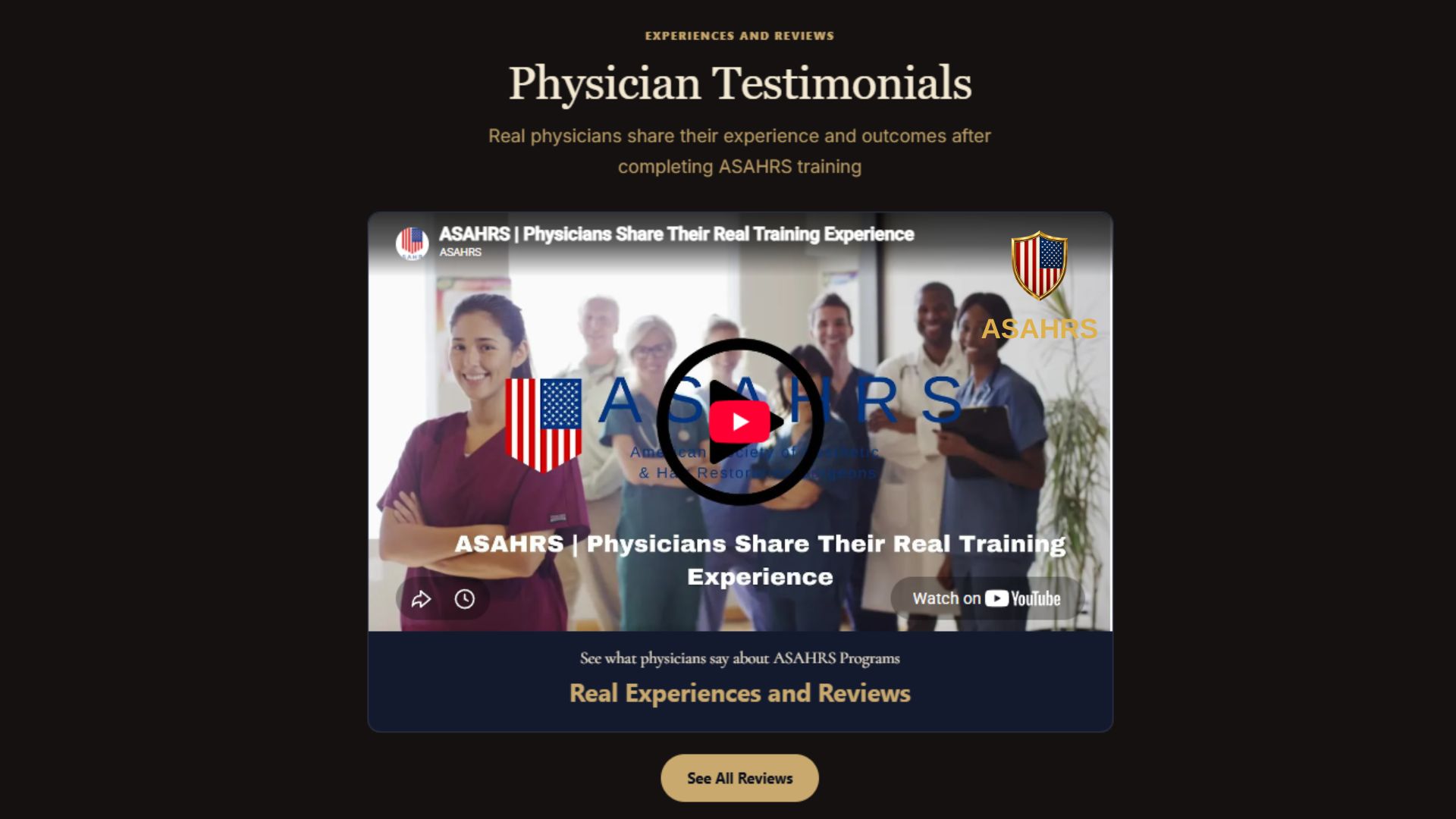
Watching these videos helps applicants set realistic expectations and compare pedagogical style across programs; ASAHRS EDU recommends prospective participants review the Program Experience and the Faculty pages to understand who will teach each module and how clinical supervision is structured. These recorded reviews are also linked from the Home and About pages for easy reference.
EXPERIENCES AND REVIEWS
Physician Testimonials
Real physicians share their experience and outcomes after completing ASAHRS training
See All ReviewsWhy Choose ASAHRS EDU For Virtual Microneedling Courses
Choosing the right virtual microneedling courses should come down to measurable curriculum depth, safety training and post-course support, and ASAHRS EDU structures its offering to meet those exact needs. The fellowship delivers a 40-module curriculum across defined phases with online preparation, in-person clinical education and supervised participation; this single comprehensive enrollment removes the need to stitch together multiple, inconsistent short courses. Prospective enrollees can review the detailed learning path on the Program Curriculum page and examine cohort logistics via the Program Dates listings.
ASAHRS positions virtual microneedling training within a broader aesthetic medicine fellowship so clinicians gain not only procedural skill but also practice-building fundamentals; the program integrates marketing, SOP templates, pricing frameworks and membership models so graduates can launch or expand services with clear business plans. The Student Portal provides downloadable treatment-menu templates, consent forms and photography standards — resources that reviewers have repeatedly called out on the Success Stories and Physician Reviews pages.
"The virtual modules gave me immediate confidence to supervise microneedling procedures and to build a consistent treatment menu in my clinic," said one graduate in a video testimonial on the Physician Reviews page.
Importantly, training is technology-neutral: ASAHRS EDU teaches energy–tissue interaction, device evaluation and parameter selection rather than promoting vendor-specific settings. That means clinicians completing the fellowship can evaluate needles, pen systems, fractional RF microneedling devices and adjunctive biologics with objective criteria and safety checklists. For those comparing programs, consult the Aesthetic Medicine Board Certification guidance and the Faqs for credentialing context.
Ready to take the next step?
Book a Free ConsultationTechnology & Technique
Understanding the science behind microneedling and adjunctive technologies is vital for safe, consistent outcomes, and ASAHRS EDU embeds technology‑neutral technique education as a core program pillar. The fellowship covers energy–tissue interaction fundamentals, parameter selection, device maintenance, indications for fractional RF versus dermal roller/pen approaches and combination sequencing with topicals, PRP or serums. The curriculum outlines specific modules where microneedling principles intersect with laser, RF and biologic adjuncts, and the Program Curriculum provides module-by-module learning objectives and competency markers.
ASAHRS emphasizes practical device evaluation by giving participants device-comparison worksheets, QA checklists and guidance on lease vs purchase economics so clinics make informed capital decisions. Participants learn how to select needle depth, speed and adjunct protocols based on skin thickness, phototype and scar morphology, and they receive supervised case discussions in recorded session reviews to see parameter choices applied in real cases. For hands-on demonstrations and cohort device access, check the Dates & Locations and the Program Experience pages for planned device demo schedules.
Safety is a through-line in technique modules: anatomy before technique, ocular protection where relevant, infection prevention, and complication recognition including pigmentary changes or atypical scarring. The program includes specific training on emergency preparedness, escalation pathways and documentation standards so clinicians feel supported when managing adverse events. External evidence supports microneedling's safety profile when performed with proper technique and asepsis; for clinical context see an evidence review published in PubMed Central here and the American Academy of Dermatology guidance here.
Locations & Access
Access to blended learning is a core advantage of the fellowship model: ASAHRS EDU provides online preparation for every participant and schedules in-person cohorts for supervised hands-on practice where local rules and cohort formats permit. Detailed cohort scheduling with city and venue information is published on the Dates and Locations page; applicants can also Apply Now to secure a seat or request cohort-specific logistics via the Contact Us page. International clinicians are welcome; review the International Fellows listing for examples of past cohorts.
Logistics for confirmed participants include facility names, travel guidance, partner hotels and arrival logistics; these details are released to enrolled clinicians via the Student Portal. The blended model ensures that clinicians from diverse geographies can complete theory remotely and attend targeted, supervised clinical sessions with faculty who are listed on the Faculty page. If you need to review cohort availability before applying, schedule a Program Advisor call by visiting Speak with an advisor.
Enrollment is managed on a rolling basis; tuition details and payment options are explained on the Tuition page and prospective applicants can download program materials or request the program guide through the Contact form. For legal and privacy details related to participation, consult the Privacy and Terms pages.
Want personalized advice?
Schedule Your AssessmentFree Tools & Resources
Every clinician considering virtual microneedling courses benefits from previewing program materials, and ASAHRS EDU offers a robust library of free and included resources that help applicants evaluate fit before committing. Prospective participants can request the downloadable Program Guide via the Contact Us page and can preview the Student Portal content by discussing access with an admissions advisor. The portal contains the digital program manual, device-comparison worksheets, SOP templates, consent forms and recorded session reviews that illustrate how online learning translates to clinical competence.
Included post-program resources are particularly valuable: recorded case discussions, faculty Q&A archives and templates for treatment planning and documentation remain available after course completion. These materials support ongoing quality improvement and are frequently referenced in graduate reviews and the Success Stories gallery. If you want to examine the student resources directly, request access through the Student Portal link or schedule a call with admissions via the Contact page.
"The device-comparison worksheet and SOP templates were instrumental in standardizing our clinic's microneedling protocols after the fellowship," noted a program graduate in a recorded session review.
These free previews and included toolkits make it easier to compare virtual microneedling courses objectively; use the Program Curriculum to inspect module outlines and the Program Experience to see sample learning schedules and supervision ratios. Applicants can also consult the Faqs page for common admissions and credentialing questions.
ASAHRS teaches with a safety-first mantra: "anatomy before technique," and program materials reflect that commitment in every virtual and in-person module.
Conclusion
For clinicians seeking robust, safe and business-ready remote training, ASAHRS EDU positions itself as the comprehensive answer for virtual microneedling courses. The fellowship's single-enrollment 40-module curriculum, technology-neutral device education, integrated business and marketing training, and deep emphasis on safety create a pathway that moves clinicians from theory to clinic-ready practice. Prospective applicants are encouraged to review the Program Curriculum, watch the Physician Video Reviews and schedule an advisor call through Contact Us to discuss cohort options and enrollment steps.
ASAHRS remains committed to ongoing student support via the Student Portal, recorded session reviews and a faculty Q&A archive so graduates can continue improving outcomes after the program. If you are ready to compare programs objectively, download the Program Guide or Apply to the Program and reserve your place in an upcoming cohort. The next step toward offering consistent, evidence-based microneedling in your clinic begins with a conversation — Speak with an advisor today.
See how we can help you
Get Started TodayFrequently Asked Questions
What do virtual microneedling courses by ASAHRS EDU include?
ASAHRS virtual microneedling courses are embedded within a 40-module fellowship that covers anatomy, device-neutral technique, complication management, business systems and post-program resources. The curriculum includes online modules, recorded case reviews and supervised hands-on opportunities where cohorts permit; for module-level detail see the Program Curriculum page and for cohort schedules consult Dates & Locations.
Are microneedling virtual courses accredited or board-aligned?
ASAHRS provides a certificate of completion and maps content to relevant board competencies but does not confer statutory licensure; clinicians should review board pathways for local credentialing. For context on certification alignment, consult the Aesthetic Medicine Board Certification guidance.
Will I get hands-on experience in a virtual program?
Yes, the fellowship blends remote learning with supervised in-person clinical education and hands-on participation where cohort formats permit. Confirm the hands-on schedule and device demos for your cohort on the Program Dates page and review faculty assignments on the Faculty page.
What post-course support does ASAHRS EDU offer?
Graduates receive ongoing access to the Student Portal, recorded session reviews, device worksheets, SOP templates and faculty Q&A archives so learning continues after the course ends. For access and demonstrable content lists, visit the Student Portal and request the Program Guide via Contact.
How do I apply and what are the logistics?
Apply via the Apply page or register interest on the Contact Us page to schedule a Program Advisor call. Once accepted, cohort logistics and Student Portal credentials are issued to enrolled participants and cohort-specific details are posted on Dates & Locations.
For additional inquiries, review the Faqs or request a direct conversation with admissions through Speak with an advisor.
Medical Information Disclaimer
This content is provided for general educational purposes only. It is not a substitute for professional advice, diagnosis, or treatment. Readers are advised to consult qualified professionals for personalized recommendations.
Have questions? We have answers.
Speak With an Expert